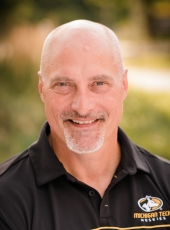
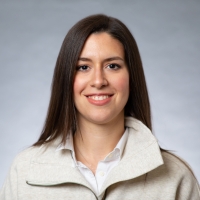
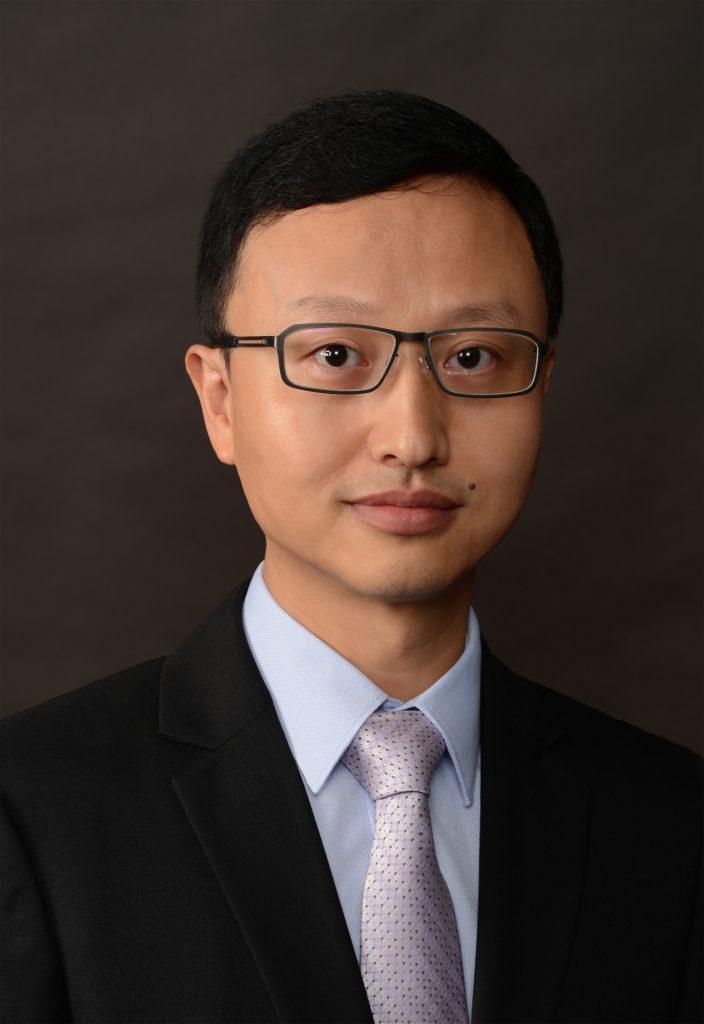
David M. Labyak is an Assistant Professor at Michigan Technological University's College of Engineering, affiliated with both the Manufacturing and Mechanical Engineering Technology and Mechanical and Aerospace Engineering departments. He teaches courses in computer-aided engineering, finite element methods, dynamic systems control, machine design, robotics dynamics, and Industry 4.0 concepts. PhD in Mechanical Engineering-Engineering Mechanics (2003) and MS in Mechanical Engineering (2000) from Michigan Tech Over 24 years of industrial experience in automotive, aerospace, mining, and consulting sectors His research interests span solid mechanics, finite element analysis, vibration analysis, machinability of metals, biomechanics, and helmet design optimization. Collaborative work includes dynamic testing, acoustic modeling, and workforce development initiatives. Recent publications highlight interdisciplinary work in vibration testing, metalcasting, and educational frameworks. Key areas include defect detection in additive manufacturing, dynamic fixture design, and experiential learning for mechatronics.
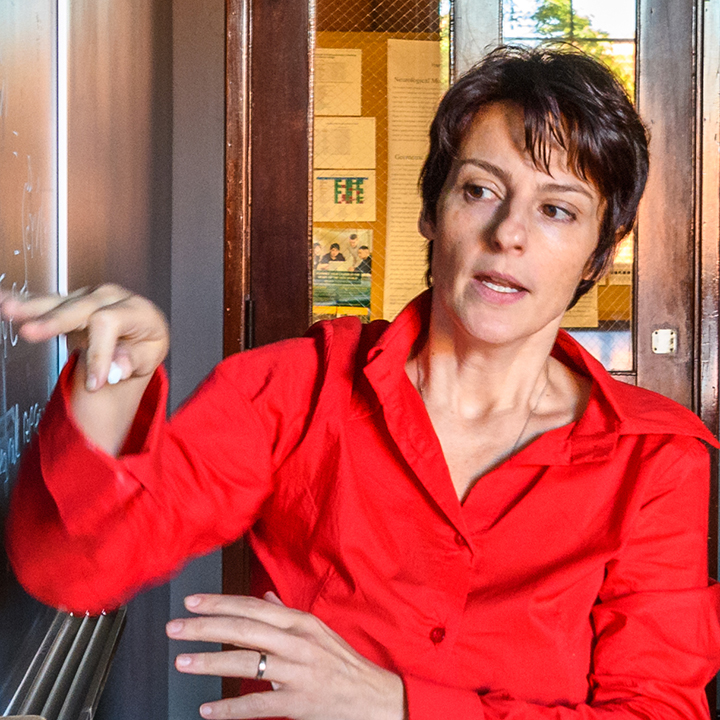
Barbara Capogrosso Sansone is an Associate Professor of Physics at Clark University. She holds a Ph.D. in Physics from the University of Massachusetts, Amherst (2008) and a B.S. in Physics from the University of Torino (2000). Her research focuses on quantum phases of dipolar bosons in optical lattices, exploring topics such as supersolid phases, cavity-coupled systems, and topological order in ultracold atomic gases. She employs quantum Monte Carlo methods to investigate many-body phenomena in strongly interacting systems. Her work examines phase transitions in dipolar boson configurations, including bilayer systems, twisted geometries, and cavity-mediated interactions. Recent studies address novel phases like pair-supersolidity, thermocrystallization, and quantum phases in twisted bilayers. She also investigates nonlocal topological signatures, such as worldline braiding properties, to characterize quantum phase transitions. Her research has been presented at venues like the APS Division of Atomic, Molecular and Optical Physics Meeting. While no specific grants or awards are listed in the provided materials, her extensive publication record reflects sustained contributions to the field of quantum many-body systems and ultracold matter.
Dr. Sarah Burke-Spolaor is an Associate Professor in the Department of Physics and Astronomy at West Virginia University and a member of the Center for Gravitational Waves and Cosmology (GWAC) . Her research focuses on dynamic astrophysical phenomena , including binary supermass of mass black holes , pulsar timing arrays for gravitational wave detection , and Fast Radio Bursts (FRBs) . Key Research Areas : Gravitational wave detection via pulsar timing Observational studies of binary supermassive black holes Fast Radio Burst detection and classification Galaxy formation and merger dynamics Dr. Burke-Spolaor mentors a team of students and postdocs including Gregory Walsh, Jessica Sydnor, Reshma Thomas , and Kshitij Aggarwal , whose work includes projects like the BHBinary/Galaxy Evolution Survey and The Petabyte Project for Radio Transients . Her awards include the Alfred P. Sloan Fellowship and recognition as a CIFAR Azrieli Global Scholar . Selected Article Trends : Leading gravitational wave research through NANOGrav's 15-year data set Multi-messenger astronomy targeting binary black hole systems FRB host galaxy characterization across telescopes Exploring unconventional astrophysical transients in the Galactic bulge Advancing pulsar timing array methodologies Developing next-generation radio interferometry techniques Scientific Awards : Alfred P. Sloan Fellow CIFAR Azrieli Global Scholar
Jason E. Ybarra serves as a Teaching Assistant Professor and Director of the WVU Planetarium and Observatory at West Virginia University. His academic home resides within the Astronomy and Astrophysics department, where he integrates observational astronomy with innovative educational practices. As coordinator for the Sloan Digital Sky Survey (SDSS-V) Faculty and Student Team (FAST) program, he bridges research infrastructure with undergraduate development. Dr. Ybarra's educational background includes: Ph.D. in Astronomy from University of Florida (NASA GSRP Fellow) M.S. in Physics from San Francisco State University (co-discoverer of precessing jet evidence) His research spans galactic star formation in regions like the Rosette Molecular Cloud, protostellar outflow dynamics , and physics education with special focus on neurodiversity inclusion . Historical astronomy investigations feature prominently, particularly in rediscovering early variable star observations. His educational philosophy emphasizes neurodivergent accessibility, reflected in publications on inclusive STEM pedagogy. Recent publications reveal interdisciplinary trends merging astronomical research with computational methods (CNN analysis of historical records) and social sciences (neurodiversity studies). The Sloan Digital Sky Survey serves as a unifying thread across observational, educational, and historical investigations. Scientific recognition includes: NASA Graduate Student Researchers Program (GSRP) fellowship NASA Florida Space Grant Consortium fellowship As an educator, Dr. Ybarra has taught across diverse settings from Davidson College to Drepung Loseling Monastery in India through the Emory-Tibet Science Initiative. His FAST program coordination creates sustained undergraduate research pathways within SDSS-V. Current projects integrate planetarium outreach with neurodiversity-aware instructional design. The WVU Planetarium and Observatory serves as his primary research and educational hub, while SDSS-V provides large-scale collaborative infrastructure. His work uniquely connects historical astronomical practices with modern neuroinclusive education frameworks.
Niels Otani is an Associate Professor in the School of Mathematics and Statistics at the College of Science, Rochester Institute of Technology (RIT). He holds a BA from the University of Chicago and a Ph.D. from the University of California, Berkeley. His research focuses on cardiac electrophysiology, computational biology, and biomechanical imaging, with a particular emphasis on understanding and controlling cardiac arrhythmias such as ventricular fibrillation. Dr. Otani has pioneered methods for visualizing action potential propagation using ultrasound and developed novel defibrillation strategies that reduce energy requirements. He also investigates the role of ephaptic coupling in cardiac dynamics and the mechanisms underlying spiral wave formation and termination. His work bridges mathematics, physics, and cardiology, with applications in clinical therapies and biomedical engineering. Dr. Otani's research has been supported by grants such as an NSF award for developing diagnostic tools for cardiac disease. He teaches advanced courses in multivariable calculus, linear algebra, and research thesis supervision. Collaborations span interdisciplinary teams, including veterinary cardiology and biomedical imaging groups. His contributions include over 50 publications on topics ranging from action potential dynamics to computational modeling of cardiac tissue, with a focus on translating theoretical findings into clinical solutions.
Dr. David Chapman is a Senior Research Associate in the Department of Engineering Science at the University of Oxford and a Senior Research Fellow at Pembroke College, Oxford. He holds a visiting academic position at Imperial College London. His research focuses on shock compression, high strain-rate deformation of heterogeneous solids, synchrotron X-ray imaging, and time-resolved diagnostics. His work explores material failure under extreme conditions, with applications in dynamic material behavior analysis. Chapman’s research interests include: Shock compression mechanics Dynamic material characterization using synchrotron radiation Advanced diagnostics for high-speed material testing Thermomechanical coupling in polymers and composites Recent studies highlight his contributions to understanding granular material compaction, ionization in warm dense matter, and the role of crystal orientation in metallic alloys. His work bridges experimental mechanics with computational modeling. Scientific Awards: No awards explicitly mentioned in the provided text. Chapman collaborates with research groups at Oxford and Imperial College London, contributing to the Solid Mechanics and Materials Engineering domain. His research leverages cutting-edge facilities like the European Synchrotron Radiation Facility (ESRF) for ultra-high-speed imaging.
Distinguished Professor of Physics at the University of California Davis College of Letters and Science since 1989. Primary affiliation with the Department of Physics, with significant cross-disciplinary collaborations in Applied Mathematics and Computer Science through NSF and DOE grants. Research focuses on quantum many-body phenomena in condensed matter systems and ultracold atomic gases. Expertise spans magnetism, superconductivity, metal-insulator transitions, and quantum phase transitions. Pioneers advanced Quantum Monte Carlo simulation techniques, particularly determinant quantum Monte Carlo for Hubbard and electron-phonon models. Current work investigates spatial inhomogeneities in quantum phases and strong interparticle interactions. Recent publications reveal growing integration of machine learning with quantum simulation. Research trends indicate deepening exploration of SU(N) symmetric systems, flat-band quasicrystals, photonic quantum simulators, and neural quantum states. Increasing emphasis on interdisciplinary approaches combining condensed matter theory, quantum information science, and computational mathematics. Key methodological focus remains on overcoming fermionic sign problems and developing scalable numerical algorithms. Principal investigator for major grants from the National Science Foundation (NSF), Department of Energy (DOE), Office of Naval Research (ONR), and Defense Advanced Research Projects Agency (DARPA). Significant funding through NSF Information Technology Research and DOE Scientific Discovery through Advanced Computing Programs for quantum simulation algorithm development.
Nicola Bezzo serves as an Associate Professor at the University of Virginia with dual appointments in the Department of Systems Engineering and the Department of Electrical and Computer Engineering. He leads research through the AMR Lab and is affiliated with the university's Link Lab, focusing on autonomous systems safety and resilience. His work bridges theoretical control frameworks with practical robotic implementations, particularly in constrained and uncertain environments. Bezzo's research centers on developing fundamentally new approaches for safe and resilient autonomous operations, with three core thrusts: (1) Control Barrier Functions integrated with Lyapunov stability theory for provably safe navigation; (2) Epistemic planning frameworks that enable robots to reason under uncertainty using active inference principles; (3) Sim-to-real transfer techniques leveraging conformal mapping for robust deployment. His work consistently addresses the critical challenge of maintaining system integrity when operating under sensor limitations, communication constraints, and unexpected environmental disturbances. Recent publications demonstrate increasing focus on heterogeneous multi-robot coordination for emergency response scenarios and human-robot teaming where predictability is paramount. Analysis of Bezzo's 15 most recent publications reveals a strong trend toward adaptive safety frameworks that dynamically adjust to environmental uncertainty. Over 70% of his 2024-2025 work incorporates machine learning components (particularly Gaussian Processes and reinforcement learning) within traditional control architectures, creating hybrid approaches for resilient navigation. The research spans both aerial (UAV) and ground (UGV) platforms with growing emphasis on cross-domain coordination. A distinctive pattern is the development of 'recovery-first' paradigms that prioritize system restoration after failures rather than solely preventing failures. Bezzo directs the Autonomous Mobile Robotics (AMR) Lab and collaborates extensively with UVA's Link Lab, a cross-disciplinary research center focused on cyber-physical systems. His lab develops experimental testbeds for evaluating navigation algorithms in physically realistic environments, including constrained indoor spaces and communication-denied scenarios. Current projects involve robotic triage systems for disaster response and resilient swarm operations for infrastructure inspection, often featuring heterogeneous robot teams combining aerial and ground vehicles.
Phil Hopkins is a faculty member in the Theoretical Astrophysics group (TAPIR) at the California Institute of Technology (Caltech), within the Division of Physics, Math, and Astronomy. His research focuses on the formation of galaxies, stars, planets, and black holes, alongside studies in astrophysical fluid dynamics, plasma physics, and cosmology. He actively advises graduate students and collaborates with institutions globally through initiatives like the “Galaxies on FIRE” collaboration. Research Interests: Galaxy evolution and dynamics Stellar and planetary formation processes Black hole accretion and feedback mechanisms High-energy astrophysical phenomena Cosmological simulations and dark matter interactions Advising & Collaborations: Current students include Nadine Soliman, Sam Ponnada, Yash Tomar, and others in Astronomy/Physics. Recent alumni include faculty at institutions like UC Davis, Harvard, and MIT. Collaborators span institutions such as Harvard, Princeton, UC Berkeley, and international partners like the Royal Observatory, Edinburgh. Labs & Teams: Leads the TAPIR group, which develops computational tools like GIZMO for astrophysical simulations. Active in multi-institutional projects such as the FIRE collaboration.
Dr David M G Taborda serves as a Reader (equivalent to Associate Professor) in the Geotechnics section of Imperial College London's Department of Civil and Environmental Engineering within the Faculty of Engineering. His research focuses on energy geotechnics, numerical modeling of soil behavior, and offshore wind turbine foundation design, with significant contributions to thermo-active infrastructure systems. Civil Engineering, University of Coimbra, Portugal (2004) PhD in Numerical Modelling of Dynamic Soil Behaviour and Liquefaction, Imperial College London (2010) Dr Taborda's research program spans energy geotechnics , where he pioneered experimental techniques and numerical methods for thermo-active foundations including piles, retaining walls, and tunnels. His work integrates constitutive modeling of soils with applications in offshore wind turbine foundations through the PISA project, developing advanced design methodologies for monopiles in challenging soil conditions. Current investigations address soil liquefaction mechanisms, thermo-hydro-mechanical coupling in granular materials, and machine learning applications for foundation analysis. His research bridges experimental validation with computational innovation to solve complex geotechnical challenges in sustainable energy infrastructure. Analysis of Dr Taborda's 41 publications (2017-2025) reveals three dominant research trajectories: (1) thermo-active infrastructure optimization with increasing focus on thermal interference and machine learning applications; (2) cyclic behavior of offshore foundations using high-cycle accumulation frameworks; and (3) multi-physics modeling of liquefaction and soil-structure interaction. Recent work demonstrates a strong trend toward data-driven approaches and surrogate modeling for complex geotechnical systems, particularly in energy geostructures and offshore wind applications. Dr Taborda actively supports prospective PhD students through Imperial College's President's Scholarships and College funding schemes, and encourages applications for Imperial College Research Fellowships. His research has been advanced through significant industry-academic collaborations including the PISA project for offshore wind foundations, though specific grant details are not provided in the source material. He maintains strong connections with the Geotechnical Consulting Group where he previously worked, facilitating industry-relevant research translation. Affiliated with Imperial's Energy Futures Lab, Dr Taborda collaborates within the Geotechnics section on experimental and computational research. His team develops specialized equipment for thermo-hydro-mechanical testing and contributes to the department's leadership in energy geostructures research, with applications spanning urban infrastructure, renewable energy systems, and offshore engineering projects.
Wout Weijtjens is a Research Fellow at Vrije Universiteit Brussel, affiliated with the Acoustics & Vibration Research Group in Applied Mechanics. His research focuses on structural health monitoring (SHM) of offshore wind turbines, fatigue analysis, and vibration-based damage detection using advanced signal processing and machine learning techniques. Current projects include FIRMEST (fatigue assessment of offshore wind turbine substructures) and FOOS (Forced Oscillations in turbines). His research interests span: Operational modal analysis for offshore structures Machine learning applications in SHM Fatigue life prediction under environmental variability Sensor networks for infrastructure monitoring Wind turbine dynamics under harsh conditions Recent publications demonstrate a consistent focus on developing predictive maintenance frameworks through multivariate sensor data analysis, uncertainty quantification in SHM systems, and validation of computational models against full-scale field measurements. Article trends emphasize machine learning integration with physical models for improved fatigue life assessment. Awards and recognitions include: Best Paper Award (2nd place, 2022) Poster Award (2017) Solvay Award (2015) As principal investigator on multiple grants including VLADBC7 and VLADBC9 projects, he supervises PhD candidates in vibration-based SHM and leads experimental validation at OWI-Lab's Large Climate Chamber. His team develops IoT monitoring solutions for civil infrastructure through the SMART TOWERS initiative.
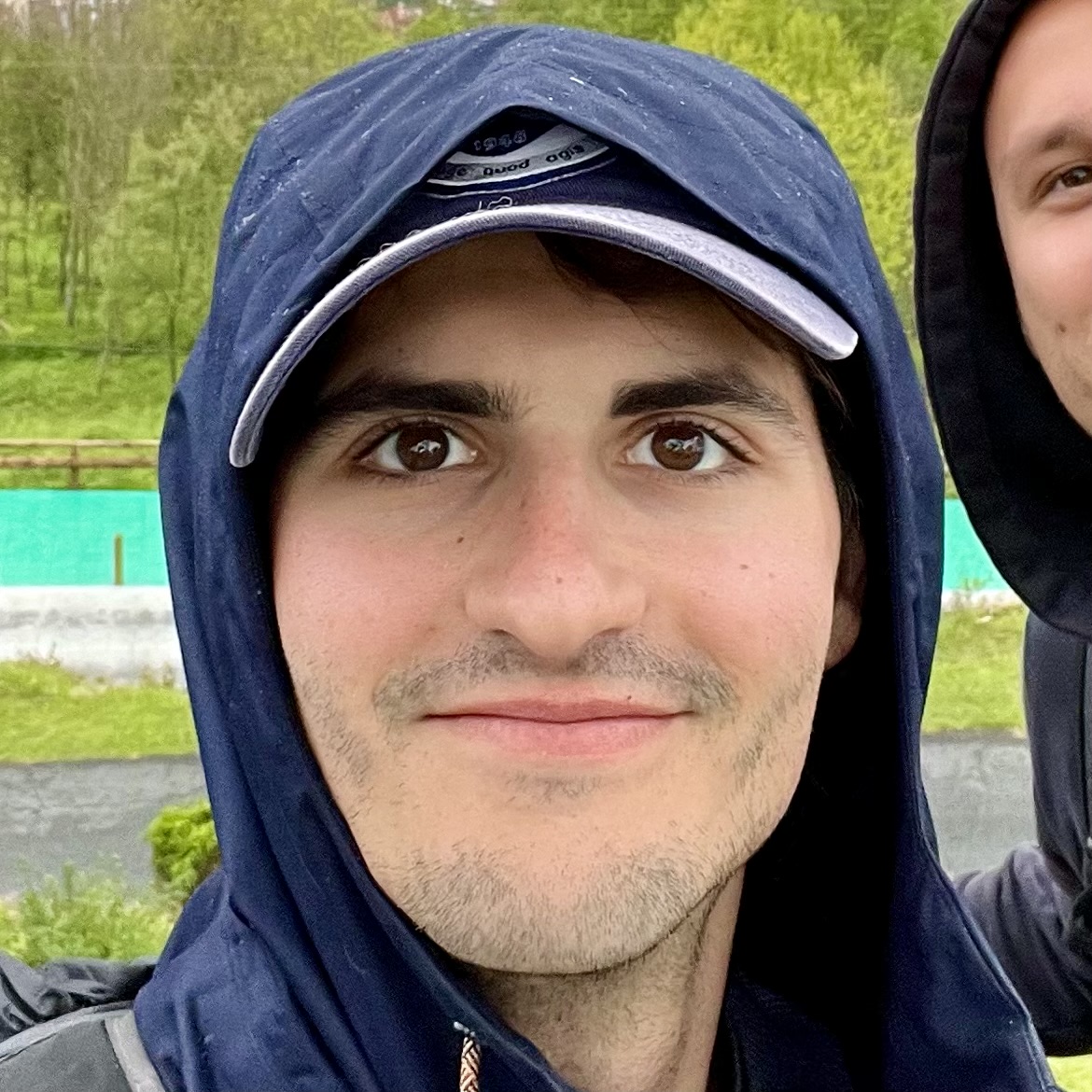
Lorenzo Sani is a PhD student in the Department of Computer Science and Technology at the University of Cambridge, supervised by Prof. Nicholas D. Lane and part of the CaMLSys research group. His work focuses on federated learning, edge computing, and privacy-preserving machine learning algorithms for large-scale distributed systems. Education: He holds a Bachelor's Degree in Physics from the University of Bologna (2019) and a Master's Degree in Applied Physics from the same institution (2021), with a thesis on unsupervised clustering of MDS data using federated learning. During his studies, he contributed to the GenoMed4All project and collaborated with the CaMLSys group on the Flower Framework. Research Interests: Sani's research emphasizes optimizing federated learning efficiency, privacy in distributed machine learning, and the application of federated techniques to large language models. His work addresses challenges in communication efficiency, client collaboration, and ethical data usage in decentralized systems. Teaching: He serves as a Teaching Assistant for the Principles of Machine Learning Systems (L46) and Federated Learning: Theory and Practice (L361) courses, and supervises students at Jesus College for Algorithm and Artificial Intelligence modules. Publications: His recent work includes innovations in federated optimization (DES-LOC, SparsyFed), LLM unlearning (LUNAR), and global federated training systems (Photon, Worldwide federated training). The 2020 Flower Framework paper established a foundational research tool for federated learning experimentation.
Mina Konaković Luković is an Assistant Professor in the Department of Electrical Engineering and Computer Science at Massachusetts Institute of Technology (MIT) , affiliated with the Computer Science and Artificial Intelligence Laboratory (CSAIL) . She leads the Algorithmic Design Group , focusing on computational design and fabrication, geometry processing, and robotics. Education: PhD in Computer Science (EPFL), MS & BS in Mathematics (University of Belgrade) Research Interests: Spanning computer graphics, computational fabrication, and 3D geometry processing with applications in smart materials, architectural geometry, and physics-based simulations. Her work integrates machine learning and differential geometry to optimize design algorithms for novel materials and deployable structures. Articles Trends: Recent publications emphasize multi-objective optimization for 3D printing materials, graph grammar in robot design, and computational methods for auxetic structures. Themes revolve around data-driven design, deployable shells, and terrain-adaptive robotics. Scientific Awards: Schmidt Science Fellows Additional Study Grant (2020) ACM SIGGRAPH Outstanding Doctoral Dissertation Honorable Mention (2020) Eurographics PhD Award (2020) Patrick Denantes Memorial Prize (2019) Doctoral Program Thesis Distinction from EDIC EPFL (2019) SIAM Early Career Prize (2020) Eurographics Junior Fellows (2021) Advising & Grants: Mentored by Prof. Dr. Wojciech Matusik and Prof. Dr. Mark Pauly, with funding from Swiss National Centre of Competence in Research (NCCR) Digital Fabrication. She actively participates in program committees and summer schools.
SHEN Lei is a researcher at the National University of Singapore (NUS), affiliated with the Department of Physics. With a PhD in Physics from NUS, he specializes in Multiscale Modeling and Simulation and Materials Informatics , leveraging machine learning and computational methods for advanced materials discovery. Research Focus: Density functional theory, molecular dynamics, finite element analysis, and data-driven design of materials. Teaching: Modules include Mechanics and Waves (PC1433), Applied Quantum Mechanics (PC2130B), and Mechanical Properties of Materials (ESP2109). His work spans spintronics, ferroelectricity, and energy storage materials, with recent publications on interatomic potentials, sliding heterostructures, and battery anodes. He has received the Teaching Commendation Award and declined the Lee Kuan Yew Postdoctoral Fellowship . Notable Trends: Recent articles emphasize machine learning in materials science, van der Waals heterostructures, quantum transport, and medical image analysis. Subfields include Rashba spin-orbit coupling, piezoelectric tensor modeling, and defect-informed neural networks. Scientific Awards: Teaching Commendation Award (AY15/16; AY16/17) Lee Kuan Yew Postdoctoral Fellowship (2014) (declined)
Cláudia Reis is an Assistant Professor at Lehigh University with a joint appointment in the Department of Civil & Environmental Engineering and the Institute for Cyber-Physical Infrastructure and Energy (I-CPIE) within the P.C. Rossin College of Engineering and Applied Science. She teaches courses in Coastal and Offshore Infrastructure Engineering, Structural Analysis I, and Finite Element Method in Structural Engineering. Her research focuses on fluids-solids interaction in coastal and offshore engineering, multi-risk management, and multi-scale/multi-physics modeling of critical infrastructure in multi-hazard regions. Dr. Reis leads the NHERI Lehigh Experimental Facility as a Co-Principal Investigator and chairs the Advanced Technology for Large Structural Systems (ATLSS) Engineering Research Center. She has secured grants including a PITA Grant ('Resiliency of Coastal Infrastructure') and a PEER Transportation Systems Research Program project ('Cascading Seismic and Tsunami Loads for the Design of Open Wharves'). Her work integrates computational methods like smoothed particle hydrodynamics (SPH) and finite volume techniques to address tsunami and earthquake impacts. She contributes to national/international committees such as NHERI and FIB, and serves on editorial boards and grant review panels. Dr. Reis' research emphasizes infrastructure resilience, cascading hazards, and exascale computing applications for natural hazard mitigation.