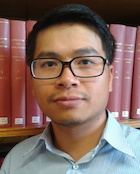
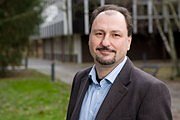
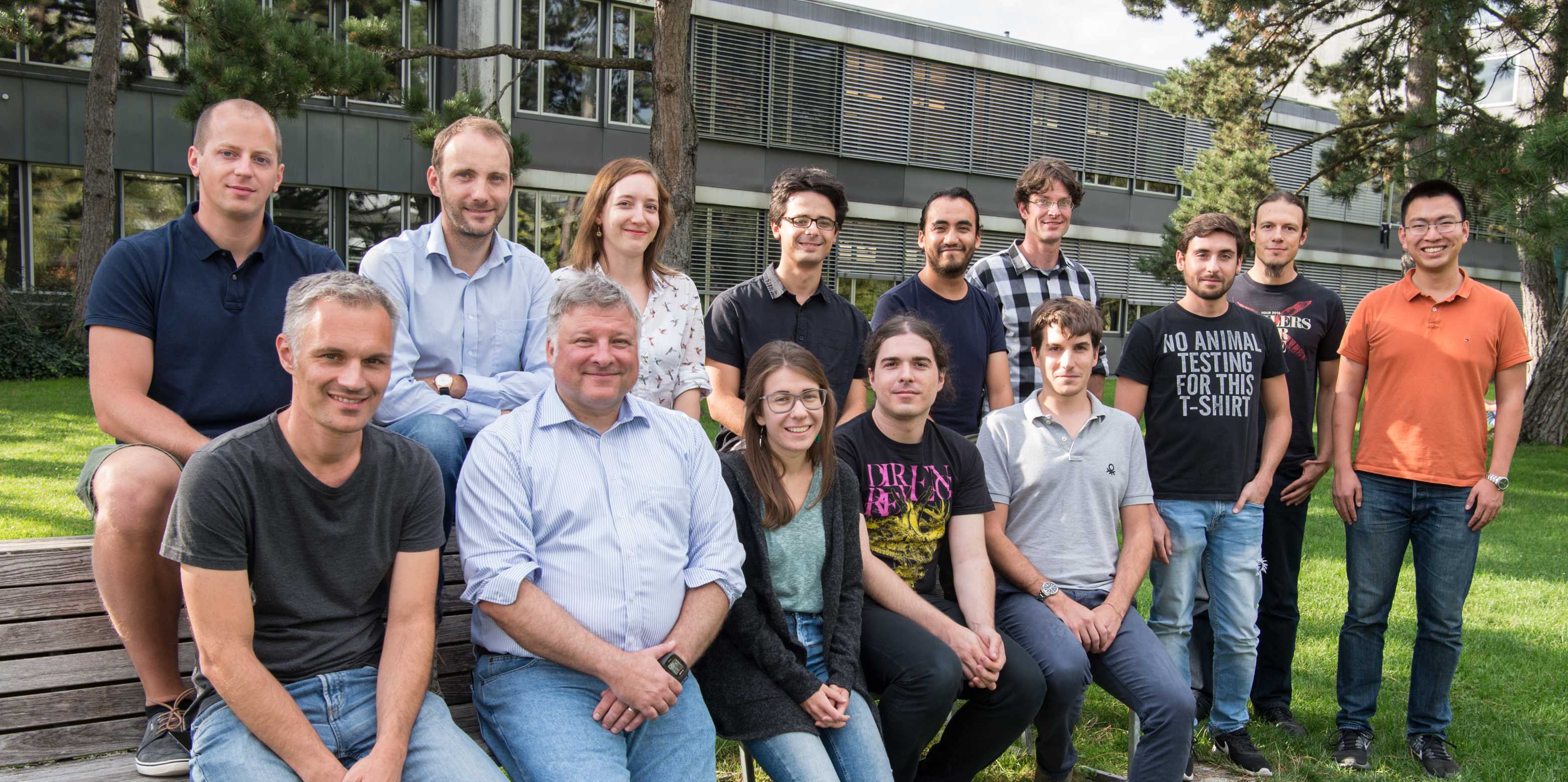
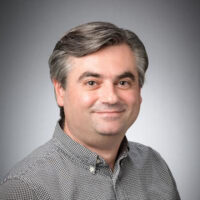
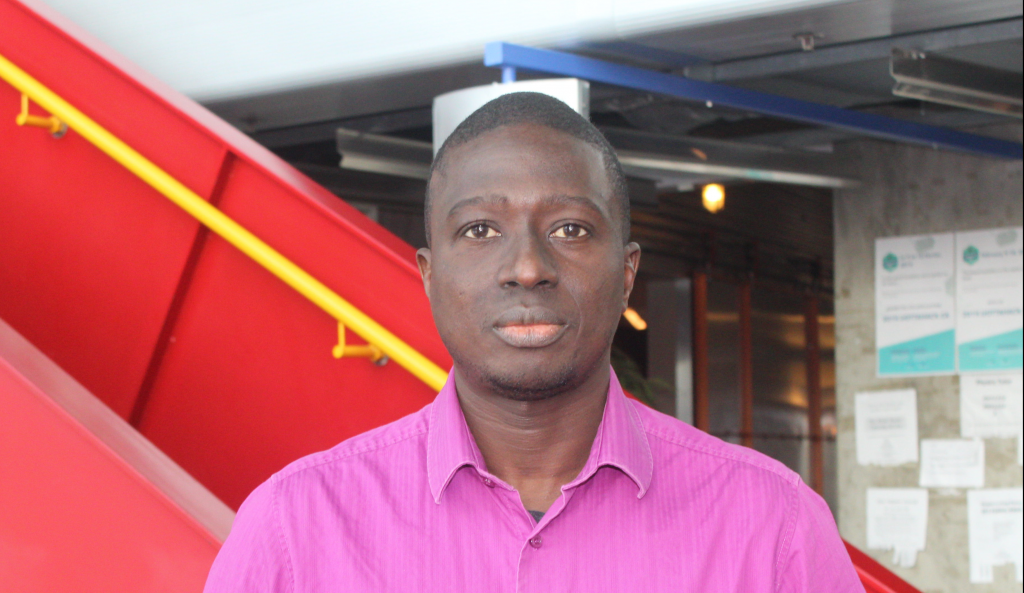
Minh Hoai Nguyen is an Assistant Professor in the Department of Computer Science at Stony Brook University. He received his PhD in Robotics from Carnegie Mellon University and a Bachelor of Engineering from the University of New South Wales. Prior to Stony Brook, he was a post-doctoral research fellow at Oxford University and a Kurti Junior Research Fellow at Brasenose College. Education: PhD in Robotics, Carnegie Mellon University Bachelor of Engineering, University of New South Wales His research focuses on computer vision , machine learning , and time series analysis , particularly in developing algorithms for human action recognition , gesture detection , and expression analysis in video data. Applications include video surveillance , human-computer interaction , and medical diagnosis of behavioral disorders . His work integrates computer vision for video processing, time series analysis for modeling human behavior, and machine learning for training complex algorithms. Notable awards include: CVPR 2012 best student paper award Winner of PASCAL VOC 2012 Challenge for Human Action Recognition He teaches courses such as Video Analysis (CSE 594) and Introduction to Robotics (CSE 525) .
Adriano Jorge Cardoso Moreira is an Associate Professor with Habilitation at the Department of Information Systems, School of Engineering, Universidade do Minho, Portugal. He is also a Senior Researcher at the Algoritmi Research Centre and Scientific Coordinator of the Urban and Mobile Computing department at Centro de Computação Gráfica. His research focuses on indoor positioning , mobile and context-aware computing , urban computing , and simulation of wireless networks . Research Interests : Indoor Positioning, Mobile Computing, Urban Mobility, Sensor Networks, Wi-Fi and UWB Localization, Smart Cities. Leadership : Coordinated the Computer Communications and Pervasive Media Group (2008-2016), Scientific Committee member (Director of MAP-tele PhD program in multiple terms), and leads the Master in Telecommunications and Informatics since 2021. Publications : Over 100 papers, including IEEE Transactions and Sensors journal articles, with an h-index of 23 and 2136 citations. Awards : First and second prizes in EvAAL-ETRI Indoor Localization Competitions (2015, 2016, 2017).
Elisabeth Wetzer is an Associate Professor in Machine Learning at the Department of Physics and Technology, UiT The Arctic University of Norway. Her research bridges artificial intelligence with healthcare applications, focusing on multimodal image registration, bias mitigation in AI, and physics-informed learning models. Current Role: Associate Professor, Machine Learning Group Research Themes: AI ethics, medical imaging, cross-modal representations, algorithmic fairness Her recent work explores technical challenges in PET imaging analysis and societal implications of AI bias. Collaborative projects span medicine, mathematics, and computer science disciplines. Key scientific contributions include: Physics-informed deep learning for PET image data Studies on multi-task learning efficacy in medical classification Research on gender bias in algorithmic systems She actively participates in diversity initiatives and public outreach, including presentations at Nobel laureate conferences and media engagements on AI ethics.
Jaynie Yang, PhD, is a full Professor in the Department of Physical Therapy, Faculty of Rehabilitation Medicine at the University of Alberta, where she has served since January 1990. She additionally holds adjunct appointments in the Department of Biomedical Engineering and is an active member of the Neuroscience & Mental Health Institute and the Women and Children’s Health Research Institute. She has previously acted as Graduate Coordinator for the thesis-based MSc and PhD programs and as Acting Chair of the Department of Physical Therapy. Education Post-doctoral Fellowship, Neuroscience, University of Alberta (1987–1989) PhD, Kinesiology, University of Waterloo (1987) BSc, Physical Therapy, Queen’s University (1978) Research Interests Dr. Yang’s research centres on how the nervous system controls human walking and how this control is altered following injury to the central nervous system. She investigates three inter-related themes: (1) neural mechanisms underlying gait control in healthy humans and how these are disrupted by spinal cord injury or perinatal brain injury; (2) optimization of task-specific training paradigms—such as intensive early therapy in infants with perinatal stroke or powered exoskeleton training in adults with spinal cord injury—to drive neuroplasticity and improve walking; and (3) developmental aspects of motor learning, comparing how children and adults acquire and retain novel walking patterns on split-belt treadmills. Recent Publication Trends Over the past decade her team has produced a high-impact portfolio that blends mechanistic studies of neural plasticity with pragmatic clinical trials. Common keywords across recent papers include “perinatal stroke,” “cerebral palsy,” “spinal cord injury,” “powered exoskeleton,” “functional electrical stimulation,” and “neuroplasticity.” The work spans bench-to-bedside translation, from rodent studies of critical periods through multi-centre randomized controlled trials evaluating early intensive rehabilitation protocols in infants and gait-retraining paradigms in adults. Current Studies & Funding Multi-centre RCT (Edmonton & Calgary) examining early, intensive leg training in children Cohort studies investigating cortical and spinal neuroplasticity induced by powered exoskeleton (ReWalk, Ekso) training in adults with chronic SCI. Split-belt treadmill studies comparing motor learning retention across children, young adults, and older adults. Laboratory & Team Dr. Yang leads an interdisciplinary group that integrates neurophysiology, biomechanics, and clinical rehabilitation. The lab is embedded within the University of Alberta’s Neuroscience & Mental Health Institute and has active collaborations with the Glenrose Hospital, Alberta Children’s Hospital, and Children’s Hospital of Eastern Ontario. At present she mentors one graduate student and is not accepting additional trainees for the upcoming cycle. Teaching She is the instructor for PTHER 500 – Movement Analysis, a core course in the MScPT curriculum covering mechanical and analytical concepts essential for physical therapy practice (scheduled for Fall Term 2025).
Ratnak SOK is an Associate Professor at Waseda University, specializing in thermal engineering, electrified vehicles, and internal combustion engine research. His work spans transportation electrification , CFD modeling , waste heat recovery , and low-carbon/e-fuel ICEs with aftertreatment systems. Doctor of Engineering (2015, Waseda University) MSME (2011, Institut Teknologi Bandung) Diplôme d'Ingénieur (2009, Institut de Technologie du Cambodge) DUT (2006, Institut de Technologie du Cambodge) His research focuses on xEV thermal management , internal combustion engine efficiency , and thermoelectric waste heat recovery , supported by 44 peer-reviewed papers and 340 Scopus citations. Recent work integrates machine learning and CFD simulations for combustion control and battery modeling. Scientific accolades include: Young Investigator Award (2025 Japan Society of Automotive Engineers) SAE International Journal editorial board member Chair, 2025 ASME Rail Transportation Symposium His academic leadership extends to organizing technical sessions at IEEE, SAE, and FISITA conferences.
Lionel C. Briand is a Professor of Software Engineering with shared appointments at the University of Luxembourg's SnT Centre for Security, Reliability, and Trust and the School of Electrical Engineering and Computer Science at the University of Ottawa. He holds a Canada Research Chair (Tier 1) in Intelligent Software Dependability and Compliance and serves as Director of Lero, Ireland's national software research center. His academic leadership spans over 25 years of collaborative research with industry partners across automotive, aerospace, energy, financial, and legal domains. Professor Briand's research focuses on software verification and validation, trustworthy AI systems, model-driven engineering, and empirical software engineering methodologies. His work bridges theoretical foundations with industrial applications, particularly in cyber-physical systems where machine learning components interact with safety-critical control systems. He has pioneered techniques for testing AI-enabled systems, GDPR compliance automation, and mutation analysis for space systems. His publication portfolio demonstrates consistent innovation in software testing, with recent emphasis on large language models for test generation, automated compliance checking, and safety analysis of deep neural networks. Key trends include black-box testing methodologies, metamorphic testing for security, and search-based approaches for DNN validation. IEEE Fellow and ACM Fellow IEEE Computer Society Harlan Mills Award (2012) ACM SIGSOFT Outstanding Research Award (2022) IEEE Reliability Society Engineer-of-the-Year Award (2013) ERC Advanced Grant recipient (2016) Fellow of the Academy of Science, Royal Society of Canada (2023) ICSE 2011 Most Influential Paper Award As Director of Lero and holder of a Canada Research Chair, Professor Briand leads major research initiatives including an ERC Advanced Grant on cyber-physical system modeling and testing. His industrial collaborations generate substantial grant funding, particularly in automotive safety validation and regulatory compliance automation. He mentors numerous researchers through his dual appointments and serves on program committees for top software engineering conferences. Professor Briand directs research activities at the SnT Centre's SVV department, focusing on software verification and validation. His team develops practical tools like MASS for space system mutation analysis and COREQQA for compliance requirements understanding, with strong industry adoption in automotive and aerospace sectors.
Sebastien Nicolas Gros is a Professor at the Department of Engineering Cybernetics, Norwegian University of Science and Technology (NTNU). His research focuses on safe reinforcement learning (RL) and data-driven model predictive control (MPC), with applications in energy systems, biomedical engineering, and autonomous vehicles. Institution: Norwegian University of Science and Technology Department: Engineering Cybernetics His work emphasizes AI-driven optimization for domestic energy storage, battery integration, and smart building management. Collaborations include Equinor, DNV, Kongsberg, Volvo, and CorPower Ocean. Key themes in his publications include: Control theory for renewable energy systems (wave energy converters, buildings) Biomedical applications (artificial pancreas, glucose monitoring) Transportation systems (electric vehicles, autonomous ships) Machine learning integration with physical models He supervises 6 PhD students and co-supervises projects on multi-rotor wind turbines and industrial PhD collaborations. The articles demonstrate a convergence of RL, MPC, and uncertainty quantification across energy, biomedical, and transportation domains.
Prof. Rainer Wallny is a Full Professor of Physics at ETH Zurich and Head of the Institute for Particle Physics and Astrophysics. His research focuses on high-energy particle physics, particularly through the CMS experiment at the Large Hadron Collider (LHC), emphasizing Higgs boson studies and detector upgrades. He leads projects on Higgs boson characterization in photon and b-quark final states, as well as CMS pixel detector upgrades for Phase-2. His group also explores future collider technologies and contributes to teaching at all academic levels. Education: Studied Physics at Universities of Tübingen, Washington (M.Sc., 1994), and Heidelberg (Diplom, 1996) PhD in Physics from University of Zurich CERN Research Fellow (2001–2003) Faculty at UCLA (2003–2010), promoted to Full Professor in 2010 Joined ETH Zurich as Full Professor in 2010 Research Interests: Higgs boson properties and decay channels Supersymmetry searches in CMS data Detector development for CMS (pixel trackers, diamond sensors) Phase-2 LHC upgrade technologies Experimental particle physics at high-luminosity colliders Grants and Advising: Supervised over 20 PhD students since 2010 Leadership roles in CMS collaboration and detector R&D initiatives Active in curriculum design for physics education at ETH Labs & Teams: Wallny Group at ETH Zurich Institute for Particle Physics and Astrophysics (D-PHYS) Collaborations with CERN and global CMS teams
Matthew R. Edwards is an Assistant Professor of Mechanical Engineering at Stanford University, affiliated with the School of Engineering. His research focuses on high-power lasers and plasma physics, developing optical diagnostics for fluids and plasmas, and exploring light-matter interactions. He holds a PhD and prior degrees from Princeton University in Mechanical and Aerospace Engineering, followed by a Lawrence Fellowship at Lawrence Livermore National Laboratory. Education : PhD in Mechanical and Aerospace Engineering, Princeton University (2019) MA in Mechanical and Aerospace Engineering, Princeton University (2015) BSE in Mechanical and Aerospace Engineering, Princeton University (2012) Research Interests : Edwards' work bridges mechanical engineering and plasma physics, emphasizing ultrafast laser-plasma interactions, plasma-based optical components, and applications in energy science. His lab, the SAPPHIRE Laser Laboratory, explores femtosecond laser technologies for creating novel optical elements (e.g., plasma gratings, holographic lenses) and advancing laser-driven particle acceleration, fusion research, and diagnostic tools. Key areas include: Design of plasma-based optical components for high-power laser control Simulation of laser-matter interactions at relativistic intensities Development of compact light and particle sources Research Trends : His recent articles (2024–2025) highlight advancements in plasma gratings, relativistic birefringence, and laser wakefield acceleration. Notable contributions include ionization-based compression of ultrafast laser pulses and polarization control in underdense plasmas. Awards/Grants : No awards explicitly listed, but his Lawrence Fellowship indicates prior recognition. His work aligns with grants in plasma physics and laser technology. Labs/Teams : He leads the SAPPHIRE Laser Laboratory , collaborating with the PULSE Institute and National Ignition Facility (NIF) on plasma optics and high-energy laser applications.
Dr. George Karakostas is an Associate Professor in the Department of Computing and Software at McMaster University. His research focuses on Scientific Computing, Optimization, and Theoretical Computer Science, with a particular emphasis on algorithms, scheduling, and resource management in data centers and mobile networks. He is actively involved in advising graduate students and contributes to cutting-edge research in digital twins, edge computing, and approximation algorithms. Dr. Karakostas holds a PhD (implied by title) and has authored numerous publications addressing challenges in workload distribution, thermal management, and task scheduling under deadline constraints. His work often intersects with practical applications in IoT, wireless networks, and energy-efficient infrastructure. Key research trends include optimizing resource allocation in distributed systems, developing efficient offloading strategies for mobile devices, and leveraging digital twins for system performance enhancement. Despite the volume of his publications, the focus consistently revolves around theoretical rigor paired with real-world applicability. Dr. Karakostas is affiliated with the Digital & Smart Systems research cluster and teaches advanced courses such as CAS 744: Advanced Topics in Design of Algorithms (Theory). His contact information includes karakos@mcmaster.ca and a faculty profile page at www.cas.mcmaster.ca/~gk.
Professor Tony Jan leads the Centre for Artificial Intelligence Research and Optimisation (AIRO) at Torrens University Australia's Design and Creative Technology school. He holds a PhD in Computing Science from the University of Technology Sydney (2004) and a Bachelor of Engineering from the University of Western Australia (1999). His research focuses on federated machine learning for IoT security, ensembled machine learning for real-time applications, cognitive machines for human-centric computing, and smart sensor networks for healthcare and security. He has secured ARC grants and industry partnerships with NVIDIA, IBM, and Microsoft. Awards include the 2024 SEI Global Academic Excellence Award and the 2023 Torrens University Excellence Award. Research collaborations span global partners, with contributions to UN Sustainable Development Goals in education and industry. His work bridges academia and industry, expanding AI program enrollments by 2,000+ students and enhancing student satisfaction by 15%. He advises PhD students on topics like IIoT cybersecurity and smart cities, and has produced over 97 publications since 1999. Education: PhD (UTS, 2004), BEng (UWA, 1999) Research Themes: AI for Industry 5.0, Cybersecurity, Smart Cities, Healthcare Technology Key Partnerships: NVIDIA, CIMIC, Palo Alto Networks Recent Projects: Federated learning for health IoT, drone vision intelligence, ransomware detection His work emphasizes ethical AI adoption in design and healthcare, with publications exploring AI ethics, generative AI applications, and sustainable technology integration.
Andrea Passerini is a Full Professor in the Department of Information Engineering and Computer Science at the University of Trento, Italy, where he also serves as Coordinator of the PhD programme in Information Engineering and Computer Science (Ministerial Decree 45/2013). His academic footprint spans multiple departments including Mathematics, Sociology, Cellular Biology, and Industrial Engineering, reflecting deep interdisciplinary engagement across computational sciences and life sciences. His research centers on Machine Learning and Data Mining with specialized expertise in Neuro-Symbolic AI , Probabilistic Reasoning , and Statistical Relational Learning . He pioneers methods for graph-based learning, medical AI applications, and explainable systems, with significant contributions to bioinformatics (particularly RNA-protein interactions) and healthcare diagnostics. His work bridges theoretical rigor with practical implementations in critical domains. Analysis of his 2025 publications reveals dominant trends in neuro-symbolic integration for graph data, human-AI collaboration in medical decision-making, and robust recommender systems. His research increasingly focuses on interpretable AI for high-stakes applications like surgical planning and physician support, while advancing foundational techniques in graph neural networks and concept-based modeling. As PhD programme Coordinator, Professor Passerini mentors doctoral candidates across AI and computer science disciplines. His collaborative network extends to medical researchers at CIBIO (Cellular, Computational and Integrative Biology department) and industrial partners, though specific lab structures aren't documented in available materials. Current projects emphasize medical AI validation, temporal network modeling, and LLM integration with structured reasoning frameworks.
Supriyo Ghosh is a Senior Researcher at Microsoft Research, India. Prior to this role, he held positions at IBM Research AI Lab (2019–2021) and the Institute of Infocomm Research (I2R), A*STAR. He completed his PhD in Information Systems at Singapore Management University (2017) under Prof. Pradeep Varakantham and conducted postdoctoral research at MIT's SMART and LIDS centers (2016–2017). His research focuses on data-driven decision analytics, including algorithmic optimization, reinforcement learning, urban logistics, and network resilience in cyber-physical systems. His work has addressed cloud incident management, proactive decision-making under uncertainty, and applications of large language models (LLMs) in system reliability. Notable contributions include developing automated root-cause analysis frameworks and improving incident response strategies in large-scale cloud environments. He has also explored reinforcement learning applications in healthcare treatment optimization and air traffic control systems. Award-winning research includes the Best Paper Award at ACM SoCC'22 for an empirical study on high-severity cloud service incidents. He actively serves as a PC member for top conferences like AAAI, NeurIPS, and ICML, demonstrating his leadership in advancing AI and optimization fields. His academic background includes a graduate exchange at Carnegie Mellon University (CMU) and collaborations with MIT faculty like Prof. Patrick Jaillet. His work bridges theoretical foundations with real-world applications in transportation, cybersecurity, and enterprise systems.
Dr. Ousmane Seidou is a Full Professor in the Department of Civil Engineering at the University of Ottawa, where he has served since 2007. He leads the Hydraulics Lab and holds affiliations with the Faculty of Engineering's Centre for Indigenous Community Infrastructure. His academic journey includes a PhD from École Polytechnique de Montréal (2002) and postdoctoral research at the Institut National de la Recherche Scientifique, Quebec. Dr. Seidou specializes in climate change impacts on water resources, hydrological modeling, and transboundary water management. Education: Ph.D. in Civil Engineering (Hydraulics), École Polytechnique de Montréal (2002) M.Sc. in Water Resources Engineering, École Polytechnique de Montréal (2002) Postgraduate Diploma in Hydroinformatics, École Inter-États des Ingénieurs de l'Équipement Rural (1998) Undergraduate Degree in Civil Engineering, École Mohammadia d'Ingénieurs (1996) Research Focus: Dr. Seidou’s work integrates hydrological modeling with climate adaptation strategies, emphasizing Africa’s water security. Key areas include: Climate change impacts on river basins (e.g., Niger, Congo) Development of flood early warning systems in West Africa Water-Energy-Food-Environment (WEFE) nexus frameworks Environmental flow estimation in wetland ecosystems He leads international projects involving multi-country collaborations and agencies like the United Nations Development Programme and the World Bank. Recent Projects: Principal Investigator for the Niger Basin Authority’s WEFE Nexus initiative Technical leadership in the Dutch-funded BAM-GIRE project (Mali/Guinea wetlands) Development of flood early warning systems for Niamey and Gaya (Niger) Teaching: Courses include Climate Change Impacts on Water Resources, Advanced Hydrological Modeling, and Water Resources Management. He mentors PhD students in hydrology and climate adaptation. Grants & Funding: Secured multi-million-dollar projects with organizations like Wetlands International and the UAE-BELEM Programme. Recent funding includes $135,000 for hydrological modeling tools in the Niger Basin. Labs/Teams: Director of the Hydraulics Lab at the University of Ottawa. Active in global initiatives like the Global Goal on Adaptation (GGA) indicator development under the Paris Agreement.
Jef Poortmans is a Visiting Professor at KU Leuven, Belgium, specializing in photovoltaic technologies and solar energy systems. His research spans multiple applications including conventional solar installations, agrivoltaics, vehicle-integrated photovoltaics, and tandem solar cell configurations. Affiliated with the Electa department at KU Leuven, he maintains an active research profile with numerous publications extending into 2025. His research interests focus on advancing photovoltaic technology across multiple dimensions. Poortmans investigates thermal modeling to improve energy yield predictions, develops lightweight PV modules for vehicle integration, explores agrivoltaic systems that combine agriculture with solar energy production, and works on next-generation perovskite and tandem solar cell technologies. His work often addresses practical implementation challenges including reliability under various environmental conditions, mechanical integration requirements, and performance optimization for specific applications. Analysis of his recent publications reveals a strong emphasis on practical implementation challenges of photovoltaic systems. His work spans fundamental materials science (particularly for perovskite and thin-film technologies), system integration challenges (especially for vehicle applications), and innovative approaches to land use optimization through agrivoltaics. A recurring theme is addressing reliability and performance issues under real-world operating conditions rather than ideal laboratory settings. Poortmans frequently collaborates with researchers across multiple institutions, indicating strong industry and academic connections within the photovoltaics community. His work appears in high-impact journals including Solar Energy Materials and Solar Cells, Scientific Reports, and Advanced Functional Materials, demonstrating recognition within the field. While specific grant information isn't detailed in the provided materials, his extensive publication record across diverse photovoltaic applications suggests successful funding acquisition for multiple research projects. His involvement in PhD theses supervision indicates active mentorship of next-generation researchers in the photovoltaics field. His research group appears to focus on bridging fundamental photovoltaic science with practical engineering applications, particularly addressing the reliability and integration challenges that prevent wider adoption of solar technologies in non-traditional applications like vehicles and agricultural settings.