Southern University of Science and Technology (SUSTech)China
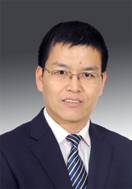
LIN Meng is an Associate Professor at the Department of Mechanical and Energy Engineering , Southern University of Science and Technology (SUSTech) . He holds a Ph.D. in Mechanical Engineering from Swiss Federal Institute of Technology in Lausanne (EPFL) (2018) and has held postdoctoral positions at Caltech's Joint Center for Artificial Photosynthesis (2018-2019). Research Interests include solar thermal/thermochemical/(photo)electrochemical energy conversion devices , CO2 capture and utilization , and multi-scale modeling and simulation . His work focuses on optimizing energy systems through advanced computational models and cross-disciplinary integration of physics. Recent Publications highlight his contributions to solar fuel processing, CO2 conversion technologies, and hybrid electrochemical systems, with articles in Nature Communications , Joule , and Energy & Environmental Science . His research emphasizes scalable solutions for sustainable energy and carbon management. Scientific Awards ASME Graduate Student Award (2018) Outstanding Reviewer of Solar Energy (2018, 2015) Swiss National Science Foundation Postdoc Fellowship (2017) Shanghai Outstanding Master Thesis (2016) Shanghai Jiao Tong University Outstanding Graduate (2013)
Southern University of Science and Technology (SUSTech)China
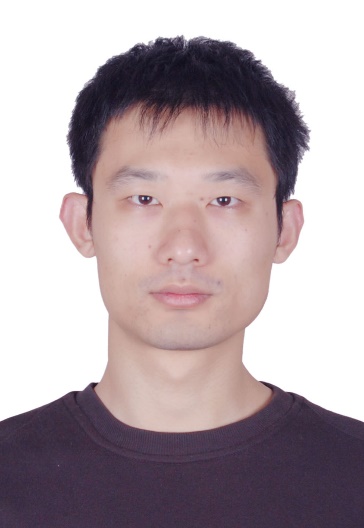
Dr. Yanqing Hu is an Associate Professor at the Department of Statistics and Data Science, School of Science, Southern University of Science and Technology (SUSTech). With a Ph.D. in Systems Theory from Beijing Normal University (2011) and postdoctoral experience at the Levich Institute, City University of New York (2011-2013), his work focuses on big data analysis of complex systems, particularly in social media dynamics, network resilience, and graph neural network applications. Ph.D.: Beijing Normal University (Systems Theory, 2011) Postdoctoral: Levich Institute, CUNY (2011-2013) Research spans complex network analysis, information spreading mechanisms, and predictability of network structures. His work combines theoretical frameworks with real-world applications in social networks, infrastructure systems, and brain connectivity. Recent publications explore information percolation in social media, resilience quantification in interdependent networks, and intrinsic structure predictability. These studies appear in high-impact journals like Nature Human Behaviour (IF: 24.3), Nature Communications (IF: 17.7), and PNAS (IF: 10). World AI Conference Youth Outstanding Paper Nomination Beijing Outstanding Doctoral Dissertation Award Guangdong Special Support for Young Talents Guangdong Outstanding Youth Fund Collaborations include leading researchers from Boston University, King's College London, and Shenzhen-Hong Kong Institute of Microelectronics. His work informs network defense strategies and efficient navigation mechanisms in complex systems.
Southern University of Science and Technology (SUSTech)China
Liu Leo Liu is an Associate Professor and tenure-track faculty member in the Department of Chemistry at Southern University of Science and Technology (SUSTech), Shenzhen, China, leading research on multi-active ambiphilic main group centers. He serves on editorial boards for Chem (2020-2023), European Journal of Inorganic Chemistry (since 2022), Chinese Chemical Letters (since 2022), Inorganic Chemistry Frontiers (since 2024), and Acta Chimica Sinica (since 2024). His educational background includes: B.Sc. in Chemistry, Xiamen University (2007-2011) Ph.D. in Organic Chemistry, Xiamen University (2011-2016) with joint study at UC San Diego (2013-2015) Post-doctoral Fellow, University of Toronto (2016-2019) under Prof. Douglas W. Stephan Post-doctoral Scholar, Lawrence Berkeley National Laboratory & UC Berkeley (2019-2020) under Profs. F. Dean Toste, Kenneth N. Raymond, and Robert G. Bergman Dr. Liu's research pioneers the synthesis of novel ambiphilic compounds across d- and p-block elements, integrating synthetic chemistry, computational modeling, and spectroscopy. His group develops multi-active centers that challenge textbook knowledge while enabling practical applications in catalysis and materials science. Key focus areas include low-valent carbon species, isolable carbenes, and main group element chemistry with inverted electronic configurations. His publication record demonstrates consistent innovation in ambiphilic main group chemistry, with recent breakthroughs in crystalline stannyne, σ0π2 carbenes, and carbyne anions featured in Science, Nature Chemistry, and JACS. These works reveal fundamental principles of bonding and reactivity while expanding synthetic possibilities for unconventional molecular architectures. Significant scientific recognition includes: Chinese Chemical Society Young Chemist Award (2022) Huang Yao-Zeng Metal Organic Chemistry Young Award (2023-2024) Distinguished Lectureship Award from Chemical Society of Japan (2024) Chinese Chemical Society-RSC Young Chemist Award (2024) World's Top 2% Scientists (2024) As a doctoral supervisor, Dr. Liu mentors graduate researchers and received SUSTech's Outstanding Graduate Supervisor Award (2025). His research is supported by National Natural Science Foundation grants including Original Exploration Program, Excellent Youth Fund (Overseas), General Program, and Youth Fund C Project. The LLL group maintains active collaborations with international institutions and contributes to major chemistry conferences through invited lectures on ambiphilic main group chemistry. The LLL group operates as a dynamic interdisciplinary team within SUSTech's chemistry department, combining experimental synthesis with computational analysis to explore frontier areas of main group element chemistry. Their work bridges fundamental discovery and potential applications in catalysis, materials science, and chemical synthesis.
Shaowei Wang is a Professor in the Department of Engineering Mechanics at the School of Civil Engineering, Shandong University, China. He holds a Ph.D. in Mathematics (2007) from Shandong University and completed post-doctoral research in fluid mechanics (2009) at Peking University. His research focuses on heat and mass transfer in porous media , fluid mechanics , and mathematical methods in mechanics . His recent publications highlight advancements in electro-osmotic flows, oscillatory non-Newtonian fluid dynamics, and stability analysis of bioconvection in porous media. Key themes include modeling viscoelastic fluids (Oldroyd-B, Maxwell), fractional calculus applications, and microchannel transport phenomena. First Prize in Natural Science of the Ministry of Education (2015) Second Prize of Natural Science Award of Shandong Province (2015) Du Qinghua Young Scholar Award (2016) Wang serves as Director of Shandong Society of Mechanics and editorial board member of multiple journals. His work bridges theoretical fluid dynamics with practical applications in microfluidics and geophysical systems.
Southern University of Science and Technology (SUSTech)China
Yuanzhen Chen is an Associate Professor in the Department of Physics at Southern University of Science and Technology (SUSTech), where he has been working since 2015. His research focuses on experimental investigation of superconducting quantum computation and quantum simulation, aiming to advance quantum information processing using superconducting circuits. Chen's work contributes to the development of quantum technologies that leverage quantum superposition and entanglement for computational advantages over classical systems. His educational background includes: Ph.D. in Physics from University of Maryland (1998-2005) M.S. from Chinese Academy of Sciences, Institute of Semiconductors (1995-1998) B.S. from University of Electronic Science and Technology of China (1991-1995) Chen's research interests center on superconducting quantum systems. His team focuses on two main areas: developing superconducting quantum chips using Josephson-junction-based devices to build qubits and measurement apparatus, and implementing quantum computation and simulation on these chips. They explore geometric quantum computation, quantum automata, quantum few-body systems, and simulation of condensed matter physics models. Their work aims to address fundamental challenges in quantum computing, including error correction and scalability. Analysis of Chen's recent publications reveals a consistent focus on advancing superconducting quantum circuit technology. His research has progressed from fundamental quantum gate implementations toward more complex quantum systems including multi-qubit architectures and topological quantum phenomena. A notable trend is the increasing sophistication of quantum control techniques, with recent work exploring hybrid digital-analog approaches and noise-resilient quantum gates. Chen collaborates extensively with theoretical researchers, particularly with Man-Hong Yung, to bridge theory and experiment in quantum computing. His laboratory at SUSTech has developed capabilities in fabricating and measuring superconducting quantum devices, with research outputs published in high-impact journals including Physical Review Letters and npj Quantum Information. The research team operates within SUSTech's Department of Physics, part of the Faculty of Science. They maintain experimental facilities for superconducting quantum device fabrication and characterization, with current work focusing on advancing toward practical quantum computing applications and exploring fundamental quantum phenomena using controllable superconducting systems.
Southern University of Science and Technology (SUSTech)China
Dr. QUAN Chen is an Associate Professor at the School of Microelectronics, Southern University of Science and Technology (SUSTech), holding this position since May 2025 after serving as Assistant Professor (2019-2025) and Research Assistant Professor at the University of Hong Kong (2012-2018). A Shenzhen high-level overseas talent, he earned his PhD from the University of Hong Kong and conducts cutting-edge research in electronic design automation. His academic credentials include: Ph.D. from The University of Hong Kong (2010) Master's degree from The University of Hong Kong (2007) Bachelor's degree from Sun Yat-Sen University (2005) Dr. Chen's research pioneers advanced EDA algorithms for large-scale analog/RF circuit simulation, post-Moore multi-physics analysis, and AI-assisted design technologies. His work addresses critical challenges in nanodevice modeling and quantum computing circuits, resulting in over 50 publications in top venues like IEEE TCAD and DAC, plus four Chinese patents. Analysis of his recent publications reveals dominant trends in exponential integrator methods for transient simulation, model order reduction techniques, and physics-informed machine learning for reliability analysis. His work bridges numerical mathematics with practical EDA applications across analog circuits, quantum hardware, and emerging memory technologies. Key recognitions include: Wu Wenjun Artificial Intelligence Science and Technology Award, Second Prize (2020) ICCAD Best Paper Award Nomination (2012) Dr. Chen actively recruits Postdoctoral Fellows, Research Assistants, and Graduate Students while leading major funded projects including NSFC key/general programs and Guangdong Provincial R&D initiatives. His industry partnerships with Huawei, Empyrean, and Guowei Group translate theoretical advances into real-world EDA solutions. He directs a specialized research group at SUSTech focused on computational methods for next-generation circuit design, fostering innovation in simulation algorithms and multi-physics analysis through academic-industry collaboration.
Southern University of Science and Technology (SUSTech)China
Dr. Yanan Dai is an Associate Professor in the Department of Physics at Southern University of Science and Technology (SUSTech), where he joined in August 2022. His research focuses on probing exotic excited state dynamics in quantum materials using ultrafast optical and photoelectron spectromicroscopy techniques. Previously, he worked as a postdoctoral research scientist at Columbia University's Department of Chemistry from 2019 to 2022. B.S., Space Science & Technology, Shandong University (2013) Ph.D., Physics, University of Pittsburgh (2019) His research integrates Quantum Excited State Dynamics , Strong-field Nano-optics , and Ultrafast Spectroscopy & Microscopy to explore topological structures in condensed matter systems. Notable achievements include the first imaging of Meron (half-skyrmion)-like plasmonic spin textures using ITR-PEEM and full-Brillouin zone detection of Hot Electron Dynamics via TR-ARPES in 2D thermoelectric materials. His recent articles focus on Topological Optics , Plasmonics , and Floquet Engineering of quantum materials at nanofemto scales. Key methodologies include Structured Light Design , Extreme-UV Spectroscopy , and Spin-momentum-locking in surface plasmon polaritons. Scientific Awards: Outstanding Dissertation Award, International Organization of Chinese Physicists and Astronomers (2020) Outstanding Thesis Award, Springer (2020) At SUSTech, he teaches University Physics , Modern Optics , and Principles of Nonlinear Optics . For lab recruitment and collaborations, contact him at daiyn@sustech.edu.cn or dai.yanan@outlook.com .
University of Science and Technology of ChinaChina
Professor Song Weiguo serves as a full-time faculty member at the State Key Laboratory of Fire Science, University of Science and Technology of China (USTC) in Hefei, where he has held a Professorship since 2010 following his Associate Professorship (2003-2010) and postdoctoral fellowship at USTC's Department of Statistics and Finance (2001-2003). His international research experience includes a Guest Researcher position at the U.S. National Institute of Standards and Technology (NIST) during 2006-2007. His educational foundation comprises a PhD from USTC (2001) and specialized postdoctoral training in statistical finance. Research interests focus on pedestrian evacuation dynamics, fire system criticality, performance-based building fire protection, and remote sensing fire monitoring, with particular emphasis on complex systems modeling of crowd behaviors and fire spread phenomena. Analysis of his 2007-2011 publications reveals a dominant trend in microscopic pedestrian dynamics (60% of works), especially bottleneck flow, counter-flow, and exit selection behaviors, complemented by fire monitoring via remote sensing (22%) and weather-fire interaction modeling (18%). This portfolio demonstrates rigorous integration of experimental validation with computational modeling across fire safety disciplines. His scientific recognition includes: Huaxia Construction Award for Science and Technology (First-class, 2010) Lu Jia Xi Youth Excellence Prize (Chinese Academy of Sciences, 2009) National Liangxi Forestry Science and Technology Progress Award (Second-class, 2007) National Science and Technology Progress Award (Second-class, 2006) Chinese Academy of Sciences President Award Excellence (2001) Professor Song has secured significant research funding as principal investigator for three National Natural Science Foundation projects, three National Key Technologies R&D Program grants, and additional awards from the Ministry of Science and Technology and Ministry of Education. His role as Communication Expert for China's National Natural Science Foundation and reviewer for top journals like IEEE Transactions on Intelligent Transportation Systems reflects his leadership in fire safety science. Current projects likely involve mentoring graduate students through USTC's laboratory infrastructure. He remains actively engaged at USTC's State Key Laboratory of Fire Science, which serves as China's primary hub for interdisciplinary fire research, collaborating with international bodies like the International Association of Fire Safety Science while advancing evacuation modeling and fire monitoring technologies.
Chao YUAN is a Professor in the Department of Engineering Mechanics at the School of Civil Engineering, Shandong University, China. He obtained his PhD in Geomechanics/Civil Engineering from Université Grenoble Alpes (France) in 2016, following MSc and BEng degrees from Shandong University. Education : PhD (2012-2016), MSc (2009-2012), BEng (2005-2009) Prior Appointments : Postdoctoral Associate at University of Calgary (2017-2019), Postdoctoral Research Fellow at Université Grenoble Alpes (2016-2017) Research Interests focus on granular material mechanics through advanced computational methods. His work includes discrete element modeling , multi-physics/multiphase couplings , unsaturated soil mechanics , and soil conditioning in Tunnel Boring Machines . Key contributions involve pore-scale simulations of hydromechanical interactions and stability analysis of tunnels and slopes. Publication Trends emphasize computational geotechnics , with studies on drainage dynamics, wetting-induced collapse, and machine learning applications in geomechanics. His articles span journals like Granular Matter , Proceedings of the National Academy of Sciences , and Acta Geotechnica , reflecting interdisciplinary approaches to granular media. Contact : chao.yuan@sdu.edu.cn , chaoyuan.geo@outlook.com
Southern University of Science and Technology (SUSTech)China
Professor Cheng Xing is a distinguished faculty member at the Department of Materials Science and Engineering within the College of Engineering at Southern University of Science and Technology (SUSTech). Since 2013 , he has served as a Professor and previously held a Director position at the Analytical Testing Center until 2020 , after which he became the Director of the Laboratory and Equipment Management Department . His academic journey includes a PhD in Electrical Engineering from the University of Michigan (2005), an MS in Geochemistry from Stanford University (1999), and a BS in Geochemistry from the University of Science and Technology of China (1997) Research Interests: Micro/Nanofabrication Techniques Nano-Optics and Photonic Devices Organic Semiconductor Materials Bio-MEMS and Digital Microfluidics Integrated Macroelectronics Publication Trends reflect expertise in Nanoimprint Lithography , High-Performance Semiconductor Devices , and Advanced Bio-MEMS Systems , with recent work focusing on Metasurface Applications , Flexible Electronics , and Cost-Effective Nanofabrication . His 15 Most Recent Articles (2023-2002) span Materials Science , Nanotechnology , and Optical Engineering . Scientific Recognition: 2011: NSF CAREER Award 2011: DARPA Young Faculty Award 2013: Shenzhen Peacock Project B 2014: Shenzhen Government Special Allowance 2018: Shenzhen Pengcheng Scholar Administrative Roles include leadership positions at SUSTech's Analytical Testing Center (2013-2020) and Director of Laboratory and Equipment Management Department (2020-present). His work bridges Academic Research and Industrial Application , with grants supporting innovations in Nanostructured Materials and Smart Sensing Systems .
Southern University of Science and Technology (SUSTech)China
Dr. BAO Fangwen is a Researcher at the Department of Ocean Science and Engineering, Southern University of Science and Technology (SUSTech). He holds a PhD in Cartography and Geographic Information Systems from the Chinese Academy of Sciences (2018) and a BSc in Surveying and Mapping Science and Technology from China University of Geosciences (Wuhan) (2013). His research focuses on marine-atmospheric parameter inversion using remote sensing, environmental pollution monitoring, and multi-scale pollution source analysis. Education: PhD, Cartography and GIS, Chinese Academy of Sciences (2013-2018) BSc, Surveying and Mapping Science and Technology, China University of Geosciences (Wuhan) (2009-2013) Dr. Bao has published extensively in top-tier journals such as Remote Sensing of Environment , Environmental Science & Technology , and IEEE Transactions on Geoscience and Remote Sensing , with research spanning aerosol optical properties, black carbon concentration estimation, and pollution transport dynamics. His work combines satellite data analysis with environmental modeling. He has conducted research projects funded by the Guangdong Provincial Basic and Applied Basic Research Fund and the China Postdoctoral Science Foundation. From 2016-2017, he was a visiting scholar at the Laboratory of Atmospheric Optics, University of Lille I, France.
Southern University of Science and Technology (SUSTech)China
Huang Boyuan serves as an Associate Professor and Doctoral Supervisor in the Department of Materials Science and Engineering at Southern University of Science and Technology (SUSTech). His research group operates within the Guangdong Provincial Key Laboratory of Information Functional Oxide Materials and Devices, utilizing advanced facilities including AFM, PLD, ALD, CVD, SHG, semiconductor analyzers, and cleanroom lithography equipment. Education: Ph.D. in Mechanical Engineering, University of Washington (2016-2020) B.S. in Physics, Nanjing University (2012-2016) Huang's research focuses on developing cutting-edge characterization techniques, particularly artificial intelligence atomic force microscopy (AI-AFM) and mechanically gated transistors (MGT). His work bridges materials science, nanotechnology, and artificial intelligence to investigate nanoscale multi-field coupling mechanisms in semiconductor materials. The research group actively explores two-dimensional thin film materials, experimental mechanics, and energy material interfaces, with particular emphasis on data-driven approaches to material characterization. Huang's publication portfolio demonstrates consistent high-impact output across materials science and nanotechnology domains, with increasing emphasis on AI-integrated characterization methods. His recent work shows strong interdisciplinary connections between materials physics, machine learning, and semiconductor device engineering, reflecting the growing importance of data science in advanced material characterization. Scientific Recognition: R&D 100 Awards Finalist (2020) Shenzhen Natural Science Award (2021) Shenzhen Overseas High-level Talent (2020) National Excellent Self-financed Overseas Student Scholarship (2020) Featured in MIT Technology Review Huang has successfully secured funding for eight research projects, including the NSFC Original Exploration Plan project and Major Research Plan Integration Project. His research group actively mentors graduate students and postdoctoral fellows, with several students receiving prestigious awards and scholarships. The team maintains strong industry connections, with two authorized patents achieving technology transfer. The research group operates within state-of-the-art facilities at SUSTech, maintaining collaborative relationships with national research initiatives including the National Major Scientific Research Instrument Development Projects. Current recruitment efforts focus on doctoral candidates and research assistants specializing in two-dimensional thin film materials, experimental mechanics, and energy material interface studies.
Michael Mackenzie is an Assistant Professor at Xi'an Jiaotong-Liverpool University's Academy of Film and Creative Technology, where he bridges academic research and multi-disciplinary artistic practice. His work explores the intersection of virtual and real human experiences through creative mediums. His research interests focus on digital art , virtual reality , and narrative theory , examining how artistic creativity represents contemporary digital existence. Key themes include social media commodification, online polarization, and the materiality of digital traces, often manifested through hybrid analog-digital artworks, murals, and film projects. Recent publications reveal a consistent trajectory analyzing virtual-real oscillations across multiple formats: from Chinese online comment visualization (2025) to rural village murals (2024) and virtual reality storytelling (2025). His work demonstrates strong interdisciplinary connections between visual arts, digital humanities, and sociological analysis of online communities. Award highlights include screenplay acceptances by: MIFF 37%South Market script initiative L.A Gateway development program Academy Nicholl Fellowship As a supervisor, he guides Master's students on culturally significant topics including doctors' professional image in medical documentaries and traditional Chinese cultural transmission through online memes. He co-founded the Panda-monium creative collective with colleagues Zihong Yue and Colin Chuan, producing multidisciplinary research projects engaging university communities and external collaborators through both creative practice and scholarly articles. His current Virtual-Reality: Representing virtual experience through creative works project (2025-2028) continues this exploration through internal university funding.
Southern University of Science and Technology (SUSTech)China
Dr. Ziwei Dai is an Assistant Professor at the Department of Biology, Southern University of Science and Technology, where she leads interdisciplinary research bridging computational and systems biology. She completed her PhD in Physical Chemistry at Peking University's Center for Quantitative Biology in 2016 and conducted postdoctoral training at Duke University's Department of Pharmacology and Cancer Biology (2016-2020). Research Focus: Cancer metabolism (glucose & amino acid dysregulation) Metabolic regulation of epigenetics/gene expression Biological network modeling Multi-omics data analysis Publication Trends: Her 15 most recent works (2018-2021) demonstrate expertise in metabolic network modeling, cancer epigenetics, and computational approaches to nutrient metabolism. Common subfields include flux analysis, chromatin biology, and tumor microenvironment characterization. Scientific Recognition: Robert J. Fitzgerald Scholar Award (2018) National Graduate Scholarship (2014) President Scholarship, Peking University (2014) Her research has achieved over 1,200 citations by 2021 and includes multiple cover articles in journals like Nature , Cell Metabolism , and Science Advances .
Southern University of Science and Technology (SUSTech)China
Tao Feng is a Research Assistant Professor and Master's Supervisor at the Department of Materials Science and Engineering, Southern University of Science and Technology (SUSTech). With a background in solid-state physics and inorganic chemistry, he specializes in unconventional thermoelectric materials, particularly magneto-thermoelectric systems and correlated electron-based materials. His work spans topological materials, low-temperature transport physics, and material synthesis. Educational Background: Ph.D. in Inorganic Chemistry (2017-2020), Jilin University M.Sc. in Condensed Matter Physics (2015-2017), Jilin University B.Sc. in Applied Physics (2010-2014), Yanshan University Research Focus: Tao Feng's work centers on magneto-thermoelectric effects under multi-field coupling (magnetic, thermal, electric), correlated electron thermoelectrics, and low-temperature physical property analysis. His research integrates topological materials, electron-phonon interactions, and computational approaches like machine learning for material design. Publication Trends: His recent articles emphasize topological semimetals (Mg3Bi2), transverse thermoelectric effects, and electrical/thermal transport mechanisms. Key subfields include Nernst effect optimization, correlated electron systems, and application of hollandite-type oxides in energy conversion. Awards & Recognition: Class C Special Talent, Shenzhen Pengcheng Peacock Plan (2024) Professional Roles: He serves as a young editorial board member for Energy Materials and Devices and Progress in Natural Science: Materials International . He is an invited reviewer for journals like ACS Applied Materials & Interfaces and Applied Physics Letters , and a core member of Guangdong Key Laboratory of Information Functional Oxide Materials and Devices.