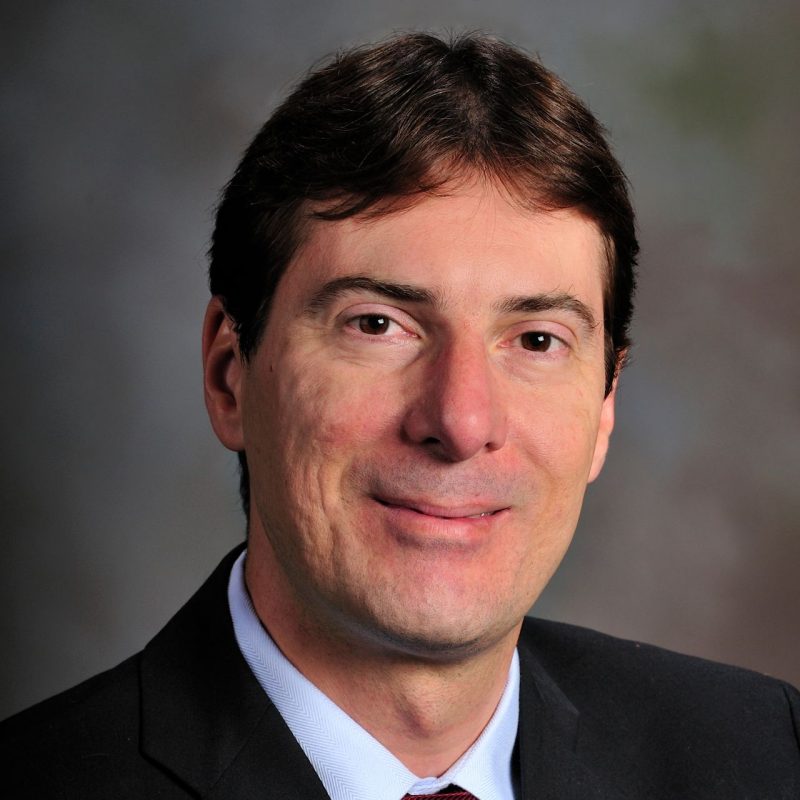
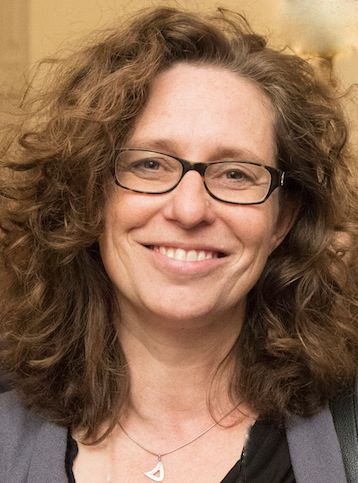
Dr. Jan Salmen is a researcher at Ruhr University Bochum's Faculty of Computer Science, affiliated with the Institute of Neuroinformatics (INI). His work focuses on real-time systems, computer vision, and machine learning. Doctoral thesis: Efficient video-based driver assistance systems Salmen's research spans autonomous driving, traffic sign recognition, stereo vision, and sports analytics. He has contributed to benchmarks in traffic sign detection and soccer analysis. Publications highlight his expertise in image processing, pattern recognition, and sensor fusion for autonomous systems. Key trends include optimization of machine learning algorithms for real-time applications. He collaborates with interdisciplinary teams at INI, which integrates experimental psychology, neurophysiology, and robotics into artificial cognitive systems research.
Professor Nicholas Warren is a Chair in Sustainable Materials at the School of Chemical, Materials and Biological Engineering at the University of Sheffield. With a PhD from Sheffield and academic experience at Leeds University (2016-2024), his research integrates polymer chemistry with automation technologies. Education: University of Bristol (2005), University of Sheffield (PhD) Academic Positions: Postdoc at Sheffield (2005-2016), University Academic Fellow at Leeds (2016-2024), Associate Professor (2021-2024) Current Role: Chair in Sustainable Materials (2024-present) Research focuses on polymer science with flow chemistry , online monitoring , and artificial intelligence to advance sustainable materials. Key article trends include self-driving laboratories , multi-objective optimization , and nanostructured polymer systems . Scientific recognitions include: 2022 Macro Group UK Young Researchers Medal 2023 RSC Reaction Chemistry & Engineering Outstanding Early Career Paper Award Advisees span current and alumni PhD students like Dr Stephen Knox , Anna Morrell , and Dr Charlotte Pugsley . His team employs self-driving lab platforms that combine robotics, AI, and online analytics for accelerated materials discovery.
Prof. Dr. Haris Gačanin is a faculty member at RWTH Aachen University, affiliated with the Institute for Distributed Signal Processing under the College of Electrical Engineering. His research focuses on integrating machine learning with wireless communication systems, particularly in industrial IoT, edge computing, and network optimization. Current academic rank: Professor Contact: harisg@dsp.rwth-aachen.de Research Interests: Wireless systems, machine learning, signal processing, and network optimization. Key contributions include: Adaptive resource allocation in IIoT and vehicular networks AI-driven channel estimation and feedback mechanisms Security-oriented emitter identification via metric learning Federated/transfer learning for edge environments Hardware-efficient deep learning models for mmWave and THz communications Methodological Focus: Combines reinforcement learning, attention mechanisms, and robust neural architectures with practical implementations on FPGA and vehicular systems.
Abolfazl Simorgh is a researcher at Charles III University of Madrid's Department of Aerospace Engineering, specializing in climate-optimized aviation systems. His work bridges mathematical control theory with practical climate impact mitigation, focusing on robust trajectory optimization under environmental and operational uncertainties. He leads development of open-source tools for sustainable flight planning while contributing to major European aviation initiatives. Education: B.Sc. in Control Engineering (2017) M.Sc. in Control Engineering (2020) Ph.D. in Aerospace Engineering from Charles III University of Madrid Dr. Simorgh's research centers on developing mathematical frameworks that reconcile aircraft trajectory optimization with climate impact reduction. His expertise spans robust control systems, optimization under uncertainty, and climate modeling integration, with particular emphasis on non-CO₂ emissions. His methodology addresses both CO₂ and non-CO₂ climate forcing mechanisms through computationally efficient algorithms that account for weather variability and climate metric uncertainties. This work directly supports aviation's decarbonization by providing operational strategies that reduce environmental footprint without prohibitive cost increases. Analysis of his 15 most recent publications reveals a cohesive research trajectory focused on operationalizing climate-optimal flight planning. His work consistently integrates climate science with aerospace engineering through robust optimization frameworks, demonstrating particular innovation in handling multiple uncertainty sources (weather, climate models, emissions). The publications cluster around three interconnected themes: 1) Development of open-source computational tools (ROOST, CLIMaCCF), 2) Network-scale implementation of climate-aware air traffic management, and 3) Risk analysis of climate mitigation strategies. This body of work establishes new methodological standards for quantifying and minimizing aviation's total climate impact. Scientific Awards: Luis Azcárraga Aeronautical Innovation Award for collaborative research impact Best Paper Award (2022) from a high-impact aerospace journal Dr. Simorgh secures significant research funding through European Commission projects including FlyATM4E (climate-optimized flight planning), ALARM (aviation emissions reduction), and RefMAP (sustainable aviation pathways). His grant portfolio emphasizes practical implementation of climate mitigation strategies, with strong industry-academia collaboration. He mentors junior researchers through project teams and has developed three major open-source Python libraries (CLIMaCCF, ROOST, ROC) that have become community standards for climate impact assessment in aviation research. His current work focuses on scaling climate-optimized trajectories to continental airspace while addressing operational constraints and economic viability. He leads a research group focused on climate-aware air traffic management, developing the ROOST simulation framework for GPU-accelerated trajectory optimization and the CLIMaCCF library for standardized climate metric calculations. His team collaborates with European air navigation service providers and aircraft manufacturers to transition research into operational practice, with current projects emphasizing real-time implementation and regulatory compliance frameworks.
Yuta Sugiura is an Associate Professor in the Department of Information and Computer Science at Keio University's Faculty of Science and Technology. His research focuses on innovative human-computer interaction techniques, particularly in wearable computing, tangible interfaces, and novel input methods. Previously, he worked as a postdoctoral researcher at the National Institute of Advanced Industrial Science. Dr. Sugiura's research interests span Human-Computer Interaction, Wearable Computing, Augmented Reality, Tangible User Interfaces, Gesture Recognition, Ubiquitous Computing, Haptics, and Virtual Reality. His work often explores how everyday objects and environments can become interactive surfaces, with notable projects including the iRing (intelligent ring), SenSkin (skin as interface), and EarHover (mid-air gesture recognition for hearables). He has developed numerous novel interaction techniques that leverage physical properties of materials and human physiology for input and output. His recent publications indicate a strong focus on hearable computing, medical applications of HCI, edible interfaces, and novel authentication methods. The research shows a consistent pattern of exploring unconventional interaction surfaces and leveraging subtle physical phenomena for input sensing. His work has significant implications for healthcare applications, particularly in neurological disorder screening and rehabilitation. Best Paper Award Dr. Sugiura has advised numerous students who have gone on to publish significant work in top-tier HCI venues. His research has been supported by various grants enabling the development of novel interaction techniques and systems. He maintains strong collaborations with researchers across Japan and internationally, particularly in the fields of wearable computing and medical applications of HCI. His laboratory appears to focus on lifestyle computing, developing interfaces that integrate seamlessly into daily activities. Current projects include exploring edible displays, adaptive ear interfaces, and novel authentication methods using wearable devices. Future work seems to be heading toward more medical applications of HCI, particularly in neurological assessment and rehabilitation.
Professor Ai-Chun Pang is affiliated with the National Taiwan University , serving in both the Department of Computer Science and Information Engineering and the Graduate Institute of Networking and Multimedia . He held leadership roles including Associate Dean (2018-2022) and Director (2013-2016) within the College of Electrical Engineering and Computer Science. His research spans Fog/Edge Computing , Wireless Networking , Mobile Computing , and AIoT Systems , with recent advancements in federated learning security, energy-efficient network design, and 5G/6G optimization. Collaborative work includes applications in vehicular networks, industrial control systems, and non-terrestrial connectivity. Key publication themes: Edge Intelligence and Privacy (2024) Federated Learning for Heterogeneous Devices (2023-2024) 5G Backhaul Optimization (2017-2021) Wireless Energy Transfer (2022) Awarded IEEE Fellow 2021 for contributions to mobile edge networks, he has received multiple IEEE Vehicular Technology Society awards, the CES 2019 Innovation Award , and teaching accolades including National Taiwan University Distinguished Teaching Award (2010) . His lab has produced 16 PhD students now in academia and industry. As Editor-in-Chief of IEEE Wireless Communications Letters and active in conference organization, he shapes global research directions. Current projects focus on GenAI for Networking and Non-Terrestrial Networks , with recent 2024 admissions for new students.
Betül Boz is an Assistant Professor at the Department of Computer Hardware, Faculty of Engineering, Marmara University. She holds a B.Sc. and M.Sc. in Computer Engineering from Marmara University, and a Ph.D. in Computer Engineering from Boğaziçi University. Her research focuses on computer architecture, optimization, and evolutionary computing. B.Sc., M.Sc., and Ph.D. in Computer Engineering Her research interests include computer architecture, parallel algorithms, optimization techniques, and evolutionary algorithms applied to graph coloring and scheduling. Recent work explores cloud computing scheduling, register allocation, and bioinformatics applications like circRNA-disease prediction. She has published extensively in these areas, utilizing evolutionary computing and machine learning. Key trends in her publications include evolutionary algorithms for graph coloring (2015–2025), register allocation (2004–2024), and cloud computing optimization (2023). She also investigates biomedical applications such as circRNA-disease association prediction. She has advised one thesis, managed one project, and her work aligns with UN Sustainable Development Goals. Her research outputs include 14 WoS-indexed publications, 11 WoS citations, and an h-index of 25 on WoS.
Marco A.R. Ferreira is an Associate Professor in the Department of Statistics at Virginia Polytechnic Institute and State University (Virginia Tech), affiliated with the College of Science. He holds a Ph.D. in Statistics from Duke University (2002), with a dissertation on Bayesian multi-scale modeling under M. West. He also earned an M.Sc. (1994) and B.Sc. (1993) in Statistics from the Federal University of Rio de Janeiro. Research Interests: Ferreira specializes in Bayesian statistics, multi-scale modeling, spatial-temporal models, computational methods (e.g., MCMC), and applications in environmental science, genomics, and epidemiology. His work emphasizes hierarchical models, inverse problems, and high-dimensional data analysis. Publications Trends: His research spans advanced statistical methodologies for environmental monitoring, civil unrest modeling, and genomic data analysis. Key themes include Bayesian hierarchical models, spatiotemporal fusion, and computational algorithms for optimal experimental design. Awards & Honors: OBAYES Poster Prize (2009) CNPq Fellowship (2003–2006) WNAR/COBAL 2 Award (2005) Springer Poster Prize (2003) Finalist, Savage Award (2003) Best Contributed Paper (JSM 2000) Professional Activities: He serves as an Associate Editor for Bayesian Analysis and is a member of the American Statistical Association and the International Society for Bayesian Analysis.
Sreenath Chalil Madathil is an Assistant Professor in the Department of Systems Science and Industrial Engineering at Binghamton University. His academic journey includes previous roles as Assistant Professor at the University of Texas at El Paso (2019–2021) and Research Scientist at the Watson Institute of Systems Excellence (WISE) at Binghamton University's Research Foundation (2017–2019). He holds a PhD and MS in Industrial Engineering from Clemson University, an MS in Data Science from the University of Texas at Austin, and a Bachelor of Technology in Electrical and Electronics Engineering from Mahatma Gandhi University, India. Dr. Madathil's research focuses on applying operations research, simulation modeling, and data science to address healthcare challenges such as patient-centered care and healthcare disparities. His work bridges theoretical methodologies with practical applications, including maternal healthcare equity, healthcare facility design, and supply chain resilience. He has secured funding from the National Science Foundation and the U.S. Department of Commerce. Prior to academia, he gained industry experience as a software consultant and client-side analyst at Cognizant Technology Solutions (2006–2011), alongside collaborations with Los Alamos National Lab and BMW Manufacturing. His research has been published in high-impact journals like Healthcare Management Science and Computers and Industrial Engineering . His professional expertise spans interdisciplinary projects, including optimizing healthcare workflows, analyzing social media data for public health interventions, and developing resilient microgrid systems. Current research trends include leveraging AI/ML techniques for healthcare analytics and improving operational efficiency in healthcare systems.
Srikanth Rangarajan is an Assistant Professor at Binghamton University's School of Systems Science and Industrial Engineering. He holds a PhD and MS from the Indian Institute of Technology Madras (2017) and a BE from Anna University Chennai (2011). His research focuses on energy storage systems, thermal management of electronics, battery optimization, and digital twinning. He previously served as an Associate Research Professor in Mechanical Engineering at Binghamton under Bahgat Sammakia. Rangarajan authored the book Phase Change Material Heat Sinks: A multi-objective Perspective and holds a patent for a rotatable heat sink design. His teaching includes optimization techniques, thermal modeling, and neural networks. Recent work explores virus spread modeling via genetic algorithms, with a preprint under review in Journal of Healthcare Informatics . He has received multiple awards including an Institute Post-Doctoral Fellowship and Research Assistantships from the Indian government. His research bridges thermal engineering with advanced manufacturing and sustainability, addressing challenges in high-power electronics and data center cooling. Education: BE in Mechanical Engineering, Anna University (2011) MS in Thermal Engineering, IIT Madras (2017) PhD in Heat Transfer, IIT Madras (2017) Research Interests: Digital twin systems for battery optimization Thermal energy storage design Advanced electronics packaging Data center cooling innovations Phase change material composites His recent articles highlight cooling solutions for high-density electronics, battery recycling challenges, and predictive models for epidemiological patterns using computational methods. Ongoing work includes embedded cooling technologies for heterogeneous integrated circuits and sustainable thermal management strategies. Awards: Patent: Rotatable Heat Sink (Government of India) Institute Post-Doctoral Fellowship (IIT Madras, 2017) Research Associate, Divecha Centre (IISc, 2017) Half-Time Research Assistantship (MHRD, 2012-2013) Advising & Grants: While no formal advisees are listed, his prior roles indicate involvement in mentorship. His research has been supported by institutional grants including those from the Indian Ministry of Human Resource Development. Labs/Teams: Active in Binghamton's Systems Science and Industrial Engineering lab, collaborating on thermal management and additive manufacturing projects.
R. Manmatha is an Adjunct Professor in the College of Information and Computer Sciences at the University of Massachusetts Amherst and a Principal Scientist at Amazon A9 since 2013. His academic journey includes a Ph.D. in Computer Science from University of Massachusetts Amherst (1997), an M.S. in Electrical Engineering from University of Hawaii (1986), and a B.Tech in Electrical Engineering from Indian Institute of Technology Kanpur (1983). Research Interests Manmatha's work spans Computer Vision , Information Retrieval , and Document Analysis . Key projects include: Developing Vision-Language Models for GUI grounding and OCR-free document understanding Creating Word Spotting techniques for historical manuscripts like George Washington's papers Advancing Image Retrieval through statistical and relevance models Building Meta Search systems using score distribution analysis Optimizing Diffusion Transformers for text-to-image generation Scientific Contributions His research has led to numerous publications in conferences like SIGIR , CVPR , and ICDAR , focusing on: Automatic Image Annotation using cross-media relevance models Scale Space Techniques for handwritten manuscript segmentation Alignment Methods for document-groundtruth generation Indian Language Document Search via locality-sensitive hashing Transformer-based architectures for multimodal and document tasks Advising & Collaborations Manmatha has mentored students including Jiwoon Jeon , Shaolei Feng , Toni Rath , Jamie Rothfeder , and Nitin Srimal . He co-founded Snaptell (acquired by Amazon) and contributed to Amazon's mobile search technology. Labs & Teams He leads the Multi-media Indexing and Retrieval (MIR) group at the Center for Intelligent Information Retrieval (CIIR) , focusing on non-textual information indexing through ASCII conversion and direct content analysis.
Zhongguo Li is a Lecturer in Robotics, Control, Communication & AI at the University of Manchester. He holds a B.Eng. (2017) and Ph.D. (2021) in Electrical and Electronic Engineering from the University of Manchester. Prior to his current role, he was a Lecturer at University College London (2022-2023) and a Research Associate at Loughborough University (2020-2022). His research focuses on distributed control, optimization, and reinforcement learning, particularly in robotics and autonomous systems. Key areas include multi-agent coordination, networked systems, and applications in autonomous vehicles. He has authored over 40 papers in top journals/conferences and co-authored a book on Distributed Optimization and Learning (2024). Teaching responsibilities include courses such as Control Systems II, Nonlinear and Adaptive Control, and Embedded Systems Project. He serves as an Associate Editor for Drones and Autonomous Vehicles and Guest Editor for Machines and Frontiers in Control Engineering. Dr. Li actively mentors PhD students, offering guidance on funding opportunities and research projects in distributed algorithms, robotics, and control systems. His work aligns with UN Sustainable Development Goals related to innovation and infrastructure.
Bettina Kemme is a Professor in the School of Computer Science at McGill University, Montreal, Canada. She leads the Distributed Information Systems Lab (DISL) and specializes in large-scale data management, distributed systems, and cloud computing. Her academic roles include teaching COMP 512 (Distributed Systems) and COMP 421 (Database Systems). Education: Diplom (M.Sc. equivalent) in Computer Science, Friedrich-Alexander University, Erlangen, Germany (1996) PhD in Computer Science, Swiss Federal Institute of Technology (ETH), Zurich, Switzerland (2000) Research Interests: Distributed systems, cloud-native data management, in-database analytics (AIDA project), monitoring-as-a-service frameworks, and scalable pub/sub systems for online games. Current projects focus on integrating machine learning with databases, cloud performance monitoring using SDN, and sustainable data systems for data science. Lab & Collaborations: Leads the Distributed Information Systems Lab (DISL) with active projects in distributed databases, cloud computing, and game systems. Collaborates on EU-Canada initiatives like the SustainSys program for sustainable data infrastructure. Advising: Supervises PhD and M.Sc. students in topics like monitoring frameworks (Mona ElSaadawy), in-database ML (Winnie He), and distributed systems (Maximilian Schiedermeier). Alumni include over 50 researchers from PhD candidates to undergraduate researchers.
Mina Konaković Luković is an Assistant Professor in the Department of Electrical Engineering and Computer Science at Massachusetts Institute of Technology (MIT) , affiliated with the Computer Science and Artificial Intelligence Laboratory (CSAIL) . She leads the Algorithmic Design Group , focusing on computational design and fabrication, geometry processing, and robotics. Education: PhD in Computer Science (EPFL), MS & BS in Mathematics (University of Belgrade) Research Interests: Spanning computer graphics, computational fabrication, and 3D geometry processing with applications in smart materials, architectural geometry, and physics-based simulations. Her work integrates machine learning and differential geometry to optimize design algorithms for novel materials and deployable structures. Articles Trends: Recent publications emphasize multi-objective optimization for 3D printing materials, graph grammar in robot design, and computational methods for auxetic structures. Themes revolve around data-driven design, deployable shells, and terrain-adaptive robotics. Scientific Awards: Schmidt Science Fellows Additional Study Grant (2020) ACM SIGGRAPH Outstanding Doctoral Dissertation Honorable Mention (2020) Eurographics PhD Award (2020) Patrick Denantes Memorial Prize (2019) Doctoral Program Thesis Distinction from EDIC EPFL (2019) SIAM Early Career Prize (2020) Eurographics Junior Fellows (2021) Advising & Grants: Mentored by Prof. Dr. Wojciech Matusik and Prof. Dr. Mark Pauly, with funding from Swiss National Centre of Competence in Research (NCCR) Digital Fabrication. She actively participates in program committees and summer schools.
Dr. Suranga Seneviratne is a Senior Lecturer in Security at the School of Computer Science, University of Sydney. He holds a PhD from the University of New South Wales (2015) and a Bachelor's degree from the University of Moratuwa, Sri Lanka (2005). Before academia, he worked in telecommunications for six years. His research focuses on cybersecurity, particularly privacy and security in mobile systems, AI applications in security, and behavioral biometrics. He has developed tools like an app security rating system and intrusion-free authentication methods. Key awards include the ACM Mobicom 2015 Gold Prize, NASSCOM Technical Innovation Award, and IESL NSW Engineering Excellence Award (all 2015). Current research students include Pasindu Marasinghe (Multi-Objective Optimization in Flat Glass Cutting Production), Braylon SHU (Efficient Parameter Tuning for Large Language Models), and Gaurav VERMA (Threats and Defenses in IoT Wireless Protocols). Grants include funding from the Australian Research Council, NSW Network for Cyber Security, and Google Research. His work spans collaborations with the NSW Smart Sensing Network and the University of Technology Sydney. Labs/Teams: Collaborates with the Centre for Distributed and High-Performance Computing and the NSW Smart Sensing Network (NSSN).