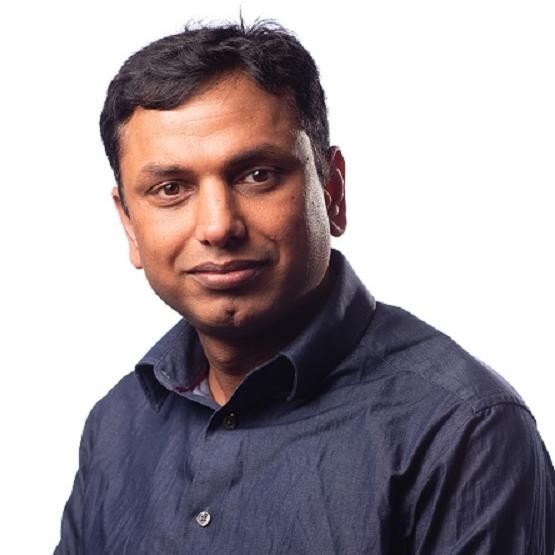
Dr Bhupesh Mishra is a Lecturer at the University of Hull's Faculty of Science and Engineering, affiliated with the Data Science AI and Modelling Centre (DAIM). He holds a PhD in Modelling and Optimisation of relief items distribution in disaster scenarios from the University of the West of Scotland. His research focuses on Data Science, Machine Learning, Explainable AI, and IoT applications in smart cities and healthcare. Recent work includes studies on climate change awareness in Kathmandu Valley, graduate salary prediction using machine learning, and predictive models for UK electricity pricing. Research Interests: Data Science and Machine Learning Explainable AI Citizen Science & Smart Cities Scheduling & Optimization Edge Computing Natural Language Processing Key Projects: Principal Investigator: Predictive Manufacturing Optimization using Neural Networks (PROMINN) funded by Innovate UK Co-Investigator: Responsible AI project in Burkina Faso funded by the British Academy His articles explore topics ranging from humanitarian logistics optimization to AI-driven healthcare decision tools. Mishra supervises PhD students in AI and data science domains and actively engages in interdisciplinary collaborations across academia and industry.
Matthias Ehrgott is a Professor in the Department of Management Science at the Lancaster University Management School (LUMS). His research focuses on multi-objective optimization, operations research, transportation systems, and healthcare logistics. He leads the OptiWaSP project (2022–2025), which designs efficient walking school bus routes integrating optimization and instance generation. He is affiliated with the Centre for Transport & Logistics (CENTRAL), STOR-i Centre for Doctoral Training, and Health Systems Optimisation groups. His editorial roles include serving on the editorial boards of EURO Journal on Decision Processes , Optimization , 4OR , and others. Recent work emphasizes applications in railway timetabling, radiation therapy planning, and sustainable urban mobility. He advises PhD students like Malek Almousa, an Associate Lecturer. Key research themes include bi-objective optimization, algorithm design for multi-criteria problems, and real-world implementations in healthcare and transportation. His projects bridge theoretical advancements with practical solutions for complex decision-making environments.
Dr. Yuan Sun is a Lecturer in Business Analytics and Artificial Intelligence at La Trobe University's La Trobe Business School. His research focuses on leveraging machine learning for combinatorial optimization, including problem reduction methods and hybrid algorithms. He has contributed to top-tier journals like IEEE Transactions on Pattern Analysis and Machine Intelligence and conferences such as ICML and NeurIPS. Sun collaborates with researchers from institutions like Monash University and Singapore Management University, and is affiliated with the ARC Training Centre in Optimisation Technologies (OPTIMA). He co-organized the ACM GECCO 2024 conference and serves on program committees for major AI conferences. Academic Position: Lecturer at La Trobe University (2022–present) Education: PhD in Artificial Intelligence (University of Melbourne), BSc in Applied Mathematics (Peking University) Research interests span machine learning, operations research, and optimization, with notable work on integrating AI with digital twins for sustainable power grids and federated learning frameworks like F3KM. Sun's methods enhance constraint programming and ant colony optimization through supervised learning, addressing complex real-world problems. Grants and collaborations include the 'Quantum Enhanced Optimisation for Energy Efficient Data Centres' project and consulting for the Australian mining workforce analysis. Teaching roles include Algorithms & Analysis and Evolutionary Computing, with joint supervision of PhD projects on combinatorial optimization and mixed-integer programming.
Sergey Utyuzhnikov is a Professor of Computational Mathematics and Reader in Mechanical and Aerospace Engineering at The University of Manchester since 2016. He holds a DSc (Habilitation) in Computational Mathematics from Moscow Institute of Physics & Technology (1997) and was certified as a Full Professor in Computational Mathematics by the Ministry of Education of Russia (1999). He has held academic roles at Moscow Institute of Physics & Technology (1986–2004) and Cranfield University (2004–2005), before joining the University of Manchester in 2005 as a School Senior Research Fellow. Educations: BSc, MSc, Moscow Institute of Physics & Technology (1977–1983) PhD (Candidate of Science) in Computational Mathematics (1986) DSc (Habilitation) in Computational Mathematics (1997) Research Interests: Focus on computational fluid dynamics, multiobjective optimization, active noise control, turbulence modeling, hypersonic flows, and geophysics. His work addresses challenges in boundary equations, nonlocal boundary conditions, and combustion modeling. He actively contributes to UN Sustainable Development Goals through aerospace engineering research. Key Projects: Leading the Aerospace Engineering research theme at the University of Manchester Co-investigator on projects like 'Development of advanced techniques for aerodynamic assessment of blunt bodies in hypersonic flow' Awards and Memberships: Fellow of the Institute of Mathematics & Applications (FIMA) since 2007 Membership in the Russian Academy of Sciences Academic expert for the Engineering & Physical Sciences Research Council (EPSRC) Labs & Collaborations: Part of the Aerospace Research Institute and collaborates internationally on topics like domain decomposition methods and turbulence modeling.
Dr. Hua Zhong is an Associate Professor at the School of Construction, Property and Surveying, London South Bank University. Her expertise spans sustainable building technologies, energy efficiency, urban sustainability, and fire safety engineering. She leads interdisciplinary research integrating numerical modelling, CFD simulations, and practical applications to address challenges in the built environment. Key areas include urban utility tunnel resilience, solar chimney ventilation, and smoke management in metro stations. Her research is supported by grants such as the NERC-CDE Network (digitalisation and green infrastructure) and EPSRC projects on rehabilitation technologies and diversity initiatives in engineering. She is a Fellow of the UK FST Future Leaders and UUKRI Peer Review College, and actively contributes to professional bodies like CIBSE, ASHRAE, and the British Standards Institution. Dr. Zhong has published over 47 articles, focusing on topics like zero-energy buildings, fire dynamics in tunnels, and IoT-driven energy efficiency. She has supervised multiple PhD students and pioneered teaching innovations using virtual reality and digital platforms for sustainable education. Her work aligns with UN SDGs, emphasizing climate action (SDG13) and sustainable cities (SDG11). Notable initiatives include developing a carbon emission calculation system for construction and promoting STEM equity through Women's Engineering Society ambassadorship. She co-leads the Centre for Civil and Building Services Engineering (CCiBSE) and serves as an editor for key engineering journals.
Seyedali Mirjalili is a Professor of Artificial Intelligence and Director of the Centre for Artificial Intelligence Research and Optimization (AIRO) at Torrens University Australia. He holds distinguished professorships at VSB Technical University of Ostrava, Óbuda University, and De La Salle University, and is an adjunct researcher at Griffith University and Yonsei University. His research focuses on optimization algorithms, swarm intelligence, evolutionary computation, and machine learning. Education: PhD in Computer Science (Griffith University, 2016). Research interests include optimization techniques, swarm intelligence algorithms (e.g., Grey Wolf Optimizer, Whale Optimization Algorithm), machine learning applications, and robust optimization frameworks. He has published over 600 papers with an H-index of 110 and is among the most cited researchers in optimization fields globally. Awards include the Pro-Vice Chancellor Research Special Award (2019) and recognition as a top 1% highly cited researcher (since 2019). He serves as an associate editor for journals like Neurocomputing and Applied Soft Computing. Labs/Teams: Leads the AIRO Centre at Torrens University, focusing on AI-driven solutions for complex optimization problems.
Dr Alma Rahat is an Associate Professor of Data Science at Swansea University, affiliated with the School of Mathematics and Computer Science. He specializes in Bayesian search and optimization, evolutionary algorithms, and multi-objective optimization. His work focuses on solving computationally expensive problems with applications in engineering, healthcare, and education. Education: BEng (Hons) in Electronic Engineering from the University of Southampton (UK), PhD in Computer Science from the University of Exeter (UK), and a Postgraduate Certificate in Teaching in Higher Education from Swansea University. He is a Fellow of the Higher Education Academy (FHEA). Research Interests: Dr Rahat’s expertise includes data-driven evolutionary optimization, surrogate-assisted methods, and active learning. He has contributed to pandemic response modeling for the Welsh Government and the UK Health Security Agency, leveraging machine learning and parameter optimization. His work on healthcare decision-making systems and educational assessment tools demonstrates a commitment to interdisciplinary applications of optimization. Key Contributions: He leads the Surrogate-Assisted Evolutionary Optimization (SAEOpt) workshop at GECCO and is a member of the IEEE Computational Intelligence Society Task Force on Data-Driven Optimization. His research bridges academic theory and industry needs, with patents and publications in top journals and conferences like IEEE Transactions and ACM. Grants: £750k from Welsh Government (Co-PI/Co-I), £230k EPSRC grant (EP/W01226X/1 as PI). Awards: Best Paper in Real-World Applications Track at GECCO, Patent for industrial fluid separation technology. Supervision: Currently guiding PhD students across AI, healthcare, education, and environmental modeling. His supervision emphasizes Bayesian methods and human-in-the-loop systems. Lab/Teams: Active in Swansea’s Computational Foundry, collaborating on projects like beach change forecasting and clinical decision support systems.
Aly-Joy Ulusoy is an Imperial College Research Fellow in the Department of Civil and Environmental Engineering at Imperial College London, affiliated with the Faculty of Engineering and the Grantham Institute. Her research focuses on optimisation methods for the design and control of water distribution networks, integrating adaptive systems, hydraulic modeling, and resilience analysis. She holds a Ph.D. (2021) and M.Sc. (2016) from Imperial College London, and an M.Sc. from École Supérieure d’Électricité, France (2016). Previously, she worked as a postdoctoral researcher in Dr. Ivan Stoianov's InfraSense Labs. Education: Ph.D. in Civil and Environmental Engineering, Imperial College London (2021) M.Sc. in Civil and Environmental Engineering, Imperial College London (2016) M.Sc., École Supérieure d’Électricité, France (2016) Her research interests span optimisation algorithms for water network control, adaptive hydraulic systems, data-driven hydraulic modeling, and resilient infrastructure design. Recent work emphasizes dynamically adaptive networks for pressure management, fault localization, and integration of AI for demand forecasting. She explores multi-objective optimization techniques to balance operational efficiency and resilience in water distribution systems. Key research trends include: (1) distributed optimization for real-time control under time-coupling constraints, (2) interpretable AI for water demand prediction, and (3) principled approaches for model maintenance using principal component analysis. Her work bridges theoretical optimisation with practical water infrastructure challenges. Advising and grants: No specific advisees or grants listed. Affiliated with InfraSense Labs, focusing on smart infrastructure and sensor networks. Active in developing methodologies for network resilience under uncertainty. Ongoing projects include adaptive MPC strategies for burst incident management and design-for-control frameworks for dynamically adaptive systems.
Jian-Bo Yang is Professor and Chair of Decision and System Sciences at the University of Manchester. With over £3.78m in secured research funding from 49 projects (including 17 EPSRC/ESRC grants), he leads research in decision sciences and analytics. He coordinates multiple courses including Quantitative Methods for Management and Decision Analysis for Business, while supervising PhD, MPhil, and MSc students. His research integrates evidential reasoning , probabilistic inference , and multi-criteria decision analysis to address complex problems in risk assessment, resource optimization, and intelligent systems. Recent publications demonstrate focus on: Theoretical advances in evidence-based decision frameworks Evolutionary algorithms for industrial optimization Uncertainty quantification in multi-source data fusion Yang has developed software systems like the Intelligent Decision System (IDS) and collaborates through the Data Science Institute and Decision and Cognitive Sciences Research Centre . His work supports UN Sustainable Development Goals through improved decision methodologies.
Manuel Lopez-Ibanez is a Professor of Optimisation in the Department of Management Sciences at the University of Manchester. His research contributes to the UN Sustainable Development Goals through advancements in optimization and decision analytics. He actively collaborates on international projects in multiobjective optimization and evolutionary computation. Research areas: Optimisation, Evolutionary Computation, Multi-criteria Decision Making, Machine Learning, Operations Research External affiliations: Institute of Electrical and Electronics Engineers (IEEE), ACM SIGEVO, editorial boards of Evolutionary Computation and Operations Research Perspectives
Dr Richard Edgar Hodgett is Associate Professor in Business Analytics and Decision Science at the Leeds University Business School, University of Leeds. He currently serves as the MBA Director and leads the expansion of the MBA portfolio. He is a member of the Department of Analytics, Technology and Operations and affiliated with the Centre for Decision Research. His educational qualifications include an MEng in Product Design and Development from Queen’s University Belfast and a PhD in Multi-criteria Decision-Making in Whole Process Design from Newcastle University. Richard's research focuses on applied analytical and decision-making problems. He specializes in Multi-Criteria Decision Analysis (MCDA/MCDM), multi-objective optimisation, techniques to handle uncertainty, predictive modelling, and the development of innovative analytical methods. His work spans both theoretical advancements and practical tool development for real-world applications. He has secured over £2 million in research funding from EPSRC, ESRC, InnovateUK, and the EU for collaborative industry projects. His teaching expertise includes data pre-processing, clustering, optimisation, forecasting, machine learning, and decision analysis. He has designed and delivered new modules at undergraduate, master’s, and executive levels, including bespoke industry courses and training for the Consumer Data Research Centre and the United Nations. Newcastle Teaching Award Richard supervises three PhD students and one EPSRC-funded research fellow. He has led the development of the MSc in Business Analytics and Decision Sciences and previously served as Director of Student Education for the Management Department. He advocates for blended and flipped learning, often teaching practical sessions in computer labs to enhance student engagement.
Dr. Edgar Galván is an Associate Professor in the Department of Computer Science at Maynooth University's Faculty of Science & Engineering. He is a leading expert in Genetic Programming (GP) and Evolutionary Algorithms, with a focus on semantic-based approaches, neutrality, and multi-objective optimization. His work spans applications in combinatorial optimization, gaming (e.g., Carcassonne), and software engineering, including neuroevolution for deep learning architectures. Current Affiliation: Maynooth University Previous Roles: Senior Researcher at University College Dublin, Trinity College Dublin, and INRIA Paris-Saclay Research interests include: Semantic-based Genetic Programming Multi-objective Evolutionary Algorithms Monte Carlo Tree Search Circular Economy Applications Privacy-Preserving Optimization Neuroevolution in Autonomous Systems His recent publications analyze semantic diversity in GP, neural architecture search, and privacy-aware swarm optimization. Key awards include being ranked among the top 1% of GP researchers by University College London (2020), a Marie Curie Fellowship (2014), and a Best Paper Award at ECTA 2015. Current Projects: REBUILD (Circular Economy Buildings, 2024-2027), VISION (Circular Business Models, 2023-2026) Previous Grants: Stochastic Bio-inspired Algorithms (2014-2017, €267k), circAI (2022-2023, €142k) Dr. Galván serves on program committees for IEEE, ACM, and Springer conferences, and as Scientific Adviser for institutions in Ireland, France, and Mexico. His work bridges theoretical GP analysis with real-world applications in energy optimization and AI.
Professor Hisao Ishibuchi is Chair Professor of Computer Science and Engineering at Southern University of Science and Technology (SUSTech) in Shenzhen, China, a role he has held since April 2017. Previously, he spent nearly three decades at Osaka Prefecture University, progressing from Research Associate (1987-1993) to Assistant Professor (1993), Associate Professor (1994-1999), and full Professor (1999-2017). He is an IEEE Fellow , served as Vice-President of the IEEE Computational Intelligence Society (2010-2013) , and is currently President of the Japan Society for Evolutionary Computation (2016-2018) . He is Editor-in-Chief of IEEE Computational Intelligence Magazine (2014-2019) and the Journal of the Japan EC Society (2014-2018). Education: Ph.D. in Engineering, Osaka Prefecture University, 1992 M.S. in Engineering, Kyoto University, 1987 B.S. in Engineering, Kyoto University, 1985 Research Focus: Professor Ishibuchi is internationally recognised as a pioneer of computational intelligence , with seminal contributions to evolutionary multi-objective optimisation , evolutionary machine learning , fuzzy systems , neural networks , and hybrid intelligent systems . He introduced the first multi-objective memetic algorithm and early methods for multi-objective fuzzy rule-based classifier design that balance accuracy and interpretability. Publications & Impact: With over 100 journal papers in top-tier venues such as IEEE Transactions on Evolutionary Computation and nearly 500 conference papers, his work has attracted more than 24 000 Google-Scholar citations and an h-index of 68. His recent articles concentrate on many-objective optimisation, fuzzy machine learning, and transfer learning techniques. Honours & Awards: IEEE Computational Intelligence Society Fuzzy Systems Pioneer Award 2019 IEEE Fellow 2014 JSPS Prize 2007 (Japan’s most prestigious mid-career award) Multiple Best Paper Awards from GECCO, FUZZ-IEEE, SCIS & ISIS, WAC, ACIIDS, HIS-NCEI, and others Teaching & Mentoring: At SUSTech he teaches Advanced Algorithms and Advanced Optimization Algorithms , covering greedy algorithms, hyper-heuristics, memetic algorithms, multi-objective optimisation, and performance assessment. His research group actively recruits post-doctoral fellows and research assistants in evolutionary computation, fuzzy systems, and neural networks. Labs & Teams: He leads the Computational Intelligence Research Group at SUSTech, maintaining active collaboration networks across Asia, Europe, and North America, and supervising several post-doctoral researchers and graduate students working on next-generation intelligent systems.
Yingqian Zhang is an Associate Professor in the Information Systems group at the Industrial Engineering and Innovation Sciences department of Eindhoven University of Technology (TU/e). She is affiliated with the Eindhoven Artificial Intelligence Systems Institute (EAISI), specifically with the EAISI High Tech Systems and EAISI Foundational groups. Her research focuses on applying Artificial Intelligence to solve complex decision-making problems across various domains including logistics, transportation, manufacturing, and e-commerce. Dr. Zhang received her PhD in Computer Science from the University of Manchester, UK. Prior to joining TU/e, she served as an Assistant Professor in the Econometrics Institute at Erasmus University Rotterdam and as a postdoc researcher in the Algorithmics group at TU Delft. She was also a visiting professor at the Institute for Advanced Computer Studies at University of Maryland, College Park, USA. Her research expertise lies at the intersection of Artificial Intelligence and optimization, with particular focus on machine learning, deep reinforcement learning, and trustworthy data-driven optimization. Dr. Zhang develops socially aware algorithms that can optimize decisions in data-rich environments. Her work bridges the gap between theoretical AI advancements and practical applications in industrial settings, addressing real-world challenges through innovative algorithmic solutions. She is particularly interested in how AI can support human decision-making while maintaining transparency and trustworthiness. Dr. Zhang's recent publications reveal a strong trend toward applying graph neural networks and reinforcement learning to complex scheduling and optimization problems. Her work demonstrates increasing sophistication in handling stochastic elements in decision-making processes, with applications spanning healthcare diagnostics, logistics, transportation, and manufacturing. She has made significant contributions to the field of neural combinatorial optimization, particularly for job shop scheduling problems and vehicle routing. Dr. Zhang has received several prestigious awards recognizing her contributions to the field: Winner of the MLVRP2023 GECCO competition (2023) Best Paper Award from Omega-International Journal of Management Science (2017) Best Industrial Paper Award (2020) Best Student Paper Award (2019) Best Student Paper Award of ICAART 2022 (2022) As a dedicated mentor, Dr. Zhang supervises numerous PhD students including Mohsen Abbaspour Onari, Abdo Abouelrous, Luca Begnardi, Xia Jiang, Chengpeng Hu, Minshuo Li, Robbert Reijnen, Jesse van Remmerden, Bart von Meijenfeldt, Ya Song, and Igor Smit. Her research is supported by various grants, including the LEO (Learning and Explaining Optimization) project co-funded by Holland High Tech | TKI HSTM via the PPP allowance scheme for public-private partnerships. Dr. Zhang actively contributes to the academic community as the Chair of the Benelux Association for Artificial Intelligence (BNVKI) and as a member of the Technical Board for the European Big Data Value Association (BDVA). She serves as an associate editor for the "Annals of Mathematics and Artificial Intelligence" journal and participates in the technical Program Committee for major AI conferences such as IJCAI, AAAI, AAMAS, and ECAI. She is also on the executive committee of the Data Science meets Optimisation (DSO) working group of EURO to promote collaboration between AI and Operations Research communities.
Manuela Battipede is Associate Professor of Flight Mechanics & Control at the Politecnico di Torino , Department of Mechanical and Aerospace Engineering (DIMEAS). Since 2002 she has led research and teaching in aerospace guidance, airworthiness, neural-network-based virtual sensors, and trajectory optimisation, coordinating EU H2020 and Clean Sky projects, industrial airworthiness certification contracts, and supervising PhD students in aerospace engineering. Education & Academic Career Joined Politecnico di Torino as a confirmed Associate Professor (Prof.ssa Associata Confermata). Visiting Researcher, West Virginia University, USA (April–September 2002). Research Interests Her work integrates control theory , flight mechanics , and artificial-intelligence-based sensing to enhance safety and efficiency of air and space vehicles. Key themes include: 4-D trajectory optimisation for climate-neutral aviation. Certifiable virtual air-data systems using neural networks. Flutter suppression and intelligent flight control for fixed-wing and rotary-wing aircraft. Low-thrust orbital mechanics, collision avoidance, and end-of-life disposal for satellites. Lighter-than-air platforms and VTOL hybrid drones for earth-observation and fire-monitoring missions. Scientific Awards & Recognition PoCN – Proof of Concept Network (2015), AREA Science Park, Italy. Regular evaluator for SESAR Joint Undertaking, EU H2020, and European Commission programmes. Doctoral Advising & Funding Since 2011 she has served on the PhD board of the Aerospace Engineering doctorate at Politecnico di Torino, currently supervising: Giorgio Antonio Orlando (39th cycle, 2023–) Gabriele Tarascio (39th cycle, 2023–) She has been Scientific Director of >20 competitively funded projects (EU Clean Sky MIDAS, ESA, MIUR-PRIN, EASA certification contracts, etc.) and commercial consultancy contracts exceeding €3 M. Laboratories & Teams Battipede leads the Modelling, Simulation and Control of Aircraft research group at DIMEAS, managing real-time hardware-in-the-loop test rigs, CubeSat development platforms, and an integrated multi-aircraft simulation laboratory for education and industrial validation.