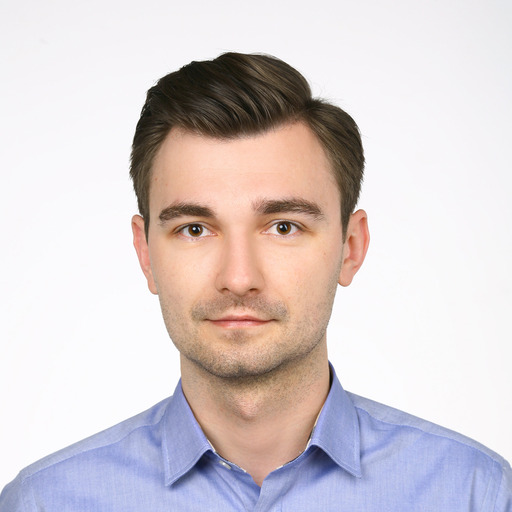
mgr inż. arch. Anahita Azadgar is an Assistant Lecturer at the Department of Urban Architecture and Waterscapes, Faculty of Architecture, Gdańsk University of Technology. She is concurrently pursuing a PhD at the GdańskTech Doctoral School. Her research focuses on urban flood resilience, nature-based solutions (NbS), GIS applications, and climate adaptation strategies in urban environments. Education: PhD Candidate (GdańskTech Doctoral School), Master of Engineering in Architecture (mgr inż. arch. degree). Research Interests: Optimization of green infrastructure for flood mitigation Socio-economic impacts of urban planning GIS-based comparative urban studies Regenerative architectural education Post-pandemic urban space redesign Publications (2022-2025) emphasize: Multi-objective genetic algorithms for NbS deployment GIS comparative studies between Gdańsk & Rome Systematic review of urban flood models Integration of creative tools in architectural education Pandemic-driven urban space reconfiguration Spatial distribution of Tehran's community gardens Labs/Teams: Active in urban resilience research groups within the Faculty of Architecture, collaborating with institutions like the Department of Environmental Sciences (via co-authored works with Dr. Salata and Dr. Nyka).
Włodzimierz Kasprzak is a Professor at the Institute of Control and Computation Engineering, Faculty of Electronics and Information Technology, Warsaw University of Technology. His research focuses on computer vision, robotics, human-computer interaction, and machine learning. He has contributed to advancements in human action classification, skeleton-based feature analysis, and multimodal interface design. Research Highlights: Development of lightweight classification models for human actions in video using skeleton-based features. Advances in multi-stream fusion techniques for image and video analysis. Design of embodied agent systems for cybersecurity event visualization and control. Awards and Recognition: 2024: Individual First Class Rector's Award for Scientific Achievements (2022-2023) 2021: Medal of the Commission of National Education 2011: Golden Cross of Merit His work integrates theoretical contributions with practical applications in robotics, surveillance systems, and human-centered technologies.
Igor Wojnicki is a Professor at AGH University of Science and Technology's Faculty of Electrical Engineering, Automatics, Computer Science and Biomedical Engineering, where he serves as Vice-Dean of the Faculty of Cooperation and Education. His primary affiliation is with the Department of Applied Informatics, where he maintains an active research laboratory focused on knowledge engineering and smart systems. His research spans multiple domains with evolving focus: Early career: Deductive databases and rule-based inference engines (PhD thesis on "A Rule-based Inference Engine Extending Knowledge Processing Capabilities of Relational Database Management Systems") Mid-career: Graph-based knowledge representation and Tabular Trees (XTT predecessor) Current focus: Smart city applications, particularly energy-efficient lighting control systems and graph-based urban data integration His recent publications demonstrate a clear trajectory toward applied urban computing, with over 15 significant papers in the last five years addressing smart city infrastructure optimization. Key themes include dynamic street lighting control, graph-based computational methods for urban environments, and energy conservation in public infrastructure. Wojnicki actively contributes to academic-practical collaboration through initiatives like the Green AGH Campus Project and IBM academic partnerships. His technical leadership includes development of the ReDaReS system for relational database knowledge processing and the Jelly View technology for advanced database queries. His laboratory maintains strong industry connections, particularly with IBM through student internship programs and technology transfer initiatives. The team produces both theoretical frameworks and practical implementations, with notable outputs including the Osiris GUI system and Magellan GPS software for Poland.
Prof. Lucyna Nyka serves as Professor and Head of the Department of Urban Architecture and Waterfront Spaces at the Faculty of Architecture, Gdańsk University of Technology. Her leadership role encompasses academic administration and research direction within this specialized department focused on climate-resilient urban design. Her research interests center on urban flood resilience , nature-based solutions , and waterfront adaptation strategies in the face of climate change. She employs advanced methodologies including GIS spatial analysis , multi-objective optimization algorithms , and comparative urban studies to develop practical frameworks for sustainable urban development. Her work bridges theoretical research with real-world implementation through numerous international projects. Recent publication trends reveal a strong focus on climate-sensitive urban environments , particularly examining the intersection of walkability and flood resilience in waterfront public spaces across the Baltic Sea Region. Her research portfolio demonstrates consistent evolution from theoretical explorations of architecture-water relationships toward actionable strategies for climate adaptation, with increasing emphasis on nature-based solutions and spatial optimization techniques since 2020. Prof. Nyka leads significant international research initiatives including the Horizon 2020 project 'SOS Climate Waterfront' (agreement 823901) and the 'Premium on the Horizon' funded initiative, both focused on improving waterfront adaptation strategies to climate change. Additional projects include 'Urban ElemenTREE' for smart green space development and the 'ENACT 15mC' initiative for neighborhood co-creation within the 15-minute city framework. Her department actively engages in practical implementation through projects like the revitalization of Potok Królewski stream on the university campus, demonstrating integration of academic research with tangible urban interventions. Current work emphasizes data-driven approaches to climate adaptation, particularly through nature-based solutions that address both flood risk and socio-economic considerations in urban planning.
Ryszard Szynowski is a researcher affiliated with WSB University , focusing on Security Studies and Safety Engineering (50% each). His work spans national defense, military administration, and crisis management, with extensive contributions to academic literature and Polish security policy development. He has supervised 33 promoted theses, indicating a strong mentorship role in shaping defense and security research. Affiliation: WSB University Research Interests: Security Studies, Safety Engineering, National Defense, Military Administration, Crisis Management His research explores historical evolution of military administration, comparative analysis of defense systems in Poland, Czech Republic, and Slovakia, and security challenges in educational institutions. He has contributed to conceptual frameworks for territorial defense forces and Polish-Ukrainian cross-border security collaboration. While his publications emphasize practical applications of security science and administrative integration, the absence of explicit scientific awards or a detailed educational background in the provided data limits further categorization. His work often bridges legal frameworks with operational needs in defense and emergency contexts.
Paweł Kliber is a Professor at the Department of Econometrics within the Institute of Informatics and Quantitative Economics at Poznań University of Economics and Business. His research spans Economics and Finance , with a focus on Econometrics , Portfolio Optimization , and Financial Modeling . Role: Professor (since 2014) Institution: Poznań University of Economics and Business Email: p.kliber@ue.poznan.pl Kliber’s research emphasizes liquidity risk , regional economic convergence , and stochastic volatility in financial markets . His work includes empirical analyses of the Frankfurt Stock Exchange , Polish financial markets , and theoretical contributions to quantile hedging and multi-criteria portfolio selection . Recent publications highlight trends in portfolio choice integrating financial statements, supply chain resilience , and Okun’s law variations across Polish regions. His methodological approaches combine jump-diffusion models , quantitative risk analysis , and panel data econometrics . Kliber has authored 36 publications and supervised 2 promoted theses. His academic contributions include studies on monetary policy effectiveness in Poland and convergence dynamics in OECD economies.
Professor Jerzy Węcławski of Maria Curie-Skłodowska University's Faculty of Economics specializes in banking, family business finance, and financial market dynamics. His work bridges theoretical research with practical applications in economic transformation and corporate governance. Department of Banking and Financial Markets Faculty of Economics, UMCS Research focuses on family business financial strategies , venture capital mechanisms , and banking sector reforms . Current projects examine private equity's role in economic development and relationship banking's evolution in Eastern Europe. Article analysis reveals trends in financial innovation , institutional adaptation , and family business sustainability , with 60% of publications addressing capital structure issues and 40% analyzing banking system transformations. Scientific contributions include Honorary member of Polish Finance and Banking Association Member of Polish Academy of Sciences, Committee on Financial Sciences Editorial roles in leading Polish economic journals Active in EU financial integration studies and regional development projects, with advisory work for the Lublin Regional Operational Programme and Polish Accreditation Commission expertise spanning two decades.
Dr hab. Radosław Pietrzyk, prof. UEW, is a Professor at the Department of Financial Investments and Risk Management within the University of Economics in Wrocław. His research focuses on financial risk management, household financial planning, cryptocurrency markets, and econometric modeling. He specializes in developing integrated risk models for households, evaluating Value at Risk (VaR) forecasts, and analyzing market dynamics during crises such as the subprime mortgage collapse, the global pandemic, and geopolitical conflicts like the Russo-Ukrainian war. His work often intersects with practical applications, including stress testing financial instruments, optimizing investment portfolios, and assessing mutual fund performance in Polish and global markets. Pietrzyk’s methods emphasize statistical rigor, with contributions to Divisia Index applications for stock exchange analysis and multi-objective optimization frameworks for household financial goals. Recent articles highlight his exploration of green bonds’ governance effectiveness and cryptocurrency exchange rate volatility. His research frequently addresses longevity risk, risk aversion in retirement planning, and the integration of environmental factors into financial decision-making. Pietrzyk maintains active academic engagement, offering consultations via email (radoslaw.pietrzyk@ue.wroc.pl) and through Microsoft Teams. His consultancy hours are Monday 8:00-9:30 AM. He collaborates with external institutions and contributes to the academic community through platforms like ResearchGate and ORCID.
Paweł Myszkowski is a Professor at Wrocław University of Science and Technology, affiliated with the Department of Artificial Intelligence within the Faculty of Computer Science and Management. He is a key member of the Metaheuristics Team and actively contributes to research in evolutionary computation, multi-objective optimization, and scheduling algorithms. His research focuses on evolutionary algorithms , metaheuristics , and multi-objective optimization , particularly applied to the Multi-Skill Resource-Constrained Project Scheduling Problem (MS-RCPSP). He has developed hybrid algorithms combining differential evolution, greedy methods, and ant colony optimization. His work includes the creation of benchmark datasets (iMOPSE) and quality measures for optimization algorithms. The recent publications show a strong trend in algorithmic innovation for complex scheduling and design automation , with applications in architectural design and financial modeling. His work bridges theoretical optimization and practical implementation in software systems. Golden Badge of Wrocław University of Science and Technology He supervises diploma theses and collaborates extensively with researchers such as Maciej Laszczyk and Marek Skowroński. He has contributed to the development of tools and benchmarks that support reproducibility and comparative evaluation in computational intelligence research. He is involved in research projects on dark-box optimization, multi-criteria optimization for classifiers, and application-aware network optimization, indicating an ongoing active research agenda.
Michał Panek is a researcher at the Department of Computer Systems and Networks, Faculty of Computing, Wroclaw University of Science and Technology. He is a member of the Machine Learning Team (ZUM) and actively contributes to research in optimization and machine learning applications in networking. His research interests include: Machine Learning in cellular networks Multi-criteria and many-objective optimization Evolutionary algorithms with gene-linkage techniques Application-aware multi-layer network optimization Classifier training using optimization methods The research projects he is involved in focus on developing advanced general-purpose optimizers (Dark-Box Optimization), evolutionary methods for high-dimensional multi-criteria problems, and performance analysis for wireless network automation. These projects reflect a strong interdisciplinary trend combining computer science, optimization theory, and telecommunications engineering. Michał Panek serves as a supervisor for diploma theses and is engaged in teaching activities. He is currently completing his doctoral studies, with a thesis titled "Machine Learning-based performance analysis to enhance the wireless network automation," supervised by Prof. Michał Woźniak and Prof. Ireneusz Jabłoński. The defense is scheduled for March 18, 2025. He is involved in key research teams including: Machine Learning Team Teaching Team Computer Networks Team Advanced Data Analysis Methods Team Metaheuristics Team
Piotr Oramus, PhD, is an Assistant Professor in the Department of Information Technologies at Jagiellonian University in Kraków, Poland. His research focuses on parallel and distributed computing, glowworm swarm optimization algorithms, and computational materials science. He holds a PhD in Physics from Jagiellonian University (2001) and an MSc in Physics (1995) from the same institution. Education: MSc (1995), PhD (2001) in Physics from Jagiellonian University Affiliations: Department of Information Technologies, Jagiellonian University; Juna Network Academy (Juniper Networks Academic Alliance) His research interests include optimization algorithms, Monte Carlo simulations for material systems, and distributed computing architectures. Recent work has advanced glowworm swarm optimization techniques and explored atomic ordering dynamics in intermetallic alloys. Key contributions span computational modeling of phase transitions, defect chemistry, and superstructure stability. Teaching responsibilities include courses on computer networks and object-oriented design. He has published extensively on topics ranging from parallel computing frameworks to atomic migration mechanisms in materials science. Grants include BASTION, MASTER, and VENTURES (2011/8 KBN Grant) projects. He leads the Students Computer Laboratory and collaborates with the Juna Network Academy for academic-industrial partnerships.
Dr. hab. Paweł Rokita, professor at the Wrocław University of Economics, specializes in financial investments and risk management. He holds a position in the Department of Financial Investments and Risk Management. His research focuses on household financial planning, longevity risk analysis, stochastic modeling, and applications of copula functions in financial risk assessment. Notable areas include optimization of multi-goal financial plans, risk tolerance verification, and analysis of extreme market dependencies. Key contributions include development of cumulated surplus approaches for retirement planning, methodologies for determining longevity risk aversion, and studies on dependence structures between extreme losses in stock markets. His work spans both theoretical frameworks (e.g., adaptive market hypothesis applications) and practical modeling techniques for household financial stability. Publications analyze Polish financial markets extensively, with comparative studies to German and global markets. Research emphasizes dynamic financial planning methodologies under uncertainty, stochastic goal optimization, and international portfolio diversification strategies.
Piotr Łabędź (BEng, PhD) is an Assistant Professor at the Department of Computer Science , Faculty of Computer Science and Telecommunications , Kraków University of Technology . His research focuses on 3D point cloud processing, LiDAR applications, photogrammetry optimization, and geospatial analysis methodologies. His work involves advanced techniques in Point cloud segmentation using KD trees Fractal algorithms for spatial object analysis Image preprocessing for photogrammetric reconstruction Visibility mapping (viewsheds, visibility zones) Integration of UAV data with geospatial models Recent publications demonstrate expertise in both theoretical computer science and applied geospatial technologies , particularly in architectural modeling, landscape analysis, and sensor data validation. His research bridges computational methods with environmental and architectural applications. With an h-index of 5 (Scopus) and 825 ministerial points , he contributes to fields like 3D reconstruction accuracy verification LiDAR odometry/mapping Digital landscape modeling
Dominik Dulas is an academic staff member at Wroclaw University of Science and Technology, Faculty of Computer Science and Management, where he is affiliated with the Department of Computer Networks. He actively participates in multiple research teams, including the Machine Learning Team, Computer Networks Team, and Advanced Data Analysis Methods Team, contributing to interdisciplinary research in optimization and intelligent systems. His research interests focus on computational intelligence and optimization, particularly in multi-objective and evolutionary methods. Key areas include: Multi-criteria optimization using gene interaction techniques Development of highly effective general-purpose optimizers using black-box methods Application-aware optimization of multilayered networks Machine learning classifiers trained via multi-objective optimization Metaheuristic algorithms for complex decision problems Dr. Dulas supervises diploma theses, indicating an active role in academic mentoring. He holds a doctoral degree in engineering (dr inż.) and is involved in ongoing advanced research projects. His work bridges theoretical optimization and practical applications in network and data systems.
Dr. Uday Venkatadri is a Professor and Department Head in the Department of Industrial Engineering at Dalhousie University in Halifax, Nova Scotia, Canada. He has been teaching at Dalhousie University since July 2001, progressing from Assistant Professor (2001-2006) to Associate Professor (2006-2019) and finally to Professor (2019-present). His extensive experience includes prior roles as a Lead Architect for supply chain planning products at Baan and as a Research Associate at Université Laval in Québec City. Dr. Venkatadri's educational background includes: Ph.D. in Industrial Engineering from Purdue University M.S. in Industrial Engineering from Clemson University B.Tech in Mechanical Engineering from Indian Institute of Technology, Banaras Hindu University His research focuses on addressing design, planning, and control issues in production and distribution systems in the era of Industry 5.0 and Hyperconnected Logistics. He employs Mixed Integer Linear Programming as the cornerstone of his methodological approach, while incorporating trends in big data analytics, machine learning, and artificial intelligence. Dr. Venkatadri's work spans several critical areas including facilities planning and design, supply chain management, production planning and control, and sustainable manufacturing systems. He has developed frameworks for perishable food supply chains, healthcare logistics during pandemics, offshore wind energy maintenance, and cellular manufacturing systems. Dr. Venkatadri's recent publications demonstrate a strong emphasis on sustainable and resilient supply chains, maintenance optimization, and the application of advanced analytics to logistics problems. His work addresses contemporary challenges such as pandemic response in healthcare supply chains, optimization of renewable energy systems, and management of perishable goods in food supply chains. He frequently collaborates with researchers across disciplines, particularly with Claver Diallo, Abdelhakim Khatab, and other colleagues in the field of industrial engineering. Dr. Venkatadri has received numerous awards and honors throughout his career: 2021: Teaching award by the Logistics and Supply Chain Division of the Institute of Industrial and Systems Engineers 2016: Best Teacher of the Year award, Department of Industrial Engineering, Dalhousie University 2004: Best Teacher of the Year award, Department of Industrial Engineering, Dalhousie University 1991-1993: Summer David Ross Fellowship from Purdue University for excellence in teaching 1987-1990: David Ross Fellowship from Purdue University for Ph.D. work 1988: Institute of Industrial Engineer's General Motors First Place Master's thesis award Dr. Venkatadri has advised numerous graduate students, with many co-authoring publications with him. His research has been supported by various grants focusing on supply chain optimization, maintenance systems, and sustainable manufacturing. He is actively involved in the academic community as a Senior Member of IIE (Institute of Industrial Engineers), a Member of Engineers Nova Scotia, and a Member of the Canadian Operational Research Society (CORS). His teaching portfolio includes undergraduate and graduate courses in computational methods, operations research, supply chain management, facilities design, and quality control.