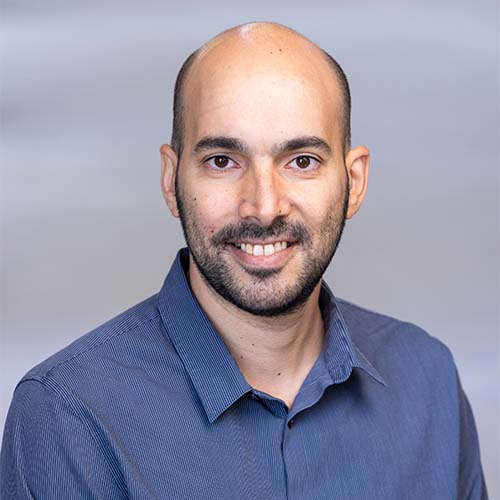
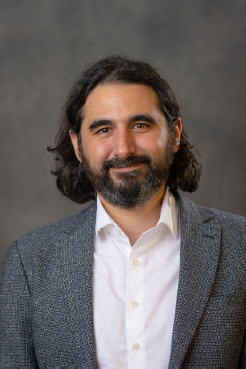
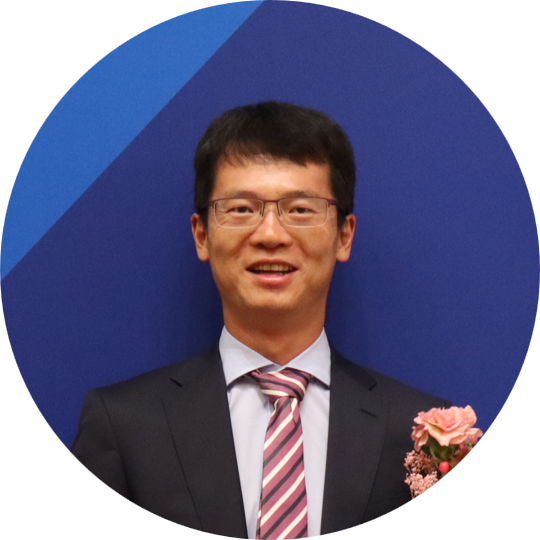
Filipe Veiga is an Assistant Professor in the Department of Electrical and Computer Engineering at George Mason University. He holds a PhD in Machine Learning and Robotics from Technische Universität Darmstadt, an MSc in Electrical and Computer Engineering from Instituto Superior Técnico, and a BS in Engineering Sciences from the same institution. His research focuses on integrating perception and biomimetic control approaches to enable intelligent robotic behavior, particularly in tactile sensing, dexterous manipulation, and human-robot collaboration. Key areas include real-time state estimation, hierarchical control systems, and tactile feedback mechanisms for robotics applications. His work bridges machine learning with physical systems to solve challenges in manipulation and perception. Veiga's publications emphasize advancements in tactile sensor design, reinforcement learning for robotic tasks, and human-centric robotic systems. His contributions span theoretical frameworks and practical implementations, with applications in both industrial and assistive robotics. No academic awards or grants are explicitly mentioned in the provided materials. His advising record remains undocumented here. His research is anchored in the university's engineering department, though specific lab affiliations are not detailed.
Rafael Valencia Garcia is Full Professor in the Department of Computer Science and Systems Engineering at Universidad de Murcia's Faculty of Informatics. His research develops modeling, processing and knowledge management technologies through semantic approaches. He leads the Tecnomod research group focusing on knowledge extraction and semantic technologies. His 2005 PhD thesis 'Un entorno para la extracción incremental de conocimiento desde texto en lenguaje natural' pioneered incremental knowledge extraction methods under Dr. Jesualdo Tomás Fernández Breis and Dr. Rodrigo Martínez Béjar's supervision. His recent publications demonstrate strong focus on NLP applications for social good: Advanced hate speech detection using multi-task learning Multimodal emotion recognition in Spanish Few-shot learning strategies for low-resource scenarios AI moderation systems for inclusive communication The research consistently integrates transformer architectures with linguistic features across diverse tasks including author profiling, persuasion detection, and emotion analysis. He regularly contributes to SemEval and IberLEF evaluation campaigns, developing state-of-the-art systems for detecting harmful content and analyzing emotional patterns in digital communication.
Dr. Zhidong Xiao serves as Principal Academic (Associate Professor) at Bournemouth University's National Centre for Computer Animation within the Faculty of Media and Communication. With over ten years of leadership experience including roles as Programme Leader, Head of Education, and Deputy Head of Department, he drives academic strategy and research innovation in computer animation and digital media. His work bridges technical excellence with creative industry applications through extensive collaborations across the UK and China. Dr. Xiao's educational foundation includes a PhD in Computer Graphics (2010) and postgraduate certificates in Education Practice (2010) and Research Degree Supervision (2011) from Bournemouth University, complemented by a BEng (Hons) in Thermodynamics from Taiyuan University of Technology, China (1994). PhD in Computer Graphics, Bournemouth University (2010) PGCE in Education Practice, Bournemouth University (2010) PGCE in Research Degree Supervision, Bournemouth University (2011) BEng (Hons) in Thermodynamics, Taiyuan University of Technology (1994) His research spans Computer Graphics, Motion Capture, Artificial Intelligence, and Virtual Reality with focus on physics-based simulation, sign language recognition, and motion synthesis. Recent work integrates partial differential equations with machine learning to solve animation challenges in facial realism, deformation simulation, and 3D reconstruction. His interdisciplinary approach connects computer science with creative industries, healthcare applications, and educational technology while advancing core techniques in neural rendering and motion analysis. Analysis of his 15 most recent publications reveals consistent innovation in physics-based animation techniques (40%), motion capture processing (25%), and neural approaches to 3D reconstruction (35%). Key trends include the fusion of analytical physics models with deep learning architectures, development of efficient real-time simulation methods, and expansion into accessibility applications through sign language recognition systems. Scientific recognitions include: Fellow of British Computer Society (2023) Fellow of Higher Education Academy (2011) Best Poster Award at Pacific Graphics 2014 He maintains active peer review roles for EPSRC, ESRC, IEEE Transactions on Multimedia, and ACM SIGGRAPH conferences. Dr. Xiao has supervised seven PhD students to completion while currently guiding Alexandra Sergeeva Alexdottir's research on Phantom Touch phenomena. His grant portfolio demonstrates strong industry-academia collaboration: Principal Investigator Capturing and representing sign language (British Council, 2025) VE Communication Programme (Erasmus+, 2020) Co-Investigator Rehabilitation Enhancement via Motion Capture (BU Fusion Fund, 2013) Cross-Channel Film Lab (Interreg, 2012) Digital Beijing Opera Project (2010) As a core member of Bournemouth's Computer Graphics and Visualisation Research Group and Centre for Digital Entertainment, he leads initiatives in motion capture technology through AccessMocap Studio. His international outreach includes invited lectures across China on computer animation education and visual effects techniques, strengthening global partnerships in creative technology development.
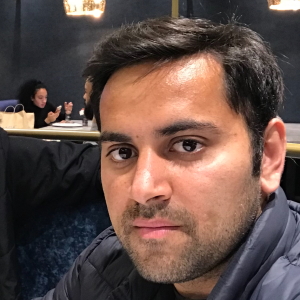
Dr. Vishwash Batra is a Lecturer (Computing) at Keele University's School of Computer Science and Mathematics. He holds a PhD in Computer Science from the University of Warwick, focusing on neural models for stepwise text illustration, and a BTech in Computer Science and Engineering from IIT Ropar (2015). His research bridges Natural Language Processing (NLP) and Computer Vision, emphasizing machine learning, deep learning, data mining, and knowledge graphs. Industrial experience includes software development in e-commerce, complemented by collaborative projects with Aston University and the Indian Institute of Science, Bangalore. Research interests span structured data representation, semantics, and multi-modal applications. Recent work includes transformer-based models for news classification, fake news detection via multi-modal fusion, and sentiment analysis of Chinese texts. His contributions also address challenges in aspect grouping and domain-specific Twitter analysis for health monitoring. Publications reflect a focus on NLP-CV intersections, including neural caption generation for news images, variational sequence retrieval, and attention-based RNNs for medication intake detection. No scientific awards are explicitly listed. Collaborations span institutions like Aston and IISc, though no students or grants are detailed. Contact him at v.batra@keele.ac.uk at the Colin Reeves Building, Keele University.
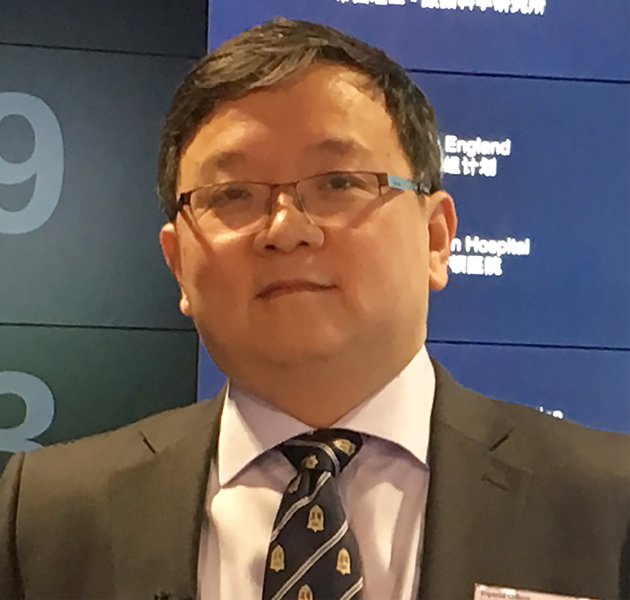
Guo Yike is the Provost of The Hong Kong University of Science and Technology (HKUST) and concurrently a Chair Professor in the Department of Computer Science and Engineering. He holds a PhD in Computational Logic from Imperial College London (1994) and a first-class honours degree in Computing Science from Tsinghua University (1985). His academic leadership roles include Director of the Data Science Institute at Imperial College London (2014–2020), Honorary Dean of Shanghai University's School of Computer Science (since 2020), and Vice President (Research and Development) at Hong Kong Baptist University (2020–2022). Research interests focus on machine learning, data mining, and large-scale applications in healthcare, finance, and environmental science. He pioneered informatics systems for biology, geophysics, and social media, emphasizing ethical AI and multimodal reasoning. Notable awards include Royal Academy of Engineering Fellowship (2018), ACM SIGMM Best Open Source Software Award (2017), and recognition as one of China's Top 10 Data Scientists (2016). Industry collaborations include leading startups like InforSense and TranSMART, working with GSK, Huawei, and BBC. Editorial roles include editor-in-chief of Annual Reviews of Data Sciences and deputy editor-in-chief of Machine Intelligence Research . His work bridges academia and industry, driving innovation in AI ethics, cloud computing, and interdisciplinary science.
Dr. Andrés Occhipinti Liberman is an Assistant Professor at the ICAI School of Engineering , Comillas Pontifical University , in the Department of Telematics and Computer Science . He teaches Natural Language Processing and Foundations of Artificial Intelligence , focusing on improving large language models' reasoning and planning capabilities . His research explores how autonomous agents can develop internal environmental representations for planning, with a foundational interest in planning algorithms and mathematical logic . Education Ph.D. in Artificial Intelligence and Logic, Technical University of Denmark (2020) M.Sc. in Logic, University of Amsterdam M.Sc. in Development and International Aid, Complutense University B.A. in Philosophy, Universidad Autónoma de Madrid His work bridges epistemic logic with machine learning , particularly in dynamic term-modal logic for social network analysis and planning. Recent publications examine partially observable domains , grounded representations , and decidability in epistemic systems . He previously served as a postdoc at Universitat Pompeu Fabra in the EU project RLeap and as an external lecturer at DTU. Key article trends include: (1) epistemic planning using first-order logic , (2) dynamic logic frameworks for social networks, and (3) knowledge grounding in reinforcement learning. No formal scientific awards are listed in the provided text. His current research at IIT (Institute for Research in Technology) involves theory-of-mind agents and symbolic planning representations .
Zuzana Kubincová is a researcher in educational technology and computer science education, contributing to conferences like ICWL, ITHET, and MIS4TEL. Her work focuses on peer assessment, code review tools, and adaptive learning systems. Key collaborations with Martin Homola, Ján Kluka, and Dana Suníková Research spans 2009-2024 with recent emphasis on robotics and computational thinking Research Interests She explores innovative assessment methods including digital badges and rubrics, while developing tools for code review and ontology-driven learning. Her work bridges educational theory with practical technology implementations, particularly in K-12 and higher education contexts. Recent publications analyze robotic education and multi-modal assessment frameworks, showing her commitment to advancing teaching practices through technology. Though specific university affiliation details are unavailable in the provided texts, her consistent publication record indicates active academic engagement.
Professor Kristin Dana is a faculty member in the Department of Electrical and Computer Engineering at Rutgers University, School of Engineering. Her research focuses on computer vision, robotics, artificial intelligence, computational photography, and machine learning. She leads the SOCRATES initiative, a NSF-funded program integrating STEM education with social and behavioral sciences. Dana holds a Ph.D. from Columbia University (1999), an M.S. from MIT (1992), and a B.S. from Cooper Union and NYU (1990). Education: Ph.D., Electrical Engineering, Columbia University, 1999 M.S., Electrical Engineering and Computer Science, MIT, 1992 B.S., Electrical Engineering and Computer Science, Cooper Union/NYU, 1990 Research interests span computer vision applications in agriculture (e.g., cranberry ripening analysis), robotics for socially aware systems, and computational methods for material recognition. Her work bridges optical technologies with practical systems like autonomous bridge inspection robots, earning awards such as the NSF CAREER and Sarnoff Technical Achievement Awards. Recent publications emphasize interdisciplinary innovations: from AI-driven agricultural monitoring to steganography in light fields. Grants include a $3M NSF NRT grant for SOCRATES and robotics-related projects. Honors: 2014 Charles Pankow Award (ASCE) 2011 Rutgers ECE Service Award 2001 NSF CAREER Award 1994 Sarnoff Technical Achievement Award Advising focuses on graduate training through SOCRATES, while lab collaborations include Rutgers Robotics and remote sensing frameworks like Finch. Current work explores vision-based localization systems (ViFi series) and socially cognizant robotic systems.
Berk Calli is an Associate Professor in the Department of Robotics Engineering at Worcester Polytechnic Institute (WPI), where he leads the Manipulation and Environmental Robotics Laboratory (MER Lab). He holds a PhD from Delft University of Technology and completed postdoctoral research at Yale University. His research focuses on advancing robotic capabilities for unstructured environments through innovations in manipulation, computer vision, and machine learning. Calli's research spans robotic manipulation, robot vision, machine learning, dexterous manipulation, and environmental robotics. His MER Lab develops multi-modal manipulation strategies using advanced control methods, active vision frameworks, and intelligent mechanical design to address uncertainties in real-world applications like recycling and industrial automation. His publication trends demonstrate consistent contributions to robotic grasping, vision-based control, and industrial applications, with recent work emphasizing benchmark development and sustainable technologies. The articles explore themes of adaptive control systems, recycling automation, and performance evaluation frameworks. Scientific Awards: Prestigious NSF CAREER Award ($599,559) for enhancing robotic object manipulation capabilities Early-Career Faculty Research Award recognizing innovative contributions to environmental robotics Calli leads multiple NSF-funded projects, including initiatives to establish environmental robotics tracks for undergraduates. He advises graduate researchers in the MER Lab and founded the Yale-CMU-Berkeley Object and Model Set project, a globally used benchmarking resource. As head of MER Lab, he directs research on fundamental manipulation problems and environmental sustainability projects including waste sorting and metal scrap recovery. His patented robotic technology is being developed for industrial applications like ship dismantling and metal cutting.
Yawei Li is a Lecturer at ETH Zürich, affiliated with the Integrated Systems Institute. His research focuses on efficient deep learning and AI systems for vision, language, and biosignals. Collaborating with Professors Luca Benini and Luc Van Gool, he explores topics like foundation models for biosignals, efficient neural network design, and deployment on RISC-V cores. He has organized workshops such as the NTIRE Challenge on Efficient Super-Resolution and served as a Senior Program Committee member for AAAI and IJCAI. He has supervised numerous PhD and Master students, with open positions available in foundational model development and bio-signal analysis. Key achievements include the Best Poster Presentation at ICVSS 2019 and contributions to projects like TinyYOLO for smart glasses. His work emphasizes practical applications of AI on embedded systems and low-power devices. Teaching includes courses like 'Deep Learning for Image Manipulation' and involvement in Computer Vision Lab initiatives. His research spans image restoration, neural network compression, and cross-modal analysis, with publications in top venues like CVPR, NeurIPS, and ECCV.
Hong Liu is a Professor at Shandong University's School of Computer Science and Technology, with an extensive publication record spanning multiple disciplines within computer science and engineering. His research spans computer vision, machine learning, medical imaging, robotics, and signal processing, with over 500 publications listed in the dblp database from 1993 to 2025. Dr. Liu's research interests focus on the intersection of artificial intelligence and practical applications across various domains. His recent work demonstrates expertise in deep learning architectures, medical image analysis, robotics navigation, and computer vision systems. He has made significant contributions to medical imaging techniques, particularly in segmentation methods using quaternion mathematics and self-attention mechanisms, as well as applications in liver disease diagnosis and pediatric fracture detection. The publication trends show increasing activity in recent years, with substantial contributions in 2023-2025 across IEEE journals and conferences. His work frequently appears in high-impact venues including IEEE Transactions on Medical Imaging, IEEE Access, and Pattern Recognition, demonstrating both theoretical rigor and practical applications. His research bridges theoretical computer science with real-world engineering and medical challenges, particularly in China's healthcare and technology sectors. Dr. Liu has collaborated extensively with researchers across Chinese institutions including Shandong University, Harbin Institute of Technology, and Huazhong University of Science and Technology, as well as international partners. His work shows strong interdisciplinary connections between computer science, electrical engineering, and medical applications.
Davide Bacciu is a Professor at the University of Pisa, associated with the Department of Computer Science within the School of Engineering. His research focuses on advancing artificial intelligence, particularly in deep learning for graphs, continual learning, and neural networks. He leads projects such as TEACHING (Trustworthy autonomous cyber-physical applications) and CLaaS (Continual-Learning-as-a-Service), emphasizing human-centered AI and edge computing solutions. His work bridges theoretical advancements with practical applications in robotics, healthcare, and smart systems. Key research interests include graph representation learning, federated learning, and generative models. He has contributed to frameworks like PyDGN for graph deep learning and Avalanche for continual learning. His interdisciplinary projects involve collaborations with institutions like the University of Trento and the Institute for Bioengineering of Catalonia. Publications reflect his expertise in domains like molecular property optimization, causal inference, and swarm intelligence. He has advised on grants related to edge computing, autonomous systems, and human-AI collaboration. His work is disseminated through top venues such as AAAI, ICLR, and IEEE Transactions.
Dr. Joseph P. Havlicek is the Gerald Tuma Presidential Professor in the Gallogly College of Engineering at the University of Oklahoma, where he has served since 1997. He directs the OU Center for Intelligent Transportation Systems and is a full member of the OU Institute for Biomedical Engineering, Science, and Technology. His extensive career spans both academic and professional realms, with significant contributions to signal processing, image analysis, and transportation systems. His educational background includes: BS in Electrical Engineering from Virginia Tech (1986) MS in Electrical Engineering from Virginia Tech (1988) PhD in Electrical and Computer Engineering from the University of Texas at Austin (1996) Dr. Havlicek's research spans multiple domains including signal, image, and video processing; modulation domain signal processing; target tracking; medical imaging; and intelligent transportation systems. His work bridges theoretical signal processing with practical applications in healthcare and transportation. He has pioneered techniques in AM-FM signal and image modeling, uncertainty measures, and developed innovative approaches for medical image analysis and infrared target tracking. Analysis of his recent publications reveals a strong interdisciplinary trend, with significant work at the intersection of signal processing and medical imaging, particularly in bone marrow assessment and cancer treatment monitoring using PET/CT imaging. His computer vision research focuses on infrared object detection and tracking, with recent work on dual-band infrared systems improving small object detection. The publications also demonstrate his continued theoretical contributions to signal processing, particularly in modulation domain techniques and entropy-based uncertainty measures. His scientific achievements have been recognized with numerous awards: University of Oklahoma Outstanding Faculty Advisor Award (2006) University of Oklahoma College of Engineering Brandon H. Griffith Faculty Award (2003) University of Oklahoma IEEE Favorite Instructor Award (1998, 2000) Department of the Navy Award of Merit for Group Achievement (1990) University of Texas Engineering Foundation Award for Exemplary Engineering Teaching (1992) Dr. Havlicek has been exceptionally successful in securing research funding, serving as PI or co-PI on more than 100 externally funded grants and contracts totaling over $25 million. His professional service includes editorial positions with IEEE Transactions on Image Processing and IEEE Transactions on Industrial Informatics, as well as leadership roles in major conferences including ICIP and ICASSP. He has chaired both graduate and undergraduate studies committees in the ECE department. He leads the OU Center for Intelligent Transportation Systems, which develops advanced technologies for traffic management and traveler information systems. His biomedical engineering work through the OU Institute focuses on medical image analysis, particularly for cancer treatment monitoring and bone marrow assessment. His research teams regularly collaborate with medical institutions to translate signal processing techniques into clinical applications.
Robert Atkinson is a Professor in the Department of Electronic and Electrical Engineering at the University of Strathclyde, affiliated with StrathCyber. He holds a PhD in Mobile Communications Systems (2003), MSc in Communications Control and Digital Signal Processing (1996), and BEng in Electronic and Electrical Engineering (1993), all from the University of Strathclyde. He is actively involved in supervising PhD students and has contributed to over 139 research outputs. Research Interests: Dr. Atkinson's work focuses on machine learning applications in industry, cybersecurity, and IoT. His expertise includes explainable AI, hyperparameter optimization, data processing pipelines, and collaboration with industry on topics like partial discharge localization and predictive maintenance. He has pioneered projects such as DelugeAI (flood forecasting using AI) and EPSRC-funded submarine cable data analysis. Key Projects: DelugeAI: Scottish Government-funded project exploring AI for flood forecasting. EPSRC IAA: Subsea cable data analysis for underwater infrastructure monitoring. Publications: His recent work spans cybersecurity deception systems, neural networks for image processing, and IoT intrusion detection. Notable contributions include the MQTT-IoT-IDS2020 dataset for intrusion detection. Awards: DASC 2015 Best Paper Award Finalist in 2022 Herald Higher Education Awards for Outstanding Business Engagement Advising & Grants: Supervised four students and contributed to over 36 research projects. His work aligns with UN SDGs, particularly in sustainable infrastructure and innovation. Labs & Affiliations: Active in StrathCyber, collaborating on AI-driven solutions for cyber resilience and industrial IoT challenges.
Dr. Maria Loftus is an Assistant Professor in French at the School of Applied Languages and Intercultural Studies, Dublin City University. She holds degrees from French and Irish universities, including a PhD in Sub-Saharan Documentary Cinema. Her research focuses on documentary cinema, CALL (Computer Assisted Language Learning), student-created multimedia content, social empathy, and anti-racism. Education: B.A. in Irish and French; M.A./PhD in French Literature, Discourse and Representations, Applied Linguistics, and Sub-Saharan Documentary Cinema (French/Irish institutions). Research Interests : Protest and documentary cinema, visual representations of colonization, CALL innovations, student multimedia creation in SLA, telecollaboration, and anti-racism through creative outputs. She co-supervises PhDs on blended mobilities, language learning creativity, and modal verbs for second-language learners. Awards : Co-recipient of Research Ireland’s New Foundations funding (2023-2024) for projects on social empathy and antiracism. Active in funded initiatives like Ordinary Treasures: Objects from Home , fostering solidarity through material culture. Grants & Projects : Lead roles in projects like Students as Creators of Interactive Video Content (2020) and Ordinary Treasures (2024). Collaborates with Jawaharlal Nehru University on cross-cultural educational research. Labs/Teams : Co-leads the Ordinary Treasures initiative, exploring antiracism through youth culture. Engages in interdisciplinary teams addressing forced migration, volunteer-led education, and refugee integration networks.