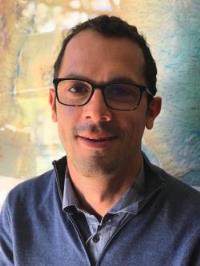
Jakob Puchinger is a Professor in Supply Chain Management and Logistics at EM Normandie since 2022. He also serves as an affiliate professor at the Laboratoire Génie Industriel at CentraleSupélec, Université Paris-Saclay, and co-director of the Future Cities Lab with Centrale Pékin. He holds a PhD in Computer Science from TU Wien (2006), focusing on metaheuristics and integer programming for cutting and packing problems. His research spans logistics, urban mobility, disruptive technologies, and transport system optimization. Professional roles include Head of the Operations Management team at CentraleSupélec (2019–present), holder of the Anthropolis Chair at IRT SystemX (2015–2022), and scientist at the Austrian Institute of Technology (2008–2014). He has authored over 80 publications and supervised six theses, with five ongoing. Research interests emphasize sustainable urban logistics, last-mile delivery optimization, and shared mobility systems. Key contributions include studies on electric vehicles, autonomous systems, and policy frameworks for decarbonization. His work integrates optimization algorithms, agent-based modeling, and real-world case studies to address complex mobility challenges. Recent publications focus on route optimization for cold chain logistics, decarbonization policies, and collaborative truck-robot delivery systems. He actively contributes to conferences like Transportation Research Board and ROADEF, and co-authored books on urban mobility futures and robomobility revolution.
José Picheral is a Professor at CentraleSupélec, affiliated with the Laboratory of Signals and Systems (L2S). He holds a PhD (2003) and HDR (2017) in high-resolution signal processing methods and inverse problems. His research focuses on array processing, source localization, acoustic imaging, and vibration analysis, with applications in aeroacoustics, automotive systems, and industrial monitoring. He has supervised multiple PhD students and contributed to projects like Valeo’s smartphone-based car key replacement system. Education: Engineering Degree: Supélec (1999) and Politecnico di Milano (1999, Erasmus-TIME) PhD: Paris Sud University (2003) Habilitation (HDR): Université Paris Sud (2017) Research Interests: High-resolution methods for distributed sources, sparse signal processing, acoustic imaging, asynchronous measurements, and sensor array design. Current projects include spatial source covariance estimation, EEG spectrum analysis, and automotive applications using smartphone localization. Key Contributions: Over 50 publications in top journals/conferences (e.g., IEEE Transactions, ICASSP). Notable work on MUSIC algorithm robustness, DAMAS optimization, and sparse approaches for tip-timing signals. Advising & Collaboration: Supervised 7 PhD students. Collaborations with SAFRAN, Valeo, and academic teams in Bayesian inference and inverse problems. Active in L2S’s Inverse Problems Group and SYCOMORE team. Labs/Teams: Member of L2S’s Signal Processing and Statistics group, leading research in systems and control, telecommunications, and energy systems.
Prof. Eiman Kanjo is a Professor of Pervasive Sensing & TinyML and Head of the Smart Sensing Lab at Nottingham Trent University. She leads the Smart Nottingham and Smart Campus initiatives, focusing on impactful applications of mobile sensing, wearable tech, and edge AI. Her work bridges academia, industry, and community, emphasizing privacy-preserving AI for mental health, environmental monitoring, and social prescribing. Education: PhD in Computer Science (2005), University of Abertay Dundee. Formerly a Research Associate at the University of Cambridge and researcher at the University of Nottingham’s Mixed Reality Lab. Collaborates with organizations like the tinyML Foundation, Health Data Research UK (HDRUK), and the Alan Turing Institute. Research Interests : Pervasive computing, TinyML, Edge AI, wearable devices, environmental sensing, mental health technologies, and community-driven solutions for urban wellbeing. She pioneered early mobile sensing systems like NoiseSPY (2010) and MobSens (2009). Key Projects : 5G Connected Forest (£10m DCMS grant) : Smart environmental monitoring in Sherwood Forest. TagWithMe : AI-driven proximity-based games for community wellbeing. EPSRC Green+ Network : Tech for healthier environments. Awards & Recognition : Top 50 Women in Engineering (2023). Outstanding Educator of the Year Award (EDGE AI Foundation, 2023). 2021 Vice-Chancellor’s Outstanding Research Team Award (Smart Sensing Lab). Grants & Collaborations : Over £10m in funding from EPSRC, InnovateUK, MOD, and DEFRA. Partners include Nottingham City Council, tinyML Foundation, Health Data Research UK, and industry stakeholders. Labs & Initiatives : Leads the Smart Sensing Lab , developing technologies for Green Social Prescribing at Rufford Country Park and Highbury Mental Health Hospital.
Dr. Nathanael L. Baisa is a Lecturer in Artificial Intelligence at De Montfort University (DMU), part of the Computing, Engineering and Media faculty within the School of Computer Science and Informatics. His academic career includes roles as a senior research associate at Lancaster University, researcher at AnyVision, and research fellow at the University of Lincoln, focusing on computer vision and machine learning projects funded by ERC, EPSRC, and Innovate UK. Education: PhD in Electrical Engineering (Computer Vision/ML - Heriot-Watt University, 2018) MSc in Computer Vision and Robotics (Erasmus Mundus program, 2013) Research focuses on computer vision applications including object detection, scene understanding, autonomous systems, and biometrics. He leads work on deep learning for visual tracking, hand-based person identification, and robotic perception. He teaches courses like Introduction to Computer Vision and Deep Learning frameworks. His recent publications emphasize vision-language models, multi-object tracking algorithms, and geoscience machine learning applications. He collaborates with the Institute of Artificial Intelligence (IAI) and contributes to interdisciplinary projects in robotics and energy exploration.
Huiran Jin is an Associate Professor in the School of Applied Engineering and Technology at New Jersey Institute of Technology (NJIT). Her research focuses on remote sensing, land cover classification, and environmental modeling, with a strong emphasis on integrating multi-sensor data and machine learning techniques. She has secured federal grants from NSF and USGS for projects addressing riparian ecosystem dynamics and harmful algal blooms. Her work spans applications from solar image generation using GANs to geospatial education frameworks promoting diversity and inclusion in STEM. Her research interests include environmental monitoring using remote sensing technologies such as VIIRS, Landsat, and LiDAR, as well as cognitive strategies in engineering education. Notable contributions include fusion of optical/radar/LiDAR data for land cover mapping and assessing spatiotemporal variations of environmental parameters like PM2.5 and PM10 in China. Her articles reflect interdisciplinary trends in geospatial science, combining environmental data analysis with educational innovations. Recent projects highlight deep learning applications for flood monitoring and subpixel urban mapping. Jin has collaborated internationally on ecosystem dynamics and hydroclimate variability studies. Her work has been supported by grants totaling over $1M, including a 7-year NSF project (2018-2025) and a 2023 USGS-funded study on harmful algal blooms in NJ lakes. She has published extensively in journals like ISPRS Journal of Photogrammetry and Remote Sensing, with over 500 citations and an h-index of 11.
Dr. Erin R. Ottmar is an Associate Professor of Psychology and Learning Sciences at Worcester Polytechnic Institute (WPI), affiliated with the Department of Social Science & Policy Studies. She directs the MAPLE (Math Abstraction Play Learning Embodiment) Lab, focusing on educational technology and mathematics cognition. She holds a BA in Psychology and Elementary Education from the University of Richmond (2005) and a PhD in Educational Psychology: Applied Developmental Science from the University of Virginia (2011). Her postdoctoral training was completed at the University of Richmond. Her research integrates educational, cognitive, and developmental psychology to design interventions improving mathematics teaching/learning. Key projects include developing dynamic educational technologies like From Here to There and Graspable Math that embed perceptual learning and gesture-based interaction. Her current work examines how cognitive and non-cognitive pathways combine to enhance K-12 mathematics education, using classroom observations, longitudinal data, and multi-level modeling. Publications demonstrate consistent focus on: Perceptual learning mechanisms in mathematics Educational technology efficacy Classroom implementation studies Game-based learning analytics Cognitive factors in mathematical reasoning Awards include: NSF CAREER Award (2022) Sigma Xi Outstanding Junior Faculty Researcher Award (2022) AERA Early Career Fellow (2016) She actively mentors graduate/undergraduate students in the LST program and Psychology department. Major grants include NSF funding for projects on perceptual cues in algebra learning ($668K) and AI-supported teacher tools. She emphasizes interdisciplinary collaboration and real-world applications in her lab.
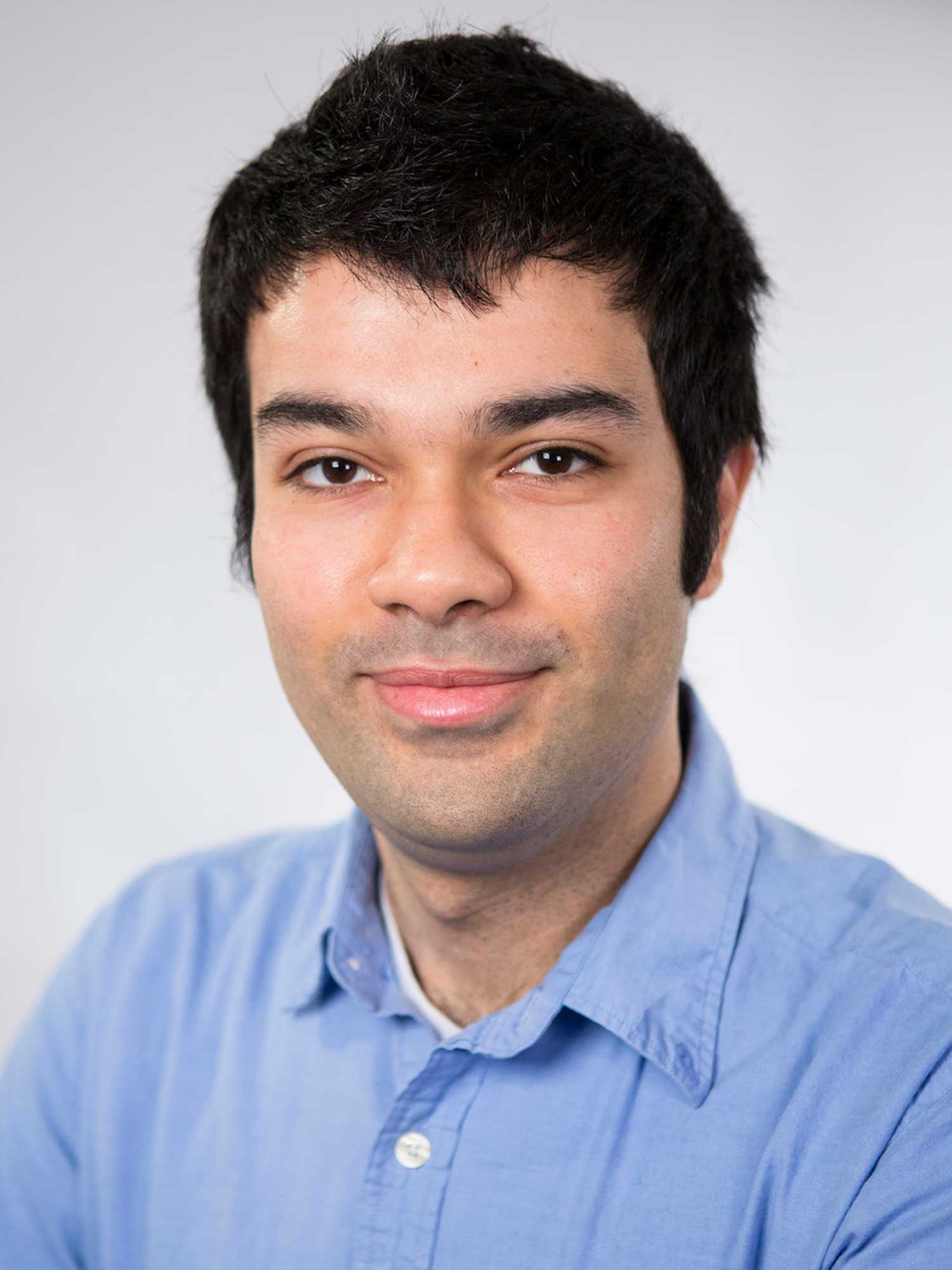
Rizwan Qureshi is an active researcher and academic specializing in artificial intelligence, machine learning, and their applications in medical imaging and bioinformatics. With a robust publication record spanning from 2017 to 2025, he has established himself as a significant contributor to the fields of computer vision and biomedical AI. His research interests focus on Artificial Intelligence , Machine Learning , Medical Imaging , Computer Vision , and Biomedical Engineering . Qureshi's work demonstrates particular expertise in object detection systems (especially YOLO variants), medical image segmentation, vision-language models, and applications of AI to healthcare problems including lung cancer research and diabetic retinopathy detection. Analysis of his recent publications (2023-2025) reveals a strong trend toward medical applications of AI, with approximately 60% of his work focusing on healthcare-related problems. His research shows increasing emphasis on model robustness, explainability, and handling distribution shifts in real-world applications. The publications span top venues including IEEE Access, IEEE Transactions on Medical Imaging, CVPR, and BIBM. Qureshi maintains extensive collaborations with researchers across multiple institutions, with frequent co-authorship with Hong Yan, Tanvir Alam, Jia Wu, and Sheheryar Khan. His work demonstrates both technical depth in machine learning methodologies and practical application to significant healthcare challenges. While specific details about his academic advising are not evident from the publication record alone, his numerous publications with multiple co-authors suggest active participation in research teams and likely supervision of graduate students. His work shows consistent funding support through publication in reputable journals and conferences.
Christa Searle is an Assistant Professor in Business Analytics at Heriot-Watt University's School of Social Sciences and Edinburgh Business School. She joined in 2021 and serves as Programme Director for the MSc Business Analytics and Consultancy. Her research focuses on sustainability, logistics, and human behavior, employing operational research, agent-based simulation, and data analytics. She holds an extraordinary senior lecturer position at Stellenbosch University, where she earned her PhD in Industrial Engineering (2019). Her work addresses challenges like hydrogen refuelling infrastructure design, supply chain optimization, and modeling complex systems such as tuberculosis spread in informal settlements. Key projects include the ATHENA framework for hydrogen infrastructure analysis and Agent-Based Modeling of forced migration and consumer behavior. Christa has been recognized with awards including the Tom Rozwadowski Medal (2022) and Fellow of the Higher Education Academy (FHEA, 2023). She actively participates in conferences and workshops, such as the 53rd Annual Conference of the Operations Research Society of South Africa (2024) and the Sustainable Road Freight Workshop (2023). She contributes to research groups like the Centre for Logistics & Sustainability and the FeMe Network. Her teaching emphasizes authentic, industry-engaged assessments and spans business and data analytics. Current research collaborations explore decarbonizing freight transport and SDG-aligned solutions, reflecting her commitment to practical sustainability outcomes.
Stephen Arrowsmith is a Professor and Hamilton Chair in Earth Sciences at Southern Methodist University (SMU). His research focuses on seismoacoustics, infrasound propagation, and geophysical monitoring of natural and anthropogenic phenomena. He holds a Ph.D. from the University of Leeds and has contributed significantly to nuclear test monitoring, atmospheric dynamics, and machine learning applications in geophysics. Key research areas include: Integration of seismic and acoustic data for event detection and discrimination Analysis of infrasound signals from earthquakes, explosions, and bolide impacts Development of automated detection algorithms using machine learning Urban seismology and distributed acoustic sensing Recent work emphasizes multi-modal data fusion, with studies on the Korean Peninsula, Tonga eruptions, and North Korean nuclear explosions. His contributions include advancing global infrasound networks and improving stratospheric atmospheric modeling through infrasound observations. He maintains an active research website at allthespheres.com .
Shahin Shahrampour is an Assistant Professor in the Department of Mechanical & Industrial Engineering at Northeastern University, with a courtesy appointment in Electrical & Computer Engineering. He holds a Ph.D. in Electrical & Systems Engineering from the University of Pennsylvania, an M.A. in Statistics from The Wharton School, and a B.S. in Electrical Engineering from Sharif University of Technology. Prior to Northeastern, he was at Texas A&M University and held a postdoctoral fellowship at Harvard University. Research Interests: Machine learning, optimization and control, distributed and sequential learning, with a focus on computationally efficient methods for data analytics. Specific areas include manifold optimization, online and reinforcement learning, non-convex optimization, and statistical signal processing. His work bridges theory and applications in networked systems and dynamic environments. Awards & Grants: Received a $500,000 NSF grant (2023) for distributed optimization in non-convex environments. Best Paper Award at IEEE ICASSP 2022 for contributions to signal processing. TEES Engineering Genesis Award (2020) for multidisciplinary research at Texas A&M. Principal Investigator on NSF-funded projects in collaborative online optimization and decentralized learning. Labs & Teams: Leads research in machine learning and control systems at Northeastern University, focusing on interdisciplinary challenges in distributed optimization and real-time learning. His lab emphasizes theoretical foundations and practical implementations in networked and dynamic systems.
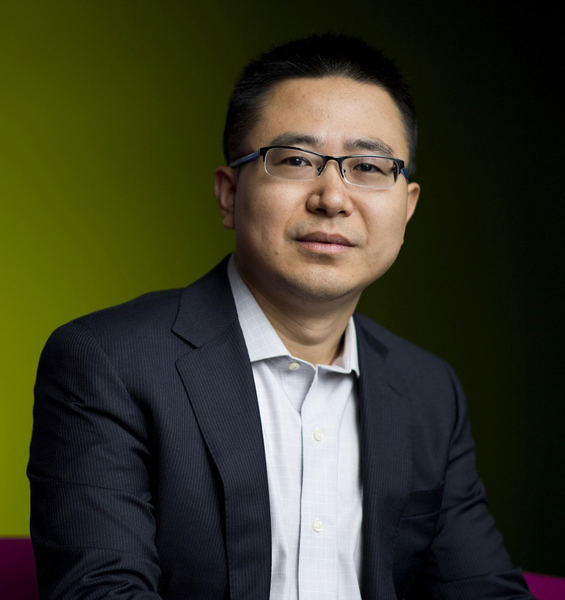
Yun Fu is a tenured Professor in the Department of Electrical and Computer Engineering at Northeastern University, with a joint appointment in the Khoury College of Computer Science. He has established himself as a leading researcher in Artificial Intelligence, with over 500 publications in top-tier venues including IEEE/ACM transactions and major AI conferences. His work spans both theoretical foundations and practical applications, with significant impact in computer vision and machine learning. Professor Fu earned his Ph.D. in Electrical and Computer Engineering from the University of Illinois at Urbana-Champaign. His academic career progressed from Assistant Professor at SUNY Buffalo to his current position as tenured Professor at Northeastern University, where he has held appointments since 2012. His educational background includes a Beckman Graduate Fellowship at UIUC (2007-2008). His research focuses on advancing Artificial Intelligence with particular emphasis on Computer Vision, Pattern Recognition, and Machine Learning. His seminal work includes the "Residual Dense Network for Image Super-Resolution" presented at CVPR 2018, which was ranked among the Top 10 Most Influential CVPR papers. His research interests span image processing, anomaly detection, multimodal learning, and trajectory prediction, with applications ranging from healthcare to consumer technology. Analysis of his recent publications reveals a strong trend toward developing efficient and robust AI systems that bridge computer vision with language understanding. His work increasingly focuses on multimodal learning, trajectory prediction for multi-agent systems, anomaly detection in complex environments, and model validation techniques for black-box systems, while maintaining practical applications in real-world scenarios. Professor Fu's extensive recognition includes: Fellow of IEEE (2018), OSA (2019), SPIE (2018), IAPR (2016), AAIA (2021), and AAAI (2025) Member of Academia Europaea (2022) and European Academy of Sciences and Arts (2023) Fellow of National Academy of Inventors (2023) Multiple Young Investigator Awards from NAE, ONR, ARO, IEEE, ACM, and INNS 12 Best Paper Awards from major conferences Industrial Research Awards from Google, Amazon, Samsung, JPMorgan, and others Professor Fu has successfully mentored numerous Ph.D. students who now hold prominent positions in academia and industry at institutions including Amazon, Microsoft, Meta, Adobe, and major universities. His entrepreneurial ventures include founding Giaran (acquired by Shiseido in 2017) and co-founding TVision Insights, demonstrating his commitment to translating research into real-world impact. He has secured significant research funding from both government agencies and industry partners. As the PI and Founding Director of the SmiLe Lab at Northeastern University, Professor Fu leads a dynamic research group focused on advancing the state-of-the-art in AI and Computer Vision. The lab fosters interdisciplinary collaboration across computer science, electrical engineering, and applied mathematics, with ongoing projects in efficient deep learning, multimodal understanding, and practical AI applications.
Allison Jing is a Lecturer (Assistant Professor) at RMIT University’s School of Computing Technologies and an adjunct Researcher at the Empathic Computing Lab at the University of South Australia. Her research focuses on Mixed Reality (MR) technologies to enhance human abilities through multimodal interaction, including gaze-based cues, biosignals, and AI-driven empathy. She holds a PhD in Information Technology from the University of South Australia (2023) and an MSc in Information Technology from the University of St Andrews (2017). Dr. Jing’s academic roles include coordinating Mixed Reality and Programming courses at RMIT. She has extensive industry experience, working at Meta Reality Labs, Microsoft, Amazon, and startups, which informs her user-driven research approaches. Her work spans collaborative VR/AR systems, empathic computing, and digital health applications. Key research interests include cross-reality collaboration, empathetic AI, and physiological signal integration. She collaborates with global institutions like CSIRO Data61 and Meta RLR. Her awards include runner-up in the XR Workshop (2023) and finalist in Deloitte Cyber Capture the Flag (2018). Teaching and supervision: Coordinates COSC2476/77 (Mixed Reality) and COSC2801 (Programming Bootcamp Java). Currently supervises PhD students and mentors research interns from Oxford, NYU, and other universities. Serves on program committees for CHI, MobileHCI, and ISMAR. Labs/Teams: Empathic Computing Lab, Australian Research Centre for Interactive and Virtual Environments (IVE), and ARIVE network. Active in industry partnerships for collaborative projects in MR and AI.
Glen Berseth is an Associate Professor in the Department of Computer Science and Operations Research at the University of Montreal and a Senior Academic Fellow at Mila – Quebec Institute for Artificial Intelligence. He is also a Canada CIFAR Chair in AI and Co-Director of the Montreal Robotics and Integrative AI Laboratory (REAL). His work focuses on reinforcement learning, robotics, and deep learning applied to autonomous systems. He holds a postdoctoral background from Berkeley Artificial Intelligence Research (BAIR), working under Sergey Levine. His research emphasizes real-world applications, including human-robot collaboration, continual learning, and multi-agent systems. He teaches courses on robot learning at the University of Montreal and Mila, covering cutting-edge techniques for general-purpose robots. Key research interests include reinforcement learning for robotics, adaptive interfaces, and sim-to-real transfer. His recent work addresses challenges in autonomous learning systems, such as robust locomotion control and efficient exploration strategies. Notable awards include the Canada CIFAR AI Chair. He has supervised numerous students, including PhD candidates Ozgur Aslan and Siddarth Venkatraman, and Master’s students like Roger Creus-Castanyer and Léa Demeule, focusing on topics like reinforcement learning and robotic control. Berseth leads research projects funded by organizations like the CRSNG, FCI, and MITACS, addressing topics such as modular lifelong learning and generalization in robotics. His lab, REAL, explores embodied AI and robotics integration.
Hady W. LAUW is an Associate Professor in the School of Computing and Information Systems (SCIS) at Singapore Management University (SMU), serving as Director of the BSc (Computer Science) Programme and a Lee Kong Chian Fellow. He holds a PhD from Nanyang Technological University (2008). His research focuses on artificial intelligence, data science, machine learning, and recommender systems, with notable contributions to multimodal recommendation frameworks like Cornac and collaborative filtering techniques. He teaches advanced courses including IS712 Machine Learning for postgraduate students and CS608 Recommender Systems for MITB programme participants. His work emphasizes practical applications, such as designing explainable recommendation systems and integrating A/B testing into frameworks. Key research interests include web mining, preference learning, representation learning, and decision support systems. He has advised multiple students on topics like neural networks, collaborative filtering, and comparative analysis of reviews. Scientific achievements include the Lee Kong Chian Fellowship and over 100 publications in top venues like ACM WWW and IEEE TKDE. He actively contributes to conferences as a PC member and chairs events like PAKDD. His Cornac framework supports reproducible research in multimodal recommendations. He leads the Preferred.AI research group, fostering undergraduate and postgraduate research in computing. His work bridges theoretical advancements with industry applications, particularly in data-driven decision making and automated evaluation metrics.
Prof. Zeynep Işıl Kalaylıoğlu is a Professor of Statistics at the Department of Statistics, Middle East Technical University (METU), Ankara, within the Faculty of Arts and Sciences. She holds a Ph.D. in Statistics from North Carolina State University (2002) and has held roles including Associate Professor (2014–2022), Assistant Professor (2009–2014), and researcher at the National Cancer Institute (2002–2007). She has served in administrative roles such as Assistant to the Department Head and member of METU’s Wind Energy Research Center and Faculty Board. Ph.D.: Statistics, North Carolina State University, 2002 M.S.: Statistics with Computational Engineering minor, North Carolina State University, 1999 B.S.: Statistics with Computer Engineering minor, Middle East Technical University, 1995 Her research focuses on Bayesian statistical methodologies for environmental and health phenomena. Key areas include spatial/temporal modeling of atmospheric and ecological variables, prediction of migratory patterns (e.g., wind direction, bird movements), and risk modeling for breast cancer using mammogram data. She develops flexible models for circular and extremal data, emphasizing applications in ecology, epidemiology, and environmental science. Her recent publications address topics like goodness-of-fit tests for statistical distributions, predictive model selection for circular data, and Bayesian approaches for missing covariates in generalized linear models. Current projects include mobile apps for olive harvest optimization and frost预警 systems, reflecting her commitment to applied statistical solutions. Labs/Teams: She leads the BayeZian Research Group, collaborating with METU’s Ecosystem Research Center on interdisciplinary projects. Her teaching expertise spans mathematical statistics, Bayesian theory, and statistical inference at undergraduate and graduate levels.