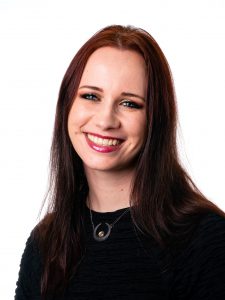
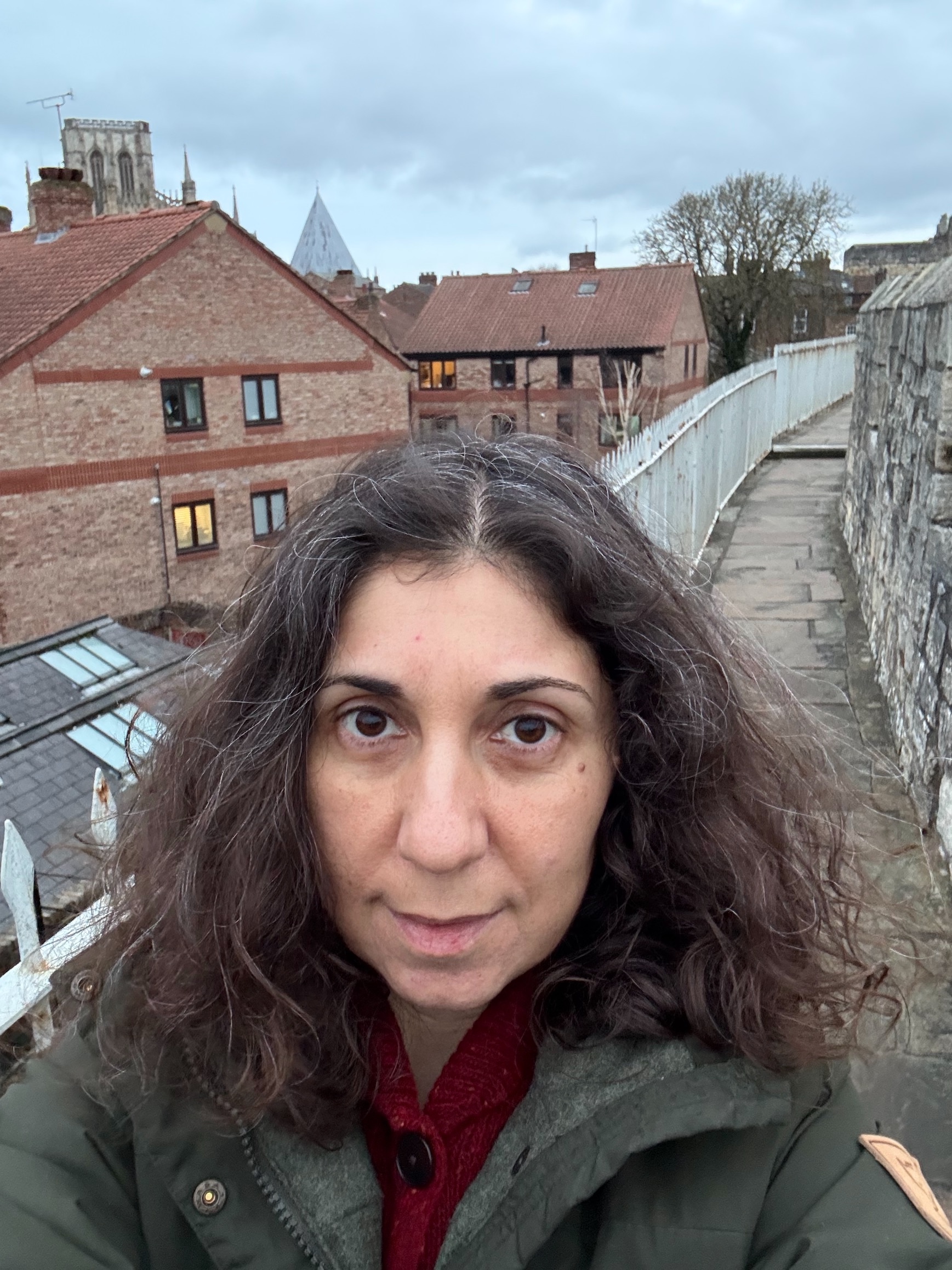
Noeska Smit is a Professor in Medical Visualization at the Department of Informatics, University of Bergen , where she has held a tenure-track position funded by the Trond Mohn Foundation since 2017. She is also a senior researcher and member of the leadership team at the Mohn Medical Imaging and Visualization (MMIV) Centre . Her research focuses on novel interactive visualization techniques for exploring and communicating multimodal medical imaging data , particularly in multi-parametric MR acquisitions . She leads projects in gynecologic cancer imaging , Multiple Sclerosis neuroimaging , and human anatomy education through collaborations with institutions like UGent (Belgium) and HVL. 2019: Dirk Bartz Prize for Visual Computing in Medicine 2016: PhD at Delft University of Technology , Netherlands 2012: MSc in Computer Science (Computer Graphics & Visualization) , Delft University Recent publications highlight her work in MRI radiomics , narrative visualization , open-source anatomy platforms , and interactive clustering tools for tumor analysis. Her methods are applied in oncological pelvic surgery planning , neurological disease monitoring , and 3D learning environments . She supervises PhD candidates Eric Mörth and Sherin Sugathan , and has contributed to open-source medical visualization tools like RegistrationShop and Online Anatomical Human (OAH) . Her work bridges clinical practice and computer science through collaborations with radiologists, surgeons, and ML researchers.
Guoyuan Li is a Professor at the Department of Ocean Operations and Civil Engineering, Faculty of Engineering, Norwegian University of Science and Technology (NTNU), Ålesund Campus. His work bridges digitalization , artificial intelligence , and maritime engineering , focusing on ship maneuvering, robotics, and human-machine interaction. Ph.D. in Computer Science, University of Hamburg (2013) M.S. & B.S. in Computer Science, Chongqing University (2009 & 2006) Research Interests: Digital twin systems for ships, adaptive locomotion control in bio-inspired robotics, trajectory prediction for marine vessels, and human visual attention analysis in maritime operations. He integrates machine learning and physics-based models to enhance safety and efficiency in marine environments. Publications highlight trends in ship motion prediction , collision avoidance , and environmental disturbance modeling , with applications in digital twin technology and remote control centers . His work spans IEEE and Springer journals. Awards include multiple Best Paper Awards at IEEE conferences (2024-2014). He serves as Associate Editor for IEEE Journal of Oceanic Engineering and IEEE Transactions on Intelligent Transportation Systems . Projects include EU’s RoboSapiens (robot adaptation), Digital Twin for Green Ship Operations (Norway), and AuReCo (remote control systems). He collaborates with the Intelligent Systems Lab at NTNU.
Fabio Mogavero is an Associate Professor in Theoretical Computer Science at the Department of Electrical Engineering and Information Technology, Università degli Studi di Napoli Federico II. His research spans formal specification, verification, and synthesis of systems, with a strong focus on logics, automata, games, and database theory. Ph.D. in Computer Science, Università degli Studi di Napoli Federico II, 2011 M.Eng. in Computer Science Engineering, Università degli Studi di Napoli Federico II, 2007 B.Eng. in Computer Science Engineering, Università degli Studi di Napoli Federico II, 2005 His primary research interests include formal verification, temporal and strategic logics, automata over infinite structures, decidability, and database theory—particularly bag semantics. He has made significant contributions to the theory of parity and mean-payoff games, strategy logic, and SHACL/RDF validation. His recent work explores fragments of first-order and monadic second-order logic, and he actively publishes in top venues such as LICS, ICALP, and IJCAI. The most recent articles highlight a sustained focus on logical characterizations (e.g., automata-theoretic models for temporal logics), game-solving algorithms, and foundational database theory, especially around SHACL and multiset semantics. His work bridges theoretical computer science with practical formal methods. Scientific Awards and Recognition: Erdös number at most 3 (via Erdös → J.H. Spencer → M.Y. Vardi → F. Mogavero) Fabio Mogavero has served on the program committees of major conferences including IJCAI, AAMAS, ECAI, and LICS. He has co-edited proceedings for the Strategic Reasoning (SR) and OVERLAY workshops. He has collaborated with leading researchers such as Moshe Y. Vardi, Orna Kupferman, and Michael Benedikt. He has held postdoctoral and teaching positions at the University of Oxford and Università di Verona. He is actively involved in the theoretical computer science community through conference organization and editorial work. He maintains research collaborations across Europe and the U.S. and continues to contribute to foundational and applied aspects of logic in computer science.
Heather Hornbeak is an active Associate Professor of Web Design in the Art Department at Charleston Southern University (CSU), where she teaches Web Design, UX/UI, and Photography. She joined CSU in 2024 after previously serving as Professor of Interactive Media at Asbury University (2016-2024) and teaching photography at Union University during graduate studies. Her career uniquely bridges academia and industry, with designs featured globally in Apple stores and major trade shows like CES and MacWorld. Education: M.F.A. in Graphic Design & Photography, Azusa Pacific University (2016) B.A. in Graphic Design, Union University (2004) Animation Design Training, School of Visual Arts (2022) Production Design Training, Asbury University (2017) Her research focuses on user-centered digital design, particularly Web Design and UX/UI methodologies. She investigates practical applications of Data Visualization in education and corporate settings, alongside sustainable design innovations demonstrated through her tiny home project and van conversion. Her work consistently connects technical design skills with real-world user behavior and ethical digital communication practices. Recent publications (2016-2024) reveal three key trends: (1) UX/UI design for corporate and educational contexts, (2) data visualization as a communication tool, and (3) design's role in lifestyle innovation. She emphasizes the intersection of technology, user behavior, and physical space optimization, with growing attention to social media's impact on community events. Heather Hornbeak has not received any listed scientific awards or fellowships in the provided text. While no formal graduate students are documented, she mentors through teaching and industry leadership. She trained employees in her AV & Home Automation business and taught photography at Union University. Grant history isn't mentioned, but her corporate work included major accounts for Target, Walmart, and Best Buy, reflecting applied research funding through industry partnerships. She co-owns a studio and AV & Home Automation business with her husband, personally training employee teams. At CSU, she collaborates with the Art Department but no dedicated research lab is specified. Her Creo Art Guild membership and AIGA judging role indicate professional team engagement.
Luis Alberto Barron Cedeno is an Associate Professor at the Department of Interpretation and Translation, University of Bologna since 2022, where he previously served as Senior Assistant Professor from 2019-2022. He holds a PhD in Computer Science from Universitat Politècnica de València (2012) and has worked at Qatar Computing Research Institute (2014-2019) and TALP Research Center (ERCIM fellowship, 2012-2014). PhD: Universitat Politècnica de València (2012) MSc: AI (Universitat Politècnica de València, 2009) MSc: Computing Science (UNAM, 2007) BEng: Computing (UNAM, 2004) His research focuses on NLP applications for analyzing text qualities like originality (plagiarism detection) and intent (hate speech, propaganda). Recent work includes persuasion techniques in spam emails , misogyny detection using argumentation theory, and Spanish language varieties analysis. He has published over 100 papers with 20+ in top-tier conferences. Key awards include SemEval 2020 Best Task for propaganda detection and ACL 2020 Best Demo . He serves as Specialty Chief Editor for Frontiers in Artificial Intelligence (NLP) since 2023. His students include PhD candidates Arianna Muti (misogyny detection), Katerina Korre (hate speech), and Paolo Gajo (inceldom analysis). 2020: SemEval Best Task 2020: ACL Best Demo 2012: PhD International Mention 2009: Best MSc Thesis 2007: MSc Cum Laude 2004: BEng Cum Laude He organizes the annual CheckThat! lab at CLEF since 2018 and chaired CLEF 2022. His teaching includes NLP courses, computational linguistics, and game localization for translation students.
Dr. Sven Lautenbach is a Professor and Chief Scientist at the Institute of Geoinformatics, University of Heidelberg , affiliated with the HeiGIT research group. His work bridges geospatial analysis, environmental modeling, and public health, with a focus on urban systems and land-use decision-making. Current role: Chief Scientist at HeiGIT gGmbH Key affiliations: Department of Geoinformatics, University of Heidelberg Research Interests : Lautenbach's interdisciplinary research addresses: Trade-offs in land use decisions and ecosystem services Health geography and spatial epidemiology Application of machine learning and AI to urban geospatial data Open data quality assessment (OpenStreetMap, social media) Climate adaptation strategies for urban environments Vector-borne disease risk modeling Publication Trends : Recent work emphasizes: Geo-social media for pandemic early warning systems Deep learning for infrastructure mapping (e.g., road surfaces) Flood impact analysis on urban accessibility Heat stress mitigation in pedestrian routing Multi-modal urban human dynamics during crises Open data quality evaluation for humanitarian applications Project Leadership : Lautenbach directs initiatives including: myGreen: Urban green space analysis Climate Change and Spatial Epidemiology Summer School OPERAs/FP-7: Ecosystem science-policy integration CONNECT: Biodiversity-ecosystem service synergies
Michael Dorn is an Associate Professor at Linnaeus University's Department of Building Technology since 2016, with research focusing on wood products , timber connections , and structural health monitoring . He holds a PhD from Vienna University of Technology and has led projects like Biobaserade skivmaterial within Framtidens byggande och boende , while coordinating the Competitive CLT initiative. Research Focus His work spans experimental and numerical analysis of timber-glass composites , CLT elements , and moisture/temperature monitoring systems in buildings. Key themes include load distribution , dowel connection mechanics , and carbon footprint reduction in wood construction. Publications & Projects Recent outputs address dynamic testing of timber buildings, hybrid structural evaluation , and environmental effects on CLT . Active projects include House Charlie (Växjö timber office building) and House Limnologen (CLT apartment structures). Teaching & Leadership Teaches steel/timber construction , structural analysis , and project courses . Serves as program coordinator for bachelor's engineering programs and internationalization coordinator . Supervises thesis works and develops structural health monitoring curricula.
Chadi Abdallah, MD is an Associate Professor Adjunct of Psychiatry at Yale School of Medicine, where he serves as Deputy Director for Research and Director of Neuroimaging for the Clinical Neuroscience Division at the VA National Center for PTSD. His work focuses on the neurobiological mechanisms underlying depression, PTSD, and stress-related psychiatric disorders, with particular emphasis on synaptic connectivity and neuroenergetics. Dr. Abdallah received his medical degree from Lebanese University in 2006, followed by residency training at SUNY Downstate (2010), where he served as Chief Resident in 2011. He completed specialized fellowships at Yale University in 2013, including both a Neuroimaging Fellowship and a McNeil Psychopharmacology Fellowship, after previously serving as a Research Trainee at Cornell University in 2011. His research program employs a broad range of pharmacological challenges, neuroimaging modalities, and network neuroscience approaches to study the neurobiology of psychiatric disorders and the mechanisms underlying treatment response and resistance. Dr. Abdallah has made significant contributions to understanding the role of synaptic fidelity in depression and PTSD, the application of in vivo synaptic density imaging, and the development of rapid-acting antidepressants. His work bridges translational clinical neuroscience with practical therapeutic applications for stress-related psychiatric conditions. Dr. Abdallah's recent publications demonstrate a strong trajectory toward computational approaches to neuroimaging, with increasing integration of AI and machine learning techniques to analyze complex brain networks in depression and PTSD. His research shows progression from basic neuroimaging studies toward sophisticated predictive modeling of psychiatric symptoms and treatment response, with particular focus on suicidal ideation prediction and network-based biomarkers. Klerman Award, Honorable Mention (2015) Patterson Trust Award in Clinical Research (2015) NARSAD Young Investigator Award (2014) Young Investigator Travel Award (2013) Early Academic Career Award on Schizophrenia Research (2013) As Deputy Director for Research at the VA National Center for PTSD, Dr. Abdallah oversees multiple research initiatives examining the neurobiological underpinnings of trauma-related disorders. His laboratory collaborates extensively with other leading researchers in the field, including John Krystal, MD, Lynnette A. Averill, PhD, and Joel Gelernter, MD, on federally funded projects investigating novel treatment approaches for depression and PTSD. Dr. Abdallah has been instrumental in establishing the Emerge Research Program at Yale, which focuses on innovative approaches to understanding and treating mood and anxiety disorders. Dr. Abdallah leads the neuroimaging component of the Clinical Neuroscience Division at the VA National Center for PTSD, directing a team that utilizes advanced multimodal imaging techniques to investigate brain structure and function in psychiatric disorders. His laboratory employs state-of-the-art MRI methodologies, including ultrahigh-field magnetic resonance spectroscopy, to examine neurotransmitter systems and synaptic density in depression and PTSD, with particular focus on the medial prefrontal cortex and default mode network abnormalities.
Shahriar Nirjon is an Associate Professor in the Department of Computer Science at the University of North Carolina at Chapel Hill. His research focuses on Embedded Intelligence, developing end-to-end systems that make resource-constrained real-time and embedded sensing systems capable of learning, adapting, and evolving. Dr. Nirjon received his Ph.D. from the University of Virginia in 2014. Before joining UNC Chapel Hill in 2015, he worked as a Research Scientist at HP Labs (2014-2015) and as a Research Intern at Microsoft Research (Summer 2013) and Deutsche Telekom Lab (Summer 2010). His primary research interest is Embedded Intelligence, with recent works broadly categorized into embedded deep learning and multi-modal sensing techniques. Applications of his research span wearables and implantables, long-term monitoring and control systems, smart home environments, and mobile health solutions. Dr. Nirjon's research bridges theoretical foundations with practical implementations, resulting in systems that have real-world impact in healthcare, safety, and everyday computing. His work has been highlighted in prominent media outlets including IEEE Spectrum, The Economist, New Scientist, and BBC. Dr. Nirjon's publication record demonstrates a strong focus on mobile computing systems, embedded sensor networks, and wireless technologies. His recent work shows increasing integration of machine learning and artificial intelligence with embedded systems, particularly in healthcare applications. There's a clear trajectory toward more sophisticated, energy-efficient systems capable of on-device intelligence, with growing emphasis on privacy-preserving techniques and real-world deployments in healthcare settings. Best Paper Award, Challenges in AI and Machine Learning for IoT (AIChallengeIoT '20) Best Presentation Award, Pervasive and Ubiquitous Computing (Ubicomp '20) Best Paper Award, Distributed Computing in Sensor Systems (DCOSS '19) Best Presentation Award, Vehicular Networking Conference App Contest (VNC '18) Best Demo Runner Up, Vehicular Networking Conference App Contest (VNC '18) Best Paper Nomination, Embedded Wireless Systems and Networks (EWSN '17) Best Demo Runner Up Award, Embedded Networked Sensor Systems (SenSys '16) Best Paper Award, Mobile Systems, Applications, and Services (MOBISYS '14) Best Paper Award, Real-Time and Embedded Technology and Applications Symposium (RTAS '12) Dr. Nirjon has advised numerous PhD students including Chong Shao (Google), Shiwei Fang (Assistant Professor at Augusta University), Tamzeed Islam (Research Staff at Amazon), Bashima Islam (Assistant Professor at Worcester Polytechnic Institute), Seulki Lee (Assistant Professor at UNIST, Korea), and Yubo Luo (Black Sesame Technologies Inc.). He currently advises Mahathir Monjur, Zhenyu Wang, and Louie Lu who are in various stages of their PhD programs. His research is supported by significant grants including an NSF CAREER award ($561K), an NSF SCH grant ($941K), and multiple other NSF-funded projects totaling over $2 million. His active projects include Audio Privacy, Pedestrian Safety, IoT Data Privacy, and HVAC Acoustic Fingerprinting. Dr. Nirjon leads research in the Embedded Intelligence Lab at UNC Chapel Hill, where his team develops cutting-edge technologies in mobile computing, embedded systems, and wireless networks. His work spans multiple domains including healthcare (mobile health systems), safety (pedestrian safety applications), and smart environments (smart homes). He collaborates with researchers across disciplines, particularly in healthcare through the Carolina Health Informatics Program (CHIP), and is actively involved in the Be-A-Maker (BeAM) network of makerspaces at UNC.
Dr. Qindan Huang is an Associate Professor in the Department of Civil, Construction and Environmental Engineering at Marquette University. His research focuses on structural reliability, risk and life-cycle analysis, probabilistic methods in civil engineering, performance-based design, and decision making under uncertainty. He has contributed extensively to the understanding of corrosion effects on infrastructure systems and probabilistic modeling for pipelines and reinforced concrete structures. Education: Ph.D., Civil Engineering, Texas A&M University (2010) M.S., Civil Engineering, University of Toledo (2004) B.S., Structural Engineering, Tongji University (2001) Research Interests: Structural Reliability Risk and Life-Cycle Analysis Probabilistic Methods in Civil Engineering Performance-Based Design Multi-Hazard Analysis Deteriorating Systems Decision Making Under Uncertainty Recent Publications: Dr. Huang's 2024-2023 work includes probabilistic modeling of pipeline corrosion, life-cycle cost analysis for deteriorating infrastructure, multi-modal NDE frameworks, and seismic performance evaluation of concrete frames. His research emphasizes corrosion management, bond behavior in concrete, and failure prediction under interactive anomalies. Grants: 2020: DOT-PHMSA - Probabilistic Performance Evaluation of Pipelines 2020: DOT-PHMSA - Corrosion Management for Plastic Pipelines 2019: DOT-PHMSA - Multi-Modal NDE for Pipelines 2017: ODOT - Bridge Deck Repair Evaluation 2016: NSF - Bond Behavior in Corroded RC Structures
Dr. Marissa Wechsler, a first-generation Hispanic biomedical engineer, returned to her alma mater The University of Texas at San Antonio (UTSA) in 2021 as an Assistant Professor in the Margie and Bill Klesse College of Engineering and Integrated Design. As UTSA's first biomedical engineering undergraduate student (class of 2015), she now leads a 12-member research team in her biomaterials and cell engineering lab while teaching advanced courses like BME 4443: Stem Cell Engineering. Academic Journey: UTSA BME program pioneer (2015) → NSF Graduate Research Fellowship → Ph.D. from UT Austin Leadership Roles: Founding faculty member of UTSA Sigma Xi chapter (2023), SWE faculty advisor, ESTEEMED mentor Research Focus: Specializes in biomaterials engineering with emphasis on: Stimuli-responsive hydrogels for drug delivery and tissue regeneration Stem cell engineering through controlled microenvironments Biosensing platforms using nanoparticle-hydrogel hybrids Regenerative medicine applications for vascular diseases Recent publications demonstrate expertise in RNA-based vaccine delivery systems , nanoparticle engineering , and mitochondrial dysfunction analysis in peripheral artery disease. Her work combines material science innovation with clinical translation potential. Award Highlights: 2023: Sigma Xi Grant-in-Aid of Research 2021: National Science Foundation Graduate Research Fellowship (during studies) Mentorship Impact: As a former participant in federal research programs (RISE, MARC), she now mentors through: Leading 12-member research team (undergraduate to postdoctoral) Sigma Xi leadership (President-elect) Faculty advisor for Society of Women Engineers ESTEEMED program mentor
Selma Tekir is an Associate Professor in the Computer Engineering Department at Izmir Institute of Technology. She completed her undergraduate studies in Computer Engineering at Ege University in 2001, followed by a master's degree from Izmir Institute of Technology in 2004, and earned her PhD from Ege University in 2010. In 2009, she worked as a visiting researcher at the University of Konstanz, Germany. Her educational background includes: B.Sc.: Computer Engineering, Ege University (2001) M.Sc.: Computer Engineering, Izmir Institute of Technology (2004) Ph.D.: Computer Engineering, Ege University (2010) Dr. Tekir's research spans multiple areas of natural language processing and computational linguistics, with a particular focus on Turkish language processing. Her work explores text mining, news analysis, information warfare, and the application of deep learning techniques to linguistic problems. She has made significant contributions to counterfactual detection in Turkish, multi-modal language models, and the integration of symbolic reasoning with neural approaches. Her research often bridges theoretical advances with practical applications, particularly in the Turkish language context which presents unique challenges as a morphologically rich agglutinative language. Analysis of her recent publications reveals a strong trend toward advancing natural language understanding systems for Turkish, developing methods for counterfactual detection, enhancing question answering systems with knowledge graphs, and applying graph neural networks to biological sequence analysis. Her work demonstrates growing interest in combining symbolic reasoning with neural approaches and exploring self-reflection capabilities in language agents. Dr. Tekir has received research funding for projects including: Consistency and Reliability Assessment in News Chains (TÜBİTAK ARDEB 3501) Application of Data Analysis and Visualization Techniques on Historical Sources (BAP) She teaches courses including CENG 381 - Stochastic Processes, CENG 613 - Scientific Research Methods in Computer Science, and SEDS 501 - Introduction to Data Science.
Lusi Li is an Assistant Professor in the Department of Computer Science at Old Dominion University's Batten College of Engineering & Technology. She earned her Ph.D. from University of Rhode Island in 2021, with prior degrees from Zhongnan University of Economics and Law. Ph.D. in Electrical, Computer, and Biomedical Engineering (URI, 2021) B.S. and M.S. in Computer Science (Zhongnan University, 2014 & 2017) Her research focuses on Computer Vision and Machine Learning , developing scalable algorithms for robust representation learning from large-scale data with applications in industrial processes and wireless communications. Key areas include multi-view/multi-modal learning , transfer learning , few-shot/zero-shot learning , and imbalanced learning . Recent publications reveal expertise in semantic communication , 3D shape understanding , and dynamic spectrum management , with 2025 papers at MILCOM and ACM MM. Her work often integrates graph learning and domain adaptation techniques across wireless systems and industrial fault diagnosis. Awards include multiple federal grants (NSF, ICAR) and institutional honors (FP3, Cheng Fund). She actively mentors graduate students in research and serves on editorial boards for Information Fusion and Pattern Recognition . National Science Foundation (NSF) Grant for dynamic spectrum sharing ICAR grants for coastal community AI systems ODU's FP3 and Cheng Fund awards URI graduate fellowships and awards Her teaching portfolio includes undergraduate courses in theoretical computer science and graduate-level pattern recognition.
Ao Du, Ph.D. is an Assistant Professor in Structural Engineering at the Klesse College of Engineering and Integrated Design , The University of Texas at San Antonio . His research focuses on enhancing the resilience of infrastructure systems against natural hazards and aging through advanced modeling and data analytics. Education : Ph.D. in Civil Engineering (Rice University, 2020), M.S. in Civil Engineering (Tongji University, 2016), B.S. in Civil Engineering with minor in Mathematics (Tongji University, 2013). Research Interests include probabilistic seismic risk assessment, multi-hazard resilience analysis, surrogate modeling, uncertainty quantification, and structural reliability. His work integrates physics-based modeling , stochastic simulations , and artificial intelligence to address infrastructure risk management. Labs & Teams : Leads the Smart and Sustainable Infrastructure Resilience (S2IR) Lab , focusing on multi-modal sensing, optimization methods, and life-cycle analysis for infrastructure resilience under deep uncertainties.
Dr. Conny Louen serves as Senior Engineer and Head of the Urban Transport Planning research group at RWTH Aachen University's Institute of Urban and Transport Planning (ISB), where she has contributed since 2007. Her work bridges academic research and practical policy development in German and international urban mobility contexts, with emphasis on evidence-based transport planning solutions. She earned her Civil Engineering degree from RWTH Aachen (2000-2006) with specialization in Transport and Urban Planning, completed a diploma thesis on adolescent multi-modal traffic behavior (2006), and received her doctorate in 2013 for research on mobility management's modal shift effects. Her educational journey included an Erasmus year at Universidad Politècnica de València (2005-2006). Louen's research centers on urban traffic systems, impact analyses, and mobility management, investigating how policy interventions like fare-free public transport during pandemics influence travel behavior. She employs simulation models and case studies in cities like Aachen to address parking optimization, electric bus integration, and equitable transport planning, emphasizing actionable outcomes for policymakers through handbooks like 'Planungsinstrumente für eine nachhaltige Mobilität' (2020). Her recent publications (2022-2025) reveal growing focus on automated public transport scenarios (NAIXTransit project), pandemic-era mobility shifts, and transport equity evaluation. She actively contributes to European initiatives like WISE-ACT COST Action while analyzing real-world implementations from Jakarta's BRT to Aachen's electric bus networks. No scientific awards or fellowships were documented in available sources. Louen has secured significant grant funding including the NAIXTransit project (German Federal Ministry grant 01MM20007A, 2020-2021) and participation in European WISE-ACT research. While she teaches Transport Planning I and Public Transport Organization courses, no formal PhD/Master's students were listed in provided materials despite her supervisory role in diploma/doctoral theses. As leader of the Urban Transport Planning research group, she directs applied studies on sustainable mobility solutions, with current work emphasizing automated transit integration, mobility equity frameworks, and charging infrastructure optimization for zero-emission public transport systems.