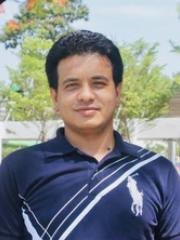
Dr. Nanda Kaji Budhathoki is a Postdoctoral Research Fellow at the School of the Environment , University of Queensland, with expertise in environmental economics, climate change adaptation, and behavioral economics. He completed his PhD in Agriculture and Environmental Economics from Charles Darwin University in 2020. Education : PhD in Agriculture and Environmental Economics (2020), Charles Darwin University Research Interests : Focus on climate risk mitigation for agricultural communities, behavioral aspects of climate adaptation, socio-economic impacts of extreme weather events, and economic modeling for private land conservation. His work integrates environmental, economic, and social data to develop sustainable solutions. Publication Trends : Recent work explores climate risk management in agriculture (2025-2020), with specific focus on index-based insurance, farmer risk perception, and adaptation strategies. Earlier publications examine rural development economics (2017-2010), including microcredit impacts and crop innovation adoption.
Prof. Muhittin Eren Uçkan is a Professor in the Department of Civil Engineering at Rafet Kayış Faculty of Engineering. His work focuses on earthquake engineering, structural dynamics, and seismic performance of infrastructure systems. Education: MS in Civil Engineering (1987) from Middle East Technical University, PhD in Earthquake Engineering (1994) from Boğaziçi University Key Research Areas: Seismic response of pipelines, soil-structure interaction, base isolation systems, and infrastructure resilience His recent publications analyze post-earthquake performance of transmission pipelines (2024 Kahramanmaras), liquid storage tanks (2023), and buried steel pipes (2016–2019). Studies emphasize fault crossing effects , sloshing damping , and seismic risk frameworks . Administrative roles include Vice Dean at Gebze Institute of High Technology (1998), Head of Department (1995–1998), and Commission Presidency at Alanya Aladdin Keykubat University (2020).
Professor Seda Kundak at Istanbul Technical University's Faculty of Architecture is a leading expert in Disaster Risk Management , Urban Resilience , and Multi-hazard Impact Chains . She has served as Program Head, Deputy Head of Department, and Commission President at Istanbul Technical University's Urban and Regional Planning Department since 2010. PhD in Urban Planning (Istanbul Technical University) Research focus: Seismic Risk, Climate Change Adaptation, Disaster Logistics Her scientific work includes 21 research outputs (Scopus h-index: 94) analyzing earthquake scenarios, compound disasters, and systemic risk assessment. Recent articles explore Impact Chains frameworks and Istanbul's seismic risk dynamics. Awards : SRA Fellow (2022) SRA/Sigma Xi Distinguished Lecturer (2017) She leads the PARATUS Project (€2,064,375 budget) developing open-source tools for multi-hazard risk assessment and has completed 5 major research projects on disaster logistics since 2005.
Ann Bostrom is a Professor at the Daniel J. Evans School of Public Policy and Governance, University of Washington. Previously, she served as Associate Dean for Research at Georgia Tech's Ivan Allen College of Liberal Arts (1992-2007) and co-directed the National Science Foundation's Decision Risk and Management Science Program (1999-2001). Her work bridges environmental policy, risk communication, and decision-making under uncertainty. Education: Ph.D. in Public Policy Analysis (Carnegie Mellon University), M.B.A. (Western Washington University), B.A. in English (University of Washington), Postdoctoral studies in Engineering and Public Policy (Carnegie Mellon) and Cognitive Survey Methodology (Bureau of Labor Statistics) Bostrom's research focuses on risk perception , environmental policy , and decision-making under uncertainty , particularly in climate change, natural disasters, and science communication. She has pioneered mental models approaches to risk assessment and contributed to understanding public attitudes toward carbon emissions, weather hazards, and astronaut health risks. Her scientific awards include the 2020 Distinguished Educator Award and 1997 Chauncey Starr Award (both from the Society for Risk Analysis), and fellowships from AAAS, WSAS, and SRA. She has received research funding from the National Science Foundation, EPA, and NIH. Bostrom leads or co-leads multiple NSF-funded initiatives, including the Cascadia Coastlines and Peoples Hazards Research Hub and the NSF AI Institute for Trustworthy AI in Weather, Climate, and Coastal Oceanography (AI2ES) . She serves on advisory committees for AAAS, Washington State Academy of Sciences, National Renewable Energy Laboratory, and NCAR's Mesoscale & Microscale Meteorology Lab.
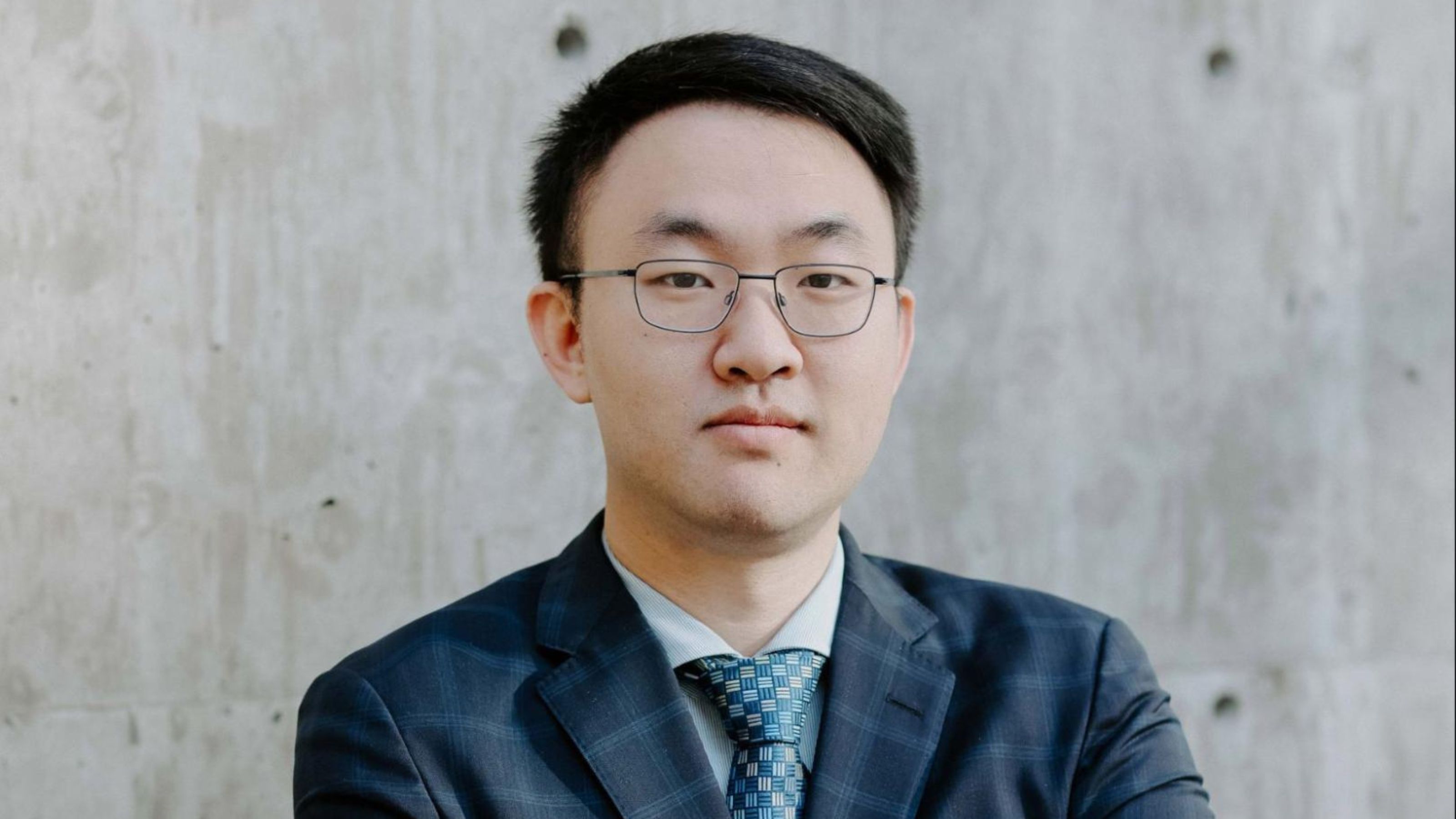
Qipei Mei is an Assistant Professor in the Department of Civil and Environmental Engineering at the University of Alberta's Faculty of Engineering. With an MSc in Computer Science and a PhD in Structural Engineering, he bridges civil engineering with artificial intelligence to enhance infrastructure productivity and sustainability. His research spans AI-driven design automation, robotics for construction safety, and IoT-based condition assessment. PhD, Structural Engineering - University of Alberta (2020) MSc, Computer Science - Georgia Institute of Technology (2018) MSc, Structural Engineering - University of Alberta (2014) B.E., Civil Engineering - Huazhong University of Science and Technology (2011) Mei's work focuses on three key areas: leveraging data-driven methods for design automation, applying sensing/robotics to construction operations, and using digital twins for infrastructure assessment. His team explores generative AI for housing design, robotic construction in remote communities, and smart monitoring systems. Recent publications highlight advancements in: lateral capacity prediction for monopile foundations, transformer-based architectural layout analysis, large language models for building code compliance, vision-language models for safety hazard detection, and sensor networks for bridge monitoring. These works demonstrate interdisciplinary integration of AI, structural engineering, and IoT. Mei actively collaborates with diverse researchers and welcomes graduate students to his Smart Infrastructure Technologies (SITE) Research Group, part of the Infrastructure and Human Tech Lab (IHT-Lab). He teaches advanced topics in structural and civil engineering while pursuing industry-funded projects through NSERC, CFI, and Alberta Innovates.
Professor Zoheir Sabeur is Professor of Data Science and Artificial Intelligence at Bournemouth University (2019–present) and Head of the Processes and Behaviour Understanding (PRO_BU) Research Group. He concurrently serves as Visiting Professor of Data Science at Colorado School of Mines (2017–present) and held the position of Science Director at the IT Innovation Centre, University of Southampton (2009–2019). Over three decades he has led more than 30 large-scale projects as Principal Investigator, securing over £12 million of funding from the European Commission, UKRI, DSTL, NERC, EPSRC and industry. Education PhD in Theoretical Physics, University of Glasgow (1990) MSc in Theoretical Physics, University of Glasgow (1986) BSc First-Class Honours in Physics and Applied Mathematics, Université d'Oran (1984) Advanced Leadership Programme, Ashridge Business School (2011) Research Interests Professor Sabeur’s research focuses on the fundamental theory and application of data science and artificial intelligence to understand complex human, natural and industrial processes and behaviours. His work spans multi-modal sensing, big-data analytics and machine-learning algorithms that extract actionable knowledge from large heterogeneous datasets. Application domains include: Healthcare: AI-driven diagnostics and prognostics for chronic diseases such as COPD, asthma and cancers through omics and phenotypic data integration. Environmental & Climate: Earth-observation analytics for wildlife migration and climate-change impact assessment using satellite data and global grid systems. Maritime & Cyber-Physical Security: Real-time risk assessment for shipping in extreme environments, smart-city safety and critical-infrastructure protection using computer vision and sensor fusion. Recent research has produced novel AI classifiers that analyse lung-auscultation audio signals to grade COPD severity, as well as digital-twin frameworks for detecting malicious behaviour in urban spaces. Scientific Awards & Recognition Fellow of the British Computer Society (FBCS) Fellow of the Institute of Marine Engineering, Science & Technology (FIMarEST) Chartered Engineer (CEng) and Chartered Physicist (CPhys) Multiple ORS Awards (1987, 1988, 1989) Grants & Doctoral Supervision Professor Sabeur has secured and led more than 40 funded projects since 1996, including recent grants such as INSIGHT (NIHR, 2024) and S4AllCities (H2020, 2020). He currently supervises three ongoing PhD students at Bournemouth University and has successfully graduated three others, covering topics from computational hydrodynamics to AI-based respiratory-disease analytics. He welcomes enquiries from prospective postgraduate researchers interested in data science, AI and interdisciplinary applications under schemes such as UKRI and Horizon Europe.
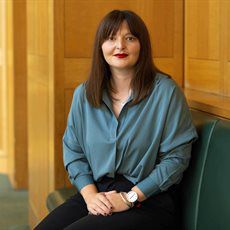
Louise Reardon is Professor of Governance and Public Policy at the University of Birmingham's School of Government, Department of Public Administration and Policy. She serves as School Deputy Director of Research (Impact) and is Thematic Research Lead for Transport at UK Parliament. Her internationally recognized expertise spans transport policy and governance, with research focusing on institutional collaboration across scales to advance local transport goals, technological innovation, and sustainability. Louise earned her PhD in Political Science from the University of Sheffield (2014), MA in Governance and Public Policy from the University of Sheffield (2009), and BA (hons) in Philosophy, Politics and Economics from the University of Durham (2008). She holds a Post-Graduate Certificate in Higher Education (2018) and is a Senior Fellow of the Higher Education Academy (2020). Her research interests center on transport policy and governance, with specific focus on multilevel governance, agenda setting, policy implementation, smart mobility transitions, urban governance, and wellbeing. As a political scientist, she advances theoretical understanding of policy processes through transport analysis, examining how local dynamics influence issue recognition, agenda setting, policy change, and approaches to wicked problems. Her work consistently bridges academic theory with practical policy application. Louise's research portfolio demonstrates a clear trajectory toward increasingly complex, interdisciplinary climate-related transport research. Her recent publications show strong emphasis on net-zero transitions, smart city governance, and pandemic recovery implications for transport systems, with growing international collaboration particularly with Indian and Australian institutions. The trend indicates deepening engagement with practical policy implementation challenges alongside theoretical contributions. Senior Fellow of the Higher Education Academy, 2020 Louise regularly provides scientific advice to diverse stakeholders and serves on the UK Department for Transport's Transport Research Innovation Grant advisory board. She co-edited the Handbook of Transportation and Public Policy (2025) and previously co-chaired the Governance and Decision-Making Processes Special Interest Group for the World Conference on Transport Research Society. She serves on editorial boards for Research in Transportation Business & Management and Local Government Studies. As an educator, Louise led the College of Social Science's first Degree Apprenticeship programme and specializes in blended teaching approaches. She has supervised PhD students on evidence use in local policymaking, center-local government relations, and walking's role in climate change agendas. She actively seeks new doctoral students interested in multi-level governance, policy change, sustainable transitions, and urban governance topics.
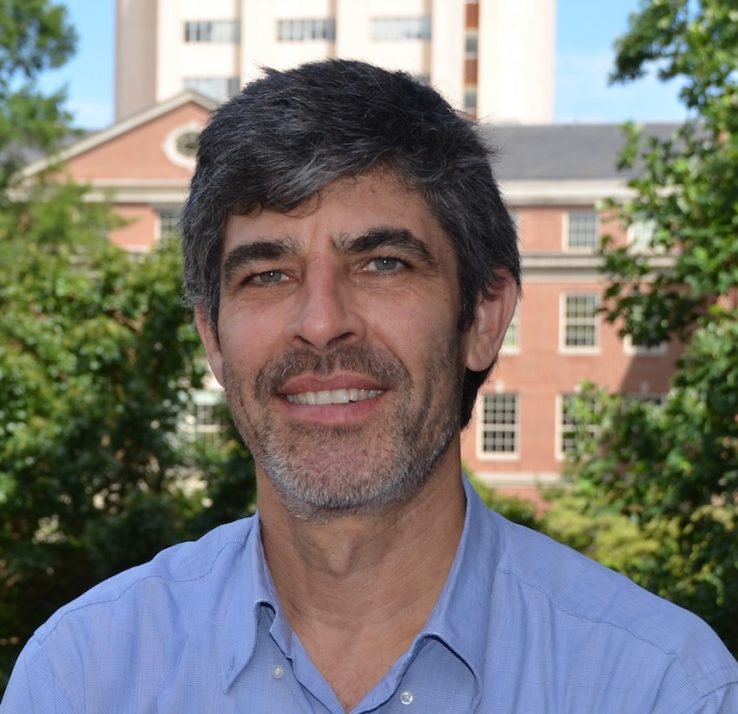
Lawrence S. Engel, PhD, serves as Professor in the Department of Epidemiology at UNC's Gillings School of Global Public Health, with additional appointments at the Lineberger Comprehensive Cancer Center and UNC Center for Environmental Health and Susceptibility. He concurrently holds an associate scientist position in the Epidemiology Branch of the National Institute of Environmental Health Sciences (NIEHS). His educational credentials include a PhD (1999) and MS (1996) in Epidemiology from the University of Washington-Seattle, and a BS in Genetics from UC Berkeley (1986). Dr. Engel's research program investigates health impacts of environmental disasters (oil spills, hurricanes), pesticides, persistent organic pollutants, and occupational hazards on cancer, neurological deficits, and chronic kidney disease. He leads UNC's Environmental and Occupational Epidemiology initiatives, utilizing biomarkers and multi-source clinical data to examine exposure-disease relationships through cohort and case-control designs. His work emphasizes vulnerable populations in disaster-affected regions and agricultural communities. Analysis of his 2007-2019 publications reveals consistent focus on disaster-related exposures (Deepwater Horizon), neurotoxicants (styrene), and carcinogens (organochlorines, PCBs). Methodologically, his studies leverage nested cohort designs, long-term follow-up, and biomarker integration to assess cardiovascular, neurological, and oncological outcomes across diverse populations. His scientific recognition includes: NIH Director’s Award for the Gulf Long-term Follow-up (GuLF) Study (2011) Dr. Engel teaches Environmental Epidemiology (EPID 785), lectures on disaster/occupational epidemiology, and serves on the Department of Epidemiology admissions committee. He chairs the Scientific Advisory Board for Western New York's Environmental Health Study at the University at Buffalo, with research primarily funded through NIEHS collaborations including the GuLF Study. He directs environmental epidemiology programs within the Department of Epidemiology and collaborates extensively with Lineberger Comprehensive Cancer Center and UNC Center for Environmental Health and Susceptibility teams on interdisciplinary environmental health projects.
Daniel Aldrich is a Dean's Professor of Resilience and Director of the Resilience Studies Program at Northeastern University , affiliated with the College of Social Sciences and Humanities and Political Science Department . His career spans decades of research on disaster resilience , social capital , and post-crisis recovery , with fieldwork across Japan, India, and Africa. Education : PhD and MA in Political Science from Harvard University, MA from UC Berkeley, BA from UNC Chapel Hill. Leadership : Co-Director of Global Resilience Institute, Board member of journals Asian Politics and Policy and Risk Hazards and Crisis in Public Policy . Research Focus centers on social capital's role in disasters , controversial facility siting , and countering violent extremism . His work reveals how community networks enhance survival rates during tsunamis, hurricanes, and pandemics, and how decentralized decision-making improves recovery. Scientific Contributions include groundbreaking studies on Fukushima nuclear policy , social ties in evacuation behavior , and resilience through rainwater harvesting . His 2019 book Black Wave analyzes Japan's 3/11 disasters. Grants : NSF, Fulbright, Abe Foundation, Rasmussen Foundation, Japan Foundation. Awards : TIER 1 NEU Award, AAAS Fellowship, NSF Research Center Grant, University Faculty Scholar (Purdue). Media Engagement spans New York Times , CNN , AP , Reuters , and NPR , with over 50 media appearances in 2025 alone. He consults for the New England Aquarium and Louisiana Coastal Protection Authority .
Eun Jeong Cha is an Associate Professor in the Department of Civil and Environmental Engineering at the University of Illinois at Urbana-Champaign. She holds a Ph.D. (2012) and M.S. (2009) from Georgia Institute of Technology, and a B.S. (2006) from Seoul National University. Her research focuses on risk-informed decision-making for infrastructure resilience under natural hazards, including hurricane risk assessment under climate change, interdependent infrastructure systems analysis, and seismic risk mitigation. Education: Ph.D. in Civil Engineering, Georgia Tech (2012) M.S. in Civil Engineering, Georgia Tech (2009) B.S. in Architectural Engineering, Seoul National University (2006) Her research interests span structural reliability, disaster risk management, and the integration of climate change impacts into infrastructure design. Key areas include hurricane risk modeling, interdependent infrastructure recovery, and socially-aware retrofit prioritization. She has received awards such as the ASCE/EMI Probabilistic Methods Committee Student Paper Award (2012) and is a Fellow of the Next Generation of Hazards and Disasters Researchers (2015). Dr. Cha leads the R4 Group, advancing methodologies for resilient infrastructure systems. She actively contributes to professional societies like ASCE, serving on committees for load combinations and climate adaptation. Her work bridges engineering, risk analysis, and policy to enhance community resilience against extreme events.
David Wanik is an Assistant Professor in the Department of Operations and Information Management and Associated Faculty in the Department of Civil and Environmental Engineering at the University of Connecticut. He serves as Academic Director for Business Data Analytics at the Stamford campus and conducts research in the Eversource Energy Center, focusing on data science, natural hazards, remote sensing, and IoT applications in utility systems. PhD, MS, and BS in Environmental Engineering from University of Connecticut His research bridges natural hazard prediction, power grid resilience, and environmental data science. Key themes include: Machine learning for power outage prediction Climate change impact on energy demand Remote sensing for population and environmental monitoring IoT-enabled infrastructure hardening Recent publications emphasize deep learning for nighttime light imagery analysis, hybrid physics-data-driven models for grid resilience, and climate-integrated demand forecasting. His work integrates satellite data, LiDAR, and utility infrastructure records for predictive analytics. Teaching includes courses in business analytics, Python-based data science, and deep learning for the MS Business Analytics and Project Management program.
Dr. Zoe Li is an Associate Professor in the Department of Civil Engineering at McMaster University, with an additional role as an Associate Member in the Department of Computing and Software. She specializes in developing modeling and decision-support tools to address challenges in water resources management, environmental systems analysis, and climate change impacts. Her research focuses on hydrological modeling, probabilistic forecasting, risk analysis, and environmental systems optimization. She holds a B.Eng. from China and M.A.Sc./Ph.D. degrees from the University of Regina. Her work spans interdisciplinary collaborations, including studies on dam safety under climate change, wastewater treatment plant optimization, and AI-driven environmental monitoring. She has been actively involved in projects such as CityDNA, a digital tool to model urban environments for decision-making during crises like the pandemic. Dr. Li teaches courses in environmental systems engineering and principles of environmental engineering, emphasizing uncertainty quantification and sustainable practices. Her research publications (15+ recent articles) address topics like machine learning applications in environmental systems, climate change impacts on water resources, and infrastructure resilience. She advises graduate students in environmental engineering and systems optimization. Notable grants include funding from Roche Canada for pandemic-related urban modeling. Her work is frequently published in high-impact journals like Journal of Environmental Management and Water Resources Research .
Dr. Jessica Sunshine is a Professor in the Department of Geology at the University of Maryland. Her research focuses on planetary materials and processes, particularly using spectroscopy and morphological analysis to study comets, asteroids, meteorites, and lunar geology. She is a principal investigator on NASA missions such as the Double Asteroid Redirection Test (DART) and the Lucy Mission, contributing to breakthroughs in planetary defense and asteroid composition analysis. Dr. Sunshine holds a Ph.D. from Brown University (1994). Her work integrates field-based and remote sensing techniques, including thermal infrared spectroscopy, to explore topics like the origins of spinel-rich deposits on the Moon, the composition of Trojan asteroids, and the dynamics of impact ejecta. She leads the Lunar Vulkan Imaging and Spectroscopy Explorer (Lunar-VISE) mission to study non-mare volcanic regions on the Moon. Her recent studies include analyzing the DART mission's impact on Dimorphos, revealing insights into asteroid deflection mechanics and surface material responses. She has also contributed to understanding the geological history of Ceres and the compositional diversity of Jupiter Trojans through the Lucy mission's data.
Jack Baker is the William Alden Campbell and Martha Campbell Professor of Engineering and Associate Dean for Faculty Affairs in the Stanford Doerr School of Sustainability at Stanford University. He is a Professor of Civil & Environmental Engineering with expertise in probabilistic and statistical tools for quantifying and managing disaster risk and resilience. His work has significantly influenced building codes, performance-based engineering guidelines, and catastrophe risk models. Dr. Baker's educational background includes: Ph.D. in Civil & Environmental Engineering from Stanford University (2005) M.A. in Statistics from Stanford University (2004) M.S. in Civil & Environmental Engineering from Stanford University (2002) B.A. in Mathematics/Physics from Whitman College (2000) His research focuses on disaster risk and resilience, particularly in earthquake engineering and seismic hazard analysis. Baker uses probabilistic and statistical approaches to analyze risk in spatially distributed systems, characterize earthquake ground motions, and simulate post-disaster recovery processes. His work bridges theoretical frameworks with practical applications in building codes and risk management strategies. He has made significant contributions to understanding the relationship between ground motion characteristics and structural response, while also expanding into climate-related hazards like atmospheric rivers and their compound effects. His recent publications demonstrate a growing focus on interdisciplinary research that connects engineering with socioeconomic factors in disaster contexts. There's a clear trend toward integrating machine learning techniques with traditional engineering approaches, particularly in modeling household displacement, economic recovery, and flood damage prediction. His work increasingly addresses the human dimension of disasters, examining how physical damage translates to social impacts and recovery timelines. Dr. Baker has received numerous prestigious awards recognizing his contributions to the field: William B. Joyner Lecture Award from the Seismological Society of America and Earthquake Engineering Research Institute (2023) PROSE Awards finalist for Seismic Hazard and Risk Analysis textbook (2022) Thorpe Medal from the European Council on Computing in Construction (2022) Walter L. Huber Civil Engineering Research Prize from the American Society of Civil Engineers (2018) CAREER Award from the National Science Foundation (2010) As an educator and mentor, Baker advises numerous doctoral and master's students while serving as Associate Dean for Faculty Affairs. His research group has secured significant funding for projects related to seismic risk, disaster recovery modeling, and infrastructure resilience. He has directed major initiatives like the Stanford Urban Resilience Initiative and co-founded the Haselton Baker Risk Group, demonstrating strong leadership in translating research into practical applications. Dr. Baker leads the Baker Research Group, which focuses on probabilistic approaches to disaster risk assessment and management. The group maintains active collaborations with government agencies, industry partners, and international research institutions to advance the state of knowledge in earthquake engineering and broader disaster resilience fields. Their work often involves developing innovative computational tools and frameworks that are made publicly available through GitHub repositories.
Tracy Becker is an Adjunct Assistant Professor in the Department of Civil Engineering at McMaster University, where she has been since 2014. Her expertise lies in the design, modeling, and experimental testing of high-performance structural systems with a focus on seismic isolation. Education: BS in Structural Engineering, University of California, San Diego MS and PhD in Structural Engineering, Mechanics and Materials, University of California, Berkeley Post-doctoral research at Kyoto University's Disaster Prevention Research Institute Research Interests: Becker specializes in seismic isolation systems, hybrid simulation methods, and structural performance under extreme events. Her work spans bridge engineering, nuclear infrastructure protection, and innovative materials for earthquake resilience. She integrates computational modeling with experimental validation to address challenges in: Nonlinear system behavior in isolated structures Multi-hazard optimization for seismic and wind loads Bridge management using data-driven and fuzzy logic frameworks Advanced gusset plate design for seismic retrofit Adaptive isolation systems for nuclear facilities Probabilistic lifetime demand predictions for infrastructure Teaching: She has instructed courses in Seismic Design (CIVENG 4ED4), Structural Mechanics (CIVENG 2C04), and Earthquake Engineering (CIVENG 730) at McMaster University.