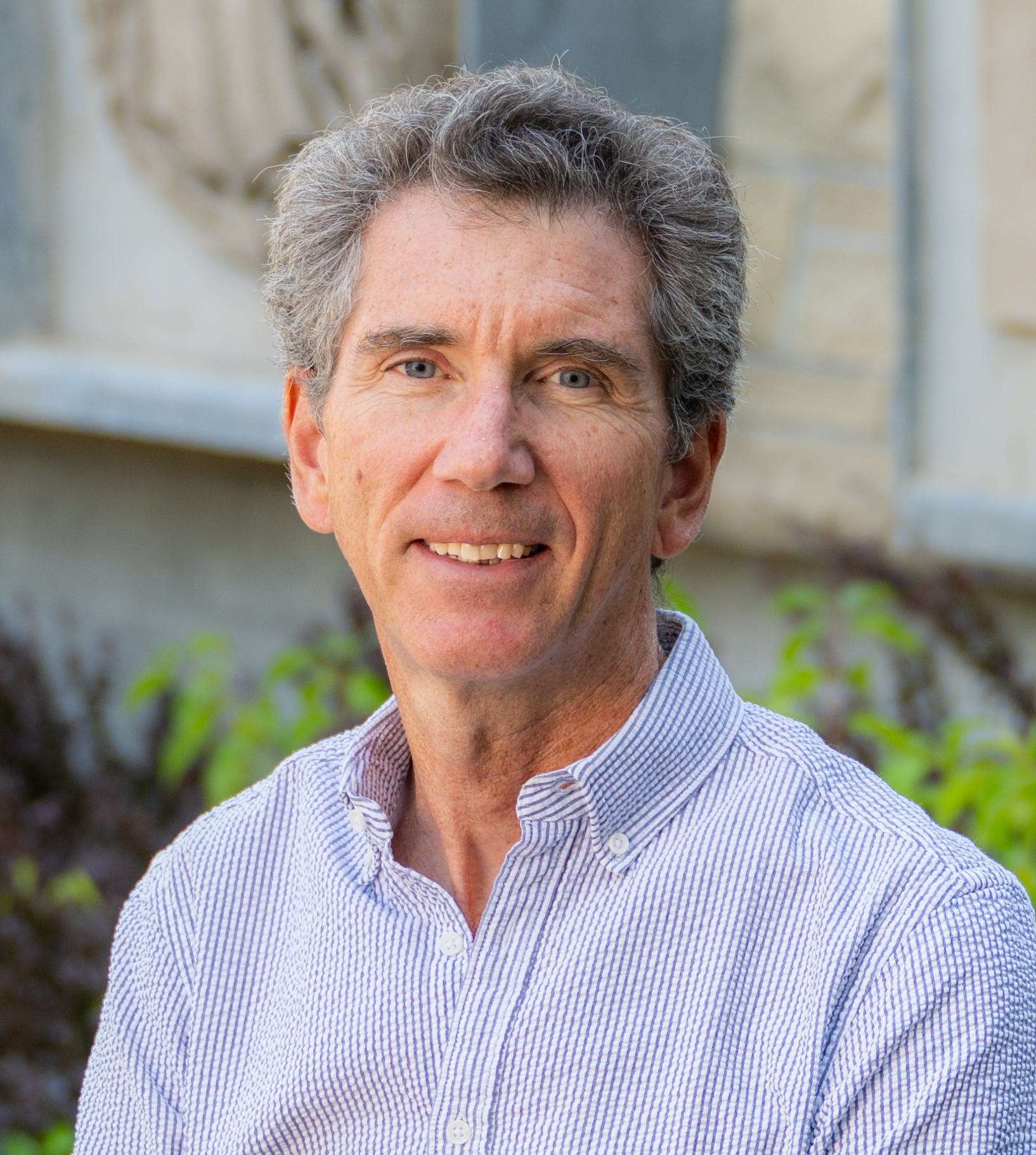
Dr. Paul Henshaw is an Associate Professor in the Department of Civil and Environmental Engineering at the University of Windsor. He holds a PhD (1995), MASc (1990), and dual bachelor's degrees in Mechanical Engineering and Chemistry (University of Western Ontario, 1985/1983). His research focuses on renewable energy systems, particularly solar energy applications, thermoelectric systems, and absorption cooling technologies. He has contributed to advancements in exergy analysis, optimization algorithms for energy systems, and greenhouse climate modeling in subarctic environments. Key affiliations include Professional Engineers Ontario and the American Solar Energy Society. Research highlights include optimizing photovoltaic-thermoelectric hybrid systems, analyzing wind-solar energy interactions, and developing models for bubble-pump-driven absorption cooling. Over 50 peer-reviewed articles since 1981 reflect his interdisciplinary work spanning thermodynamics, fluid dynamics, and sustainable engineering. He collaborates on projects like Canada’s subarctic greenhouse modeling and Mexico’s renewable energy shoreline initiatives. His work bridges theoretical analysis with practical applications in energy efficiency and climate adaptation.
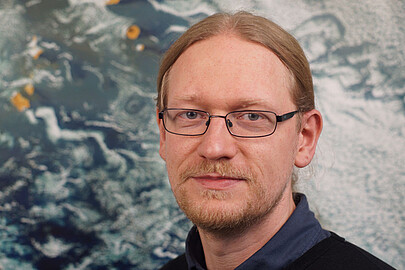
Professor Raphael Hirschi (Lennard-Jones School of Chemical and Physical Sciences, Keele University) is a leading astrophysicist specializing in stellar evolution, nucleosynthesis, and 3D hydrodynamic simulations. With a PhD from Geneva Observatory and postdoctoral experience at the University of Basel, he joined Keele in 2007 as an RCUK fellow, becoming Professor in 2018. His work bridges observational astrophysics, nuclear physics, and computational modeling. Developed 3D hydrodynamic constraints for 1D stellar models Co-discoverer of 320 solar-mass stars (Crowther et al. 2010) Chair of the ChETEC COST Action (chemical evolution collaborations) Research Interests include: Stellar nucleosynthesis (s-process, p-process, weak s-process) Massive star evolution (rotation, metallicity, supernovae) 3D hydrodynamic simulations of convective shells and turbulence Population III stars and early universe chemical enrichment Recent trends in his publications focus on multi-dimensional stellar modeling , with collaborations across computer science and nuclear experiments (e.g., LUNA facility). Key projects include SHYNE (ERC-funded) and NuGrid simulations. Scientific Awards include the Plantamour-Prevost Prize for early-career research excellence. Teaching modules: Nuclear and Particle Physics (PHY-20009) Applied Physics and Emerging Technologies (PHY-20033) Physics of Fluids (PHY-30030) Particle Physics and Accelerators (PHY-30033)
Prof. Dr. Björn Maronga is a Professor of Boundary Layer Meteorology at the Institute of Meteorology and Climatology within the Faculty of Mathematics and Physics at Leibniz Universität Hannover. His office is located at Herrenhäuser Straße 2, 30419 Hannover (Building 4105, Room F126). He holds multiple administrative roles including chair of the Meteorology Examination Board, BAföG representative, and practical training coordinator for Meteorology, as well as representing professors on the selection commission and faculty council. Prof. Maronga's research focuses on boundary layer meteorology and urban climate modeling, with particular expertise in Large-Eddy Simulations (LES) using the PALM model system. His work spans from fundamental atmospheric physics to practical urban climate applications. He investigates urban heat islands, radiation fog dynamics, land-atmosphere interactions, and the development of high-resolution urban climate models. His research group is deeply involved in the [UC]² national research program focused on developing building-resolving atmospheric models for entire city regions. Analysis of his recent publications reveals a strong trend toward increasingly sophisticated urban climate modeling techniques. His work with the PALM model system has evolved from basic boundary layer studies to comprehensive urban climate simulations incorporating chemistry, detailed radiative transfer, and land-surface interactions. Recent research emphasizes practical applications for urban planning, climate adaptation, and thermal comfort assessment. His collaborative network spans numerous international institutions, with particular focus on European research partnerships. Prof. Maronga is actively involved in several significant research projects including the MOSAIK initiative for model-based city planning under climate change and the ISOBAR project studying Arctic boundary layer processes. His work has contributed substantially to the development and validation of the PALM model system, which has become a leading tool for high-resolution urban climate simulations worldwide. He has supervised numerous PhD students and postdoctoral researchers who have contributed to the extensive publication record associated with the PALM modeling framework.
Dr. Mahyar Silakhori is a Research Fellow at the School of Electrical and Mechanical Engineering , University of Adelaide, with expertise in thermal energy storage (TES) and phase change materials (PCMs). His work focuses on solar energy integration, nanofluid applications, and optimizing materials for high-temperature processes. Research Interests : Thermal Energy Storage (TES) systems Phase Change Materials (PCMs) for solar energy Graphene-based nanofluids for heat transfer Chemical looping for solar thermal storage Recent Publications highlight trends in solar thermal battery design, nanocomposite processing, and exergy optimization of hybrid energy systems. Contact : mahyar.silakhori@adelaide.edu.au
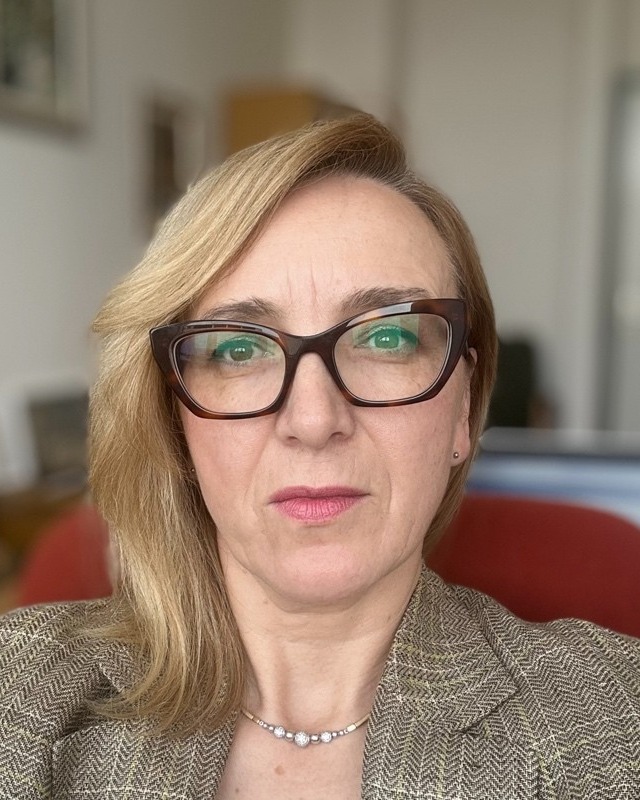
Džana Kadrić is a Full Professor at the Faculty of Mechanical Engineering , University of Sarajevo , specializing in energy efficiency and sustainable building systems. She holds a PhD in Technical Sciences (2014) and has led numerous projects focused on energy audits, district heating optimization, and renewable energy integration. Education : PhD in Technical Sciences (2014), MSc in Technical Sciences (2008), Dipl.Eng. in Mechanical Engineering (2001) Research Interests include industrial and building energy efficiency, renewable energy systems, and cooling technology. Her work emphasizes practical implementation of energy-saving measures and policy development for decarbonization. Recent projects cover carbon-neutral campus planning, multi-objective retrofit optimization, and alternative heating systems for Bosnia and Herzegovina. Scientific Contributions span 15+ peer-reviewed articles on topics like energy retrofit strategies, cooling tower performance, and renewable resource assessment. She co-authored books on experimental design and residential building typology, and her research has informed national energy policies. Awards : Recognition for Best Technical Project in BiH (2022), University of Sarajevo Scientific Achievement Awards (2022, 2021) Leadership : Invited reviewer for journals like Sustainable Cities and Society , mentor in 34+ student projects, and trainer for energy auditors and women's professional development programs
Nils Olsen is a Professor and Head of Geomagnetism and Geospace at the Department of Space Research and Technology , DTU Space (Danish National Space Center). His career spans multiple institutions including the Niels Bohr Institute at the University of Copenhagen and the Danish Center for Planetary Science . He holds a MSc (1985) and PhD (1991) in Physics from Göttingen University . Research interests center on Earth’s magnetic field modeling , core fluid dynamics , electromagnetic induction , and planetary magnetism (Mars, Moon). His work integrates Swarm satellite data , Ørsted missions , and CHAMP observations to study geomagnetic variations and external-internal field separation. Recent publications focus on tidal magnetic signals, ionospheric currents, and space weather applications. Supervision includes PhD projects on drone-borne magnetic surveying , machine learning for geophysical inversion , and UAV-based near-surface geophysics . Collaborations extend to ESA’s Swarm mission and CSES satellite initiatives , with over 100 peer-reviewed publications and leadership roles in international geophysical working groups.
Dr. Samy Missoum is a Professor in the Department of Aerospace and Mechanical Engineering at the University of Arizona's College of Engineering. His academic career spans over two decades with continuous research and teaching contributions in multidisciplinary design optimization, reliability-based design, and computational mechanics. He has maintained an active teaching schedule offering graduate-level courses including Finite Element Methods, Design Optimization, and Advanced Finite Element Analysis through Fall 2025. Dr. Missoum's research focuses on Multidisciplinary Design Optimization, Reliability-Based Design Optimization, Finite Element Analysis, Probabilistic Design, Structural Dynamics, and Aeroelasticity. His work bridges theoretical developments with practical engineering applications, particularly in handling uncertainty in complex systems. He has pioneered approaches using Support Vector Machines for engineering design problems, especially for discontinuous responses and multiple failure modes. His research has significant applications in aerospace structures, mechanical systems, and renewable energy technologies. His recent publications (2022-2024) demonstrate a strong focus on reliability assessment of uncertain systems subjected to random vibrations, stochastic optimization of nonlinear energy sinks, and thermal optimization for concentrated solar power systems. His work employs sophisticated computational approaches including surrogate modeling, multi-fidelity methods, and advanced optimization techniques to address complex engineering problems with uncertainty. Dr. Missoum's scholarly achievements have been recognized through several awards including being named an Associate Fellow of the American Institute of Aeronautics and Astronautics (2017) and receiving the 'Most Helpful to Their College Education' award from AME Seniors (2014). He was also invited as a Professor at Ecole Centrale in Marseille, France during 2021. His research has been consistently supported by grants that enable his work on structural reliability, optimization under uncertainty, and multidisciplinary design. He maintains active collaborations with researchers both nationally and internationally, as evidenced by his co-authored publications with scholars from various institutions. Dr. Missoum leads the CODES Laboratory at the University of Arizona, which focuses on Computational Optimization and Design under uncertainty. The laboratory conducts research on reliability assessment, multidisciplinary design optimization, and development of novel computational methods for engineering design problems with complex constraints and uncertainties.
Dr. Manuel Ángel Aguilar Torres is a Professor in the Department of Engineering at the University of Almería, Spain, where he leads the research group 'Integrated Territory Management and Spatial Information Technologies.' With an h-index of 29 (Scopus) and 26 (Web of Science), he has established himself as a leading researcher in remote sensing applications for agricultural and forest monitoring. His research primarily focuses on plastic greenhouse mapping using satellite imagery , LiDAR technology for forest inventory , and precision agriculture applications . He specializes in object-based image analysis, spectral indices development, and the integration of multi-source geospatial data for environmental monitoring, with particular emphasis on Mediterranean ecosystems. His work has resulted in 98 journal articles, 16 book chapters, and numerous conference presentations. Dr. Aguilar Torres has served as Principal Investigator for multiple research projects, including 'Mapeado de invernaderos e identificación de cultivos hortícolas protegidos mediante análisis de imagen basada en objetos y series temporales de imágenes de satélite' (RTI2018-095403-B-I00) and 'Identificación basada en objetos de cultivos hortícolas bajo invernadero a partir de estéreo imágenes del satélite Worldview-3 y series temporales de Landsat 8' (AGL2014-56017-R). His recent publications (2022-2025) demonstrate continued productivity in remote sensing methodology development, particularly in greenhouse mapping, forest inventory using UAV and LiDAR technologies, and spectral analysis. Notable scientific contributions include: Development of novel methods for plastic greenhouse detection using multi-temporal satellite imagery Benchmarking studies of spectral indices for agricultural monitoring Advanced techniques for individual tree segmentation in Mediterranean forests Integration of UAV and terrestrial LiDAR data for forest inventory As a supervisor, Dr. Aguilar Torres has guided numerous PhD students through the completion of their theses, with former students including Rafael Jiménez Lao, Abderrahim Nemmaoui, and María del Mar Saldaña Díaz. His research group maintains active collaborations with international institutions, providing students with opportunities for cross-border research experiences. The laboratory facilities support advanced geospatial analysis, with capabilities for processing satellite imagery from platforms like Sentinel-2, WorldView-3, and Deimos-2, as well as UAV and LiDAR data processing for environmental monitoring applications.
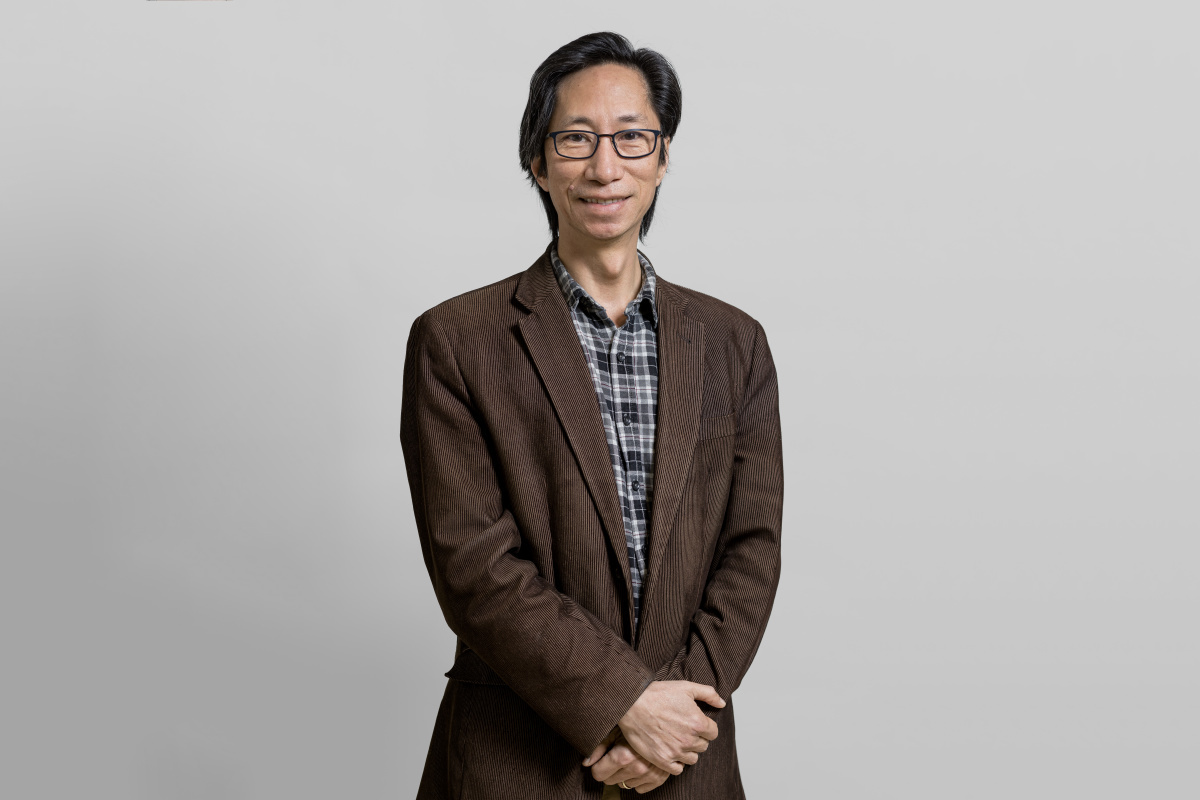
Tony Wong is a Professor in the Department of Systems Engineering at École de technologie supérieure (ÉTS), specializing in aeronautics, autonomous systems, and industrial automation. He holds affiliations with three key research laboratories: the Control and Robotics Laboratory (CoRo), LARCASE (Aeronautical Research), and SYNCHROMEDIA (Multimedia Communication). His work bridges theoretical optimization and practical applications, particularly in UAV design, renewable energy, and blockchain logistics. Research interests span: Aeronautics/Aerospace : Morphing wing optimization, computational fluid dynamics, UAV performance enhancement. Intelligent Systems : Robotic automation, machine learning for predictive maintenance, low-code industrial solutions. Sustainable Technologies : Hybrid energy systems, IoT for resource optimization, edge computing deployments. Dr. Wong mentors 47+ graduate students, with recent projects including wind-tunnel validations of morphing wings, AI-driven supply chains, and solar energy forecasting. His publication record (31+ journal articles since 2021) demonstrates consistent contributions to aerodynamic design and computational intelligence. While no awards are documented, his leadership in collaborative labs underscores institutional recognition. Laboratory engagements focus on experimental validation and industrial partnerships, utilizing ÉTS facilities like the Price-Païdoussis Wind Tunnel and advanced flight simulators. Current projects prioritize sustainability, including aerodynamic drag reduction and blockchain-enabled cost optimization.