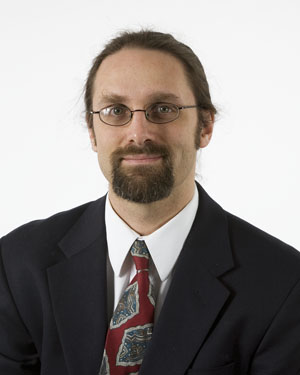
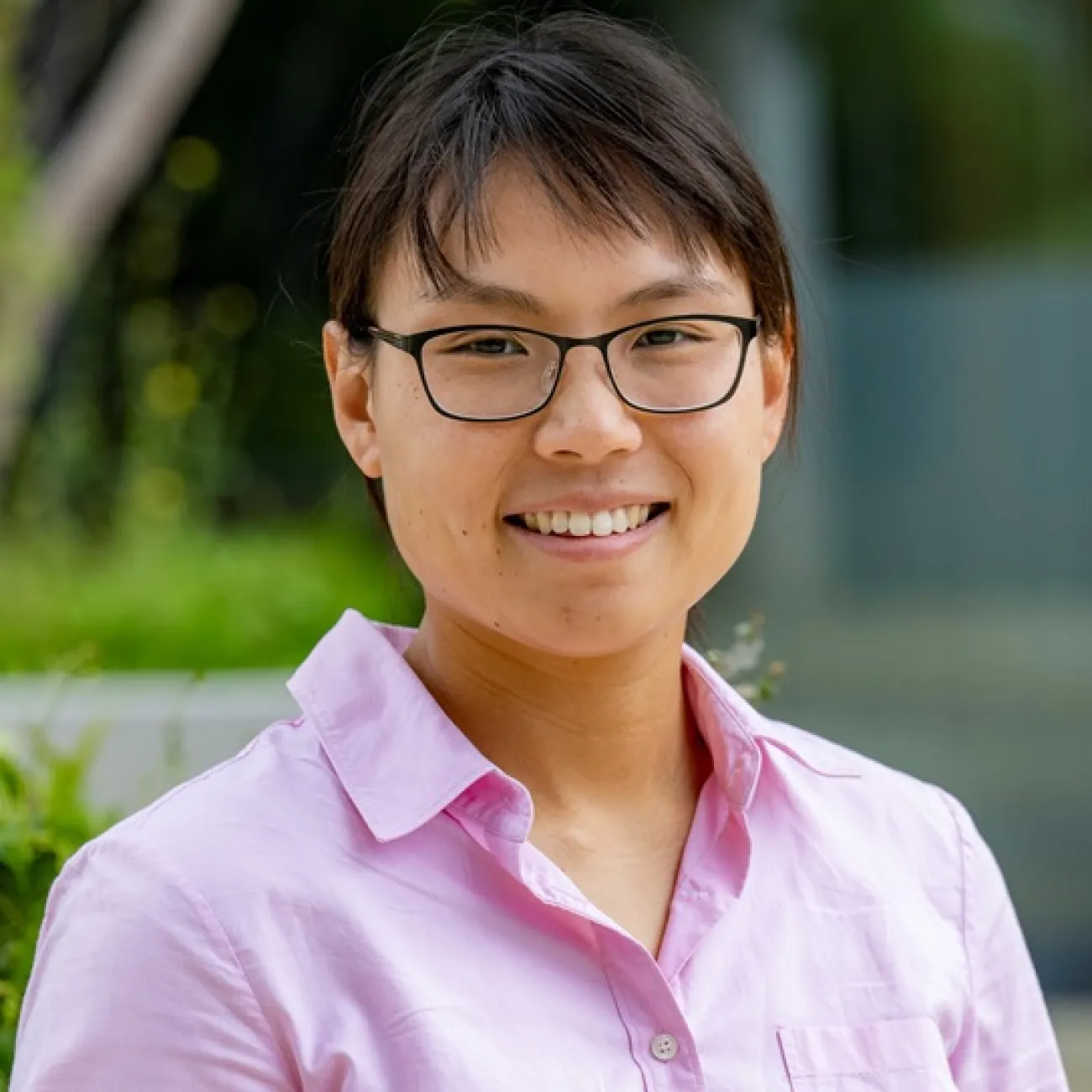
Prof. Ph.D.Sc. Malik Čabaravdić is a Full Professor at the Department of Automation and Metrology, Faculty of Mechanical Engineering, University of Zenica. He holds a Doctor of Technical Sciences degree from the Technical University of Dortmund, Germany. Since 2009, he has been affiliated with the University of Zenica, advancing to his current professorship in 2020. His roles include serving as Vice-Rector for International Cooperation and Quality Assurance (2015–2023) and currently leading the Department of Automation and Metrology since November 2023. His research focuses on automation, robotics, innovation management, and quality assurance in higher education. Notable projects include work on 3D printing applications, robot-assisted manufacturing processes, and smart automation systems. He has contributed to international collaborations, particularly in optimizing robotic processes for precision tasks like sheet metal forming and photovoltaic systems. Prof. Čabaravdić's publications span over two decades, emphasizing robotics, automation, and manufacturing innovations. His work bridges theoretical advancements with practical industrial applications, reflecting a strong commitment to both academic research and institutional leadership.
Hasan MISAII is a Researcher affiliated with the Université de Technologie de Compiègne (UTT), where he contributes to the Research Directory. His work focuses on advanced statistical and machine learning methodologies applied to industrial systems, maintenance optimization, and risk analysis. Key research areas include degradation modeling, predictive maintenance strategies, and data-driven decision-making for complex systems. His expertise spans statistical learning, applied statistics, and data science, with a strong emphasis on real-world applications in manufacturing and industrial engineering. MISAII has extensively explored topics such as masked data analysis, competing risks modeling, and the integration of machine learning algorithms into maintenance policies. His research bridges traditional statistical approaches with modern AI techniques to enhance system reliability and operational efficiency. Notable contributions include comparative studies of degradation models, optimal maintenance policy formulations under dynamic conditions, and addressing challenges in masked data through machine learning-based imputation methods. His work frequently targets industrial systems like curing ovens, milling machines, and multi-component systems, delivering practical solutions for predictive analytics and risk mitigation. MISAII’s publications highlight a trend toward data-driven, task-specific, and time-dependent methodologies, reflecting his commitment to advancing both theoretical and applied aspects of systems engineering and reliability analysis.
Mohit Tawarmalani is the Executive Associate Dean of Faculty and the Allison and Nancy Schleicher Chair of Management at Purdue University's Mitch Daniels School of Business. He holds a courtesy appointment as a Professor of Chemical Engineering. With a Ph.D. and M.S. from the University of Illinois at Urbana-Champaign and a B.Tech. from the Indian Institute of Technology Delhi, his expertise spans optimization, mathematical programming, and global optimization software (e.g., BARON). His research bridges computer science, operations research, and engineering, focusing on applications in business and energy systems. His awards include the INFORMS Computing Society Prize (2004), Beale-Orchard-Hays Prize (2006), and the 2024 Computing in Chemical Engineering Award. He led Purdue’s team to win the 2023 INFORMS UPS George D. Smith Prize for educational innovation in analytics training. Prof. Tawarmalani directs the Krenicki Center for Business Analytics and Machine Learning, co-founded the Master’s in Business Analytics program, and redesigned the Mitch Daniels School of Business structure. His grants include NSF and Air Force funding for optimization and network research.
Dr Andrew Razjigaev is a PhD Researcher at the Queensland University of Technology (QUT), affiliated with the Medical Robotics Group within the QUT Centre for Robotics. He holds a Mechatronics Engineering degree from QUT (2017) and has been involved in the Medical Robotics Group since 2016, contributing to projects like teleoperating snake robots via hand gestures and visual servoing systems. His research focuses on surgical robotics, particularly developing continuum robots for vision-based teleoperated minimally invasive surgeries. Education: Bachelor of Mechatronics Engineering, Queensland University of Technology (2017) Research interests include robot arm kinematics, robotic vision, and teleoperation systems. His work integrates computational design algorithms with patient-specific surgical needs, advancing the field of minimally invasive surgery through snake-like manipulators and robotic collaboration (e.g., RAVEN II integration). He has also contributed to projects like CARTMAN, a low-cost Cartesian manipulator that won the Amazon Robotics Challenge, and semantic segmentation techniques for limited training data. He served as President of the QUT Robotics Club in 2018, developing robot arm workshops focused on control systems and computer vision for students. His contributions span surgical robotics, competition robotics, and medical automation, with a strong emphasis on practical applications and interdisciplinary collaboration.
Prof. Frederic Nabki is an Associate Professor of Electrical Engineering at the École de technologie supérieure (Québec, Canada). He holds a B.Eng. (Honors) and Ph.D. in Electrical Engineering from McGill University. His primary research focuses on MEMS integration with CMOS systems, RF integrated circuits (RFICs), and ultra-wideband (UWB) systems. He leads the Microtechnology and Microsystems Laboratory (Micro²) and co-directs the CoFaMic Research Centre at UQAM, exploring novel MEMS fabrication processes and hybrid RF-MEMS systems. Education: B.Eng. (McGill, 2003), Ph.D. (McGill, 2010) Affiliations: IEEE Montreal Section Secretary Labs: CoFaMic (UQAM), Micro² (ETS) His research interests span MEMS resonators, phase-locked loops, and UWB transceivers. Notable contributions include patents in MEMS-CMOS integration and book chapters on MEMS resonators. He has secured funding from NSERC, CFI, and ReSMiQ, focusing on miniaturization, energy efficiency, and system-level integration challenges. Recent work emphasizes energy-efficient UWB systems, terahertz modulation, and deep learning-enhanced ultrasonic sensors. His interdisciplinary approach bridges microelectromechanical and electronic systems for applications in healthcare, aerospace, and industrial IoT. Awards: Governor General of Canada’s Academic Bronze Medal (2025). Grants and collaborations include NSF-funded projects on MEMS fabrication and partnerships with Quebec’s Microsystems Strategic Alliance. He advises on emerging trends in hybrid RF-MEMS systems and low-power sensor networks.
Roman Szewczyk is a Professor at the Institute of Metrology and Biomedical Engineering within the Faculty of Mechatronics at Warsaw University of Technology (Politechnika Warszawska). He also maintains an affiliation with the Łukasiewicz Research Network – Industrial Research Institute for Automation and Measurements PIAP. His academic career spans over two decades since earning his doctorate in 2003. Professor Szewczyk's research interests are highly interdisciplinary, focusing on the intersection of mechanical engineering, materials science, and biomedical applications. His primary expertise lies in magnetic sensors, metrology, and the development of measurement systems. He has made significant contributions to understanding magnetostrictive effects, magnetic permeability in electrical steels, and the application of finite element methods for sensor development. His work bridges theoretical physics with practical engineering applications, particularly in the fields of automation and biomedical instrumentation. An analysis of his recent publications reveals a strong focus on precision measurement systems, magnetic sensor development, and materials characterization. His work spans from fundamental physics of magnetoelastic effects to practical applications in robotics, biomedical devices, and environmental sustainability. The consistent publication output across multiple domains demonstrates his ability to integrate knowledge from diverse fields to solve complex engineering problems. With an impressive record of 342 publications and an h-index of 18 (Scopus) and 17 (Web of Science), Professor Szewczyk has established himself as a significant contributor to his fields of expertise. His work has practical applications across various industries including medical technology, power systems, and precision manufacturing. Professor Szewczyk has supervised 120 promoted theses, indicating his substantial contribution to academic mentoring and the development of future engineers. His involvement in 4 research projects demonstrates his ability to secure funding and lead research initiatives. While specific grant details aren't provided in the available information, his publication record suggests successful acquisition of research funding to support his extensive work. His laboratory work appears to focus on precision measurement systems, particularly those involving magnetic phenomena. The research group likely maintains facilities for materials testing, sensor development, and computational modeling, given the nature of his publications. The connection to the Institute of Metrology and Biomedical Engineering suggests strong capabilities in precision instrumentation and biomedical applications of engineering principles.
Mark A. Minor is an Associate Professor in the Department of Mechanical Engineering at the University of Utah's College of Engineering, where he serves as Director of the Robotics Systems Lab and Coordinator of the Robotics Track within Mechanical Engineering. His research spans multiple domains of robotics including climbing robots, terrain adaptable mobile robots, virtual interfaces, autonomous vehicles, and flying robots. The Robotics Systems Lab under his direction synergizes design, modeling, and control to create novel robotic embodiments with enhanced adaptability, mobility, and immersion. Dr. Minor's research focuses on the synergistic integration of design, modeling, and control of robotic systems. His lab specializes in several types of robotic systems including climbing robots, terrain adaptable mobile robots, virtual interfaces, autonomous vehicles, and flying robots. With extensive expertise in the design and control of under-actuated nonholonomic systems, kinematic motion control, dynamic motion control, state estimation, sensor development, and data fusion, his work pushes the boundaries of what robotic systems can achieve in challenging environments. His research portfolio demonstrates a consistent focus on practical robotic applications across multiple domains. Recent work shows increasing emphasis on immersive virtual environments with wind, olfactory, and thermal displays, as well as sophisticated control systems for autonomous vehicles and terrain-adaptive locomotion. The integration of haptic feedback, multi-sensory stimulation, and soft robotics components represents an emerging trend in his research trajectory, bridging the gap between physical robotics and human perception. Dr. Minor has successfully advised numerous graduate students through completion of their degrees, with alumni now working at institutions including Harbin Institute of Technology, University of Utah, Orbital Sciences Corporation, and Western Digital Corporation. His research has been supported by prestigious sponsors including the National Science Foundation, NASA, Army Night Vision Lab, and industry partners such as ATK Launch System and Kairos Autonomi. The Robotics Systems Lab, directed by Dr. Minor, maintains several active research projects including Hybrid Mobility Research (investigating robots capable of rolling, walking, and climbing), Autonomous Vehicle Research (particularly related to the DARPA Urban Challenge), Traction Sensing and Control in Wheeled Mobile Robots, Immersive Virtual Environments (including the TreadPort Active Wind Tunnel), and Compliant Framed Modular Mobile Robots. The lab continues to push the boundaries of robotic mobility, control, and human-robot interaction.
Dr. Mehmet Günhan Aksoylu is a Researcher at the Department of Civil Engineering within the Faculty of Civil Engineering at Istanbul Technical University. He has been affiliated with the university since 1995 and holds a PhD in Structural Engineering from the same institution. Educational Background: PhD (2006): Structural Engineering, Istanbul Technical University MSc (1997): Structural Engineering, Istanbul Technical University BSc (1994): Civil Engineering, Istanbul Technical University His research focuses on Earthquake Engineering , Steel Structures , and Reinforced Concrete Structures , with specific interests in seismic design, buckling analysis of functionally graded materials, nonlinear structural behavior, and strain hardening effects in concrete systems. His work addresses challenges in asymmetric setback buildings, load distribution, and plastic strain vector dynamics. Article trends highlight his contributions to seismic safety , material stability , and nonlinear modeling techniques . He has co-authored textbooks on structural statics and MATLAB applications for civil engineers. Dr. Aksoylu has no documented scientific awards. He has participated in a scientific research project (2015–2016) on Multi-Component Earthquake Calculations of Tall Buildings supported by higher education institutions.
Timo Hämäläinen is a Professor of Computer Engineering at Tampere University, leading the Unit of Computing Sciences within the Faculty of Information Technology and Communication Sciences. He is a core member of the System-on-Chip research group and the Computer Engineering Team, actively contributing to the System-on-Chip Hub initiative. His research focuses on System-on-Chip (SoC) design methodologies, FPGA-based high-level synthesis, real-time embedded systems, and open-source hardware-software co-design frameworks like RISC-V and HEVC encoding. He has pioneered work on agile SoC development processes and validation techniques for large-scale hardware systems. Key research areas include: High-level synthesis (HLS) optimization for FPGAs Real-time processor architectures and context-switching latency reduction Formal verification of IP-XACT-compliant SoC designs Resilient RISC-V MPSoC implementations Hardware-accelerated algorithms for signal processing and networking His recent publications (2023-2025) emphasize agile SoC development frameworks, hardware-software co-design for real-time systems, and validation methodologies for large-scale embedded systems. He has contributed to open-source projects like Kvazaar HEVC encoder and the Kactus2 IP-XACT toolchain. Academic advising includes students such as Santéri Mäki-Äijö (formal verification), Arto Oinonen (RISC-V tooling), and Sakari Lahti (processor modeling). His work integrates academic research with industrial collaboration through frameworks like the Fault-slip-Through quality assessment methodology.
Gordon McTaggart-Cowan is an Associate Professor and Associate Director in the School of Sustainable Energy Engineering at Simon Fraser University (SFU). He holds a Ph.D. (2006), M.A.Sc. (2002), and B.Eng. (1999) in Mechanical Engineering from the University of British Columbia and the University of Victoria. His research focuses on clean, low-carbon transportation technologies, including vehicle modeling, renewable gaseous fuels, and emissions control in internal combustion engines. He has pioneered work on hydrogen-diesel dual-fuel systems, natural gas engine optimization, and high-pressure fuel injection strategies. Recent publications highlight advancements in hydrogen compression systems, hybrid electric truck performance analysis, and thermoelectric energy harvesting. He has contributed to over 50 peer-reviewed articles and holds multiple patents on fuel injection and combustion control technologies. McTaggart-Cowan is an Associate Editor for the Proceedings of the Institution of Mechanical Engineers, Part D and collaborates internationally through visiting fellowships at Loughborough University and Michigan Technological University. Teaching responsibilities include fluid mechanics, thermodynamics, and sustainable energy design projects. His work aligns with global efforts to decarbonize heavy-duty transport and stationary power systems through innovative engine design and alternative fuel integration.
Marco Brambilla is a Professor at Politecnico di Milano and a Lecturer at Università della Svizzera italiana (USI) . He leads the Data Science Lab at Politecnico di Milano's Department of Electronics, Information and Bioengineering (DEIB) and serves as director of Computer Science and Engineering B.Sc. and M.Sc. curricula . Research focus on data science, AI explainability, web science, crowdsourcing, model-driven development, and social media analytics Co-inventor of the OMG IFML standard and holder of 2 patents on crowdsourcing and multi-domain search Founder of four startups: WebRatio, Fluxedo, Servitly, and Quantia His recent publications explore: Graph-based Retrieval Augmented Generation for energy efficiency Human-AI interaction analysis through live streaming platforms Model-driven approaches for multiexperience AI interfaces Explainable AI with human-in-the-loop validation Scientific contributions include: Best paper awards at international conferences Associate editor role at SIGMOD Records Editorial contributions to the PERISCOPE H2020 project on pandemic impacts He actively participates in European research initiatives such as: TRIGGER project on EU global governance PERISCOPE for pandemic preparedness
Katherine Kwa is a Senior Research Fellow at the University of Southampton's Civil, Maritime and Environmental Engineering Department, focusing on offshore renewable energy infrastructure. She leads projects funded by the Royal Academy of Engineering (RAEng) and the EPSRC, advancing station-keeping design for floating systems through geotechnical innovations. Her research integrates geotechnical engineering with marine infrastructure, emphasizing seabed-anchor dynamics. She holds a BEng and PhD from the University of Sydney (2019), specializing in soil mechanics and shipped metallic ores liquefaction. She is affiliated with the Supergen Offshore Renewable Energy Hub and RAEng's Intelligent & Resilient Ocean Engineering Centre. Katherine supervises two PhD students and collaborates on projects like 'Station-Keeping Solutions for Floating Offshore Renewables' and 'NextGen Anchor Design'. Her recent articles explore mooring systems, surrogate models for soil behavior, and anchor capacity in offshore wind applications. She has received the RAEng Research Fellowship, recognizing her contributions to ocean engineering. Her work bridges geotechnical analysis with renewable energy systems, aiming to enhance efficiency and resilience of floating offshore infrastructure.
Professor Stefan Kasapis is a renowned academic in Food Science at RMIT University's School of Science. He holds the rank of Professor and has over 30 years of industry collaboration, focusing on developing novel food formulations. His research emphasizes structural, nutritional, and bioactive functionality of materials, particularly plant/marine polysaccharides, proteins, and bioactive compounds. Academic Roles: He has served as Assistant Dean of Research, Head of the Department of Food Sciences, and Coordinator of the Graduate Programme in Food Sciences. At RMIT, he coordinates advanced food technology courses at undergraduate and postgraduate levels, including BP199 (Bachelor of Science) and MC237 (Master of Food Science and Technology). Research Interests: His work explores conformation-structure-function relationships in food systems, including plant proteins, phenolics, dietary fiber, and delivery systems for bioactives. He leads a research group of 12 PhD students and two postdoctoral researchers, funded by ARC Linkage, Australia Awards, and FFW CRC. Awards & Recognition: He has received the RMIT Award for Research Excellence (2016), Royal Society of Chemistry Medal (1998), and a runner-up prize at the Institute of Food Science and Technology Annual Conference (1994). Labs & Industry: His lab focuses on techno-bio functionality of food materials, utilizing RMIT’s City and Bundoora facilities. He holds multiple patents for food innovations, including bioactive delivery systems and improved food formulations.
Elena Vazquez Peña is an Associate Professor at Umeå School of Architecture, Umeå University. She holds a Ph.D. in Architecture from Penn State and a professional degree from Universidad Nacional de Asunción. Her work bridges computational design, smart materials, and architectural innovation. She has pioneered research in adaptive building systems using bistable materials, shape memory alloys, and kinetic structures. Education: Ph.D. in Architecture, Pennsylvania State University Master of Science in Architecture, Pennsylvania State University Graduate Certificate in Additive Manufacturing, Pennsylvania State University Professional Degree in Architecture, Universidad Nacional de Asunción Research focuses on: Smart materials for adaptive buildings Computational tools for kinetic façade design Sustainable architectural technologies Parametric design methodologies Recent projects include developing shape-morphing devices with shape memory alloys and exploring low-cost acoustic solutions through origami patterns. Awards : 2023 ARCC Dissertation Award 2022 Rustum & Della Roy Innovation Award 2018 ARCC King Medal 2016-2018 Fulbright Scholar Teaching emphasizes project-centered learning using parametric design tools. Courses include Architecture Studio, Robotics in Architecture, and Shape Grammars. She leads the Digital Materials Research Group and collaborates on the UmArts Art & AI research project.
Héctor Chinchero Villacis is an Assistant Professor in the Department of Electronics at the University of Alcalá. His research focuses on smart lighting systems, IoT integration in buildings, and energy management solutions. He is a member of the GEINTRA research group, which specializes in Electronic Engineering applications for intelligent spaces and transport. Chinchero holds a PhD from the University of Oviedo (2021), where his thesis addressed LED driver development for smart buildings using controllable reactive elements. Education: PhD in Electronics Engineering, Universidad de Oviedo (2021) Research Interests: His work combines power electronics innovation with IoT technologies to enhance energy efficiency in smart infrastructure. Key areas include: Magnetic control of DC-DC converters for LED applications Energy management systems for public lighting and microgrids IoT-based precision agriculture and home energy monitoring Human-centered lighting parameters for wellbeing optimization Recent Contributions: Recent publications highlight advancements in low-cost emergency lighting solutions, magnetic control techniques for power electronics, and distributed energy systems for Amazonian regions in Ecuador. His work bridges theoretical power electronics with practical smart infrastructure implementations. Labs/Teams: Active contributor to the GEINTRA research group, focusing on applied electronic engineering innovations for smart environments.