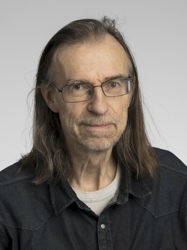
Professor Stephen T Newman is a faculty member at the University of Bath , serving in the Department of Mechanical Engineering as the Professor of Innovative Manufacturing Technology . His research focuses on advancing manufacturing technologies through additive/subtractive hybrid systems, sustainable machining practices, and smart manufacturing frameworks. University: University of Bath Department: Mechanical Engineering Email: S.T.Newman@bath.ac.uk Research interests include: Process optimization in additive manufacturing (LDED, WA-DED) Cryogenic and hybrid cooling/lubrication techniques Industry 4.0 implementation via cloud manufacturing Machine learning applications for tool condition monitoring Sustainability in material delivery and recycling Recent publications highlight trends in smart manufacturing , energy-efficient machining , and multi-sensor process monitoring . Key subfields include laser additive systems, cryogenic lubrication mechanics, and decentralized production platforms. Current affiliations: University of Bath 4 East 2.9c, Department of Mechanical Engineering
Prof. Dr. Burak Aricak is a faculty member at Bursa Technical University , where he serves in the Faculty of Forestry under the Department of Forest Engineering . His work integrates geospatial technologies and environmental science to address critical forestry challenges. Research Focus : Forest Road Planning, Harvesting Techniques, GIS & Remote Sensing Applications, and Ergonomics. Key Publications (2023-2025) explore climate change effects on forest species distribution, heavy metal accumulation in trees, soil respiration dynamics post-harvesting, and UAV/LiDAR advancements for biomass estimation. Contact : burak.aricak@btu.edu.tr | +90 (224)-8081101
Hans Georg Beyer is an Affiliated Professor in Energy Engineering at the Faculty of Science and Technology, The University of the Faroe Islands. His work focuses on sustainable energy systems with emphasis on renewable energy integration and meteorological aspects of power generation. With extensive publication history spanning over three decades, he has established himself as a leading researcher in renewable energy systems analysis. Professor Beyer's research interests center on sustainable energy supply systems based on renewables, with special emphasis on relating system performance characteristics to meteorological conditions. His work in Energy Meteorology covers analysis and modeling of spatial and temporal statistics of wind and irradiance fields, including forecasting methods for wind speed and solar irradiance with horizons of 6-35 hours and near now-casts in minute time scales. In Renewable Energy Systems, he investigates layout, dimensioning, modeling and performance analysis of grid-connected and stand-alone solar, wind and hybrid systems. His research bridges meteorological science with practical energy engineering applications, particularly for island and remote communities. His publication record shows consistent research activity with 55 research outputs documented, including significant contributions to solar and wind energy forecasting, hybrid system design, and grid integration challenges. Notable work includes the development of methods for satellite-derived irradiance data applications in PV system monitoring and performance assessment. Solar Energy Best Paper Award, ISES 1999 Solar World Congress, Jerusalem Professor Beyer has been instrumental in several major collaborative projects including PVSAT-2 (satellite-based PV system performance monitoring), SWERA (UNEP solar resource assessment), and various European initiatives focused on renewable energy integration. His work demonstrates strong international collaboration, particularly with German, Brazilian, and other European research institutions. While specific grant details aren't provided in the source material, his extensive publication record in high-impact journals suggests substantial research funding support throughout his career.
Kari Smolander is a Professor in Software Engineering at the LUT School of Engineering Sciences, Finland. They focus on cloud computing, digital transformation, and software development practices. Research Interests Smolander's research spans serverless computing, cloud migration strategies, DevOps, and digital identity architecture. Their work examines socio-technical challenges in platform ecosystems and enterprise software development. Publication Trends Recent publications (2024-2025) emphasize serverless computing frameworks, cloud integration challenges, and digital identity systems. Studies analyze AI adoption gaps, technical debt in cloud environments, and collaboration mechanisms in B2B platform development. Software Engineering Leadership As a faculty member, Smolander contributes to advancing cloud-native software practices through empirical studies and conceptual frameworks for modern digital infrastructure.
Farshad Firouzi serves as an Adjunct Assistant Professor in the Department of Electrical and Computer Engineering at Duke University, where he teaches EGR 393: Research Projects in Engineering. His academic work bridges hardware and software domains with a strong emphasis on practical applications in critical systems. His research spans Edge Computing, Internet of Things (IoT), Artificial Intelligence, Machine Learning, Healthcare Systems, Chip Design, and Reliability Engineering. This interdisciplinary focus manifests in projects ranging from Parkinson's disease monitoring using edge devices to LLM-enhanced chip design and security-hardened neural networks. His work consistently addresses real-world challenges in system dependability, particularly in healthcare and biomedical contexts where failure is not an option. Analysis of his 2024-2025 publications reveals three dominant research thrusts: (1) LLM applications in hardware design (ChipMnd, Spiced), (2) Edge-based healthcare monitoring systems (freezing of gait recognition, blood glucose prediction), and (3) Security and reliability in AI/ML systems (gradient inversion defense, silent data corruption mitigation). His work demonstrates a clear trajectory toward integrating cutting-edge AI techniques with hardware-aware solutions for mission-critical applications. No scientific awards were mentioned in the source materials. The absence of student listings or grant information suggests his current role may be primarily research-focused without formal advising responsibilities. Similarly, no dedicated labs or research teams were referenced in the available documentation.
Professor Peter Quinn is a distinguished astrophysicist at the University of Western Australia , serving as Chairman of the Board at the International Space Centre and affiliated with the International Centre for Radio Astronomy Research (ICRAR) and the Office of DVC Research . He received his BSc(Hons) in Mathematics and Physics from the University of Wollongong in 1978 with the University Medal in Physics, and his PhD in astronomy and astrophysics from the Australian National University (ANU) in 1982. His research centers on galaxy formation and evolution , dark matter dynamics , and the Epoch of Reionization . He has pioneered computational astrophysics, particularly through the discovery of the Quinn-Goodman effect and contributions to the MACHO Dark Matter Search Project . He has led major initiatives in the European Southern Observatory (ESO) , including the Very Large Telescope (VLT) data flow system and the Astrophysical Virtual Observatory (AVO) project. His scholarly work spans radio astronomy , supercomputer simulations , and data-intensive science , with a strong focus on the Square Kilometre Array (SKA) and gravitational wave detection . His work has earned him several prestigious accolades including a NASA High Performance Computing Award and a Computerworld 21st Century Achievement Award . He is a Fellow of the Australian Academy of Science (FASA) and a Fellow of the Australian Institute of Physics (FTSE) . His research also extends to large-scale international infrastructure projects and planning for the Square Kilometre Array and gravitational wave observations . He has served as Division Head at ESO and as a Chief Investigator for numerous grants, including the Australian SKA Regional Centre and ICRAR core funding .
Carla Fabiana Chiasserini is a Full Professor and Deputy Director at the Department of Electronics and Telecommunications (DET) at the Polytechnic University of Turin. She serves as a Component of the CARS@PoliTO Interdepartmental Center - Center for Automotive Research and Sustainable Mobility and acts as a Spoke leader for research and innovation activities. Her academic career spans multiple prestigious institutions and she maintains active collaborations worldwide. Professor Chiasserini's research interests span algorithm design and analysis, cellular networks, connected cars, edge computing, heterogeneous wireless networks, Internet of Things, machine learning, mobile networks, mobile services, and performance evaluation. Her work bridges theoretical algorithm development with practical applications in next-generation telecommunications systems. She leads the TNG research group at DET and focuses on Machine Learning for Networking, with specific research lines in Network Slicing in 5G, Connected autonomous cars, and Opinion dynamics in social networks. Her research aligns with Sustainable Development Goals including Industry, Innovation and Infrastructure; Sustainable Cities and Communities; and Climate Action. Her recent publications demonstrate a strong trend toward integrating machine learning with edge computing, 5G/6G systems, and automotive applications. The research spans from theoretical algorithm development to practical implementations for XR offloading, distributed service provisioning, reliability assessment of AI-based automotive systems, and satellite networking. Her work shows increasing focus on practical implementations with industry applications, particularly in the automotive sector and next-generation telecom infrastructure. Best Paper Award - Wireless Telecommunications Symposium (WTS) 2018 Best Paper Award - IEEE WoWMoM 2016 Best Paper Award Runner-up at ACM MSWiM 2016 Top Paper Award at the ACM CoNEXT 2016 Cloud-Assisted Networking (CAN) Workshop Best Paper Award at SPACOMM 2014 Best Paper Award at AD HOC NOW 2014 2010 Editor of the Year Award for the Ad Hoc Networks journal (Elsevier) IEEE Fellow (2018-) ACM Fellow (2024-) Professor Chiasserini actively advises numerous PhD students working on cutting-edge topics in network systems, with recent graduates focusing on edge services in 5G networks, resource-aware learning in mobile networks, and deployment of microservices at the network edge. She leads multiple significant research grants including O-RAN (2024-2027), CSI-Future (2023-2025), RESTART - Spoke 4 (2023-2025), PREDICT-6G (2023-2025), and several others funded by PNRR, EU Horizon programs, and industry partnerships. Her work has substantial practical impact through numerous patents including OffloaDNN and SEM-O-RAN. She leads the TNG research group within the Department of Electronics and Telecommunications and participates in the CARS@PoliTO Interdepartmental Center for Automotive Research and Sustainable Mobility. Her laboratory work focuses on practical implementations of theoretical concepts, particularly in the areas of connected vehicles, edge computing, and 5G/6G systems. She maintains strong industry connections through projects with Intel Corporation and other technology partners, ensuring her research has direct real-world applications.
Yao Zhu is a Visiting Professor at the Chair of Information Theory and Data Analytics, RWTH Aachen University . His research focuses on advanced wireless communication systems, particularly in Edge Computing , Ultra-Reliable Low-Latency Communication (URLLC) , and Physical Layer Security , leveraging Finite Blocklength Codes for next-generation network optimization. Key research areas include: Optimization of resource allocation and task scheduling in distributed edge learning and fog computing environments Reliability and energy efficiency trade-offs in Industrial IoT and V2X networks Novel applications of NOMA (Non-Orthogonal Multiple Access) and short-packet communication for secure and fresh data transmission Integration of physical layer deception with semantic reliability models His work explores the interplay between telecommunications and computer science principles to address challenges in low-latency, high-reliability networked systems. The Chair of Information Theory and Data Analytics serves as his academic base, focusing on theoretical and practical advancements in data-driven communication frameworks.
Xiaolin Hu is a Professor in the Department of Computer Science at Georgia State University within the College of Arts & Sciences. His research focuses on modeling and simulation theory with applications in complex systems science, agent-based systems, and advanced computing environments. Ph.D. in Electrical and Computer Engineering, University of Arizona (2004) NSF CAREER Award recipient Senior member of IEEE and Society for Modeling and Simulation International (SCS) Associate editor for ACM Transactions on Modeling and Computer Simulation (TOMACS) and other journals SIMULATION: Transactions journal and International Journal of Modeling, Simulation, and Scientific Computing (IJMSSC) Dr. Hu's research spans three major areas: Dynamic Data-Driven Simulation (DDDS): Development of simulation frameworks that assimilate real-time data, particularly applied to wildfire spread prediction and autonomous systems. Multi-Agent Systems: Study of adaptive behaviors and coordination mechanisms for unmanned aircraft and social/public health systems. Advanced Computing: Implementation of parallel and cloud computing solutions for large-scale simulations. His recent publications (2025-2023) demonstrate a strong focus on integrating real-time data from UAVs and satellite systems into wildfire simulations, utilizing Bayesian methods for sequential data assimilation, and developing cloud-based simulation services. These works bridge computational modeling with environmental science applications. Scientific recognitions include: National Science Foundation (NSF) CAREER Award Dr. Hu has chaired multiple international conferences in modeling and simulation and leads the SIMS Lab at Georgia State University, which specializes in simulation technologies and their applications in diverse domains.
Giacomo Boracchi is a researcher at the Polytechnic University of Milan , focusing on machine learning, computer vision, and signal processing. His work spans anomaly detection, change detection in data streams, 3D imaging, and biomedical applications. Key Collaborations : Diego Carrera, Luca Magri, Cesare Alippi Industries : Embedded systems, medical imaging, environmental monitoring Recent research explores adaptive Kalman filtering for battery estimation, zero-shot anomaly detection, and explainable AI for vision-language models. Publications highlight applications in waste sorting, histological data generation, and cardiac monitoring. His technical focus includes convolutional networks, ensemble learning, and domain adaptation. Boracchi's work bridges theoretical advancements with real-world systems in fraud detection, semiconductor manufacturing, and wearable health devices.
Dimitrios Nikolopoulos is the John W. Hancock Professor of Engineering at Virginia Tech's College of Engineering, within the Department of Computer Science. His research focuses on high-performance computing, systems runtime systems, memory management, and edge computing. He holds a Chartered Engineer (CEng) certification. Education: M.Eng., University of Patras, Greece (1996) M.Sc., University of Patras, Greece (1997) Ph.D., University of Patras, Greece (2000) Research Interests: His work spans transprecision computing, parallel programming paradigms, efficient inference frameworks for large language models (LLMs), and energy-efficient server ecosystems. Recent efforts emphasize optimizing edge computing systems, GPU resource sharing, and adaptive memory management in cloud-edge environments. Recent Trends in Publications: Recent studies highlight advancements in edge-serving frameworks (e.g., SLED), multi-agent systems for HPC code optimization (MARCO), and novel approaches to GPU and memory resource utilization in constrained settings. Themes include reducing latency, improving scalability, and integrating AI-driven techniques into HPC workflows. Grants & Advising: Details on current grants and advisees are not explicitly listed in the provided materials. Labs/Teams: His research is conducted through collaborative groups within Virginia Tech's Department of Computer Science, focusing on systems, parallel computing, and AI/ML infrastructure.
Kartik Gopalan is a Professor in the School of Computing at Binghamton University (State University of New York), serving as Interim Associate Dean for Research, Corporate Engagement, and Entrepreneurship within the Thomas J. Watson College of Engineering and Applied Science. He holds a PhD from Stony Brook University, an MS from IIT Madras, and a BE from Delhi Institute of Technology. Education - BE: Delhi Institute of Technology - MS: Indian Institute of Technology, Chennai - PhD: State University of New York at Stony Brook Research Interests His work focuses on experimental computer systems, including virtualization, cybersecurity, cloud computing, operating systems, and networks. Key projects include the OSNET Group's VirtuOSNet initiative, exploring advancements in virtual machine migration, hypervisor management, and privacy-preserving technologies. Notable contributions include Directvisor (bare-metal cloud virtualization), Span Virtualization (multi-hypervisor ecosystems), and privacy-preserving VMs. Professional Service - Associate Editor, IEEE Transactions on Parallel and Distributed Systems (2022–present) - Associate Editor, IEEE Transactions on Cloud Computing (2017–2024) - TPC roles at USENIX ATC, HPDC, and ICDCS Awards Recipient of the National Science Foundation CAREER Award (2013). Over 60 refereed publications and 8 U.S. patents reflect his research impact. Advising & Teams Mentor of numerous PhD/Masters students (e.g., Roja Eswaran, Mingjie Yan) and leads the OSNET Group, dedicated to advancing operating systems, networks, and cloud systems. His research bridges theoretical innovation with practical implementations in data center environments.
Јasmina Ćurčić is an Assistant Professor in the Department of Industrial Management at the Faculty of Technical Sciences Čačak, University of Kragujevac. She holds a PhD candidate status in Engineering Management, having completed a Master's in Engineering Management (2017) and a Bachelor's in Entrepreneurial Management (2014). She has been employed as an academic assistant since 2021, previously working in administrative roles at the faculty (2018-2019). Her research focuses on industrial management, quality systems, and information technology applications in manufacturing. She has published extensively in areas like ERP system implementation, AHP decision-making frameworks, and strategic process optimization. Her work emphasizes practical applications in Serbian industries, particularly in production monitoring and organizational digitization. Education: PhD candidate (2018–present), MEng Management (2017), BEng Entrepreneurial Management (2014) Teaching: Leads courses in Project Management, Supply Chains, Engineering Economics, and Standardized Management Systems Awards: 2014/15 Dositej Scholarship for academic excellence Committees: Member of accreditation teams for academic programs and faculty asset inventory commission Her recent publications (2023–2025) investigate topics such as ERP systems in manufacturing, business intelligence in public procurement, and strategic performance improvement methodologies. She actively participates in international conferences across Serbia, Montenegro, and Bosnia-Herzegovina.
Laurent ALFANDARI is a Full Professor at ESSEC Business School, specializing in Operations Research and Decision Analytics within the Information Systems, Decision Sciences and Statistics (IDS) Department. He has held key academic roles including Academic Co-Director of the ESSEC-CentraleSupélec Master in Data Sciences & Business Analytics (2019–2023) and Coordinator of the Operations & Data Analytics PhD concentration (2018–2021). His research focuses on optimization techniques applied to supply chains, logistics, healthcare, and disaster preparedness. He has authored over 50 journal articles in top venues like European Journal of Operational Research and Transportation Science. Education : - Doctorate in Operations Research (Université Paris Dauphine-PSL, 1999) - Master of Research in Management Science (Université Paris Dauphine-PSL, 1995) - M.Sc in Management (ESSEC Business School, 1993) - Bachelor in Mathematics & Social Sciences (Université Paris Dauphine-PSL, 1990) Research Interests : His work addresses complex optimization challenges in urban logistics, healthcare networks, and disaster response. Notable contributions include freight-on-transit systems, autonomous robot delivery, and pandemic intervention sequencing. He emphasizes practical solutions for real-world problems through mixed-integer programming and robust optimization frameworks. Teaching & Mentoring : Teaches Decision Analytics and Operations Research across ESSEC programs (Grande École, Executive MBA, PhD). Supervised 14 PhD theses, including recent works on sustainable last-mile deliveries and healthcare analytics. Awards & Activities : 2020 ESSEC Top 4 Teaching Award, Vice-President of ROADEF (2012–2015), and leader in industrial collaborations with SNCF and Aid-Impact. Active in organizing academic conferences and serves as a journal reviewer for Annals of Operations Research and others. Labs & Collaborations : Member of LIPN (Sorbonne Université) and LAMSADE (Paris Dauphine). Consults for organizations like Babcock-Wanson and contributes to public-sector projects like EDF's ROADEF challenge.
Dr Antonios Gouglidis is a Senior Lecturer in the Department of Computing and Communications at Lancaster University, specializing in theoretical and applied security. His research focuses on designing secure systems through the integration of theoretical informatics and practical industry experience. His research interests span several critical areas in cybersecurity including access control models and policies , Cloud security , Critical Infrastructure Protection (CIP) , and formal verification through model checking. His work bridges theoretical security concepts with practical implementation challenges. Analysis of his recent publications (2022-2025) reveals a strong focus on emerging security challenges in cloud environments, 5G networks, and operational technology. His research demonstrates particular expertise in multi-layer threat analysis, security-vs-QoS optimization, and formal verification techniques. He frequently applies game theory approaches to security problems and has increasingly incorporated AI/ML techniques into his security frameworks. Dr Gouglidis has supervised PhD students including Ovini Gunasekera and Igor Ivkic. His research has been supported by significant projects such as: SL:H2020 SANCUS (2020-2023) BEIS: Nuclear Research and Development Programme (2019-2022) Enable Ancillary Services bY Renewable Energy Sources (2018-2021) Towards Ultimate Convergence of All Networks (2017-present) Resilient communication services protecting end-user applications (2016-2020) His work has practical applications in critical infrastructure protection, particularly in energy sector systems and industrial control environments. Dr Gouglidis maintains an active research profile with consistent publication output across top security venues.