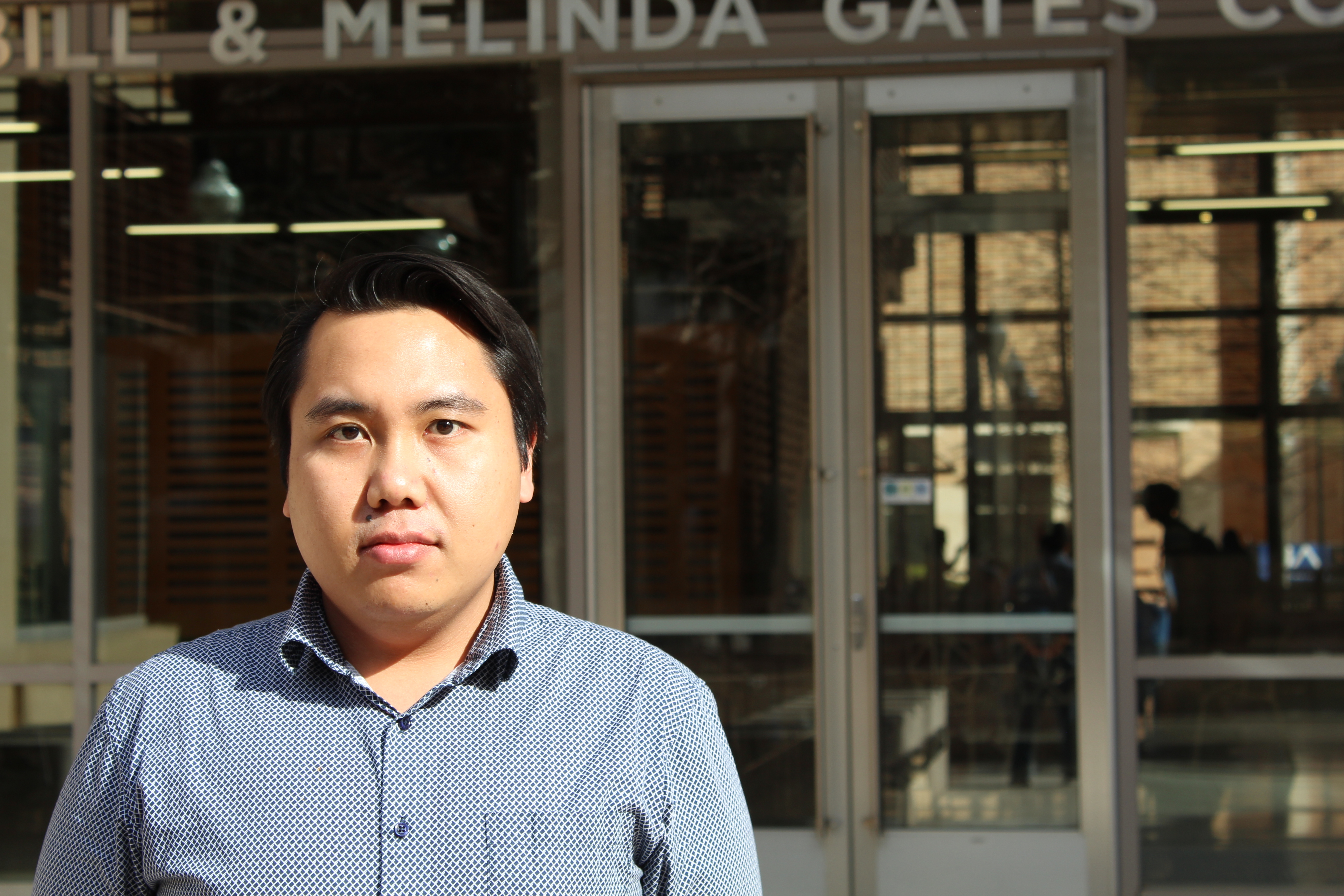
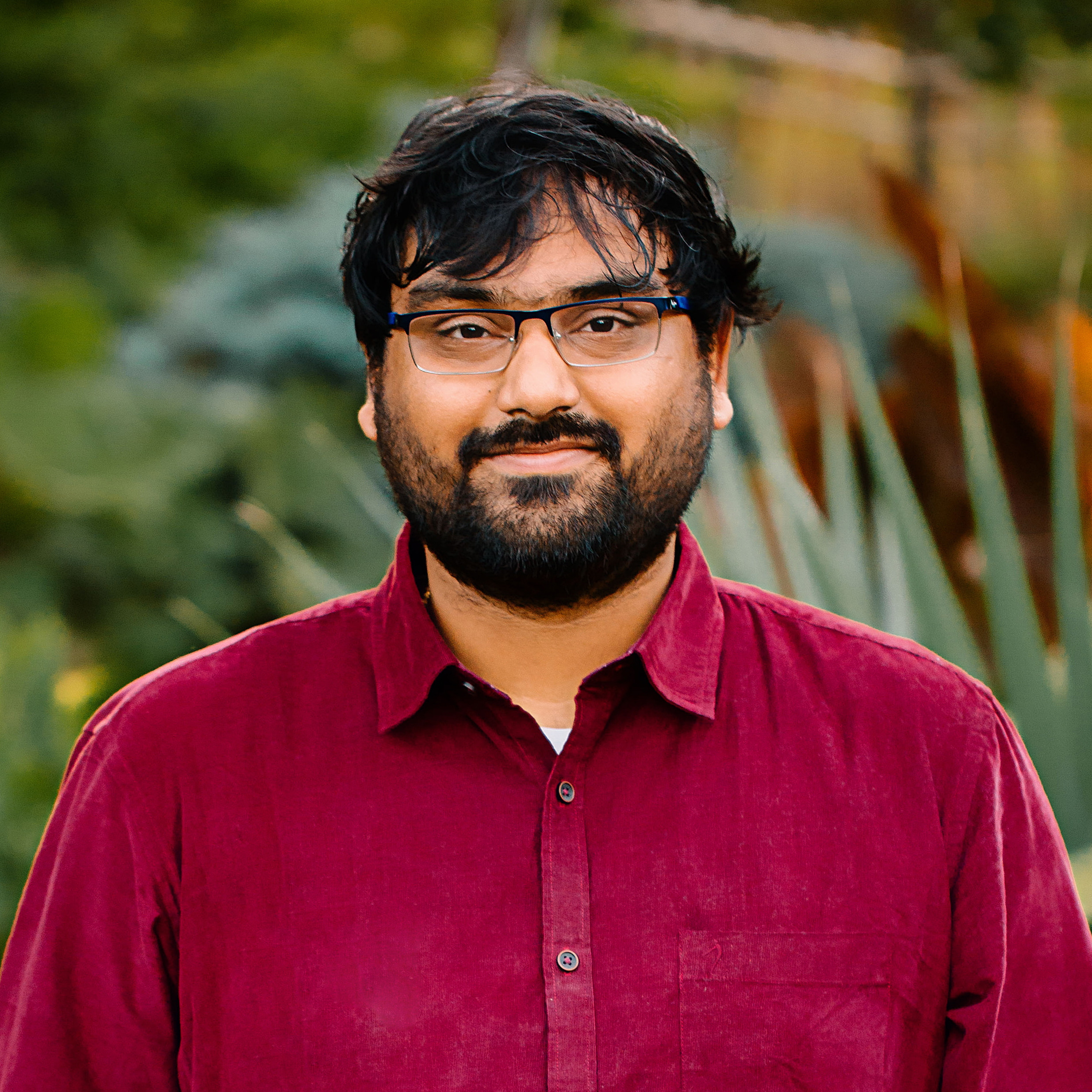
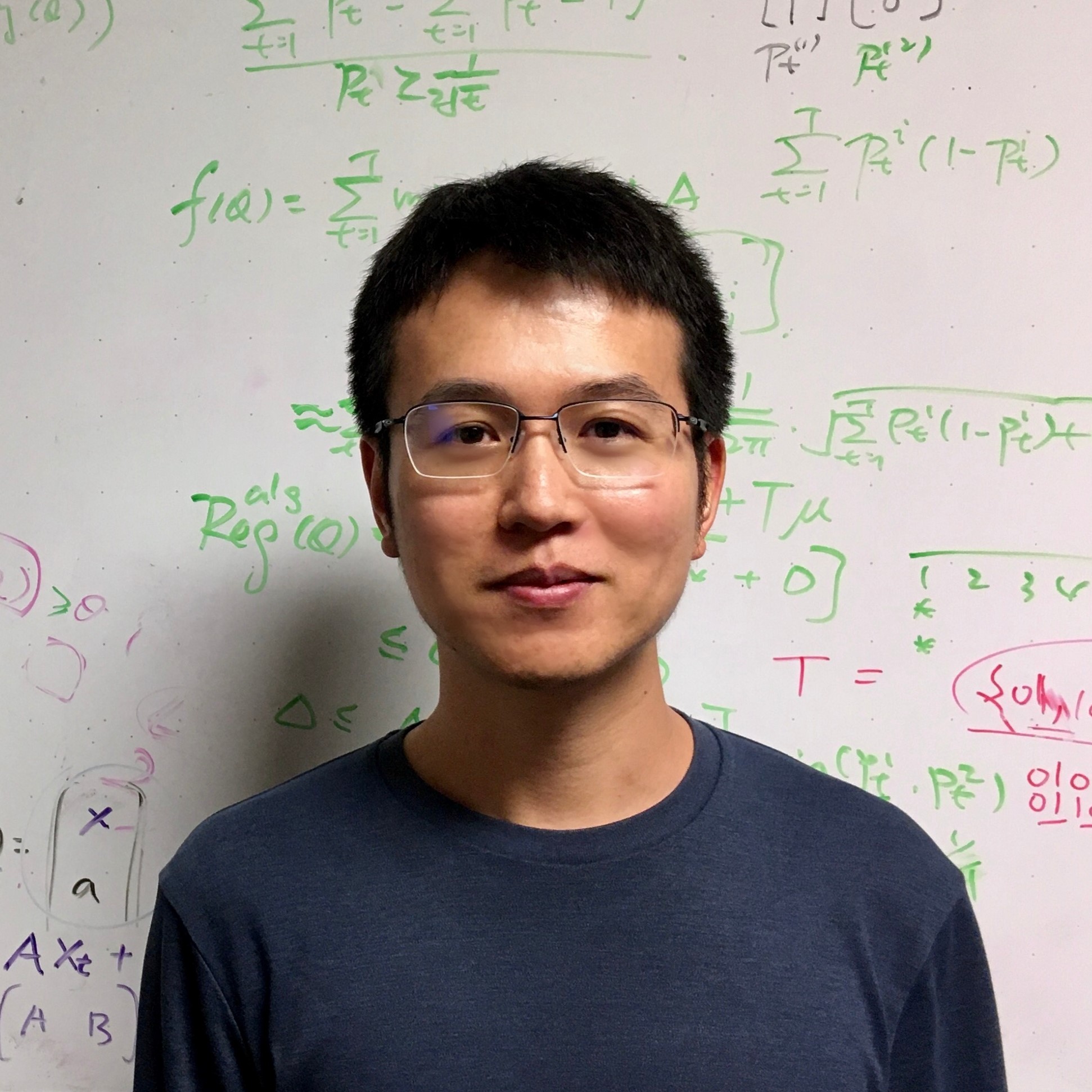
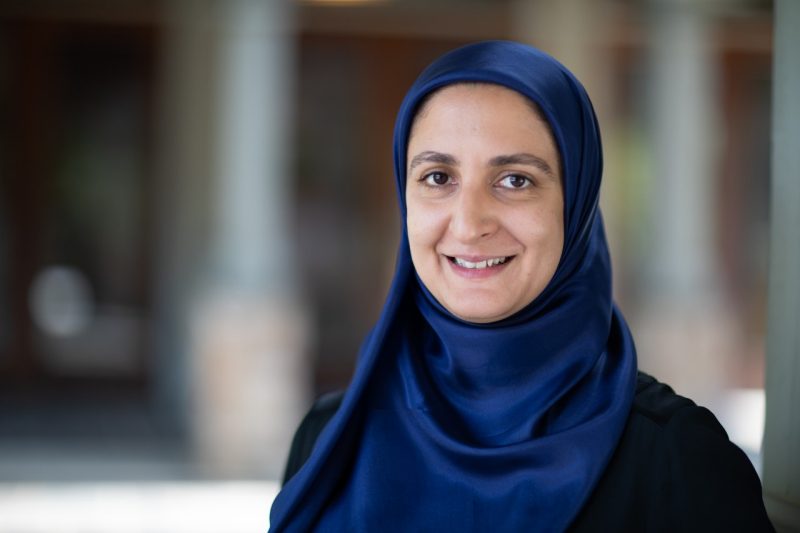
Arrasy Rahman is a Postdoctoral Research Fellow at Professor Peter Stone’s Learning Agents Research Group (LARG) in the College of Natural Sciences at The University of Texas at Austin. His research focuses on creating adaptive autonomous agents for collaborative tasks, with expertise in game theory, reinforcement learning, and graph neural networks, particularly applied to the ad hoc teamwork (AHT) problem. Education: PhD and MSc from the University of Edinburgh, BSc from Universitas Indonesia His work explores methods to generate diverse teammate policies for training robust agents capable of collaborating with unseen teammates. Recent projects include partnerships with Lockheed Martin Corporation and organizing a workshop at AAAI-24. Arrasy’s research aims to build intelligent agents that assist humans in real-world collaborative decision-making challenges. Research trends in his publications include ad hoc teamwork, reinforcement learning, graph-based policy learning, and multi-agent systems. He has contributed to advancing techniques for best-response diversity and sub-task curriculum frameworks in autonomous agent collaboration. Labs and teams: Arrasy collaborates with the Autonomous Agents Research Group at the University of Edinburgh and the Learning Agents Research Group (LARG) at UT Austin. He is also involved in organizing the Ad-Hoc Teamwork Seminar Series and a AAAI-24 workshop.
Patrick Jaillet is the Dugald C. Jackson Professor in the Department of Electrical Engineering and Computer Science at MIT's School of Engineering. He holds joint appointments with the Laboratory for Information and Decision Systems (LIDS), the Operations Research Center (ORC), the Operations Research and Statistics Group at MIT Sloan, and the Department of Civil and Environmental Engineering. Previously, he served as Head of Civil and Environmental Engineering at MIT (2002-2009) and Chair of the Department of Management Science and Information Systems at UT Austin (1997-2002). Dr. Jaillet's research focuses on online optimization and learning, sequential decision-making under uncertainty, and security and resilience in complex networks. His work spans theoretical foundations in optimization and machine learning with applications in transportation, online market analytics, and network security. He has developed mathematical frameworks for problems involving uncertainty, dynamic resource allocation, and strategic behavior in complex systems. His recent publications reveal strong trends in bridging theoretical optimization with practical machine learning applications. Key themes include Bayesian optimization for black-box functions, online learning with limited information, mechanism design for resource allocation, and network security applications. His work increasingly integrates large language models with traditional optimization techniques, reflecting the evolving landscape of AI-driven decision-making systems. Fulbright Scholar (1990) Fellow of the Institute for Operations Research and Management Science (INFORMS) Best Applications Paper Award at ICAPS 2019 Long-standing Associate Editor for top journals including Operations Research and Transportation Science Dr. Jaillet has advised over 40 doctoral students who now hold prominent positions in academia and industry, including faculty positions at MIT, Georgia Tech, and ETH Zurich, and research scientist roles at Amazon, Microsoft Research, and Google. His research has been consistently funded by major agencies including NSF, ONR, AFOSR, and international partners like Singapore NRF, with current projects focusing on learning algorithms for autonomous security and fundamental tradeoffs in optimization. He leads a vibrant research group spanning MIT's EECS department and ORC, with current funding supporting work on neural bandits, federated optimization, and network security applications. His research group operates at the intersection of theory and practice, with strong connections to industry through collaborations with IBM, Microsoft, Google, and various transportation and technology companies. The group maintains active partnerships with international institutions, particularly through SMART in Singapore, reflecting Dr. Jaillet's global research impact.
Xiao Wang is a research assistant and PhD student in the Cyber-Physical Systems Group at the Technical University of Munich since 2019. She holds a Master of Science in Mechanical Engineering from the same university (2018) and a Bachelor of Engineering in Vehicle Engineering from Tongji University, China. Her research focuses on Motion Planning for Autonomous Vehicles , Formal Methods , and Safe Reinforcement Learning . She has supervised multiple theses exploring topics like constrained RL, online verification, imitation learning, and safety falsification for autonomous systems. Her teaching roles include exercises and practical courses on Artificial Intelligence and Motion Planning for Autonomous Vehicles since 2018. Her publications (2020–2023) span journals like Transactions on Machine Learning Research and conferences such as ITSC and FISITA , addressing challenges in safe RL, control barrier functions, and naturalistic traffic rule violations. She has also contributed to integrating the Apollo framework with the CommonRoad motion planning environment. Key research areas: Safe Reinforcement Learning, Motion Planning, Formal Verification, Autonomous Driving, Control Barrier Functions, Trajectory Prediction
Professor Jan Černocký serves as Head of Department at the Department of Computer Graphics and Multimedia (DCGM) within the Faculty of Information Technology at Brno University of Technology (FIT VUT). With a professional email cernocky@fit.vut.cz and office L221.2, he maintains an active research profile with numerous publications spanning over 20 years in the field of speech processing and recognition. His work is well-documented through multiple research identifiers including ORCID iD 0000-0002-8800-0210, Scopus Author ID 6604040821, and Researcher ID M-7494-2019. Professor Černocký's research interests focus primarily on advanced speech processing technologies, with particular emphasis on speech recognition, speaker verification, language identification, and multimodal systems. His work demonstrates a strong trajectory from traditional speech processing techniques toward modern deep learning approaches, especially in self-supervised learning for speech applications. Recent publications show his leadership in developing benchmarks like TS-SUPERB for target speech processing and innovative methods for speaker verification using transformer models. His research group at BUT has made significant contributions to multi-channel speech processing, target speech extraction, and speaker diarization systems. The analysis of Professor Černocký's recent publications (2023-2025) reveals several key trends in his research direction. There's a clear shift toward self-supervised learning approaches for speech processing, with numerous papers exploring how pre-trained models can be adapted for speaker verification, target speech extraction, and multi-channel processing. His work increasingly incorporates transformer architectures and attention mechanisms, reflecting the broader trends in speech processing research. The 2024 publications particularly highlight work on multimodal analysis (BESST dataset for stress detection) and practical applications of speech technology for social inclusion. Throughout his career, Professor Černocký has maintained strong collaborative relationships with researchers across Europe and internationally, evidenced by his extensive publication record with co-authors from multiple institutions. His leadership role as Head of Department at DCGM places him at the center of speech processing research at Brno University of Technology, where his team continues to produce cutting-edge research in speech technology.
Sathyanarayanan N. Aakur is an Assistant Professor in the Department of Computer Science and Software Engineering at Auburn University's College of Engineering. Previously, he was an Assistant Professor in the Department of Computer Science at Oklahoma State University. He is an IEEE Senior Member and has received the prestigious NSF CAREER award for his research on multi-modal event understanding. Dr. Aakur received his PhD from the University of South Florida, where he worked with Dr. Sudeep Sarkar in the Computer Vision and Pattern Recognition Group. He also holds a Master's degree in Management Information Systems from the Muma College of Business at the University of South Florida and an undergraduate degree in Electronics and Communication Engineering from Velammal Engineering College, Anna University, India. His research focuses on the intersection of computer vision, natural language processing, and psychology, with the goal of building intelligent agents that understand the visual world beyond simple recognition or captioning. His work encompasses self-supervised predictive learning for video event segmentation, commonsense reasoning to ground perception and prior knowledge, and generative modeling for building knowledge systems. Much of his group's current work focuses on analyzing, modeling, and synthesizing complex video scenes, with applications in agriculture and animal diagnostics. His recent publications demonstrate a strong focus on open-world visual understanding, neurosymbolic reasoning, and multimodal learning. His work spans from fundamental computer vision problems like egocentric action recognition and scene graph generation to applied research in agricultural technology and biomedical informatics. He has successfully published at top-tier conferences including CVPR, ICCV, ECCV, and WACV, as well as in high-impact journals like IEEE TPAMI. NSF CAREER Award (2022) IEEE Senior Member (2024) Dr. Aakur serves as Area Chair for major conferences including CVPR, WACV, ICML, and NeurIPS, and as Associate Editor for Pattern Recognition journal. He has successfully mentored numerous students who have published at top venues in computer vision and machine learning. His research group has received funding from sources including the NSF and USDA for projects related to multimodal time series classification and stress detection in precision agriculture. The lab maintains active collaborations with institutions including the University of South Florida and Florida State University.
John Horty is a Distinguished University Professor in the Philosophy Department at the University of Maryland, with affiliate appointments in the Institute for Advanced Computer Studies and the Computer Science Department. His research integrates logic, artificial intelligence, ethics, epistemology, philosophy of language, and philosophy of law to address complex questions in human cognition, legal systems, and normative reasoning. Horty holds a BA in Classics and Philosophy from Oberlin College and a PhD in Philosophy from the University of Pittsburgh. He has authored four books and over 40 papers, exploring topics such as defeasible reasoning, stit semantics, and the open texture of legal language. Education: BA (Oberlin College), PhD (University of Pittsburgh) Research Interests: Logic, artificial intelligence, ethics, epistemology, philosophy of law, and philosophy of language. Article Trends: Focus on computational legal reasoning, default logic, stit semantics, and the intersection of law and nonmonotonic logic. Scientific Awards and Grants: Humboldt Research Award Three National Endowment for Humanities Fellowships Visiting Fellowships at the Netherlands Institute for Advanced Studies and Stanford’s Center for Advanced Studies in Behavioral Sciences Carole Hafner Best Paper Award (2017), Honorable Mention at AAAI-87 NSF Grants for interdisciplinary research Teaching and Affiliations Teaches courses in symbolic logic, legal reasoning, and defeasible reasoning Affiliate in the University of Maryland Institute for Advanced Computer Studies and the Computer Science Department
Dinesh Manocha is a Distinguished University Professor of Computer Science at the University of Maryland, with joint appointments in the Department of Electrical and Computer Engineering and the University of Maryland Institute for Advanced Computer Studies (UMIACS). He is also affiliated with the Maryland Robotics Center and the Institute for Systems Research. His educational background includes a Ph.D. in Computer Science from the University of California at Berkeley (1992) and a B. Tech in Computer Science and Engineering from the Indian Institute of Technology, Delhi, India (1987). Professor Manocha's research spans multiple domains with significant emphasis on: Computer Graphics and Visualization Robotics and Motion Planning Virtual and Augmented Reality Systems Geometric Computing Algorithms AI Applications for Autonomous Systems High Performance Computing His extensive publication record shows consistent innovation in multi-agent navigation, collision avoidance algorithms, and applications in virtual environments. Recent work focuses on trajectory prediction for autonomous vehicles and physics-based simulation for immersive experiences, with algorithms integrated into industry-standard systems like ROS (Robot Operating System). Among his numerous honors, Professor Manocha is recognized as: ACM, IEEE, AAAS, and AAAI Fellow Member of the IEEE VGTC Virtual Reality Academy Recipient of the Pierre Bézier Award from the Solid Modeling Association University of Maryland Distinguished University Professor Multiple best paper awards across premier conferences He has supervised 54 PhD students throughout his career and currently advises numerous graduate researchers. His research has attracted significant funding from NSF, Google, Amazon, Facebook, and industry partners. Notably, he co-founded Impulsonic, a company developing physics-based audio simulation technologies acquired by Valve Corporation in 2016. Professor Manocha leads the GAMMA research group, which continues to advance geometric algorithms with applications across multiple disciplines.
Giorgia Ramponi is an Assistant Professor with Tenure Track at the Faculty of Business, Economics and Informatics at the University of Zurich. She is also an affiliated professor at the ETH AI Center and the Data Science and AI, Computer Science and Engineering department at Chalmers University of Technology. Her educational background includes a Ph.D. in Information Technology from Politecnico di Milano (completed June 2021 with honors), advised by Marcello Restelli, and a Master of Science in Computer Science with Honours Programme (110/110 cum laude) from la Sapienza (July 2017), advised by Flavio Chierichetti and Alessandro Panconesi. Dr. Ramponi's research focuses on machine learning and mathematical modeling, with particular emphasis on reinforcement learning and multiagent learning. Her work bridges theoretical foundations with practical applications, exploring how learning algorithms can make optimal decisions in complex environments. She has made significant contributions to areas including inverse reinforcement learning, multi-agent systems, constrained Markov decision processes, and human-AI interaction through preference learning. Her recent publications demonstrate a strong trend toward addressing fundamental challenges in reinforcement learning, particularly in multi-agent settings, constrained optimization, and learning from human feedback. Her work combines theoretical rigor with practical applications across robotics, economics, and decision-making systems. Hassler Research Grant for "Unified Feedback Integration Framework for Reinforcement Learning" Dr. Ramponi actively contributes to the academic community through conference participation, invited lectures (including at the Mediterranean Machine Learning Summer School), and teaching. She designed and taught the "Data Science and Machine Learning" course for the ETH-Ashesi Master program. She is also a member of the ELLIS community, which connects excellence in AI research across Europe. Her research group focuses on developing frameworks for reinforcement learning with various feedback types, including preferences, rewards, and demonstrations. The group aims to advance the theoretical understanding of learning algorithms while addressing practical challenges in real-world applications.
Haipeng Luo is an Associate Professor at the Thomas Lord Department of Computer Science, University of Southern California, holding the IBM Early Career Chair. He previously worked as a Postdoctoral Researcher at Microsoft Research, NYC, and has held visiting roles at Google and Amazon. His research focuses on developing practical machine learning algorithms with strong theoretical guarantees, particularly in online learning, bandit problems, reinforcement learning, and game theory. PhD in Computer Science, Princeton University (2011–2016) BSc in Computer Science, Peking University (2007–2011) His work spans adversarial and stochastic environments, addressing challenges in reinforcement learning, game dynamics, calibration, and omniprediction. Recent publications highlight advancements in regret minimization, game equilibrium computation, and robust optimization frameworks. Key contributions include algorithms for zero-sum games, bandit problems with feedback graphs, and theoretical analyses of convergence properties in multi-agent systems. Scientific accolades include Best Paper Awards at COLT 2021, COLT 2018, NeurIPS 2015, and ICML 2015. He has received prestigious grants such as the NSF CAREER Award (2020), Google Faculty Research Award (2020), and NSF CRII Award (2018). His students have secured academic and industry positions, and he actively teaches graduate courses in machine learning and online optimization.
Timothy Menzies is a full Professor in the Department of Computer Science at North Carolina State University's College of Engineering. He serves as the director of the Irrational Research lab (mad scientists r'us) and holds editorial positions as editor-in-chief of the Automated Software Engineering journal and associate editor for IEEE Transactions on Software Engineering. With over 300 publications and more than 24,000 citations, Menzies is a globally recognized leader in software engineering research. Menzies' research focuses on developing computer systems that make optimal decisions with minimal data, specializing in artificial intelligence, intelligent agents, data sciences, analytics, and software engineering. His pioneering work in data-driven, explainable, and minimal AI for software systems has redefined defect prediction, effort estimation, and multi-objective optimization. He is particularly known for his contributions to empirical software engineering, emphasizing transparency and reproducibility. As the co-creator of the PROMISE repository, he helped establish modern empirical software engineering by demonstrating that small, interpretable AI models can outperform larger, more complex ones. Menzies' recent publications reveal several key trends in his research: a growing emphasis on ethical considerations in AI deployment, particularly in sensitive domains like legal systems; continued innovation in software analytics with a focus on hyperparameter optimization tailored specifically for software engineering tasks; exploration of causal relationships in software analytics; and development of techniques that work effectively with limited data, including landscape analysis, surrogate learning, and active learning approaches. Mining Software Repositories Foundational Contribution Award (2017) Carol Miller Graduate Lecturer Award (2016) IBM Faculty Award (2016, 2017) ACM Fellow (2025) ASE Fellow (2024) IEEE Fellow Professor Menzies has advised 24 Ph.D. students throughout his career, with recent completions including Andre Motta (April 2025) and Xueqi Yang (October 2024). His research has secured over $19 million in funding from prestigious agencies including NSF, DARPA, and NASA, as well as industry partners like Meta, Microsoft, and IBM. Current grants focus on improving machine learning model efficiency, adapting empirical software engineering methods to computational science, vulnerability detection, and software analytics at scale using transfer learning across 10,000+ GitHub projects. Menzies has developed innovative approaches to help developers navigate the challenges of AI implementation while maintaining ethical standards and practical effectiveness. As director of the Irrational Research lab, Menzies leads a team focused on creating AI tools that are not only intelligent but also fair, transparent, and trustworthy. The lab's work emphasizes practical applications of AI in software engineering while addressing the human factors involved in developer-AI collaboration. Current projects include developing methods for better fuzzing with L3harris, improving vulnerability detection through smart pruning techniques, and creating AI platforms for workforce empowerment through credential gap diagnostics.
Isaac Lage is an Assistant Professor of Computer Science at Colby College since July 2023, specializing in interactive optimization methods for sociotechnical machine learning applications. Their work bridges technical rigor with societal impact, emphasizing accessibility in educational settings and algorithmic accountability. Harvard University PhD in Computer Science (NSF GRFP Fellow) Microsoft Research Intern (Adaptive Systems and Interaction Group) Research Software Engineer at MIT/NYU with David Sontag Research focuses on interpretable machine learning , human-AI collaboration , and healthcare equity analysis . Current projects explore sociotechnical implications of computing systems through EHR data patterns , fairness in predictive models , and user-driven interpretability frameworks . Recent publications show trends in explainable AI (2020-2022), with subfields including clinical decision support , policy summarization , and uncertainty communication . Key themes: healthcare disparities , robust interpretability , and human-in-the-loop learning . Scientific Awards: NSF GRFP Fellowship NeurIPS Spotlight Presentation (2018) AAAI HCOMP Honorable Mention (2019) As a Pedagogy Fellow at Harvard SEAS (2022-23), they contributed to curriculum design for CS 152 and CS 231 at Colby. Also earned a Teaching Certificate from Harvard's Derek Bok Center (Spring 2023).
Dr. Erma Perenda serves as Professor and Chair of Distributed Signal Processing at RWTH Aachen University, Germany, leading research within the Department of Distributed Signal Processing. Her contact details include email perenda@dsp.rwth-aachen.de and phone +49 241 80-27879, with office location at Kopernikusstraße 16, 52074 Aachen in the ICT Cubes facility. Her research spans: Distributed Signal Processing Wireless Communications Machine Learning (Deep Reinforcement Learning, Federated Learning) Modulation Classification AI-driven Network Optimization She focuses on solving real-world challenges in wireless systems including hardware impairments, channel variations, and energy efficiency through advanced AI techniques. Analysis of her 2018-2024 publications reveals consistent innovation in applying multi-agent deep reinforcement learning to wireless power allocation, developing robust modulation classification methods resilient to channel impairments, and implementing federated learning for industrial edge computing. Her work bridges theoretical machine learning with practical wireless communication constraints. Scientific Awards: No awards documented in available sources Advising and Grants: No student advisees or grant information provided Labs and Teams: Leads Distributed Signal Processing research group at RWTH Aachen University Based in ICT Cubes building focusing on wireless AI systems
Daniel J. Stilwell is a Professor in the Bradley Department of Electrical and Computer Engineering at Virginia Polytechnic Institute and State University (Virginia Tech), and Co-Director of the Center for Marine Autonomy and Robotics. He holds affiliations including the Seale Coastal Observatory Faculty Fellow role. His research focuses on autonomous underwater vehicles (AUVs), marine robotics, control systems, and sensor networks. He earned his Ph.D. in Electrical Engineering from Johns Hopkins University (1999), M.S. from Virginia Tech (1993), and B.S. in Computer Engineering from the University of Massachusetts (1991). His notable contributions include advancements in AUV control, underwater acoustic communication, multi-agent systems, and sensor network optimization. Key projects include the "Unconventional Marine Platforms" funded by the Office of Naval Research and collaborative subsea mapping initiatives. His work bridges theoretical control systems with practical robotic applications in marine environments. Dr. Stilwell has received prestigious awards such as the NSF CAREER Award and ONR Young Investigator Program Award. His research emphasizes robust control strategies, adaptive systems, and decentralized learning algorithms. He leads efforts in experimental validation of AUV control systems and underwater sensor networks, contributing to both academic and military applications.
Bradley Hayes is an Associate Professor in the Department of Computer Science at the University of Colorado Boulder, affiliated with the College of Engineering and Applied Science. He leads the Collaborative AI and Robotics (CAIRO) Lab, focusing on creating autonomous robots that collaborate effectively with humans through advances in explainable AI, machine learning, and human-robot interaction. His prior research includes foundational work at MIT's Interactive Robotics Group and Yale's Social Robotics Lab. Research interests span Explainable AI, Learning from Demonstration, Hierarchical Reinforcement Learning, Computer Vision, Natural Language Processing, and Cognitive Science. His work emphasizes making human-robot teams more efficient and safe through innovations like emotionally expressive robotic motion, socially aware navigation, and AR-based collaboration tools. Key contributions include techniques for robust robotic exploration, generative occupancy mapping, and systems for improving human trust through predictable robot behavior. His work has been applied to teleoperation training, surgical assistance, and space exploration scenarios. Grants and partnerships support development of assistive robotic canes and AR interfaces for collaborative tasks. Lab activities emphasize translating theoretical advancements into practical systems through close collaboration between researchers, engineers, and end-users. Education efforts include developing foundational robotics curricula addressing autonomy, perception, and control systems.
Hoda Eldardiry is an Associate Professor in the Department of Computer Science at Virginia Polytechnic Institute and State University (Virginia Tech), and Director of the Machine Learning Laboratory. Her research focuses on artificial intelligence, machine learning, data mining, and their applications in policy, ethics, and complex systems analysis. Education: Ph.D., Computer Science, Purdue University M.S., Computer Science, Purdue University B.E., Computer and Systems Engineering, Alexandria University, Egypt Research Interests: Eldardiry’s work spans machine learning modeling (e.g., hypergraph neural networks, time-series forecasting), AI ethics and policy education, and interdisciplinary applications in transportation, healthcare, and cybersecurity. She emphasizes socially responsible AI development through curriculum design and policy frameworks. Recent Research Themes: Her 2025 publications highlight advancements in graph-based learning, policy-aware AI education modules, and novel techniques in multi-modal data analysis. Key areas include zero-shot learning, sparse control systems optimization, and collaborative machine learning frameworks. Labs & Teams: Directs the Machine Learning Laboratory at Virginia Tech, fostering innovation in ethical AI systems and data-driven decision-making.