Dr. Kenan Bektas is a researcher at the University of St.Gallen, focusing on Augmented Reality , Eye Tracking , and Context-Aware Systems . His work bridges Mixed Reality and Human-Computer Interaction , with a particular emphasis on gaze-enabled interfaces, object identification, and activity recognition. University of St.Gallen His research explores how Augmented Reality can enhance cognitive offloading and improve user performance. He develops systems like NeighboAR and GEAR , which leverage gaze data and machine learning for object retrieval and activity recognition. Key article trends include: Integration of Eye Tracking with AR/MR systems Development of Context-Aware Interfaces Investigations into Responsible Personalization and privacy in MR Applications in Industrial Processes and remote living (Telelife) His work often involves interdisciplinary collaborations with researchers such as Simon Mayer and Jannis Rene Strecker, and has been published in venues including ACM, PLOS ONE, and Frontiers.
Ali Murat FERMAN is a Professor in Business Administration with extensive academic experience across multiple institutions, including Işık University, Radford University, and Istanbul University. He is currently affiliated with Beykent University, as indicated by his institutional email. His research focuses on marketing, consumer behavior, business ethics, and strategic management, with publications in internationally refereed journals indexed in SSCI. His research interests span a broad spectrum of topics in marketing and management, including sustainable development in retail, cultural influences on consumer behavior, customer retention in omnichannel environments, business ethics in financial services, and emotional intelligence in leadership. These areas reflect a deep engagement with both theoretical and applied aspects of modern business challenges. The recent trend in his publications shows a strong emphasis on sustainability, cross-cultural consumer behavior, and digital transformation in marketing and healthcare. His work often combines empirical research with strategic models, contributing to both academic knowledge and practical applications in business. He is a member of several prestigious academic and professional associations, including the American Marketing Association and the Academy of Marketing Science, demonstrating his active participation in the global academic community. While specific details about grants and advising are not provided, his numerous publications and long academic tenure suggest a significant contribution to student mentorship and research supervision. He has not received any explicitly mentioned scientific awards in the provided text. There is no mention of specific labs or research teams, but his collaborative publications indicate engagement in research partnerships, particularly in areas like e-health and cross-cultural marketing.
Chris Greenhalgh is a Professor of Computer Science at the University of Nottingham, where he co-leads the Mixed Reality Laboratory and is a member of the Horizon Digital Economy Research Institute. He has been a member of academic staff in the School of Computer Science since 1996 and has served in various administrative roles including Senior Tutor and Director of Taught Programmes. First class BA (with distinction) in Electrical and Information Sciences from Cambridge University (1991) PhD in Large Scale Collaborative Virtual Environments from University of Nottingham (1997) Professor Greenhalgh's research focuses on interactive and multi-user applications, software infrastructure for networked, mobile and embedded systems, and empowering people to use complex technologies. His work spans ubiquitous computing, personal data management, and interactive music-based experiences. He is particularly known for developing the Muzicodes interactive musical control system and the daoplayer app for adaptive mobile music experiences. His recent publications show a strong focus on responsible innovation, digital mental health interventions, and human-computer interaction, with an increasing emphasis on applications in mental health, ethical technology development, and creative computing. His work bridges technical infrastructure development with practical applications in health, music, and everyday experiences. 1998 BCS/CPHC Distinguished Dissertations in Computer Science competition winner PhD thesis published by Springer as a result of this award Professor Greenhalgh has supervised numerous PhD students across multiple disciplines including Computer Science, Cultural Studies, Architecture, Sociology, and Mental Health. He has been a co-investigator on significant projects including the Databox project for personal data management and the FAST IMPACt programme grant for interactive music systems. His work often involves interdisciplinary collaboration and public engagement through partnerships with artists and performers. He co-leads the Mixed Reality Laboratory and has been instrumental in developing several research platforms including the MASSIVE Collaborative Virtual Environment system, the Equator Integrated Platform (EQUIP), and the Digital Replay System (DRS). His current work focuses on personal data stores, interactive music experiences, and accountable Internet of Things systems.
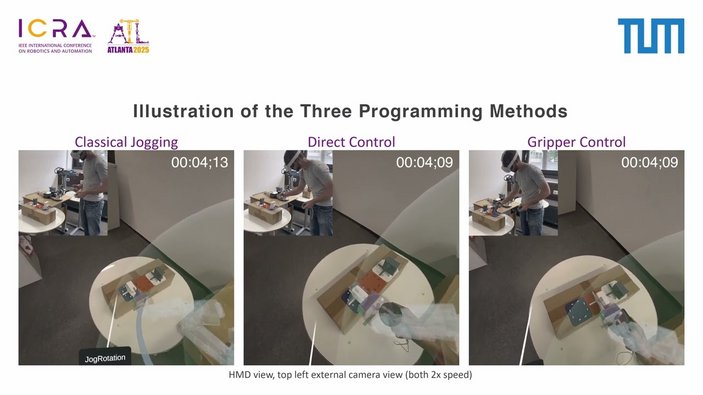
Maximilian Rettinger is a researcher at the Chair of Human-Machine Communication within the Technical University of Munich (TUM), holding an M.Sc. degree. He actively contributes to research and teaching in Extended Reality (AR/VR/MR), Human-Computer Interaction, and computer-based training systems, with publications spanning 2021-2025. His research centers on VR/AR applications for high-stakes training domains, particularly healthcare and robotics. Key investigations include cognitive load dynamics in complex VR environments, multi-user collaborative systems for medical device operation, tangible interaction techniques, and visual complexity impacts on learning. His work bridges human factors with practical training solutions for critical scenarios like hemodialysis, explosive ordnance disposal, and pandemic response. Analysis of his 12 recent publications reveals consistent focus on medical VR training efficacy, with emerging trends in multi-user expert guidance systems and cognitive load optimization. His 2024-2025 work shows increasing specialization in robotic programming interfaces and visual perception metrics within XR. Rettinger participates in two major funded projects: the DAAD-supported Sino-German Graduate College (CDHK) involving five universities (2022-2028), and a BMWi/ZIM-funded VR training system for explosive ordnance disposal with industry partners EMC Kampfmittelbeseitigungs GmbH and Golden West Humanitarian Foundation (2019-2021). As part of Prof. Hemmert's research chair, he contributes to TUM's human-machine interaction initiatives through conference presentations at IEEE ICRA, VR, and ISMAR, while teaching courses including Ergonomic User Interface Design and Human-Machine Communication since 2019.
Robin Welsch is an Assistant Professor in the Department of Computer Science at Aalto University, specializing in Human-Computer Interaction (HCI) with strong interdisciplinary connections to psychology. Their work bridges computer science and cognitive/clinical psychology, focusing on virtual reality, social robotics, and human augmentation technologies. Affiliated with both the Engineering Psychology (ENGPSYCH) and Human-Computer Interaction and Design (HCID) research areas, Welsch maintains an active international research profile with publications in top-tier venues including CHI, IEEE Transactions, and PLOS One. Research interests center on the psychological and behavioral aspects of emerging technologies. Key areas include interpersonal distance regulation in virtual environments, social dynamics in VR/AR, cognitive and placebo effects of AI augmentation, and ethical considerations in human-robot interaction. Their work frequently examines how psychological factors (social anxiety, psychopathy traits, aging) influence technology interaction, with strong emphasis on experimental methodologies combining physiological sensing, behavioral observation, and computational analysis. Recent publications (2023-2025) reveal three dominant trends: 1) Social VR research exploring proxemics, privacy, and gaze behavior; 2) Investigations into placebo effects and performance expectations in human-AI interaction; 3) Methodological contributions to bias detection in ML annotation and AR social media applications. This work consistently applies rigorous experimental psychology frameworks to HCI problems. Award highlights: CHI PLAY 2023 Honorable Mention for VR locomotion research Welsch actively collaborates across institutions (Germany, Finland, Australia) and disciplines, with notable partnerships in psychology departments and HCI labs. While specific grant details aren't provided, the volume and venue quality of publications suggest sustained research funding. Current work shows increasing focus on generative AI's impact on design processes and ethical implications of emerging interaction paradigms. Research occurs within Aalto University's Engineering Psychology and HCID groups, with emphasis on experimental VR/AR setups and physiological measurement systems. Recent projects involve social VR scenarios, location-based AR applications, and human-robot interaction studies in public spaces.
Markus Sarlin is a Doctoral Researcher at the Department of Built Environment, Aalto University. His work focuses on photorealism and 3D modeling applications in environmental analysis. Research Group: MeMo Affiliation: Aalto University Research Interests : Markus specializes in 3D modeling, photorealism, and computer vision within the built environment context. His projects include geospatial analysis and architectural visualization. Publication Trends : His research spans photorealism in digital art (2021) and consumer-grade 3D modeling systems (2024), emphasizing interdisciplinary applications in technology and environmental design. Labs & Teams : Markus collaborates with the MeMo research group, contributing to advancements in 3D modeling and photorealistic rendering.
Niko Kleer is a Doctoral Researcher at the German Research Center for Artificial Intelligence (DFKI) , affiliated with the Ubiquitous Media Technology Lab on the Saarland Informatics Campus. His work focuses on Human-Robot Interaction , Artificial Intelligence , and Language Technology . Key Projects : MultiGrasp, FEDWELL, TRACTAT, CAMELOT, MarKIeR, PABeLA, RESUMAIS. Research Themes : Robotic grasp prediction leveraging semantic information, task-dependent anthropomorphic grasping, and multimodal human-robot collaboration. Recent publications address Computer Vision , Natural Language Processing , and Deep Learning in robotic systems. He contributes to open-source tools like the Virtual Reality Questionnaire Toolkit and stepDP dialogue platform. Collaborations include TRUMPF Werkzeugmaschinen SE + Co. KG, with grants from the BMBF (Federal Ministry of Education and Research). His teaching includes Adaptive Human Machine Interfaces for Autonomous Systems and Grundlagen der Medieninformatik (Media Informatics Foundations).
Muhammad Moiz Sakha is a Junior Researcher at the German Research Center for Artificial Intelligence (DFKI) in Saarbrücken, Germany, affiliated with the Ubiquitous Media Technology Lab (UMTL) at Saarland Informatics Campus. His research spans Visual Computing, 3D User Interfaces, Mixed Reality, Mathematical Modelling, and Machine Learning. He applies these disciplines to solve practical problems in plant breeding robotics and medical diagnostics, focusing on AI integration within virtual environments for decision support systems. His recent publications (2022-2024) reveal a strong trend toward interdisciplinary AI applications, particularly in agricultural technology (robotics-assisted plant breeding) and ophthalmology (cornea assessment tools). These works consistently leverage virtual reality frameworks and machine learning for real-world data analysis and quality control. As part of DFKI's Cognitive Assistants department, he contributes to the Ubiquitous Media Technology Lab's mission of advancing human factors in interactive systems, multi-modal interaction, and ubiquitous computing through collaborative projects spanning gaming, sports technology, and human-spaceflight preparation.
Dr. Michael Johannes Barz is an Associated Member at the Deutsches Forschungszentrum für Künstliche Intelligenz (DFKI) in Saarbrücken, Germany, where he conducts research within the Ubiquitous Media Technology Lab (UMTL). His work bridges human-computer interaction with artificial intelligence, focusing on gaze-based interaction, eye tracking, and interactive machine learning systems. Dr. Barz has established himself as a significant contributor to the field with over 50 publications spanning from 2015 to 2024. His research interests center on gaze-based interaction , mobile eye tracking , user modeling , and interactive machine learning , with recent work expanding into cognitive load measurement using digital pen technology and mixed reality applications for industrial training. Dr. Barz has developed influential tools like IMETA for eye tracking annotation and pEncode for visualizing pen signals, demonstrating his commitment to creating practical research methodologies. Dr. Barz's publication record shows consistent contributions to top-tier conferences including ACM ETRA, IEEE VR, and the International Conference on Intelligent User Interfaces. His 2022-2024 work reveals increasing focus on making AI systems more transparent and interactive, with publications on explaining machine learning model explanations and interactive deep learning frameworks. His research often involves interdisciplinary collaboration across computer science, cognitive science, and educational technology. Special recognition for an outstanding review at ACM ETRA 2020 Active conference reviewer for IJCAI, ACM IUI, KI, ACM ETRA, and IEEE VR Journal reviewer for Journal of Eye Movement Research Dr. Barz has contributed to teaching as an assistant for 'Intelligent User Interfaces' at TU Kaiserslautern and 'Artificial Intelligence' at Saarland University. His current research suggests strong engagement with both theoretical advancements in interactive machine learning and practical applications in educational and industrial contexts, particularly through the MASTER-XR project for mixed reality manufacturing training. The Ubiquitous Media Technology Lab provides the collaborative environment where Dr. Barz develops his innovative approaches to human-AI interaction.
Prof. Dr. Matthias Böhmer is a Professor of Computer Science at Technische Hochschule Köln (Cologne University of Applied Sciences), where he leads the Ubiquitous Media Technology Lab (UMTL) and builds the new lab for mobile and distributed information technology. His academic journey includes positions as an HCI researcher at the German Research Center for Artificial Intelligence (DFKI) in Saarbrücken (2011-2013), research associate at Münster University of Applied Sciences (2007-2010), and a stint at Microsoft Research, Redmond (summer 2012). Prior to academia, he worked in product design at Deutsche Telekom in Bonn (2013-2015). His research focuses on building mobile and distributed information systems with particular interest in understanding and supporting mobile app usage and innovative connected products. His educational background includes a Bachelor of Science in Applied Computer Science (2005) and Master of Science in Information Technology (2007), both from Münster University of Applied Sciences, followed by a PhD from Saarland University's Graduate School of Computer Science with dissertation work on 'Understanding and Supporting Mobile Application Usage'. Prof. Böhmer's publication record spans over a decade with significant contributions in Human-Computer Interaction, particularly in mobile computing interfaces, foldable device interactions, and spatial awareness technologies. His recent work (2023-2024) demonstrates innovative approaches to mobile interaction, including electrotactile feedback systems, foldable smartphone applications, and website aesthetics prediction using deep learning. His research shows a clear trajectory from understanding basic mobile usage patterns to developing sophisticated interaction techniques for emerging mobile form factors. Among his notable achievements is the Honorable Mention Award received in 2023 for his work on extending rotary knob interaction through multi-touch grasp recognition, demonstrating recognition of his innovative contributions to input device design. Prof. Böhmer actively supervises student research as evidenced by BA-Kolloquium announcements for students like Max Teetz, Joel Neumann, Andreas Schurawlev, and Robert Kellermann, with recent work focusing on mobile computing applications, foldable device interfaces, and IoT systems.
Juan Luis Herrera Gonzalez is a Postdoctoral Researcher at the Distributed Systems Group within the Faculty of Informatics at Technische Universität Wien (TU Wien) . Previously affiliated with the University of Extremadura, University of Pisa, and University of Bologna, his research focuses on Computing Continuum systems, microservice orchestration, network optimization, and sustainability in distributed environments. PhD in Computer Science (University of Extremadura, 2023) Collaborator with 8 universities across 4 countries 50+ publications with 270+ citations His work addresses Quality of Service (QoS), economic cost reduction, and sustainability in domains such as IoT, 5G networks, and Digital Twins. Recent publications emphasize machine learning-driven SDN optimization, federated learning applications, and energy-efficient fog computing. He contributes to frameworks for adaptive analytics, xApp development, and latency minimization in hybrid infrastructures. His research portfolio spans from theoretical models using Mixed-Integer Linear Programming to practical implementations in testbeds for O-RAN and SDN-fog scenarios. Current projects include the Marie Skłodowska-Curie Actions fellowship, focusing on real-world deployments and developer-centric tools like EFCC (Emulation Framework for Cloud Continuum) and xSTART (xApp Simulation Environment).
Hakan Tüzün is a full Professor of Instructional Technology at Hacettepe University , Ankara, Turkey, holding an established research profile in game-based learning, human-computer interaction, and virtual learning environments. His research portfolio centres on the motivational and cognitive impacts of educational computer games, the design and evaluation of 3D multi-user virtual worlds, and the usability and accessibility of web-based distance-education systems. A recurring theme across his empirical studies is the integration of constructivist and socially-responsive pedagogies into immersive digital environments. While no explicit list of awards or funded projects was provided, his work has appeared in leading journals such as Educational Technology Research and Development , Computers & Education , and The Journal of the Learning Sciences , indicating sustained scholarly recognition. No advisees or laboratory information were disclosed in the available text.
Fiona Stewart is a Lecturer at Edinburgh Napier University's School of Computing Engineering and the Built Environment , with affiliations to the Centre for Interaction Design . Her career spans fine art, design, and interactive media, following a decade in youth community work focusing on digital projects. Education: BA(Hons), MSc, PGCert, FHEA Stewart's research explores Interaction design , User experience , and Mixed realities , particularly how children engage with technology through play and learning. Her work includes: Immersive VR experiences for cultural heritage Scratch-based game development for community storytelling Analysis of historic interactive TV formats Design patterns for multi-reality experiences Her publications demonstrate trends in: Augmented Reality for data engagement Educational technology adoption Interactive toys for child development Psychogeographic mapping through digital play Re-purposing narratives across platforms Current projects include: The Library of Inspiration (Royal Academy of Engineering, £99,711) Let's Play Wester Hailes (Royal Academy of Engineering, £25,708) Stewart collaborates with researchers across disciplines, notably Dr. Tom Flint (School of Arts and Creative Industries) and Prof. Emma Hart (School of Computing Engineering), focusing on: Children's support-seeking behaviors in tech XR applications for educational spaces Community-driven creative coding initiatives
Daniel Thalmann is a distinguished Professor at École Polytechnique Fédérale de Lausanne (EPFL), specifically within the School of Computer and Communication Sciences and the Institute of Computer Science. As a current EPFL member, he leads the Virtual Reality Laboratory (VRLAB) and has established himself as a pioneer in virtual reality research with decades of international leadership in the field. His academic contributions span numerous publications, including the influential book "Stepping into Virtual Reality" (2023), which serves as both a textbook and reference for VR applications. Professor Thalmann's research interests encompass a broad spectrum of virtual reality and related technologies, with particular emphasis on computer animation, crowd simulation, virtual humans, and human-computer interaction. His work demonstrates exceptional depth in understanding how virtual environments can be designed to interact naturally with users, simulate complex social scenarios, and extend human capabilities through immersive technologies. He has made significant contributions to the theoretical foundations of VR while maintaining strong practical applications across various domains. The most recent publications reveal a clear progression in Thalmann's research trajectory, moving from core VR technologies toward increasingly sophisticated applications that integrate artificial intelligence, multi-sensory experiences, and real-world problem solving. His work now spans health sciences applications, brain-computer interfaces, sensory systems including smell and taste simulation, and the architectural foundations of the metaverse. This evolution demonstrates both continuity in his core expertise and strategic expansion into emerging application areas where virtual reality can have transformative impact. Through the Virtual Reality Laboratory at EPFL, Professor Thalmann has fostered numerous collaborations across disciplines and institutions, contributing significantly to the global VR research community. His leadership extends to organizing major international conferences including the Computer Graphics International (CGI) and Computer Animation and Social Agents (CASA) events, where he has served as editor and contributor to multiple proceedings volumes. The laboratory continues to advance research in social robotics, virtual humans, and immersive environments, with applications ranging from healthcare to cultural heritage preservation.
Prof Ahmed Al-Dubai is a Professor at the School of Computing Engineering and the Built Environment , Napier University. His research spans eHealth , Cyber-security , and Internet of Things domains. Research interests include: Edge computing, Network security, Smart cities, Energy harvesting Recent projects focus on: AI-driven emergency vehicle tracking Temporal transcriptomics for sepsis research Chaos-based encryption for IoT He supervises students in areas like: Network optimization Medical data analytics Security protocols Current funded work includes: £3.2M EPSRC grant for multi-modal hearing aids Kuwait College funded energy harvesting solutions Royal Society security research in vehicular networks