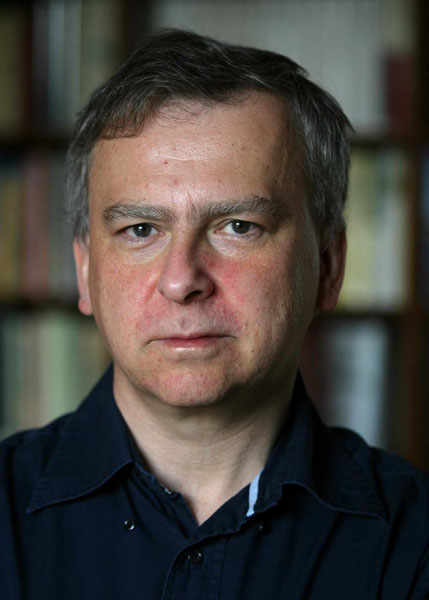
Dr. Wibowo Hardjawana is a Senior Lecturer in Telecommunications Engineering at the School of Electrical & Computer Engineering , University of Sydney. He holds a PhD from the University of Sydney and serves as an ARC DECRA Research Fellow. His research focuses on wireless network softwarisation, enabling programmable radio interfaces to address traffic elasticity in 5G/6G systems. Education : PhD (University of Sydney) Grants : ARC DP210100744 (2021), ARC DECRA DE140101114 (2014) His work spans 5G/6G network architectures , machine learning for wireless systems , and open radio interfaces . Key contributions include graph representation learning for interference management, Bayesian neural network detectors for OTFS modulation, and NOMA decoding techniques . Recent publications analyze ultra-reliable low-latency communications , UAV-enabled networks , and stochastic geometry in wireless systems . He has collaborated with institutions in China, Indonesia, and UAE, and engaged with industry partners like Telstra and Ausgrid.
Douglas C. Noll is the Ann and Robert H. Lurie Professor of Biomedical Engineering and Professor of Radiology at the University of Michigan. He holds key roles as Co-Director of the Functional MRI Laboratory, Co-Lead of the NeuroImaging Core at the Michigan Alzheimer’s Disease Research Center, and collaborator at the Michigan Institute for Imaging Technology and Translation (MIITT). His affiliations include the Michigan Neuroscience Institute, Center for Computational Medicine and Bioinformatics, and Michigan Concussion Center. His research focuses on advancing MRI and fMRI technologies to study brain function and neurological disorders. Key projects include rapid image acquisition, artifact elimination, physiological modeling, and MRI-guided therapies like histotripsy. Recent work emphasizes pre-clinical MRI-guided focused ultrasound systems and collaborations with neuroscientists to map brain organization in health and disease. Notable contributions include developing the Oscillating Steady State Imaging (OSSI) technique, the TOPPE framework for MRI sequence prototyping, and tools like FieldMapNet MRI for off-resonance correction. His lab addresses challenges in high-resolution fMRI, real-time motion compensation, and translational imaging for clinical applications. Current efforts span improving MRI hardware-software integration, advancing non-invasive brain therapies, and applying machine learning to enhance image reconstruction and artifact correction. Collaborations bridge engineering, neuroscience, and clinical medicine to tackle complex neurological conditions like Alzheimer’s and brain tumors.
Prof. Vinod Namboodiri is the Forlenza Chair in Health Innovation and Technology at Lehigh University's Department of Computer Science & Engineering and College of Health. He leads the Accessibility and Assistive Technologies (ACCESS) Lab, focusing on computing technologies to address health disparities affecting people with disabilities. His NSF-funded research develops navigation solutions for individuals with disabilities, with emphasis on smart communities and built environment accessibility. He holds a Ph.D. from UMass Amherst and previously served as Full Professor/Associate Director at Wichita State University and Adjunct Senior Scientist at Envision Research Institute. His research spans assistive technologies, applied computer vision, and smart health systems. Notable work includes MABLESim (indoor accessibility simulation), NaVIP (visually impaired navigation), and economic analyses of accessibility investments. His publications explore both technical innovations and policy implications of assistive technologies. Prof. Namboodiri has received multiple awards for research, teaching, and innovation. His work bridges computer science with disability studies, emphasizing real-world impact through interdisciplinary collaboration. Current projects address indoor navigation systems, cost-benefit analysis of accessibility infrastructure, and human-agent interaction platforms for disability empowerment.
Dr. Nara Yoon is an Assistant Professor in the School of Strategic Leadership Studies at James Madison University’s College of Business and a visiting researcher at the Gradel Institute of Charity at the University of Oxford. Her research focuses on board governance, collaborative governance, and volunteer management across public, nonprofit, and for-profit sectors. She holds a Ph.D. in Public Administration from Syracuse University, an M.P.A. and B.A. in Public Administration from Yonsei University. Her work examines organizational behavior and interorganizational relationships, with particular emphasis on board interlocks, institutional theory, and quantitative analysis. Notable research areas include how nonprofits adopt governance policies, the impact of regulatory changes on healthcare organizations, and the role of social media in political elections. Dr. Yoon’s recent publications span leading journals such as Journal of Public Administration Research and Theory and Nonprofit and Voluntary Sector Quarterly . Her awards include recognitions from the Academy of Management, ARNOVA, and ASPA. She collaborates with institutions like the Gradel Institute of Charity and engages in policy analysis related to collaborative governance systems and crisis management during the pandemic.
Ling Zhao is a distinguished Professor at the School of Management, Huazhong University of Science and Technology, China, with extensive research contributions spanning artificial intelligence, machine learning, information systems, and biomedical applications. With over 150 publications since 2008, Dr. Zhao has established herself as a leading researcher in multiple interdisciplinary domains, particularly in applying computational methods to solve complex real-world problems. Dr. Zhao's research interests encompass a broad spectrum of cutting-edge topics including artificial intelligence, machine learning, data mining, control systems, and information systems. Her work demonstrates exceptional versatility, bridging theoretical computer science with practical applications in healthcare, transportation, cybersecurity, and business management. Notably, she has made significant contributions to sentiment analysis, medical image processing, algorithmic management, and privacy-preserving data analysis. Her research methodology often combines deep learning approaches with domain-specific knowledge to develop innovative solutions. Analysis of Dr. Zhao's recent publications (2023-2025) reveals a strong focus on interdisciplinary applications of AI, with particular emphasis on healthcare informatics (medical image analysis, disease diagnosis), human-computer interaction (algorithmic management effects), and advanced machine learning techniques (graph neural networks, multimodal learning). Her work shows a consistent trend toward increasingly complex and integrated systems that address real-world challenges across multiple domains. Dr. Zhao has made substantial contributions to academic advising and research mentorship, though specific student names aren't detailed in the available publications. Her research has been supported by various grants enabling work in AI applications, biomedical engineering, and information systems. Dr. Zhao maintains active collaborations with researchers across China and internationally, as evidenced by her co-authorship patterns. While specific laboratory information isn't explicitly mentioned in the publication records, Dr. Zhao appears to lead or be significantly involved in research groups focusing on AI applications in management and healthcare. Her work on medical imaging, sentiment analysis, and control systems suggests involvement in multiple specialized research teams addressing different application domains through computational approaches.
Christopher Bailey is a Professor of Advanced Semiconductor Packaging and Director of the Centre for Advanced Semiconductor Packaging at Arizona State University (ASU). He previously served as Professor of Computational Mechanics & Reliability and Associate Dean for Research at the University of Greenwich, UK. At ASU, he leads research on advanced semiconductor packaging, including roles as Principal Investigator (PI) and Co-Investigator (Co-I) on major projects such as the SRC-funded Thermo-Mechanical Modelling and US Chips Act initiatives (e.g., SWAP-Hub, SHIELD, ITSI). His research focuses on semiconductor packaging reliability, thermal management, co-design methodologies, and multiphysics modeling. Education: MBA (Technology Management), Open University, UK PhD, Thames Polytechnic, UK Research Interests: Advanced Semiconductor Packaging Thermal Management Solutions Co-Design and Multiphysics Modeling Reliability of Electronic Components His work integrates computational mechanics, materials science, and engineering to address challenges in high-reliability electronics. Recent projects emphasize predictive modeling for semiconductor packaging failures under thermal-mechanical stress. Awards: IEEE Region 8 Europe Award (2024) IEEE David Feldman Award (2022) Visiting Professorships at IIT Kharagpur (2018/2022) and Hong Kong (2018) Service & Leadership: Former President of IEEE Electronics Packaging Society (2020–2021) Associate Editor for IEEE Transactions on Components, Packaging, and Manufacturing Technology Conference Leadership (e.g., Program Chair for IEEE PAINE 2024) He has secured over $40M in research funding and authored 400+ archival papers, with expertise spanning industry collaborations (e.g., BAe Systems, Rolls Royce) and government advisory roles (EPSRC Peer Review College, UK Research Excellence Framework).
Raquel Gallego is a Full Professor of Political Science and Public Administration at the Autonomous University of Barcelona (UAB), with a secondary role as Senior Researcher at the Institute of Government and Public Policies (IGOP). She holds a Ph.D. from the London School of Economics and Political Science (LSE), alongside advanced degrees from UAB including an M.Sc. in Public Administration and a Licenciatura in Political Science and Sociology. Her research focuses on public policy analysis, public administration reform, welfare state dynamics, and social policies in areas like health, education, and housing. She has directed IGOP (2016-2019) and coordinated the Master in Public Management (2001-2016; 2020-2022), a collaborative program involving UAB, Universitat de Barcelona, and Universitat Pompeu Fabra. Gallego’s work emphasizes state decentralisation and social innovation, particularly in early childhood education and care. Her recent projects include analyzing cooperative affordable housing models and evaluating community health initiatives in Barcelona’s deprived neighborhoods. Over 110 publications highlight her contributions to policy reform and equity-focused governance, including articles in European Societies , Public Administration Review , and Policy Studies . Her professional trajectory reflects deep engagement with public sector challenges, balancing academic research with institutional leadership in Spain’s complex multi-level governance landscape.
Roland Larsson is a Professor and Head of Subject in Machine Elements at Luleå University of Technology, Sweden. His research focuses on Tribology, particularly lubrication regimes (boundary to elastohydrodynamic), contact mechanics, surface roughness effects, and applications in rolling element bearings, clutches, hydraulic systems, tires, and sports equipment. He has supervised over 20 doctoral and licentiate students, contributed to advanced courses, and developed teaching methods like Flipped Classroom and Constructive Alignment . Education: Ph.D. (1996, Luleå University of Technology), Docent (2001), M.Sc. in Mechanical Engineering (1988). Research: Central themes include elastohydrodynamic lubrication, surface roughness in contact interfaces, and sustainable lubricants. His work explores water-based lubricants, ionic liquids, and glycerol mixtures. Publications: Recent articles (2025) investigate water-based lubricants' film formation, ski-snow friction dynamics, and tribochemical properties of green lubricants. Earlier works (2024-2023) cover micropitting, wear models, and multi-scale contact analysis. Awards: Recipient of multiple tribology awards including ASME Best Paper, Nordea's Vetenskapliga Pris, and Venture Cup North. He has held leadership roles at Luleå University, including Dean and Vice-Dean of the Faculty of Engineering Board. Collaboration: Active in international research networks as peer-reviewer, faculty opponent, and external examiner. His post-doctoral work includes affiliations with Leeds University and SKF Engineering Research Centre.
Tina Shoa is an Associate Professor in the School of Sustainable Energy Engineering at Simon Fraser University. She holds a Ph.D. in Electrical Engineering from the University of British Columbia (2010), an M.Sc. from the University of Manitoba (2004), and a B.Sc. from Iran University of Science and Technology (2000). Her research focuses on battery performance modeling, electrochemical methods for fault detection, sustainable battery manufacturing, and AI-based diagnostics. Education: Ph.D., Electrical Engineering, University of British Columbia, 2010 M.Sc., Electrical Engineering, University of Manitoba, 2004 B.Sc., Electrical Engineering, Iran University of Science and Technology, 2000 Research Interests: Battery performance modeling, analysis, and optimization Electrochemical and ultrasound-based battery fault detection Sustainable battery manufacturing processes AI-driven battery diagnostics Teaching and Courses: Advanced Battery and Fuel Cell Technologies Power Plant Systems Smart Grids Practicum SEE 354 D100 Energy Storage (Summer 2025) Patents: Battery State-of-health Determination upon charging (US Patent 11079437B2, 2022) Battery State-of-health Determination using multi-factor normalization (US Patent 10,302,709, 2019) Apparatus and Method for testing electrochemical systems (US Provisional Patent 62/994687, 2020) Key Contributions: Her work integrates electrochemical principles and AI to advance battery diagnostics and sustainable energy storage solutions. She has authored over 15 publications in top-tier journals and conferences, addressing battery aging, state estimation, and novel manufacturing techniques.
Andrew Ho is the Charles William Eliot Professor of Education at Harvard University's Graduate School of Education (HGSE). He holds a Ph.D. in Educational Psychology and an M.S. in Statistics from Stanford University. His research focuses on improving educational assessment design, particularly in measuring educational progress and inequality. He developed the Stanford Education Data Archive (SEDA), a national repository of student achievement data, and advocates for low-stakes assessment use in policy. Ho has held leadership roles including Immediate Past President of the National Council on Measurement in Education and trustee of the Carnegie Foundation. He advises seven U.S. states' testing programs and teaches graduate courses in statistics and psychometrics at HGSE. His work emphasizes the importance of accurate assessment during crises like the pandemic, advocating for standardized testing as part of a multi-measure 'census' approach to identify learning disparities and allocate resources effectively. Education: Ph.D. in Educational Psychology (Stanford, 2005), M.S. in Statistics (Stanford) Affiliations: Harvard Graduate School of Education, Technical Advisory Committees for 7 states Key Projects: SEDA, Assessment Literacy initiatives, pandemic-era testing advocacy His research bridges psychometrics with policy, emphasizing equitable assessment practices. Notable contributions include frameworks for interpreting test scores in multi-measure systems and critiques of 'learning loss' terminology favoring actionable 'learning lag' perspectives. Ho's recent work addresses pandemic-era education challenges through rigorous data analysis and policy recommendations.
Liuping Wang is a Professor in the School of Electrical and Computer Engineering at RMIT University, Australia, since 2007. He serves as Head of Discipline for Electrical Energy and Control Systems since 2005 and teaches Advanced Control Systems (EEET 2100) and Real Time Estimation and Control (EEET 2221). Current academic rank: Professor Location: City Campus, Australia Industry collaborators: ANCA, Australian Power Academy, Advanced Manufacturing CRC His research interests span: Control Theory with applications to UAVs and industrial processes Development of Model Predictive Control systems System Identification using neural networks Robust Control for constrained systems Control of AC motors and power electronics Applications in biomedical research and food process monitoring The 15 most recent publications (2015-2025) demonstrate expertise in: UAV control systems with segmented surfaces Battery condition monitoring for electric vehicles Mult-agent robotics with coordination algorithms Smart grid security and electricity dispatch GPS-denied localization for mobile robots Disturbance observer control with input constraints As a supervisor, he oversees Masters Research and PhD projects but no specific student names are listed. His email is liuping.wang@rmit.edu.au for collaboration or supervision inquiries.
Professor Klaus McDonald-Maier is a full Professor in the School of Computer Science and Electronic Engineering (CSEE) at the University of Essex , where he leads the Embedded and Intelligent Systems (EIS) Research Laboratory and heads the Intelligent Embedded Systems and Environments Research Group . He is also Director of Impact , Visiting Professor at the University of Kent, and Visiting Research Affiliate at NASA Jet Propulsion Laboratory, California Institute of Technology. Education PhD in High-Performance Parallel Neural Network Architectures, Friedrich-Schiller-University Jena (Germany, 1999) Electronic Engineering studies, University of Ulm (Germany) Electronic Engineering studies, Cardiff University (Wales) Electronic Engineering studies, École Supérieur de Chimie Physique Électronique de Lyon (CPE-Lyon) (France) Research Interests Professor McDonald-Maier’s research integrates embedded systems , System-on-Chip (SoC) architectures , and AI-driven robotics . He pioneers visual place recognition techniques that remain robust under severe appearance and viewpoint changes, develops cybersecurity frameworks based on ICMetrics for autonomous vehicles and IoT, and designs approximate real-time computing solutions for energy-constrained multicore and FPGA platforms. His work on radiation-tolerant systems supports space and nuclear applications, while his bio-inspired algorithms enable lightweight, neuromorphic perception on resource-limited robots. Publication Trends Between 2022 and 2025 his output converges on FPGA-accelerated AI , secure edge intelligence , visual navigation for autonomous systems , and healthcare analytics . He repeatedly couples rigorous algorithmic innovation with practical hardware deployment, yielding energy-efficient, real-time systems validated in domains ranging from autonomous driving to post-stroke rehabilitation. Scientific Awards & Recognition Best Paper Award – IEEE Transactions on Sustainable Computing (2024) Best Paper Award – IEEE/ACM DATE (2024) Best Paper Award – IEEE Systems Journal (2022) Best Paper Award – IEEE Sensors Journal (2021) Best Paper Award – IEEE Access (2020) Research Grants & Industrial Collaboration He has secured major funding from EPSRC , EU Horizon 2020 , Innovate UK , and industry partners. Current projects span trustworthy autonomy, radiation-hardened edge AI, and AI-enhanced rehabilitation technologies. He is Chief Scientist of UltraSoC Technologies Ltd and CEO of Metrarc Ltd , commercialising University research in semiconductor debug and cybersecurity respectively. Laboratory & Team Leadership As Director of the Embedded and Intelligent Systems Laboratory (EIS Lab) , he oversees a multidisciplinary team of researchers and PhD students, providing state-of-the-art FPGA, robotics, and embedded-systems facilities. The lab collaborates closely with NASA JPL, UK Atomic Energy Authority, and leading semiconductor firms to translate fundamental research into high-impact industrial solutions.
Prof. Dariusz Kolodziejczyk holds a full professorship at the University of Warsaw's Institute of History since 2003, alongside a part-time professorship at the Polish Academy of Sciences' Institute of History since 2010. His academic journey began at the University of Warsaw, where he earned a Master of Arts (1986) and Ph.D. (1990) in History. He has held visiting roles at Hokkaido University (2009–2011), University of Notre Dame (2004–2005), and others. As Chair of Early Modern History (2010–2013) and Director of the Institute of History (2012–2016), he has shaped academic leadership in Eastern European history. His research focuses on Ottoman and Genghisid state dynamics, multi-ethnic societies, and imperial frontiers. Notably, he explores diplomatic interactions between the Polish-Lithuanian Commonwealth and Crimean Khanate within early modern Eurasia. His recent works analyze Ottoman frontier administration, tributary systems, and cross-cultural alliances. Awards: 2015: Committee of Oriental Sciences Membership 2014: Chevalier de l'ordre national du Mérite (France) 2013: Honorary Turkish Historical Society Membership 2012: Bekir Çoban-zade Foundation Prize for Crimean history He contributed to the Polish Ministry of Science project on Commonwealth-Persian relations and participated in the COST Action A36 on tributary empires. His work bridges historical scholarship with international academic collaboration, reflecting his dedication to interdisciplinary and comparative imperial studies.
Zohreh Davoudi is an Associate Professor in the Department of Physics at the University of Maryland, College Park. She holds additional roles as a Fellow of the Joint Center for Quantum Information and Computer Science (QuICS) and Associate Director for Education at the NSF Institute for Robust Quantum Simulation. Her research focuses on simulating strongly interacting systems using lattice quantum chromodynamics (LQCD), quantum simulation, and quantum computing. She earned her B.Sc. and M.Sc. from Sharif University of Technology in Iran, followed by a Ph.D. in Theoretical Physics from the University of Washington (2014), and served as a postdoctoral researcher at MIT's Center for Theoretical Physics before joining UMD in 2017. Her research interests include developing computational frameworks to study nuclear and particle physics phenomena, such as neutrino interactions, dark matter scattering, and neutron star dynamics. She has pioneered efforts to leverage quantum computing to address the 'sign problem' in fermionic systems and simulate real-time dynamics of early universe matter. Notable awards include the 2025 Presidential Early Career Award, 2024 Simons Emmy Noether Fellowship, and 2019 Alfred P. Sloan Fellowship. Her educational contributions include leading training programs in quantum information science and fostering collaborations across institutes like RIKEN (2017–2021) and the NSF Quantum Simulation Institute. She supervises a dynamic research group focused on lattice gauge theory, quantum algorithms, and interdisciplinary applications such as neutrinoless double-beta decay calculations.
Philippe Moireau is a Full Professor in the Department of Applied Mathematics at École Polytechnique, where he is also affiliated with the Center for Applied Mathematics (CMAP). He serves as the head of the Inria Project-Team MΞDISIM (Mathematical and Mechanical Modeling with Data Interaction for Simulation in Medicine) and holds the distinguished position of Ingénieur Général of The Corps des Mines. His primary research focuses on inverse problems and data assimilation for partial differential equation models, with particular emphasis on: Observer-based methods from optimal control perspectives Stabilization approaches for evolution equations Numerical analysis of time-dependent control problems Digital twin applications in cardiovascular medicine Professor Moireau's publication portfolio demonstrates consistent focus on mathematical methods for physical systems, with recurring themes in: Data assimilation techniques for PDE-based models Numerical stabilization and discretization methods Cardiovascular biomechanics and hemodynamics Stochastic modeling of biological systems Epidemiological forecasting and control He leads the ANANKΞ project-team at Inria focused on Analysis And Numerics of physical-Knowledge-based Estimation. His educational contributions include lectures on data assimilation theory at CEMRACS and courses on mathematical modeling in cardiac biomechanics at Institut Polytechnique de Paris.