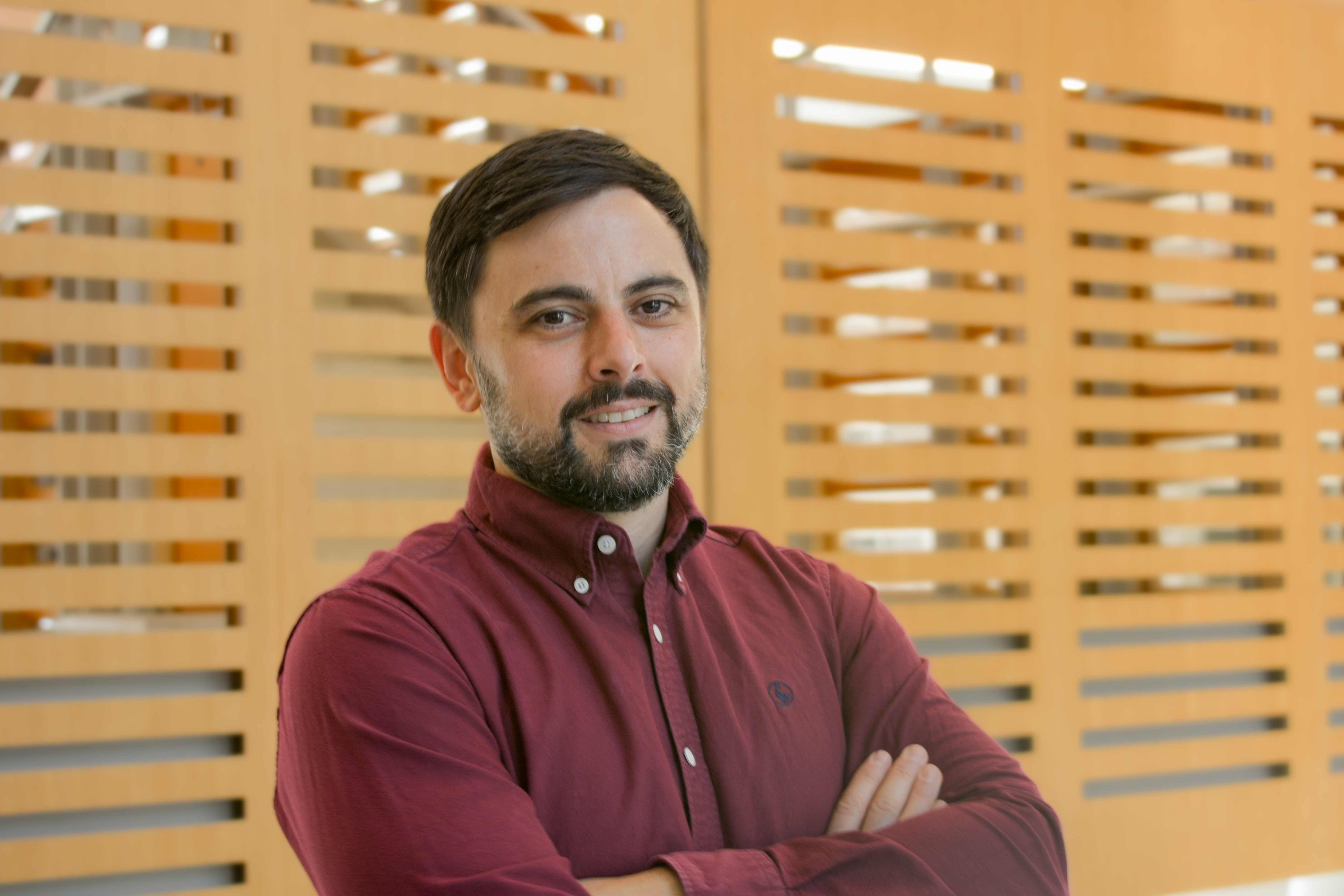
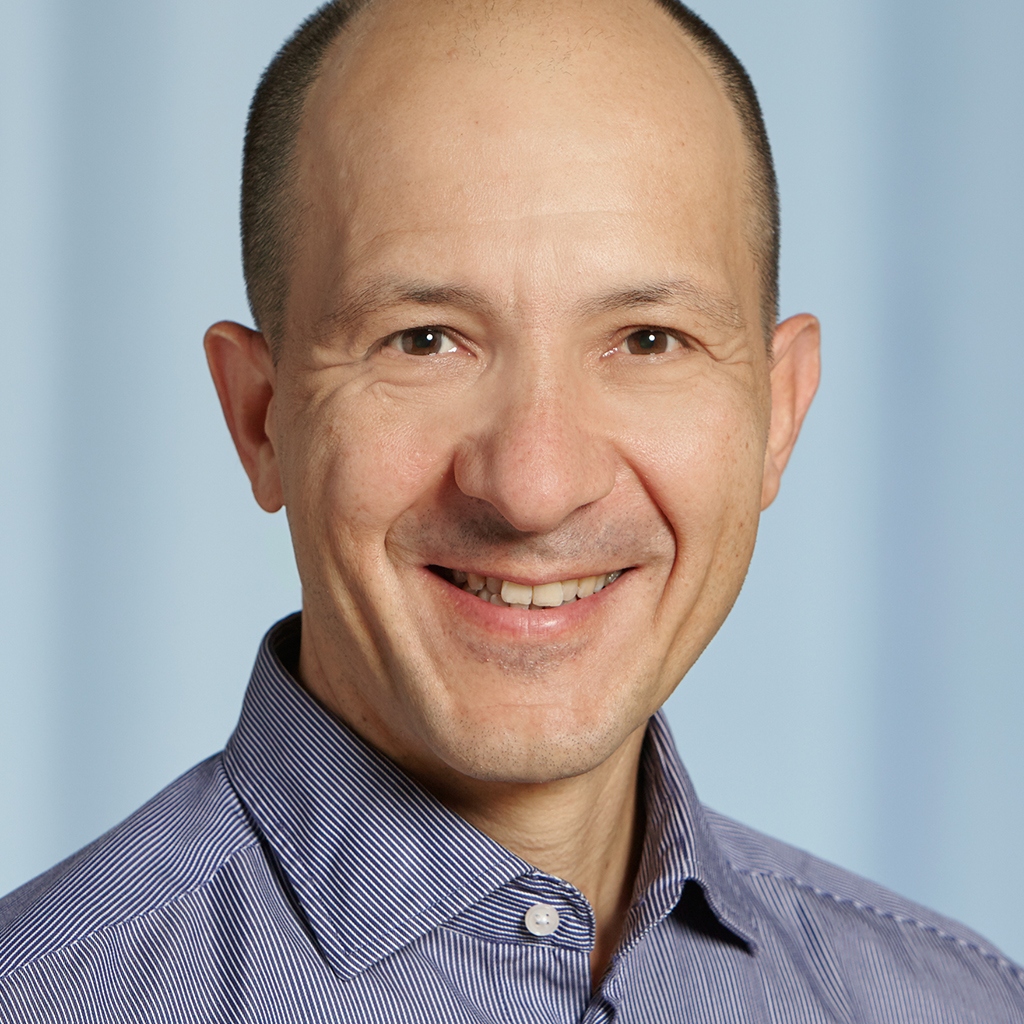
Prof. Hedan Bai is an Assistant Professor at the Department of Materials, ETH Zürich, specializing in robotics materials, bio-inspired systems, and soft robotics. Their research focuses on developing advanced materials for sensing, energy-efficient systems, and biomedical applications. Notable projects include the SmartSuit architecture for space exploration and self-healing optical sensors for soft robots. Research interests span bioelectronics, stretchable sensors, haptic interfaces, and biomimetic materials. Bai's work integrates material science with robotics to create adaptive, sustainable, and intelligent systems. Key areas include wireless implants for neuromodulation, environmental-responsive textiles, and energy-harvesting devices. Publications highlight innovations in optical waveguides, self-healing materials, and wearable technologies. Their interdisciplinary approach bridges robotics, biomedical engineering, and aerospace applications. No formal awards are listed, but contributions to next-gen materials for robotics are prominent. Advising and grants are not detailed in the text, but Bai's lab focuses on projects like SmartSuit for extravehicular activities and synthetic afferent neural networks. Collaborations likely involve aerospace and biomedical sectors.
Lerrel Pinto is an Assistant Professor of Computer Science at the Courant Institute of Mathematical Sciences at New York University (NYU), where he leads the General-purpose Robotics and AI Lab (GRAIL) as part of the CILVR research group. His work bridges the gap between theoretical machine learning and practical robotics applications, with a focus on enabling robots to generalize and adapt in real-world environments. Dr. Pinto received his undergraduate degree from IIT Guwahati, followed by a PhD from the Robotics Institute at Carnegie Mellon University (CMU). He then completed a postdoctoral fellowship at the University of California, Berkeley before joining NYU as faculty. His research program centers on robot learning and decision making, with several key thrusts that demonstrate his innovative approach to robotics. Pinto's work emphasizes large-scale learning techniques that leverage both extensive data and sophisticated model architectures. A significant portion of his research focuses on representation learning for sensory data, particularly developing methods that enable robots to make sense of visual, tactile, and auditory inputs. His lab has made notable contributions to reinforcement learning algorithms that allow robots to adapt to new scenarios with minimal retraining. Pinto also champions open-source robotics , developing affordable robot platforms that democratize access to robotics research. Analysis of Pinto's recent publications reveals a strong trend toward multimodal perception in robotics, integrating visual, tactile, and auditory information to create more robust robot systems. His work increasingly focuses on zero-shot and few-shot learning capabilities, enabling robots to handle novel situations without extensive retraining. There's also a clear progression toward general-purpose robotics , moving away from task-specific solutions toward more flexible systems that can handle diverse real-world challenges. Dr. Pinto's scientific contributions have been recognized with several prestigious awards: Sloan Research Fellowship (2025) NSF CAREER Award (2024) RAL Early Career Award (2024) Best Student Paper Award at ICRA (2016) Outstanding Paper Award at MFM-EAI workshop at ICML (2024) Best Paper Award at NGSM workshop at ICML (2024) Best Student Paper Award at RSS (2023) As an advisor, Pinto has mentored numerous students who have gone on to impactful careers in both academia and industry. His former PhD student Denis Yarats co-founded Perplexity.AI, while Mahi Shafiullah became a postdoc at UC Berkeley and Meta AI. Many of his Masters students have pursued PhDs at top institutions like CMU, MIT, and Stanford, or joined leading robotics companies including 1X, Fauna Robotics, and NVIDIA. Pinto's lab has secured significant research funding, including the NSF CAREER award and likely other grants supporting his robotics research program. The General-purpose Robotics and AI Lab (GRAIL) that Pinto leads brings together a diverse team of researchers working on cutting-edge robotics challenges. The lab maintains strong collaborations with industry partners and other academic institutions, facilitating technology transfer and real-world impact. GRAIL's research spans multiple robotics platforms and focuses on developing algorithms that enable robots to learn from diverse experiences and generalize across environments.
Roberto Martin-Martin is an Assistant Professor of Computer Science at the University of Texas at Austin, where he leads the Robot Interactive Intelligence (RobIN) Lab. His research bridges robotics, computer vision, and machine learning to enable robots to operate autonomously in human-centric environments like homes and offices. Previously, he was a Postdoctoral Scholar at the Stanford Vision and Learning Lab working with Fei-Fei Li and Silvio Savarese, and an AI Researcher at Salesforce AI. Education: Ph.D. and M.Sc. in Robotics from Technische Universität Berlin (TUB), advised by Professor Oliver Brock B.Sc. from Universidad Politécnica de Madrid Dr. Martin-Martin's research focuses on developing AI algorithms that combine reinforcement learning and imitation learning with advanced planning and control to address core challenges in robot perception. His work spans mobile and whole-body manipulation, dexterous and contact-rich interactions, and long-horizon tasks in unstructured environments. He takes inspiration from human cognition through psychology and cognitive science to develop solutions for skills ranging from simple pick-and-place operations to complex tasks like cooking and furniture assembly. His recent publications demonstrate a strong trend toward enabling robots to learn from human demonstrations, particularly through video, and to safely adapt these demonstrations to their own morphology. There's significant emphasis on mobile manipulation, bimanual tasks, and developing hardware that supports robust robot learning through trial and error. His work shows increasing integration of large language models and vision-language models to enhance robot understanding and task execution. Scientific Awards: RSS Pioneer (2020) Winner of Amazon Picking Challenge (2015) RSS Best Systems Paper Award (2016) ICRA Best Paper Award IROS Best Mechanism Award Amazon Faculty Award AAAI Young Faculty IJCAI Early Faculty Nominated for Best Paper at IROS (2014, 2017) Dr. Martin-Martin advises PhD students including Arpit Bahety, who is working on mobile manipulation and learning. He serves as Chair of the IEEE Technical Committee on Mobile Manipulation and is a co-founder of QueerInRobotics. His research is supported by industry partnerships and academic funding sources that enable his lab to develop both hardware and software innovations in robotics. He directs the Robot Interactive Intelligence (RobIN) Lab at UT Austin, which takes a holistic approach to robot intelligence, developing both the hardware (like the BaRiFlex gripper) and software frameworks necessary for robots to learn from interaction. The lab's research addresses the full pipeline from perception to action, with particular emphasis on learning from human demonstrations, safe exploration, and adapting to novel objects and environments.
Wojciech Matusik is a Professor of Electrical Engineering and Computer Science at MIT's Computer Science and Artificial Intelligence Laboratory (CSAIL). He leads the Computational Design and Fabrication Group and is a member of the Computer Graphics Group. His research spans computer graphics, robotics, and AI-driven manufacturing, with a focus on computational design, tactile sensing, and material science. Matusik holds a PhD in Computer Science from MIT (2003), an MS from MIT (2001), and a BS from UC Berkeley (1997). His work includes groundbreaking projects like differentiable cloth simulation (DiffCloth), AI-enhanced molecular design, and tactile sensing gloves. He has received prestigious awards such as the MIT TR35 (2004), DARPA Young Faculty Award (2012), and Ruth and Joel Spira Teaching Award (2014). Matusik teaches courses on computer graphics, machine learning, and computational fabrication at MIT. Key research themes include: Robotics: Robotic assembly, tactile interaction, and soft robotics Graphics: 3D holography, procedural material generation Manufacturing: Additive fabrication, topology optimization His recent articles explore AI-driven molecular synthesis, holographic displays, and tactile-enabled VR systems. Matusik collaborates on open-source tools like the WiReSens tactile platform and Simit language for sparse systems.
Rana Hanocka is an Assistant Professor of Computer Science at the University of Chicago, leading the 3DL research group focused on AI-driven 3D geometry processing. She earned her Ph.D. in 2021 from Tel Aviv University under Professors Daniel Cohen-Or and Raja Giryes. Her work explores neural networks for unstructured 3D data, including mesh convolutional networks and self-priors for shape reconstruction. Key research areas include geometric deep learning, human-AI collaboration in 3D modeling, and interpretable neural networks. Notable contributions include MeshCNN (SIGGRAPH 2019) and Point2Mesh (NeurIPS 2020), advancing mesh analysis and point cloud processing. Awards include the 2023 Pazy Research Award and 2020 Rising Star in EECS. Education : Ph.D. Computer Science, Tel Aviv University (2021) Labs/Groups : 3DL Group at UChicago Grants : NSF Grant for AI-driven 3D modeling tools (2023) Research directions emphasize creative human-AI partnerships, unsupervised learning from shape collections, and explainable 3D neural networks. Ongoing projects include style-aware 3D synthesis, interactive segmentation, and multimodal shape interfaces.
Pieter Abbeel is a Professor in the Department of Electrical Engineering and Computer Sciences (EECS) at the University of California, Berkeley. He leads the Berkeley Robot Learning Lab and co-directs the Berkeley Artificial Intelligence Research (BAIR) Lab. His work focuses on advancing AI and robotics through deep reinforcement learning, imitation learning, and unsupervised learning, with applications in automation, healthcare, and education. Abbeel's research also explores the societal implications of AI and its potential to revolutionize other scientific and engineering fields. Education: Ph.D. in Computer Science, Stanford University (2008) M.S. in Electrical Engineering, KU Leuven, Belgium (2000) Research Interests: Robotics, AI, Machine Learning, Reinforcement Learning, Autonomous Systems, and Applications in Surgery, Manufacturing, and Education. Recent Article Trends: Focus on multimodal learning, robot manipulation, protein structure prediction, and scalable AI systems. Key areas include sim-to-real transfer, embodied AI, and foundation models for decision-making. Awards & Honors: IEEE Kiyo Tomiyasu Award (2022) ACM Prize in Computing (2021) IEEE Fellow (2018) MIT Tech Review TR35 (2011) Advising & Grants: Advises startups and has received grants from NSF, DARPA, and industry partnerships. Notable students include those advancing robotics, reinforcement learning, and bioAI. Labs & Initiatives: Berkeley Robot Learning Lab, BAIR Lab, and collaborations with the Center for Human-Compatible AI (CHAI). Founded companies include Gradescope, Covariant, and Berkeley Open Arms.
Subhasish Mitra is the William E. Ayer Professor of Electrical Engineering and Computer Science at Stanford University, holding dual appointments in both departments. He leads the Stanford Robust Systems Group and serves on the leadership team of the Microelectronics Commons AI Hardware Hub under the US CHIPS and Science Act. His research spans Robust Computing, NanoSystems, Electronic Design Automation (EDA), and Neurosciences, with breakthroughs in X-Compact test compression, carbon nanotube computing, and 3D integration. He has held international roles like the Carnot Chair at CEA-LETI and Visiting Professorships globally. Education & Honors: Recipient of over 40 awards including the IEEE Computer Society’s Harry H. Goode Memorial Award, ACM/IEEE’s A. Richard Newton Technical Impact Award, and the Intel Achievement Award. He earned top academic accolades from IIT Kharagpur and Jadavpur University, and is a Fellow of ACM and IEEE. Research Impact: Pioneered first-of-their-kind systems like the carbon nanotube computer and monolithic 3D integration. His work on robust computing techniques like QED validation and X-Compact compression has industry-wide adoption, saving billions in manufacturing costs. Collaborates with industry leaders like Intel, Google, and Samsung. Publications & Grants: Over 400 publications, including award-winning papers in DAC, ISSCC, and IEEE journals. Leads grants from NSF, DoE, and industry partnerships. His lab explores cutting-edge topics like neuromorphic computing, 3D thermal scaffolding, and AI hardware acceleration. Administration & Outreach: Serves as Associate Chair (Faculty Affairs) for Stanford’s Computer Science Department. Recognized by students for mentorship, and frequently invited to global forums like the World Economic Forum and National Academy of Engineering.
Nancy M. Wells is a Professor in the Department of Human Centered Design and serves as the Senior Associate Dean for Research and Graduate Education in the College of Human Ecology at Cornell University. Her work bridges environmental psychology and public health, examining how built and natural environments impact human health and behavior across the lifespan. Dr. Wells received a joint PhD in Psychology and Architecture from the University of Michigan and completed National Institute of Mental Health (NIMH) post-doctoral training at the University of California, Irvine. Her educational background uniquely positions her to investigate the intersection of physical environments and human wellbeing through both psychological and architectural lenses. Her research focuses on how environmental contexts—from homes to neighborhoods to schools—affect health outcomes, cognitive functioning, and resilience. A central theme examines nature's role in human resilience, particularly how natural environments buffer against adversity and challenge. She has conducted influential work on school gardens and their effects on children's physical activity, dietary habits, and learning. More recently, she has pioneered research on nature and autism, conducting a randomized controlled trial examining natural environments' effects on autistic youth wellbeing. Analysis of Dr. Wells' recent publications reveals consistent focus on nature's health benefits, with strong emphasis on experimental methodologies including randomized controlled trials and natural experiments. Her work spans environmental psychology, public health, and education, with particular attention to vulnerable populations including low-income communities and children of color. NSF Funding for environmental health research USDA Funding for school garden studies Robert Wood Johnson Foundation Funding MacArthur Foundation Funding Senior Associate Editor of Environment and Behavior (4 years) Research Advisory Board of Children and Nature Network Board of Directors for reDirect Dr. Wells actively mentors undergraduate and graduate students through the Wells Lab, involving them in all research stages from data collection to publication. Her research has been supported by multiple significant grants examining housing quality effects on mental health, neighborhood design impacts on physical activity, and school garden interventions. She leads interdisciplinary research teams that integrate perspectives from environmental psychology, public health, landscape architecture, and education. The Wells Lab operates as an integrated research-teaching-outreach unit that develops practical yet rigorous studies to assess causal relations between environment and health, creates valid measurement tools, and identifies causal pathways. Current projects include examining nature's effects on autistic youth wellbeing in partnership with The Center for Discovery in New York, and investigating multi-sensory design in urban public spaces.
Nicolas Mathevon is a Professor at the University of Saint-Etienne, with a focus on Animal Behavior and Bioacoustics . He currently serves as Director of Studies at Ecole Pratique des Hautes Etudes and leads the ENES Team . His research explores acoustic communication across diverse species, including crocodiles, seals, penguins, and humans, with particular emphasis on vocal recognition, signal evolution, and neurobiological underpinnings. Major collaborations include Dr. T. Aubin (CNRS), Dr. I. Charrier (marine mammals), Dr. N. Grimault (crocodilian bioacoustics), and Prof. D. Reby (human communication). He also co-edits a new book, The Voices of Nature , published by Princeton University Press. His recent work spans ecoacoustic monitoring for conservation, multi-modal communication in crocodiles, and cross-species analysis of distress signals in bonobos, chimps, and humans. Neurobiological studies include brain activation patterns in response to vocalizations and sound localization mechanisms in reptiles. Scientific Awards include senior membership in the Institut universitaire de France .
Danica Kragic is a Professor of Computer Science at the School of Electrical Engineering and Computer Science at the Royal Institute of Technology (KTH) in Stockholm, Sweden. She serves as the Director of the Centre for Autonomous Systems and leads the Robotics, Perception and Learning Lab at KTH. Her research focuses on advancing robotics capabilities through computer vision and machine learning approaches. MSc in Mechanical Engineering from the Technical University of Rijeka, Croatia (1995) PhD in Computer Science from KTH (2001) Professor Kragic's research primarily centers on robotics, computer vision, and machine learning, with particular emphasis on robotic manipulation, grasp planning, and human-robot interaction. Her work bridges theoretical foundations with practical applications, exploring how robots can understand and interact with objects in complex environments. She investigates how visual and tactile sensing can be integrated to improve robotic perception and manipulation capabilities, with applications ranging from industrial automation to assistive robotics. Her recent publications demonstrate a strong focus on advanced grasp planning techniques, tactile sensing for manipulation, and mathematical representations for robotic control. Kragic's research shows increasing integration of machine learning approaches with traditional robotics frameworks, particularly in the areas of grasp synthesis, object recognition, and human-robot collaboration. Her work spans theoretical contributions in mathematical representations of grasps to practical implementations of robotic systems capable of adapting to novel objects and situations. 2007 IEEE Robotics and Automation Society Early Academic Career Award IEEE Fellow ERC Starting Grant (2012) Member of The Royal Swedish Academy of Sciences Member of The Royal Swedish Academy of Engineering Sciences Honorary Doctorate from Lappeenranta University of Technology Professor Kragic's research has been supported by major funding bodies including the EU, Knut and Alice Wallenberg Foundation, Swedish Foundation for Strategic Research, and Swedish Research Council. While specific student names aren't listed in the provided information, her publication record suggests extensive mentorship of PhD students and postdoctoral researchers in robotics and computer vision. Her lab, the Robotics, Perception and Learning Lab, serves as a hub for interdisciplinary research connecting computer science, engineering, and cognitive science perspectives on robotic systems. As Director of the Centre for Autonomous Systems at KTH, Kragic oversees a major research initiative focused on advancing autonomous technologies. Her Robotics, Perception and Learning Lab brings together researchers working on visual perception, machine learning, and robotic manipulation, with particular emphasis on developing systems that can understand and interact with objects in unstructured environments. The lab's work spans theoretical foundations of robotic manipulation to practical implementations of systems capable of learning from experience.
Giacomo Indiveri is a dual Professor at the Faculty of Science of the University of Zurich and the Department of Information Technology and Electrical Engineering of ETH Zurich . He serves as the Director of the Institute of Neuroinformatics at both institutions. Indiveri holds an M.Sc. in Electrical Engineering (1992) from the University of Genoa and a Ph.D. in Computer Science (2004) from the same university. Primary Affiliation: University of Zurich (Faculty of Science, Institute of Neuroinformatics) Secondary Affiliation: ETH Zurich (Department of Information Technology and Electrical Engineering) Indiveri's research bridges neuroscience , computer science , and machine learning to develop neuromorphic cognitive systems . His work focuses on spike-based learning , recurrent neural networks , and analog/digital circuit design for real-time sensory-motor systems . He integrates emerging memory technologies into fault-tolerant event-based architectures, enabling brain-inspired computing paradigms in applications like robotics and medical monitoring. His recent publications emphasize neuromorphic hardware for epileptic seizure detection , spiking neural networks in robotic painting , and scalable processors with on-chip learning . These works explore biologically plausible neurons , delay lines , and memory arrays for temporal processing, with applications in healthcare , edge computing , and adaptive control . Scientific Awards & Recognitions: 2021 IEEE Biomedical Circuits and Systems Best Paper Award Senior Member of IEEE Society ERC Fellow with three European Research Council grants Indiveri's group at the Institute of Neuroinformatics develops event-based systems for real-world validation of brain-inspired computing. His work includes multi-core processors , feedback optimizers , and dynamic routing architectures , supported by grants for advancing neuromorphic technologies .
Nima Mesgarani is an Associate Professor of Electrical Engineering at Columbia Engineering, Columbia University, affiliated with the Sense, Collect and Move Data Committee. His research bridges engineering and neuroscience through reverse-engineering neural signal processing mechanisms, leading to advancements in brain-machine interfaces, neural prosthetics, and speech processing algorithms. He received his PhD in Electrical Engineering from the University of Maryland and completed postdoctoral training at Johns Hopkins University's Center for Language and Speech Processing and UC San Francisco's Neurosurgery Department. Research Focus Professor Mesgarani's lab integrates computational neuroscience and engineering to study acoustic signal processing. Key areas include: Neural decoding of speech and auditory attention in multi-talker environments Development of brain-controlled hearing technologies Novel speech separation and synthesis algorithms inspired by cortical processing Cross-modal learning between auditory and visual systems Applications of large language models in neural signal interpretation Publication Trends Analysis of his 15 most recent articles (2025) reveals dominant themes: neural decoding techniques using intracranial EEG, brain-inspired speech separation models (e.g., Mamba architectures), applications of large language models in auditory neuroscience, cross-modal distillation methods, and clinical translation of audio processing algorithms. A strong emphasis emerges on real-time brain-computer interfaces and noise-robust speech processing. Laboratory and Collaborations Mesgarani directs an interdisciplinary lab developing neurotechnology for hearing restoration. His team collaborates with neurosurgery departments and speech processing centers, focusing on translating theoretical models into clinical brain-machine interfaces. The lab's work has yielded patents for brain-informed speech separation systems and attention-decoding frameworks.
Dr. George Stamou is a Professor at the School of Electrical and Computer Engineering of the National Technical University of Athens (NTUA), serving as Director of the Artificial Intelligence and Learning Systems Laboratory (AILS). His expertise spans knowledge representation, machine learning, neural networks, and semantic technologies. He leads interdisciplinary initiatives such as the postgraduate program 'Data Science and Machine Learning' (2018–2022). Research Interests: Focuses on knowledge graphs, interpretable AI, semantic web applications, and multimodal learning. His work integrates formal logic systems (e.g., description logics) with modern deep learning techniques, addressing challenges in explainability, bias detection, and ethical AI applications. Publications: Over 150 articles in AI journals/conferences with an h-index of 34 (Google Scholar). Notable contributions include datasets like CHORDONOMICON (music analysis), GOSt-MT (gender bias in MT), and methodologies for counterfactual explanations in machine learning. Awards & Committees: Active in W3C and RuleML standardization bodies. Co-organized major AI conferences. Recognized for contributions to semantic interoperability and knowledge-based systems. Labs & Teams: Directs AILS-NTUA lab and collaborates with CISRI (Computer & Information Systems Research Institute). Engages in EU projects like CultureLabs (cultural heritage digitalization) andsmarty4covid (health data analysis).
Andreas Eklund is an Assistant Professor in the Marketing Department at the University of Wisconsin-La Crosse (UWL). He holds a Ph.D. in Marketing from Linnaeus University (Sweden), specializing in consumer psychology, and a Master’s degree from Lund University (Sweden). His research focuses on sensory marketing, branding, and service-dominant logic, exploring how sensory cues influence consumer behavior and brand experiences. He has taught courses on branding, consumer behavior, and marketing strategy at universities in Sweden, Norway, and the U.S. Education: Ph.D. in Marketing (Consumer Psychology), Linnaeus University, Sweden M.Sc. in Marketing, Lund University, Sweden Research Interests: Sensory marketing and its intersection with branding Multi-sensory consumer experiences in automotive and retail environments Experiential marketing and value proposition design Congruency theories in brand-consumer relationships Teaching: Recent courses include MKT351 (Principles of Marketing), MKT362 (Consumer Behavior), and MBA755 (Advanced Marketing) Focuses on experiential learning and real-world marketing applications Professional Background: Prior career as a chef informs his sensory marketing research Experience in Scandinavian universities before joining UWL Personal Interests: Outdoor activities (disc golf, ice skating) Swedish salt licorice enthusiast Manchester United football fan
Yonatan Bisk is an Assistant Professor at Carnegie Mellon University (CMU) in the School of Computer Science , with dual appointments in the Language Technologies Institute and Robotics Institute . His research bridges Natural Language Processing (NLP) with robotics, focusing on grounded and embodied language understanding. Assistant Professor, Language Technologies Institute, CMU (2021–Present) Courtesy Appointment, Robotics Institute, CMU Research Themes : Language as a social codification of embodied experience Interpretable multimodal model training Human-robot collaboration frameworks Embodied question-answering systems Selected Trends : His recent publications show increasing focus on cross-modal attention mechanisms (Vid2Robot), error detection in toolchains (Tools Fail), and theory-of-mind reasoning in language agents (SOTOPIA). Multimodal integration spans vision, audio, and robotic control contexts (ANAVI). Labs & Collaborations : Founder of CLAW Lab (Connecting Language to Action and the World) Collaborations with Microsoft Research, Meta Inc, and CMU's REAL (Robotics, Embodied AI, Learning) community