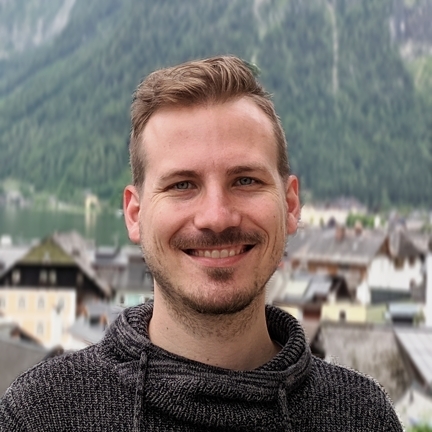
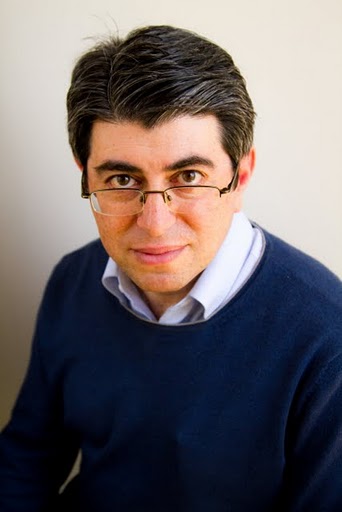
Jacob Wenegrat is an Assistant Professor in the Department of Atmospheric and Oceanic Science at the University of Maryland, College Park. His research focuses on submesoscale ocean processes (0.1-10 km scales), combining theory, high-resolution numerical simulations, and observational data. Key research areas include ocean submesoscale dynamics, air-sea interaction, boundary layer turbulence, and multi-scale fluid dynamics. He teaches courses such as Physical Oceanography (AOSC420/670) and Oceanography of the Chesapeake and Mid-Atlantic (AOSC421). His group actively collaborates with observationalists and large-scale modelers to bridge fundamental dynamics with interdisciplinary applications like climate science and marine ecosystems. Wenegrat advises a diverse group of graduate students and postdocs working on topics including submesoscale turbulence, coastal oceanography, and numerical modeling. His lab utilizes advanced computational tools and field data from initiatives like the Sub-Mesoscale Ocean Dynamics Experiment (S-MODE). Recent research highlights include studies on marine heatwaves in the Chesapeake Bay, turbulent dynamics of submesoscale vortices, and the role of submesoscale processes in global ocean boundary layers. His work emphasizes connecting small-scale physics to broader environmental and climate systems.
Jonathan Balkind is an Assistant Professor in the Department of Computer Science at the University of California, Santa Barbara (UCSB). His research focuses on the intersection of computer architecture, programming languages, and operating systems, with an emphasis on pragmatic system design and open-source hardware. He leads the ArchLab at UCSB and is affiliated with the OpenPiton project, an open-source manycore research framework. Education includes a PhD and MA in Computer Science from Princeton University (adviser: Prof. David Wentzlaff), an MSci in Computing Science from the University of Glasgow (advisers: Prof. Joseph Sventek and Dr. John O'Donnell), and exchange studies at UCSB. His work has been supported by awards such as the NSF Early CAREER Award (2023) and the Open Hardware Trailblazer Fellowship (2022). Research interests span heterogeneous computing, cache-coherent systems, FPGA integration, and domain-specific architectures. Notable projects include the 25-core Piton chip, the CIFER SoC with embedded FPGA, and the DECADES manycore processor. Recent publications address fused-kernel operating systems (Stramash), control logic synthesis, and hyperloop data-center architectures. His awards reflect contributions to open-source hardware and academic mentorship, including Siebel Scholarship (2018), Gordon Y.S. Wu Fellowship (2013–2017), and multiple teaching/research recognitions. He actively collaborates with industry (e.g., Microsoft Research, ARM) and advises on open-source projects.
Sylvia Bohnenstengel is a researcher at the University of Reading's Department of Meteorology, specializing in urban meteorology, climate change impacts, and air quality. Her work involves numerical weather prediction, boundary layer dynamics, and urban energy balance studies. Her research interests include: Urban heat island effects and mitigation Anthropogenic heat emissions Scalar dispersion in urban environments Climate change adaptation for cities Atmospheric turbulence and flow Surface energy balance parameterization Recent publications analyze: 2024: Urban heat flux evaluation via scintillometry 2024: Convective motions' impact on dispersion models 2022: Turbulence dynamics in idealized urban geometries 2018: Sea-breeze detection algorithms 2016: Urban heat island effects on health Multi-decadal urban climate modeling (2004-2015) She contributed to the ClearfLo project (2015) examining London's meteorology-air quality-health nexus, and participated in international urban energy balance model comparisons (2010-2011). Her work bridges meteorology, urban planning, and public health.
H. Cheng is a researcher at the University of Twente, affiliated with the Faculty of Engineering Technology and the Department of Mechanics of Solids, Surfaces and Systems. He plays a central role in several interdisciplinary research projects focused on computational modeling of granular materials, geohazards, and machine learning integration in physics-based simulations. His research centers on advancing numerical methods such as the Discrete Element Method (DEM) and developing machine learning surrogates for efficient uncertainty quantification in complex systems. Key project areas include offshore infrastructure resilience under climate change (POSEIDON), dynamic fault slip in induced seismicity (FastSlip), upscaling particulate systems for industrial applications (TUSAIL), and automated segmentation of soil-root systems using micro-CT imaging (UNSAT). H. Cheng leads and supervises multiple early-career researchers across EU-funded initiatives, including MSCA Doctoral Networks and COST Actions. He is the main applicant and supervisor in the GrainLearning project, which integrates Bayesian inference with physics-based models to improve simulation accuracy and efficiency. His scientific contributions span collaborative research across academia and industry, with a strong emphasis on open science, reproducibility, and cross-sectoral training. He contributes to community-building through initiatives like ON-DEM, promoting best practices in particle-based simulations. Supervisor of multiple PhD students and postdoctoral researchers Daily supervisor in POSEIDON, FastSlip, TUSAIL, UNSAT Vice-lead of Working Group 1 in ON-DEM COST Action Main applicant and project lead for GrainLearning H. Cheng is actively involved in training the next generation of computational scientists and engineers, with a focus on interdisciplinary methodologies that bridge mechanics, data science, and industrial applications.
Dr. Christopher Chen is a Reader in Space Plasma Physics at Queen Mary University of London, holding a UKRI Future Leaders Fellowship. He is affiliated with the School of Physical and Chemical Sciences within the Department of Physics and Astronomy. Chen earned his PhD in Space Physics from Imperial College London in 2011 and has held research positions at the University of California, Berkeley and Imperial College before joining QMUL in 2017, where he progressed from Lecturer to Senior Lecturer in 2021 and then to Reader in 2022. Chen's research focuses on space plasma physics, particularly solar wind turbulence and its fundamental properties. His work bridges theoretical models, spacecraft data analysis, and laboratory experiments to understand complex plasma behavior. He is actively involved in several major space missions including Parker Solar Probe (as a member of FIELDS and SWEAP teams), Interstellar Probe mission study, and Magnetospheric Multiscale mission (as a member of the Science Working Team). His publication record shows a strong focus on solar wind turbulence, Alfvén wave interactions, and plasma dynamics in the inner heliosphere. The most recent work emphasizes forecasting techniques for solar wind parameters, laboratory experiments of wave interactions, and detailed analysis of turbulence properties using data from Parker Solar Probe. His research demonstrates a clear progression toward understanding the kinetic-scale processes that govern energy transfer in space plasmas. Royal Astronomical Society Fowler Award (2017) American Geophysical Union Macelwane Medal (2021) Conferred Fellow of the American Geophysical Union (2021) American Physical Society Landau-Spitzer Award (2022) Chen actively supervises a large research group including multiple postdoctoral researchers and PhD students, and has secured significant research funding through an STFC Ernest Rutherford Fellowship (2016-21), UKRI Future Leaders Fellowship (2022-26), and multiple STFC Consolidated Grants. His teaching responsibilities include organizing and lecturing the Astrophysical Plasmas module and supervising Masters and undergraduate research projects. He is also engaged in extensive public outreach through media interviews, public talks, and participation in science festivals.
Yunseong Nam is an Adjunct Assistant Professor at the University of Maryland. His research focuses on advancing quantum computing through innovations in trapped-ion systems, quantum algorithms, and error mitigation techniques. He is particularly known for developing methods to enhance gate fidelity, optimize quantum circuits, and improve fermionic simulations for quantum chemistry applications. Research Interests: Nam’s work spans quantum hardware optimization, entangling gate implementation, and hybrid quantum-classical computing architectures. He emphasizes practical applications like materials science simulations and fault-tolerant protocols, leveraging symmetries and resource-efficient algorithms to address computational challenges. His contributions include breakthroughs in pulse engineering, SPAM error handling, and the design of robust quantum circuits. Key Research Trends: Recent articles highlight advancements in trapped-ion gate optimization (e.g., small-angle Mølmer-Sørensen gates), error mitigation strategies, and quantum circuit compilers. His work frequently intersects with experimental quantum systems, emphasizing real-world implementations over purely theoretical models. Awards & Grants: No specific awards or grants are mentioned in the provided texts. Labs & Teams: While specific lab affiliations are not detailed, his collaborations likely involve quantum computing hardware groups and theoretical teams focused on algorithm optimization.
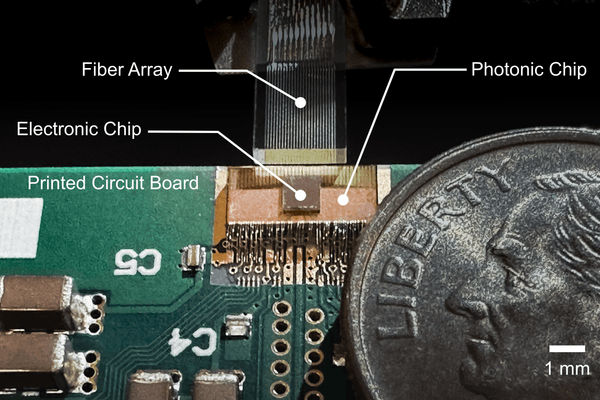
Anthony Rizzo is an Assistant Professor of Engineering at Dartmouth College, leading the Rizzo Integrated Photonic Systems Laboratory. His research focuses on integrated photonics, quantum photonics, and neuromorphic photonics, with applications in high-speed data communication, quantum computing, and energy-efficient systems. He holds a PhD in Electrical Engineering from Columbia University (2022), an MS from Columbia (2019), and a BS in Physics from Haverford College (2017). His work has been funded by organizations such as the Toyota Research Institute and the U.S. Army Research Laboratory. Key research areas include silicon photonics for ultra-low energy optical interconnects, photonic-electronic integration, and novel photonic materials like aluminum nitride. Notable achievements include the first demonstration of a Kerr comb-driven silicon photonic link and advancements in 3D photonic integration for terabit-scale data links. His lab explores applications in quantum sensing, neuromorphic computing, and visible wavelength photonics for atomic systems. Funding Sources: Toyota Research Institute, U.S. Army Research Laboratory, Thayer School of Engineering, AIM Photonics Courses Taught: ENGS 23 (Distributed Systems and Fields), ENGS 60 (Solid-State Electronic Devices) Recent publications highlight breakthroughs in ultra-low loss waveguides, scalable photonic linear neurons, and energy-efficient modulators. His work bridges fundamental photonics research with practical applications in next-generation communication and computing systems.
Silvia Holler is a Researcher (RTD-A) at the Department of Cellular, Computational, and Integrative Biology (CIBIO) at the University of Trento. She specializes in biochemistry, biotechnology, and synthetic biology with a focus on enzymology, catalysis, and structural biology. Her work spans experimental and computational studies of protocells, droplet-based systems, and self-organizing soft matter. Teaching responsibilities include co-teaching the Biochemistry course at CIBIO, where she collaborates with scholars like Giovanni Piccoli and Martin Michael Hanczyc. The course covers foundational topics in biochemistry, enzymology, and molecular structures with practical skills in chromatography and enzymatic kinetics. Research interests emphasize artificial life systems, droplet engineering, and the physics of biological organization. Key themes include protocell formation, compartmentalized biochemistry, and ethical implications of synthetic biology innovations. Recent work explores self-organized patterns in soft matter, active matter dynamics, and computational modeling of multi-phase systems. Publications focus on droplet microfluidics, vesicle interactions, and agglomeration phenomena across scales. Collaborative efforts include editorial roles for artificial life conference proceedings and interdisciplinary projects combining biophysics with materials science. No scientific awards were explicitly mentioned in the provided materials. Her research lab activities are embedded within CIBIO's facilities, focusing on experimental setups for droplet-based synthetic biology and computational simulations of complex systems.
Saravanan Venkatachalam is an Associate Professor in the Department of Industrial and Systems Engineering at Wayne State University. His research focuses on stochastic programming, robust optimization, and discrete event modeling with applications to supply chain management, healthcare, energy systems, and unmanned vehicle operations. Education Ph.D. in Industrial and Systems Engineering, Texas A&M University M.S. in Industrial and Systems Engineering, Texas A&M University B.E. in Production Engineering, PSG College of Technology, India His work addresses decision-making under uncertainty through decomposition algorithms and data-driven approaches. Recent projects include autonomous vehicle path planning with uncertain parameters, community-aware electric vehicle charging networks, and optimization models for radio advertisement placements. Current research trends emphasize stochastic programming for resource allocation in dynamic environments, robust optimization for transportation and energy systems, and multi-vehicle routing under uncertainty. He has supervised multiple graduate students in thesis work related to optimization models and taught core courses such as Operations Research, Deterministic Optimization, and Stochastic Programming at both undergraduate and graduate levels.
Rishabh Dabral is a Research Group Leader at the Max Planck Institute for Informatics since August 2024, leading the "3D Visual Intelligence" group. He is also affiliated with the Research Training Group on Neuro-Explicit Models of Language, Vision, and Action at Saarland University. Expertise: 3D computer vision, computer graphics, human-object interaction modeling, and motion synthesis. Leadership: Conducts cutting-edge research on 3D human performance capture and physical plausibility in motion. His research focuses on: 3D human pose estimation under gravity constraints Multi-modal gesture synthesis using neural architectures Quantum auto-encoding for 3D representations Wearable robotics informed by human behavior Temporal dynamics in human-object interaction Recent publications at top venues like SIGGRAPH , CVPR , and ICCV demonstrate his work on: Music-driven motion synthesis Egocentric motion capture systems Reactive two-person interaction models Diffusion-based gesture generation Object-aware motion prediction Wearable robotic limb design
Koen Van Dam is a Research Fellow at Imperial College London's Department of Chemical Engineering, part of the Urban Energy Systems group within the Faculty of Engineering. His work focuses on agent-based modelling of socio-technical systems to support decision-making in urban energy and transport infrastructure design. He leads the SEF05 Urban Energy Systems module in the Sustainable Energy Futures MSc program and co-organizes computational social science summer schools. Koen has held visiting researcher positions at the National University of Singapore and TU Delft, and previously served as president of Eurodoc (European council for doctoral candidates). Education: MSc in Artificial Intelligence (Vrije Universiteit Amsterdam), PhD from TU Delft (2009) with thesis on agent-based modelling of socio-technical systems. Research interests emphasize integrating spatial/temporal data across energy and transport sectors to model urban systems at multiple scales. Projects include: FCDO Climate Compatible Growth (CCG) project COP26 Rapid Response Facility technical lead EPSRC-funded Digital City Exchange (DCE) and IDLES projects resilience.io (DFID project) Key contributions include decision support tools for: Electric vehicle infrastructure planning Low-carbon energy systems Smart district design Post-pandemic urban resilience Awards: None explicitly listed, though his extensive project leadership indicates recognition in sustainability research. Advising: Supervised over 40 MSc/MEng projects on smart cities, energy demand, EVs, bioenergy, and resilient infrastructure. Active in education through master's course leadership and international summer schools. Labs/Teams: Affiliated with Energy Futures Lab, Network of Excellence in Air Quality, and the Artificial Intelligence Climate Compatible Growth initiative.
Georg Sperl is a research scientist at CLO Virtual Fashion . He holds a PhD in physics-based simulation from the Institute of Science and Technology Austria (IST Austria) , where he was supervised by Chris Wojtan . His research focuses on physics-based animation of natural phenomena like cloth, yarns, granular media, and fluids, emphasizing multi-scale simulation techniques. Education: BSc and MSc in Visual Computing from the Technical University of Vienna , followed by a PhD at IST Austria. His work bridges computational mechanics and visual detail through methods like numerical homogenization. Notable achievements include the SIGGRAPH Outstanding Doctoral Dissertation Award (Honorable Mention) and the Eurographics PhD Award . His research has advanced yarn-level cloth simulation, thin-shell mechanics, and inverse modeling of fabric properties. Prior to his current role, he contributed to projects like iCaRL in computer vision.
Thierry Duval is a Professor in the Department of Computer Science (INFO) at IMT Atlantique , Brest campus. His work focuses on Virtual Reality (VR) , Human-Computer Interaction (HCI) , and 3D Interaction in collaborative environments.
Associate Professor Socrates Dokos is Deputy Head of the Graduate School of Biomedical Engineering at UNSW Sydney. His research focuses on computational modeling of electrical and mechanical properties in excitable tissues, with over 160 publications and a sole-authored textbook on Modelling Organs, Tissues, Cells and Devices . He leads interdisciplinary work combining computational modeling, systems identification, and experimental electrophysiology. Current IEEE EMBC Editor for Computational Systems & Synthetic Biology Member of EMBS Technical Committee on Therapeutic Systems and Technologies Key research areas involve Cardiac electrical and mechanical function modeling Retinal neural stimulation simulations Electroconvulsive therapy (ECT) optimization Biomechanical modeling of tissues and devices Parameter optimization for ionic cell models Cardiovascular-rotary blood pump interactions His recent publications demonstrate expertise in multi-scale biological modeling, cardiac hemodynamics, retinal prosthetics, and therapeutic neuromodulation techniques. He actively engages in developing standards for the Modeling Markup Language (MML) framework. Contact: Room 506, Samuels Building (F25), UNSW Sydney. Email: s.dokos@unsw.edu.au . ORCID: 0000-0002-7399-2712
Fred Schauer is an Associate Professor in the Department of Aeronautics and Astronautics at the Air Force Institute of Technology (AFIT), part of Air University at Wright-Patterson Air Force Base, Ohio. He is a leading researcher in propulsion systems, particularly in the development and analysis of detonation-based engines such as pulsed and rotating detonation engines. His work integrates experimental testing, thermodynamic modeling, and advanced diagnostics to advance aerospace propulsion technologies. His educational background includes: BS in Mechanical Engineering, University of Dayton, 1993 Ph.D. in Mechanical Engineering, University of Illinois at Urbana-Champaign, 1998 Air War College, 2008 Dr. Schauer's research focuses on energy, propulsion, and power, with special emphasis on novel thermodynamic cycles, detonation dynamics, laser diagnostics, and flame-turbulence interactions. His work has significantly contributed to understanding and optimizing rotating and pulsed detonation engines, including performance scaling, nozzle integration, and fuel injection strategies. He has explored both conventional and bio-derived fuels to enhance efficiency and sustainability in small-scale propulsion systems. The 15 most recent publications reflect a strong trend toward experimental validation of rotating detonation engines, thermodynamic modeling, and performance optimization. These works span high-speed propulsion, combustion stability, and integration with turbines and ejectors. Keywords across these articles include aerospace engineering, propulsion, combustion, and mechanical systems, with subfields such as rotating detonation, pulsed detonation, nozzle dynamics, fuel efficiency, and thermodynamic modeling. His scientific achievements have been widely recognized: AFRL Commander’s Cup and Innovation Award Two-time winner of the AFRL Science & Technology Achievement Award ASME Airbreathing Propulsion Award Finalist for the Collier Trophy Finalist for Aviation Laureate AFRL Fellow Air Force Scientist of the Year AIAA Engineer of the Year Dr. Schauer has served as a research advisor for numerous M.S. and Ph.D. students and maintains active collaborations with AFRL, NASA, DOE, and academic institutions. His research group has published extensively and led major projects, including the AFRL in-house detonation propulsion research program from 1997 to 2019. He previously led the Propulsion and Power Advanced Concepts Group, which operated the Detonation Engine Research Facility and the Small Engine Research Laboratory, driving innovation in next-generation propulsion systems. His research labs and teams include the Detonation Engine Research Facility and the Small Engine Research Laboratory, where experimental and computational studies on advanced propulsion concepts are conducted. These facilities support high-pressure, high-speed combustion research and enable the development of practical applications for military and aerospace platforms.