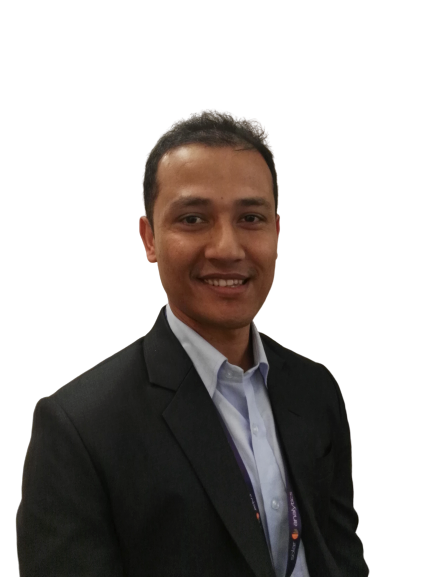
Dr Sanjeev Gambhir is a Senior Research Fellow at the Intelligent Polymer Research Institute, University of Wollongong. With over 30 years of experience in chemistry, he leads bioinks synthesis and scale-up activities at TRICEP (Translational Research Initiative for Cellular Engineering and Printing) facility. His work bridges academic research with commercial translation, particularly in 3D bioprinting of living tissues. B.Sc. and M.Sc. in Organic Chemistry from Garhwal University Ph.D. in Organic Chemistry from Indian Institute of Petroleum Research focuses on 3D bioprinting technologies, graphene composites, conducting polymers, and hydrogel engineering. Key challenges addressed include biomaterial diversity limitations, bioprinted construct characterisation, and scalable bioink formulation. His work spans tissue engineering, regenerative medicine, and industrial applications. Major publications appear in Nature Communications , Journal of the American Chemical Society , and Advanced Materials . With 60+ peer-reviewed papers and an H-index of 28, his research on graphene composites and conducting hydrogels has significant citations in biomedical and materials science domains. Frater Award (Australian National Fabrication Facility, 2013) Active in mentoring junior staff and students, Gambhir collaborates with Inventia Life Science Pty Ltd and Professor Fiona Wood at the University of Western Australia. Current funding includes MRFF grants for intraoperative skin regeneration systems and translational projects through University of Wollongong infrastructure grants.
Professor Luming Shen is a distinguished academic in the School of Civil Engineering at The University of Sydney. With over two decades of experience in mechanical behavior of materials research, he leads cutting-edge investigations at the intersection of civil engineering, materials science, and computational mechanics. His work spans multiple scales from nano to macro, focusing on fundamental understanding that can be applied to real-world engineering challenges in water purification, structural safety, and sustainable infrastructure. Professor Shen's educational background includes: Bachelor's degree in Building Engineering from Tongji University, China Master's degree in Structural Engineering from Tongji University, China PhD in Civil Engineering from the University of Missouri-Columbia, USA Professor Shen's research focuses on the mechanics and behaviors of materials across multiple scales. His primary interest lies in understanding both brittle materials (concrete, rock, glass) and ductile materials (aluminum, titanium, metals). Two major thrusts of his work include nano-mechanics and materials research, particularly developing carbon nanotube membranes for water purification, and studying novel composite materials under impact and extreme loading conditions for applications in blast-resistant structures and vehicle safety. He employs high-performance computing for molecular and macro-level analyses, complemented by physical laboratory testing. Professor Shen's extensive publication record demonstrates a consistent focus on multiscale modeling of materials behavior, with recent work emphasizing granular materials dynamics, carbon nanotube applications, 3D-printed concrete technology, and energy storage systems. His research shows a clear evolution toward increasingly complex multiphysics problems that integrate mechanical, thermal, and fluid dynamics phenomena at multiple scales. The interdisciplinary nature of his work bridges civil engineering, materials science, computational mechanics, and environmental engineering, with applications spanning from fundamental material science to practical civil infrastructure solutions. Professor Shen actively supervises multiple research students, including Yifang Cao working on 3D printing concrete, Jiangshuai Meng studying granular materials under impact loads, and Runda Wang applying machine learning to rock burst prediction. His research is supported by access to advanced computational resources and laboratory facilities at The University of Sydney, particularly through his membership in The University of Sydney Nano Institute. The university has provided specialized space and equipment necessary for conducting physical tests on materials under high-speed impact conditions. Professor Shen maintains active laboratory facilities for conducting physical tests on materials under various loading conditions, particularly high-speed impact testing. His work is supported by computational resources for molecular dynamics and multiscale modeling. As a member of The University of Sydney Nano Institute, he collaborates with interdisciplinary researchers working at the nanoscale, particularly in applications related to water purification technologies using carbon nanotube membranes.
Rabin Basnet is a Research Fellow in the College of Engineering & Computer Science at The Australian National University (ANU). He holds a PhD from ANU (2020), a Master of Science in Renewable Energy Management from the University of Freiburg, and a Bachelor of Engineering from the Institute of Engineering, Pulchowk Campus, Nepal. His research focuses on silicon solar cell fabrication, defect characterization, and renewable energy policies. He has worked on developing low-cost silicon wafers with passivating-contact technology and mitigation strategies for bulk defects in Cz-Si wafers. Dr. Basnet’s research interests span advanced solar cell technologies, including photovoltaic materials characterization and energy storage solutions. His work combines experimental methods like time-resolved photoluminescence with materials science to enhance solar cell efficiency and stability. He has collaborated internationally, including a research stint at the Fraunhofer Institute for Solar Energy Systems ISE in Germany (2013–2016). His publications highlight innovations in polysilicon passivation, hydrogen activation, and defect mitigation in silicon wafers, with contributions to tandem solar cell designs and machine learning applications in materials research. While no specific awards are listed, his work has been published in high-impact journals and presented at international conferences. He is affiliated with ANU’s Energy cluster and actively contributes to interdisciplinary research in sustainable energy systems.
Dr. Emmanuel Alejandro Flores Johnson is an Adjunct Senior Lecturer at the School of Mechanical and Manufacturing Engineering, Faculty of Engineering at the University of New South Wales (UNSW), and a Senior Structural Modeller at the Australian Nuclear Science and Technology Organisation (ANSTO). His research focuses on the performance of advanced structural materials under extreme conditions for applications in the nuclear industry and non-nuclear energy-generation systems using numerical modelling. Dr. Flores Johnson has extensive expertise in developing finite element simulations of non-linear material behaviour, including plasticity, damage and fracture mechanics, impact, and shock behaviour. His work spans various engineering materials and structures, including composites, metal alloys, polymers, concrete and bioinspired materials. He has been involved in international multi-disciplinary collaborations, industry-oriented projects, and defence projects requiring numerical modelling and experimental testing expertise. His research interests include: Composite and hybrid materials Metals and alloy materials Numerical modelling and mechanical characterisation Modelling and simulation Finite element analysis of non-linear material behaviour Plasticity, damage and fracture mechanics Dr. Flores Johnson's publication record demonstrates a strong focus on applying numerical methods to solve complex structural engineering problems, particularly in extreme environments. His recent work shows increasing emphasis on nuclear applications and non-nuclear energy systems, reflecting the growing importance of these sectors in materials research. Dr. Flores Johnson has received recognition for his contributions to structural modelling and materials science through various research collaborations and projects. His work bridges theoretical modelling with practical applications in critical industries. With over a decade of experience in both academic and research organization settings, Dr. Flores Johnson has developed a robust research program that combines advanced numerical techniques with experimental validation to address challenging problems in structural materials science.
Dr Rebecca Rockett is a Senior Lecturer in the School of Medical Sciences , Faculty of Medicine and Health at the University of Sydney . She is an NHMRC Senior Research Fellow (2023–2027) and a principal investigator within the Sydney Infectious Diseases Institute (Sydney ID) and the Centre for Infectious Diseases and Microbiology – Public Health at Westmead campus. Education & Training: PhD in Molecular Virology, University of Queensland (2015) – characterised pathogenesis of newly discovered human polyomaviruses. Post-doctoral development in next-generation sequencing and bioinformatics at SydneyID. Research Focus: Dr Rockett’s overarching goal is to improve detection and treatment of existing and emerging high-burden infectious diseases. She leverages pathogen genomics , metagenomics , epidemiology and bioinformatics to: track and contain outbreaks via real-time genomic surveillance; detect antimicrobial resistance determinants; investigate vaccine breakthrough infections; develop molecular diagnostics for respiratory viruses, malaria and STIs. Recent Publication Trends: Her 2020–2025 publications reveal an intensive focus on SARS-CoV-2 , covering co-infections, variant subtyping, resistance mutations, and assay optimisation. Additional work addresses monkeypox antibody responses , Salmonella and Legionella outbreak genomics, and capacity-building for genomics in low-resource settings . Scientific Awards & Fellowships: NHMRC Senior Research Fellow (2023–2027) NHMRC Investigator Grant recipient (2023–2027) Research Supervision & Grants: Current HDR students: David Pham (Targeted Metagenomic NGS for Infectious Disease Diagnosis); Sarah Smith (Phylo-epidemiology of invasive pneumococci). Major grants (2022–2024): – Deployable Genomics-Guided Outbreak Response Program (ReSPOnd) , Office of Global and Research Engagement – Metagenomic NGS for female sexual & reproductive health in Zambia , Bill & Melinda Gates Foundation – Castanet: analytics toolkit for capture-based pathogen surveillance , Sydney ID Strategic Funding Laboratories & Collaborations: She leads a research group within the Sydney Infectious Diseases Institute and works closely with the Centre for Infectious Diseases and Microbiology – Public Health at Westmead, maintaining strong collaborative networks across Australian public health laboratories and international partners in the Asia-Pacific region.
Professor Ryan T. Armstrong is a leading researcher at the University of New South Wales in the Faculty of Engineering , specifically the School of Civil and Environmental Engineering . His work focuses on interdisciplinary applications of applied mathematics, petroleum engineering, computer science, and physics to digital materials characterization and energy technologies. Integrates disciplines into digital rock physics frameworks Specializes in X-ray tomography and pore-scale flow modeling Research applications: hydrogen storage, CO 2 sequestration, mineral recovery His research portfolio includes 15 recent publications spanning machine learning for rock imaging, fluctuation-dissipation theorems, and multi-scale modeling of unconventional reservoirs. Key funding includes: 2022: ARC Future Fellowship (FT210100165) 2021: ARC Discovery Grant (DP210102689) 2020: ACARP Grant (C29036) 2019: ARC Linkage Grant (LP190100990) 2017: ARC Discovery Grant (DP170104417) 2016: ARC Discovery Grant (DP160104995) Honors include multiple Best Paper Awards at Society of Core Analysts symposia and UNSW Excellence Awards in both research and teaching. Professional memberships span the International Society of Porous Media , Society of Petroleum Engineers , and American Geophysical Union .
Dr. Azdiar Adil Gazder is a Senior Research Fellow and FEGSEM/EBSD Supervisor at the University of Wollongong's Electron Microscopy Centre, affiliated with the Australian Institute for Innovative Materials (AIIM). He holds roles as Deputy Chair of AIIM's Research, Training, and Development Committee and a Non-Faculty Member of the UOW Academic Senate. His academic journey includes a Ph.D. in Materials Engineering (Monash University, 2008) and a Graduate Diploma in Materials Engineering (Monash University, 2003). Research Focus: His work centers on physical metallurgy of steels and structural alloys, with expertise in advanced electron microscopy (EBSD/EDXS), crystallography, and polycrystalline modeling. Key themes include microstructure-property relationships, deformation mechanisms, and materials characterization techniques. Grants & Leadership: Gazder has secured over 18 grants, including ARC-funded projects on steel innovation and titanium alloy deformation. He led the establishment of UOW's Electron Microscopy Centre (2009–2012). His service roles include membership in the Royal Microscopical Society, Australian Microscopy & Microanalysis Society, and leadership in materials research networks. Awards: Recognized as a Certified Materials Professional (2012), Royal Microscopical Society Fellow (2018), and recipient of Monash University's Mollie Holman Doctoral Medal (2007). Research Outputs: Recent work spans medium-entropy alloys, additive manufacturing of superalloys, and fracture mechanisms in steels. His articles highlight innovations in microstructural analysis and materials modeling.
Dr. Yamila Cajal is a Research Fellow in Critical Minerals Characterisation at the Centre for Ore Deposit and Earth Sciences (CODES) within the University of Tasmania's School of Natural Sciences. She holds a PhD from the Australian National University (ANU), where her research focused on magma fertility in porphyry copper deposits in Chile. Prior to her PhD, she worked in Chilean mining and exploration sectors. Her current research involves ore deposit systems under the Regional Research Collaboration Program (RRC) and Amira P1249 project. She specializes in applying petrology, geochemistry, and geochronology to understand metallogenic processes. Education: PhD in Geology (Australian National University, Australia) BSc (Hons) in Geology (University of Concepción, Chile) Research Interests: Yamila investigates magma evolution, ore fertility indicators (e.g., PGE and zircon geochemistry), and critical mineral potential in porphyry and VHMS deposits. She focuses on linking magmatic processes to ore formation using multi-disciplinary approaches, including fieldwork, isotope geochemistry, and geochronology. Grants & Projects: Genesis, Characterisation and Geochronology of the Cargo Deposit ($85,746, 2025–2028) Characterisation and Paragenesis of the Magdalena VHMS Deposit ($60,000, 2023–2027) Building Capacity in Regional Australia for Critical Metals ($3.5M, 2022–2027) Availability: Supervision of MPhil/PhD students and collaboration on industry projects, particularly in porphyry and VHMS systems. Labs/Teams: Affiliated with CODES and the Amira P1249 consortium, focusing on critical minerals research and sustainable mining solutions.
Dr Michael Cowley is a Senior Lecturer in the School of Chemistry & Physics at Queensland University of Technology (QUT), Faculty of Science. He leads the QUT Astrophysics Research Group and serves as the Academic Lead of Learning and Teaching. His research spans extragalactic astrophysics, galaxy evolution, and physics education, with strong involvement in major surveys such as ZFOURGE, ZFIRE, TAIPAN, and ASKAP-EMU. Research Interests: Dr Cowley's work focuses on the co-evolution of galaxies and supermassive black holes, using multi-wavelength data to study star formation, AGN activity, and quenching mechanisms across cosmic time. He also investigates physics and astronomy education, with a commitment to embedding Indigenous knowledges in science curricula. Publication Trends: His recent publications (2020–2025) reflect a strong focus on high-redshift galaxy populations, radio surveys (EMU), source detection algorithms (Hydra), and the integration of observational data with simulations. There is a clear trajectory toward large-scale data analysis, collaborative survey science, and methodological innovation in source finding and galaxy characterisation. Scientific Awards: Vice-Chancellor's Award for Excellence (2022) Faculty of Science's Educator of the Year (2021) Research Centre for Astronomy, Astrophysics and Astrophotonics Observing Funding Award (2015) Member of the International Astronomical Union (2019) Member of the Astronomical Society of Australia (2014) Member of the Australian Institute of Physics (2010) Member of the Institute of Physics (2010) Supervision and Grants: Dr Cowley supervises Honours, Masters, and PhD students in areas such as star formation rate estimation, galaxy evolution, and radio survey analysis. He is actively involved in education leadership and curriculum development. While specific grants are not listed, his leadership in major surveys implies significant research funding and collaboration. Labs and Teams: He leads the QUT Astrophysics Research Group and is a key member of international collaborations including the ZFOURGE, ZFIRE, TAIPAN, and EMU surveys, contributing to large-scale data analysis and scientific interpretation.
Professor Ryan Armstrong is a distinguished academic in the School of Engineering at the University of New South Wales (UNSW), specializing in Civil and Environmental Engineering. With a Ph.D. in Environmental Engineering from Oregon State University (2012), his research spans multiple disciplines including applied mathematics, petroleum engineering, computer science, and fundamental physics. He leads cutting-edge research in digital materials characterisation, porous media imaging and modelling, and multiphase flow studies for future energy technologies. Dr. Armstrong's research interests focus on the intersection of computational methods and energy applications. His work integrates advanced imaging techniques with mathematical modeling to address critical challenges in energy transition. Key areas include digital rock physics, geological storage of hydrogen and CO 2 , in situ mineral recovery, and machine learning applications in resources engineering. His multidisciplinary approach bridges fundamental science with practical energy solutions. Analysis of his recent publications reveals a strong emphasis on multi-scale modeling, with particular attention to pore-to-core scale phenomena. His work increasingly incorporates advanced machine learning techniques for image processing and flow simulation, while maintaining strong experimental validation. Current research trends show growing focus on hydrogen storage technologies, electrokinetic recovery methods, and multi-physics modeling of complex subsurface systems. Dr. Armstrong is actively involved in several professional societies including the International Society of Porous Media, Society of Core Analysts, Society of Petroleum Engineers, and American Geophysical Union, contributing to the advancement of his field through collaborative research and knowledge sharing.
Karen Osborn serves as a Curator Adjunct Research Fellow in the School of Biological Sciences at The University of Western Australia, while simultaneously holding positions as Curator-Research Zoologist at the Smithsonian National Museum of Natural History (since 2011) and Adjunct Scientist at the Monterey Bay Aquarium Research Institute (since 2012). Her dual institutional affiliations bridge academic research with museum-based systematics and marine exploration. Education: PhD in Integrative Biology, Systematics and ecology of munnopsid isopods, University of California Berkeley (2007) MS in Marine and estuarine science, Effects of Sargassum muticum on faunal communities of the Puget Sound, Western Washington University (1998) BS with Honors in Zoology, Andrews University (1996) Dr. Osborn's research centers on deep-sea biodiversity, specializing in the systematics and morphology of marine invertebrates including crustaceans and polychaete worms. Her fingerprint analysis reveals expertise in Cladistics (100%), New Species discovery (69%), Annelida (66%), Chaeta (48%), Proboscis morphology (45%), Water Column ecology (41%), Crustacea (37%), and Polychaeta (35%). Her work significantly contributes to UN Sustainable Development Goals related to life below water and climate action. Analysis of her recent publications shows a consistent focus on deep-sea organismal biology, with particular emphasis on visual systems of deep-sea amphipods, marine biodiversity monitoring frameworks, taxonomic revisions of marine invertebrates, and microbiome associations in mesopelagic environments. Her collaborative approach is evident through numerous multi-author papers addressing global marine biodiversity challenges. Dr. Osborn currently leads two active research projects: 'Discovery in the Largest Frontier: Advanced imaging and genomics of open ocean animals' (funded by Sasakawa Peace Foundation, 2025-2028) and 'Characterisation of high-resolution tubular eyes in Acoetidae scale worms' (funded by The University of Western Australia, 2025). These projects demonstrate her ongoing commitment to cutting-edge marine biological research despite the challenges of deep-sea exploration. Her scholarly impact is evidenced by an h-index of 19 with 750 citations according to Scopus. Her work has been referenced by policy sources, picked up by news outlets, and widely shared across academic social networks including X (formerly Twitter) and Mendeley, indicating broad scientific influence beyond traditional academic circles.