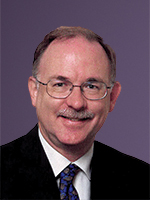
István VargaView profile
Associate Professor
István Varga is an Associate Professor in the Department of Control for Transportation and Vehicle Systems at the Faculty of Transportation Engineering and Vehicle Engineering, Budapest University of Technology and Economics. His work bridges theoretical control systems and practical transportation applications, particularly in intelligent traffic management and autonomous mobility. His research interests are centered on traffic control , urban traffic modeling , autonomous vehicles , emission modeling , and intelligent transportation systems . He applies advanced control methodologies such as model predictive control (MPC), set-theoretic control, and LPV modeling to solve real-world traffic problems including congestion, safety, and environmental impact. His work often integrates simulation platforms like VISSIM and MATLAB for system design and validation. The recent publications (2019–2024) reveal a strong trend toward connected and automated mobility , with a focus on V2X communication, platooning in urban environments, dynamic traffic light integration, and testing infrastructure like ZalaZONE. His research also addresses policy-level questions such as speed limit changes and dynamic road pricing using simulation-based impact analysis. The articles consistently emphasize multi-objective optimization, balancing traffic performance with environmental sustainability. István Varga is actively involved in the Hungarian Research Centre for Autonomous Road Vehicles (RECAR), contributing to national-level advancements in autonomous transport technology. His earlier work includes significant contributions to nuclear power plant safety systems, demonstrating interdisciplinary expertise in safety-critical control systems. While specific grants and students are not listed, his extensive publication record and leadership in research initiatives suggest active project involvement and academic supervision. He has contributed to both theoretical frameworks and real-world implementations, including traffic-responsive signal control, emission modeling for motorways, and robust control of industrial systems. His collaborations span academia and industry, with frequent co-authorship with researchers from Budapest University of Technology and Economics and the Hungarian Academy of Sciences.