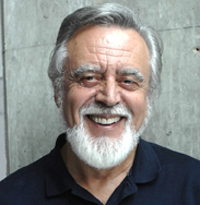
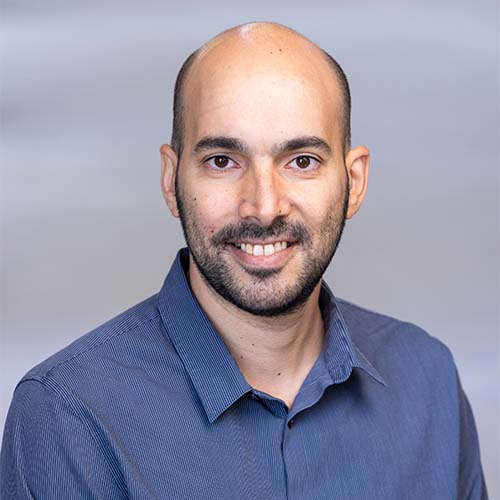
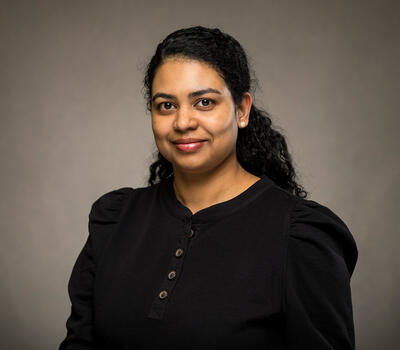
Dimitri Bertsekas is the Jerry Mcafee (1940) Professor in Engineering at the Massachusetts Institute of Technology. His research focuses on optimization, game theory, systems, networking, control, and autonomy. He works within the Laboratory for Information and Systems Decisions. His recent publications demonstrate a strong emphasis on reinforcement learning, dynamic programming, and algorithmic solutions for complex systems. Work spans applications in robotics, transportation optimization, computer vision, game AI, and knowledge systems. Common themes include multi-agent coordination, real-time decision-making under uncertainty, and scalable computational methods. Bertsekas contributes to both theoretical frameworks and practical implementations, with innovations in auction algorithms, rollout methods, and model predictive control integration.
Associate Professor Weidong Cai is affiliated with the University of Sydney's School of Computer Science, serving as Director of the Multimedia Lab and Associate Director of the Biomedical & Multimedia Information Technology (BMIT) Research Group. He has held visiting roles at Harvard Medical School and holds a PhD in Computer Science from the University of Sydney. His research focuses on medical image computing, computer vision, machine learning, and computational neuroscience, with over 300 peer-reviewed publications. Dr. Cai leads projects on 3D point cloud processing, label-efficient learning, cross-domain medical image analysis, and neuroimaging computing. Dr. Cai's educational background includes a PhD from the University of Sydney (2001) and postdoctoral experience at Harvard Medical School (2014). He supervises students in courses like COMP3419 Graphics and Multimedia and COMP5424 Information Technology in Biomedicine. His current research explores cutting-edge topics like 3D neuron reconstruction, multimodal neuroimaging, and AI-driven medical diagnostics. His research interests span medical imaging, bioinformatics, and computer vision, with a focus on developing algorithms for big data analytics, deep learning, and biomedical applications. Projects include automated neuron tracing, cross-domain adaptation for medical imaging, and geometric deep learning for neuroimaging analysis. Dr. Cai's students have received numerous awards, including the MICCAI IUGC Grand Challenge (2024) and IEEE ISBI Travel Grants. He serves on editorial boards for journals like IEEE Transactions on Image Processing and Brain Informatics, and co-edits Springer's Brain Informatics & Health book series. His lab, the Multimedia Lab, collaborates on projects like 3D point cloud applications, label-efficient feature learning, and cross-domain medical image analysis. Research teams include the BMIT group, focusing on biomedical and multimedia technologies.
Kevin Y Chen is an MS Student in Health Policy at Stanford University and a Clinical Instructor at Stanford Children's Health. He holds concurrent roles as an Intermountain Fellow in Population Health, Delivery Science, and Primary Care. His academic background includes a pediatrics residency at the University of Utah School of Medicine. His research focuses on improving healthcare quality and process efficiency through high-value care initiatives. Key technical interests span artificial intelligence, robotics, and autonomous systems, with recent work addressing reinforcement learning, LiDAR data transfer for autonomous vehicles, and language-conditioned robot behavior. His articles reflect interdisciplinary contributions to robotics, computer vision, and embodied AI, with a focus on navigation, 3D reconstruction, and human-robot interaction. Current research integrates AI-driven solutions to healthcare challenges such as workflow optimization and medical education. No scientific awards have been explicitly mentioned in the provided text. His advising and grant activities remain unspecified, though his roles suggest involvement in clinical and educational projects.
Prof. Daoyi Dong is a Professor and ARC Future Fellow at the School of Engineering, The Australian National University (ANU), and an IEEE Fellow. He holds a B.E. (2001) and Ph.D. (2006) from the University of Science and Technology of China. His research focuses on quantum control, machine learning, system identification, and renewable energy systems. He has received prestigious awards including the Humboldt Research Fellowship and the ACA Temasek Young Educator Award. Education: B.E., University of Science and Technology of China (2001) Ph.D., University of Science and Technology of China (2006) Research Interests: Quantum control and stabilization Machine learning applications in quantum systems System identification and optimization Renewable energy systems and microgrids Key Contributions: Developed quantum tomography methods using neural networks Advanced reinforcement learning for quantum gate design Optimized energy management strategies for community microgrids Awards: ARC Future Fellowship (Australia) Humboldt Research Fellowship (Germany) ACA Temasek Young Educator Award (Asia) Grants & Editorial Roles: Recipient of Australian Research Council grants (Discovery, International) Associate Editor: IEEE Transactions on Neural Networks, Cybernetics, and Mechatronics Labs & Collaborations: Active in quantum control and energy systems research, collaborating with global institutions including the Alexander von Humboldt Foundation and the Asian Control Association.
Huan Wu is an accomplished academic researcher with a substantial publication record spanning nearly three decades (1996-2025), comprising 63 indexed publications in the dblp database. Their scholarly work demonstrates expertise across multiple technical domains with significant contributions to optical communication systems, wireless networking, and artificial intelligence applications. Research interests focus on the intersection of electrical engineering and computer science, particularly in developing advanced sensing technologies using optical fibers, creating efficient communication protocols for IoT systems, and applying machine learning techniques to environmental monitoring and biomedical applications. Recent work shows a strong trend toward AI integration for infrastructure monitoring systems, including water pipe leak detection and hydrological modeling, as well as healthcare applications like non-invasive glucose monitoring and medical image analysis. The publication portfolio reveals a clear evolution from foundational work in signal processing and communication systems toward increasingly interdisciplinary research that bridges engineering with environmental science and healthcare. Recent publications (2023-2025) demonstrate particular strength in graph neural networks, distributed sensing systems, and AI-driven solutions for critical infrastructure monitoring. Based on publication patterns including consistent first-author contributions, supervisory roles evident in student collaborations, and extensive research output, Huan Wu appears to hold a senior academic position with significant research leadership. The collaborative nature of the work, involving multiple institutions across China and internationally, suggests active participation in major research initiatives and substantial grant funding, though specific details are not provided in the publication records.
Ridwan Noel is an Assistant Professor in Math and Computer Science at Texas Lutheran University. He holds a Ph.D. in Computer Science from the University of Texas at San Antonio, with specializations in cloud computing performance optimization and machine learning-based adaptive resource management. His research focuses on cloud storage systems, machine learning applications in computing, and computational analysis of socio-political texts. Current projects include COVID-19 modeling, fake news detection, and stock market prediction using ML approaches. Dr. Noel maintains active faculty-student collaborations, including summer research projects on fake news detection and stock market prediction algorithms. Honors: Best Paper Award at IEEE CLOUD 2017 Student Advisees: Ty Edwards (Fake news detection research) John Person (Stock market prediction research)
Juan Antonio Corrales Ramón is a postdoctoral researcher at the University of Santiago de Compostela (USC) under the prestigious Beatriz Galindo Program, affiliated with the CiTIUS laboratory. Previously, he served as an Associate Professor at Sigma Clermont Engineering School (France) from 2014 to 2020, where he taught courses in automatic control, robotics, and programming while conducting research at the Institut Pascal laboratory. He holds a Doctorate in Automatic Control and Robotics from the University of Alicante (2011), following a Master’s in Computer Engineering (2005). His research focuses on human-robot interaction , robotic manipulation , and soft robotics , with applications in industrial automation, healthcare, and agriculture. He has led or contributed to multiple international projects, including H2020-funded initiatives like Bots2Rec, SoftManBot, and ACROBA. His work emphasizes tactile sensing, deformation control, and collaborative robotics systems. Key contributions include: Development of low-cost tactile sensors for soft robotics ( Sensors , 2022) Adaptive control frameworks for deformable objects ( Frontiers in Robotics and AI , 2022) Robotic grippers with reconfigurable fingers ( IEEE Robotics and Automation Letters , 2021) He has received the Beatriz Galindo Postdoctoral Fellowship (2021–present) and has authored over 30 peer-reviewed articles. His research bridges theory and practice, addressing challenges in dexterous manipulation and human-robot collaboration.
Roberto Iglesias Rodríguez is a Professor at the Department of Electronics and Computing, Higher Polytechnic School of Engineering at Universidade de Santiago de Compostela. He holds a PhD from the same institution (2003) with a thesis on vector quantification models. His research focuses on artificial intelligence, mobile robotics, reinforcement learning, and fuzzy logic control. He leads the GSI Group (Intelligent Systems Group) within the Center for Research in Intelligent Technologies (CITIUS). Key research areas include: Robot navigation and path planning Reinforcement learning and hybrid learning systems Fuzzy control systems in dynamic environments Computer vision for robotics Federated learning and distributed robotics Recent work emphasizes federated learning applications in robotics, non-IID data handling, and adaptive systems. Notable contributions include a self-organized multi-camera network for robot deployment (2013) and combining reinforcement learning with genetic algorithms (2006). His research bridges theoretical advances with practical implementations in autonomous systems. Publications span over 30 years, with impactful work in journals like Robotics and Autonomous Systems, IEEE Transactions, and Lecture Notes in Computer Science. Active collaborations include institutions like The University of Texas at Austin and Maastricht University.
Santiago Martinez de la Casa Diaz is an Associate Professor in the Systems Engineering and Automation Department at the University Carlos III of Madrid , affiliated with the Robotics Lab . He specializes in robotics, with a focus on humanoid robots, control systems, and sensor integration. His work spans areas like soft robotics, reinforcement learning, and autonomous systems for tunnel inspection and service applications. His research interests include the design and control of humanoid robots (e.g., TEO and BADGER), sensor fusion, and applications in healthcare and industrial automation. He has published extensively on topics like actuator control, bimanual manipulation, and fractional-order systems. He leads projects such as SIROCO (robotic orthosis) and ROBOSUB (subsurface robotics), and collaborates on initiatives like iRoboCity2030 for smart city robotics. His work integrates AI, mechatronics, and biomechanics to advance humanoid robotics capabilities and real-world applications.
Katarína Smolenová is a Researcher at Wageningen University & Research, specializing in 3D plant phenotyping , digital twin technology , and crop physiology . She contributes to interdisciplinary projects combining agricultural science with computational methods. Her research focuses on developing advanced algorithms for plant trait extraction, including deep reinforcement learning for stem occlusion inpainting and tree quantitative structural modeling for internode-level phenotyping. She leads datasets like TomatoWUR and collaborates on digital twin applications for tomato cultivation optimization. Current projects include modeling tip burn in lettuce, rice digital twins, and plant architecture growth simulations. She co-promotes multiple PhD candidates and contributes to agro-food robotics research with 3D detection frameworks like MOT-DETR.
Dr. Zhen Gao is an Associate Professor of Automation Engineering Technology at the W Booth School of Engineering Practice and Technology, McMaster University. He holds associate membership roles in the School of Computational Science & Engineering, Department of Civil Engineering, and McMaster School of Biomedical Engineering. His expertise spans Automation Engineering Technology, Industry 4.0, Health Technology, and Robotics. Research focuses on advanced manufacturing systems, smart systems, and biomedical engineering applications. Dr. Gao’s work integrates robotics, AI, and sensor technologies for practical applications like wound analysis, autonomous systems, and healthcare automation. His recent publications emphasize 3D object detection algorithms, machine learning for medical diagnostics, and robotics control systems. He advises students in emerging technologies, including Shiyu (Shannon) Chen, a Master of Engineering Systems and Technology student. His academic contributions include innovations in parallel robotic mechanisms, smart grid systems, and project-based learning methodologies. He actively collaborates with institutions like St. Joseph’s Healthcare Hamilton to advance healthcare technologies.
Maryam Parsa is a Tenure-Track Assistant Professor in the Department of Electrical and Computer Engineering at George Mason University. Her research focuses on neuromorphic computing, Bayesian optimization, and algorithm-hardware co-design, aiming to develop energy-efficient, secure, and resilient AI systems for edge computing applications. She holds a PhD from Purdue University, supported by an Intel/SRC fellowship, and previously worked at Oak Ridge National Lab. Education: PhD in Electrical and Computer Engineering, Purdue University (2020) MS in Civil Engineering, Purdue University (Year unknown) MS in Electrical and Computer Engineering, University of Ottawa (Year unknown) BS in Electrical and Computer Engineering, Khaje Nasir Toosi University of Technology (Year unknown) Research Interests: Neuromorphic learning and bio-inspired robotics Bayesian optimization for materials discovery Privacy-preserving spiking neural networks Edge AI and real-time embedded systems Major Achievements: Lead a $2.4M 3-year project on 3D chip creation (2023) Recipient of Intel/SRC PhD Fellowship Current Work: Developing neuromorphic architectures for smart healthcare and cyber-physical systems Pioneering causal machine learning for materials innovation Advancing privacy & security in neuromorphic systems Labs/Teams: Active in Mason's neuromorphic computing research group with collaborations in national labs and industry partners.
Filipe Veiga is an Assistant Professor in the Department of Electrical and Computer Engineering at George Mason University. He holds a PhD in Machine Learning and Robotics from Technische Universität Darmstadt, an MSc in Electrical and Computer Engineering from Instituto Superior Técnico, and a BS in Engineering Sciences from the same institution. His research focuses on integrating perception and biomimetic control approaches to enable intelligent robotic behavior, particularly in tactile sensing, dexterous manipulation, and human-robot collaboration. Key areas include real-time state estimation, hierarchical control systems, and tactile feedback mechanisms for robotics applications. His work bridges machine learning with physical systems to solve challenges in manipulation and perception. Veiga's publications emphasize advancements in tactile sensor design, reinforcement learning for robotic tasks, and human-centric robotic systems. His contributions span theoretical frameworks and practical implementations, with applications in both industrial and assistive robotics. No academic awards or grants are explicitly mentioned in the provided materials. His advising record remains undocumented here. His research is anchored in the university's engineering department, though specific lab affiliations are not detailed.
Sandhya Saisubramanian is an Assistant Professor in the School of Electrical Engineering and Computer Science (EECS) at Oregon State University. Her research focuses on the foundations and applications of automated planning, reinforcement learning, decision theory, and safe and reliable AI systems. She earned her Ph.D. in Computer Science from the University of Massachusetts Amherst in 2021. Her research interests emphasize mitigating negative side effects in AI systems, multi-agent coordination, and user-aligned AI safety. She has contributed to frameworks like REVEALE for reward verification and learning using explanations, as well as WOFOSTGym, a crop management simulation environment. Her work addresses challenges in autonomous systems operating in open-world environments. Education : Ph.D., Computer Science, University of Massachusetts Amherst (2021) Dr. Saisubramanian has been recognized with the Distinguished Paper Award at IJCAI 2020 and serves as a reviewer for top venues like AAAI, IJCAI, and ICAPS. She teaches AI 539: Safe and Reliable Autonomy , reflecting her commitment to advancing trustworthy AI systems. Her research explores intersections between automated planning, reinforcement learning, and safety-critical applications. Current projects include minimizing side effects in multi-agent systems and developing adaptive querying techniques for reward learning from human feedback.
Dr. Faheem Khan is a Reader in Electronic Engineering at the University of Huddersfield's School of Computing and Engineering, and Course Leader for the MSc in Electronic and Automotive Engineering. With over 20 years of academic and research experience across institutions in the UK, Oman, UAE, and India, he has contributed significantly to wireless communications and signal processing. His career includes postdoctoral research at the University of Edinburgh, where he managed EU and EPSRC projects. Education: PhD, Electrical and Electronic Engineering, Queen’s University Belfast (2012) MSc, Communication and Radar Engineering, Indian Institute of Technology Delhi (India) BSc, Electronics Engineering, Aligarh Muslim University (India) Research Interests: Focuses on 6G Communications, Full-duplex Systems, IoT Networks, and Cognitive Radio. His work integrates machine learning, MIMO systems, and spectrum sharing to advance wireless technologies. He leads projects funded by Innovate UK (e.g., RF transceiver design for deep space) and EU Horizon grants (e.g., AI-driven spectrum sharing in 6G). Grants & Contributions: Principal Investigator of £0.5M Innovate UK AKTP grant for RF transceiver design Co-investigator in EU Horizon projects (e.g., EVOLVE, MOTOR5G) totaling €4M Authored successful EPSRC proposals like MANGO (Non-orthogonal access in 5G) Awards: Fellow of the Higher Education Academy (FHEA) Over 600 citations and an h-index of 18 Teaching & Supervision: Leads modules like Analogue System Integration and supervises PhD students in wireless systems and IoT. Collaborations: International partnerships include National Sun Yat-sen University (Taiwan) for AI-driven spectrum sharing and European institutions for 6G research.