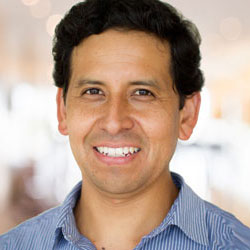
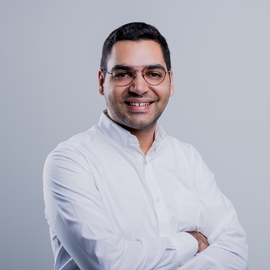
Kenan Kütükde is an Assistant Professor at Kafkas University since 2016, affiliated with the Kazım Karabekir Technical Sciences Vocational School under the Department of Machinery and Metal Technologies. His research focuses on composite material machining, computer-aided design, and manufacturing process optimization. Education : PhD and Master's in Mechanical Education from Gazi University; Bachelor's in Machining Teaching Program from Gazi University. His research explores metal matrix composites , drilling process analysis , and manufacturing technologies , particularly using methods like the Taguchi method and grey relational analysis . Publications highlight advancements in cutting force optimization, tool wear assessment, and thermal analysis during machining of B4C-reinforced aluminum composites. Over his career, he has collaborated with researchers like Ahmet Taşkesen (5 collaborations) and contributed to 5 SCI-indexed publications. His work emphasizes improving dimensional accuracy and reducing wear in composite machining processes.
Dr. Tulika Saha is a Lecturer (Assistant Professor) at the Department of Computer Science , University of Liverpool , United Kingdom. She is affiliated with the Natural Language Processing (NLP) group at the university and previously worked as a postdoctoral researcher at the National Centre for Text Mining (NaCTeM) , University of Manchester , under Prof. Sophia Ananiadou. She earned her Ph.D. in 2021 from the Indian Institute of Technology Patna (IITP) , supervised by Dr. Sriparna Saha and Prof. Pushpak Bhattacharyya. Current role: Lecturer at University of Liverpool Prior role: Postdoctoral researcher at University of Manchester Ph.D. institution: IIT Patna Research Interests : Dr. Saha specializes in Machine Learning , Deep Learning , and Natural Language Processing , with a focus on Conversational/Dialogue Systems , AI for Social Good , and Social Media Analysis . Her work explores applications in mental health, educational NLP, and legal chatbots, emphasizing ethical and interpretable AI systems. Research Trends : Her recent publications highlight interdisciplinary approaches combining NLP with mental health analysis, bias mitigation, multi-modal learning, and legal domain applications. Key themes include interpretable models for healthcare and legal systems, fairness in AI, and multi-modal sarcasm detection.
Dr. Paúl Pauca is a Professor in the Department of Computer Science at Wake Forest University, where he integrates teaching and research under the teacher-scholar model. His work focuses on applying computational technologies to critical environmental and societal challenges. Ph.D., Computer Science, Duke University (2001) M.S., Computer Science, Wake Forest University (1996) B.S., Mathematics and Computer Science, Wake Forest University (1994) His research spans machine learning , computational imaging , and remote sensing , with emphasis on environmental conservation. Recent projects involve deep learning for change detection in tropical forests, UAV exploration algorithms, and data fusion techniques for ecological monitoring. Publications highlight his interdisciplinary collaborations with biology and environmental science teams. Dr. Pauca contributes to open-source methodologies for high-performance computing in conservation and advises student researchers in the IRSC Lab , which partners with institutions like Dartmouth College and the Center for Amazonian Scientific Innovation in Peru. His grants include funding from The Boeing Company, Air Force Office of Scientific Research, and National Geospatial-Intelligence Agency.
Mohammad Ali Darvish is a Senior Lecturer in the Department of Computer Science at Johns Hopkins University , specializing in software engineering , software testing , and computer science education . He has held teaching positions since at least 2006 and currently works from Malone Hall in Baltimore, Maryland. Education PhD in Computer Science (2015), Iowa State University MSc in Software Engineering (2010), Chalmers University of Technology, Sweden His research focuses on improving software testing methodologies , particularly for graphical user interfaces , and developing automated testing frameworks . He also contributes to computer science education reform , most notably through the Gateway Computing curriculum for engineering majors. Recent publications demonstrate expertise in: GUI Testing (2014-2015) Health Informatics (2011) Software Verification (2010) AI Research Frameworks (2006) Contact: darvish@jhu.edu | Department Website | Google Scholar
Joni-Kristian Kämäräinen serves as Professor of Signal Processing within the Computing Sciences department at Tampere University, where he leads research in the Vision Group. Previously, he held faculty positions at LUT University's School of Engineering Science for five years before joining Tampere University in 2012 (tenured 2017, promoted to full professor in 2020). His academic journey includes a postdoctoral fellowship at the University of Surrey's Center of Vision, Speech and Signal Processing under Josef Kittler. His research centers on robot vision and robot learning , with significant contributions to computer vision and machine learning. Key focus areas include visual place recognition, RGB-D tracking, color constancy, and anthropometric measurements. His group maintains strong industry collaborations with Huawei, Nokia Technologies, and Business Finland-funded projects. His publication portfolio shows a clear trajectory toward real-world robotic applications, with recent work emphasizing visual place recognition under varying conditions (2022-2024), depth-aware video processing (2023-2024), and reinforcement learning for industrial manipulators (2023-2025). The 2023 textbook Koneoppimisen perusteet (Machine Learning Fundamentals) demonstrates his commitment to education. Expert Statement for Finnish Parliament (2022) on AI solutions Contributor to Finnish Roadmap: Robots and the Future of Welfare Services (2021) Featured in YLE Uutiset (2018), Aamulehti (2021), and multiple technical press outlets He has supervised 20 PhD students since 2007, including Vivienne Huiling Wang (2025), Samu Koskinen (2025), and Fatemeh Shokollahi Yancheshmeh (2024), with alumni placed at Aalto University, Ericsson AB, and Huawei. His group receives funding from the Academy of Finland, EU Horizon 2020, Business Finland, Huawei, and Nokia Technologies. The Vision Group operates from Tampere University's Hervanta Campus, maintaining close ties with industrial partners through applied research projects.
Anas Barakat is a Research Fellow at the Singapore University of Technology and Design , where he develops theory and algorithms for learning in strategic, structured, and dynamic environments. His work integrates reinforcement learning, game theory, online learning, stochastic optimization, and dynamical systems to build robust multi-agent learning systems. PhD : Applied Mathematics and Computer Science, 2021, Institut Polytechnique de Paris (Télécom Paris) MSc : Data Science, 2018, Université Paris Saclay MSc : Applied Mathematics and Computer Science, 2018, Télécom Paris His research focuses on multi-agent learning in strategic environments, behaviorally aligned reinforcement learning (e.g., incorporating psychological biases), and adaptive optimization via dynamical systems analysis. He explores feedback loops, non-stationary objectives, and structured games like Markov potential games and zero-sum linear quadratic games. Recent publications (2025–2023) span multi-agent control , symmetric cone games , policy gradient frameworks , and Adam algorithm convergence . His work appears in venues like IEEE CDC , NeurIPS , ICML , and AISTATS , with preprints on arXiv. At ETH Zurich (2022–2024), he taught Optimization for Data Science and Foundations of Reinforcement Learning , and at Télécom Paris (2018–2021), he assisted courses in machine learning and optimization.
Paul Robinette serves as Associate Professor and Associate Chair for Master of Science Programs in the Electrical and Computer Engineering Department at the Francis College of Engineering, University of Massachusetts Lowell. He maintains significant affiliations with the Printed Electronics Research Collaborative (PERC) and the Raytheon UMass Lowell Research Institute (RURI), where his robotics research integrates printed electronics for field-deployable systems. His office resides in Ball Hall's third floor, with primary contact at Paul_Robinette@uml.edu. Dr. Robinette earned his Ph.D. from the Georgia Institute of Technology, establishing his foundation in robotics and human-systems engineering. This academic background directly informs his experimental approach to human-robot interaction challenges. His research centers on trust dynamics in human-robot teams, particularly examining how moral violations versus performance failures impact trust retention. He investigates drone appearance effects on trust calibration, multi-robot coordination during search and rescue, and trust recovery mechanisms after system malfunctions. His experimental work spans marine environments using platforms like Robowhaler, subterranean scenarios, and emergency evacuation simulations—consistently bridging theoretical AI frameworks with real-world human factors. Analysis of his 2023-2025 publications reveals three dominant trends: 1) Quantitative validation of trust metrics across simulation and reality, 2) Development of relational network architectures for resilient multi-agent teams, and 3) Ethical frameworks for moral trust violations in autonomous systems. His work uniquely integrates reinforcement learning with psychological models to create beneficent AI systems that respect human trust boundaries. As Associate Chair for Master's Programs, Dr. Robinette oversees graduate curriculum development and student mentorship within electrical and computer engineering. His research leadership through PERC and RURI facilitates cross-disciplinary collaboration between robotics, printed electronics, and defense applications—though specific grant details remain unspecified in available materials. He directs experimental robotics teams developing platforms such as Robowhaler for marine autonomy and dataset collection. His lab maintains the publicly available Aquaticus dataset for human-robot teaming research and contributes to standardization efforts like the DECISIVE Test Methods Handbook for subterranean robotics evaluation. Current projects focus on real-world trust validation in navigation deviation scenarios and moral trust repair protocols.
Lingzhong Guo is a Lecturer in the Department of Automatic Control and Systems Engineering at the University of Sheffield , affiliated with the Insigneo Institute for in silico Medicine and Neuroscience Institute . His research bridges signal processing, nonlinear systems identification, and biomedical applications. PhD from Bristol Robotics Laboratory (UWE Bristol) Specializes in spatio-temporal system identification, PDE control, and machine learning for medical imaging Recent work focuses on deep learning applications for muscle segmentation in MR images and EIS analysis for oral disorder detection. Collaborations with Zilico Ltd. and participation in Horizon2020 projects highlight his translational research. Scientific Recognition SANO Centre grant (H2020, £2.5M) for computational diagnostics SPINe: Numerical and Experimental Repair strategies (H2020 European program, €1.58M) Innovate UK KTP for EIS-based medical diagnosis (£190K) His publications span nonlinear dynamics , multiscale modeling , and biomedical signal processing , with methodological contributions to Volterra series and coupled PDE-ODE systems.
Guangyao Chen is an Assistant Professor in the Department of Computer Science within Cornell University's College of Engineering, where he leads research at the intersection of computer vision, machine learning, and artificial intelligence. His work focuses on advancing open-world visual understanding systems capable of handling unknown classes and real-world complexity. His primary research interests include: Computer Vision and Open-Set Recognition Few-Shot Learning and Cross-Domain Adaptation LLM-Visual Integration and Symbolic Reasoning Neuromorphic Computing and Spiking Neural Networks Multi-Modal Learning and Real-Time Systems Analysis of his 2021-2025 publications reveals a strategic evolution toward solving open-world perception challenges. His recent work demonstrates how large language models can unlock complex event understanding from object detectors, while his G-OSR benchmark establishes new standards for graph-based open-set recognition. Notable contributions include real-time multimodal anomaly detection frameworks, retina-inspired saliency models, and Autoagents for automatic agent generation - all addressing critical gaps in deploying AI systems in dynamic, uncontrolled environments. Though specific awards and advising details aren't documented in available sources, his prolific publication output (including 9 papers in 2025) indicates an active research program with significant community impact. His work bridges theoretical advances in representation learning with practical applications in robotics, medical imaging, and industrial systems where handling unknown classes is critical.
Samira Ebrahimi Kahou holds the following academic appointments: Assistant Professor, Department of Electrical and Software Engineering, Schulich School of Engineering, University of Calgary Adjunct Professor, McGill University Adjunct Professor, École de Technologie Supérieure (ÉTS) Canada CIFAR AI Chair, Mila Educational background: Ph.D. from Polytechnique Montréal/Mila (2016), supervised by Professor Chris Pal Research focuses on deep learning (generalization and interpretability), reinforcement learning, and multi-modal learning with critical applications in clinical decision support systems, climate modelling, and disaster response. Her foundational work includes computer vision for emotion recognition, object tracking, and knowledge distillation during her doctoral studies. Key recognition: Canada CIFAR AI Chair Prior to her current role, she served as Associate Professor at ÉTS, Postdoctoral Fellow at McGill/Mila with Professor Doina Precup, and Researcher at Microsoft Research Montréal. Prospective students (MSc/PhD/Postdoc/Internship) must contact via email with specific subject-line formatting due to high inquiry volume.
Dr. Chengcheng Tao is an Assistant Professor in the School of Construction Management Technology within Purdue University's Polytechnic Institute. She holds a Ph.D. in Civil Engineering from the University of Florida and previously served as an ORISE Postdoctoral Research Fellow at the DOE National Energy Technology Laboratory. Her research spans sustainable construction materials, rheology of non-Newtonian fluids, and AI-driven infrastructure resilience. Dr. Tao's research focuses on sustainable construction materials and manufacturing, rheology of non-Newtonian fluids (including fresh cement, concrete, and liquid epoxy), multi-functional infrastructure materials, hazard-resilient infrastructure, computational mechanics of materials, and AI-driven multi-objective optimization. Her work integrates computational modeling with experimental validation to address critical challenges in infrastructure sustainability and resilience, particularly in flood-prone regions and pipeline systems. She leads the Sustainable Infrastructure and ManUfacturing Lab (SIMULab) at Purdue. Her publication portfolio demonstrates strong focus on infrastructure resilience modeling, cement rheology, and AI applications in civil engineering. Recent work shows increasing integration of machine learning with traditional computational mechanics, particularly in pipeline rehabilitation, flood resilience, and sustainable cement manufacturing. Key publication venues include Applied Energy, Structures, Construction and Building Materials, and Fluids. National Academies of Sciences, Engineering, and Medicine - Gulf Research Program Early-Career Research Fellow (2023-2025) American Chemical Society - Petroleum Research Fund Doctoral New Investigator Award (2023) Purdue Polytechnic Institute Outstanding Faculty in Discovery Award (2023-2024) SCMT Outstanding Faculty in Discovery Award (2022-2023 & 2023-2024) Illinois-Indiana Sea Grant Faculty Scholars Award (2022) DOE ORISE Postdoctoral Fellowship (2018-2021) Dr. Tao has secured significant research funding as PI or Co-PI from NSF, USDOT, DOE, ACS, NASEM, IISG, and INDOT. Current projects include multi-objective optimization of precast concrete, flood resilience modeling for Great Lakes infrastructure, and AI-assisted sustainable cement manufacturing. She serves as a panel reviewer for NSF, DOE, and NCHRP, and as guest editor for multiple journal special issues. Her professional service includes voting membership in ACI Committees 135, 238, and 241, and participation in ASCE, AIChE, and SPE working groups focused on cementing challenges. Dr. Tao leads the Sustainable Infrastructure and ManUfacturing Lab (SIMULab), which develops data-driven approaches for infrastructure resilience. The lab focuses on integrating computational mechanics with machine learning for infrastructure assessment, developing sustainable construction materials using industrial byproducts, and creating physics-based models for hazard resilience. Current projects involve Great Lakes dredged material utilization, pipeline rehabilitation technologies, and AI-driven cement manufacturing optimization.
Georgios Th. Papadopoulos is an Assistant Professor at the Department of Informatics and Telematics at Harokopio University of Athens. He holds a Diploma and PhD in Electrical Engineering from Aristotle University of Thessaloniki and completed postdoctoral research at CERTH and FORTH. With over 50 peer-reviewed publications, he actively contributes to European research projects, serving as Technical Coordinator for Anti-FinTer and Ceasefire projects. His research focuses on: Computer vision and deep learning for security applications (X-ray analysis, gesture recognition) Federated learning systems for intrusion detection and cybersecurity Human-robot collaboration frameworks Explainable AI methodologies Multi-agent systems for IoT and edge computing His recent publications demonstrate strong emphasis on federated learning architectures, security applications of computer vision (especially X-ray threat detection), and human-centered AI systems. Research trends show growing focus on cybersecurity countermeasures, multimodal learning systems, and deployment of AI in public safety domains. He has led significant EU-funded initiatives including: Technical Coordinator: Anti-FinTer, Ceasefire, DANTE, ANITA Deputy Coordinator: HR-Recycler, LASIE Contributor: aceMedia, K-Space, MESH, Vidi-video, GLOCAL, CEEDs, REVERIE, RePlay
John Patsavellas is a Senior Lecturer in Manufacturing Management at Cranfield University, specializing in sustainable manufacturing systems. He is affiliated with the Sustainable Manufacturing Systems Centre and has extensive industry experience across multiple sectors including steel, food, paper products, pharma, fashion, building products, and sanitaryware ceramics. His educational background includes: Honours degree in Mechanical Engineering Design from the University of Huddersfield MSc in Manufacturing Systems and Management from the University of Bradford MBA from the University of Kingston Dr. Patsavellas' research focuses on sustainable manufacturing, industrial automation, and the integration of people in modern industrial systems. His work bridges theoretical frameworks with practical implementation, emphasizing lean manufacturing, circular economy practices, and digital transformation. He explores how behavioral economics intersects with manufacturing efficiency and sustainability, particularly in high-value manufacturing contexts. His recent publications (2023-2025) demonstrate a strong focus on sustainable manufacturing practices, particularly in Middle Eastern contexts. There's a clear trend toward digital transformation in manufacturing, with significant work on AI applications, digital twins, and metaverse technologies for sustainable production. His research also emphasizes organizational culture, change management in lean implementation, and carbon accounting in manufacturing supply chains. Scientific awards and recognitions: 2014 IMechE Manufacturing Excellence award for innovation in products and services Dr. Patsavellas has held significant leadership positions including serving as president of the European Resilient Flooring Manufacturers' Institute (ERFMI) in Brussels and as an active member of the All-Party Parliamentary Manufacturing Group (APMG). He is also an industrial visiting fellow at the University of Hertfordshire and a member of the IET's Manufacturing Policy Panel and Production and Design Sector. His industry experience as a boardroom director since 2004 provides practical grounding for his academic work. His research activities involve collaboration with various teams focused on sustainable manufacturing systems, with particular attention to the integration of advanced technologies with human factors in production environments. Current projects examine the application of behavioral economics principles to manufacturing operations and the development of frameworks for sustainable digital transformation.
Enrique Ruiz Zuniga serves as Associate Professor in Production Engineering at the University of Skövde's School of Engineering Science in Sweden, while simultaneously holding a JSPS research fellowship at Kyoto University's Systems Design Laboratory and collaborating with Japan Manned Space Systems Corporation (JAMSS). His career bridges academic research and industrial applications across Europe and Asia, focusing on optimizing complex manufacturing and logistics systems through advanced computational methods. University of Skövde, School of Engineering Science JSPS Research Fellow, Kyoto University Japan Manned Space Systems Corporation (JAMSS) collaborator Dr. Ruiz Zuniga's educational background includes a B.Eng. in industrial engineering from the University of Malaga, Spain, a BSc in automation engineering from the University of Skövde, Sweden, followed by an MSc in industrial informatics and a 2020 PhD in informatics from the University of Skövde, completed in partnership with Xylem Water Solutions Manufacturing. His doctoral research focused on facility layout design using simulation-based optimization methodologies. His primary research interests encompass the design, verification, and improvement of logistics, robotics, and complex production systems, with methodological expertise in Lean Production, Discrete-Event Simulation, System Dynamics, Simulation-Based Optimization, and the Functional Resonance Analysis Method. Dr. Ruiz Zuniga's work demonstrates a consistent focus on international collaboration and practical implementation of theoretical models in real-world industrial settings across healthcare and manufacturing sectors. Analysis of his publication record reveals an evolution from foundational work in facility layout design toward more recent explorations of AI integration, human-centered design, and resilient production systems. His research shows increasing sophistication in combining simulation approaches with functional analysis methods, with a growing emphasis on human factors and system resilience in complex production environments. REFUSE (2023-2026): Resource efficient use of reconfigurable machining systems Dynamic SALSA (2023-2024): AI scheduling for assembly and logistics systems Envisioned world problems (2021-2023): Functional approaches for system design Emergency Department Modeling (2012-2016): Healthcare production systems Dr. Ruiz Zuniga has coordinated international engineering programs in Industrial Engineering, Product Design Engineering, and Mechanical Engineering (all 60 credits), while teaching courses including Introduction to Lean Philosophy, Methods Engineering, Mechatronics/Electronics, and Production and Logistic Simulation. His work demonstrates a strong commitment to bridging theoretical research with practical industrial applications in production engineering through international collaboration and methodological innovation.
Dr. Hamidreza Kasaei is an Associate Professor in the Department of Artificial Intelligence at the University of Groningen, Netherlands. He leads the Interactive Robot Learning Lab (IRL-Lab) , focusing on robotics, machine learning, and computer vision. Develops algorithms for lifelong interactive robot learning Specializes in 3D perception and multi-arm manipulation Actively involved in IEEE RAS as Associate Editor His research directions include: Perception systems for dynamic environments Dual-arm manipulation techniques Lifelong learning architectures Multimodal integration for object understanding Dynamic motion planning for reactive systems Recent work trends show emphasis on: Vision-language model integration for open-world grasping Dual-arm reinforcement learning frameworks Neural ODE applications for video generation Ensemble methods in continual learning Imitation learning for agricultural robotics Transformer-based view planning systems Scientific awards include: Google Research Scholar Award (2023) Outstanding Associate Editor - IEEE RAS (2023) His lab actively trains students through PhD and Master's projects in domains like 3D object perception, dual-arm coordination, and multimodal learning. The lab has successfully graduated multiple PhD candidates including Zhenxing Zhang and Hamed Ayoobi .