Stuart Xiang Zhu is an Associate Professor at the Faculty of Economics and Business, University of Groningen, specializing in Operations Management & Operations Research. His work intersects sustainable supply chains, digital business, and renewable energy applications. Ph.D. from Hong Kong University of Science and Technology Cooperation with Chinese and Hong Kong scholars Fellow of research institute SOM Research focuses on stochastic dynamic programming, queueing theory, and game theory in sustainable operations. Key areas include sustainable supply chain management, production planning, and renewable energy integration. His 2025 publications address aspirational newsvendor models, CCUS opportunities, and sustainable aviation fuel supply chains. Recent articles analyze retail parallel importation, manufacturer resale strategies, and nonfungible token ecosystems. Teaching covers logistics, game theory, and queueing systems. Collaborations span National Natural Science Foundation of China and Hong Kong RGC grants.
Raj Sunderraman is a Professor of Computer Science at Georgia State University, specializing in databases, data mining, and logic programming. His research focuses on deductive databases, semantic web technologies, bioinformatics, and graph data modeling. He holds a B.E. (Honors) in Electronics Engineering from Birla Institute of Technology and Science, an M.Tech. in Computer Technology from Indian Institute of Technology Delhi, and a Ph.D. in Computer Science from Iowa State University. His research projects include NeuronBank—a tool for cataloging neuronal circuitry—and work on scalable graph storage systems for big data. He has developed a programming environment for protein structure data and contributed to the paraconsistent relational data model. His teaching and research emphasize practical applications in bioinformatics, geoinformatics, and software systems. Key areas of exploration include reasoning with incomplete/inconsistent data, deductive database semantics, and graph query languages. Recent work involves lambda calculus visualization tools and 3D perception benchmarks for UAVs. He has authored over 150 publications and a textbook on Oracle 10g programming.
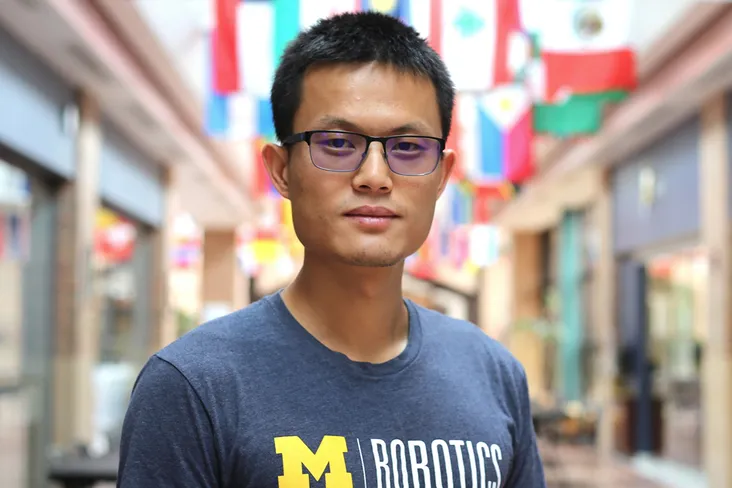
Yanran Ding is an Assistant Professor in the Department of Robotics at the University of Michigan, directing the Agile Robot Control and Design (ARCaD) Lab. His research focuses on optimization-based control, actuator design, and trajectory planning for legged robots, aiming to bridge theoretical foundations with practical hardware implementations. He holds a Ph.D. from the University of Illinois at Urbana-Champaign and a B.S. from Shanghai Jiao Tong University. Prior to U-M, he was a Postdoctoral Associate at MIT’s Biomimetic Robotics Lab. Education: Ph.D., Mechanical Engineering, University of Illinois Urbana-Champaign (2017–2021) M.S., Mechanical Engineering, University of Illinois Urbana-Champaign (2015–2017) B.S. (with Honors), Joint Institute, Shanghai Jiao Tong University (2011–2015) Research interests emphasize optimization-based control algorithms , actuator design , and reinforcement learning applied to legged robots. His work enables agile motions through mechatronics integration and real-time model predictive control (MPC). Recent projects include energy-efficient legged locomotion and humanoid robot actuator design funded by a $1.2M grant. Publications span topics like MPC for dynamic walking, self-collision avoidance, and open-source robotics kits. Notable trends include advancing MPC techniques for real-world robot agility and integrating hardware-software co-design principles. Awards include the 2021 Best Paper Finalist Award (Model-Based Optimization TC), 2019 Coordinated Science Lab Best Robotics Demo Award, and multiple scholarships for academic excellence. ARCaD Lab is actively hiring post-doctoral researchers. Current research includes robotic jumping, terrain-adaptive locomotion, and collaborative robotics systems. Lab activities include public demonstrations (e.g., robot dog Go2 at Ann Arbor Museum) and international conference presentations (ICRA, Humanoids).
Robert Riggs is an Assistant Professor and Director of Undergraduate Programs in Systems Engineering at the University of Virginia's School of Engineering and Applied Science. He holds a Teaching Track position and serves as Systems ME and VEO Advisor. His research focuses on integer programming, combinatorial optimization, healthcare systems engineering, Six Sigma, lean enterprise applications, and disassembly optimization. He has advised on projects spanning healthcare clinic efficiency, AI-driven systems, and logistics optimization. Education details are not explicitly provided in the text, but his roles indicate advanced academic training in engineering disciplines. His research explores topics such as healthcare patient flow optimization, AI applications in recommenders, and disaster management systems. Recent work includes refining an AI restaurant recommender system (2025), redesigning emergency department layouts (2025), and analyzing post-COVID-19 healthcare workflows (2023). Riggs' articles reflect a multidisciplinary approach, addressing challenges in healthcare, logistics, and sustainability. His work on truck scheduling in cross-docking centers (2024) and maritime electrification (2023) highlights expertise in supply chain systems. He has also explored ethical AI applications and threats (2023) and nonprofit employment strategies for adults with autism (2024). No scientific awards are mentioned, but his active research portfolio spans over a decade with contributions to disassembly line balancing (2015) and parameter-coupling models in manufacturing (2013).
Hugues Bersini is a Professor at Université Libre de Bruxelles (ULB) and Co-Director of the IRIDIA laboratory, the Artificial Intelligence research laboratory of ULB. His academic career spans over three decades, with significant contributions to the fields of artificial intelligence, complex systems, and biological networks. Bersini earned his MS degree in 1983 and his Ph.D. in engineering in 1989, both from Université Libre de Bruxelles. After working as a researcher with an EEC grant from the JRC-CEE in Ispra (1984-1987), he joined the IRIDIA laboratory at ULB, where he has remained throughout his career, eventually becoming a full professor. His research spans a diverse range of topics within artificial intelligence and complex systems. Bersini is particularly known for his work on modeling and control of complex systems, neural networks, fuzzy control, data mining, autonomous agents, and biological networks. He pioneered the exploitation of biological metaphors, especially from the immune system, for engineering and cognitive sciences applications. His research has evolved to include computational chemistry, immune engineering, cognitive sciences, bioinformatics, and object-oriented technology. In recent years, he has focused on business intelligence applications and public goods through the Brussels Institute FARI. Throughout his career, Bersini has published approximately 300 papers, demonstrating consistent productivity and evolving research interests. His early work focused on optimization algorithms and immune-inspired computing, which gradually expanded to include fuzzy and neuro control systems, biological networks, and more recently, applications to real-world problems through spin-off companies and the FARI institute. His publications show a clear trajectory from theoretical foundations to practical applications, with growing emphasis on interdisciplinary approaches that bridge computer science with biology, chemistry, and cognitive sciences. Bersini has been actively involved in the academic community, having co-organized major conferences including the Parallel Problem Solving from Nature (PPSN), European Conference on Artificial Life (ECAL), European Workshops on Reinforcement Learning (EWRL), and International Competitions on Evolutionary Optimization (ICEO). He also organized tributes to Francisco Varela and the International Conference on Artificial Immune Systems (ICARIS). As an educator, Bersini teaches artificial intelligence, object-oriented programming (C++, Java, .Net, Kotlin, UML, Django/Python), and design patterns to both university students at Solvay and Polytechnic Schools and for industry professionals. He has authored fourteen French books covering computer science fundamentals, complex systems, and the intersection of computer science with other fields. His books range from technical manuals to philosophical explorations of complex systems and emergence. Bersini has coordinated significant research projects including the FAMIMO LTR European Project on fuzzy control for multi-input multi-output processes and participated in ESPIRIT projects NEMORETS and METHODS. His work has led to practical applications through spin-off companies such as Cluepoints, Tevizz, and In Silico DB, and more recently through the Brussels Institute FARI which addresses public goods like mobility, epidemics, access to jobs and schools, and energy transition.
Prof. Günter Rudolph is a Professor of Algorithmic Foundations and Education in Computer Science at the Technical University of Dortmund's Department of Computer Science. He leads Chair 11: Algorithm Engineering, focusing on Computational Intelligence (CI), Evolutionary Algorithms, and their applications in optimization and gaming. His research emphasizes theoretical analysis of CI methods, practical guidelines for operationalization, and applications in engineering, energy systems, and entertainment. Key research areas include multi-objective optimization, evolutionary robotics, and computational intelligence in games such as StarCraft and car racing simulations. He has advised numerous students on topics ranging from autonomous driving systems to procedurally generated game content. Rudolph collaborates internationally, including with CINVESTAV-IPN (Mexico) on multiobjective control methods and BMWi-funded projects on energy systems and forming process predictions. His work spans academic publications in journals like Genetic Programming and Evolvable Machines and conferences such as IEEE CIG. Notable projects include developing adaptive car racing controllers, optimizing energy supply systems in industrial parks, and advancing AI strategies in real-time strategy games. Rudolph's group actively contributes to game AI research through competitions like the StarCraft AI Competition and the Simulated Car Racing Championship, emphasizing the intersection of computational intelligence and entertainment.
Syed Juned Ali is a Researcher (Univ.Ass.) at TU Wien's Business Informatics Group. His work focuses on conceptual modeling, knowledge graphs, and model-driven engineering. He holds BSc and MSc degrees and contributes to academic publications in top venues like Science of Computer Programming. Key projects include CM2KGcloud (a knowledge graph transformation platform) and GGMF (a modularization framework). He teaches Model Engineering (VU 188.923) and collaborates with Prof. Dominik Bork on AI-driven decision systems. Professional activities include conference paper reviews and contributions to enterprise architecture research. Research interests span AI integration in decision models, automated model modularization, and cross-language modeling tools. His work bridges theory and practice through tools like EAKG Toolkit for enterprise architecture analysis and genetic algorithm-based frameworks for scalable model decomposition.
Bruce Draper is a Professor and Chair of the Department of Computer Science in the College of Natural Sciences at Colorado State University. His work bridges artificial intelligence, machine learning, and computer vision, with a strong emphasis on real-world applications involving visual data and intelligent systems. Research Interests: Draper's research centers on machine learning with a focus on visual learning, adversarial AI, and visual agents. He investigates how AI systems can perceive, interpret, and interact with visual environments through technologies like facial recognition, object tracking, augmented reality, and automated visual communication. His work addresses both the capabilities and vulnerabilities of modern AI, particularly in defending systems against adversarial attacks. Publication Trends: His recent scholarly output reflects a consistent trajectory in advancing computer vision and AI robustness. The articles span topics from adversarial defense mechanisms and visual agent autonomy to scalable learning frameworks and real-time video analysis. Collectively, they emphasize secure, efficient, and context-aware visual intelligence systems grounded in deep learning and representation learning. Scientific Awards: No specific awards mentioned in the provided text. Advising and Grants: While no students or grants are explicitly listed, his leadership role as department chair and prior experience as a DARPA program manager suggest extensive involvement in research funding, mentorship, and high-impact project direction. His background indicates likely supervision of graduate students and management of federally funded research initiatives in AI and computer vision. Labs and Teams: Although no specific lab or research group is named, his research scope implies leadership or affiliation with interdisciplinary teams working on AI security, computer vision, and augmented reality systems within the Department of Computer Science at CSU.
Kate Fullagar is Professor of History at the Institute for Humanities and Social Sciences, Australian Catholic University (ACU). She is a Fellow of the Australian Academy of the Humanities and the Royal Historical Society (UK), and currently serves as Vice President of the Australian Historical Association. She is also a Historical Consultant to Getty and the London National Portrait Gallery, and a member of the Australian Research Council’s College of Experts (2022–2025). Her research focuses on eighteenth-century world history, particularly the British Empire and its interactions with Indigenous societies in North America, Australia, and the Pacific. She specializes in visual culture, anthropological history, and experimental biography, with a strong commitment to decolonizing historical narratives. Her work explores Indigenous-Imperial relations through material objects, portraiture, and cross-cultural encounters. Her recent publications reveal a consistent engagement with Indigenous agency, biography, and the cultural dimensions of empire. Themes include oceanic mobility, the politics of memory, and the representation of Indigenous figures in colonial art and discourse. She frequently contributes to public history through essays in Inside Story , History Today , and public lectures. Fellow, Australian Academy of the Humanities (2023) Fellow, Royal Historical Society (UK) (2024) Hazel Rowley Literary Fellowship (2024) Visiting William Dobell Chair in Art History, ANU (2024) Winner, Douglas Stewart Prize for Nonfiction Winner, NSW Premier’s General History Prize Shortlisted, Prime Minister’s Literary Award for Non-Fiction Shortlisted, James Tait Black Biography Prize Kate Fullagar has supervised HDR students and led major research projects, including the ARC Linkage project 'Facing New Worlds' and the multi-volume Bloomsbury Cultural History of Oceania . She co-edits History Australia and serves on the editorial boards of Studies in Imperialism and Australian Historical Studies . She is the creator and host of the podcast Unsettling Portraits , which critically examines colonial representations of Indigenous people. She is a key member of several academic teams and working groups, including the Oceania Working Party of the Australian Dictionary of Biography and the Australia-France Social Science Collaborative Research Program. Her work bridges scholarship, public engagement, and cross-institutional collaboration.
Sergio Rajsbaum is a Professor (Investigador Titular "C") at the Institute of Mathematics of the Universidad Nacional Autonoma de Mexico (UNAM) in Mexico City. He has been a member of SNI (Sistema Nacional de Investigadores) nivel III. His academic career includes a visiting scientist position at MIT's Laboratory for Computer Science (1993-1995) and a Research Staff member position at Cambridge Research Laboratory of HP (1999-2002). Rajsbaum received his Computer Engineering degree from UNAM in 1985 and his PhD in Computer Science from the Technion (Israeli Institute of Technology) in 1991 under the supervision of Shimon Even. His academic genealogy traces back to Paul Erdős (Erdős number 2). Rajsbaum's research focuses on the theory of distributed computing, particularly issues related to coordination, complexity, and computability. He has made significant contributions to combinatorial topology applications in distributed systems, consensus problems, and graph theory. His work often bridges theoretical computer science with practical distributed system design. He has pioneered the use of topological methods to study distributed computing from complexity and computability perspectives. Analyzing his publication record reveals a consistent focus on fundamental problems in distributed computing, particularly consensus and set agreement. His work demonstrates a progression from basic algorithm design to more abstract topological approaches. The publications show strong collaboration patterns, especially with researchers like Achour Mostefaoui, Michel Raynal, Maurice Herlihy, and Eli Gafni. His research spans theoretical foundations, algorithm design, and practical implementations. Best Student Paper Award at ACM PODC 2008 for "New Combinatorial Topology Upper and Lower Bounds for Renaming" Long-standing editorial role as editor of the ACM SIGACT News Distributed Computing Column (2000-2007) Rajsbaum has been actively involved in the distributed computing research community, serving as program committee chair for major conferences including LATIN02, PODC03, and ENC06. He has been a steering committee member for DISC, LADC, LATIN, and PODC. His teaching includes graduate and undergraduate courses on Principles of Distributed Computing, Algorithms, Theory of Computation, and JAVA Distributed Computing at UNAM. He has mentored numerous students and contributed significantly to the academic community through conference organization and editorial work.
Wayne Kelly is an Associate Professor in the School of Computer Science at Queensland University of Technology (QUT), Faculty of Science. He has over 25 years of academic experience and serves as the Academic Lead for Teaching and Learning and Course Coordinator for the Bachelor of Information Technology degree. PhD in Computer Science, University of Maryland, College Park, 1996 BSc (Hons) in Computer Science, University of Queensland, 1989 His research expertise lies in Programming Languages, Compiler Construction, and Parallel Computing, with significant contributions to High Performance Computing, Big Data, and Bioinformatics. His work has led to collaborations with Microsoft Research and over $2 million in external funding. His recent publications reflect a strong trend in parallel and distributed systems, embedded computing, bioinformatics data analysis, and remote sensing. Key themes include optimization of computational systems, memory management, and scalable data processing. Wayne Kelly has made impactful contributions to both teaching and research, guiding numerous postgraduate students and leading curriculum development in information technology. Optimizing I/O cost and managing memory for bioinformatics A communication model for streaming applications on MPSoC Ruby.NET: a compiler for the Common Language Infrastructure He is actively engaged in real-world technology development, including a project with a vision-impaired student to improve public transportation accessibility, currently trialed by transport authorities in Australia and the US.
Professor Kenneth Brown is affiliated with the Department of Computer Science at University College Cork (UCC) , Ireland. He holds the academic rank of Professor and is a Principal Investigator at the Insight Centre for Data Analytics and the CTVR (Telecommunications Research Centre) . BSc (Hons) Mathematics, University of Glasgow, 1986 MSc Mathematical Logic and the Foundations of Computation, University of Manchester, 1987 PhD Artificial Intelligence in Engineering, University of Bristol, 1991 His research focuses on Artificial Intelligence, constraint programming, optimisation, and distributed reasoning , with applications in wireless networking, sensor networks, and dynamic resource management . He also works on smart energy systems, data analytics, and human-centric applications. His recent work includes projects under the SFI-funded Insight Centre and Horizon Europe initiatives like GLACIATION and SEISMEC. His publications span topics from wireless sensor network optimization and cognitive radio to constraint-based decision support and AI in emergency management. He has led and contributed to over 15 recent publications in top-tier journals and conferences, showing a strong trend in AI-driven solutions for networked and intelligent systems. IEEE SECON 2015 Best Demonstration 2014 TAOS Best Paper Award in Access Networks and Systems Best paper, SMARTGREENS 2013 Enterprise Ireland Lifescience and Food Commercialisation Award Best Application Paper, AI2008 Best Application Paper, AI2006 Best paper nomination, ECAI 2004 Best Paper, Intl Conf AI in Design Professor Brown has supervised numerous PhD and MSc students in areas including constraint programming, sensor networks, evacuation modeling, and smart buildings. He has secured significant research funding from SFI, Enterprise Ireland, and IRCSET. He is actively involved in research leadership, serving as Deputy Director of Insight@UCC and PI in multiple national and international projects. He is a member of research groups involved in GLACIATION (green, responsible data operations), SEISMEC (human-centric industry), and SMARTeBuses . His lab supports a team of doctoral students and research staff working on AI, networking, and data analytics for real-world applications.
Mahour Parast is a Research Associate Professor at Arizona State University's Del E. Webb School of Construction within the School of Sustainable Engineering and the Built Environment. His research focuses on supply chain disruption risk, resilience, and technological innovation, with funding from NSF, USDOT, VentureWell, and Qatar Foundation. He maintains active industry collaborations and serves on editorial boards for IEEE Transactions on Engineering Management and Operations Management Research. Education: Ph.D. in Engineering, University of Nebraska-Lincoln M.S., University of Science and Technology B.S., Sharif University of Technology Research Focus: Dr. Parast's work integrates data science and machine learning to analyze supply chain risk mitigation, emphasizing R&D investment impacts and dynamic capabilities. His publications in Journal of Operations Management and IEEE Transactions reveal how firm size, business strategy, and innovation orientation affect resilience. Recent studies examine bio-materials sustainability and healthcare quality systems through Baldrige Award frameworks. Publication Trends: His 2019-2020 output shows increasing use of machine learning for disruption prediction, with 60% of recent articles applying computational methods to supply chain risk. Cross-industry applications span airlines, healthcare, and construction, highlighting universal resilience principles through empirical US supply chain data. Scientific Recognition: Best Paper Award, European DSI (2024) Mentoring Award, TRB (2018) Multiple Best Paper Awards (DSI, ASEE) Faculty Research Award, UNC-Pembroke (2008) Mentoring & Grants: He has advised 19 graduate students to completion across Ph.D. and Master's programs. Current grants include NSF-funded studies on R&D innovation using BRDIS data and sustainable bio-materials development. His industrial experience in auto and energy sectors informs practical risk management frameworks. Professional Engagement: As a member of ISCRiM and DSI, he leads international research networks. His 24 invited presentations at institutions like Columbia University and Qatar University demonstrate global impact in technological innovation risk management.
Ziling Zeng is a researcher at Chalmers University of Technology, Sweden, affiliated with the Mechanics and Maritime Sciences (M2) school and the Logistics and Transportation department. His work focuses on electric bus systems, energy storage optimization, and sustainable urban mobility. Research interests span public transit electrification , fleet management , battery degradation modeling , and multi-modal logistics . His 15 most recent publications emphasize optimization frameworks, cost analysis, and real-world implementation challenges for zero-emission transportation. Key projects include: ERGODIC (2023–2026) - VINNOVA & European Commission funding Accelerating transport electrification by machine learning (2021–2023) - European Commission Speed Control of Connected Vehicles (2020–2023) - VINNOVA His work addresses policy, technology, and infrastructure challenges in transitioning to sustainable transit systems.
Dr. Djuna Lize Croon serves as an Associate Professor in the Department of Physics, conducting cutting-edge research at the intersection of particle physics, cosmology, and astrophysics. Her work focuses on dark matter phenomenology, gravitational wave signatures, and early universe cosmology, with significant contributions to understanding extended dark matter structures and their observational consequences. Her research program investigates extended dark matter objects through cosmic microwave background constraints, microlensing surveys, and gravitational wave observations. She explores dark matter's role in leptogenesis and baryogenesis, its thermal effects on planetary and stellar systems, and develops machine learning techniques for astrophysical data analysis. Current projects examine dark matter interactions in supernovae, black hole formation mechanisms, and axion physics in compact object environments. Analysis of her 2021-2025 publications reveals a dominant focus on dark matter phenomenology, particularly extended structures and their multi-messenger signatures. Her work consistently bridges theoretical particle physics with observational astrophysics, addressing fundamental questions about dark matter composition, early universe dynamics, and gravitational wave source populations through innovative computational approaches. No scientific awards or honors were documented in the provided profile. Dr. Croon actively mentors postgraduate researchers, currently supervising: Ansh Bhatnagar (PGR Student) Ben Crossey