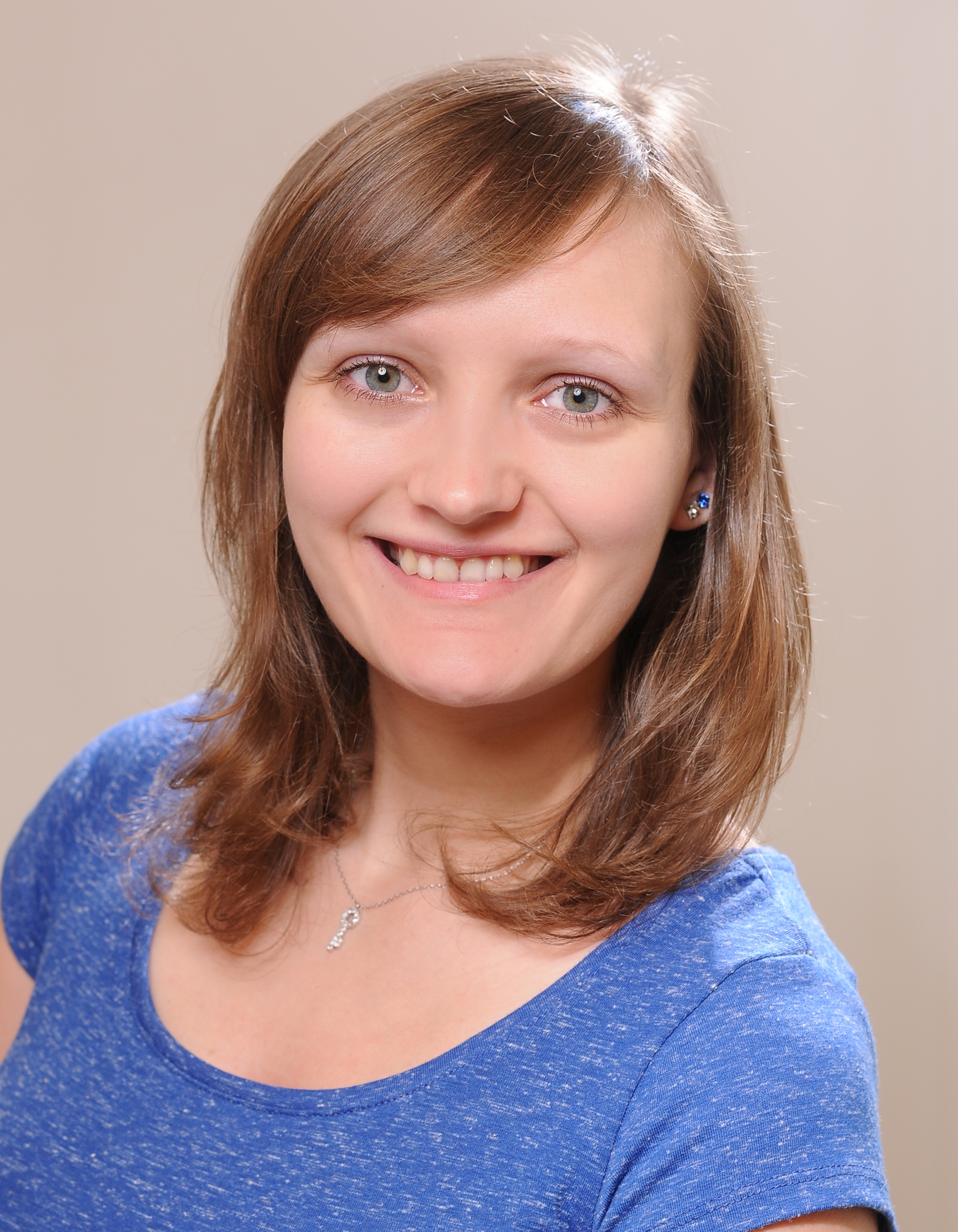
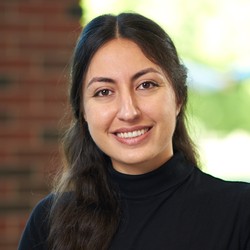
Franziska Mueller is a Research Scientist at Google Zurich , specializing in Augmented Perception . Prior to joining Google, she earned her Ph.D. in Computer Science at Saarland University under the supervision of Prof. Dr. Christian Theobalt, focusing on real-time hand reconstruction from RGB and depth images. Ph.D. in Computer Science (2016-2020) at Saarland University Master’s and Bachelor’s in Computer Science at Saarland University Research visits at Stanford University (2018) and Reality Labs Research (2019) Her research emphasizes the integration of model-based techniques and machine learning components for real-time 3D hand pose estimation, occlusion handling, and hand-object interaction tracking. Key contributions include methods for single-camera reconstruction and datasets like HandSeg. Scientific Awards : Dr. Eduard Martin Award (2021) Google PhD Fellowship (2017) Günter-Hotz-Medal (2016) Bachelor Award (2015) Völklinger Abiturpreis (2012)
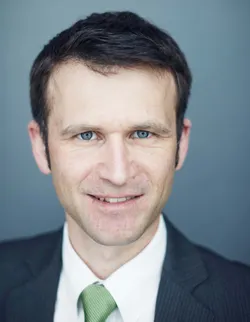
Prof. Dr.-Ing. Werner Lang serves as Vice President for Sustainable Transformation and holds the Chair of Energy Efficient and Sustainable Design and Building (ENPB) at the Technical University of Munich (TUM), within the TUM School of Engineering and Design. Previously, he was Professor of Sustainable Building and Director of the Center for Sustainable Development at the University of Texas School of Architecture in Austin (2008-2010). Lang also directs the Oskar von Miller Forum and is a partner at Lang Hugger Rampp GmbH Architekten in Munich. Lang's research focuses on developing strategies for buildings with positive environmental footprints through regenerative energy systems, renewable materials, and closed material cycles. His work emphasizes comprehensive life cycle analysis considering ecological, economic, and social aspects. Current research areas include climate-resilient urban neighborhoods, circular economy in construction, and sustainable building materials. The ENPB institute conducts numerous research projects such as Building Climate-Municipal, CircularFTmehrRAUM, and Urban Green Infrastructure. Lang's publications reveal a strong trend toward life cycle assessment, multi-criteria decision-making, and computational approaches for sustainable building design. His recent work integrates machine learning with building performance analysis and focuses on practical implementation of circular economy principles in urban contexts, with increasing emphasis on quantifying environmental benefits of urban green infrastructure. TUM Sustainability Award 2022 Doce et Delecta (Second Prize for Best Teaching), 2019 Bayerischer Energiepreis 2014 International Building Skin Tech Award (2008) Promotionspreis der TUM (2000) Lang leads the Institute of Energy-Efficient and Sustainable Design and Building with numerous research grants including projects like Building.Lab+, NAWAREUM, and ECO+. His team includes researchers working on topics ranging from urban mining to life cycle assessment tools. The institute maintains several products and startups including MoMeBo, Bilanzlabor, and EnergyML that translate research into practical applications for the building industry.
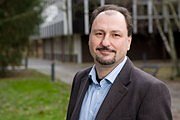
Dr. Benjamin Busam is a Senior Research Scientist at the Technical University of Munich , affiliated with the Chair for Computer Science Applications in Medicine under Prof. Nassir Navab. Starting September 2025, he will hold the Professorship for Photogrammetry and Remote Sensing at TUM. His career includes leadership roles at FRAMOS Imaging Systems and Huawei Research in London. Education: Mathematics (TUM), Mathematics and Physics (ParisTech, University of Melbourne), PhD in Mathematics (TUM, 2014) His research focuses on 3D computer vision , multi-modal sensor fusion , and their applications in collaborative robotics and augmented reality . He specializes in projective geometry , 6D pose estimation , and neural radiance fields , with a particular emphasis on photometrically challenging environments. Recent publications highlight advancements in 3D scene understanding , neural rendering , and medical imaging , often leveraging machine learning and vision-language models . His work has been recognized through awards like the EMVA Young Professional Award (2015) and Innovation Pioneer of the Year (2019) , along with multiple Outstanding Reviewer distinctions at leading conferences. Dr. Busam has supervised numerous PhD and MSc students on topics including 6D pose estimation , medical augmented reality , and robotic ultrasound , collaborating with institutions like MIT , École Polytechnique , and University of Padova .
Fatma Deghim is a Research Fellow at the Technical University of Munich , affiliated with the Chair of Energy Efficient and Sustainable Design and Building. Her work focuses on urban microclimate, building energy simulation, and data-driven methods for sustainability. Education : Master’s Degree in Civil Engineering (2019–2022) and Bachelor’s Degree in Civil Engineering (2015–2019), both from TUM. Research Interests include: Urban microclimate and indoor-outdoor interactions Building energy simulation and comfort analysis Integration of green infrastructure in climate-resilient design Data-driven methods for environmental monitoring Publications highlight her expertise in applying machine learning to occupancy modeling, thermal comfort prediction, and multi-objective optimization frameworks for sustainable building design. Her work emphasizes uncertainty analysis, resource efficiency, and computational methods. Teaching contributions include assisting in courses on sustainable architecture, building energy principles, and urban water systems at TUM.
Dr. Kevin G. Jamieson is a faculty member at the University of Washington , School of Computer Science , with prior affiliations at the University of California, Berkeley (Department of Electrical Engineering and Computer Sciences) and the University of Wisconsin-Madison (Department of Electrical and Computer Engineering). His work spans machine learning, reinforcement learning, bandit algorithms, and robotics. Current university: University of Washington Academic rank: Professor His research focuses on: Bandit algorithms and sequential decision-making Optimization in non-stationary environments Reinforcement learning with real-world applications Multi-agent systems and game theory Efficient data selection for multimodal learning Human-in-the-loop AI systems Recent publications highlight his expertise in pure exploration strategies, robotic manipulation, and bridging simulation-to-reality gaps in RL. He has mentored numerous collaborators, though formal student advising details are not explicitly listed here. No scientific awards are mentioned in the provided data.
Prof. Dr. Jörg Budde is a faculty member at the University of Bonn , affiliated with the Department of Economics . His academic rank is Professor , and he is actively engaged in research related to managerial accounting, performance measurement, and incentive contracts. Institute: Institute for Applied Microeconomics Email: joerg.budde@uni-bonn.de Contact: +49 228 73-9247 Budde’s research focuses on incentive design and performance evaluation in agency models, particularly under conditions of limited liability and distorted metrics. His work explores topics such as bonus pools , rank-order tournaments , and contractual frameworks that balance risk and incentive alignment. His publications span journals like Journal of Economics , Management Accounting Research , and Journal of Mathematical Economics , with a thematic emphasis on agency theory , information systems , and organizational behavior .
Prof. Dr.-Ing. Jürgen Teich is a full Professor and Chair for Hardware-Software Co-Design at the Department of Computer Science, Friedrich Alexander University Erlangen-Nuremberg (FAU). He serves as Head of Department Computer Science and Vice Dean of the Technical Faculty since August 2024, and has been Speaker of the FAU Research Center Embedded System Initiative (FAU ESI) since 2023. His educational background includes: Diploma degree in Electrical Engineering, University of Kaiserslautern (1989) Dr.-Ing. degree in Electrical Engineering, University of Saarland (1993) Habilitation (PD Dr.-Ing.) entitled "Synthesis and Optimization of Digital Hardware/Software Systems" (1996) Prof. Teich's research focuses on Embedded Systems , Invasive Computing , Hardware-Software Co-Design , and Reconfigurable Computing . His work spans from theoretical foundations to practical implementations, with particular emphasis on resource-constrained systems, many-core architectures, and energy-efficient computing. He has pioneered research in invasive computing paradigms that enable more efficient use of many-core processors by allowing applications to dynamically claim resources. His recent publications reveal a strong trend toward energy-efficient AI deployment on embedded devices , security of embedded systems , and novel memory technologies . There's a clear focus on practical implementations of machine learning on microcontrollers (TinyML), hardware acceleration for data processing, and innovative approaches to power management in self-powered systems. Among his notable scientific awards are: IEEE Fellow (since 2018) Member of Academia Europaea, Section Informatics (since 2011) Member of the National Academy of Science and Engineering (acatech) (since 2018) Member of the German Society of Humboldtians (since 2021) Prof. Teich has been Principal Investigator for numerous DFG-funded projects including SFB/Transregio 89 "Invasive Computing" (2010-2022), SFB 694, and multiple priority programs. He has coordinated large collaborative research efforts across Germany and internationally, with significant funding from DFG and other sources. His research group has produced influential work in embedded systems design and co-design methodologies. He leads the Hardware-Software Co-Design research group at FAU, which focuses on innovative approaches to embedded system design, invasive computing architectures, and efficient implementation of machine learning on resource-constrained devices. The group maintains strong collaborations with industry partners including Intel, Xilinx, and automotive companies.
Marina Petrova is a Professor at RWTH Aachen University, holding positions in both the Teaching and Research Area of Mobile Communications and Computing and the Chair and Institute for Networked Systems. She is also a member of the Steering Committee for the Mobility & Transport Engineering (MTE) profile area at the university. Her office is located at Kackertstraße 9, 52072 Aachen, Germany. Professor Petrova's research focuses on cutting-edge wireless communication technologies, with particular emphasis on next-generation mobile networks. Her work spans multiple dimensions of wireless systems including: 5G and 6G network architectures and protocols Cell-Free Massive MIMO systems Millimeter-wave communications Resource allocation and scheduling in wireless networks Wi-Fi sensing and coexistence analysis Integration of distributed learning services in wireless networks Beamforming and beam management techniques Ultra-Reliable Low-Latency Communications (URLLC) Her recent publications demonstrate a strong trend toward the integration of artificial intelligence and machine learning techniques in wireless network design and optimization. She has been particularly active in exploring the convergence of communication and sensing functionalities (ISAC - Integrated Sensing and Communication), which is considered a key enabler for future 6G networks. Professor Petrova's research also addresses practical implementation challenges in next-generation wireless systems, with several publications focusing on ns-3 implementations and experimental validations. Professor Petrova has received recognition for her contributions to the field through numerous publications in top-tier venues, though specific awards are not mentioned in the available information. Her work shows strong industry relevance with applications in smart industries, autonomous systems, and future communication networks.
Prof. Dr. Matthias Weidlich is a faculty member at Humboldt University of Berlin within the Institute of Computer Science under the Faculty of Mathematics and Natural Sciences . His research focuses on Process Mining , Complex Event Processing , and Data Privacy with applications in Business Process Management and Scientific Workflows . Research Interests: Business Process Management and Process Mining Complex Event Processing and Stream Data Analysis Data Privacy and Security in Process Systems Scientific Workflow Systems and User Behavior Heterogeneous Network Embeddings Algorithm Design and Optimization Recent Publications (2023-2025) demonstrate expertise in: Efficient stream processing techniques Privacy-preserving process mining frameworks Scientific workflow analysis tools Graph neural network applications Multi-modal data integration Adaptive querying systems Contact: Office: Unter den Linden 6, 10099 Berlin Phone: 030 2093-41277 Email: matthias.weidlich@hu-berlin.de Web: hu.berlin/data
Mahsa Ghasemi is an Assistant Professor in the Elmore Family School of Electrical and Computer Engineering at Purdue University, leading the AKADEMI Group. Her research focuses on theoretical advancements in trustworthy sequential decision-making for autonomous systems, emphasizing human-aware collaboration and adaptation to dynamic environments. She is affiliated with the Institute for Control, Optimization and Networks (ICON). Education: PhD in Electrical and Computer Engineering from The University of Texas at Austin (2021), MSE in Mechanical Engineering (2017), and BSc in Mechanical Engineering from Sharif University of Technology (2014). Research Interests: Reinforcement learning, control theory, active perception, multi-agent systems, robotics, and online learning. Applications span disaster response, healthcare, and autonomous systems design. Key methodological directions include compositional learning, human-AI collaboration, and adaptive decision-making under uncertainty. Teaching: Courses include Reinforcement Learning Theory (ECE 59500), Introduction to Reinforcement Learning (ECE 49595), and Python for Data Science (ECE 20875). Awards: Finalist for Student Best Paper Award at the 2018 American Control Conference (ACC). Students: Current advisees include Maheed H. Ahmed, Jayanth Bhargav, and Somtochukwu Oguchienti. Past members include Lai Wei and Juan Sebastian Mateo Ruiz Bulla. Service: Editorial roles at ICRA, ICCPS, and IFAC workshops. Reviewer for top conferences (NeurIPS, ICML) and journals (Automatica, IEEE TAC). Labs/Teams: Leads the AKADEMI Group, focusing on algorithmic and theoretical research in autonomous decision-making systems.
Heiko Falk is a Professor and Head of the Institute of Embedded Systems at Technische Universität Hamburg (TUHH). His roles include serving as Workshop Chair for the 2024 Embedded Systems Week (ESWEEK), Scientific Coordinator for the B.Sc. and M.Sc. Computer Science programs, and Deputy Head of the Board of Examiners for Computer Science and Engineering. His research focuses on real-time systems, compiler optimizations, and worst-case execution time (WCET) analysis. Key areas include multi-core architectures, cache management, energy efficiency, and hardware/software co-design. Falk's work emphasizes practical compiler techniques for improving real-time performance, such as WCET-aware memory allocation, dynamic SPM optimization, and event-driven scheduling. His publications analyze shared cache interference, preemptive/non-preemptive scheduling, and DMA-aware optimizations. Recent work explores multi-objective trade-offs between WCET, energy consumption, and code size in embedded systems. No scientific awards are explicitly listed, but his contributions to WCET benchmarking (e.g., haRTStone project) and compiler frameworks demonstrate significant impact in the field. Advising and grants: No formal advisees are listed in the provided texts. Falk's work is supported through projects like teamplay, focusing on cyber-physical systems optimization. Labs/Teams: His group operates within TUHH's Institute of Embedded Systems, collaborating on projects addressing real-time system challenges in multi-core environments.
Haoyi Xiong is an active academic researcher in artificial intelligence, machine learning, and data science, with extensive publications in top-tier journals and conferences including IEEE TPAMI, NeurIPS, ICML, KDD, and AAAI. His work spans explainable AI, graph neural networks, diffusion models, remote sensing, and large language models. Research Interests: Explainable AI (XAI) and model interpretability Graph Neural Networks and contrastive learning Diffusion models and generative AI Medical and remote sensing image analysis Large language models and autonomous agents Learning to rank and web search His recent publications (2023–2025) show a strong trend toward self-supervised learning , model robustness , and integration of LLMs with structured data and knowledge graphs . He frequently collaborates with researchers from major tech and academic institutions. Scientific Awards: No explicit awards mentioned in the provided text. Advising and Grants: While no direct mention of students or grants, his role as a senior author on numerous papers suggests he advises graduate students and likely leads funded research projects in machine learning and AI. His work on frameworks like COLTR , GS2P , and MUSCLE indicates leadership in developing scalable AI systems. Labs and Teams: Though not explicitly stated, his frequent collaboration with Jiang Bian, Dejing Dou, and Dawei Yin suggests affiliation with a well-established AI research lab or industry-academia partnership focused on data mining, intelligent systems, and large-scale learning.
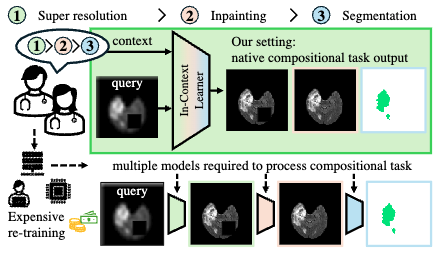
Prof. Dr. Erik Rodner is a faculty member at the University of Applied Sciences Berlin (HTW Berlin), where he serves as a Professor for Machine Learning and Data Science. He also contributes to the School of Engineering Sciences - Technology and Life. His research spans computer vision, machine learning, and biomedical applications, with a focus on learning with limited data, robust visual recognition models, and medical image analysis. He has developed innovative methods for medical diagnostics, industrial classification, and anomaly detection. Recent publications (2025-2016) highlight his expertise in visual in-context learning, semi-weakly segmentation, and active learning frameworks. He has collaborated with institutions such as ZEISS Group, Friedrich Schiller University Jena, and UC Berkeley. Scientific Awards: Award for Excellent Teaching (2023)
Lionel C. Briand is a Professor of Software Engineering with shared appointments at the University of Luxembourg's SnT Centre for Security, Reliability, and Trust and the School of Electrical Engineering and Computer Science at the University of Ottawa. He holds a Canada Research Chair (Tier 1) in Intelligent Software Dependability and Compliance and serves as Director of Lero, Ireland's national software research center. His academic leadership spans over 25 years of collaborative research with industry partners across automotive, aerospace, energy, financial, and legal domains. Professor Briand's research focuses on software verification and validation, trustworthy AI systems, model-driven engineering, and empirical software engineering methodologies. His work bridges theoretical foundations with industrial applications, particularly in cyber-physical systems where machine learning components interact with safety-critical control systems. He has pioneered techniques for testing AI-enabled systems, GDPR compliance automation, and mutation analysis for space systems. His publication portfolio demonstrates consistent innovation in software testing, with recent emphasis on large language models for test generation, automated compliance checking, and safety analysis of deep neural networks. Key trends include black-box testing methodologies, metamorphic testing for security, and search-based approaches for DNN validation. IEEE Fellow and ACM Fellow IEEE Computer Society Harlan Mills Award (2012) ACM SIGSOFT Outstanding Research Award (2022) IEEE Reliability Society Engineer-of-the-Year Award (2013) ERC Advanced Grant recipient (2016) Fellow of the Academy of Science, Royal Society of Canada (2023) ICSE 2011 Most Influential Paper Award As Director of Lero and holder of a Canada Research Chair, Professor Briand leads major research initiatives including an ERC Advanced Grant on cyber-physical system modeling and testing. His industrial collaborations generate substantial grant funding, particularly in automotive safety validation and regulatory compliance automation. He mentors numerous researchers through his dual appointments and serves on program committees for top software engineering conferences. Professor Briand directs research activities at the SnT Centre's SVV department, focusing on software verification and validation. His team develops practical tools like MASS for space system mutation analysis and COREQQA for compliance requirements understanding, with strong industry adoption in automotive and aerospace sectors.
Dr. Christoph Trinkl serves as Head of the Institute of new Energy Systems (InES) at Technische Hochschule Ingolstadt, a position he has held since 2008. His work focuses on renewable energy technologies and sustainable energy systems development, with particular expertise in solar thermal applications and system integration. His research interests include: Green Technologies Renewable Energy Technologies Solar Energy Engineering Solar Heating and Cooling Renewable Energy Systems for Industrial, Domestic and Mobility Applications Technology Transfer and Network Management Dr. Trinkl's educational background includes a PhD in Engineering from De Montfort University Leicester's Institute of Energy and Sustainable Development (UK) in 2007, following his work as a researcher at Technische Hochschule Ingolstadt from 2001-2007. His degree course in Mechanical Engineering and Business (1997-2001) provided the foundation for his interdisciplinary approach to energy systems. His recent publications demonstrate a strong focus on practical applications of renewable energy technologies, particularly in solar thermal systems, heat pump integration, and district heating networks. His research spans from fundamental engineering analysis of collector technologies to large-scale system integration and optimization, with increasing emphasis on real-world implementation challenges and optimization techniques including AI-driven approaches. Dr. Trinkl's extensive publication record spanning over two decades shows an evolution from fundamental collector technology research to broader energy system integration, addressing both technical and practical implementation considerations across diverse contexts from industrial applications to rural energy access solutions.