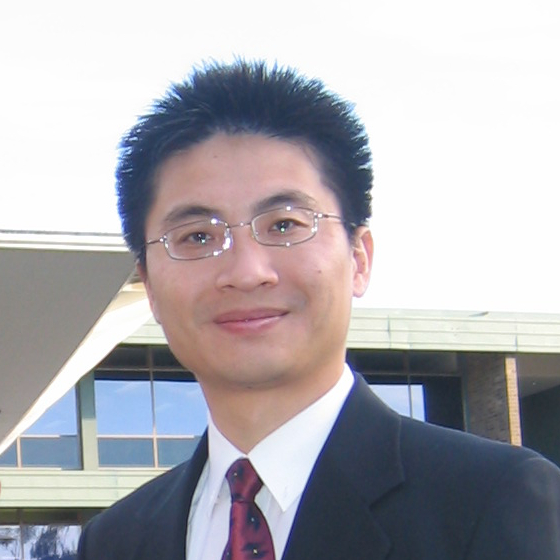
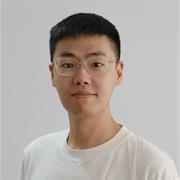
Dr. Kit Yan Chan is a Senior Lecturer at the School of Electrical Engineering, Computing and Mathematical Sciences (EECMS) at Curtin University. His research focuses on Artificial Intelligence, Machine Learning, Deep Learning, and Optimization, with applications in wireless communications, signal processing, and power systems. He has held editorial roles in journals such as Neurocomputing, Sensors, and the International Journal of Ad Hoc and Ubiquitous Computing. His teaching spans courses like Transmission and Interface Design, Advanced Research in AI, and Mobile Cloud Computing. Dr. Chan's work emphasizes interdisciplinary approaches, combining computational intelligence with engineering challenges. He has contributed to over 100 publications in areas such as resource allocation in heterogeneous networks, deep learning for load forecasting, and underwater acoustic communication systems. His research bridges theoretical advancements and practical implementations, addressing real-world problems in telecommunications, energy systems, and smart technologies. His recent projects include optimizing energy efficiency in 5G networks, developing robust power control strategies, and advancing neural network architectures for real-time applications. Collaborations with industry and global institutions underscore his commitment to impactful research.
Rebecca Yang is a Visiting Professor at RMIT University's School of Property, Construction and Project Management, specializing in building, construction, and distributed renewable energy research. She integrates theoretical knowledge with cutting-edge technologies to advance sustainable urban development. Her research focuses on solar energy applications in buildings, construction innovation, and international energy policy frameworks through her leadership roles in the International Energy Agency's Photovoltaic Power Systems Programme (PVPS) Task 15 and Solar Heating and Cooling Programme (SHC) Task 66. She established RMIT's Solar Energy Application Lab and has 8 years of BIPV expertise. Notable achievements include: Australian representative in international BIPV standardization (IEC 63092) 2019 Facilitator Prize for BIPV Tool development She supervises research projects related to: Solar building envelope optimization Machine learning for energy systems Fire safety in BIPV installations Blockchain-enabled energy trading Circular economy for PV waste
Dr. Paulo Santos is a Senior Lecturer at Flinders University's College of Science and Engineering, specializing in Artificial Intelligence with a focus on explainable AI systems. He holds a PhD from Imperial College London (2003) and has over 20 years of research experience in spatial reasoning, machine learning, and robotics. His work bridges knowledge representation with deep learning to enhance transparency in AI decision-making. Dr. Santos has led research groups in Brazil, collaborated internationally, and secured funding from organizations like the British Council and EU. His expertise spans robotics, computer vision, and cognitive science. Notable achievements include the British Computer Science Machine Intelligence Prize (2004) and the Santander Prize for Science and Innovation (2006). Research interests include reinforcement learning for autonomous underwater vehicles (AUVs), scene graph generation in computer vision, and spatial reasoning for multi-robot systems. Recent work emphasizes sim-to-real transfer learning and fault recovery in underwater robotics.
Adi Kurniawan is a Research Fellow at the University of Western Australia (UWA) in the School of Earth and Oceans, affiliated with the Marine Energy Research Australia (MERA) and the Great Southern Marine Research Facility (GSMRF). His research focuses on wave energy conversion, wave-structure interactions, and multi-objective optimization. He holds a PhD in Marine Technology from NTNU and has held roles at Aalborg University and the University of Plymouth. Kurniawan co-authored Ocean Waves and Oscillating Systems and contributes to industry standards (Standards Australia Committee EL-066) and journal editing (Journal of Offshore Mechanics and Arctic Engineering). Research Interests: Wave energy converter (WEC) design and optimization Nonlinear wave dynamics and numerical modeling Multi-objective optimization of wave farms Parametric resonance mitigation in WECs Teaching: Previously taught OCEN4007 Renewable Ocean Energy. Active in the Oceans Graduate School, covering oceanography, hydrodynamics, and marine geoscience. Collaborations: Works with industry on sponsored projects, including wave energy device modeling and power prediction. Part of the UN SDGs contributing to sustainable energy solutions (SDG 7, 13, 14). Grants: Lead investigator on projects like 'Advancing ocean renewable energy systems through physics and machine learning' and 'WaveX Albany', totaling over $2M in funding. Projects emphasize scalability, cost reduction, and environmental impact assessments. Labs/Teams: Based at the GSMRF in Albany, collaborating with international partners on WEC testing and deployment strategies.
Dr. Xiongcai Cai is an Adjunct Associate Professor at the School of Computer Science and Engineering, University of New South Wales (UNSW). With expertise in Artificial Intelligence , Machine Learning , and Computer Vision , he contributes to advancing Recommender Systems , Natural Language Processing , and Health Informatics . His work bridges theoretical and applied research in technology for human-centric applications. Current roles: Adjunct Associate Professor, UNSW School of Computer Science and Engineering Key research areas: Machine Learning, Recommender Systems, Computer Vision, Generative AI Dr. Cai's research portfolio demonstrates a consistent focus on recommender systems and machine learning over the past decade. His technical contributions span graph convolutional networks , temporal bilinear models , and embedding techniques for collaborative filtering. Recent work in 2025 addresses knowledge distillation for GCNs-based recommenders, while earlier studies tackled cold-start transitions and matrix factorisation boosting. His publication history (2 book chapters, 7 journal articles, and 36 conference papers) reveals a strong emphasis on real-time applications in domains like gait recognition (2020), health data analytics (2016), and social network recommendation (2010-2015). The research applies mathematical rigor to practical challenges in online dating platforms , medical decision support , and object tracking systems . Contact details: Email: x.cai@unsw.edu.au Phone: +61 2 9385 8858
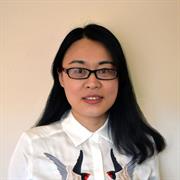
Dr. Xinyu Zhang is a Research Fellow at the Australian Institute for Machine Learning (AIML), University of Adelaide's Faculty of Sciences, Engineering and Technology. Her research bridges computer vision and machine learning, focusing on image/video generation, self-supervised learning, and multimodal retrieval for human-centric AI applications. Zhang's current investigations include: Causal representation learning and multimodal integration Bayesian deep learning frameworks Video generation with temporal consistency Lightweight detection transformers Unsupervised person re-identification Analysis of recent publications reveals strong emphases on generative modeling innovations (especially video synthesis), efficient transformer architectures for real-time applications, and self-supervised representation learning. Her work frequently addresses the alignment between latent representations and human perception across vision-language tasks. Dr. Zhang co-supervises graduate students on projects involving multi-agent 3D scene generation and knowledge transfer in low-supervision learning. She serves as conference reviewer for premier venues including CVPR, ICCV, and NeurIPS, contributing to the advancement of computer vision research.
Associate Professor John Pye leads research in high-temperature solar-thermal systems and industrial decarbonisation at the Australian National University's School of Engineering. He holds a BE/BSc (University of Melbourne) and a PhD (University of New South Wales) focused on solar thermal modelling. His work bridges engineering innovation and sustainability, with a focus on green steel production, CSP technologies, and hydrogen applications. As a Visiting Scholar at Sandia National Laboratories, he advanced solar thermal testing methodologies. Educations: Bachelor of Engineering (Mech.) and Bachelor of Science (University of Melbourne, 1997) PhD in System Modelling of Compact Linear Fresnel Reflectors (UNSW, 2008) His research interests include solar thermal energy systems, concentrated solar power (CSP), and hydrogen-based industrial processes. Notable contributions include system-level optimisation of CSP plants, techno-economic analysis of green steel production, and solar-thermal beneficiation of iron ore. His work often integrates AI for optimisation and free/open-source engineering software. Recent publications focus on solar thermal applications in steelmaking, particle-based CSP systems, and hydrogen plasma metallurgy. Projects include the Gen3 Liquids Pathway for CSP and solar-driven thermochemical processes. Collaborations span industry and academia, addressing decarbonisation challenges in steel production and energy storage. Supervises research in solar thermal engineering and low-carbon technologies, contributing to Australia's role in zero-emissions commodity production. Active in policy submissions related to green energy and manufacturing frameworks.
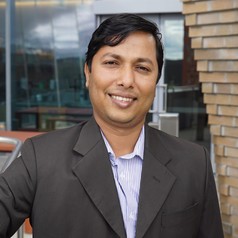
Sanjoy Paul is an Associate Professor at the University of Technology Sydney (UTS) Business School, specializing in supply chain management and operations research. He holds roles as Associate Editor of Business Strategy and the Environment and Global Journal of Flexible Systems Management . His research focuses on supply chain resilience, risk modeling, and sustainable practices, with applications to global disruptions like pandemics and IT outages. Paul has published in top-tier journals such as the European Journal of Operational Research and secured grants from government bodies including the Department of Defence. Education and Career: Prior to UTS, he worked at RMIT University and Bangladesh University of Engineering and Technology. He holds a PhD from UNSW, recognized with the Stephen Fester Prize for outstanding thesis. His career spans academic roles from Lecturer (2017) to Senior Lecturer (2019) before his current position since 2023. Research Contributions: Paul’s work bridges theoretical models and real-world applications, including recovery frameworks for supply chains during crises and strategies for sustainable practices in post-pandemic contexts. He frequently advises media on supermarket pricing, supply chain disruptions, and business strategies, appearing in outlets like The Guardian and ABC News . Awards and Recognition: His honors include the ASOR Rising Star Award, Research with Relevance Award, and inclusion in the top 2% global scientists (2020–2023). He has contributed to policy debates on supermarket competition, EV market dynamics, and Australia’s industrial strategies.
Dr. Shixun Huang is a Lecturer in the School of Computing and Information Technology at the University of Wollongong, Australia. He holds a PhD from RMIT University and specializes in data mining, machine learning, and optimization algorithms for high-dimensional data problems. His research develops efficient algorithms for data discovery, similarity search, and network analysis. Current projects focus on optimized data acquisition strategies for machine learning, cost-effective labeling for graph neural networks, and cardinality estimation in high-dimensional databases. Methodologically, he combines combinatorial optimization with machine learning techniques. Dr. Huang supervises graduate research on diffusion models for medical imaging, graph prompt learning, and image captioning systems. His honors include multiple best paper awards at top database conferences and recognition for teaching excellence (College Top Course Award at RMIT). Recent publications address dataset distinctiveness maximization (WWW 2025), high-dimensional similarity search (VLDB 2025), and edge computing optimization (2024). Earlier foundational work established new approaches for influence maximization in social networks and temporal graph representation learning.
Dr. Honglei Xu is an Associate Professor of Industrial Optimization and Engineering at Curtin University, specializing in industrial system optimization for net-zero transition. He serves as Node Leader of ATN Industry Doctoral Training Centre and Mathematics Honours Coordinator. His research spans automation in mining, hybrid systems control, and optimization in construction and energy sectors. Recent publications demonstrate interdisciplinary approaches combining operations research, AI, and control theory for sustainable industrial solutions. Honors include IEEE Senior Membership and JSPS Fellowship. Current projects focus on public transport optimization, renewable energy forecasting, and intelligent control systems for mineral processing. Dr. Xu teaches courses in mathematical modeling and production planning while serving as associate editor for multiple international journals including Complexity and Energies.
Professor Tony Roberts is the Head of School in the School of Mathematical Sciences at Queensland University of Technology (QUT). He holds a PhD from the Australian National University and is a Fellow of the Australian Mathematics Society. His research focuses on the interplay between material microstructure and macroscopic properties, with emphasis on topology optimization, random structure modeling (e.g., Gaussian fields, percolation models), and material property analysis such as conductivity, diffusion, and fluid flow. He develops computational methods for analyzing experimental techniques like 3D statistical reconstruction and small-angle scattering. His recent work includes optimizing piezoelectric materials for robotics, studying diffusion dynamics in fractal networks, and modeling material failure mechanisms. Key contributions span multi-functional piezoelectric components, anisotropic elastic properties of additively manufactured alloys, and fracture mechanics in perforated materials. Awards include his fellowship in the Australian Mathematics Society. Supervision interests include structural optimization, diffusion in random media, and porous material failure modeling. Education: PhD (Australian National University) Affiliations: Faculty of Science, School of Mathematical Sciences Research Themes: Material science, computational modeling, fracture mechanics, stochastic systems
Dr. Xiaoyu Xia is a Lecturer (equivalent to Assistant Professor in North America) in Cybersecurity & Software Systems at RMIT University's School of Computing Technologies. He received his PhD with the prestigious Alfred Deakin Medal from Deakin University, Australia, and has established himself as a leading researcher in distributed systems and cybersecurity with over 50 peer-reviewed publications in top-tier venues including IEEE S&P, ACM WWW, and IEEE Transactions. Dr. Xia's research spans critical areas at the intersection of computing and security: System Privacy and Security Distributed Systems and Edge Computing AI Privacy and Machine Learning Systems Sustainable Computing Cybersecurity and Privacy-Preserving Technologies His recent work demonstrates a clear trajectory toward developing practical privacy-preserving frameworks for emerging technologies, particularly in edge computing environments and large language models. Dr. Xia has made significant contributions to machine unlearning, secure data management in distributed systems, and energy-efficient edge computing solutions that balance performance with sustainability concerns. Dr. Xia has received notable recognition for his scholarly impact: World's Top 2% Scientists by Stanford University (2022-2024) Alfred Deakin Medal for PhD research excellence (2021) Teaching Excellence Award from Swinburne University of Technology (2021) As an active researcher, Dr. Xia currently leads multiple funded projects including an ARC Discovery Project grant worth over $500,000 for developing privacy-aware intelligent digital twins for secure critical infrastructures. He is open to supervising motivated PhD students with interests in system security and privacy, and distributed ML systems. Dr. Xia serves the academic community through editorial roles as Associate Editor for IEEE Transactions on Dependable and Secure Computing and as a Review Board Member for IEEE Transactions on Parallel and Distributed Systems, and regularly participates in program committees for major conferences including ACM WWW and IEEE ICDCS.
Dan Steinberg is a senior research scientist and team leader of the Decisions & Statistical Learning team at CSIRO Data61 in Canberra, Australia. His expertise lies in probabilistic machine learning, variational inference, Bayesian deep learning, causal inference, and their application to domains spanning synthetic biology, geospatial analytics, and algorithmic fairness. Education PhD in Computer Vision / Machine Learning (2013) – University of Sydney, Australian Centre for Field Robotics Bachelor of Engineering (Mechatronics, First-Class Honours) – University of Sydney (2008) Bachelor of Commerce (Finance) – University of Sydney (2008) Research Interests Steinberg’s core research agenda revolves around building scalable probabilistic models that can learn efficiently from limited or noisy data and provide principled uncertainty estimates. Key themes include: Variational Inference & Bayesian Deep Learning: developing lightweight yet powerful algorithms for approximate posterior inference in complex models (e.g., Aboleth, Revrand). Active Learning & Experimental Design: creating methods that decide which experiments or measurements will maximise information gain, with recent focus on in-silico protein engineering via Variational Search Distributions (VSD). Causal Inference: leveraging machine-learning tools to perform robust observational causal studies for evidence-based policy, including work on youth well-being and academic outcomes. Algorithmic Fairness: translating normative notions of equity into quantifiable objectives for regression-based decision systems. Large-scale Spatial Analytics: Landshark—an open-source TensorFlow toolkit for supervised learning on massive geospatial raster datasets. Notable Software & Tools Aboleth: A minimal-overhead TensorFlow framework for Bayesian deep learning. Landshark: Command-line tools for large-scale spatial inference. Revrand: Scalable Bayesian generalised linear models with non-conjugate likelihoods. libcluster: Extensible C++ library for hierarchical Bayesian clustering. Scientific Awards Oral Presentation Award – ICML 2025 Workshop on Scaling up Intervention Models (SIMS) Oral Presentation Award – NeurIPS 2024 Workshop on Bayesian Decision-making and Uncertainty (BDU) Oral Presentation Award – NeurIPS 2023 Workshop on Adaptive Experimental Design and Active Learning Spotlight Paper Award – NeurIPS 2014 (Extended and Unscented Gaussian Processes) Research Team & Collaborations As Team Leader – Decisions & Statistical Learning at CSIRO Data61, Steinberg directs a multi-disciplinary group that partners with government agencies (e.g., Jobs and Skills Australia, Australian Institute of Health and Welfare) and industry to deploy machine-learning solutions at scale. He has previously held roles as Principal Researcher at Gradient Institute (2019-2023), Senior Research Engineer at CSIRO Data61 (2016-2019), Researcher at NICTA (2013-2016), and Research Associate at the University of Sydney (2012-2013).
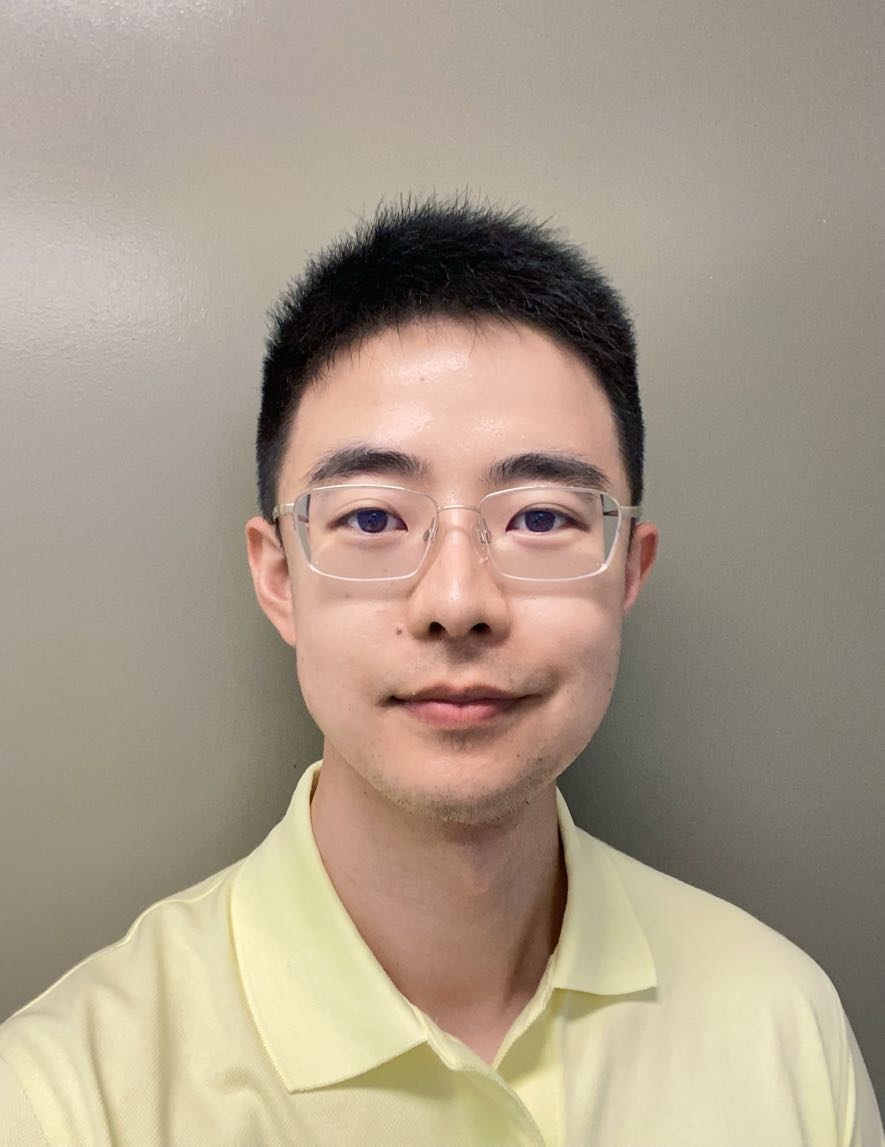
Dr. Yunzhong Hou is a Research Fellow at the School of Computing, The Australian National University (ANU), where he collaborates with Prof. Tom Gedeon and Dr. Liang Zheng. He holds a PhD in Computer Science from ANU (2019–2023) and a Bachelor's in Electronic Engineering from Tsinghua University (2014–2018). His research focuses on computer vision and deep learning, particularly in multiview detection, sensor optimization, and efficient AI systems. Education: PhD in Computer Science, ANU (2019–2023) Bachelor of Electronic Engineering, Tsinghua University (2014–2018) Research Interests: Multi-view detection and tracking Active vision and sensor optimization Efficient AI systems His work spans topics such as camera configuration optimization for pedestrian detection, deep learning for color quantization, and multi-camera systems. He has contributed to projects like the socioeconomic impact analysis of water reforms and privacy-preserving perception for robotics. Hou serves as a reviewer for top conferences (CVPR, ICCV) and journals (TPAMI, TIP). His research emphasizes scalable solutions for real-world applications, including drone vision control and edge computing optimizations. Current projects include machine learning for socio-economic analysis and privacy-aware robotic perception.
Veronica Garcia Hansen is an Associate Professor in the School of Architecture & Built Environment at Queensland University of Technology (QUT). Her research focuses on the interplay between building design and performance, emphasizing visual/thermal comfort, human health/wellbeing, and innovative methodologies using sensors, machine learning, and VR. She is an internationally recognized expert in high-performance building envelopes, daylighting, and lighting's non-visual health effects. Her 2020 WiSTEM2D award ($250k grant) supported 'healing environments in hospitals via efficient lighting design,' one of six global awards selected from 550 applications. Education: PhD (Queensland University of Technology), BArch (Other). Professional memberships include AIA, ASA, ISES, CIE (Division 3 Editor), and multiple editorial roles. Research Leadership: HDR Training Coordinator (2019–2021), Deputy Academic Lead (Architecture), and leader of QUT's Design Lab 'Emerging Technologies' program. She chairs CIE Division 3 (Interior Environment & Lighting Design) and represents Australia in IEA Task 61. Awards & Recognition: 2020 Johnson & Johnson Scholar; 2003 Asian Innovation Award (Bronze); Division Editor roles; and leadership in global architectural science initiatives. Supervision & Grants: Advised over 100 postgraduate students and led projects like 'Designing Healthy and Efficient Luminous Environments' (LP150100179). Current supervision includes lighting design strategies for healthcare staff wellbeing. Labs/Teams: Core member of QUT's Design Lab, focusing on emerging technologies and interdisciplinary architectural science research.