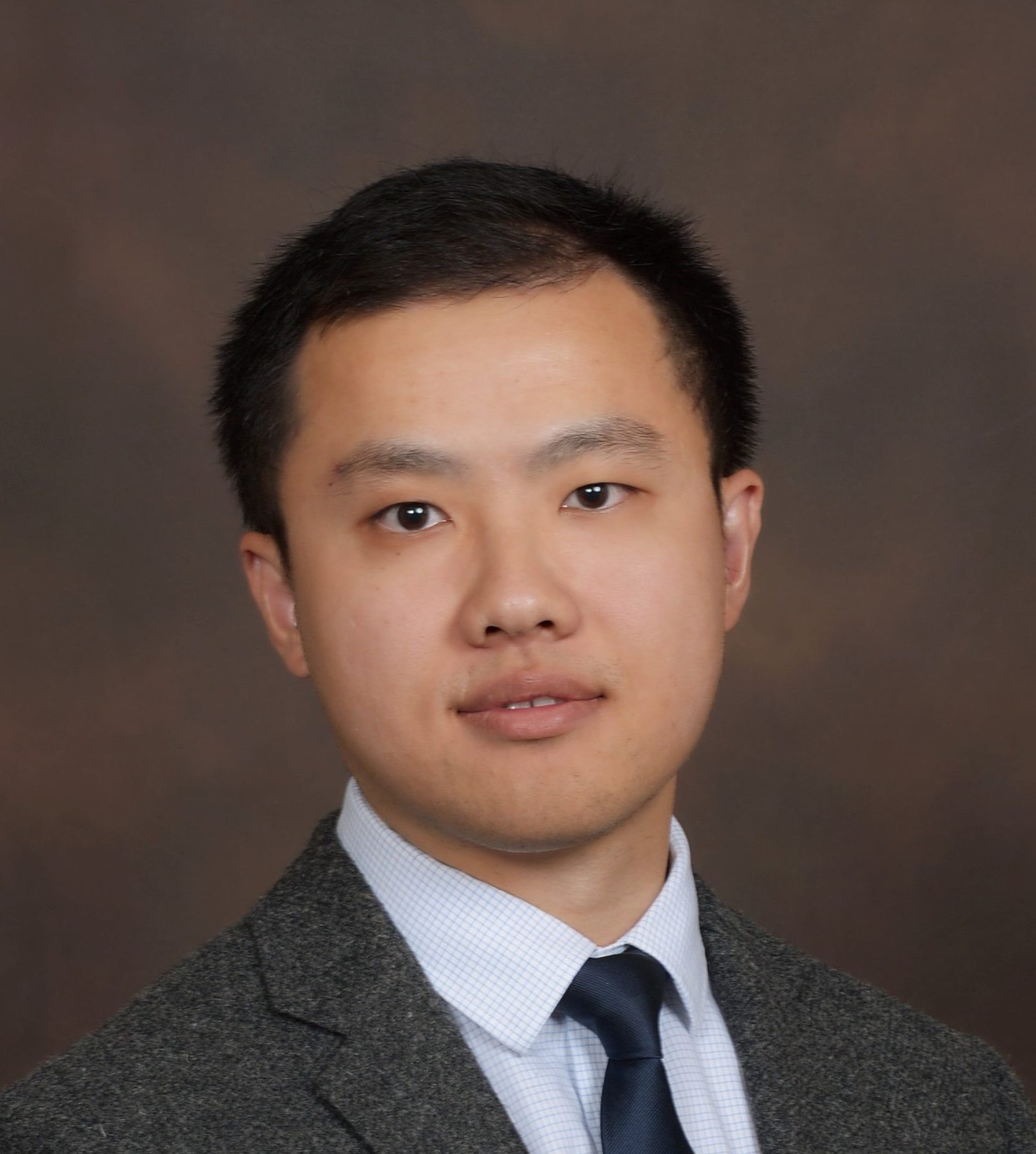
Dr. Chen Liang is an Assistant Professor in the Department of Biomedical Informatics and Medical Education at the University of Washington. He holds a PhD in Biomedical Informatics from the University of Texas and is a Fellow of the American Medical Informatics Association (FAMIA). His research focuses on augmenting clinical decision-making through computational methods. Research Interests: Dr. Liang develops AI-driven solutions for healthcare challenges including: Multi-modal EHR integration and common data models Biomedical ontology engineering Machine learning for clinical prediction (diagnostics, prognosis, comorbidity) Applications in infectious diseases, maternal health, and precision medicine Awards & Honors: Fellow, American Medical Informatics Association NIH/NIDDK DATA Scholar He leads two NIH R21 grants examining Long COVID and HIV/SARS-CoV-2 coinfections using nationwide EHR data. Dr. Liang actively mentors students and collaborates with the National COVID Cohort Collaborative consortium.
Yao Wan is an Associate Professor at the School of Computer Science and Technology, Huazhong University of Science and Technology (HUST) in Wuhan, China. He leads the ONE Lab, focused on empowering machines to interact with the physical world through unified natural language interfaces (Language + X paradigm). He obtained his Ph.D. from Zhejiang University and has research visiting experience at Chinese University of Hong Kong, University of Technology Sydney, and University of Illinois Chicago. His research bridges Artificial Intelligence and Software Engineering, with core interests in: Natural Language Processing for code intelligence Large Language Model applications Multimodal learning across code, vision, and UI domains Program analysis and code generation Software engineering automation His publications demonstrate strong focus on applying transformer-based models to software engineering challenges, with recent work expanding into multimodal applications. Research spans code model security, GUI generation, data visualization, and compiler understanding, predominantly using deep learning approaches. Awards: IEEE TCSE Distinguished Paper Award for SANER 2025 publication He actively mentors students through the ONE Lab and serves on program committees for top conferences including ASE, ISSTA, and ICSE. He is seeking highly-motivated undergraduate researchers to join his team. The ONE Lab conducts cutting-edge research at the intersection of programming languages and artificial intelligence, with ongoing projects in code intelligence, multimodal learning, and LLM applications for software engineering.
Dr. Alfonso González Briones is an Associate Professor in the Department of Computer Science and Automation at the University of Salamanca, where he conducts cutting-edge research in intelligent systems and their applications. He is a prominent member of the BISITE Research Group and has also worked with the GRASIA Research Group at Complutense University of Madrid as a 'Juan De La Cierva' postdoc. His academic journey at the University of Salamanca includes a Bachelor of Technical Engineering in Computer Engineering (2012), a Bachelor's Degree in Computer Engineering (2013), a Master's Degree in Intelligent Systems (2014), and a PhD in Computer Engineering (2018). His research focuses on Ubiquitous Computing and Ambient Intelligence for developing smarter, more energy-efficient cities that improve social welfare and promote sustainable development. His work spans Multiple Agent Systems (MAS), energy optimization, smart cities infrastructure, Industry 4.0 applications, and machine learning techniques for various domains including social networks, transportation, and agricultural systems. Dr. González Briones has published extensively with over 30 journal articles and 60 conference proceedings publications, demonstrating consistent productivity across multiple domains of computer science and artificial intelligence. His research trends show a clear progression from foundational work in multi-agent systems toward increasingly sophisticated applications in smart cities, energy management, and Industry 4.0 contexts, with a growing emphasis on practical implementations that address real-world challenges. 2nd place in 1st SENSORS+CIRTI Award for best national thesis in Smart Cities (CAEPIA 2018) Juan de la Cierva State Program Grant in ICT - Information and Communication Technologies (2018) Member of scientific committees for Advances in Distributed Computing and Artificial Intelligence Journal (ADCAIJ) and British Journal of Applied Science and Technology (BJAST) Reviewer for prestigious journals including Supercomputing Journal, Journal of King Saud University, Energies, Sensors, Electronics, and Applied Sciences As an active researcher, Dr. González Briones has participated in 10 international research projects and served on technical committees for prestigious international conferences including AIPES, HAIS, FODERTICS, PAAMS, and KDIR. His work bridges academic research with practical industry applications, particularly in energy optimization systems, IoT, and Machine Learning solutions for real-world problems. He has also collaborated with private research centers including Virtual Power Solutions in Portugal and AIR Institute, where he worked as Project Manager in Industry 4.0 and IoT projects. His research infrastructure includes work with the BISITE Research Group, where he develops and implements multi-agent architectures for optimizing energy consumption and other complex systems. His laboratory work spans smart home energy management, intelligent transportation systems, semantic analysis for Industry 4.0, and social network analysis applications.
Kijung Shin is an Associate Professor at KAIST (Korea Advanced Institute of Science and Technology), holding dual appointments in the Kim Jaechul Graduate School of AI and the School of Electrical Engineering (Computer Division). He leads the Data Mining Lab and teaches multiple courses including Graph Mining and Social Network Analysis, Data Mining and Search, and other foundational courses in electrical engineering and AI. Education Ph.D. in Computer Science, Carnegie Mellon University (February 2019) M.S. in Computer Science, Carnegie Mellon University (December 2017) B.S. in Computer Science and Engineering, Seoul National University (August 2015) B.A. in Economics (Double Major), Seoul National University (August 2015) Research Interests Professor Shin's research primarily focuses on data mining, graph algorithms, and network science, with particular expertise in hypergraph analysis, tensor decomposition, and graph neural networks. His work bridges theoretical foundations with practical applications, developing algorithms that can efficiently analyze complex real-world networks. His recent research has expanded into multimodal learning, integration of large language models with graph neural networks, and applications in recommendation systems, satellite imagery analysis, and biological data analysis. His approach combines rigorous mathematical analysis with practical implementation, resulting in numerous open-source software tools that have been widely adopted in both academia and industry. His research has significant implications for social network analysis, fraud detection, recommendation systems, and scientific discovery in various domains. Research Trends Professor Shin's recent publications show a clear trajectory toward more complex network structures, particularly hypergraphs that capture higher-order interactions beyond simple pairwise relationships. His work increasingly integrates traditional graph algorithms with deep learning approaches, especially focusing on how graph neural networks can be improved and made more interpretable. There's also a growing emphasis on practical applications in areas like satellite imagery analysis, medical data, and recommendation systems that address real-world challenges. Scientific Awards Received the PAKDD Best Survey Paper Award for 'Multi-Behavior Recommender Systems: A Survey' (2025) Selected as one of the best short paper candidates of ACM RecSys 2024 (top 7) for 'Revisiting LightGCN' (2024) Selected for oral presentation (2.6% of accepted papers) at AAAI 2024 for 'VITA: 'Carefully Chosen and Weighted Less' Is Better in Medication Recommendation' (2024) Received the IEEE ICDM Best Student Paper Runner-up Award for 'TensorCodec: Compact Lossy Compression of Tensors without Strong Data Assumptions' (2023) Received the SIGKDD Best Research Paper Award and CogX Award for Best Student Paper in AI for 'FRAUDAR: Bounding Graph Fraud in the Face of Camouflage' (2016) Received the Best Senior Thesis Award from Seoul National University (2015) Received the Samsung Humantech Paper Award (1st in Computer Science) (2015) Teaching and Mentoring Professor Shin has taught multiple graduate and undergraduate courses at KAIST since 2019, including Graph Mining and Social Network Analysis, Data Mining and Search, and foundational courses in electrical engineering. He has also co-organized tutorials at major conferences including AAAI, KDD, ICDM, and CIKM on advanced topics in hypergraph neural networks and real-world hypergraph analysis. As the leader of the Data Mining Lab, he mentors numerous graduate students and postdoctoral researchers, fostering a collaborative research environment that has produced significant contributions to the field of data mining and network analysis. Research Leadership Professor Shin leads the Data Mining Lab at KAIST, which focuses on developing novel algorithms for analyzing complex networks and high-dimensional data. The lab has produced numerous influential software tools including D-Cube, M-Zoom, CoreScope, and DenseAlert, which are widely used in both academic research and industry applications. His research group maintains active collaborations with institutions worldwide and has received funding from various sources to support their innovative work in data mining and network analysis.