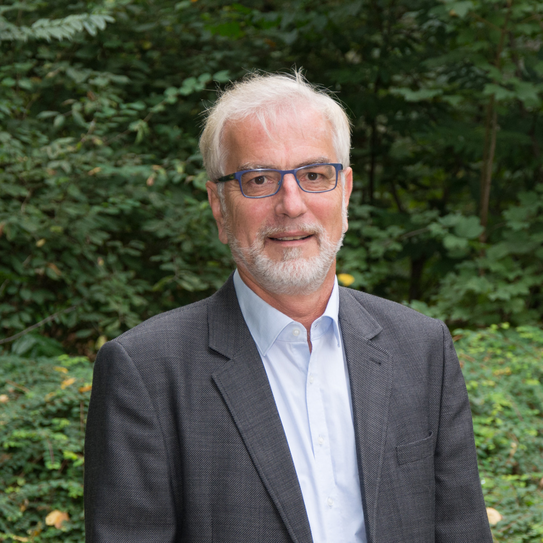
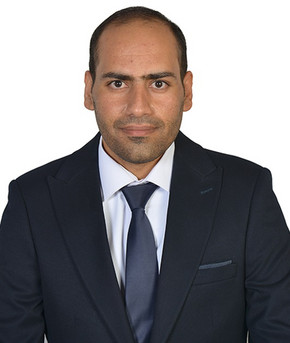
Denny Yu is an Associate Professor at the Edwardson School of Industrial Engineering, Purdue University. His work bridges human factors, neuroergonomics, and healthcare safety through advanced sensor systems and AI. Primary Affiliation : Edwardson School of Industrial Engineering, Purdue University Research Themes : Surgical ergonomics, autonomous vehicle human factors, cognitive workload assessment, multimodal physiological sensing Dr. Yu's research focuses on neuroergonomics and human-robot interaction , particularly in surgical and transportation contexts. His team develops sensor-based systems for workload monitoring, including: EEG-eye tracking fusion for situation awareness Wearable exoskeletons for surgical posture support Computer vision tools for lifting task risk analysis Smart infusion pump usability frameworks AI-driven surgical coaching systems Recent publications emphasize deep learning applications in soft tissue deformation estimation and real-time adaptive systems for robotic surgery augmentation. His work spans both occupational health (veterinary surgeons, airport workers) and medical device innovation domains.
Sarah Cobey is a Professor in the Department of Ecology and Evolution at the University of Chicago. Her research focuses on the coevolution of pathogens and host immunity , particularly influenza , using computational and mathematical models . Education: AB from Princeton (2002), PhD from University of Michigan (2009), Postdoc at Harvard School of Public Health (2013) Research Interests : The Cobey Lab studies adaptive immunity dynamics , including antibody repertoire evolution , vaccine effectiveness , and immune-mediated pathogen competition . Key areas include influenza evolution , vaccination strategies , and B cell response predictability . Publication Trends (2023–2025): Recent work examines longitudinal immune modeling , influenza antigenic diversity , and cross-reactive antibody dynamics . Collaborations span immunology , virology , and public health . Scientific Awards : NIH New Innovator Award (2014) James S. McDonnell Scholar (2014) Neubauer Fellowship (2016) NSF GRF (2005) Grants : Past and current NIH funding includes U01AI187063 (2025–2029) on Adaptive Immunity to Influenza and R01AI170116 (2022–2027) on Influenza Vaccine Response Variability . Labs & Collaborations : Leader of the Cobey Lab , with collaborations at Harvard, NIH, and WHO. Projects often involve multi-scale modeling linking individual immune responses to population-level viral evolution .
Dr. Sarah Wolf serves as Head of the Junior Research Group 'Mathematics for Sustainability Transitions' at Free University of Berlin's Department of Mathematics and Computer Science and as a Senior Researcher and Board Member at the Global Climate Forum (GCF). Her dual affiliation bridges rigorous mathematical modeling with real-world sustainability policy, focusing on complex socio-ecological systems through an interdisciplinary lens since joining GCF's Green Growth initiative in 2012. Wolf earned her PhD in Mathematics from Freie Universität Berlin in 2010 with the thesis 'From Vulnerability Formalization to Finitely Additive Probability Monads,' developed during interdisciplinary work at the Potsdam Institute for Climate Impact Research. Her academic foundation combines pure mathematics with applied climate impact research, establishing her unique approach to formalizing sustainability concepts. Her research centers on agent-based modeling of socio-technical systems, with core expertise in sustainability transitions , green growth mechanics , and sustainable mobility . She develops mathematical frameworks to clarify vulnerability concepts while embedding simulations in stakeholder dialogues through innovations like the 'Decision Theatre Triangle.' This work uniquely positions mathematics as both analytical tool and communication medium for climate policy. Analysis of her 15 most recent publications reveals an evolutionary trajectory from foundational vulnerability formalization (2009-2012) toward applied stakeholder-integrated modeling (2021-2023). Her work consistently bridges mathematical rigor with policy relevance, showing increasing emphasis on participatory approaches while maintaining computational sophistication in agent-based systems. No scientific awards are documented in the source material, though her leadership in the MATH+ junior research group indicates competitive funding attainment. As group head, she directs research strategy and likely mentors junior researchers, though no formal student advisees are listed. Wolf leads the 'Mathematics for Sustainability Transitions' junior research group within FU Berlin's Biocomputing Group, collaborating with institutions like the Potsdam Institute. Her team develops computational frameworks for green growth transitions, emphasizing stakeholder co-creation through platforms like the Decision Theatre while maintaining strong ties to GCF's global policy networks.
Zhang Yang is an Associate Professor at the School of Medical Engineering, Harbin Institute of Technology (Shenzhen), with a joint appointment as Visiting Professor at the University of Tokyo starting in July 2024. He holds a PhD from the University of Cambridge's Department of Pathology and an M.Phil. from the University of Hong Kong's HKU-Pasteur Research Center. Previously, he served as an Assistant Professor at Harbin Institute of Technology (Shenzhen) from September 2015 to December 2020. His research integrates computational and experimental approaches to address challenges in pathogen and cancer research. On the computational side, his work focuses on developing AI-powered microscopic imaging systems, applying deep learning to analyze multi-omics data (including proteins, DNA, miRNAs, LncRNAs, and mRNAs), and utilizing deep learning in cheminformatics for drug discovery. On the experimental side, his laboratory combines imaging, high-throughput sequencing, mass spectrometry, and chemical biology to understand disease mechanisms at the molecular level. His publication record demonstrates significant impact, with over 50 SCI-indexed papers in high-impact journals including Nature Communications, Briefings in Bioinformatics, Bioinformatics, Analytical Chemistry, and Trends in Biotechnology. His work has been cited by prestigious journals such as Nature Reviews Methods Primers and Nature Communications, with three ESI highly cited papers. His research spans multiple interdisciplinary fields, combining artificial intelligence with biomedical applications to advance diagnostic and therapeutic approaches. World's Top 2% Scientists 2021 Fellow of the Royal Society of Biology Three ESI Highly Cited Papers Five authorized national invention patents As an academic leader, he serves as Associate Editor for BMC Biology and Frontiers in Microbiology, Academic Editor for PLOS Genetics, Editorial Board Member for Communications Biology, and Guest Editor for a Special Issue on AI in analytical chemistry in Trends in Analytical Chemistry. His laboratory actively collaborates with international institutions, with graduates pursuing further studies at Hong Kong Chinese University, Hong Kong University of Science and Technology, Hong Kong Polytechnic University, Macau University, and the University of New South Wales. He teaches Introduction to Modern Biology for undergraduates and Bioanalytical Chemistry for graduate students.
Prof. Johannes Weyer is a faculty member at the Technical University of Dortmund , affiliated with the Faculty of Social Sciences . His research focuses on the intersection of sociology, technology, and mobility, particularly in the context of sustainable urban systems and human-machine interaction. Email: johannes.weyer@tu-dortmund.de Phone: +49 231 755 3281 Key research areas include agent-based modeling , socio-technical systems , sustainable mobility , and the implications of digital society on governance and behavior. His recent publications emphasize simulation frameworks like SimCo, mobility transitions in the Ruhr region, and participatory methods for sustainable policy design. Notable trends in his 15 most recent articles (2023-2025) include: Agent-based modeling of transportation systems Human-AI interaction in real-time society Living lab experiments for sustainable mobility Behavioral analysis of mode choice Multi-level governance of technological discontinuation
Imene ZAIDI is a Teacher-researcher at CESI engineering school in France, affiliated with the Engineering and Digital Tools research team. Her work bridges computer science and operational research with practical applications in sustainable transportation systems. Her academic background includes: Doctorate in Optimized management of electric vehicle fleet charging from University of Haute-Alsace (2022) Engineering Diploma in Computer Systems from ex.INI Algiers (2018) ZAIDI's research centers on optimization challenges in electric mobility, particularly electric vehicle charging scheduling. She develops computational approaches including heuristics, metaheuristics, and exact algorithms to address grid capacity constraints, demand satisfaction, and energy maximization in unbalanced power systems. Her work integrates operational research with real-world transportation and energy infrastructure challenges. Analysis of her 2020-2024 publications reveals consistent focus on preemptive scheduling, computational complexity, and multi-objective optimization in electric vehicle ecosystems. The research demonstrates increasing sophistication from foundational scheduling models to grid-integrated solutions addressing three-phase power imbalances and capacity limitations. She teaches computer science courses including Object-oriented programming, Algorithms, Databases, Embedded systems, Web development, and Information systems to engineering and bachelor's students across multiple academic levels. The Engineering and Digital Tools research team at CESI provides the collaborative framework for her investigations into decision support systems for sustainable mobility and energy-efficient transportation solutions.
Dr. Adel Aazami is an Assistant Professor at the Institute of Transport Economics and Logistics at Vienna University of Economics and Business (WU Vienna) since 2023. His academic journey began with a B.Sc. in Industrial Engineering from University of Tehran (2010-2014), followed by an M.Sc. (2014-2016) and Ph.D. (2016-2021) from Iran University of Science and Technology (IUST), Tehran. Prior to his current position, he worked as a Postdoctoral Researcher at Sharif University of Technology (2021-2022) and was a Visiting Researcher at the University of Toronto (2020). His educational background includes: Ph.D. in Industrial Engineering (2016-2021) - Iran University of Science and Technology (IUST), Tehran, Iran M.Sc. in Industrial Engineering (2014-2016) - Iran University of Science and Technology (IUST), Tehran, Iran B.Sc. in Industrial Engineering (2010-2014) - University of Tehran, Tehran, Iran Dr. Aazami's research spans multiple interconnected domains within operations research and supply chain management. His primary focus areas include Operations Research and Optimization, Supply Chain and Logistics, Production and Distribution/Transportation Planning, Competition and Game Theory, Stochastic Programming, and Decomposition Algorithms. His work demonstrates a strong emphasis on developing mathematical models and optimization algorithms for complex supply chain problems, particularly those involving perishable goods, competitive environments, and sustainability considerations. He has made significant contributions to integrating environmental factors into traditional logistics problems and developing robust optimization approaches for supply chain networks. Analysis of Dr. Aazami's publication record reveals a consistent trajectory of increasingly sophisticated research in supply chain optimization. His work shows a clear progression from foundational mathematical optimization techniques to increasingly complex integrated problems involving multiple stakeholders, uncertainty, and environmental considerations. A notable trend is his focus on perishable products within supply chains, developing models that account for limited product lifetimes while optimizing across multiple echelons of the supply chain. More recently, his research has expanded to incorporate green logistics considerations, developing algorithms that balance economic and environmental objectives in transportation and distribution problems. His notable scientific achievements include: Winner of the 'Best Student' award among nationwide students evaluated by the Iranian Ministry of Science (2020) Winner of the Iranian Nobel Prize (known as the Alborz National Foundation Prize) (2019) Winner of the Best Student Award at IUST (2018) Winner of the Top Researcher Award at IUST (2018) Annual Awards of the National Elites Foundation Iran (2015-2020) Dr. Aazami has extensive teaching experience across multiple Iranian universities including Tehran University, Amirkabir Technical University, Isfahan University, Yazd University, Zanjan University, Damghan University, Abrar University and Iran Technical University. His peer review activities include reviewing for prestigious journals such as Soft Computing, Expert Systems with Applications, and Annals of Operations Research. While specific grant information isn't detailed in the provided text, his research output suggests active engagement with complex optimization problems relevant to transportation and logistics industries. At WU Vienna, Dr. Aazami is part of the research team at the Institute of Transport Economics and Logistics, working alongside other faculty members including Prof. Kummer and Prof. Wakolbinger. His research integrates theoretical optimization methods with practical applications in transportation and logistics, contributing to the institute's focus on sustainable and efficient supply chain solutions.
Prof. Dr. Andreas Herkersdorf is a Full Professor and Chair of Integrated Systems at the Technical University of Munich (TUM) School of Computation, Information and Technology. His research focuses on application-specific multicore processors (MPSoC), FPGA-based prototyping, fault-tolerant systems, and energy-efficient architectures, with applications in IP packet processing, automotive systems, and visual computing. He has received multiple IBM innovation awards and serves on editorial boards including the DFG Review Board for computer architecture. Education: Dipl.-Ing. Electrical Engineering (TUM, 1987), Dr. techn. Electrical Engineering (ETH Zurich, 1991) Research: MPSoC architectures, autonomic computing, NoC resilience, FPGA acceleration, and self-optimizing systems. Awards: IBM Master Inventor (1998), IBM Outstanding Technical Achievement Award (2001), multiple IBM Innovation Achievement Awards (1996-2003) His recent publications emphasize hardware/software co-design, machine learning integration for runtime optimization, and network-on-chip innovations. He collaborates on projects involving 6G systems, smartNICs, and automotive communication protocols.
Maria Della Lucia is a Full Professor at the Department of Economics and Management, University of Trento. She holds a PhD in Economics and Management (2005) and a first-class Economics and Management degree (2000) from the University of Trento and Padua, respectively. Her research focuses on humanistic tourism, sustainable tourism development, stakeholder engagement in cultural regeneration, and business models in heritage sites. She has led EU/national projects on sustainable tourism governance, culture-led regeneration, and digital platform assessment. Her work has been recognized with multiple best paper awards at conferences like AHTMM, HTHIC, and BEST EN Think Tank. She teaches courses in market analysis, tourism economics, and sustainable development. 2018: Best paper at AHTMM2018 2015: Best paper at HTHIC2015 2012: Second best paper at BEST EN Think Tank XII 2006: Best paper at XV International Leisure and Tourism Symposium She has coordinated international doctoral programs, served on scientific committees for conferences, and contributed to policy-making for cultural development in Trento and Cuneo. Her collaborations span institutions in Sweden, Canada, the Netherlands, and other European countries.
Nikolaos Kourentzes is a Professor of Informatics at the University of Skövde , specializing in forecasting and operations research. His work bridges theoretical advancements in time series analysis with practical applications in supply chain management, tourism demand, and renewable energy forecasting. Academic Rank: Professor Department: Department of Information Technology Research Interests: His research focuses on hierarchical and temporal forecasting methodologies, integrating macroeconomic indicators into demand planning, inventory optimization, and machine learning applications. He explores forecast reconciliation, shrinkage estimators, and the role of expert judgment in predictive analytics. Recent Publications: Highlights include advances in hierarchical forecasting with leading indicators, probabilistic forecasts during crises like the pandemic, and complex smoothing techniques. His work spans journals such as Omega , International Journal of Forecasting , and European Journal of Operational Research . Collaborations: Kourentzes collaborates with researchers globally, including George Athanasopoulos, Rob Hyndman, and Robert Fildes, across domains like tourism analytics, tire industry forecasting, and public health modeling.
Nancy A. Lynch is the NEC Professor of Software Science and Engineering and Professor of Electrical Engineering and Computer Science at the Massachusetts Institute of Technology, where she heads the Theory of Distributed Systems (TDS) group within CSAIL. Research Interests Distributed computing algorithms and lower bounds Real-time and fault-tolerant systems Formal modelling and verification Wireless network algorithms Biological distributed algorithms Neural computation and spiking networks Across her work, Lynch blends rigorous theoretical analysis with practical relevance, tackling problems ranging from consensus and leader election in unreliable networks to modelling decision-making circuits in the brain. Publications & Trends Since 2020 she has published extensively on distributed algorithms , swarm robotics , neuromorphic architectures , and biologically-inspired computation . Notable recent directions include hierarchical concept learning in spiking neural networks, nanobot locomotion modelling for cancer detection, and superconducting nanowire platforms for energy-efficient neural hardware. Scientific Awards & Honors Best Paper Award, OPODIS 2018 Best Paper Award, IEEE NCA 2014 Highlight Paper, Neuromorphic Computing and Engineering 2022 Teaching & Advising Lynch teaches core graduate and undergraduate subjects at MIT including 6.042J Mathematics for Computer Science , 6.852J/18.437 Distributed Algorithms , and 6.885/6.006 Algorithms . She has supervised dozens of PhD students and post-docs whose names are listed on her Past Students page. Laboratory & Teams She leads the Theory of Distributed Systems (TDS) Group , a vibrant research team within MIT CSAIL . TDS is part of the larger Theory of Computation group and hosts weekly seminars, reading groups, and collaborative projects with partners across MIT and worldwide.
Anna-Lena Sachs is a Senior Lecturer in Predictive Analytics at Lancaster University's Management Science department. Her research bridges inventory management, behavioural operations, and forecasting, with applications in retail, healthcare, automotive, and logistics sectors. She develops quantitative models and leverages industry datasets to solve practical supply chain challenges. Research Interests : Inventory management for spare parts, data-driven decision support systems, multi-echelon optimization, markdown pricing strategies, and human decision behavior in operational contexts. She emphasizes translating academic insights into industry practice through field experiments and lab studies. Scientific Recognition : Dean’s Award for Academic Excellence Fellow of the Higher Education Academy (ATLAS) Research Impact Award for Centre for Marketing Analytics and Forecasting PhD Supervision : Actively mentors students in Operations Research, Management Science, and supply chain analytics. Current PhD candidates include Ritika Arora, Benjamin Lowery, Adam Page, Carlos Rodriguez Calderon, and Joe Rutherford. Collaborative Networks : Affiliated with Lancaster’s STOR-i Centre for Doctoral Training, Centre for Marketing Analytics & Forecasting, and Data Science Institute. She has led projects with Royal Mail, Jaguar Land Rover, and GlaxoSmithKline.
Torbjörn Thiringer is a Professor in Electrical Engineering at Chalmers University of Technology. His research focuses on electrical systems for wind turbines and electric vehicles, with particular emphasis on system-level analysis and component-level studies of electrical machines, power electronics, and battery systems. Key research areas: Wind turbine systems, Electric vehicle drives, Battery degradation, Power electronics optimization Recent work explores graphene-based thermal management, fuel cell hybrid vehicles, and direct current building distribution efficiency His publications demonstrate interdisciplinary engagement with topics spanning: Finite element analysis of motor designs Life cycle assessment of energy systems Thermal modeling of SiC inverters Wave energy converter optimization Core loss measurement techniques Hydrogen fuel cell integration Professor Thiringer's collaborations span multiple institutions and industry partners, focusing on both theoretical modeling and practical implementation of advanced energy systems.
Cen Wu serves as Associate Professor in the Department of Statistics at Kansas State University and Faculty Scientist at the Johnson Cancer Research Center. His methodological research focuses on developing robust statistical machine learning approaches for high-dimensional cancer genomic data integration, addressing challenges where measurement dimensions far exceed sample sizes. Dr. Wu earned his Ph.D. in Statistics from Michigan State University in 2013, followed by a postdoctoral fellowship in Biostatistics at Yale School of Public Health (2013-2015). He joined Kansas State University as Assistant Professor in 2015, was promoted to Associate Professor in 2021, and has maintained dual appointments in Statistics and Cancer Research since 2016. His research program centers on Bayesian sparse learning methods for cancer genomics, with particular emphasis on robust variable selection techniques that accommodate outliers and heavy-tailed distributions common in genomic studies. He develops integrative approaches for multi-platform genomic data (mRNA expression, copy number variations, DNA methylation) to elucidate cancer etiology and identify prognostic markers. His work bridges theoretical statistics with practical clinical applications, including adaptive prediction of patient recruitment in clinical trials. Analysis of his recent publications reveals consistent focus on gene-environment interaction modeling through advanced Bayesian frameworks, with increasing emphasis on longitudinal data structures and robust inference procedures. His methodological innovations frequently translate into practical R packages that implement these complex statistical techniques for broader research communities. Dr. Wu actively contributes to the academic community as Associate Editor for TEST and BMC Genomics, and previously served as Guest Editor for a special issue on Bayesian Learning in Entropy. He maintains active collaborations with cancer researchers at the Johnson Cancer Research Center, applying his statistical expertise to real-world cancer genomics problems. His laboratory develops and implements cutting-edge statistical methods through R packages including 'mixedBayes', 'pqrBayes', 'roben', and 'interep', which address specific challenges in high-dimensional data analysis for cancer research. Current projects focus on extending robust Bayesian frameworks to handle increasingly complex genomic data structures while maintaining computational efficiency.
Prof. Dr. Haris Gačanin is a faculty member at RWTH Aachen University, affiliated with the Institute for Distributed Signal Processing under the College of Electrical Engineering. His research focuses on integrating machine learning with wireless communication systems, particularly in industrial IoT, edge computing, and network optimization. Current academic rank: Professor Contact: harisg@dsp.rwth-aachen.de Research Interests: Wireless systems, machine learning, signal processing, and network optimization. Key contributions include: Adaptive resource allocation in IIoT and vehicular networks AI-driven channel estimation and feedback mechanisms Security-oriented emitter identification via metric learning Federated/transfer learning for edge environments Hardware-efficient deep learning models for mmWave and THz communications Methodological Focus: Combines reinforcement learning, attention mechanisms, and robust neural architectures with practical implementations on FPGA and vehicular systems.