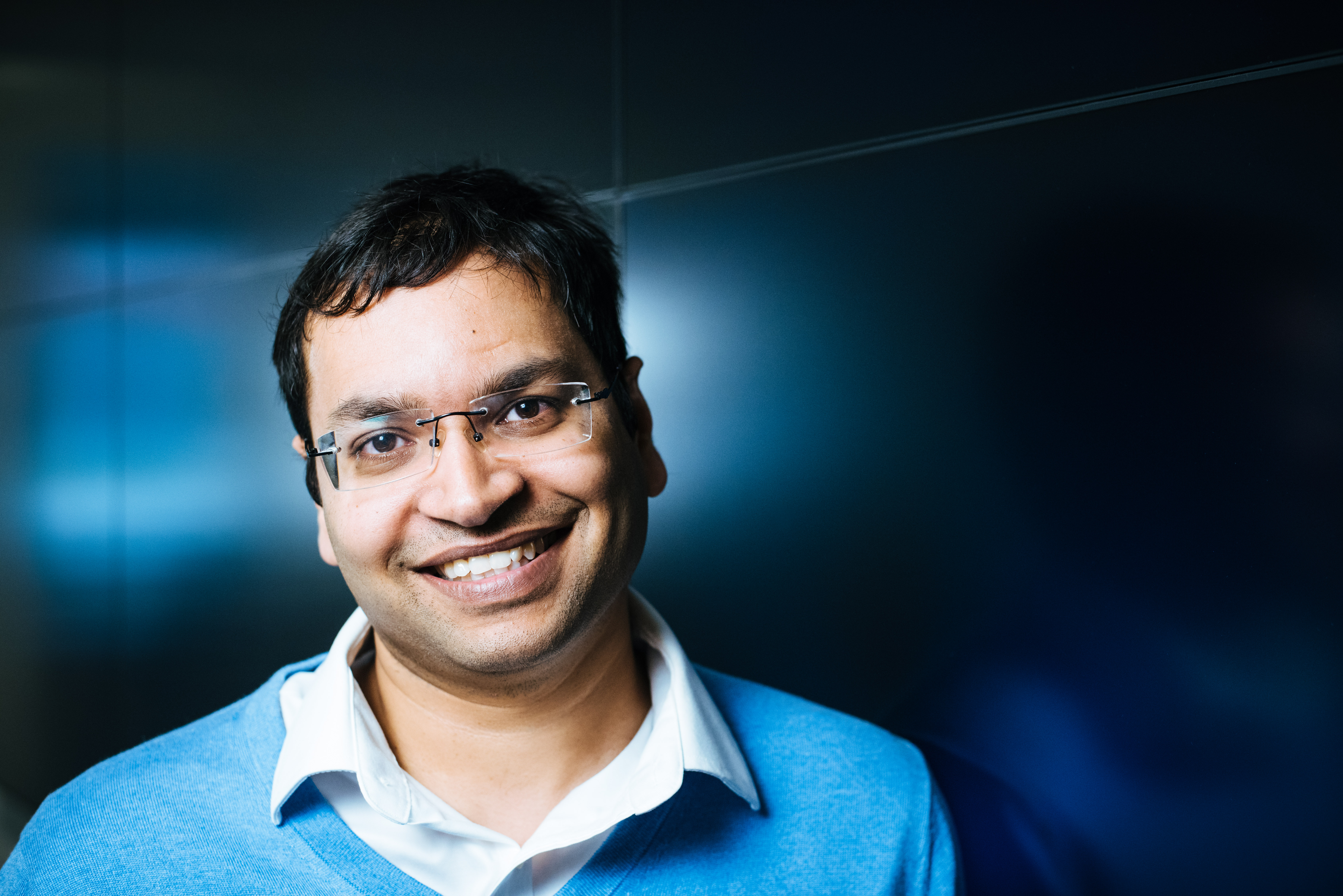
Rakesh Kumar is a Professor and John Bardeen Faculty Scholar in the Electrical and Computer Engineering Department at the University of Illinois at Urbana-Champaign. His work focuses on computer architecture, system-level design automation, and low-power computing. PhD in Computer Engineering from University of California, San Diego BS in Electrical Engineering from IIT Kharagpur His research spans all layers of the computing stack, with key contributions to flexible computer systems , waferscale computing , error-resilient architectures , and approximate computing . He has pioneered work on voltage-reliability tradeoffs and peak power management techniques. Recent publications highlight trends in space microdatacenters , printed microprocessors , and neural graph accelerators . His work on plastic chips was recognized as one of the three biggest semiconductor headlines of 2022 by IEEE Spectrum. IEEE Fellow (2024) ISCA Influential Paper Award MICRO Test-of-Time Award ICCAD Ten Year Retrospective Most Influential Paper Award Best Paper Awards at CASES, SELSE, HPCA He has received teaching accolades including the Stanley H. Pierce Faculty Award and Ronald W. Pratt Outstanding Teaching Award . His research group explores hardware-software co-design for emerging applications in AI, IoT, and sustainable computing.
Prof. Matthias Nießner is a Professor at the Technical University of Munich , where he leads the Visual Computing Lab . Prior to this, he held a Visiting Assistant Professor position at Stanford University . His work bridges computer vision , graphics , and machine learning , focusing on 3D reconstruction , semantic scene understanding , and AI-driven video synthesis . Prof. Nießner has published over 150 works in top venues like SIGGRAPH , CVPR , and ECCV , with several receiving best paper awards (SIGCHI’14, HPG’15, SPG’18, SIGGRAPH’16 Emerging Tech). His research has garnered international media attention, including features in the New York Times , Wall Street Journal , and MIT Technological Review , as well as TV demonstrations (e.g., Jimmy Kimmel Live for Face2Face technology). Awards : TUM-IAS Rudolph Moessbauer Fellowship (2017–ongoing) Google Faculty Award (2017) Nvidia Professor Partnership Award (2018) ERC Starting Grant (2018, €1.5M) Eurographics Young Researcher Award (2019) Research Trends : 3D Gaussian Splatting for real-time rendering Neural Radiance Fields (NeRF) with mesh supervision Audio-driven facial animation via diffusion models Latent space diffusion for 3D scenes Self-supervised and zero-shot methods for 3D and image analysis As a co-founder and director of Synthesia Inc. , he drives democratization of synthetic media. His YouTube channel has over 5 million views, reflecting his impact beyond academia.
Elmira Hassanzadeh is an Associate Professor at the Department of Civil, Geological and Mining Engineering , Polytechnique Montréal, with a focus on integrated water resource modeling and management under climate and anthropogenic changes. She is affiliated with the Global Institute for Water Security (University of Saskatchewan) and the Experimental and Digital Water Flow Engineering Group (GENIE EAU) . Education: PhD in Civil Engineering, University of Saskatchewan Postdoctoral Fellow, McGill University Research interests include climate change impact assessment, socio-hydrological modeling, stakeholder engagement in water management, and sustainable development of water systems in cold regions. Her work emphasizes decision-making under uncertainty and adaptive strategies for ungauged basins. Recent publications (2024–2020) span coastal flood hazard modeling, climate-driven hydrological changes in tropical and Canadian watersheds, evaluation of agricultural practices under warming climates, and integrated approaches to water quality and system dynamics. Keywords include Hydrology , Climate Change , Water Security , and Socio-Hydrology . Supervision: She has mentored 15+ graduate students in projects related to Lake Urmia, Saskatchewan River Basin, and climate adaptation in Africa and the Pacific.
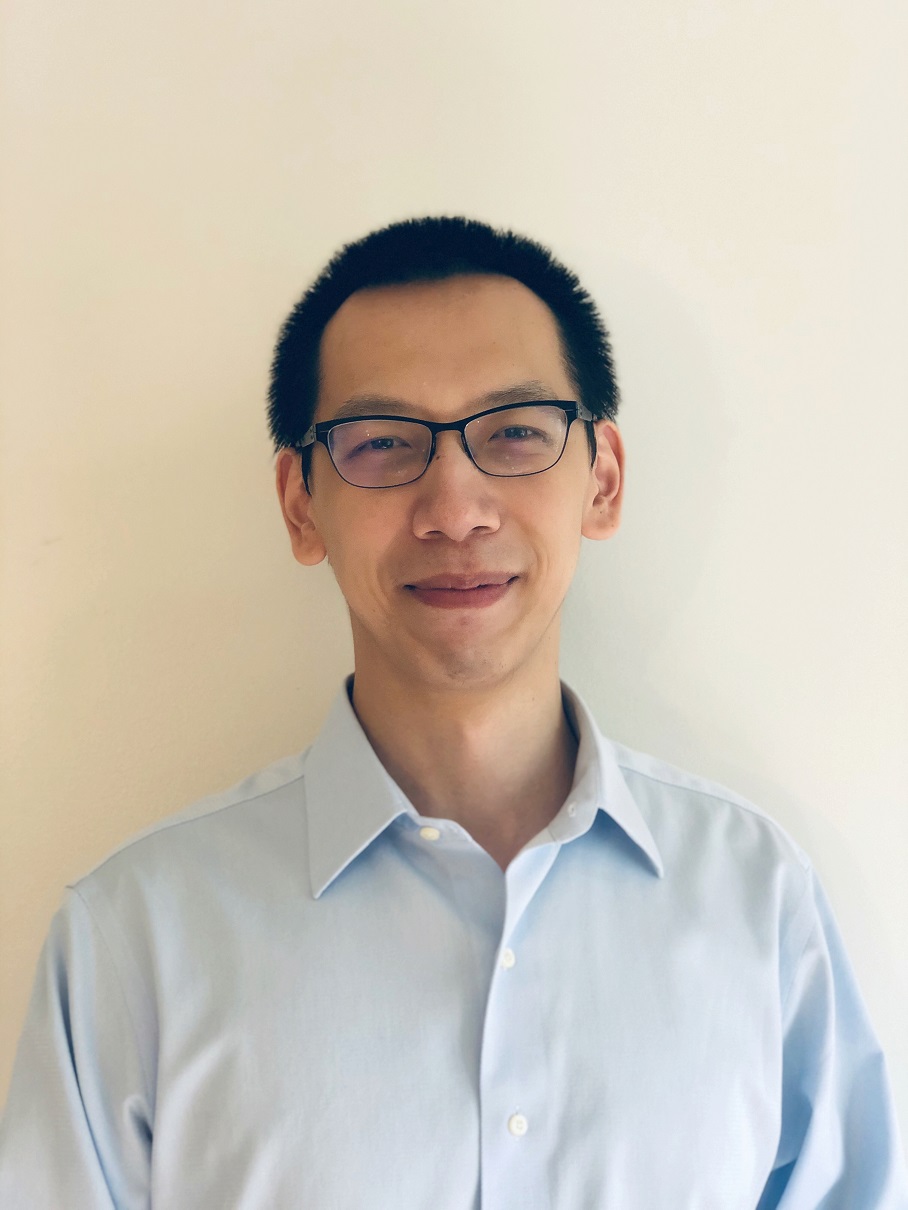
Xiaowei Jia is an Assistant Professor in the Department of Computer Science at the University of Pittsburgh. He holds a Ph.D. from the University of Minnesota (supervised by Prof. Vipin Kumar) and B.S./M.S. degrees from the University of Science and Technology of China (USTC) and SUNY Buffalo. His research focuses on integrating scientific theory with machine learning to address societal and environmental challenges, such as climate modeling, hydrology, and fairness in AI. Education: Ph.D., University of Minnesota (2020) M.S., State University of New York at Buffalo B.S., University of Science and Technology of China (USTC) Research Interests: Knowledge-Guided Machine Learning Spatiotemporal Data Mining Fairness in AI for Social Good Applications in Environmental Science and Healthcare Publications showcase his work on physics-integrated neural networks, spatiotemporal modeling (e.g., water temperature prediction), and fairness-aware algorithms. His work has been recognized with Best Paper awards at SIAM SDM (2022, 2023). Awards include the Best Applied Data Science Paper Award at SIAM SDM in 2022 and 2023. He teaches advanced machine learning courses, emphasizing theory integration with real-world applications.
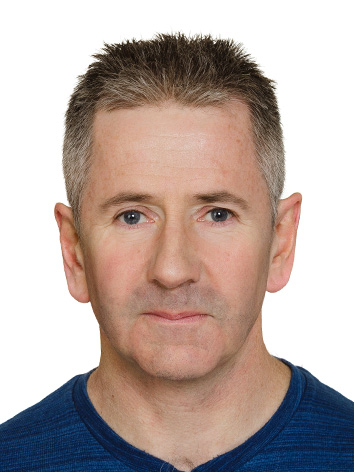
Michael O'Boyle is a Professor at the University of Edinburgh's School of Informatics, where he serves as Director of the ARM Research Centre of Excellence and the EPSRC Centre for Doctoral Training in Pervasive Parallelism. Holding an EPSRC Established Career Research Fellowship, he leads pioneering work in compiler technology for heterogeneous architectures, bridging theoretical advances with practical high-performance computing applications. Professor O'Boyle's research spans multiple cutting-edge areas including heterogeneous code discovery and optimization, neural machine translation for program synthesis, deep neural network system stack optimization, software-defined hardware, and compiler/architecture co-design. His approach integrates constraint analysis, program synthesis, and machine learning to address complex challenges in high-performance computing across diverse hardware platforms. His recent publications reveal a strong trend toward integrating machine learning with traditional compiler techniques, particularly in neural program synthesis, tensor optimization, and architecture-aware compilation. This work represents a paradigm shift in compiler design, moving from rule-based systems to learning-based approaches that can automatically adapt to diverse hardware targets. IEEE/ACM CGO 2025 Distinguished Paper Award for 'Tensorize: Fast Synthesis of Tensor Programs from Legacy Code' IEEE/ACM CGO 2024 Test of Time Award ACM GPCE 2023 Best Paper Award for 'C2TACO: Lifting Tensor Code to TACOM' ACM ASPLOS 2021 Distinguished Paper Award IEEE HPCA 2021 Best Paper Award for 'Prodigy: Improving the Memory Latency of Data-Indirect Irregular Workloads' Professor O'Boyle has successfully mentored numerous PhD students who have secured prominent positions in academia (including at Cambridge, Edinburgh, Leeds, and McGill) and industry (including Meta, NVIDIA, Qualcomm, Huawei, and Microsoft). His research is supported by significant funding from EPSRC, ARM, and European projects including Bonseyes and Transmuter, demonstrating strong international recognition and industry impact. He leads the influential Compiler and Architecture Design (CArD) Group at the University of Edinburgh and is a founder of the HiPEAC Network of Excellence, which has grown into a major European initiative connecting researchers and practitioners in high-performance and embedded computing.
Gary Pielak is a Kenan Distinguished Professor of Chemistry, Biochemistry, and Biophysics at the University of North Carolina at Chapel Hill, with a joint appointment in the School of Medicine. His research focuses on high-resolution protein NMR studies in living cells and the biophysics of tardigrade desiccation-tolerance proteins, bridging structural biology and molecular biophysics. Education: BS in Chemistry from Bradley University (1977), PhD in Biochemistry from Washington State University (1983), Postdoc at the University of British Columbia (1983-1986), Postdoc at Oxford University (1986-1988). Research Interests center on understanding protein structure, stability, and function in physiologically relevant environments. Key areas include: In-Cell NMR: Quantifying protein behavior in living cells using advanced NMR techniques. Macromolecular Crowding: Studying synthetic polymers and proteins as crowding agents to mimic cellular environments. Tardigrade Biology: Exploring desiccation-tolerance mechanisms in intrinsically disordered proteins from water bears. Recent Publications highlight interdisciplinary trends, combining AI-driven stability prediction, solid-state NMR for dry protein analysis, and molecular glass/gel applications for preservation. His Scientific Awards include: NIH Pioneer Award DuPont and Morrow Young Faculty Awards Multiple UNC Mentorship Awards Mentorship is a cornerstone, with a focus on training graduate students and advancing NMR methodologies. His group employs Research Methods : 19F, 1H, 15N, and 13C NMR Circular Dichroism and Calorimetry Protein Expression in E. coli
Lyle Ungar is a Professor at the Department of Computer and Information Science at the University of Pennsylvania . He is affiliated with multiple graduate groups, including Genomics and Computational Biology in the School of Medicine , Operations, Information and Decisions in the Wharton School , and Psychology in the School of Arts and Sciences . His research focuses on explainable machine learning , deep learning , and natural language processing for psychology and medical research , analyzing social media and sensor data to understand well-being, empathy, and stress. His work spans bioinformatics , applied economics , and group decision-making . Recent publications examine LLM-based tutoring , cross-cultural translation , and AI in palliative care , showing trends in reinforcement learning , mobile health , and health data analytics . He has contributed to Google Scholar , PubMed , and DBLP with over 15 papers since 2023. Scientific Awards : 2019 Alan I. Leshner Leadership Institute Public Engagement Fellow His students include Vitoria Aquino Guardieiro , Yihao Li , and co-advised researchers like Shreya Havaldar with Eric Wong. He leads projects at interdisciplinary centers such as the Annenberg Public Policy Center , Center for Cognitive Neuroscience , and Institute for Translational Medicine .
Mark Crowley is an Associate Professor in the Department of Electrical and Computer Engineering at the University of Waterloo, with a cross-appointment in the Cheriton School of Computer Science. He is a member of the Waterloo Artificial Intelligence Institute (WAII) and the Waterloo Institute for Complexity and Innovation (WICI), and serves as National Secretary of the Canadian Artificial Intelligence Association (CAIAC). His educational background includes a Ph.D. and M.Sc. in Computer Science from the University of British Columbia, where he worked in the Laboratory for Computational Intelligence, and a B.A. in Computer Science from York University. He completed a postdoctoral fellowship at Oregon State University working with Tom Dietterich's machine learning group. Crowley's research focuses on developing dependable and transparent algorithms to augment human decision-making in complex domains with multiple agents, spatial structure, or uncertainty. His work spans Reinforcement Learning , Deep Learning , Ensemble Methods , and Manifold Learning . He frequently collaborates with researchers in applied fields including Computational Sustainability, Sustainable Forest Management, Autonomous Driving, Medical Imaging, and Material Design. His research is motivated by both theoretical opportunities and real-world challenges such as forest fire management, automotive applications, and medical imaging. His recent publications demonstrate a strong focus on addressing challenges in reinforcement learning, particularly around observation costs, multi-agent systems, and causal representation learning. His work on ChemGymRL provides a significant contribution to digital chemistry and material design through reinforcement learning frameworks. The textbook Elements of Dimensionality Reduction and Manifold Learning represents a major contribution to the theoretical foundations of machine learning. Crowley actively supervises graduate students, with recent thesis completions including Shayan Shirahmadi Gale Bagi (PhD, Feb 2025) and Oleksandra Nahorna (MASc, Dec 2024). His lab, UWECEML (Waterloo ECE Machine Learning Lab), focuses on developing new algorithms at the intersection of Machine Learning, Optimization, and Probabilistic Modeling. He teaches courses including ECE 457C (Reinforcement Learning), ECE 657A (Data & Knowledge Modelling & Analysis), and ECE 457B (Fundamentals of Computational Intelligence). His blog Computationally Thinking explores AI, machine learning, and the societal impact of these technologies.
Dr Henry Moss is a Researcher at the Department of Applied Mathematics and Theoretical Physics within the School of Physical Sciences at the University of Cambridge. His work focuses on machine learning applications in climate modeling, Bayesian optimization, and Gaussian processes, bridging computational mathematics with environmental science and chemistry. His research interests include: Bayesian optimization for environmental and chemical systems Reinforcement learning in climate modeling Gaussian processes for molecular property prediction High-throughput machine learning in scientific domains Interpretable AI for coastal flooding prediction Hybrid ML-physics modeling Dr Moss's publications highlight his contributions to federated learning for climate models, sparse Gaussian process techniques, and multi-objective optimization frameworks. These works span applications in weather prediction, chemical engineering, and oceanography. Email: hwm26@cam.ac.uk
Andreas Geiger is a Professor and Head of the Department of Computer Science at the University of Tübingen, Germany. He leads the Autonomous Vision Group (AVG) within CyberValley and is a core faculty member of the Tübingen AI Center. His roles also include PI in the ML in Science Excellence Cluster and the CRC Robust Vision, as well as ELLIS Fellow and coordinator of the ELLIS PhD program. He specializes in machine learning models for computer vision, robotics, and autonomous systems, with applications in self-driving cars, VR/AR, and scientific document analysis. Educational background: While not explicitly detailed, his positions imply a Ph.D. in Computer Science or related field. His work spans interdisciplinary collaborations with institutions like ETH Zürich, Microsoft, and the University of Bonn. Research focuses on 3D scene understanding, Gaussian splatting, generative models, and reliable autonomous systems. Notable contributions include the KITTI dataset and foundational work in neural radiance fields. Awards include the Sage 10-Year Impact Award (2024), ERC Starting Grant (2019), and IEEE PAMI Young Researcher Award (2018). Key projects include the Scholar Inbox paper recommender platform, ReSim (reliable world simulation), and advancements in 3D scene generation (e.g., UrbanCAD, PrITTI). His lab maintains a strong focus on open-source tools and datasets, such as the CARLA Route Generator. Grants and funding include support from Vector Stiftung (MINT innovation program) and EU initiatives like the ML in Science Cluster. His team collaborates internationally, with recent work presented at CVPR, SIGGRAPH, and NeurIPS.
Qi Alfred Chen is an Assistant Professor in the Department of Computer Science at the University of California, Irvine (UCI), within the Donald Bren School of Information and Computer Sciences. He also holds affiliations with the Department of Electrical Engineering and Computer Science (EECS), the Institute of Transportation Studies at UC Irvine (ITS-Irvine), the Center for Embedded and Cyber-physical Systems (CECS), the Institute for Software Research (ISR), and the UC Irvine Cybersecurity Policy & Research Institute (CPRI). His research focuses on network and systems security, with particular emphasis on autonomous vehicle and IoT security. Dr. Chen received his Ph.D. from the University of Michigan in 2018. His educational background has prepared him for his current research in security of critical computer systems. His work bridges theoretical security principles with practical implementations in real-world systems. Chen's research interests center on network and systems security , with a major focus on smart systems and IoT security , particularly in transportation and autonomous vehicle systems . His work addresses security challenges through systematic problem analysis and mitigation, discovering and mitigating security problems in next-generation transportation systems, smartphone OSes, network protocols, DNS, GUI systems, and access control systems. His research has high impact in both academic and industry contexts, with over 10 top-tier conference papers, a DHS US-CERT alert, multiple CVEs, and coverage in major news media like Fortune and BBC News. His publication record shows a clear evolution from foundational work on network protocols and smartphone security toward increasingly sophisticated security analyses of autonomous vehicle systems and AI-powered transportation technologies. The research trajectory demonstrates growing technical sophistication and real-world impact, with recent work focusing on physical-world adversarial attacks against autonomous driving perception systems, LiDAR spoofing, and security of multi-sensor fusion in autonomous vehicles. NSF CAREER Award (2022) on securing the AI stack in emerging autonomous and connected CPSs Chancellor's Award for Excellence in Undergraduate Research Mentorship, UC Irvine (2021) 5th place nation-wide at National CCDC competition (2021, as faculty advisor) 1st place (Gold Medal) at CCDC Western Regional competition (2021) ProQuest Distinguished Dissertation Award, University of Michigan (2019) Dr. Chen has mentored numerous successful students, including PhD candidates and undergraduates who have gone on to positions at major tech companies like Meta, Uber, Amazon, and Intel. His research group has secured significant funding, including an NSF CAREER award, and has made substantial contributions to the field through high-impact publications and vulnerability disclosures. He is also the co-founder of the ISOC VehicleSec Symposium and has organized the AutoDriving CTF contest at DEF CON. Chen leads the AV & IoAT Security Research Group at UCI, focusing on security challenges in autonomous vehicles and the broader Internet of Autonomous Things. His team has developed numerous attack demonstrations and security analyses that have received significant media attention and influenced industry practices. The group maintains an active YouTube channel showcasing their security research.
Stefano NASINI is an Associate Professor at the University of Lille 3, specializing in Quantitative Methods within the Economics and Mathematics Sciences. He holds a HDR (Habilitation à Diriger des Recherches) from the University of Lille 3 (2021), a Ph.D. in Statistics and Operations Research from the Polytechnic University of Catalonia (2015), and a Master in Statistics (2011). His research focuses on optimization, complex networks, statistical inference, and microeconomic applications. He has held academic positions including a post-doctoral role at IESE Business School (2014–2016) and a visiting researcher role at the University of Lisbon (2014). His work spans scheduling optimization, network analysis, financial contagion modeling, and energy system planning. Key contributions include specialized algorithms for large-scale optimization problems and frameworks for decentralized portfolio management. He is a member of the LEM research group and teaches courses in optimization, econometrics, and social network analysis at the Grande École and MSc levels. Publications highlight interdisciplinary applications, including network-based diffusion models, multi-market financial strategies, and dynamic choice analysis. His research bridges theoretical advancements in operations research with practical challenges in economics, energy, and transportation systems. No scientific awards are explicitly listed in the provided materials. His advising roles and grants are not detailed here, but his extensive publication record reflects active collaboration within academic and applied domains.
Professor Andrew Hudson-Smith is the Director of the Bartlett Centre for Advanced Spatial Analysis (CASA) at University College London (UCL), where he holds the title of Professor of Digital Urban Systems. He leads UCL's academic and applied research in smart cities, digital twins, and urban informatics. His roles include Editor-in-Chief of the Future Internet Journal and academic lead for the Smart Queen Elizabeth Park project. He contributes to strategic initiatives such as the Greater London Authority Smart London Board and EPSRC Digital Economy Programme Advisory Board. Education: PhD (2003), MSc (1996) from UCL; BSc in Geography from the University of Plymouth (1992). Research focuses on digital urban systems, IoT applications, sustainable urban planning, and cyberphysical systems. Notable projects include urban heat island monitoring, participatory planning platforms, and metaverse-driven urban design. His work bridges technology, art, and public engagement, exemplified by initiatives like Tales of Things and the Haggle-O-Tron. Recent publications emphasize digital twins, metaverse urbanism, and IoT integration in urban environments. Awards include a Fellowship of the Royal Society of Arts. His work addresses SDGs 3 (Good Health) and 11 (Sustainable Cities), with a focus on equitable smart city development and public space innovation.
Danica Kragic is a Professor of Computer Science at the School of Electrical Engineering and Computer Science at the Royal Institute of Technology (KTH) in Stockholm, Sweden. She serves as the Director of the Centre for Autonomous Systems and leads the Robotics, Perception and Learning Lab at KTH. Her research focuses on advancing robotics capabilities through computer vision and machine learning approaches. MSc in Mechanical Engineering from the Technical University of Rijeka, Croatia (1995) PhD in Computer Science from KTH (2001) Professor Kragic's research primarily centers on robotics, computer vision, and machine learning, with particular emphasis on robotic manipulation, grasp planning, and human-robot interaction. Her work bridges theoretical foundations with practical applications, exploring how robots can understand and interact with objects in complex environments. She investigates how visual and tactile sensing can be integrated to improve robotic perception and manipulation capabilities, with applications ranging from industrial automation to assistive robotics. Her recent publications demonstrate a strong focus on advanced grasp planning techniques, tactile sensing for manipulation, and mathematical representations for robotic control. Kragic's research shows increasing integration of machine learning approaches with traditional robotics frameworks, particularly in the areas of grasp synthesis, object recognition, and human-robot collaboration. Her work spans theoretical contributions in mathematical representations of grasps to practical implementations of robotic systems capable of adapting to novel objects and situations. 2007 IEEE Robotics and Automation Society Early Academic Career Award IEEE Fellow ERC Starting Grant (2012) Member of The Royal Swedish Academy of Sciences Member of The Royal Swedish Academy of Engineering Sciences Honorary Doctorate from Lappeenranta University of Technology Professor Kragic's research has been supported by major funding bodies including the EU, Knut and Alice Wallenberg Foundation, Swedish Foundation for Strategic Research, and Swedish Research Council. While specific student names aren't listed in the provided information, her publication record suggests extensive mentorship of PhD students and postdoctoral researchers in robotics and computer vision. Her lab, the Robotics, Perception and Learning Lab, serves as a hub for interdisciplinary research connecting computer science, engineering, and cognitive science perspectives on robotic systems. As Director of the Centre for Autonomous Systems at KTH, Kragic oversees a major research initiative focused on advancing autonomous technologies. Her Robotics, Perception and Learning Lab brings together researchers working on visual perception, machine learning, and robotic manipulation, with particular emphasis on developing systems that can understand and interact with objects in unstructured environments. The lab's work spans theoretical foundations of robotic manipulation to practical implementations of systems capable of learning from experience.
Hyunghoon Cho is an Assistant Professor at Yale School of Medicine in the Department of Biomedical Informatics & Data Science, with a secondary appointment in the Department of Computer Science. He received his PhD in Electrical Engineering and Computer Science from MIT (2019) and MS/BS in Computer Science from Stanford University (2013). His research focuses on computational challenges in biomedical data privacy, single-cell genomics, and network biology. Assistant Professor (Primary): Biomedical Informatics & Data Science Assistant Professor (Secondary): Computer Science Appointments: Yale School of Medicine | Broad Institute (Schmidt Fellow) Research Themes: Privacy-Enhancing Technologies for genomic and health data Scalable AI/ML tools for omics data analysis Structured biological modeling for system-level discovery His work includes secure GWAS, transcriptomic privacy assessment, and sfkit - a federated genomic analysis toolkit. He received the NIH Director's Early Independence Award and leads NSF-funded projects on confidential genome analytics. Awards: NIH Director's Early Independence Award Lab Members: Haris Smajlović (Postdoc), Vincent Angelo (CBB MS), Denis Loginov (Senior Software Engineer), Lucy Zheng (CBB PhD)