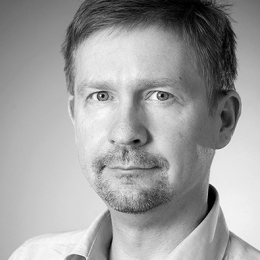
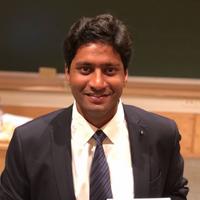
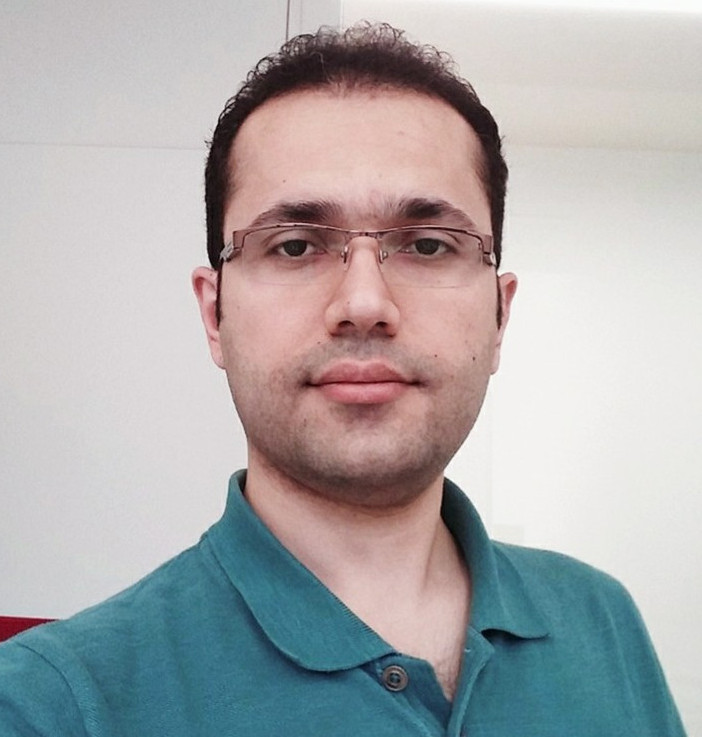
Kim Hammar is a postdoctoral researcher at KTH Royal Institute of Technology, with affiliations at the University of Melbourne (2025-2028) and Imperial College London. He works under Prof. Tansu Alpcan and Prof. Emil Lupu, focusing on the intersection of game theory, control theory, and large-scale systems for networking and security applications. Previously, he completed his Ph.D. at KTH under Prof. Rolf Stadler and Prof. Pontus Johnson. His research spans cybersecurity, networked systems, and adaptive control mechanisms. Key contributions include applying optimal stopping reinforcement learning conjectural online learning causal modeling to intrusion response and network security. His 2025-2024 publications highlight advancements in automated security through game-theoretic and control-theoretic approaches, with a focus on dynamic environments. Kim received the VR International Postdoctoral Fellowship in 2025. He has served as an assistant for Computer Networks (EP111U) Computer Systems (EP121U) at KTH.
Professor Ola Isaksson is a faculty member in Product Development at Chalmers University of Technology, where he leads the Systems Engineering Design research group. With over 40 research projects nationally and internationally, his work bridges academic research and industrial application, particularly in aviation and transport-related manufacturing sectors. His expertise spans digitalization, sustainability, and advanced manufacturing methods in product development. Ola Isaksson received his PhD in Computer Aided Machine Design from Luleå University of Technology in 1999. Prior to his academic career, he had a specialist career at GKN Aerospace Engine Systems (formerly Volvo Aero) in Trollhättan, focusing on design and product development until 2015. Professor Isaksson's research focuses on developing new product development capabilities to address societal and industrial needs through digitalization and advanced manufacturing. His primary interests include platform-based development, Set Based Engineering, multidisciplinary engineering methods, Value-driven development, and knowledge-intensive system support. He has particular expertise in additive manufacturing integration, design space exploration, and sustainability transition in product development. Analysis of Professor Isaksson's recent publications reveals a strong focus on integrating digital technologies with sustainable manufacturing practices. His work demonstrates a progression from traditional design methodologies toward AI-assisted design, digital twins, and advanced data analytics. Key thematic areas include additive manufacturing implementation, design margin management, sustainability integration, and aerospace component optimization, reflecting his commitment to bridging theoretical research with industrial applications. Professor Isaksson is one of the founders of the Swedish Product Development Academy and maintains active membership in the Design Society, ASME, and SIG PM, reflecting his significant contributions to the field of engineering design. With over 100 scientific publications and leadership in more than 40 research projects, Professor Isaksson has established himself as a leading figure in product development research. His work frequently involves close collaboration with industry partners, particularly in the aviation sector, securing substantial research funding for projects addressing digitalization, sustainability, and advanced manufacturing challenges. Professor Isaksson leads the Systems Engineering Design research group at Chalmers University of Technology. His team focuses on developing methodologies for complex product development, with particular emphasis on digital tools, sustainability integration, and manufacturing innovation. The group maintains strong industry connections, especially with aerospace manufacturers, facilitating the translation of research into practical applications.
Dag Linnarsson is a Professor of Physiology at Karolinska Institutet, Department of Physiology and Pharmacology, where he has held the position since 1986 and transitioned to Senior Professor in 2009. His research primarily focuses on environmental physiology, with an emphasis on the human body's response to extreme conditions such as microgravity, hypergravity, and spaceflight. He leads the Environmental Physiology Research Group and the Lars Karlsson team, investigating topics like pulmonary function in astronauts, musculoskeletal countermeasures during space missions, and the effects of artificial gravity. His work spans studies on bed rest as a spaceflight analog, lung diffusing capacity, and nitric oxide dynamics under varying environmental pressures. Recent research includes assessing pulmonary nitric oxide levels in astronauts during long-term space missions and exploring the physiological impacts of lunar dust exposure. Linnarsson has also contributed to standardizing bed rest protocols for spaceflight research and evaluating centrifugation as a countermeasure for muscle and bone loss. He maintains affiliations with Karolinska Institutet’s C3 Fysiologi och farmakologi team and collaborates on interdisciplinary projects addressing space medicine challenges. While no formal student listings or awards are explicitly mentioned, his extensive publication record highlights contributions to respiratory physiology, cardiovascular adaptation, and musculoskeletal health in extreme environments.
Sarah Gillet is a Postdoctoral Researcher at the Division of Robotics, Perception, and Learning at KTH Royal Institute of Technology, where she focuses on developing social robot behaviors to foster collaboration and inclusion in human groups. Her research addresses challenges like in-group favoritism through computational approaches to shape group interactions. She holds a Doctoral Thesis (2024) titled Computational Approaches to Interaction-Shaping Robotics . Her work emphasizes group dynamics , robot-mediated inclusion , and pedagogical robotics , particularly in children and adolescent populations. Key areas include gaze behavior analysis, equitable participation promotion, and social robot roles such as mediators in educational settings. Dr. Gillet teaches the Social Robotics (DD2413) course and supervises master theses. Her recent publications explore robot gaze behaviors for participation balance, socially appropriate listening, and influence prediction models like RoSI. She actively participates in conferences like ACM/IEEE HRI and IEEE RO-MAN. Her research integrates computational methods with social science insights to design robots that actively improve human group interactions, with applications in education, collaboration, and bias mitigation.
Elin Nyman is the Head of the Department of Biomedical Engineering (IMT) and an Associate Professor at Linköping University. She leads the department, fostering an environment of trust and collaboration. Her research focuses on systems biology and e-health, integrating mathematical models with experimental data to advance drug development and clinical tools. She supervises students in both the Faculty of Science and Engineering and the Faculty of Medicine and Health Sciences, examining courses like TMBI28 and 8BKG45. Her research interests include systems biology, particularly in drug development and AI applications in healthcare. Key projects involve robust metabolic measurements, AI-driven diagnostic tools (M4-health), and knowledge-driven drug development with AstraZeneca. Recent publications highlight liver steatosis dynamics, IL-10 feedback mechanisms, and insulin resistance modeling. Her work bridges interdisciplinary collaboration, such as a course combining medical and engineering students to develop digital health solutions. She contributed to a SEK 13 million grant for AI-based crime-solving using detailed analyses and AI. Current affiliations include the Division of Biomedical Engineering (MT) and IMT department.
Markus Jäntti serves as Professor at Stockholm University's Institute for Social Research (SOFI), where his research centers on income and wealth distribution, poverty dynamics, and socio-economic mobility through comparative international lenses. He specializes in quantifying family background's influence on economic outcomes and leads pivotal projects including MapIneq (life-course inequality trends), PrecaNord (Nordic precarious work analysis), and TITA (austerity-era inequality assessment). His research portfolio spans income distribution , wealth inequality , intergenerational mobility , and comparative social policy , employing advanced econometric techniques and cross-national datasets like the Luxembourg Income Study. Work within SOFI's Labor Market Economics (AME) group extends to education, health, taxation, and gender equality, reflecting labor economics' interdisciplinary nature. Analysis of his 2020-2025 publications reveals dual emphases: methodological innovation (e.g., grouped-data inequality measurement) and empirical exploration of family-background effects, labor policies, and social transfers. His influential 2020 framework synthesizing four mobility approaches underscores conceptual rigor, while recent Nordic-focused studies address contemporary challenges like migrant labor exploitation. Scientific awards: No awards were documented in source materials. Major grant-funded projects include: MapIneq : Tracking intergenerational, educational, labor market, and health inequality drivers across lifespans PrecaNord : Multi-level analysis of precarious/informal work in Finland, Norway, and Sweden TITA : Consortium study of austerity's impacts on financial, health, and opportunity inequalities As core faculty in SOFI's AME group, he contributes to research spanning labor market outcomes (wages, employment), social transfers, crime, and political economy—operating within Stockholm University's broader social policy ecosystem while maintaining independent research leadership.
Shareq Mohd Nazir is an Associate Professor at KTH Royal Institute of Technology, affiliated with the Division of Energy Processes in the Department of Chemical Engineering. He holds a joint appointment within the Digital Futures Faculty, a cross-disciplinary research center addressing societal challenges through digital technology innovation. Nazir earned his PhD in Energy and Process Engineering from NTNU (2018) and holds Master and Bachelor degrees in Chemical Engineering from BITS Pilani. His research focuses on decarbonization strategies including CO2 capture/utilization (CCUS), bioenergy conversion, and methane mitigation. Key methodologies involve techno-economic analysis and process modeling for industrial systems. Nazir leads projects integrating catalytic conversion, waste heat recovery, and gas switching technologies to achieve low-carbon energy systems. He teaches courses on chemical engineering systems, process design, and carbon-neutral energy systems at KTH. Recent publications emphasize multi-gas mitigation strategies, synthetic fuel production via biomass gasification, and cost-effective hydrogen production pathways. His work bridges academia and industry through collaborations with RISE Research Institutes and NTNU. Nazir’s research directly supports Sustainable Development Goals (SDGs), particularly targeting climate action (SDG13) and affordable clean energy (SDG7).
Nikolaos Kourentzes is a Professor of Informatics at the University of Skövde , specializing in forecasting and operations research. His work bridges theoretical advancements in time series analysis with practical applications in supply chain management, tourism demand, and renewable energy forecasting. Academic Rank: Professor Department: Department of Information Technology Research Interests: His research focuses on hierarchical and temporal forecasting methodologies, integrating macroeconomic indicators into demand planning, inventory optimization, and machine learning applications. He explores forecast reconciliation, shrinkage estimators, and the role of expert judgment in predictive analytics. Recent Publications: Highlights include advances in hierarchical forecasting with leading indicators, probabilistic forecasts during crises like the pandemic, and complex smoothing techniques. His work spans journals such as Omega , International Journal of Forecasting , and European Journal of Operational Research . Collaborations: Kourentzes collaborates with researchers globally, including George Athanasopoulos, Rob Hyndman, and Robert Fildes, across domains like tourism analytics, tire industry forecasting, and public health modeling.
Torbjörn Thiringer is a Professor in Electrical Engineering at Chalmers University of Technology. His research focuses on electrical systems for wind turbines and electric vehicles, with particular emphasis on system-level analysis and component-level studies of electrical machines, power electronics, and battery systems. Key research areas: Wind turbine systems, Electric vehicle drives, Battery degradation, Power electronics optimization Recent work explores graphene-based thermal management, fuel cell hybrid vehicles, and direct current building distribution efficiency His publications demonstrate interdisciplinary engagement with topics spanning: Finite element analysis of motor designs Life cycle assessment of energy systems Thermal modeling of SiC inverters Wave energy converter optimization Core loss measurement techniques Hydrogen fuel cell integration Professor Thiringer's collaborations span multiple institutions and industry partners, focusing on both theoretical modeling and practical implementation of advanced energy systems.
Emma Ek Österberg is a Senior Lecturer at the School of Public Administration , University of Gothenburg. Her research focuses on governance and organizational dynamics in the public sector, particularly examining administrative policy reforms, sustainable public procurement, and public sector auditing practices. University: University of Gothenburg School: School of Public Administration Academic Rank: Senior Lecturer Email: emma.ek@spa.gu.se Emma leads significant research projects such as "Taking lead in the circular transformation" (funded by Formas 2023-2025), which investigates challenges in implementing sustainable procurement practices, and "Women 4 Integration" , which explores how Work-Integrating Social Enterprises support foreign-born women's labor market entry through mixed-method research. Her work bridges theoretical and practical dimensions of public administration, analyzing: Implementation gaps in sustainable public procurement Marketization processes in public services Uniformity challenges in state inspections Organizational responses to audit regimes Public procurement's role in labor market integration Emma teaches and supervises at all academic levels, with a focus on strategic procurement, management accounting, and public audit. Her publications span topics including: Sustainable Procurement and Climate Policy Audit Practices in Elder Care Public-Private Collaboration in Migration Integration Accounting for Societal Interests Meta-Governance Mechanisms
Hamed Nemati is an Assistant Professor at the Division of Network and Systems Engineering under the School of Electrical Engineering and Computer Science at KTH Royal Institute of Technology in Stockholm, Sweden. He was previously a Visiting Assistant Professor at Stanford University and a Research Group Leader at the Helmholtz Center for Information Security (CISPA) , where he also worked as a PostDoc and Research Fellow. Education : PhD in Computer Science from KTH Royal Institute of Technology Research Interests : Security of systems software, formal methods and program logics, interactive theorem proving, machine code analysis, applied machine learning Current Projects : Systematic verification of multi-language security protocols, hardware-software co-design for Spectre mitigation, capability-based access control models Scientific Awards : WASP (Wallenberg AI, Autonomous Systems and Software Program) faculty member Teaching Activities : Formal Methods in Security (Fall 2020-2023) at CISPA/Saarland University Digital Forensics and Incident Response (EP2780) (Fall 2024) at KTH
Victoria Wibeck is a Professor at Theme Environmental Change (TEMAM) , Linköping University, specializing in Environmental and Climate Communication . Her research examines how societal actors create meaning around climate and environmental challenges through media, policy, and everyday interactions, with a focus on digital tools and visualization in decision-making arenas like Norrköping. She leads international projects under programs such as Mistra Geopolitics and The Seed Box , addressing societal transformations toward sustainability. Education : Doctorate in Communication Studies (2002), Linköping University; Associate Professor in Water in Nature and Society (2009) Current Projects : 'Seeing, Knowing and Acting in the Climate-Biodiversity Nexus' (2023–2026), 'Small Island Developing States - Geopolitics of Marginality?' (2020–2022), and program director for The Seed Box (2017–2025). Her research spans three key areas: climate communication (media trends, visualization tools), societal transformations (geopolitical contexts, digital technologies), and methodological innovation (focus group techniques, phenomenological analysis). She supervises doctoral students and collaborates with institutions like Massey University (2016) and the University of Oxford (2013). Recent Trends : Her 2025–2024 publications highlight digital biodiversity tools, geopolitical climate framing, and organizational responses to climate policies. Studies emphasize dialogical frameworks , phenomenological approaches , and policy coherence , reflecting her expertise in bridging science, policy, and public understanding. Leadership Roles : Head of Unit at Theme Environmental Change (2023), Director of Studies for Environmental Science PhD programs, and former Guest Professor at Massey University. She serves on the Climate Policy Council's 2023 review panel.
Anders Persson is Professor and Head of the Division of Diagnostics and Specialist Medicine at Linköping University, where he also serves as Director of the Center for Medical Image Science and Visualization (CMIV). His pioneering research develops advanced cardiovascular imaging techniques using photon-counting CT technology and computational fluid dynamics. Professor Persson's innovations include rapid cardiac imaging protocols capturing blood flow in a single heartbeat, AI algorithms for automated coronary calcium scoring, and patient-specific computational modeling of cardiac hemodynamics. His work with SCAPIS (Swedish CArdiopulmonary bioImage Study) examines population-level cardiopulmonary health patterns and atherosclerosis development. Recent publications focus on optimizing photon-counting CT for cardiac applications, reducing metal artifacts from implants, and developing deep learning solutions for cardiac segmentation. His research aims to enable earlier detection of cardiovascular disease through advanced imaging biomarkers. No scientific awards are documented in this profile. Professor Persson leads initiatives translating medical imaging innovations into clinical practice for improved cardiovascular diagnosis.
Jonas Sjöberg is a Full Professor of Mechatronics at Chalmers University of Technology, where he leads the Mechatronic research group in the College of Engineering. His research spans multiple aspects of mechatronic systems with a strong focus on automotive applications. Sjöberg holds leadership roles in numerous research projects related to autonomous vehicles, vehicle control systems, and transportation safety. His research interests encompass a broad spectrum of mechatronics applications, with particular emphasis on model-based methods, signal processing, control systems, system identification, and optimization for design and product development of mechatronic systems. Sjöberg's work bridges theoretical control engineering with practical automotive applications, especially in the domains of Automotive Active Safety and Hybrid Electric Vehicles. Analysis of Sjöberg's recent publications reveals a strong research trajectory focused on autonomous vehicle technologies, with particular attention to vehicle dynamics control, intersection safety, road surface condition estimation, and optimization of vehicle maneuvers. His work demonstrates a consistent approach of applying advanced control theory to solve real-world transportation challenges, with increasing emphasis on machine learning techniques integrated with traditional control systems. Sjöberg actively supervises research and education at both undergraduate and graduate levels while leading multiple research projects funded by VINNOVA, the European Commission, and other organizations. His research group collaborates extensively with both academic institutions and industry partners in the automotive sector. His laboratory work focuses on mechatronic systems development, particularly for automotive applications including autonomous bicycles, bus docking systems, and vehicle control algorithms. The research group maintains strong connections with the automotive industry, particularly in Sweden's robust vehicle technology ecosystem.
Meta Berghauser Pont is a Professor of Urban Morphology and Urban Planning at Chalmers University of Technology. She leads the Spatial Morphology Group (SMoG), focusing on quantitative analysis of urban form, space syntax, and design theory. Key research themes: urban density, sustainable cities, social-ecological systems, pedestrian movement modeling Authored the 2023 book Spacematrix: Space, Density and Urban Form , redefining density metrics Her work bridges analytical urban morphology with practical urban planning applications, particularly in noise/air quality management, transport infrastructure, and digital twin city modeling. She manages pedagogical development for architecture programs at Chalmers. Active projects include: Digital Twin Cities Centre (EU/VINNOVA) Sustainable Urban Form (Formas) Green Infrastructure Integration (Mistra Urban Futures) Multi-scale Climate Proofing (VINNOVA) Urban Design Calculator (Naturvårdsverket) Her lab develops open-source tools like the Place Syntax Tool (PST) for morphological analysis of cities.