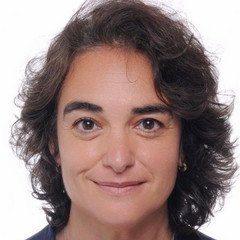
Prof. Dr. Marina Fiedler holds the Chair of Management, People and Information at the University of Passau since 2010. She is an Associate Editor at the Schmalenbach Journal of Business Research (SBUR) and heads the Passau experimental laboratory PAULA . Her academic journey includes a PhD (2004) and habilitation (2008) from the University of Munich, with visiting professorships at Corvinus University and State University of Management.
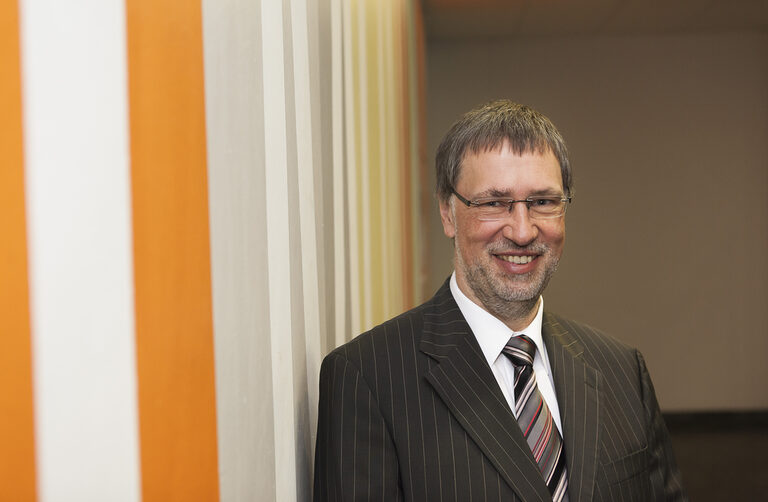
Professor Wolfgang Zacharias is the Chair of Geodesy at the Technical University of Munich (TUM), leading the Geodetic Institute. His research focuses on satellite geodesy, Earth system monitoring, and climate change studies. He holds a PhD in Geodesy from TUM and has over 20 years of experience in geodetic data analysis and remote sensing applications. Education: PhD in Geodesy, Technical University of Munich, 2003 Diploma in Geomatics Engineering, Dresden University of Technology, 1998 Research Interests: Professor Zacharias specializes in integrating satellite altimetry, GPS, and radar interferometry for monitoring Earth's dynamic processes. His work addresses climate change impacts on sea levels, crustal deformation, and coastal erosion. He collaborates with international space agencies and contributes to global geodetic reference frameworks. Publications Trends: Recent articles emphasize multi-sensor data fusion, crustal deformation modeling, and climate-related geodetic applications. Key themes include satellite laser ranging, terrestrial laser scanning, and Earth rotation parameter estimation. Awards: 2023: Bavarian Order of Merit 2021: TUM Teaching Award Grants & Labs: He leads the Geodetic Institute at TUM, overseeing projects funded by the German Research Foundation (DFG) and the European Space Agency (ESA). Active in graduate education, he advises students in geodetic engineering and Earth observation technologies.
Prof. Chao Dong ZHU is a leading researcher in ecology and biodiversity conservation, affiliated with the Chinese Academy of Sciences. He serves as Principal Investigator for multiple projects including MultiTroph (2022-2026), analyzing biodiversity mechanisms across trophic levels. His work focuses on plant-insect interactions, phylogenetic signals in ecological communities, and the impacts of tree diversity on herbivore-parasitoid networks. Key projects include SP09c1 Phylogenetic signals in plant-insect interactions and P4C: Associational effects mediated by parasitoids , examining how tree diversity influences herbivore communities and parasitoid dynamics. He has contributed to large-scale biodiversity experiments in subtropical forests, such as BEF-China, investigating species coexistence and turnover patterns. Education: Not explicitly stated in provided texts Research Themes: Trophic interactions, biodiversity gradients, DNA barcoding applications, spatial ecology Publications emphasize data-driven analyses of herbivore community structure, leveraging phylogenetic and functional trait approaches. His work bridges observational ecology with experimental design, contributing to understanding ecosystem resilience under biodiversity loss scenarios.
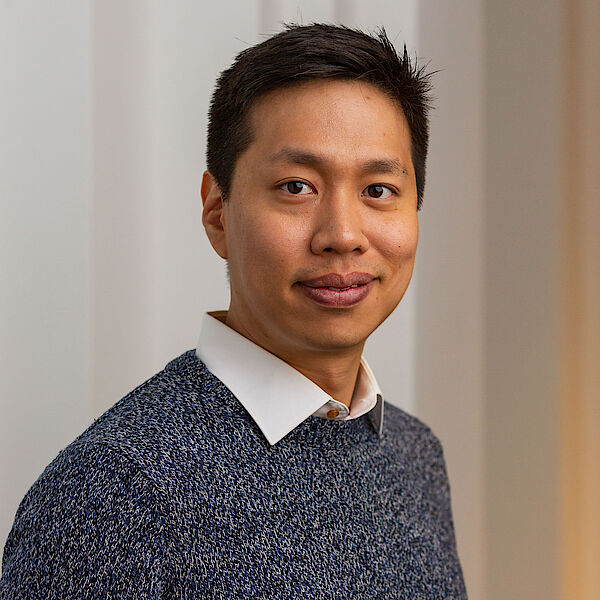
Ali Ertürk is a Professor at Helmholtz Zentrum München, serving as Director of the Institute for Tissue Engineering and Regenerative Medicine (iTERM). His work bridges cutting-edge technology and biomedical innovation, focusing on tissue clearing, spatial-omics, and AI-driven analysis to map biological systems at unprecedented resolution. His research spans three primary areas: Cellular & Systems Neuroscience Theoretical Neuroscience & Technical Applications Biomedical Neuroscience Keywords include tissue clearing, organoids, and neurodegeneration. Selected publications highlight advancements in vDISCO imaging, SHANEL protocols, and AI applications for cancer and neurodegenerative diseases. Graduated students include Dr. Chenchen Pan and Dr. Ruiyao Cai.
Alan D. Fekete is a Professor at the University of Sydney's Department of Computer Science, specializing in database systems, distributed data management, and consistency models. His work spans transaction processing, cloud computing, and query optimization, with recent focus on enhancing database concurrency and serializable execution. Key Research Areas: Database Concurrency & Transaction Isolation Multicore Scalability & Distributed Systems Cloud Data Consistency & Replication Query Optimization & NoSQL Performance Recent publications (2023-2025) explore transactional frameworks for analytical interfaces, DB-OS co-design for data ingestion, and mixed isolation levels for serializable execution. Earlier works (2018-2014) address scalable lock managers, coordination avoidance in databases, and consistency properties in cloud storage. He has contributed to educational initiatives, including a data-centric computing curriculum (2021) and teaching threading concepts (2008). Collaborations include co-authors like Nancy Lynch, Uwe Röhm, and Joseph Hellerstein.
Sangyoung Park is an Assistant Professor of Smart Mobility Systems at the Faculty of Mechanical Engineering and Transport Systems, Technical University of Berlin, and is co-affiliated with the Einstein Center for Digital Future. His research focuses on two main areas: enhancing vehicle safety through digitalization and connectivity, and advancing the electrification of the transport sector with emphasis on electric vehicle battery systems design and management. He leads the Chair of Smart Mobility Systems at TU Berlin, where his team investigates how vehicle connectivity can improve energy efficiency, traffic flow, and safety in autonomous vehicle systems. Dr. Park completed his PhD in Electrical Engineering and Computer Science at Seoul National University in Korea, where he focused on energy management techniques for hybrid energy storage systems in electric vehicles. Before joining TU Berlin in 2018, he conducted postdoctoral research at the Technical University of Munich, working on energy management for smartphones in collaboration with Google and studying battery aging processes. His research interests span smart mobility systems, electric vehicle battery management, energy consumption optimization, vehicle connectivity, and autonomous driving systems. Park's work bridges the gap between design engineers and software engineers, investigating how different energy storage components (fuel cells, supercapacitors, lithium-ion batteries) should be interconnected and managed together for maximum efficiency. His research also addresses the design of charging infrastructure for electric vehicles. Analysis of Dr. Park's recent publications reveals a strong focus on digital twin technology for teleoperated driving, battery management systems for electric vehicles, and vehicle connectivity for improved safety and efficiency. His research increasingly integrates cybersecurity aspects of connected vehicles and explores novel approaches to extend battery lifespan through advanced cell balancing techniques. The interdisciplinary nature of his work connects electrical engineering, computer science, transportation systems, and urban infrastructure planning. Dr. Park supervises multiple doctoral students, including Philipp Kremer, Ongun Türkçüoglu, Kil Young Lee, Maria Claudia Miguel de Priego, Muzaffer Citir, Andrea Reindl, Subhendu Bhadra, and Hueseyin Türkyilmaz. His research is supported by various funding sources including the ECDF grant, DAAD projects (ide3a), and government scholarships. He collaborates with institutions including OTH Regensburg and Siemens Mobility. His laboratory, the Smart Mobility Systems group, focuses on developing system-level approaches for measuring, analyzing, and balancing energy consumption in battery-powered mobile systems. The team investigates how direct communication among autonomous vehicles can enable control scenarios that improve energy efficiency, traffic flow, and safety beyond what human drivers or isolated autonomous vehicles can achieve.
Patrick Aigner, M.Sc., is a Tutor at the Technical University of Munich , affiliated with the Professorship for Environmental Sensors and Modeling led by Prof. Jia Chen. His work focuses on urban greenhouse gas monitoring , particularly through automated measurement networks and emission inventory analysis . Research : Urban CO2/CH4 sensing, high-density sensor networks, spatial emission inventories Teaching : Tutor for Environmental Sensing and Modeling lectures and seminars Email : patrick.aigner@tum.de Research Areas include: Environmental Science : Urban climate impact assessment Atmospheric Modeling : Flux tower measurements, footprint analysis Climate Policy : Quantitative mapping of mitigation plans Air Quality Monitoring : CO/NOx co-emissions Publication Trends show collaboration across European cities (Munich, Zurich, Paris) with emphasis on high-density sensor networks , emission inventory methods , and climate verification frameworks . Key projects include ICOS Cities , MUCCnet , and SCOUT .
Zhi Jin is a Professor in the Department of Computer Science and Technology at Peking University, where he has been employed since 2009. Previously, he served as a professor at the Academy of Mathematics and System Sciences, Chinese Academy of Sciences from 1994-2009. He received his BS from Zhejiang University in 1984 and MS/PhD from National University of Defense Technology in 1984 and 1992 respectively. He progressed from assistant professor (1992) to associate professor (1995) to full professor (2001). His research focuses on knowledge engineering and software engineering, with special interests in knowledge graphs, self-adaptive systems, and deep learning applications. Current research directions include Self-Adaptive Software in Human-Cyber-Physical Systems, Crowd-based Requirements Engineering, and Learning from both Natural Language and Programming Language. His work bridges theoretical knowledge engineering with practical software development challenges. His recent publications demonstrate a strong trend toward applying large language models and AI techniques to traditional software engineering problems, particularly in requirements engineering, code generation, and vulnerability detection. The articles span multiple high-impact venues including ASE, ICSE, and RE, with significant focus on aerospace applications and multi-agent collaboration approaches. Scientific honors include: Winner of National Science Fund for Distinguished Young Scholars (2006) Project 973 project lead scientist (2014) Member of Discipline Appraisal Group of the Academic Degree Commission (2015) Multiple ACM Distinguished Paper Awards He serves in numerous editorial roles including Associate Editor for IEEE Transactions on Software Engineering (2018-present) and IEEE Transactions on Reliability (2019-present). He is also an Editorial Board Member for Empirical Software Engineering and Requirements Engineering Journal, and holds leadership positions in the China Computer Federation. His extensive conference service includes PC membership for ICSE, FSE, RE, and other major software engineering venues.
Reyhaneh Jabbarvand is an Assistant Professor in the Department of Computer Science at the University of Illinois at Urbana-Champaign, where she leads the Intelligent CAT Lab. Her research focuses on improving software quality, reliability, and maintenance through neuro-symbolic approaches that combine AI techniques with formal methods. Her research interests span Neural Program Analysis, Software Testing (with emphasis on mobile apps and autonomous software), Bug Localization, and Applied Optimization for Software Analysis. She has made significant contributions to the fields of energy testing for Android applications, neuro-symbolic approaches for code analysis, and large language models for software engineering tasks. Dr. Jabbarvand's recent publications reveal strong trends in applying machine learning to software engineering problems, particularly using neuro-symbolic methods to bridge the gap between deep learning and formal program analysis. Her work on code translation, test flakiness, and test oracle generation demonstrates her focus on practical applications of AI in software development workflows. Google PhD Fellowship in Programming Technology and Software Engineering Rising Star in EECS NSF CAREER Award Dr. Jabbarvand has received research funding from multiple sources including NSF, IBM Research, and C3.ai. She actively mentors students through her Intelligent CAT Lab and has served on numerous program committees for major software engineering conferences including ICSE, FSE, and ISSTA. She teaches courses on Advanced Topics in Software Engineering, ML for Code, and Software Engineering I. Her lab focuses on neuro-symbolic approaches to software engineering problems, bringing together PhD, undergraduate, and high school students to tackle challenges in AI-assisted software development and testing.
Prof. Dr. Vera Krewald is a Professor for Quantum Chemistry at Technische Universität Darmstadt, Department of Chemistry. She leads a research group focused on theoretical and quantum chemistry approaches to understand electronic structures and properties of inorganic and transition metal complexes. Her work bridges computational methods with experimental spectroscopy to explore magnetic interactions, electron transfer processes, and catalytic mechanisms. Professor for Quantum Chemistry (W3) at TU Darmstadt (since 11/2023) Professor for Theoretical Chemistry (W2, tenure track) at TU Darmstadt (12/2018-10/2023) Research Group Leader at University of Bath (01/2017-11/2018) Prof. Krewald's research focuses on applying quantum chemistry methods to understand the electronic structure and functioning of inorganic complexes. Her group makes predictions about spectroscopic, magnetic, and other measurable properties of transition metal complexes, with particular interest in systems that exhibit unexpected properties, magnetic coupling, challenging molecular transformations, or promising catalytic activity. Key research areas include electron transfer processes, photophysics and photochemistry of transition metal complexes, nitrogen activation and splitting, oxygen reduction catalysis, and the development of theoretical methods like the Angular Overlap Model. Analysis of Prof. Krewald's recent publications reveals a strong focus on iron-based catalysis, particularly for energy-related applications like the oxygen reduction reaction in fuel cells. Her work frequently combines computational quantum chemistry with experimental spectroscopy, especially Mössbauer spectroscopy, to characterize active sites in catalysts. There's also significant emphasis on electron transfer processes, photochemical activation of small molecules like dinitrogen, and the development of computational tools for analyzing magnetic properties and metal-ligand bonding. 2022: Dozentenpreis from the chemical industry fund (Fonds der Chemischen Industrie) 2021: Award from the Dr. Hans Messer Stiftung for early career researchers 2021: ADUC Award from the German association of university professors in chemistry 2014: Otto Hahn Medal of the Max-Planck-Society 2013: Participant at 63rd Lindau Nobel Laureate Meeting 2008-2013: German National Academic Foundation fellowship Prof. Krewald leads a research group with 2 postdocs, 6 PhD candidates, and several B.Sc./M.Sc. students. Her group has secured funding from multiple sources including the DFG, Leverhulme Trust, Merck'sche Gesellschaft für Kunst und Wissenschaft e.V., NHR Verein e.V., and Deutsche Bundesstiftung Umwelt. She serves as vice-speaker of SFB 1487 "Iron, upgraded!" (2022-2025), demonstrating her leadership in coordinated research efforts. Her group actively collaborates with experimental researchers to elucidate reaction mechanisms and identify catalytically active species. The Krewald Research Group operates within the Department of Chemistry at TU Darmstadt, with strong connections to collaborative research centers including SFB 1487 "Iron, reimagined!", SFB 1633 "Pushing Electrons with Protons", and SPP 2491 "Interactive Switching of Spin States". The group is also involved in the Quantum Bio-Inorganic Chemistry Society, which Prof. Krewald co-founded and serves as Secretary General. Their work combines high-level quantum chemical calculations with experimental validation to address fundamental questions in inorganic chemistry and catalysis.
Ke Yan is an Associate Professor in the Department of Computer Science at the National University of Singapore's College of Design and Engineering. With extensive research output from 2021-2026, their work spans computer vision, artificial intelligence, and multimodal learning systems. National University of Singapore (Primary Affiliation) Collaborations with University of Electronic Science and Technology of China Research ties with Tencent Youtu Lab in Shanghai Research focuses on advancing computer vision techniques, particularly in medical image analysis, vision-language integration, and fault diagnosis systems. Their work bridges theoretical AI development with practical applications in healthcare, industrial systems, and environmental monitoring. Notable contributions include novel approaches to multimodal learning, medical image segmentation with sparse annotations, and improving reliability of large vision-language models. Recent publication trends (2024-2026) demonstrate increasing focus on multimodal systems, with significant contributions to vision-language model reliability, medical AI applications, and efficient transfer learning techniques. Their work frequently addresses critical challenges like hallucination mitigation in large models and sparse data scenarios in medical imaging. As an advisor, they mentor multiple researchers including Junlong Du, Shouhong Ding, and Zhiwen Lin, with whom they frequently collaborate on cutting-edge computer vision projects. Their research group maintains strong industry connections, particularly with Tencent's AI research division. The research is conducted within NUS's computer vision and AI research ecosystem, collaborating with multiple laboratories focused on multimodal intelligence and practical AI deployment in real-world systems.
Dr. Mhaned Oubounyt is a Postdoctoral Researcher at the University of Hamburg, affiliated with the Computational Systems Biology (CoSy.Bio) group within the Faculty of Mathematics, Informatics and Natural Sciences. His work focuses on developing computational methods for analyzing single-cell and spatial transcriptomics data, particularly in the context of disease mechanisms and drug repurposing. He is actively involved in the NetMap project, advancing dimensionality reduction techniques using differential regulatory networks. Research interests include gene co-expression networks, spatial single-cell analysis, and systems medicine applications. His methodologies bridge computational biology with clinical and agricultural challenges, such as vaccine responses in pregnancy, plant disease resistance, and cardiovascular pathophysiology. Key contributions include the SCANet and Drugst platforms for drug candidate identification and network-based analysis. Publications highlight a strong focus on network biology applications across domains: from immune system modeling to plant stress responses, leveraging single-cell multi-omics integration. His work emphasizes translational research, with implications for personalized medicine and crop improvement. Collaborations span academic and clinical institutions, reflecting his interdisciplinary approach. Current projects aim to enhance predictive modeling of disease progression and therapeutic interventions through systems-level insights.
Alexandra Dmitrienko is a researcher at the University of Würzburg's Institute of Computer Science. Her work focuses on cybersecurity, privacy-preserving technologies, and secure machine learning systems. She has collaborated extensively with institutions like TU Darmstadt and the University of California. Her research spans federated learning security, IoT device protection, Tor network analysis, and mobile platform vulnerabilities. Key contributions include defenses against poisoning attacks in federated learning, analysis of contact discovery exploits in messengers, and practical SGX cache attack mitigations. She has authored over 90 publications across top conferences like NDSS, CCS, and USENIX Security, and contributed to open-source tools like DNNShield and ClearMark for model ownership verification.
Prof. Dr. Hanno Friedrich is an Associate Professor of Freight Transportation - Modelling and Policy at Kühne Logistics University (KLU) in Hamburg, Germany. He holds a Diplom-Wirtschaftsingenieur from the Karlsruhe Institute of Technology (KIT) and a Ph.D. in Economics from KIT (2010), focusing on logistics simulation in food retailing. Prior to academia, he worked at McKinsey & Company (2004-2010) and served as a Junior Professor at TU Darmstadt (2011). Affiliations: Kühne Logistics University, World Conference on Transport Research Society (SIG B5), European Transport Conference (Freight & Logistics Committee) Education: PhD in Economics (KIT, 2010), Diplom-Wirtschaftsingenieur (KIT, 2003), ERASMUS exchange at EM Lyon (2001-2003) Research Interests: His work focuses on freight transport demand modelling, food logistics resilience, risk management in supply chains, and intermodal transport networks. Notable projects include FoodDecide (digital food safety tools), HeGeL (German logistics hypernetworks), and SEAK (food supply chain disruptions). Recent Trends: Articles emphasize spatial analysis of organic food demand, machine learning for ETA predictions in intermodal transport, and computational methods for tracing foodborne outbreaks. Recent work explores regional food self-sufficiency and electric mobility in commercial transport. Grants/Projects: Over 15 projects funded by BMBF, BMVI, and EU, including NutriSafe (blockchain in food logistics) and SMECS (ETA forecasting for seaports). Labs/Teams: Leads research groups in food supply chain resilience, freight transport policy, and intermodal logistics innovation at KLU.
Audrey Repetti is an Associate Professor in the Department of Actuarial Mathematics and Statistics within the School of Mathematical and Computer Sciences at Heriot-Watt University in Edinburgh, UK. She also holds a dual affiliation with the Institute of Sensors, Signals, and Systems in the School of Engineering and Physical Sciences, and is part of the Maxwell Institute for Mathematical Sciences - Edinburgh. Her research spans mathematical imaging, optimization, and computational methods with applications across astronomy, medical imaging, and optical engineering. Dr. Repetti's research focuses on developing advanced mathematical frameworks for solving imaging inverse problems. Her work centers on optimization algorithms, Bayesian uncertainty quantification, and the integration of machine learning with traditional mathematical approaches. She has made significant contributions to radio interferometric imaging, computational optical imaging with photonic lanterns, and uncertainty quantification in medical imaging. Her research bridges theoretical mathematics with practical applications in astronomy, healthcare, and engineering. Analysis of her recent publications reveals a clear trajectory toward integrating traditional mathematical imaging approaches with modern machine learning techniques. Her work increasingly focuses on 'hybrid' methodologies that combine data-driven models with optimization frameworks. Key themes include plug-and-play algorithms, uncertainty quantification in imaging, and the development of efficient computational methods for high-dimensional inverse problems. Her research demonstrates strong interdisciplinary connections between mathematics, signal processing, astronomy, and medical imaging. Dr. Repetti is actively involved in academic service, including co-organizing the 2026 ICMS Workshop on Imaging inverse problems and generating models. She has received research funding supporting her work in computational imaging and inverse problems, though specific grant details aren't listed in the provided materials. Her teaching portfolio includes advanced courses in scalable inference, deep learning, and statistics for sciences. She leads several research projects with associated software toolboxes including BUQO (Bayesian Uncertainty Quantification by Optimization), SARA-COIL (Compressive optical imaging with a photonic lantern), and CALIM (Self direction-dependent effect calibration and imaging in radio-interferometry). These projects demonstrate her commitment to developing practical computational tools that advance both theoretical understanding and real-world applications in imaging science.