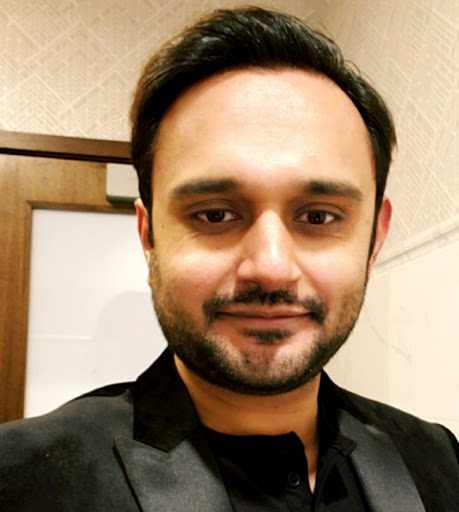
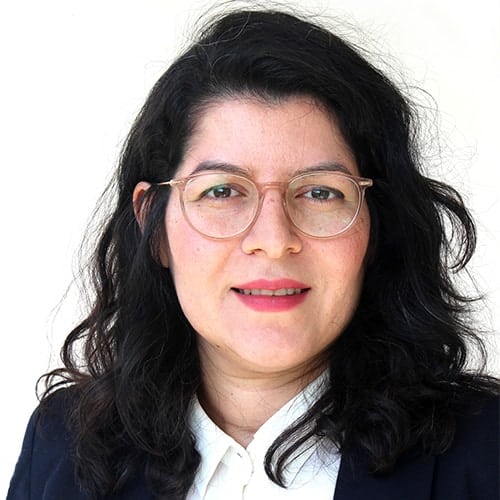
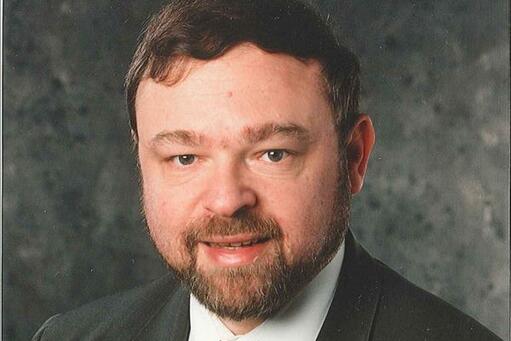
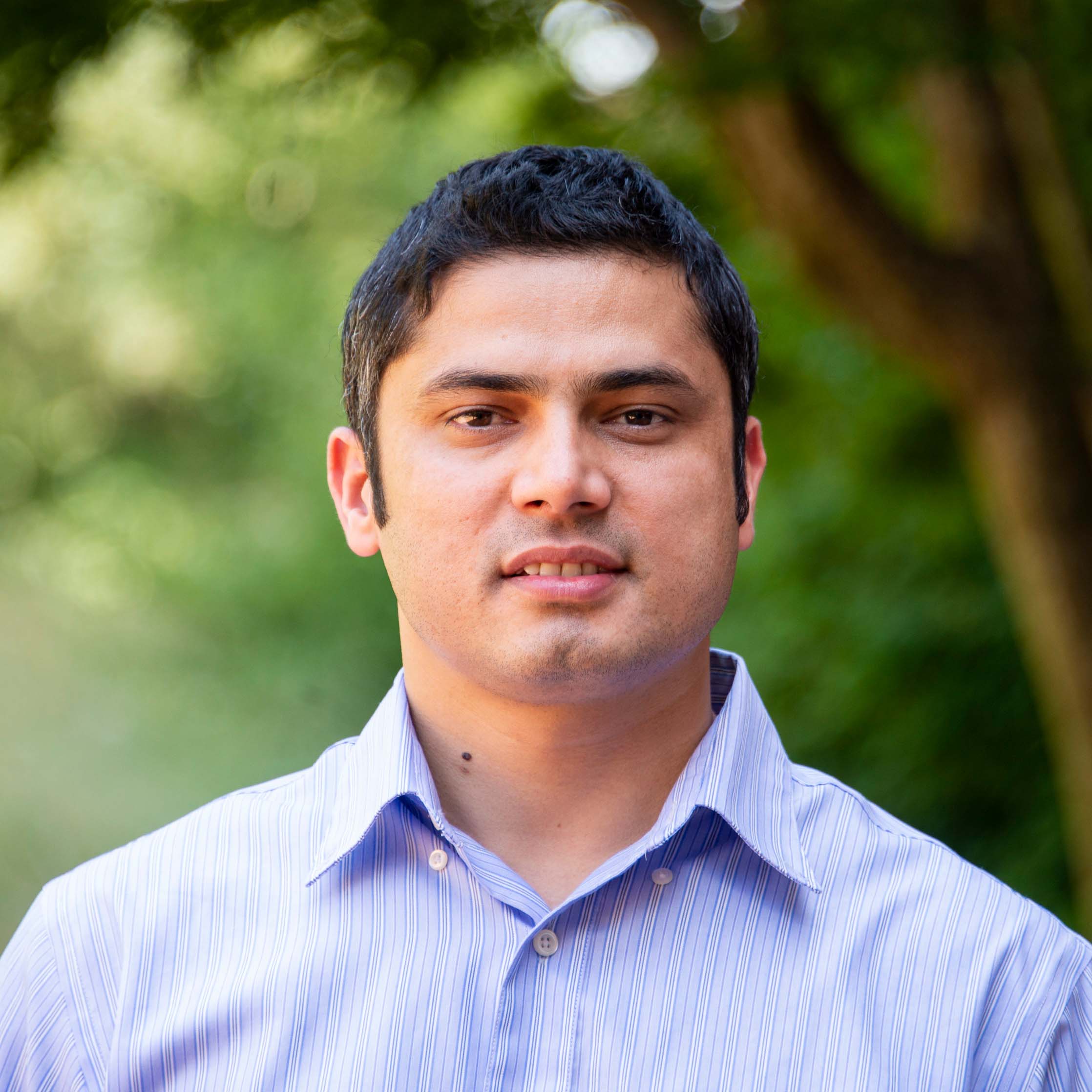
Rohan Tabish is an Assistant Professor in the Department of Computer Science at the University of Illinois at Urbana-Champaign (UIUC), specializing in real-time systems, embedded systems, and cybersecurity. His work focuses on developing predictable and secure software frameworks for multi-core and heterogeneous architectures. Education: Ph.D. in Computer Science and Engineering Master's in Computer Science and Engineering B.Sc. in Electrical Engineering with Telecommunications specialization Research Interests: Real-Time Task Scheduling Fault Tolerance in Embedded Systems Inter-Core Communication Frameworks Memory Bandwidth Management Cyber-Physical Systems Scratchpad-Centric Operating Systems Awards: Outstanding Paper & Best Paper Award (RTSS 2020) Outstanding Paper & Best Student Paper Award (RTSS 2020) Best Presentation Award (RTAS 2016) Nominated for Best Paper Award (ECRTS 2019) Teaching: CS 431: Embedded Systems (Instructor, 2015-2018) CS 424: Real-Time Systems (Instructor, 2019) CS 438: Communication Networks (TA, 2019) Labs/Teams: Active member of the Real-Time Systems Lab (RTSL) at UIUC, focusing on safety-critical embedded systems and real-time software frameworks.
Lt Col Darrell S. Crowe, PhD, is an Assistant Professor of Aerospace Engineering in the Department of Aeronautics and Astronautics at the Air Force Institute of Technology (AFIT), part of the Graduate School of Engineering and Management at Air University. He is an active military officer and educator contributing to advanced aerospace research and graduate education within the U.S. Air Force. Education: PhD in Aeronautical Engineering, Air Force Institute of Technology, 2014 MS in Aeronautical Engineering, Air Force Institute of Technology, 2008 BS in Aerospace Engineering, Texas A&M University, 2003 Dr. Crowe's research focuses on propulsion aerodynamics, computational fluid dynamics (CFD), supersonic and hypersonic flows, jet interaction effects, and store separation dynamics. His work involves high-fidelity simulations of exhaust nozzles, thermal distortion modeling, and active flow control, often in collaboration with military and aerospace applications. He investigates complex phenomena such as hot streaks in serpentine nozzles, film cooling, and cavity acoustics, contributing to improved aircraft and propulsion system design. His recent publications demonstrate a strong trend in advancing CFD methodologies for defense-related aerospace problems, particularly in propulsion-airframe integration, weapon bay aerodynamics, and supersonic/hypersonic flow control. The articles span both experimental validation and numerical modeling, emphasizing accuracy, turbulence modeling, and multi-physics coupling in extreme environments. Scientific Awards and Honors: AFIT Dean's Distinguished Teaching Professor, 2023 AIAA Associate Fellow, 2020 Air Force Meritorious Service Medal (2018, 2021) Joint Service Commendation Medal, 2017 Southwestern Ohio Council for Higher Education Faculty Excellence Award, 2015 Field Grade Officer of the Quarter, Air University, 2015 Air Force Commendation Medal, 2011 Company Grade Officer of the Quarter (2005, 2009) Air Force Achievement Medal, 2006 Dr. Crowe advises MS thesis students in aerospace engineering and teaches graduate-level courses in his domain. He has been involved in flight testing and simulation projects, often funded through U.S. Air Force research programs. His work supports critical defense capabilities in aircraft performance, propulsion efficiency, and weapon system integration. He is actively involved in professional organizations such as the American Institute of Aeronautics and Astronautics (AIAA) and contributes to major conferences and workshops, including the Propulsion Aerodynamics Workshops. His research is conducted within AFIT’s advanced simulation and modeling environment, leveraging tools like Kestrel and BCFD for high-fidelity analysis.
Dong Li is an Associate Professor at the University of California, Merced , where he directs the Parallel Architecture, System, and Algorithm Lab (PASA) and co-directs the High Performance Computing Systems and Architecture Group . He co-founded Yotta Labs Inc. and previously held research roles at Oak Ridge National Laboratory (2011-2014) and a PhD from Virginia Tech. Research Interests: Dong's work focuses on High performance computing (HPC) Memory heterogeneity and non-volatile memory Systems for machine learning and AI Fault tolerance in large-scale systems His innovations include heterogeneous memory optimization for recommendation models and GNNs, CXL memory integration, and persistent memory debugging tools. Recent Publications highlight advancements in CXL-based inter-node communication Memory tiering for laminography reconstruction ML-guided memory optimization for DLRM and GNN Fault tolerance benchmarks and error analysis Awards & Recognition: NSF CAREER Award (2016) Oracle Research Award (2022) ASPLOS Distinguished Artifact Award (2021) Virginia Tech Early Career Alumni Award (2023) Advising & Funding: Dong has mentored 22 students (8 PhD, 6 Master’s, 8 undergraduates) and secured grants from NSF, NVIDIA, Meta, and national labs (Argonne, Lawrence Berkeley, Lawrence Livermore). Collaborations include Microsoft (DeepSpeed, Intel PMDK), AMD, SK Hynix, and Intel/MICRON hardware donations.
Dr. Helga Huntley is an Assistant Professor in the Department of Mathematics at Rowan University's College of Science & Mathematics. Her research applies mathematical principles to solve complex problems in oceanography and atmospheric science, with expertise in Geophysical Fluid Dynamics, Transport and Dispersion Analysis, and Applied Dynamical Systems. She teaches mathematics courses ranging from remedial to graduate level and mentors students in research projects related to her expertise. Her educational background includes: Ph.D. in Mathematics from the Courant Institute, New York University M.S. in Mathematics from the Courant Institute, New York University B.S. in Mathematics from the University of Notre Dame Dr. Huntley's research examines transport patterns in ocean flows, their predictability, and integration of models across different scales. She investigates data assimilation to improve models based on observations and sea ice dynamics. As a data manager in a multi-institutional research consortium, she has developed expertise in preparing, archiving, and sharing diverse research data from lab experiments to field observations and model outputs. Analysis of Dr. Huntley's publication record reveals a strong focus on oceanographic processes using Lagrangian methods to study surface flows and transport phenomena. Her work spans theoretical mathematical modeling, field data analysis, and practical applications related to marine pollution, predator distribution, and climate impacts. A recurring theme is the investigation of submesoscale ocean dynamics and their implications for understanding larger-scale oceanographic processes, with consistent publication output in high-impact journals. Dr. Huntley actively encourages students interested in her research areas to contact her for research opportunities. While specific grant information isn't detailed in the provided materials, her extensive publication record across multiple high-impact journals suggests successful research funding. Her work often involves collaboration with interdisciplinary teams across various institutions. As a data manager in a multi-institutional research consortium, Dr. Huntley has developed expertise in research data management best practices. Her research methodology often involves oceanographic instrumentation and drifter technologies to collect data on surface ocean dynamics, contributing to our understanding of complex fluid dynamics in natural systems.
Timo Sprekeler is an Assistant Professor in the Department of Mathematics at Texas A&M University's College of Arts & Sciences. He joined Texas A&M in 2024 after serving as a Peng Tsu Ann Assistant Professor at the National University of Singapore (2021-2024). Sprekeler completed his Ph.D. in Mathematics at the University of Oxford (2017-2021) following a MASt from the University of Cambridge and BSc from TU Dortmund University. His research specializes in numerical multiscale methods, homogenization theory, and finite element techniques for partial differential equations. Recent publications focus on developing computational frameworks for elliptic equations and optimization problems, with applications to materials science and control systems. Sprekeler maintains an active research group and teaches graduate-level courses in computational mathematics. His office is located in Blocker 608L, and he can be contacted via email.
Dr. Kayo Ide is an Associate Professor at the University of Maryland's Department of Atmospheric and Oceanic Science, within the College of Computer, Mathematical, and Natural Sciences. Her research focuses on dynamics of atmosphere and oceans, with expertise in data assimilation, scientific prediction, transport/mixing processes, and climate variability. She contributes to NOAA's operational systems and collaborates with teams like the UFS Coastal Applications Team. Her work emphasizes integrating advanced observational technologies (e.g., satellite data from CrIS, Aeolus) into numerical weather prediction and ocean modeling frameworks. Key projects include optimizing data assimilation algorithms, evaluating new sensor constellations (e.g., CubeSats), and improving forecast initialization techniques. Dr. Ide also develops software tools like the System for Analysis of Wind Collocations (SAWC) to intercompare multi-platform wind observations. Publications highlight innovations in satellite data utilization, ensemble-based methods, and the impact of novel observing systems on operational forecasting. Her research bridges computational methods, environmental science, and applied meteorology, addressing challenges in global climate monitoring and predictive modeling.
Hokeun Kim is an Assistant Professor in the School of Computing and Augmented Intelligence (SCAI) at Arizona State University (ASU), part of the Ira A. Fulton Schools of Engineering. He previously held positions at Hanyang University (2021-2023) and worked in industry roles at Google, LinkedIn, and HP Labs. His research focuses on cyber-physical systems, IoT security, and computer architecture, with a particular emphasis on safety and security aspects of time-sensitive systems. Education: Ph.D. in EECS, University of California, Berkeley (2017) M.S. in EECS, Seoul National University (2012) B.S. in Computer Science and Engineering, Seoul National University (2010) Research Interests: Kim’s work spans secure IoT frameworks, real-time embedded systems, and edge computing. He develops tools like the Secure Swarm Toolkit (SST) and Lingua Franca, addressing challenges in distributed system security, interoperability, and performance. Key Contributions: Authored over 30 peer-reviewed publications in top venues like IEEE Transactions, ACM Conferences, and DATE. Received the ACM/IEEE Best Paper Award (IoTDI 2017) and IEEE Micro Top Picks Honorable Mention (2017). Active in organizing conferences (e.g., DATE, FDL) and serves on technical committees for top journals/conferences. Teaching: Courses include Computer Architecture I/II, Real-Time Embedded Systems, and IoT design at both undergraduate and graduate levels.
Fariba Karimi is a Professor of Social Data Science at Graz University of Technology and leads the Algorithmic Fairness research group at the Complexity Science Hub (CSH) in Vienna. Her work sits at the intersection of computational social science, network science, and AI ethics, with a strong focus on fairness, inequality, and bias in algorithmic systems. She holds a PhD in Physics and Computational Science from Umeå University, Sweden (2015), and was a Postdoctoral Researcher at GESIS – Leibniz Institute for Social Sciences, Germany. Her research combines large-scale data analysis, agent-based modeling, and network science to study how social structures and algorithms interact to shape disparities, particularly for underrepresented groups. Computational Social Science Algorithmic Fairness and Bias Network Science and Homophily Digital Humanism Urban Inequality and Implicit Bias Gender and Age Equity in Academia Her recent publications reveal a consistent focus on understanding and mitigating algorithmic and structural inequities. Themes include the visibility of minorities in networks, the impact of segregation on health and cognition, gender citation gaps in physics, and the development of fair ranking and recommendation systems. She employs interdisciplinary methods to analyze both digital and real-world social systems. Fariba Karimi has received several prestigious recognitions, including: Young Scientist Award from the German Physical Society (2023) ERC Starting Grant (2024) Nomination for the Hedy Lamarr Award (2021) She leads the 'Humanized Algorithms' project at CSH, funded by the ERC, and co-leads an EU Horizon project (MAMMOth) on multi-criteria fairness in AI. She advises PhD researchers such as Lisette Espín-Noboa and collaborates with institutions like the University of Mannheim and the Centre for Social Sciences. Her work contributes to both academic knowledge and practical solutions for fairer AI systems and more equitable societies.
Awi Federgruen is the Charles E. Exley Professor of Management and Chair of the Decision, Risk, and Operations (DRO) Division at Columbia University’s Graduate School of Business. He joined Columbia’s faculty in 1979 after earning his DSc in Operations Research from the University of Amsterdam and holding roles as a Research Fellow at the Mathematical Centre in Amsterdam and faculty member at the University of Rochester. He also holds a courtesy appointment in Columbia’s School of Engineering and Applied Sciences. Education: BA, University of Amsterdam, 1972 MS, University of Amsterdam, 1975 DSc (Operations Research), University of Amsterdam, 1978 Research Interests: Federgruen’s work focuses on optimizing supply chain and service systems through advanced operations research methodologies. Key areas include supply chain coordination, inventory management under uncertainty, service system design, and dynamic pricing. His theoretical contributions span applied probability, queuing models, and dynamic programming. Recent applications include pharmaceutical supply chains, healthcare operations, and vaccine distribution strategies. Awards & Recognition: 2004 Distinguished Fellowship Award (MSOM Society) INFORMS Presidential Fellow (highest honor) National Science Foundation & ARPA grants Consulting & Industry Impact: Federgruen advises companies in pharmaceuticals, consumer electronics, and logistics. Notably, he developed marketing mix models for the pharmaceutical industry and advised the Israeli Air Force on logistics policies. His work bridges academic theory with real-world applications in industries like retail, healthcare, and transportation. Editorial Roles: Editor-in-Chief of Naval Research Logistics ; former Departmental Editor for Manufacturing & Service Operations Management and Associate Editor of Operations Research .
Dr. Krishna P. Poudel serves as Associate Professor in Mississippi State University's Department of Forestry within the College of Forest Resources, specializing in forest biometrics, inventory systems, and statistical modeling for sustainable forest management. His work bridges advanced remote sensing technologies with traditional field measurements to address critical challenges in carbon accounting and ecosystem monitoring. His educational foundation includes: Ph.D. in Forestry, Oregon State University M.S. in Statistics, Oregon State University M.S. in Forestry, Louisiana State University B.S. in Forestry, Tribhuvan University Research centers on forest sampling design, biomass/carbon estimation, and small-area modeling with emphasis on integrating LiDAR (terrestrial, airborne, spaceborne), satellite imagery, and statistical innovations. Current projects span temperate forests in the Lower Mississippi Alluvial Valley and tropical ecosystems in Southeast Asia, focusing on species-specific allometry, short-rotation woody crops, and uncertainty quantification in forest attribute prediction. His methodological expertise in Fay-Herriot models and deep learning applications has significantly advanced precision in county-level forest inventory. Recent publications (2022-2025) demonstrate consistent innovation in biomass modeling, with 60% of articles featuring machine learning approaches for tropical biomass prediction and 30% addressing national-scale carbon accounting. Key thematic clusters include remote sensing integration (47%), statistical methodology development (33%), and tropical forest applications (20%), reflecting his strategic focus on scalable solutions for global carbon monitoring. Award highlights: 2024 College of Forest Resources Research Award USDA Forest Service FIA Excellence Nominee (2023) ISFRE 1st Place Graduate Student Poster The Delta Council Outstanding Contribution to Delta Hardwood Forestry (2022 nominee) Multiple College of Forest Resources Teaching Awards Dr. Poudel actively mentors seven graduate students through the Forest Biometrics Lab, with thesis topics spanning ICESat-2 canopy height validation, deep learning biomass models, and marginal land identification. His lab maintains strong partnerships with USDA Forest Service programs including Forest Inventory and Analysis (FIA) and the Center for Bottomland Hardwoods Research, securing collaborative funding for projects on carbon dynamics in Conservation Reserve Program lands and shortleaf pine restoration. Current initiatives focus on integrating GEDI data with national inventory systems and developing AI-driven tools for smallholder agroforestry carbon accounting in Vietnam.
James M Martin-Hayden serves as an Associate Professor in the Department of Earth, Ecological and Environmental Sciences within the College of Natural Sciences and Mathematics at the University of Toledo. With over 25 years of service at the institution, he has established himself as a prominent hydrogeologist specializing in groundwater systems and environmental geology. Education: B.A. from University of Maine, M.S. and Ph.D. from University of Connecticut (1994) Current Position: Associate Professor of Geology Department: Earth, Ecological and Environmental Sciences University: University of Toledo Dr. Martin-Hayden's research focuses on hydrogeology, with particular emphasis on groundwater-surface water interactions in wetland ecosystems, numerical groundwater modeling, and hydrogeologic field methods. His work primarily investigates the Oak Openings Region of northwest Ohio, examining how drainage modifications have altered natural groundwater flow regimes that support wet prairies. He has made significant contributions to understanding wellbore flow dynamics, groundwater sampling methodologies, and the impacts of evapotranspiration on groundwater recharge. His research integrates field observations, numerical modeling, and geophysical techniques to address complex hydrogeological problems. Analysis of Dr. Martin-Hayden's publication record reveals a consistent research trajectory focused on hydrogeological systems, particularly in the Great Lakes region. His work spans from fundamental investigations of wellbore flow dynamics to applied studies of regional aquifer systems and wetland hydrology. Recent publications demonstrate increasing integration of geophysical methods with traditional hydrogeological approaches, reflecting an evolution toward more comprehensive characterization of complex subsurface systems. His research shows particular strength in addressing the hydrological impacts of human modifications to natural systems, especially in wetland ecosystems. Dr. Martin-Hayden has mentored several students, including Lucas Groat (thesis on Hydrogeology of Wet Prairies) and Pryanka More (undergraduate thesis on Influences of ET on Groundwater Recharge). His collaborative work shows strong connections with researchers including Timothy G. Fisher, Kennedy Okioghene Doro, and Richard H. Becker, indicating active participation in research networks focused on Great Lakes geology and hydrogeology.
Prof. Jörn Meissner, PhD, is a Full Professor of Supply Chain Management & Pricing Strategy at Kühne Logistics University (KLU) since 2011. He holds a PhD and Master’s in Management Science from Columbia Business School and a Diploma in Business from University of Hamburg . As an academic and entrepreneur, he founded Manhattan Review and Lancaster Executive . Education: PhD in Management Science, Columbia University (2005) Master of Philosophy, Columbia University (2005) Diplom-Kaufmann, University of Hamburg (1997) Research Expertise: Focus on stochastic and dynamic decision-making using mathematical optimization and machine learning Key projects: Global supply chain optimization , Inventory control , Revenue management , and Operations & service management Industry collaborations with British Telecom , British Airways , Apple Europe , and SAP Germany Publication Trends: Recent work addresses intermittent demand forecasting for spare parts, lateral transshipment optimization , and risk-sensitive capacity control Historical contributions include progressive interval heuristics for multi-item lot sizing and dynamic pricing with customer choice models Teaching Experience: Previously held academic positions at Lancaster University Management School , University of Hamburg , and University of Mannheim Developed MBA electives in Advanced Decision Models , Supply Chain Management, and Revenue Management
Dr. Charlotte Halpern is a tenured FNSP researcher at Sciences Po's Centre for European Studies and Comparative Politics (CEE) in Paris. She is Co-director of the Environmental Policies Research Group at LIEPP and Director of the Institute for Environmental Transformations (IPTE). Her research spans public policy, urban sociology, environmental governance, and European Union politics. She teaches public policy analysis and urban governance at Sciences Po and AgroParisTech. Her research interests focus on public action, urban governance, environmental and transport policy, social movements, and participatory democracy. She investigates how policy instruments are selected and combined across different political systems, particularly in France, Germany, the UK, and the EU. Her work emphasizes the role of non-hierarchical governance, state restructuring, and the political regulation of urban utilities. She is particularly known for her studies on the 'Grenelle de l’environnement', metropolitan water governance, and sustainable urban mobility. The analysis of her recent publications reveals a consistent focus on environmental policy innovation, urban sustainability, and comparative governance. Her work bridges political science with urban planning and environmental studies, often employing comparative case studies across Europe, Latin America, and Southeast Asia. Key trends include the evaluation of participatory processes, the governance of decentralized utilities, and the long-term evolution of transport policies in major cities. She has received research funding from prestigious sources including the European Commission (Horizon 2020), the French National Research Agency (ANR), and the French Ministry of the Environment. Her major projects include CREATE (Congestion Reduction in Europe), MEGOWAS (Metropolitan Governance of Water Systems), and SYRACUSE (sustainable urban utilities). CREATE Project (2015–2018): European-funded project on urban congestion and sustainable mobility. MEGOWAS Project (2017–2018): USPC-NUS joint project on water governance in Manila, Jakarta, Lima, and São Paulo. SYRACUSE Project (2012–2016): ANR-funded project on technological and institutional innovations in urban utilities. Grenelle de l’environnement Study (2009–2012): Analysis of France’s national environmental consultation process. Policy Instruments Project (2005–2008): Comparative study of governance modes in EU environmental and urban policy. Dr. Halpern has conducted research stays at Nuffield College (Oxford), the Max-Planck Institute for the Study of Society (Cologne), and Humboldt University (Berlin). She is an associate researcher at the Public Policy Research Group at PUCP, Lima, and contributed to the creation of the Observatorio de políticas públicas para la ciudad. She has also been an invited lecturer at PUCP. Her interdisciplinary collaborations involve engineers, social scientists, and policymakers, particularly through projects integrating social and technical expertise in urban sustainability.
Ryan K. Williams is an Assistant Professor in the Bradley Department of Electrical and Computer Engineering at Virginia Tech. His research focuses on real-time systems optimization, multi-agent robotics, and computational frameworks for autonomous systems. He holds an NSF Career Award (2021) and has contributed to advancing algorithms for resilient and efficient multi-robot coordination. His work addresses challenges in distributed systems, including scheduling, fault tolerance, and resource allocation. Key areas include probabilistic security in multi-robot teams, topology control for stable coordination, and anticipatory planning for search and rescue operations. He also explores intersections with education, such as analyzing teacher professional learning impacts on student outcomes in STEM. Awards: NSF Career Award 2021 Grants: AF: Small grants (2024, 2021), CPS: Medium grant (2019) Labs/Teams: Collaborates on multi-robot systems and computational autonomy projects
Denny Yu is an Associate Professor at the Edwardson School of Industrial Engineering, Purdue University. His work bridges human factors, neuroergonomics, and healthcare safety through advanced sensor systems and AI. Primary Affiliation : Edwardson School of Industrial Engineering, Purdue University Research Themes : Surgical ergonomics, autonomous vehicle human factors, cognitive workload assessment, multimodal physiological sensing Dr. Yu's research focuses on neuroergonomics and human-robot interaction , particularly in surgical and transportation contexts. His team develops sensor-based systems for workload monitoring, including: EEG-eye tracking fusion for situation awareness Wearable exoskeletons for surgical posture support Computer vision tools for lifting task risk analysis Smart infusion pump usability frameworks AI-driven surgical coaching systems Recent publications emphasize deep learning applications in soft tissue deformation estimation and real-time adaptive systems for robotic surgery augmentation. His work spans both occupational health (veterinary surgeons, airport workers) and medical device innovation domains.