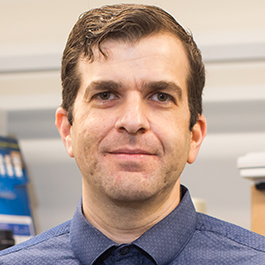
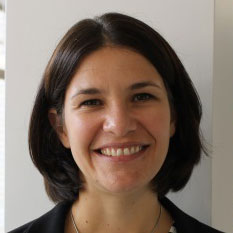
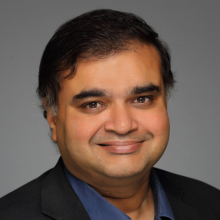
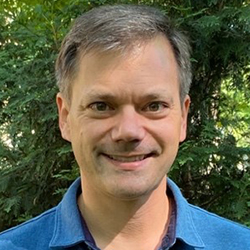
Dr. Weihao Li is a Research Fellow at The Australian National University's School of Computing, specializing in computer vision and machine learning. His research focuses on object detection, image segmentation, open-set recognition, and point cloud segmentation. He holds a Dr. rer. nat. (PhD equivalent) and is registered to supervise research students. His research interests revolve around advancing techniques for dynamic instance segmentation, open-set learning, and 3D point cloud analysis. Notable projects include the ANU bushfire smoke dataset and contributions to generalized semantic segmentation and anomaly recognition. His work emphasizes data augmentation strategies and weakly-supervised learning methods. Key technical areas include synthetic dynamic instance copy-paste for video segmentation, curved geometric networks for anomaly detection, and cross-modal fusion in building facade analysis. He collaborates on computing-for-social-good initiatives, such as environmental monitoring via hyperspectral imaging. Dr. Li's publications span 2016–2024, with a focus on advancing computer vision through innovative architectures and methodologies. His recent work explores open-set recognition, few-shot learning with reinforced attention, and geometric prior-based segmentation techniques.
Pablo Parra Espada is an Associate Professor at the Department of Automática, University of Alcalá (Spain), affiliated with the Space Research Group (SRG-UAH). He holds a PhD from the University of Alcalá (2012) titled Integración de tecnologías de desarrollo y análisis basadas en componentes bajo un enfoque multi-plataforma , supervised by Dr. Sebastián Sánchez Prieto and Dr. Óscar Rodríguez Polo. His research focuses on space systems engineering , particularly in RISC-V processor design , embedded systems , and model-driven engineering . Key areas include hardware-software co-design for satellite systems, real-time computing, and fault-tolerant architectures. He has contributed to the Solar Orbiter mission through work on the Energetic Particle Detector (EPD) and its on-board software validation. His recent work emphasizes virtualization techniques for LEON processors, FPGA-based digital beamforming , and spaceborne phased array systems . He also explores model-driven approaches for automated configuration of ground support equipment. His interdisciplinary contributions bridge computer architecture with aerospace applications. Prof. Parra Espada has published extensively on topics such as hardware performance monitoring, memory management units for satellites, and system-level verification of space software. His work combines rigorous engineering methodologies with cutting-edge technologies to address challenges in space instrumentation and embedded systems.
J. Stewart Aitchison is a Professor at the University of Toronto's Department of Electrical & Computer Engineering, holding the Nortel Chair in Emerging Technology. He serves as Associate Scientific Director for the Network Centre of Excellence, IC-IMPACTS, fostering Canada-India research collaborations. Aitchison co-founded ChipCare Corporation, developing portable HIV monitoring systems, and previously directed the Emerging Communications Technology Institute. He received a BSc (1984) and PhD (1987) in Physics from Heriot-Watt University, UK, followed by a postdoctoral position at Bellcore. His research focuses on: Nonlinear optics and plasmonics for optical signal processing Micro/nano-scale photonic devices and integrated circuits Optical biosensors for healthcare applications (e.g., HIV monitoring) Algal biofilm photobioreactors for sustainable energy His 250+ publications emphasize semiconductor waveguides, quantum optics, and lab-on-chip systems, with recent work advancing polarization management, entanglement generation, and point-of-care diagnostics. Awards & Fellowships: Fellow of Royal Society of Canada, Royal Society of Edinburgh, AAAS, OSA, and Institute of Physics Professional Engineering Ontario Research Medal (2016) IEEE Photonics Society Distinguished Lecturer (2016-2017) University of Toronto Inventor of the Year (2012) NSERC Synergy Award (2006) He leads the Aitchison Group, supervising over 60 PhD/Master's students in photonics and microfabrication. His team collaborates globally and utilizes the Toronto Nanofabrication Centre. ChipCare, his spin-off, secured $7M+ funding for blood-testing platforms enhancing healthcare in remote communities.
Duong Nguyen serves as an Assistant Professor in the School of Electrical, Computer and Energy Engineering at Arizona State University. His research integrates operations research, artificial intelligence, economics, and engineering to develop mathematical models for decision-making in large-scale networked systems including cloud/edge computing, smart grids, and crowdsourcing. He directs the NEMO research group focused on building intelligent multi-agent platforms through optimization and market design. His educational credentials include: Ph.D. in Electrical and Computer Engineering from the University of British Columbia (2020) M.Sc. in Telecommunications from INRS, University of Quebec (2014) B.Sc. in Electronic and Telecommunications from Hanoi University of Science and Technology (2011) Dr. Nguyen's research spans Operations Research, Artificial Intelligence, Decision-Making, Market Design, and Optimization with applications in edge computing, power systems, and network economics. His work emphasizes robust algorithms for uncertain environments and secure multi-agent platforms, recently expanding into quantum machine learning and privacy-preserving distributed systems. Current projects address decentralized federated learning, dynamic pricing, and EV charging network design. Analysis of his publication record reveals consistent focus on distributed optimization techniques for edge/cloud systems, with increasing integration of game theory and quantum computing. His work demonstrates strong methodological innovation in handling spatio-temporal uncertainty while addressing practical challenges in energy flexibility and secure genomic computation. His scientific recognition includes: Finalist for Best Student Paper Award at American Control Conference (ACC) 2024 Finalist for Best Paper Award at International Symposium on Modeling and Optimization in Mobile, Ad Hoc, and Wireless Networks (WiOpt) 2023 Dr. Nguyen actively mentors Ph.D. students including Jiaming Cheng and Long Vu, with student-led research achieving significant recognition. His NEMO group collaborates with institutions including ETH Zurich on projects spanning autonomous driving, edge AI, and quantum optimization. Current research directions emphasize fair resource allocation, privacy-preserving learning, and dynamic pricing frameworks for next-generation networked systems.
Mike Rubenstein is an Assistant Professor with joint appointments in the Department of Computer Science and Department of Mechanical Engineering at Northwestern University. He holds the Lisa Wissner-Slivka and Benjamin Slivka Professorship in Computer Science and is affiliated with the Center for Robotics and Biosystems. His educational background includes a Ph.D. in Computer Science from the University of Southern California, an M.S. in Electrical Engineering from USC, and a B.S. in Electrical Engineering from Purdue University. Prior to joining Northwestern, he completed a postdoctoral fellowship at Harvard University's Self-Organizing Systems Research Group. Rubenstein's research focuses on advancing multi-robot systems to enable capabilities beyond traditional single robots, emphasizing parallelism, adaptability, and fault tolerance at scale (hundreds to millions of robots). His work spans swarm shape control, modular self-reconfigurable robotics, bio-inspired satellite constellations, and novel sensing for air vehicle swarms. Key themes include algorithmic control for large-scale systems and hardware innovations to overcome current limitations in swarm robotics. His advising has produced notable student achievements, including Petras Swissler's Best Student Paper Award at DARS 2021 and Drew Curtis's NDSEG Fellowship. Research trends across his publications reveal a consistent emphasis on scalability, real-world applicability, and bridging hardware constraints with algorithmic innovation in swarm systems. Rubenstein actively mentors graduate students and leads projects involving swarm robotics platforms like FireAnt and PCBot. His lab focuses on developing systems where simplicity in individual robots enables emergent complexity at the swarm level, with applications ranging from space exploration to medical imaging.
Allison J Carroll, PhD is an Assistant Professor at Northwestern University Feinberg School of Medicine with primary appointment in Psychiatry and Behavioral Sciences, and secondary appointments in Medical Social Sciences and Preventive Medicine (Behavioral Medicine). She serves as a core faculty member in the Center for Dissemination and Implementation Science (CDIS) and is affiliated with the Institute for Public Health and Medicine (IPHAM) and the Northwestern University Clinical and Translational Sciences Institute (NUCATS). Dr. Carroll is a clinical health psychologist and implementation scientist whose research focuses on psychological (e.g., depression) and behavioral (e.g., cigarette smoking) contributors to chronic disease (e.g., cardiovascular disease), particularly for disadvantaged and historically underresearched populations. Her current research includes a K23 career development award to inform and pilot test the implementation of a culturally adapted depression intervention for Black adults with hypertension, with training aims in implementation science, community engaged research, and health informatics. Dr. Carroll also serves as an implementation science co-investigator/consultant on externally funded research projects and clinical initiatives in healthcare settings. Her publication record shows a clear focus on implementation science methods applied to cardiovascular disease prevention, depression treatment, and health disparities reduction, with numerous recent publications (2024-2025) in high-impact journals spanning implementation frameworks, community-based interventions, and integrated care models. Scientific Awards: Citation Abstract Award, Society of Behavioral Medicine (2025) Teacher of the Year, Clinical Psychology MA & PhD Programs, Northwestern University Feinberg School of Medicine (2024) Outstanding Abstract Award, Multimorbidities and Multiple Health Behavior Change Special Interest Group, Society of Behavioral Medicine (2022) Early Career Boot Camp, Association of Psychologists in Academic Health Centers 10th National Conference (2021) Fellow, Ten-Day Seminar on the Epidemiology and Prevention of Cardiovascular Disease and Stroke (2019) Dr. Carroll maintains active professional service as Secretary of the Health Research Council for the Society for Health Psychology (2023-present), Research Communication Liaison for the same council (2017-present), and previously served as Membership Coordinator for the Cardiovascular Disease Special Interest Group of the Society of Behavioral Medicine (2022-2024). She is an active member of multiple professional societies including the Association of Psychologists in Academic Health Centers, Society of Behavioral Medicine, American Heart Association, and Society for Health Psychology. Her educational background includes a BA from Monmouth College (2009), MS (2014) and PhD (2018) from Northwestern University, followed by an internship at Medical University of South Carolina in Clinical Psychology/Behavioral Medicine (2018) and a fellowship at Northwestern Medicine in Cardiac Behavioral Medicine (2020).
Joseph Trainor is the Interim Dean and Professor at the Joseph R. Biden, Jr. School of Public Policy and Administration, University of Delaware. He is a core faculty member of the Disaster Research Center, renowned for expertise in Disaster Science and Emergency Management. His research integrates behavioral and organizational dimensions of disasters, focusing on risk perception, warnings, equity, and policy integration. Trainor holds a PhD in Sociology from the University of Delaware (2009), with earlier degrees from the same institution and Millersville University. Education: Ph.D., Philosophy in Sociology, University of Delaware (2009) MA, Sociology, University of Delaware (2004) B.A., Double Major in Sociology and Psychology, Millersville University (2002) Research Interests: Trainor’s work spans risk communication, organizational management in crises, disaster mitigation, and equity. Key themes include household decision-making around insurance and retrofitting, multi-organizational response systems, and pandemic workforce dynamics. He emphasizes bridging academic research with practitioner needs, with a focus on policy applications. Public Service & Collaboration: Trainor collaborates with agencies like FEMA, DHS, and state emergency management offices. His projects address land-use policies, hurricane risk reduction, and pandemic response strategies. He frequently chairs doctoral committees and teaches at all academic levels. Labs & Teams: As part of the Disaster Research Center, he contributes to interdisciplinary teams advancing disaster science through mixed-methods approaches, including computational frameworks and community resilience models.
James Mitchell is a Professor of Public Policy at the University of Edinburgh’s School of Social and Political Science . He holds a MA (Political Studies) from the University of Aberdeen and a D.Phil. (Oxford). His research focuses on British politics, devolution, public policy, territorial politics, and Scottish nationalism. He has supervised over 30 years of PhDs and Masters in public policy, devolution, and constitutional politics. Key research themes include fiscal accountability in Scotland, party membership surges post-referendum, and multi-level governance. Research Projects: ESRC-funded study on SNP and Scottish Greens’ post-referendum membership growth Investigation of fiscal devolution’s accountability gaps Analysis of Scotland’s constitutional questions and local governance Research Interests: Mitchell explores territorial politics, public service reform, and political behavior in sub-state governments. He has contributed to debates on Scottish independence, EU referendum impacts, and intergovernmental relations. Recent work includes studies on the SNP leadership contest (2023) and Holyrood’s fiscal structures. Grants & Awards: He has secured grants from the Economic and Social Research Council (ESRC) for projects on party membership and constitutional dynamics. No specific scientific awards are listed, but his work is widely cited in political science and public policy. Labs & Teams: He is part of the Territorial Politics Research Group and has collaborated on regional economic forecasting and governance studies. His work often bridges academia and policy, influencing debates on devolution and public finance.
Prof. Penny Kyburz is a Professor and Associate Director (Engagement & Impact) at the School of Computing, Australian National University. She leads the GameFlow Lab and teaches Game Development, focusing on AI, human-AI interaction, and game design. Her work bridges academia and industry, with 20+ award-winning games including four BAFTA nominations. She holds a PhD, B.InfoTech(Hons), G.C.Ed.(Higher Ed.), and G.C.Acad.Prac. Education: Ph.D. B.InfoTech(Hons) Graduate Certificate in Education (Higher Education) Graduate Certificate in Academic Practice Research Interests: Video games, game design, and player experience AI and human-AI collaboration Virtual Reality and Mixed Reality applications Technology policy and digital rights Educational games and accessibility Awards: 4 BAFTA nominations for game contributions High critic scores for usability-tested AAA games Grants/Projects: IDEATE (2024–2028) MEC23: Advanced Biometrics (2023) C2 Sociotechnical Collaboration (2022–2024) Role-Based Deception in Games (2020–2021) Her GameFlow model and book on emergence in games are foundational in player experience research. She advocates for diversity in tech and has advised on digital rights in the Senate.
P. (Saday) Sadayappan is a Professor in the School of Computing at the University of Utah. He serves as a lead researcher in high-performance computing, with a focus on compiler optimization and algorithm-architecture co-design. His current projects include NIH SBIR Phase 2 funding for large-scale image analysis and NSF grants for tensor applications and cyber-infrastructure for AI. Research Interests : Compiler Optimization for High Performance Computing Optimization of Sparse/Dense Matrix/Tensor Computations Scalable Machine Learning Algorithm-Architecture Co-Design Optimization Research Trends in Publications : His work emphasizes optimizing computational workflows for emerging hardware architectures, with a focus on accelerating machine learning and scientific computing through compiler-level innovations. Recent trends include co-design for CNNs, sparse matrix optimizations, and distributed algorithms. Scientific Awards : ACM SIGPLAN Most Influential PLDI Paper Award (2018) Grants & Projects : NSF (2022–2027): Comprehensive Framework for Tensor Applications NSF AI Institute ICICLE (2021–2026): Cyber-infrastructure for environmental AI NIH SBIR (2023–2025): Next-gen machine learning for image analysis Labs & Teams : Collaborates with institutions like Ohio State University and RNET Technologies on projects involving parallel computing, sparse algorithms, and compiler design.
Professor Mark Howells is a Principal Research Fellow at the Centre for Environmental Policy within Imperial College London's Faculty of Natural Sciences. His work focuses on energy systems modelling and policy analysis for sustainable development in low and middle-income countries, with a particular emphasis on open-source frameworks and context-specific transition pathways. His research spans energy transition modelling, environmental policy, and sustainable development, utilizing tools like OSeMOSYS and CLEWs to address energy trilemma challenges across Africa, Asia, and South America. Key interests include integrating qualitative factors into quantitative models, green hydrogen planning, power sector reliability, and resource nexus management, with significant contributions to country-specific energy planning in Ghana, Nigeria, Kenya, Egypt, and Indonesia. Analysis of his 2023-2025 publications reveals a strong focus on open-source energy modelling applications for decarbonization, with recurring themes of data kit development, grid flexibility solutions, and water-energy-land nexus assessments. His work consistently bridges technical modelling with policy implementation needs, particularly in contexts of infrastructure constraints and climate vulnerability. No scientific awards were mentioned in the source materials. Professor Howells operates within Imperial College London's Centre for Environmental Policy, an interdisciplinary hub conducting research on global environmental challenges through integrated systems approaches that connect technical, economic, and policy dimensions of sustainability transitions.
Anders Pousette is a Lecturer at the University of Gothenburg, affiliated with the Department of Organization, Health and Addiction. His academic work focuses on organizational psychology, leadership training, information security, occupational safety, and psychosocial working conditions in high-risk industries such as healthcare and construction. His research explores the interplay between organizational support climates and workplace safety, with a particular emphasis on ethical value conflicts in healthcare, leadership practices in construction, and security culture in nuclear and transportation sectors. He employs mixed-methods approaches and longitudinal studies to evaluate interventions and workplace dynamics. Recent publications highlight his work on managerial training programs, cross-cultural comparisons of safety practices, and the impact of psychosocial factors on information security behavior. His collaborations span multiple disciplines and institutions, particularly with Marianne Törner and Martin Grill.
Erin Comartin is a Professor at Wayne State University School of Social Work, where she has served on faculty since 2016 after transitioning from Oakland University. Her scholarship critically examines social welfare policies and interventions for vulnerable populations within the criminal legal system, with particular emphasis on behavioral health needs and systemic reform initiatives. Her educational foundation includes: Ph.D. in Social Work from Wayne State University MSW from Wayne State University Post-Graduate Diploma of Arts in Community & Family Studies from University of Otago, New Zealand BA in Sociology from Oakland University Comartin's research program integrates clinical expertise from her prior work with homeless youth and domestic violence survivors to address critical gaps in justice-involved behavioral health services. She specializes in sex offender management policies, jail diversion interventions, and Behavioral Threat Assessment teams designed to prevent mass violence. Her methodological expertise spans qualitative, quantitative, and mixed-methods program evaluation with strong community engagement components. Analysis of her 15 most recent publications (2023-2025) reveals intensified focus on suicide prevention in correctional settings, overdose response systems, and law enforcement behavioral health training efficacy. Her work increasingly employs journey mapping and multi-site trial designs to evaluate systemic interventions across rural-urban divides, reflecting evolving priorities in criminal legal health services research. As principal investigator for Center for Behavioral Health and Justice initiatives, Comartin leads community-engaged projects including veteran reentry evaluations and Sequential Intercept Model implementation assessments. Her teaching portfolio encompasses advanced policy analysis, macro practice theory, and program evaluation within Wayne State's social work curriculum.
Saibal Ray is a James McGill Professor of Operations Management and Vice-Dean, Faculty at the Desautels Faculty of Management, McGill University. He holds the Desautels Business Leadership Chair and has served in multiple academic leadership roles, including Vice-Dean, Research and Academic Director of the Bensadoun School of Retail Management. His expertise spans supply chain management, risk management, and retail operations, with a focus on agri-food and natural resources sectors. He has published extensively in top journals like Management Science and Operations Research, and holds editorial roles at journals such as Production and Operations Management. Ray earned a PhD from the University of Waterloo, an MEng from the Asian Institute of Technology, and a BEng from Jadavpur University. His research bridges operations and marketing, addressing challenges like supply chain risk, pricing strategies, and sustainability. He has secured major grants from NSERC, SSHRC, and Quebec agencies, and received awards including the Desautels Faculty Scholar and Quebec Teaching Excellence Award. His teaching focuses on operations and supply chain management at the MBA and graduate levels. Ray’s work integrates academic leadership with practical impact, advising on initiatives like the McGill Center for the Convergence of Health and Economics. His recent research explores behavioral retail tactics, health-conscious bundling, and supply chain resilience in dynamic markets.
Gregory J. Wagner is an Associate Professor of Mechanical Engineering and Director of Graduate Studies at Northwestern University's McCormick School of Engineering. His research focuses on developing computational methods for multi-scale and multi-physics problems in additive manufacturing, fluid dynamics, and heat transfer. He leads the Wagner Research Group, which specializes in high-performance computing tools for complex engineering simulations. Education includes a Ph.D., M.S., and B.S. in Mechanical Engineering from Northwestern University and Boston University. His work integrates machine learning with traditional computational methods to model material behavior, microstructure evolution, and process-structure-property relationships in advanced manufacturing. Notable contributions include the GO-MELT framework for thermal simulations and the C-HiDeNN neural network approach for large-scale systems. Research interests span additive manufacturing process modeling, multiphysics coupling, and data-driven approaches for material design. Awards include the Bette and Neison Harris Chair in Teaching Excellence. Publications emphasize thermal modeling, phase change phenomena, and computational fluid dynamics innovations. His lab's work bridges mesoscopic and multiscale modeling, with applications in energy systems, biomedical devices, and environmental engineering. Collaborations focus on experimental validation and industrial-scale simulation challenges.