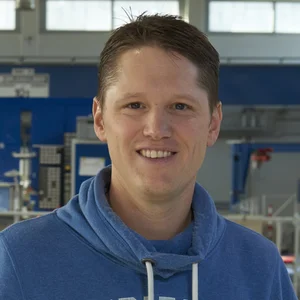
Jim O. VigoreauxView profile
Professor
Jim O. Vigoreaux is the Breazzano Family Green and Gold Professor in the Department of Biology within the College of Arts and Sciences at the University of Vermont. His research program focuses on fundamental mechanisms of muscle biology using insect flight muscle as a model system, with particular emphasis on protein structure-function relationships and biomechanics. His educational background includes a Ph.D. from the University of Oklahoma Health Science Center (1987) followed by research associate training at the Massachusetts Institute of Technology (1987-1991). Vigoreaux's research spans five interconnected domains: Novel muscle protein characterization : Discovery and analysis of projectin (invertebrate titin homolog) and flightin Integrative muscle biology : Multi-scale investigation from molecular changes to whole-organism locomotion Thick filament biomechanics : Structural properties defining muscle type differences and disease states Muscle energetics : Supramolecular enzyme complexes in energy metabolism Myosin regulatory light chain function : Pleiotropic effects on contractile regulation and behavior His recent publications (2006-2017) reveal consistent focus on Drosophila flight muscle proteins, with increasing emphasis on evolutionary conservation, phosphorylation dynamics, and biomechanical consequences of mutations. Key recurring themes include flightin's role in thick filament stability, regulatory light chain's impact on power output, and metabolic organization in muscle cells. Vigoreaux leads a collaborative research program with extensive multi-institutional partnerships, as evidenced by co-authorship patterns showing consistent collaboration with Maughan, Reedy, Irving, and others across decades of work. His lab maintains active research in protein biochemistry, genetic manipulation, and biomechanical analysis of muscle systems. The Vigoreaux lab operates within the Marsh Life Science building at UVM, utilizing specialized equipment for muscle fiber mechanics, protein analysis, and Drosophila genetics. His work bridges molecular biology, biophysics, and evolutionary studies to address fundamental questions in muscle function.