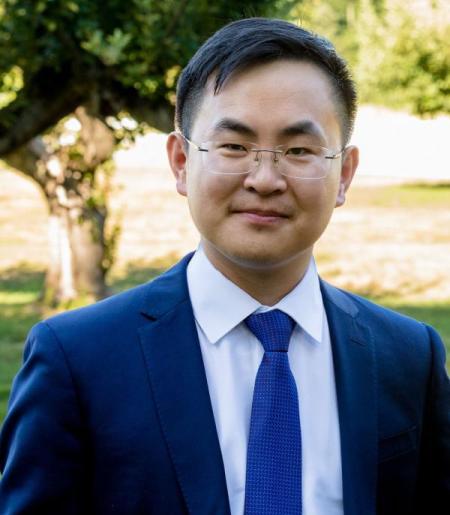
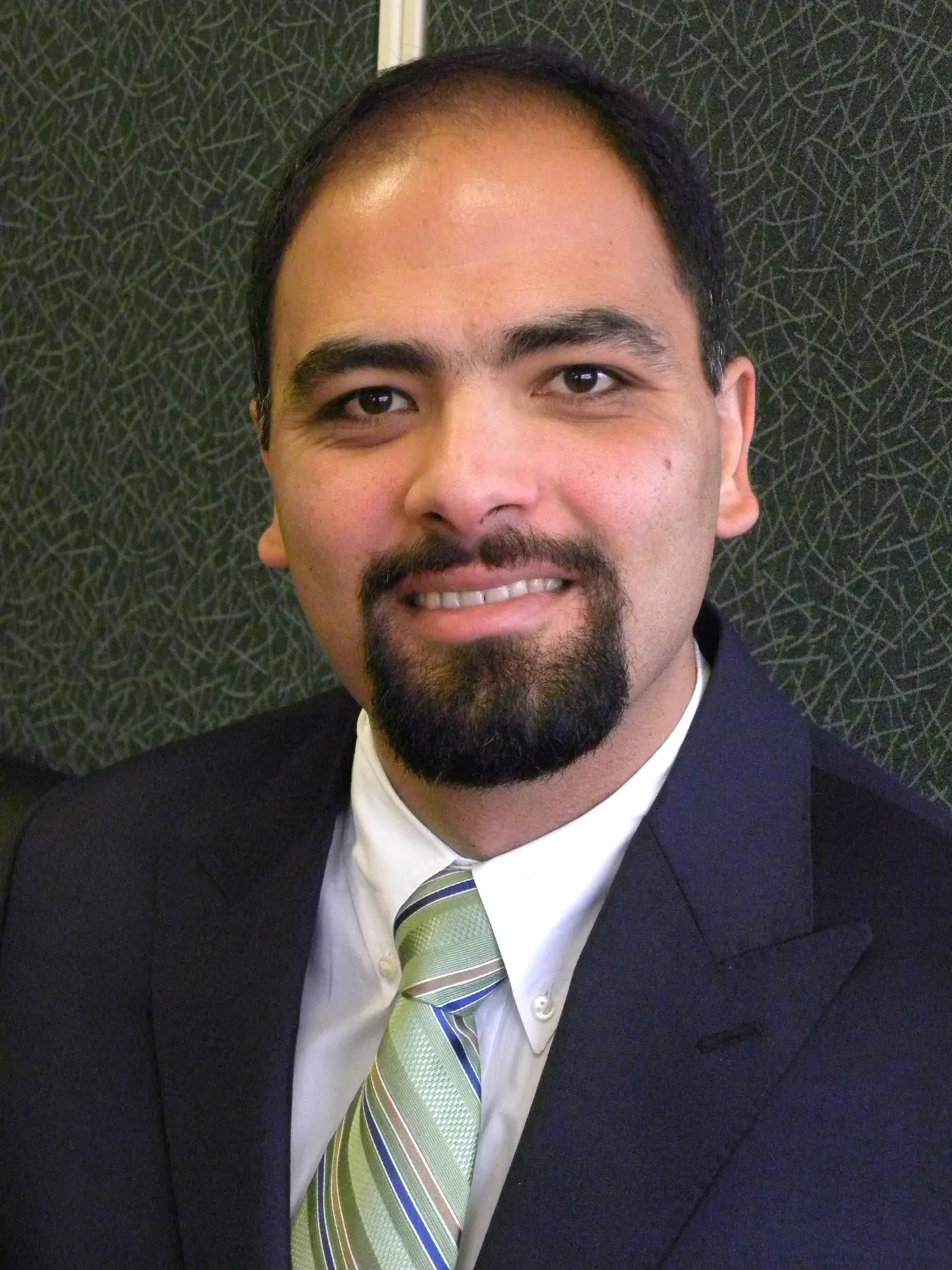
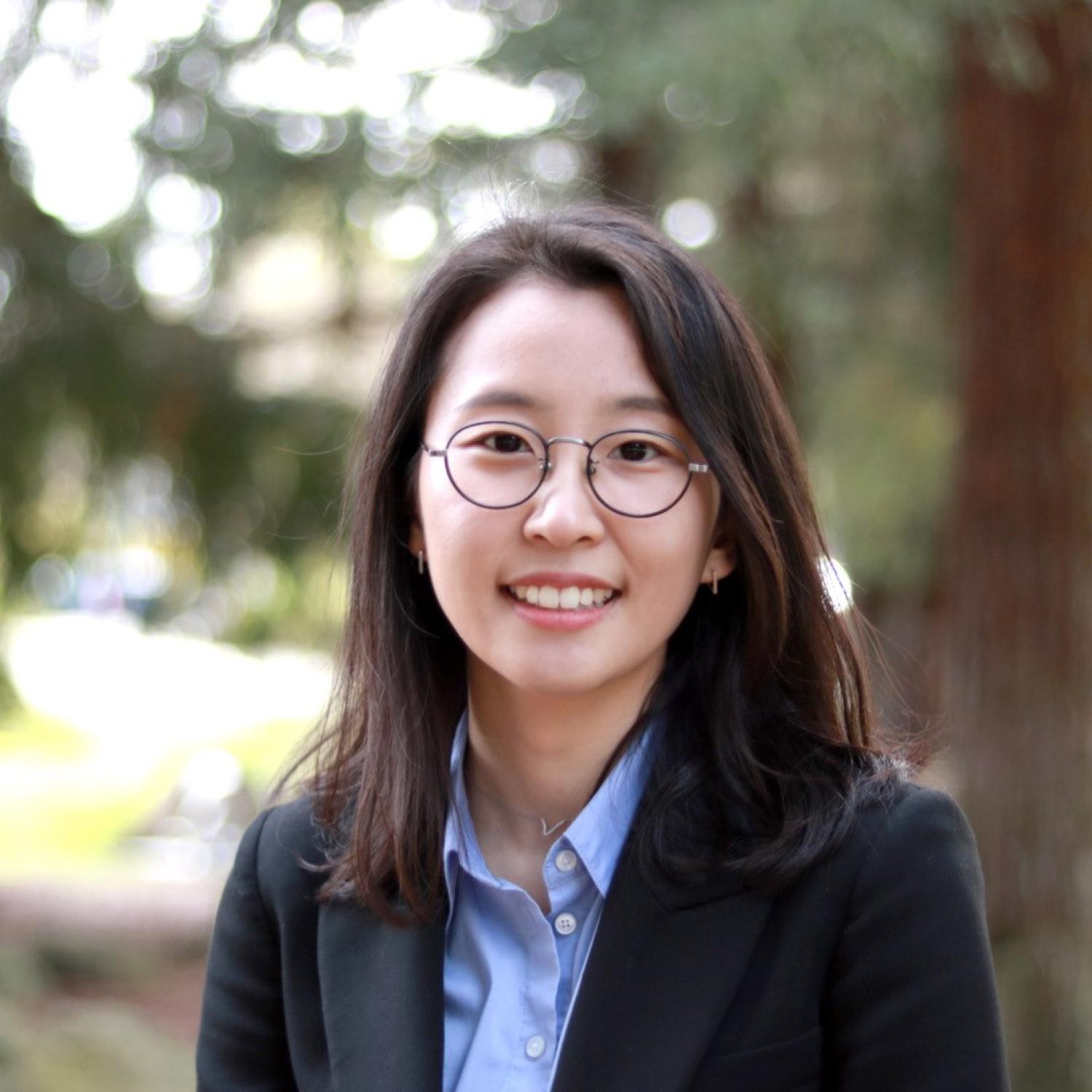
Yao Yang is an Assistant Professor in the Department of Chemistry and Chemical Biology at Cornell University's College of Arts and Sciences. His research focuses on developing multimodal operando electron microscopy and synchrotron X-ray methods to probe electrochemical dynamics at solid-liquid interfaces for energy materials. PhD, Cornell University (2021) Miller Postdoctoral Fellow, UC Berkeley (2021-2024) Research interests span fundamental electrochemistry and energy material interfaces, particularly CO2 reduction, clean H2 production, and rechargeable batteries. The Yang group specializes in operando electrochemical liquid-cell scanning transmission electron microscopy (EC-STEM) and correlative synchrotron X-ray methods at Cornell Center for Materials Research (CCMR) and Cornell High Energy Synchrotron Source (CHESS). Recent publications highlight atomic-scale imaging of catalyst dynamics, Tafel slope analysis, and epitaxial growth techniques for enhanced electrocatalysts. Articles demonstrate interdisciplinary approaches combining electrochemistry, nanoscience, and advanced characterization. Scientific Awards: 2025 ACS Materials and Interfaces Outstanding Presentations by Young Investigators Award 2024 Journal of Materials Research Distinguished Invited Speaker Miller Postdoctoral Fellowship (2021-2024) 2023 Best Early Career Presentation at MRS Spring 2022 ACS AC/DC Rising Stars in Analytical Chemistry Contact: yaoyang@cornell.edu
Assoc Prof Ng Teng Yong is an Associate Professor at the School of Mechanical & Aerospace Engineering (NTU), specializing in numerical modeling and simulation. With a background as Research Manager at A*STAR Institute of High Performance Computing, his work spans materials science, nanotechnology, and aerospace engineering. Current focus on graphene-based desalination membranes Expertise in molecular dynamics simulations Investigates nanoscale fluid mechanics and structural dynamics Recent publications highlight advancements in energy-efficient electrodialysis, smart robotics, and nonlinear vibration analysis. His interdisciplinary approach integrates computational methods with experimental validation in additive manufacturing and soft material mechanics.
Ali Mani is an Associate Professor of Mechanical Engineering at Stanford University and a faculty affiliate at the Institute for Computational and Mathematical Engineering. He earned his PhD in Mechanical Engineering from Stanford in 2009, following an M.S. (2004) and B.S. (2002) from Stanford and Sharif University of Technology, respectively. His research focuses on fluid mechanics, turbulence, and numerical simulations, with applications in multiphase flows, electrokinetic systems, and applied mathematics. His group develops high-fidelity simulation tools and reduced-order models to understand transport processes in turbulent and chaotic systems. Research interests include turbulence modeling, two-phase flow dynamics, and electrochemical transport. Recent work explores eddy viscosity operators, nonlocal transport phenomena, and computational methods for multiphase systems. The group's studies often bridge experimental validation and numerical analysis to improve predictive engineering models. Key contributions span electrokinetic transport in porous media, superhydrophobic surface slip effects, and phase field modeling. His lab’s work is supported by grants focusing on fluid dynamics, renewable energy systems, and advanced simulation frameworks.
Andreas Mortensen is a full Professor at École Polytechnique Fédérale de Lausanne (EPFL) in Switzerland, where he leads research at the Mechanical Metallurgy Laboratory (LMM) within the School of Engineering. His office is located in building MXD at EPFL's main campus in Lausanne. Institution: École Polytechnique Fédérale de Lausanne (EPFL) School: School of Engineering (STI) Department: Mechanical Metallurgy Laboratory (LMM) Position: Professor Professor Mortensen's research focuses on the mechanical properties of materials, particularly metal matrix composites, microcellular materials, and the fundamental aspects of metallurgy. His work spans from theoretical modeling to practical applications in materials processing and characterization. He has made significant contributions to understanding infiltration processes, fracture mechanics, and the behavior of materials at micro and nano scales. Analysis of Professor Mortensen's recent publications (2022-2025) reveals a continued focus on advanced materials characterization techniques, particularly nanoindentation and micro-scale mechanical testing. His research shows increasing attention to additive manufacturing processes, multi-scale material behavior, and the development of novel composite structures. The work spans fundamental investigations of dislocation dynamics and slip phenomena to applied research on brazing technologies and investment casting methods. Throughout his extensive career, Professor Mortensen has supervised numerous students and collaborated with researchers worldwide, contributing to the advancement of materials science and engineering. His laboratory has been instrumental in developing methodologies for characterizing material behavior across multiple length scales, from nano to macro.
Professor Masashi Okubo at Waseda University's School of Advanced Science and Engineering specializes in electrochemistry and energy materials development. With cross-appointments at Kyoto University and the Advanced Collaborative Research Organization for SmartSociety, his work focuses on sustainable battery systems including aqueous proton batteries, MXene-based electrodes, and oxygen-redox chemistry. His research bridges fundamental materials science with practical energy storage applications through combined experimental-theoretical approaches. Education : Ph.D. in Basic Science (2005) and M.Sc./B.Sc. in Basic Science from The University of Tokyo Research Strengths : Solid-state ionics and intercalation chemistry MXene electrode engineering Oxygen-redox reaction mechanisms High-rate energy storage systems Hydrate-melt electrolyte optimization Scientific Contributions include: Discovering near-zero-volume-phase battery materials Developing distortion-relieving voids in host structures Elucidating multiorbital bond formation in oxygen-redox reactions Advancing aqueous redox-flow battery catholyte design Prominent Awards : Waseda Research Award (2021) ACS Reviewer Excellence Award (2018) Ministry of Education Young Scientist Award (2017) Multiple Young Investigator Awards (2016)
Dr. Gaël Kermarrec is a researcher at the Boundary Layer Meteorology Group , part of the Institute of Meteorology and Climatology within the Faculty of Mathematics and Physics at Leibniz University Hannover . His work focuses on atmospheric turbulence, GNSS applications, and remote sensing for environmental monitoring. Boundary layer meteorology Turbulence theory GNSS signal processing Terrestrial laser scanning Climate change impacts Geodetic time series analysis His research integrates advanced mathematical models like LR B-splines and Matérn covariance with large eddy simulations to study: Atmospheric turbulence effects on optical/GNSS signals Hydrospheric mass loading Deformation analysis of terrain/port infrastructure Climatic sea-level changes Machine learning for remote sensing The 15 most recent articles (2025-2023) demonstrate his focus on: GNSS-based turbulence detection AI-enhanced climate mapping Advanced surface approximation techniques Multi-sensor data fusion Stochastic modeling of geodetic observations Environmental impacts on optical measurements He has developed tools like the Klimascanner QGIS plugin for urban climate resilience and contributes to: Understanding atmospheric scale lengths Improving TLS/GNSS deformation monitoring Analyzing hydrospheric changes Wavefront modeling Ionospheric corrections
Michael Hagan is a Professor of Physics at Brandeis University, affiliated with the Martin A. Fisher School of Physics. His research focuses on understanding the physical principles governing assembly and dynamic organization in biological and biomimetic systems. He employs computational and theoretical methods, including machine learning, to study viral capsid assembly, bacterial microcompartments, and active matter systems. His work bridges length and time scales to elucidate emergent behaviors in nonequilibrium systems. Education: PhD in Physics from the University of California, Berkeley (2003). His group, the Hagan Lab, collaborates with experimentalists and has received funding from the DOE, NSF, Keck Foundation, and NIH. Key areas include viral genome assembly optimization, bacterial microcompartment formation, and the dynamics of active nematics. Recent studies explore defect-ordered phases, phase separation in active colloids, and programmable self-assembly of geometric structures. Research interests span biophysics, soft condensed matter, and computational modeling. His lab's work has implications for synthetic biology, drug design, and material science. Collaborations with experimental groups (e.g., Z. Dogic's lab) have led to discoveries in active matter dynamics and biomimetic systems.
HaoTian Harvey Shi serves as an Assistant Professor in the Department of Mechanical and Materials Engineering at Western University's Faculty of Engineering. His research focuses on sustainable functional materials for hierarchical additive manufacturing across multiple length scales. Education: Ph.D. in Mechanical Engineering, University of Toronto, 2020 M.A.Sc. in Mechanical Engineering, University of Toronto, 2016 B.A.Sc. in Engineering Science, University of Toronto, 2014 Dr. Shi's research at the intersection of advanced manufacturing, nanoengineering, and material informatics targets applications in sensors (Organ-on-a-Chip Models, Microneedle-based Minimally Invasive Sensors) and energy storage (Supercapacitors and Zn-ion Batteries). His Data-Driven Advanced Manufacturing (D2M) Group develops hierarchical functionalized nanostructures where hidden relations between manufacturing parameters and device performance are revealed through innovative materials science approaches. His recent publications demonstrate expertise in graphene-based sensors, functionally-graded supercapacitors, nanohybrid strain sensors, and organ-on-chip models, reflecting trends toward multi-scale manufacturing for biomedical and energy applications. Scientific Awards: NSERC PGS-D doctoral award Ontario Graduate Scholarship (OGS) NSERC PDF Fellowship Dr. Shi previously held a post-doctoral Research Associate position at the University of Cambridge, developing multi-length-scale hierarchical fibre-based printing technologies. His work combines mechanical design principles with materials science to optimize hierarchical manufacturing parameters for enhanced device performance. The Data-Driven Advanced Manufacturing (D2M) Group operates within Western University's advanced manufacturing ecosystem, leveraging facilities for nanoengineering and materials characterization to develop next-generation sustainable functional materials.
Shahrzad Esmaeili is a Professor in the Department of Mechanical and Mechatronics Engineering at the University of Waterloo. She holds a PhD in Materials Engineering from the University of British Columbia (2002), and master’s and bachelor’s degrees in Materials Science and Engineering from Shiraz University (1988, 1980). Her research focuses on processing-structure-property relationships in light alloys, metallic biomaterials, and additive manufacturing. She has expertise in phase transformations, surface modifications, and multi-length scale characterization. Notably, she received an Early Researcher Award from the Ontario Ministry of Research and Innovation. Her work bridges experimental and computational methods to study microstructural phenomena in aluminum and magnesium alloys. Recent publications emphasize non-isothermal annealing, precipitation hardening, and bio-structure fabrication. Education: PhD, Materials Engineering, University of British Columbia (2002) MSc, Materials Science and Engineering, Shiraz University (1988) BSc, Materials Science and Engineering, Shiraz University (1980) Research Interests: Her work integrates experimental and modeling approaches to study nanostructured materials, including metallic biomaterials and light alloys. Key areas include: Precipitation hardening mechanisms in Al-Mg-Si and Mg-Zn alloys Surface functionalization via laser-assisted deposition Additive manufacturing of porous titanium bio-structures Thermal-mechanical processing of aluminum composites Publications: Over 100 peer-reviewed articles span microstructural analysis, alloy behavior under thermal treatments, and biomedical applications. Recent trends focus on non-isothermal processing effects, microalloying strategies, and advanced surface modification techniques. Awards: Early Researcher Award (Ontario Ministry of Research and Innovation) Grants & Collaboration: Her research involves interdisciplinary collaborations, though specific grants are not detailed here. She leads studies on novel processing routes for high-performance alloys and biomaterials. Labs/Teams: Active in materials characterization and computational modeling groups at the University of Waterloo, focusing on multi-scale material analysis.
Alireza Vakil Amirkhizi serves as Professor in the Department of Mechanical and Industrial Engineering at the Francis College of Engineering, University of Massachusetts Lowell. His research focuses on mechanics of materials under extreme conditions and advanced composite systems. His academic credentials include: Ph.D. in Mechanical and Aerospace Engineering, University of California, San Diego (Dissertation: Multifunctional Composites and Structures with Integrated Mechanical and Electromagnetic Properties) M.S. in Mechanical and Aerospace Engineering, University of California, San Diego B.S. in Civil and Environmental Engineering, Sharif University of Technology (Thesis: Experimental Study of Concrete Shear Walls Reinforced with Punched Steel Plates under Cyclic Loading) Dr. Amirkhizi's research spans applied mechanics and materials science with emphasis on dynamic behavior of materials under high strain-rates, extreme pressures, and temperature variations. His work explores metamaterials for wave manipulation, biomechanics of soft tissues, and molecular-level design of polymeric materials. Current investigations focus on structure-property relationships for next-generation protective systems and energy-absorbing composites. His publication record (2006-2019) reveals consistent contributions in composite mechanics , polymer physics , and metamaterial design . Key themes include constitutive modeling of pressure-sensitive polymers, micromechanical analysis of composite systems, and electromagnetic-mechanical coupling in chiral materials. His work bridges experimental validation with computational modeling across multiple length scales. Notable recognitions: Dissertation Fellowship (2006), UC San Diego Highest Academic Achievement Award (2004), UC San Diego MAE Department Certificate of Recognition (2003), UC San Diego Research funding demonstrates strong military and defense partnerships. As Principal Investigator, he secured grants from the U.S. Army (Natick Soldier RDEC), Air Force (AFOSR, SBIR), Office of Naval Research, and DARPA for projects including parachute material shelf-life analysis, cavitation-resistant coatings, and microstructurally-architected materials. Collaborative projects with S. Nemat-Nasser at UC San Diego involved blast-mitigating polymers and multi-frequency dynamic materials. His laboratory activities focus on experimental characterization of materials under dynamic loading, supported by advanced testing facilities for high-strain-rate mechanics and multi-physics material response.
Jihye Park is an Assistant Professor in the Department of Chemistry at the University of Colorado Boulder, leading the Park Lab established in January 2020. Her research focuses on designing functional hybrid materials with atomic precision, particularly metal-organic frameworks (MOFs), to address challenges in sustainable energy and human health through synthetic chemistry and materials engineering. Dr. Park's educational background includes: Ph.D. in Chemistry from Texas A&M University (2016) Postdoctoral Fellowship at Stanford University (2016-2019) Her expertise spans inorganic chemistry, nanotechnology, photochemistry, and renewable energy, with emphasis on conductive MOFs for electrochemical energy storage, photocatalysis, and biomedical applications. The group manipulates material properties (length-scale, shape, dimension) to control transport processes and leverage emergent optical/electronic properties for targeted device applications. Recent publications (2022-2024) demonstrate leadership in electrically conductive MOFs, featuring innovations in proton-electron dual conduction, photocatalytic hydrogen peroxide production, and energy storage mechanisms. Her work consistently integrates synthetic methodology development with advanced characterization to solve fundamental challenges in sustainable energy conversion. Dr. Park has received numerous accolades, including: Office of Naval Research Young Investigator Program (ONR YIP) Award (2024) ACS PMSE Early Investigator Award (2024) Outstanding Postdoc Mentor of the Year (2024) Hanwha-TotalEnergies Non-Tenured Faculty Award (2023) Marinus Smith Award for Teaching/Mentoring (2022) Camille & Henry Dreyfus Postdoctoral Fellowship (2016-2018) She mentors graduate students including NSF GRFP awardee Brianna Check (2023), Best TA award recipients Samuel and Brianna (2023), and new members Kathryn, Joe, and Liam (2023). Research is funded by competitive grants including ONR YIP (2024) and Hanwha-TotalEnergies (2023), building on prior support from ACS, Welch Foundation, and Fulbright programs. The Park Lab maintains a collaborative environment with current members including postdoc Dr. Xiaoyu Fang (joined Oct 2022), focusing on interdisciplinary projects at the chemistry-materials-engineering interface for next-generation energy and health technologies.
Sir Harshad Bhadeshia is a renowned Indian-British metallurgist and Professor of Metallurgy at Queen Mary University of London since 2022. Previously, he held the Emeritus Tata Steel Professorship at the University of Cambridge, where he worked from 1980 until his move to Queen Mary. His research focuses on the theory of solid-state transformations in multicomponent steels , aiming to create novel alloys and processes with minimal resource use. Education: BSc from City of London Polytechnic, PhD from University of Cambridge (1980) under David V. Edmonds Research Areas: Phase transformations in steel, computational modeling, neural networks, Bainite, welding technology, hydrogen embrittlement resistance, nanostructured materials Scientific Awards: Bessemer Gold Medal (2006), Hume Rothery Prize (1992), Rosenhain Medal (1994), Knight Bachelor (2015), Adolf Martens Medal (2017), William Menelaus Medal (2025) Editorial Roles: Editor for Materials Science and Engineering: A , Materials Science and Technology , and Science and Technology of Welding and Joining Students: Roger Reed, Rachel Thomson His Google Scholar publications (over 650) cover topics in metallurgy, phase transformations, computational modeling, hydrogen resistance, and AI in materials science, with a significant emphasis on Bainite, welds, and nanostructured steels. The SKF University Technology Centre (2009-2019) and Computational Metallurgy Laboratory (2005-18) highlight his leadership in industrial collaborations and international research. His scientific awards and fellowships (Royal Society, Royal Academy of Engineering, Institute of Materials, Minerals and Mining) underscore his global recognition.
Pablo D. Zavattieri is the Jerry M. and Lynda T. Engelhardt Professor in Civil Engineering at the Lyles School of Civil Engineering, College of Engineering, Purdue University. His research focuses on solid mechanics applied to the multiscale modeling of advanced and innovative engineering materials, with emphasis on bridging between atomistics to continuum-based models and combining computational tools with experimental validation. Education: B.S./M.S., Instituto Balseiro, Argentina, 1995 Ph.D., Purdue University, 2000 Professor Zavattieri's research spans solid mechanics applied to multiscale analysis and design of advanced architectured materials, interfaces, and complex structures. His work lies at the intersection of Solid Mechanics and Materials Engineering, focusing on developing novel materials with exceptional properties inspired by natural systems. His contributions include micromechanical models for polycrystalline materials, new fracture models for thin-walled structures, and pioneering work on biomimetic materials using 3D printing technology. Current projects investigate the multiscale modeling of heterogeneous and hierarchical materials, micro and nanomechanics of biological materials, bioinspired materials, architectured materials, micropatterned interfaces, and smart materials. His publication record demonstrates a strong focus on understanding natural materials like chiton radular teeth, nacre, and mantis shrimp structures, translating these biological designs into engineered solutions. His recent work spans biological materials characterization, phase-transforming cellular materials, cellulose nanocrystal composites, and 3D printing of cementitious materials, consistently combining computational modeling with experimental validation across multiple length scales. Scientific Awards and Recognitions: NSF CAREER award (2013) Roy E. & Myrna G. Wansik Research Award (2013) Purdue University Faculty Scholar (2015-2020) Kavli Frontier of Science Fellow of the National Academy of Science (2015) National Academy of Engineering US Frontier of Engineering Symposium attendee (2014) Engineering Fracture Mechanics Journal Most Cited Articles award (2005-2009 period) Second Most Cited Journal of the Mechanics and Physics of Solids Article (2007-2012) Cover page of Cellulose journal (2013) Cover page of Advanced Functional Materials journal (2014) Professor Zavattieri has mentored numerous graduate students who have received prestigious awards including William and Mary Goetz Graduate Scholarships, William L. Dolch Graduate Scholarships, Purdue Doctoral Fellowships, and SURF Research Symposium awards. His research has been supported by NSF, AFOSR, INDOT/JTRP, Forest Product Laboratory, General Motors, Velcro, and the Purdue Research Foundation. Notable projects include a $7.5M DoD/MURI award for 'Convergent Evolution to Engineering: Multiscale Structures and Mechanics in Damage Tolerant Functional Bio-Composite and Biomimetic Materials' and multiple NSF grants focusing on biomimetic materials and 3D printing of civil infrastructure. He directs the Multi-Scale Mechanics and Materials by Design Lab at Purdue University, which maintains a strong collaborative network with institutions including UC Riverside (David Kisailus' group), UC San Diego, Northwestern University, and UC Berkeley. The lab has produced significant research on biological materials like chiton radular teeth, mantis shrimp structures, and nacre, translating these natural designs into engineered solutions for applications in infrastructure, lightweight structural materials, and energy absorption systems.
Nathaniel Rosi is the Covestro Professor of Chemistry at the University of Pittsburgh's Dietrich School of Arts and Sciences, Department of Chemistry. His research focuses on designing and synthesizing new materials using chemical building blocks like metal clusters and biomolecules to create hierarchical structures with tailored properties for energy, medicine, and other applications. Research interests span inorganic and materials chemistry, metal-organic frameworks (MOFs), nanoparticle assembly, and sustainable energy materials. The Rosi Lab develops unifying design principles for organizing building blocks across multiple length scales, employing diverse synthetic methods and characterization techniques including NMR, TEM, X-ray diffraction, and sorption analysis. Scientific awards include: Chancellor's Distinguished Research Award (2014) Kavli Fellow (2012) ChemComm Emerging Investigator (2011) NSF CAREER Award (2010-2015) US Delegate for Transatlantic Frontiers of Chemistry Conference (2008) The Rosi Research Laboratory trains students in interdisciplinary approaches at the chemistry-biophysics interface and welcomes graduate students to explore its multi-disciplinary research environment.
Christina M. Rost is an Assistant Professor in the Department of Materials Science and Engineering at Virginia Polytechnic Institute and State University (Virginia Tech) , part of the College of Engineering . She holds a Ph.D. in Materials Science and Engineering from North Carolina State University (2016), following a B.S. and M.S. in Physics from Indiana University of Pennsylvania. Prior to joining Virginia Tech, she served as an Assistant Professor of Physics at James Madison University. Research Focus: Atomic-level disorder in ceramics, particularly high entropy and compositionally complex systems. Key Techniques: X-ray absorption/emission spectroscopy, multi-length-scale characterization. Applications: Functional materials for extreme environments, energy, and electronics. Research Interests include designing materials with tunable properties via controlled disorder, leveraging high entropy oxides and amorphous systems. Her work integrates advanced spectroscopy, computational modeling, and machine learning to accelerate materials discovery. Recent emphases include understanding local structure- property relationships in entropy-stabilized oxides and spinel ferrites. Publications reflect a focus on high entropy materials' synthesis, thermal stability, magnetic behavior, and functional applications. Notable trends include: (1) exploring cation roles in rock salt oxides, (2) optimizing thin film growth for pyroelectric applications, and (3) studying phase evolution under thermal/mechanical stress. Scientific Awards : 2023 Provost Award for Excellence in Research (James Madison University) 2017 Postdoctoral Teaching Fellowship (University of Virginia) 2015 First Place, Best Student Presentation (ACerS) Lab Team includes 5 graduate students (e.g., John Barber, Gerald Bejger), 4 undergraduates, and former members now at institutions like Pratt & Whitney. Lab Facilities : Located in Holden Hall, equipped with state-of-the-art characterization tools.