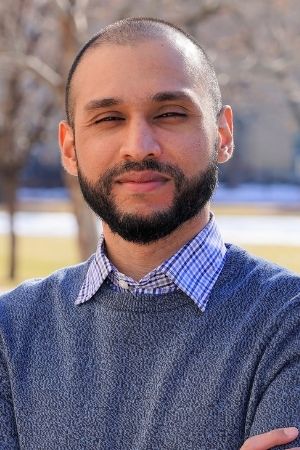
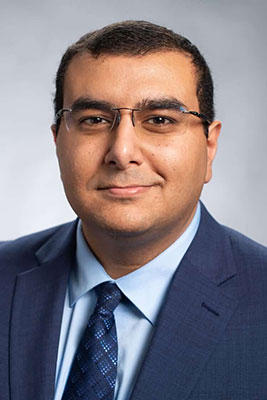
Andrea Appolloni is an Associate Professor at the Department of Management and Law, University of Rome Tor Vergata. His academic career focuses on Management with emphasis on Sustainable Supply Chain Management , Digital Transformation , and Circular Economy . His research explores the intersection of technological innovation and sustainability, particularly through topics like AI in Logistics , Green Procurement , and Policy Optimization . Publications span both theoretical frameworks and empirical studies in China, Italy, and Malaysia, with a strong focus on environmental impact and organizational performance. Recent work includes digital twin applications for human-AI collaboration, blockchain integration in sustainable supply chains, and analyzing barriers to circular economy adoption. His 15 most recent articles (2025-2022) demonstrate a trend toward combining Artificial Intelligence , Operations Management , and Environmental Governance .
Dr. Shobana Nair Partington serves as Head of the Department for Operations, Technology, Events, and Hospitality Management at Manchester Metropolitan University's triple-accredited Business School, leading a team of 60 academic staff serving over 2,000 students. With over 20 years of academic leadership experience, she also holds strategic university roles as Academic Co-Chair for the Race Equality Charter and Academic Co-Director for Accreditation. Her international teaching engagements span Switzerland, Bulgaria, and Malaysia, reflecting her global perspective on business education. Her educational foundation includes a Master's degree in Economics from the University of Leeds, funded by a Foreign and Commonwealth Office scholarship, and doctoral research at Manchester Metropolitan University supported by the Low Pay Commission. These qualifications underpin her evidence-based approach to labor market analysis. Shobana's research centers on systemic inequalities in hospitality employment, with particular focus on pay practices, working conditions, and minimum wage impacts. Her work bridges economic theory and practical industry applications, examining how structural factors shape employee experiences in service sectors. She integrates psychological safety frameworks with innovation studies to develop actionable insights for organizational change. Analysis of her publication trajectory reveals persistent themes in hospitality labor economics, with evolving emphasis from foundational minimum wage studies toward contemporary investigations of psychological safety and innovation. Her research consistently connects policy implications with operational realities in hotels, cruise ships, and tourism enterprises. Her scholarly contributions have been recognized through: Senior Fellowship of the Higher Education Academy Fellowship of the Institute of Professional Development As an academic supervisor, she has guided six PhD candidates to completion on topics ranging from hotel information systems to tourist transport experiences. Her department drives innovation through the Digital & Technology Solutions degree apprenticeship and applied research initiatives that help businesses adapt to technological disruption. She actively serves on the Chartered Association of Business Schools' Learning, Teaching and Student Experience Committee and as a Senator for the Institute of Professional Development. The department operates as a dynamic hub for industry-engaged scholarship, with faculty from diverse nationalities developing curricula that integrate digital fluency, data analytics, and creative problem-solving. Their research directly informs sector practices while addressing critical challenges like student award gaps and workplace inclusion through the Race Equality Charter framework.
Professor Kathy Kotiadis is Professor of Operational Research and Co-Director of the Centre for Advanced Diagnostic Development and Application (CADDA) at Kent Business School. Co-developed PartiSim framework for participatory simulation. Research expertise in simulation methodology (discrete-event/hybrid), conceptual modeling, and stakeholder engagement approaches applied to healthcare, transport, and energy sectors. Recipient of K.D. Tocher Medal (2007-08) and Daphne Jackson Fellowship (2014). Secured funding from EPSRC, Innovate UK, and Research England. Serves as Co-Editor of Health Systems and Editorial Board member for Journal of Simulation. Supervised 7 PhD students to completion in simulation methodologies and healthcare applications. Current projects include HS1 Ltd (2024) and North Kent Industrial Cluster (2025).
Dr. Paul Hill is a tenured Extension Professor at Utah State University's College of Agriculture and Applied Sciences, serving as the Washington County Director and founder of the Remote Online Initiative (ROI) established in 2018. His work focuses on connecting rural communities to remote work and e-commerce opportunities through innovative Extension programming that has expanded across all Utah counties and ten additional states. His educational background includes: PhD in Career and Technical Education (Distributed operations, leadership, diffusion of innovations) from Utah State University (2021) MBA in Leadership (Statistics, Marketing) from Southern Utah University (2011) BS in Business Administration (Leadership, Statistics, Marketing) from Utah Tech University (2009) Dr. Hill's research centers on remote work adoption as a modern workplace practice, with significant contributions to community, workforce, and economic development in rural areas. His work bridges leadership theory with practical applications for remote workforce development, creating measurable impacts on rural economic prosperity. His research demonstrates how technology adoption can transform traditional rural economies through remote work opportunities and e-commerce platforms. His publication record shows a clear progression from foundational work in STEM education and 4-H programming to increasingly sophisticated research on remote work adoption and its socioeconomic impacts. Recent publications focus on cutting-edge topics including generative AI applications in Extension, remote work satisfaction metrics, and evaluation frameworks for professional development events. His work consistently addresses practical challenges in rural community development through evidence-based approaches. Dr. Hill's scientific recognition includes: Utah Governor's Medal for Science and Technology (2015) Forty Under Forty Award from Utah Business Magazine (2021) Numerous national awards from seven different national associations totaling over 20 honors Multiple National Winners from the National Association of Community Development Extension Professionals As founder of the Rural Online Initiative, Dr. Hill has secured state and federal funding that has measurably increased incomes and improved quality of life for rural residents. His programming has received recognition for innovation, creativity, and community impact, with particular strength in developing practical solutions for rural workforce challenges. He has led numerous teams that have earned awards across multiple categories including educational technology, community development, and program innovation. Dr. Hill directs the Rural Online Initiative, which has become a model for rural workforce development across multiple states. His work integrates community asset mapping with technology adoption strategies to create sustainable economic pathways for rural communities. The initiative has evolved from local programming to a multi-state effort demonstrating significant impact on rural economic development through remote work opportunities.
Lendel Narine serves as an Extension Associate Professor within the Youth Programs Department at Utah State University Extension, based at the Logan Campus. His role centers on evaluation and reporting for statewide extension initiatives, focusing on evidence-based program development and impact assessment across Utah's diverse communities through rigorous methodological frameworks. Dr. Narine's educational foundation includes: PhD in Agricultural Education and Communication, University of Florida (2018) MS (M.Phil.) in Agricultural Economics, The University of the West Indies (2013) BS in Agribusiness Management, The University of the West Indies (2010) His research specializes in quantitative evaluation methodologies including competency modeling, outcome metrics, and cost-benefit analysis, with growing emphasis on behavior change mechanisms and diversity-integration frameworks. He applies the Ranked Discrepancy Model extensively for needs assessment in agricultural and youth programming contexts. Analysis of his 2024-2025 publications reveals three dominant research trajectories: food/financial security programming in Utah communities, innovative evaluation frameworks for extension services, and workforce development through emerging technologies like AI. These works consistently employ advanced statistical methods to address critical issues including climate adaptation and health disparities. His award portfolio features 13 major honors including: Distinguished Team Award (2023) Susan Barkman Award for Research and Evaluation (2023) Outstanding Article of the Year (2020) Visionary Leader Award (2020) Best Research Poster (2019) Early Career Service (2021) New Specialist Award (2022) Excellence in 4-H Citizenship Programming (2023) Communication Award: Educational Publication (2022) Florence Hall Award (2022) Innovative Program (2022) Don Dean Felker Financial Management Award (2023) Excellence in Workforce Development Programming (2023) Dr. Narine advises graduate students through ongoing mentorship since 2019 and has evaluated USU Extension's internal funding mechanisms including the mini-grant program. His grant leadership spans civil rights compliance initiatives and Western regional evaluation capacity building projects addressing organizational advancement and diversity metrics. He actively directs multiple extension teams including the Climate Adaptation Intern Program, CORE Professional Development, and Civil Rights Compliance initiatives, while contributing to multi-state collaborations on leadership development and generative AI applications in extension education through the Western Extension region.
Dr. Muhammad M. Sherif is an Assistant Professor in the Department of Civil, Construction, and Environmental Engineering at the University of Alabama at Birmingham (UAB), part of the School of Engineering. He joined UAB in Fall 2019 after completing his Ph.D. at the University of Virginia and M.S. at Carnegie Mellon University, both in structural engineering. His research focuses on smart materials, structural systems, and machine learning applications in civil infrastructure. He is particularly interested in additive manufacturing for construction and the development of innovative materials like engineered cementitious composites. Education: B.S., United Arab Emirates University M.S., Carnegie Mellon University Ph.D., University of Virginia Research Interests: Dr. Sherif’s work spans material characterization, machine learning models for structural analysis, and the integration of advanced materials into infrastructure systems. He explores topics like crack detection using UAVs, superelastic shape memory alloys, and multi-objective optimization in welding processes. His Advanced Materials and Smart Infrastructure Systems (AMSIS) lab emphasizes interdisciplinary approaches to solving civil engineering challenges. Publications: His recent work includes studies on UAV-based pavement crack detection, machine learning for concrete strength prediction, and optimization of tube-to-tubesheet joints. These reflect trends toward AI-driven solutions and sustainable material innovations. Advising: He actively mentors students in multidisciplinary research projects, emphasizing self-motivation and innovation. His lab collaborates on topics like composite materials, structural health monitoring, and infrastructure resilience. Labs/Teams: His AMSIS lab at UAB focuses on advancing smart materials and infrastructure systems through cutting-edge research and collaboration.
Sade Bonilla is an Assistant Professor at the University of Pennsylvania's Graduate School of Education (Penn GSE) and Senior Research Specialist at the Consortium for Policy Research in Education. Her work focuses on education policies' transformative potential for marginalized youth, particularly in high school-to-college transitions and labor market readiness. She leads research-practitioner partnerships to generate actionable insights for schools and policymakers. Key research projects include the 'Cost-of-Living Grant Pilot on Community College Student Success' (funded by Arnold Ventures), examining financial aid's impact on completion rates and well-being, and a multi-site study on ethnic studies' effects on academic and social-emotional outcomes (funded by the Hewlett Foundation). She has held prestigious fellowships, including the 2019 Outstanding Predoctoral Fellow from IES and Spencer/NAEd Dissertation Fellowship (2018). Her recent work highlights barriers to postsecondary success, emphasizing mental health, financial stability, and structural inequities. Collaborations with institutions like Massachusetts community colleges and Bay Area districts demonstrate her commitment to real-world policy impact. Grants & Leadership: Principal Investigator for Arnold Ventures' financial aid study, Co-PI on Hewlett Foundation's ethnic studies research Community Engagement: Named inaugural Faculty Research Director for Penn GSE's Office of School and Community Engagement (2024) Her research teams utilize mixed methods, combining longitudinal data with student-centered qualitative insights to address systemic challenges in education equity.
Aaron Kraut, MD is a Clinical Assistant Professor in the Department of Emergency Medicine at the University of Wisconsin School of Medicine and Public Health, where he has served since 2015 after completing residency training at Northwestern University as Chief Resident. His educational background includes: B.A. in Biology from Middlebury College Medical degree from University of Vermont Larner College of Medicine Residency at McGaw Medical Center of Northwestern University Dr. Kraut specializes in medical education innovation within emergency medicine, focusing on resident feedback systems, curriculum development, and adaptive expertise training. His work bridges educational theory with clinical practice through multi-institutional collaborations, emphasizing practical implementation of entrustable professional activities and assessment frameworks that enhance resident autonomy and clinical decision-making. Analysis of his 2020-2024 publications reveals dominant themes in competency-based assessment across specialties, particularly entrustable professional activities in emergency medicine and surgery residencies. His research consistently addresses resident feedback mechanisms, pandemic-driven educational adaptations, and efficiency metrics in clinical training environments, demonstrating a cross-cutting focus on data-driven program improvement and multi-institutional validation of educational tools. His significant recognitions include: UW Health Rising Star Educator Award Fellow of the American College of Emergency Physicians University of Wisconsin Emergency Medicine Residency Faculty Teaching Award Harvard Macy Institute Scholar Feinberg Academy of Medical Educators membership As a core member of the Emergency Medicine Education Research Alliance (EMERA), Dr. Kraut leads multi-institutional projects developing standardized curricula like the emergency medical services rotation framework and program evaluation systems such as the Continuous Residency Improvement Committee. His grant-funded work focuses on implementing educational innovations through mastery learning principles and graded responsibility models, with findings directly shaping residency program standards nationally. He maintains active involvement in resident mentorship and curriculum leadership within UW's emergency medicine residency program while balancing clinical duties, contributing to both educational scholarship and direct trainee development.
Dr. Ibrar Yaqoob serves as a Senior Research Fellow and Program Lead for the Smart and Resilient Supply Chain strand at the Artificial Intelligence and Cyber Futures Institute (AICF) at Charles Sturt University. He leads a research team comprising PhD students and postdoctoral fellows, and previously held research positions at Khalifa University in the UAE and Kyung Hee University in South Korea. Dr. Yaqoob holds a PhD in Computer Science from Universiti Malaya (2017) and has been a Visiting Academic at the University of Cambridge. His research focuses on blockchain, NFTs, and metaverse applications for healthcare, supply chain and logistics, wireless networks, IoT, and smart cities, with additional expertise in mobile edge-cloud computing and big data. Dr. Yaqoob has published over 100 research articles with more than 24,000 citations and an h-index of 58, with 98.9% of his publications appearing in Q1 journals. His recent publications demonstrate a strong trend toward practical blockchain implementations across diverse sectors including healthcare data management, sustainable supply chains, and smart city infrastructure. His work frequently combines blockchain with emerging technologies like NFTs, metaverse applications, and large language models to solve complex real-world problems in supply chain transparency, medical data security, and sustainable development. Ranked in the world's top 0.1% of researchers for three consecutive years (2023-2021) as a Highly Cited Researcher Listed among the World's top 2% scientists for five consecutive years (2020-2024) 2024 IEEE Consumer Electronics Magazine Best Paper Award (1st Place) 2024 Vice Chancellor's Researcher of the Year Commendation 2024 AICF Research Excellence Award 13 highly cited papers (top 1%) and 21 most downloaded articles Dr. Yaqoob serves as Chief Investigator on multiple significant research projects including the AgriTwins project (AUD $2.38 million), Trustworthy Operations and Supply Chain Management project (AUD $10,000), and Decentralized AI Juries project (AUD $13,875). He actively mentors PhD students and postdoctoral researchers while serving on editorial boards for prestigious journals including IEEE Network Magazine, Future Generation Computer Systems, and IEEE Access. His research team at the AICF Institute focuses on bridging emerging technologies with practical applications to address real-world challenges in supply chain resilience and sustainability.
G. James Lemoine is an Associate Professor in the Department of Organization and Human Resources at the School of Management, University at Buffalo. His research focuses on leadership (especially servant leadership, ethical leadership, and moral identity frameworks), creativity, and organizational behavior methodologies. He teaches courses in Organizational Behavior and Leadership. Education: PhD in Management (Georgia Institute of Technology) BS in Business Administration (Louisiana State University) His research interests span leadership ethics, creativity catalysts, and shared leadership networks. Notable contributions include frameworks linking servant leadership to stakeholder benefits and analyzing gender differences in creative performance. Recent work explores political skills in organizational change and VUCA (volatility, uncertainty, complexity, ambiguity) management. Selected Awards: SUNY Chancellor's Award for Excellence in Teaching (2021) Best Dissertation-Based Paper Award (Academy of Management, 2016) Fredric M. Jablin Doctoral Dissertation Award (ILA, 2016) His research has been published in journals like Academy of Management Annals, Journal of Applied Psychology, and Organizational Research Methods. He maintains active roles in professional organizations including the Academy of Management and Greenleaf Center for Servant Leadership. Lemoine advises on servant leadership effectiveness, leadership ethics, and multi-team empowerment spillover effects. His work has practical implications for improving organizational performance through morally-grounded leadership practices.
Prof. Dr. Marina Fiedler holds the Chair of Management, People and Information at the University of Passau since 2010. She is an Associate Editor at the Schmalenbach Journal of Business Research (SBUR) and heads the Passau experimental laboratory PAULA . Her academic journey includes a PhD (2004) and habilitation (2008) from the University of Munich, with visiting professorships at Corvinus University and State University of Management.
Mo Wang is a University Distinguished Professor and Lanzillotti-McKethan Eminent Scholar Chair at the University of Florida’s Warrington College of Business. He holds multiple leadership roles including Associate Dean for Research and Strategic Initiatives, Management Department Chair, and Director of the Human Resource Research Center. His research focuses on retirement strategies, occupational health, leadership dynamics, and advanced quantitative methods, supported by over $5M in federal funding from NIH, NSF, and CDC. Education: PhD (2005), MA (2003) from Bowling Green State University; BS (2001) from Peking University. Research interests include retirement policy, older worker employment, expatriate adjustment, and team processes. His work has been featured in major media outlets like the New York Times and Wall Street Journal, and he advised U.S. Congress on retirement policies. A Fellow of AOM, APA, APS, and SIOP, he leads editorial roles for journals like Work, Aging and Retirement and serves on National Academies committees. Recent articles explore age bias in creativity, AI-driven workplace practices, and organizational resilience during crises. Awards include the Academy of Management HR Division Scholarly Achievement Award (2008) and SIOP’s William A. Owens Award (2016).
Rhema Linder is a Teaching Assistant Professor in the Department of Electrical Engineering and Computer Science at the University of Tennessee, Knoxville. His academic journey includes a BS in Computer Science and Mathematics from LeTourneau University (2009) and a PhD in Computer Science from Texas A&M University (2019). Prior to his current role, he served as a postdoctoral researcher at the PAIRS lab at UT Knoxville. His research focuses on Human-Computer Interaction (HCI), AI Art, Information Visualization, and Creative Cognition. He explores how AI and software systems can enhance creative productivity, particularly in collaborative online environments. His work integrates theories from creative cognition, social science, and HCI to design tools for engineering, design, and scholarship. Rhema has held internships at Adobe Research and Microsoft Research, contributing to projects in data science and human-computer interaction. His GitHub repositories include open-source projects like kivy-games, demonstrating his engagement with software development and educational tools. His research interests emphasize multidisciplinary approaches, blending art, technology, and social science to innovate in creative online spaces. He is actively involved in the PAIRS lab, focusing on advancing understanding of human-AI collaboration and information management systems.
Dr Catherine Fitzgerald is a Postdoctoral Fellow at the Faculty of Nursing and Midwifery, Royal College of Surgeons in Ireland (RCSI). Her research focuses on continuing professional development (CPD), health professions education, and health services research, with a strong emphasis on nursing, midwifery, and cystic fibrosis outcomes. She collaborates with national and European academic and industry partners and is leading the implementation of the European Centre of Excellence for Research in CPD and scoping a WHO Collaborating Centre at RCSI. Education: PhD in Public Health and Epidemiology, University College Dublin, Ireland (2017) Master of Public Health (MPH), University of Alabama at Birmingham, USA (2012) Bachelor of Science in Occupational Health Nursing, Leeds Beckett University, UK (2007) Midwifery Studies, University College Dublin, Ireland General Nursing, Our Lady of Lourdes Hospital, Drogheda, Ireland (1999) Her research interests center on Health Professions Education , particularly continuing professional development for healthcare workers, interprofessional learning, and educational modalities in long-term care. She also investigates Health Services Research , including workforce staffing, policy, and outcomes, with a clinical focus on Cystic Fibrosis , especially newborn screening, caregiver burden, and economic impact. Her work aligns with the UN Sustainable Development Goal 3: Good Health and Well-being. The 15 most recent publications reflect a consistent trajectory in evaluating CPD effectiveness, teaching methods, and economic aspects in healthcare education, alongside longitudinal studies on cystic fibrosis outcomes and newborn screening awareness. Her work combines mixed-methods, systematic reviews, economic evaluations, and cohort studies, often involving multi-center and international collaborations. Scientific Awards: No awards listed in the provided text. Dr Fitzgerald has secured multiple competitive research grants, including EU-funded ECHOES, AMEE-funded CPD Train-the-Trainer, and Skillnet projects, supporting her work in CPD and health professions education. She has supervised or collaborated with numerous researchers and co-authored studies involving teams across Ireland and Europe. While no formal students are listed, her mentoring role is evident in collaborative publications and academic leadership. She is actively involved in building research infrastructure, including the European Centre of Excellence for CPD and a potential WHO Collaborating Centre, indicating leadership in shaping future research and policy in health professions education.
Ignacio Rios Uribe is an Assistant Professor at the Naveen Jindal School of Management (University of Texas at Dallas) specializing in Operations Management . He holds a PhD in Operations, Information and Technology (2020) from Stanford University, with additional MA in Economics from Stanford and MS/BS in Operations Research and Industrial Engineering from Universidad de Chile. PhD in Operations, Information and Technology (2020) - Stanford University MA in Economics (2020) - Stanford University MS in Operations Management (2014) - Universidad de Chile BS in Industrial Engineering (2014) - Universidad de Chile His research focuses on Behavioral Operations Management , particularly in matching markets , college admissions systems, and online platform optimization . Current projects examine mechanism design for dating apps, strategic behavior in college applications, team-building incentives, and charity donation systems. He employs mathematical modeling, field experiments, and structural estimation techniques. Recent publications analyze platform design for curated dating markets (M&SOM, 2023), stable matching with contingent priorities (Management Science, 2023), and capacity planning in school choice (Operations Research, 2022). His work combines theoretical analysis with empirical validation using real-world data from Chilean education systems and industry partners. Awards include First Place in Doing Good with Good OR (2018) and BOM Best Working Paper Competition (2023) Published in top journals like Management Science, M&SOM, Operations Research Professional affiliations with INFORMS and Manufacturing & Service Operations Management Society