Christian Schmidt-Sonntag is a faculty member at the Faculty of Physics, Bielefeld University , specializing in Quantum Chromodynamics (QCD) and Lattice Field Theory . His research focuses on phase transitions in strongly interacting matter, critical phenomena, and the thermodynamic properties of QCD at finite chemical potential. Key affiliations: Bielefeld University, EuroPLEx (European network for Particle physics, Lattice field theory, and Extreme computing) Technological expertise: Multi-GPU lattice QCD simulations, conjugate gradient solvers, data management systems
Professor Alexandros Koliousis serves as Professor of Computer Science and inaugural Faculty Director of the Faculty of Computing, Mathematics, Engineering & Natural Sciences at Northeastern University London. He holds additional prestigious appointments as a Turing Fellow at the Alan Turing Institute, Senior Faculty Research Scientist at the Institute for Experiential AI, and affiliated faculty with Khoury College of Computer Sciences at Northeastern University. His academic foundation includes an MSc in Advanced Computing Science (2005) and PhD (2010) from the University of Glasgow's School of Computing Science. This training underpins his research at the critical intersection of computer systems and machine learning. Professor Koliousis's research program focuses on building practical infrastructure for AI workloads, with significant contributions in distributed systems, deep learning optimization, and stream processing. His open-source projects—including Crossbow for multi-GPU training efficiency and Saber for hybrid CPU/GPU processing—demonstrate applied solutions to scalability challenges in machine learning systems. His recognition includes: Turing Fellowship from the UK's national institute for data science and AI As Faculty Director and active researcher, he maintains robust research activity with recent GitHub contributions showing consistent development across multiple repositories. His leadership position enables significant grant acquisition potential through institutional partnerships with the Alan Turing Institute and Institute for Experiential AI, providing substantial resources for research teams. His technical leadership is evidenced through active development of research systems that bridge theoretical machine learning with practical systems engineering constraints, particularly for resource-constrained environments.
Andrew MacFadyen is a Professor of Physics at New York University , affiliated with the Center for Cosmology and Particle Physics . He is a leading theoretical astrophysicist specializing in computational modeling of high-energy cosmic phenomena. His research focuses on: Formation of black holes through stellar collapse and galactic mergers Dynamics of relativistic jets and shock waves Magnetic field evolution in astrophysical environments Nuclear reactions in extreme conditions Numerical simulations of gas flow using parallel computing Recent work (2025) examines: Accretion suppression in black hole binaries Thermal X-ray signatures in unequal-mass mergers Relativistic precession effects on binary dynamics Gravitational wave decoupling in retrograde disks GPU-accelerated gas dynamics simulations Contact: am193@nyu.edu | macfadyen@nyu.edu
Vesa Hirvisalo is a Senior Lecturer in the Department of Computer Science at Aalto University. His professional profile shows active involvement in research related to computing systems and artificial intelligence. Research Focus: His work primarily addresses machine learning applications in autonomous systems, real-time processing, and heterogeneous computing environments. Publications highlight expertise in deep reinforcement learning, computer vision, and industrial informatics. Recent Publication Trends: His research output demonstrates a strong focus on deep reinforcement learning for task scheduling, autonomous driving environments, and optimizing convolutional neural networks for mobile applications. Collaborations span academic and industrial domains. Professional Contact: Email: vesa.hirvisalo@aalto.fi
Vincent Liu is an Associate Professor in the Department of Computer and Information Science at the University of Pennsylvania's School of Engineering and Applied Science. He directs the Distributed Systems Lab (DSL) and leads the PennNetworks research group. His research bridges distributed systems and networking, focusing on programmable networks, fault-tolerance, cloud infrastructure, and Internet architecture. Education includes a Ph.D. from the University of Washington and undergraduate research at the University of Texas at Austin in compilers and parallel systems. Research spans distributed systems optimization, cloud computing, sustainable computing, and ML infrastructure. Recent publications emphasize low-latency systems (Paella), cloud multicast (Cloudcast), distributed snapshots (Beaver), and sustainable computing frameworks (Carbon Connect). Network simulation innovations include DONS and NetVision. Awards & Honors: NSF CAREER Award (2019) VMWare Early Career Award (2019) Best Paper Award, USENIX NSDI (2015) Google Fellowship in Networking (2014) Qualcomm Innovation Fellowship (2014) Facebook Faculty Research Award Google Research Award Advises 11+ PhD students, with graduates at Meta, AWS, Microsoft Research, and academia (e.g., Qizhen Zhang, Asst. Prof. at Toronto). Secured grants from NSF, VMWare, Facebook, and Google. Leads the Distributed Systems Lab and PennNetworks group exploring cloud architectures, programmable networks, and sustainable computing. Actively recruiting PhD students.
Kateryna Morozovska is a Researcher at the KTH Royal Institute of Technology , affiliated with the Division of Decision and Control Systems and the School of Electrical Engineering and Computer Science . Her work bridges computational methods and energy systems development, focusing on physics-informed machine learning for renewable energy integration and power transformer optimization. Education B.S. and M.S. in Electrical Mechanics from Zaporizhzhya National Technical University (2013) European Energy Masters program with mobility at DTU (Denmark), TU Delft (Netherlands), and NTNU (Norway) PhD in Electrical Engineering from KTH (2020) on 'Dynamic rating for applications in renewable energy' Licentiate from KTH (2019) Research Focus Kateryna's research emphasizes Physics-Informed Neural Networks (PINNs) for power system optimization, including transformer thermal modeling, cellulose degradation analysis, and renewable energy integration. Her projects explore dynamic rating techniques to enhance grid efficiency and sustainability, funded by Vinnova and applied in PV-power plants and wind farms. Scientific Contributions She has developed frameworks for transformer cost analysis, wind farm sizing, and sensor placement optimization using PINNs and MILP. Her work addresses environmental trade-offs in wind energy, such as raw material mining impacts, and investigates thermodynamic challenges in nanocellulose and power systems. Affiliations Kateryna collaborates with industry partners through the PINN Summer School and contributes to SweGRIDS and Mendeley communities. Her teaching includes hands-on PINN training and multi-GPU machine learning.
Kevin Köser holds dual affiliations: Professor of Computer Science at Kiel University (Marine Data Science) Emmy Noether Research Group Leader for "Oceanic Machine Vision" at GEOMAR Helmholtz Centre for Ocean Research, Kiel His research focuses on: 3D underwater robot vision and automated camera-based measurement for deep-sea environments Physical models of underwater light transport and imaging 3D mapping and reconstruction from deep-sea photos Novel vision methods for quantification in 2D, 3D, and 4D His work enables exploration, monitoring, and hazard assessment of deep-sea habitats. Recent publications demonstrate advancements in refractive photogrammetry, digital twins, and autonomous seafloor mapping. Scientific awards: Prof. Petersen Prize for Technology (VDI/VDE/PWP Foundation) Dissertation award (University of Kiel) DAGM 2011 Main Prize Emmy-Noether Programme grant (2019) Prof. Köser mentors computer science master's students on robust estimation, GPU computation, and underwater robotics. His group develops sensor systems for deployments from shallow waters (-40m) to abyssal depths (-5000m), constructing camera/sonar systems for deep-sea observation. The Oceanic Machine Vision group pioneers sustainable terabyte-scale marine image analysis, contributing to projects like DeepSurveyCam and TuLUMIS for optical surveying and multispectral imaging in extreme marine environments.
Joseph Gonzalez is an Assistant Professor in the Department of Electrical Engineering and Computer Science at the University of California, Berkeley, and a founding member of the RISE Lab. His research focuses on the intersection of machine learning and data systems, particularly on distributed machine learning, real-time model serving, and applying machine learning to system tuning and management. Distributed machine learning and inference Large Language Model (LLM) optimization System tuning with machine learning Real-time model personalization Recent research trends from his work include innovations in GPU multitasking, memory-constrained LLM serving, multi-agent systems, and cloud-integrated autonomous driving. His publications emphasize scalable systems, verification mechanisms, and distributed zero-knowledge proofs.
Edmon Begoli serves as Director of Oak Ridge National Laboratory's Center for AI Security Research (CAISER) and holds an Adjunct Professor appointment in the Department of Electrical Engineering and Computer Science at the University of Tennessee-Knoxville. As a distinguished ORNL research staff member and senior scientist, he specializes in developing resilient, secure, and scalable machine learning architectures with national impact in AI security, veteran suicide prevention, and precision medicine initiatives. Begoli's educational foundation includes undergraduate and graduate studies at the University of Colorado-Boulder and a doctorate from the University of Tennessee, all in Computer Science. Following his PhD, he conducted research as a visiting scholar at UC Berkeley's EECS department, where he maintains an active association with the SKY Computing lab. His research program bridges adversarial machine learning and healthcare analytics, focusing on real-time decision systems for critical applications like suicide risk prediction and infectious disease monitoring. Begoli pioneers frameworks that integrate cybersecurity principles into AI development to withstand sophisticated attacks while maintaining functionality in sensitive environments. Analysis of his publication trajectory reveals a consistent emphasis on adversarial techniques applied across cybersecurity and healthcare domains, with increasing focus on veteran health outcomes and medical data security. His work demonstrates the convergence of transformer model vulnerabilities, medical informatics, and national security applications. Notable recognition includes: IEEE Computer Society Distinguished Contributor status Google Research Innovator award (2022) for robust streaming and language processing architectures Begoli leads major national initiatives including the PERC/REACH VET veteran suicide prevention collaboration and MVP CHAMPION precision medicine program. He designed DOE's foundational Knowledge Discovery Infrastructure (KDI) and Citadel platforms for protected data computation, establishing critical capabilities for secure analytics on leadership-class systems. As co-leader of ORNL's internal AI safety initiative and collaborator with UC Berkeley's RISE Lab, he advances real-time analytic monitoring frameworks for high-stakes clinical events through projects like Realm, which implements Ray's actor model for context-specific model updates across distributed healthcare systems.
Domagoj Matijević is an Associate Professor at the School of Applied Mathematics and Informatics within Josip Juraj Strossmayer University of Osijek . His academic career spans computational geometry, optimization algorithms, and bioinformatics applications. PhD in Computer Science (Algorithms and Complexity), Max-Planck-Institute for Computer Science, Saarbrücken (2007) MS in Computer Science, Saarland University (2002) BS in Mathematics and Computer Science, University of Osijek (2001) Research interests focus on Machine Learning , Computational Geometry , and Bioinformatics , particularly through software tools like Fortuna for RNA splicing analysis and Trajan for comparing single-cell trajectories. His work bridges theoretical computer science with practical implementations in C++ , Python , and CUDA for high-dimensional data processing. 2023 Best Paper Award at MIPRO's Artificial Intelligence Systems track Key contributor to Neural Network-Based Pollen Prediction and Well-Separated Pair Decomposition implementations Developed Trajan for dynamic pseudotime warping and Fortuna for novel splicing event detection Currently teaches Algorithm Complexity , Computational Geometry , and Embedded Systems . Past projects include NVIDIA-funded GPU implementations and German-Croatian collaborations on kinetic spanners.
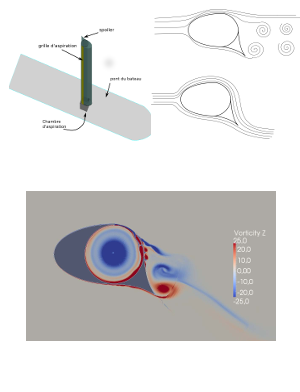
Erwan Liberge is a teacher-researcher at the University of La Rochelle, France, specializing in computational methods for fluid-structure interaction (FSI) problems. He is affiliated with the M2N team (E1-M2N) within the CNU 60 research section and works under the CNRS INSIS department. His academic rank aligns with Associate Professor in the French system. His research focuses on numerical modeling in fluid mechanics and structural mechanics , utilizing the Lattice Boltzmann Method (LBM) and Proper Orthogonal Decomposition (POD) for model reduction. Key applications include turbulence modeling, flow-induced vibrations in cylinder arrays, and infiltration heat recovery in buildings. He has developed GPU-accelerated solvers for 3D flows in porous materials and explored penalty/duality methods in FSI. The 15 most recent publications (2014–2023) reflect a consistent emphasis on POD-based reduced order modeling (for incompressible flows, rotating solids, and parametric variations) and LBM with volume penalization for obstacle flow simulation. These works intersect computational fluid dynamics , solid mechanics , and numerical mathematics , often addressing coupled systems and nonlinear stability. Erwan collaborates with researchers like Aziz Hamdouni, Claudine Béghein, and Antoine Falaize. He has presented at international conferences (ICMMES, ECCOMAS, ASME) and contributed to journals such as Journal of Fluids and Structures and Physical Review E . His team (E1-M2N) focuses on mathematical modeling and simulation for industrial applications.
Stergios-Aristoteles Mitoulis serves as Associate Professor in Engineering and Project Management at University College London's Bartlett School of Sustainable Construction. A Chartered Engineer (CEng MICE) with memberships in ASCE, EAEE, IABSE and FHEA, he directs the MetaInfrastructure.org and BridgeUkraine.org initiatives while coordinating major EU-funded projects including ZEBAI (€5M), RISKADAPT (€2.5M), and PORTAL (€1.8M). His research centers on three pillars: (1) threat-agnostic resilience frameworks for infrastructure under cascading risks; (2) AI-driven decision systems integrating remote sensing and digital twins; and (3) sustainable retrofitting of transport assets using recycled materials. With over £8 million in research funding from UKRI and Horizon Europe, his work directly informs Eurocode standards and national infrastructure policies. Analysis of his recent publications reveals strong emphasis on multi-hazard fragility modeling (particularly bridges), AI-enabled damage identification, and climate-resilient transport networks. His work consistently bridges theoretical innovation with practical implementation, evidenced by 20+ peer-reviewed papers in 2024-2025 alone spanning reliability engineering, structural safety, and sustainable development. Thorpe Medal for outstanding engineering research IStructE Research Award for infrastructure innovation Editor-in-Chief of ICE Journal of Bridge Engineering Regular contributor to Eurocode standardisation committees Mitoulis actively supervises 40+ doctoral and postdoctoral researchers across 10+ international projects. His REF2029 Impact Case Study focuses on digital technologies for infrastructure resilience, while his £8M+ grant portfolio includes major collaborations with Ukrainian institutions through bridgeUkraine.org. He leads the MetaInfrastructure research group developing counterfactual engineering approaches for the metaCity concept, with recent media coverage by BBC on conflict-damaged infrastructure recovery. The MetaInfrastructure team operates through dedicated labs for digital twin development, AI/ML applications, and sustainable materials testing. Current initiatives include the PORTAL project for AI-driven infrastructure monitoring and ReCharged for circular economy in transport networks. Mitoulis' educational contributions feature a FutureLearn MOOC on critical infrastructure resilience and CPD training for ICE professionals.
Xiangyu Hu, Dr.-Ing. habil., is a researcher at the Chair of Aerodynamics and Fluid Mechanics at Technische Universität München (TUM). Based at the TUMWAER facility in Garching bei München, their work focuses on advanced computational methods in fluid dynamics and solid mechanics using smoothed particle hydrodynamics (SPH). Research Focus: SPH methodology development, fluid-structure interaction (FSI), multi-phase flows, numerical stability, and GPU-accelerated simulations Recent publications demonstrate a strong emphasis on solving complex fluid dynamics problems through SPH method enhancements, including: Multi-resolution and multi-physics SPH frameworks Deep reinforcement learning integration for dynamic optimization Novel approaches to hourglass instability and consistency correction Applications to wave energy conversion and elastic tank sloshing suppression Their work combines theoretical advancements with practical implementations in the SPHinXsys library, addressing challenges in both incompressible and compressible flow simulations.
Carlos Andújar Gran is an Associate Professor in the Computer Science Department at the Polytechnic University of Catalonia . He is a key member of the ViRVIG Research Center for Visualization, Virtual Reality, and Graphics Interaction, as well as the Eurographics Association . His work bridges technical innovation with cultural and educational applications. Primary affiliation: Universitat Politècnica de Catalunya Research center: ViRVIG - Research Center for Visualization, Virtual Reality and Graphics Interaction Professional network: Eurographics Association His research interests focus on advanced topics in computer graphics and virtual reality : 3D Modeling - Digital reconstruction of complex geometries Animation Systems - Real-time motion capture and pose estimation Cultural Heritage - Digital restoration techniques for medieval monuments Human-Computer Interaction - 3D user interface design Sports Analytics - Player position tracking through computer vision Medical Education - VR nursing training platforms His technical publications demonstrate a consistent focus on solving practical problems through innovative algorithms: Developed DragPoser for motion reconstruction with sparse sensors Created PADELVIC dataset for sports analytics Advanced automated color restitution methods for mural paintings Improved normal estimation in point cloud processing Optimized terrain super-resolution techniques using convolutional networks Designed interactive cultural heritage systems for museum exhibitions
Dr. Benjamin Bejar Haro is a researcher at the Paul Scherrer Institute (PSI) , specializing in computational methods for scientific applications. His work spans machine learning, signal processing, and computer vision, with recent publications focusing on EUV mask inspection, sparse signal recovery, and biomedical video analysis. Research Interests Deep learning for optical imaging Multi-channel signal processing Algorithm development for crystallography Biomedical video analysis Sparse signal reconstruction Ensemble forecasting systems Publications His recent work includes contributions to EUV mask inspection using neural networks (2025), cross-channel unlabeled sensing (2025), and kilohertz serial crystallography algorithms (2024), reflecting interdisciplinary expertise in computational modeling and scientific data analysis.