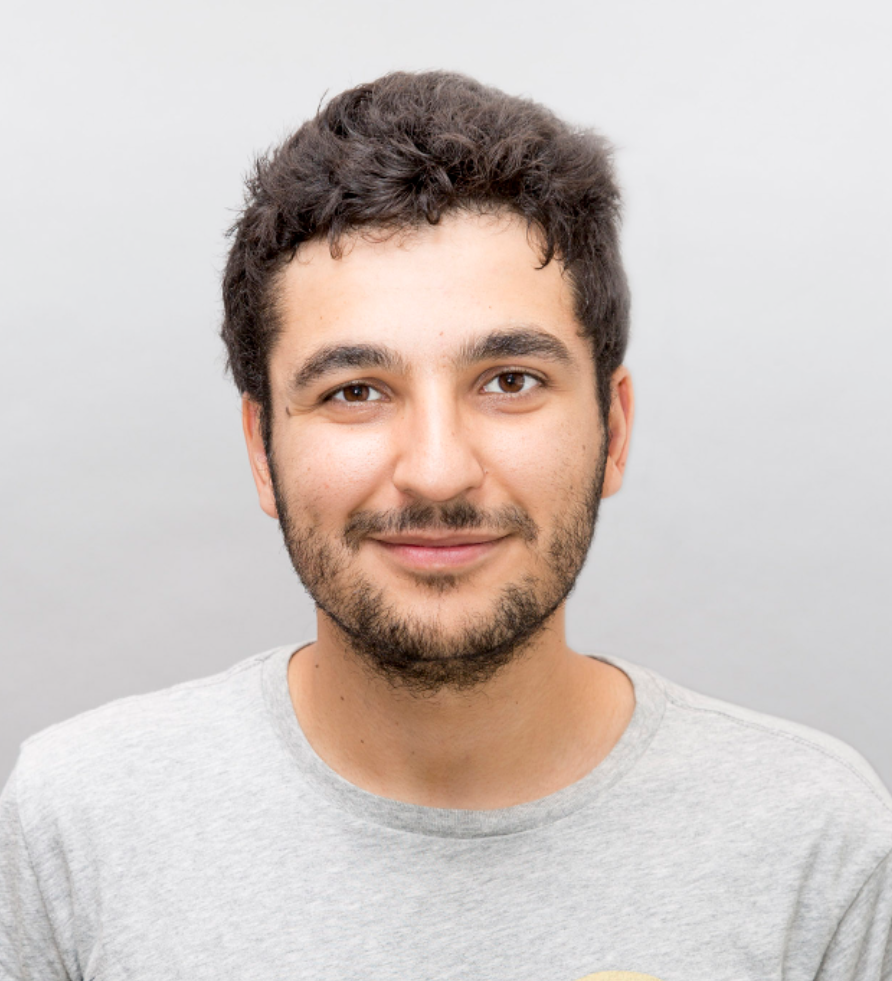
Zhongying Deng is a Research Fellow in the Department of Applied Mathematics and Theoretical Physics (DAMTP) at the University of Cambridge, affiliated with the Cambridge Image Analysis research group. His work focuses on advancing medical imaging technologies and computer vision through deep learning and domain adaptation techniques. Key contributions include developing benchmark datasets like TrafficCAM and TrafficMOT for traffic analysis, A-Eval for abdominal organ segmentation, and foundational models for medical AI such as GMAI-VL. His research bridges theoretical advancements in neural networks and practical applications in healthcare and transportation. His research interests span image segmentation, domain adaptation, neural network architectures, and multimodal data integration. Notable projects include FCN+ for enhanced convolutional networks and Brain Foundation Models for neurodegenerative disease analysis. Deng collaborates extensively on interdisciplinary projects, combining mathematical modeling with computational tools to address real-world challenges in medical diagnosis and autonomous systems. Publications emphasize scalable medical image analysis frameworks (e.g., STU-Net, Sa-med2d-20m) and robust domain adaptation methods for cross-dataset performance. His datasets and models are widely recognized for enabling reproducible research and advancing state-of-the-art performance in critical areas like MRI reconstruction and multi-organ segmentation.
Prof. Oliver Seitz leads the Bioorganic Synthesis research group at the Department of Chemistry, Faculty of Mathematics and Natural Sciences, Humboldt University of Berlin. His lab focuses on cutting-edge chemical biology approaches for protein/nucleic acid interrogation, with recent work advancing DNA/RNA-programmed assemblies for cellular imaging and therapeutic applications. Research spans chemical protein synthesis, glycoprotein/phosphoprotein engineering, and nucleic acid-templated reactions. Key innovations include Forced Intercalation (FIT) probes for wash-free RNA imaging, loss-of-affinity principles for catalytic efficiency, and peptide-PNA conjugates for targeted cellular delivery. The group actively develops tools for live-cell protein labeling and biomolecular spatial screening. Recent publications (2021-2024) emphasize fluorescence-based detection systems, catalytic templated reactions, and therapeutic peptide synthesis. Trends show increasing sophistication in multi-dye probes, glycan engineering, and RNA-triggered pro-drug activation. Scientific awards include: Max Bergmann Award (2019) Prof. Seitz actively advises doctoral students, with recent graduates Marvin Björn Stutz (2023, magna cum laude ), Dino Gluhacevic von Krüchten (2023, summa cum laude ), and Sophie Schöllkopf (2023, magna cum laude ). Current PhD candidates include Ekaterina Kazakova (glycoprotein synthesis), Alina Herfort (phosphoproteins), and Lina-Marie Beck (peptide-nucleic acid conjugates), with postdocs like Dr. Mandana Oloub (viscosity sensors). The Bioorganic Synthesis lab operates within Berlin's vibrant chemical research ecosystem, utilizing specialized techniques for chemical protein synthesis and nucleic acid detection. Recent team growth reflects ongoing projects in RNA imaging, catalytic templated reactions, and therapeutic conjugate development, supported by open positions for new researchers.
Carlo D'Eramo is a Professor of Reinforcement Learning and Computational Decision-Making at the University of Würzburg. He leads the LiteRL group at hessian.AI until 2025 and is affiliated with the Intelligent Autonomous Systems group at TU Darmstadt's Computer Science Department, as well as the Hessian Centre for Artificial Intelligence. Ph.D. : Information Technology, Politecnico di Milano (2019) Double MSc : Computer Engineering, Politecnico di Milano (2015) and University of Illinois at Chicago (2015) BSc : Computer Engineering, Politecnico di Milano (2011) His research focuses on lightweight reinforcement learning methods for adaptive autonomous agents, spanning multi-task/curriculum RL, multi-agent RL, deep RL, uncertainty quantification, residual learning, and planning. He developed MushroomRL, a widely adopted RL library, and investigates how agents can acquire real-world expert skills efficiently. The 15 most recent publications highlight trends in deep reinforcement learning architectures, adversarial and multi-agent systems, domain randomization, and curriculum design. Key subfields include optimal transport applications, entropy maximization, neural network distillation, and bounded rationality frameworks for robust learning. He has contributed to top venues like ICML, NeurIPS, AAAI, ICLR, JMLR, and IEEE Transactions on Pattern Analysis and Machine Intelligence, with a focus on advancing scalable and adaptive RL methodologies.
Kathleen M. Carley is a full professor at Carnegie Mellon University's School of Computer Science with courtesy appointments in Engineering and Public Policy, Heinz School, and Electrical and Computer Engineering. As director of the Center for Computational Analysis of Social and Organizational Systems (CASOS) and the Center for Informed Democracy and Social-Cybersecurity (IDeaS) , she leads interdisciplinary research at the intersection of network science, cognitive modeling, and cybersecurity. Ph.D. in Sociology from Harvard University SB degrees in Economics and Political Science from MIT Her research focuses on Dynamic Network Analysis (DNA) and Social-Cybersecurity (SC) , developing tools like ORA (network analysis), AutoMap (semantic mining), Construct (influence simulation), and BotHunter (bot detection). She has over 400 publications and 15+ active research projects addressing disinformation, cognitive security, and organizational resilience. Recent work examines LLM-powered bots , multi-platform misinformation dynamics , and public health analytics . As an IEEE Fellow, she contributes to standards in computational social science while teaching courses on network analysis and complex socio-technical systems.
Tim Baarslag is a Senior Researcher and group leader of the Intelligent and Autonomous Systems group at CWI (The Dutch research institute for Mathematics and Computer Science). He holds the title of Professor of Mathematics of Cooperative AI at Eindhoven University of Technology and serves as a Visiting Associate Professor at Nagoya University of Technology, Visiting Fellow at the University of Southampton, and Visiting Scholar at MIT. His research focuses on automated negotiation systems for collaborative decision-making in smart energy trading, IoT, autonomous vehicles, and digital privacy. Education : MSc (cum laude) and BSc (cum laude) from Utrecht University; PhD (cum laude) from Delft University of Technology Tim pioneered the COMBINE project (NWO Vidi grant) for coordinating multi-deal negotiations and developed the widely-used Genius negotiation environment. His work appears in prestigious venues like Science Magazine , Artificial Intelligence , and MIT Technology Review . He also leads the International Automated Negotiating Agent Competition and contributes to policy through memberships in The Young Academy and Netherlands Academy of Engineering . Recent research trends emphasize multi-deal negotiation protocols (2024), preference uncertainty modeling in privacy negotiations (2022), and scalable algorithms for handling outcome spaces as large as 10²⁵⁰ possibilities. His 2023 work on search algorithms for large negotiation domains has applications in energy trading and supply chain management. Scientific Awards : Cor Baayen Young Researcher Award (2017), Springer Theses Award (2016), multiple Best Paper Awards (AAMAS 2022, WI-IAT 2015, IJCAI 2014), and recognitions as Science Talent (2018), Academic Pioneer (2020), and Young Talent (2019) As a grant recipient , Tim leads NWO Vidi project COMBINE and previously held a Veni grant for preference uncertainty research. He mentors through organizing competitions, serving on conference PCs (AAAI, IJCAI), and reviewing in top journals like Artificial Intelligence . His work bridges theory and practice through the Genius framework and real-world implementations in smart grid and vehicular platooning.
Douglas C. Ligor is a Professor of Policy Analysis at the RAND School of Public Policy and Director of the Management, Technology, and Capabilities Program at RAND's Homeland Security Research Division. He holds dual roles as a Senior Behavioral Scientist and academic researcher, specializing in homeland/national security law, immigration policy, space governance, and international legal frameworks. Education: J.D. from University of Connecticut School of Law (2000s) and B.S. in Economics from U.S. Military Academy at West Point (1990s). Prior to RAND, he served in federal legal roles including Deputy Chief Counsel at USCIS and Assistant District Counsel at DOJ/ICE. Research focuses on border security, asylum processing, outer space regulation, and federal-state-local coordination. His work frequently addresses intersections between statutory compliance and operational realities in domains like immigration enforcement and space traffic management. Notable contributions include policy analyses on Title 42 immigration restrictions, ISIS prisoner management in Syria, and frameworks for international space traffic governance. He regularly engages in public commentary through podcasts and op-eds on topics like U.S. border policy and emerging space law challenges.
Nazanin Tajik is an Assistant Professor in the Department of Industrial and Systems Engineering at Mississippi State University (MSU). She holds a Ph.D. from the University of Oklahoma, an M.S. from the University of Tehran, and a B.S. from Sharif University of Technology. Her research focuses on integrating artificial intelligence, machine learning, and social science concepts to develop cross-disciplinary frameworks for infrastructure resilience, smart transportation systems, and disaster management. Her academic journey includes a Ph.D. at the University of Oklahoma where she contributed to the Risk-Based Systems Analytics Laboratory. At MSU, she established a research center bridging AI/ML tools with socio-technical systems. Key research domains include cyber-physical-social infrastructure resilience, search-and-rescue planning, and game-theoretic robotic designs. Tajik's work emphasizes optimization algorithms for network vulnerability assessment, resource allocation in disaster scenarios, and adaptive recovery strategies. She is actively involved with professional organizations such as INFORMS, ISE, and POMS, reflecting her commitment to advancing operations research and systems engineering methodologies.
Mustafa Gül is a Professor in the Department of Civil and Environmental Engineering at the University of Alberta’s Faculty of Engineering. He also serves as Director of Internationalization at the Faculty of Engineering’s Deans Office. His research focuses on smart, sustainable, and resilient cities, with an emphasis on infrastructure monitoring and energy-efficient systems. Education: PhD in Civil Engineering (University of Central Florida, 2009), MSc in Electrical Engineering (University of Central Florida, 2011), MSc in Civil Engineering (Boğaziçi University, 2004), BSc in Civil Engineering (Boğaziçi University, 2002). Dr. Gül’s research spans two primary domains: Crowdsensing-based Monitoring of Built and Natural Environments (CoMBiNE) using AI, signal processing, and data analytics for infrastructure health; and Energy-Efficient Smart Cities through solar PV integration, IoT applications, and net-zero energy homes. His work bridges structural engineering, machine learning, and sustainable urban development. Recent publications highlight advancements in smartphone-based damage detection, UAV-assisted disaster assessment, and AI-driven energy systems. His team’s work on crowdsensing bridges, solar PV optimization, and smartphone analytics has been widely recognized in journals like Structural Control and Health Monitoring and Energy and AI . Notably, his 2017 paper earned the Best Paper Award at ISARC. Students supervised include Azim, R. , Keskin, M. , and Do, N. T. , among others. Scientific Awards: Best Paper Award, 34th International Symposium on Automation and Robotics in Construction (ISARC 2017) Dr. Gül’s projects often involve interdisciplinary collaboration, leveraging sensor networks, computer vision, and optimization algorithms to address urban resilience and energy sustainability. His leadership extends to course CIV E 779 and ongoing research initiatives in Alberta, Canada.
Gabriel A. Silva is a Professor in the Shu Chien-Gene Lay Department of Bioengineering at UC San Diego’s Jacobs School of Engineering, with a joint appointment as Assistant Professor in Ophthalmology. His research bridges neuroscience, theoretical physics, and applied mathematics to explore how the brain encodes and processes information, leveraging quantum logic and algorithms for advanced neural modeling. University: University of California, San Diego School: Jacobs School of Engineering Department: Shu Chien-Gene Lay Department of Bioengineering Academic Rank: Professor Joint Appointment: Assistant Professor in Ophthalmology Research Interests: Silva focuses on neural computation at cellular and network scales, aiming to abstract biological mechanisms into mathematical models that emulate brain-like processing. His work has implications for understanding neurological disorders, developing neural engineering nanotechnologies, and advancing AI systems through emergent complexity. Recent Article Trends: His publications span quantum-enhanced neural modeling, EEG-based disease detection, nonlinear dynamics in brain networks, and interdisciplinary applications of graph theory. Emerging themes include the integration of category theory for network analysis and AI optimization via emergence-promoting schemes. Labs & Teams: Affiliated with UC San Diego’s Institute of Engineering in Medicine, Silva leads research at the intersection of bioengineering, ophthalmology, and neural systems, fostering collaborations with neuroscience and quantum computing domains.
Per Enqvist is an Associate Professor in the Division of Numerical Analysis, Optimization and Systems Theory within the Department of Mathematics at KTH Royal Institute of Technology, Stockholm, Sweden. He has held this position since 2009 after progressing from Assistant Professor (2006-2009) and post-doctoral roles at INRIA France and CNR Italy. His academic background includes: Ph.D. in Optimization and Systems Theory from KTH (2001), supervised by Professor Anders Lindquist M.Sc. in Engineering Physics (Civilingenjör) from KTH (1994) with Applied Mathematics focus Post-doctoral studies at INRIA Sophia-Antipolis (2003-2004) and CNR Padova (2001-2003) Enqvist's research centers on mathematical modeling of stochastic processes, scheduling, and queueing theory with applications across operations research, systems engineering, and signal processing. His principal interests span Optimization, Operations Research, Systems Engineering, Signal Processing, Mathematical Systems Theory, and Modeling and Simulation. He has made significant contributions to spectral estimation, covariance interpolation, and resource allocation frameworks. Publication analysis reveals an evolution from foundational systems theory work (2000s) on spectral estimation and minimal realization toward applied optimization in healthcare operations (2010s-2020s). Recent articles address radiation therapy scheduling and contact center modeling using queueing theory with risk-sensitive measures like CVaR, while earlier work established theoretical frameworks for covariance interpolation and passive system synthesis. No scientific awards are documented in the provided information. He has received funding from Vetenskapsrådet (Swedish Research Council) and led the ACCESS seed project on "Robust Spectral Estimation". Enqvist is course responsible for multiple master's program tracks including Aerospace systems and Industrial Engineering, and oversees the Optimization and Systems Theory seminar series. No student advisement details are provided. He maintains affiliations with the ACCESS Linnaeus centre, Center for Industrial and Applied Mathematics (CIAM), and serves on the Swedish Operations Research Society (SOAF) board.
Onesun Steve Yoo is a Professor of Operations and Marketing Analytics at the UCL School of Management, University College London, and Co-Director of the UCL Centre for Sustainable Business. He holds a PhD from UCLA Anderson School of Management, alongside advanced degrees in Electrical Engineering and Applied Mathematics from UC Berkeley and UCLA. His research focuses on innovation and entrepreneurship, examining operational and marketing strategies for firms launching innovative products/services. Key areas include consumer behavior analysis, pricing policies, sequential product launches, and the impact of technologies like surge pricing and AI-driven data analytics on business operations. Recent work integrates sustainability initiatives with AI to enhance operational transparency in supply chains and regulatory compliance. Yoo’s research has been published in top journals such as Marketing Science , Operations Research , and Manufacturing & Service Operations Management . His findings have been cited by US policymakers and featured in media outlets like the Wall Street Journal . He serves as a senior editor at Production and Operations Management and associate editor at Manufacturing & Service Operations Management . His academic service includes grants from Innovate-UK (UKRI) to collaborate with industry on sustainable business practices. Yoo’s work bridges theoretical research with practical applications, emphasizing data-driven decision-making and interdisciplinary collaboration between operations, marketing, and sustainability domains.
Asuman Ozdaglar is the MathWorks Professor of Electrical Engineering and Computer Science and Department Head of EECS at MIT. She also serves as Deputy Dean of Academics for the MIT Stephen A. Schwarzman College of Computing. Her research focuses on large-scale networked systems, including optimization, game theory, social networks, and distributed algorithms. Education: BS in Electrical and Electronics Engineering from Middle East Technical University (1996), SM (1998) and PhD (2003) in Electrical Engineering and Computer Science from MIT. Research emphasizes nonlinear optimization, machine learning, and network economics. She leads work on robust algorithms, misinformation dynamics, and networked systems. Affiliated with the Laboratory for Information and Decision Systems (LIDS) and the Operations Research Center (ORC). Her contributions span theoretical and applied domains, including distributed optimization methods, social network analysis, and privacy-preserving data mechanisms. Active in shaping academic policy through her roles in the College of Computing.
Salem Lahlou is an Assistant Professor in the Machine Learning Department at the Mohamed bin Zayed University of Artificial Intelligence (MBZUAI), having joined in September 2024. He previously served as a Senior Researcher at the Technology Innovation Institute (TII) in 2024. His academic background includes a PhD from Mila and Université de Montréal (UdeM) under Yoshua Bengio (2023), with prior studies in applied mathematics at École Polytechnique and statistical learning at École Normale Supérieure Paris-Saclay. His research focuses on developing more capable and reliable AI systems through three interconnected pillars: Novel Method Development : Core contributions to Generative Flow Networks (GFlowNets), uncertainty estimation techniques (DEUP), and curriculum learning frameworks Large Language Model Advancement : Enhancing reasoning capabilities and alignment through preference optimization and trace-based learning Community Tooling : Creation of torchgfn library for GFlowNets and benchmarks including BabyAI, FinChain, and LLM-BabyBench Core research areas span Machine Learning, GFlowNets, Uncertainty Estimation, LLM Reasoning, Reinforcement Learning, and AI for Science. Recent publications (2023-2025) demonstrate strong emphasis on GFlowNet theory/improvements (8+ papers), LLM reasoning evaluation (FinChain, LLM-BabyBench), uncertainty quantification, and societal AI impacts. Key application domains include mathematical reasoning, financial systems, privacy preservation, and cognitive science. He currently advises graduate students including Junyi (privacy risks in SNNs) and Abhijith (LLM reasoning). His group collaborates with MBZUAI faculty (Nils Lukas, Alham Fikri, Mingming Gong, Martin Takac) and industry partners on projects involving Conversational AI, Personalization, and Affective AI.
Vinod M. Vokkarane is a Professor in the Department of Electrical and Computer Engineering at the University of Massachusetts Lowell, where he serves as Director of the Center for Smart Cyber-Physical Systems (SCyPS) and Director of Advanced Computer Network Labs. Previously, he was an Associate Professor at University of Massachusetts Dartmouth from 2004 to 2013 and a Visiting Scientist at MIT's Research Laboratory of Electronics from 2011 to 2014. His extensive research portfolio spans multiple domains of advanced networking and cyber-physical systems. Dr. Vokkarane earned his educational foundation with a B.S. from University of Mysore, India (1999), followed by an M.S. (2001) and Ph.D. (2004) in Computer Science from the University of Texas at Dallas. His dissertation focused on optical burst-switched networks, establishing the foundation for his future research trajectory. His research interests center on Cyber-Physical Systems, Network Optimization, Reliability, Smart Grids, and Cyber-Security, with particular expertise in the design, analysis, and modeling of architectures, protocols, and algorithms for ultra-high speed networks including Optical networks, Grid/Cloud networks, and Big-data networks. His work bridges theoretical foundations with practical implementations, often addressing critical challenges in network reliability, security, and efficiency. His research has received significant recognition through numerous best paper awards and substantial external funding. Analysis of his recent publications reveals a clear evolution toward increasingly sophisticated integration of cyber-physical systems with power infrastructure, particularly in the areas of grid resilience and observability. His work has expanded from fundamental optical networking research to address critical infrastructure challenges, with a growing emphasis on machine learning applications for network optimization and power system monitoring. The recent focus on PMU networks, disaster resilience, and cyber restoration demonstrates his strategic pivot toward addressing national security and critical infrastructure protection challenges. UMass Dartmouth Scholar of the Year Award (2011) UMass Dartmouth Chancellor's Innovation in Teaching Award (2010-11) University of Texas at Dallas Computer Science Dissertation of the Year Award (2003-04) Multiple Best Paper Awards including IEEE GLOBECOM 2005, IEEE ANTS 2010, ONDM 2015, ONDM 2016, and IEEE ANTS 2016 Texas Telecommunications Engineering Consortium Fellowship (2002-03) Dr. Vokkarane has successfully mentored numerous graduate students who have contributed significantly to his research projects, with several going on to successful careers in academia and industry. His research has been consistently supported by major funding agencies including NSF, DOE, and USMC, with recent projects totaling over $5 million in funding. Current projects include Unified Post-Disaster Restoration Planning for Cyber-Physical Power Distribution Systems (ONR, $550K), CyberCARE: Northeast University Cybersecurity Center (DOE, $3.5M), and Flexible Spectrum Allocation in Next-Generation Optical Networks (NSF, $350K). He leads the Center for Smart Cyber-Physical Systems (SCyPS) and Advanced Computer Network Labs at UMass Lowell, where his research teams work on cutting-edge problems in network architecture, cyber-physical security, and infrastructure resilience. His labs collaborate extensively with national laboratories and industry partners to translate theoretical advances into practical solutions for real-world infrastructure challenges.
Clément Mallet is a Senior Researcher and Director of the LASTIG laboratory at Université Gustave Eiffel, IGN, and École Nationale des Sciences Géographiques (ENSG) in Champs-sur-Marne, France. He leads research in geospatial computer vision, focusing on the intersection of remote sensing, computer vision, and machine learning. His responsibilities include overseeing 75 laboratory members and directing the STRUDEL research team focused on spatio-temporal information modeling. Education: Habilitation (HDR) in Geographical Information Science, Université Paris-Est (2016) PhD in Image and Signal Processing, Télécom ParisTech (2010) Engineering Degree in Geographical Information Science, ENSG (2005) Master's in Remote Sensing, Université Paris 6 (2005) Research Interests: Dr. Mallet specializes in multi-modal land-cover mapping, change detection, geohistorical image analysis, and airborne lidar processing. His work integrates deep learning with geospatial data analysis to solve complex problems in environmental monitoring, urban studies, and historical geography. Current research explores foundation models for earth observation and semantic change detection using hybrid data generation techniques. Publication Trends: Mallet's recent articles (2021-2025) demonstrate strong focus on deep learning applications for geospatial challenges: 40% address land-cover mapping innovations, 30% develop novel change detection methodologies, 20% advance lidar data processing, and 10% explore historical map analysis. His work consistently bridges computer vision theory with operational remote sensing applications. Awards and Recognition: Schwidefsky Medal from ISPRS (2016) 5x Outstanding Reviewer awards (CVPR/ECCV/ICCV 2017-2024) Best Paper Awards at GEOBIA 2016 and ISPRS 2014 Young Researcher Award from GDR ISIS (2010) EuroSDR Best PhD Thesis supervision (2020) Research Leadership: Directs multiple national and international projects including MAESTRIA (ANR-funded multi-modal EO analysis) and HIATUS (historical image analysis). Supervised 14+ PhD students in geospatial AI topics. Secured funding from ANR, CNES, EU H2020 (VOLTA, LandSense), and industrial partners. Leads the STRUDEL team developing cutting-edge methods for territory dynamics analysis. Professional Service: Editor-in-Chief of ISPRS Journal of Photogrammetry and Remote Sensing (2021-present). Organized major conferences including ISPRS Congress (2020-2022 Program Chair) and JURSE events. Active in ISPRS working groups since 2008, currently leading initiatives in large-scale machine learning applications for geospatial data.