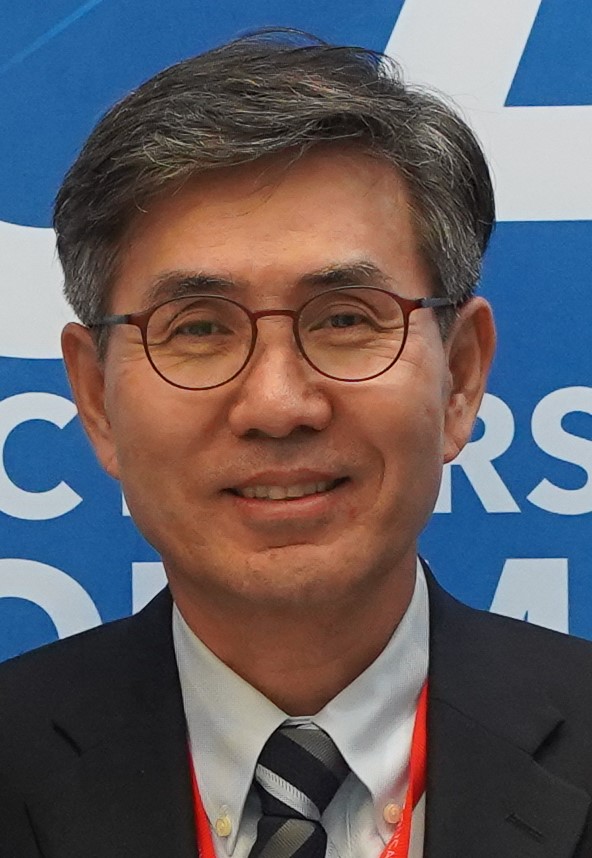
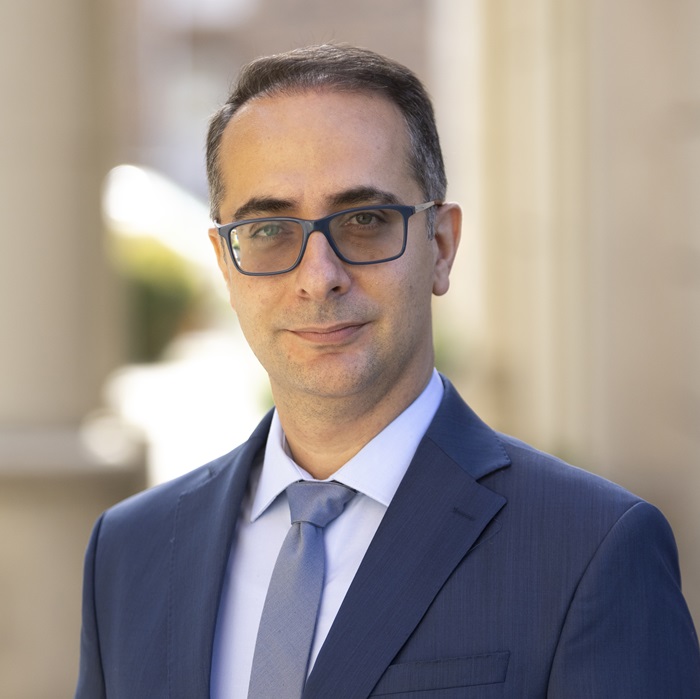
Chenguang Liu is a researcher at Institut Polytechnique de Paris , France, with a focus on computational methods, machine learning, and control systems. His work bridges theoretical and applied research across multiple domains including computer vision, signal processing, and operations research. Key research areas: Machine Learning, Computer Vision, Computational Physics, Control Theory Notable publication trends: Develops novel algorithms for parallel computing, peridynamic modeling, and real-time systems Recent contributions include Bayesian neural networks for gas-bearing prediction, multi-agent reinforcement learning for UAV swarms, and domain adaptation techniques in object detection. He collaborates extensively with researchers in electrical engineering and applied mathematics disciplines.
Professor Flora Salim is a leading academic at the University of New South Wales (UNSW) Sydney, holding a full Professorship in the School of Computer Science and Engineering. She serves as Deputy Director (Engagement) of the UNSW AI Institute and contributes to multidisciplinary research at the intersection of ubiquitous computing, machine learning, and data science. Human-centred AI and ethical systems Spatio-temporal data modeling Applications for climate resilience and urban mobility Her research focuses on multimodal foundation models, continual learning, and responsible AI deployment in real-world environments. She explores: Time-series and sensor data analysis Wearable and environmental sensing AI for sustainable infrastructure Robustness and trustworthiness in models Recent publications highlight her work on: Transformer-based climate downscaling Cross-modal fairness in mobility Privacy-preserving spatio-temporal generation Patient similarity networks in healthcare She has received multiple competitive fellowships including: Humboldt Fellowship Bayer Fellowship Victoria Fellowship ARC Australian Postdoctoral Industry (APDI) Fellowship Additional accolades include: Women in AI Award Australia and New Zealand (2022) IBM Smarter Planet Industry Innovation Award As Chief Investigator in: ARC Centre of Excellence for Automated Decision Making and Society (ADM+S) ARC Training Centre for Whole Life Design for Carbon Neutral Infrastructure She maintains active collaborations through: Associate position at ELLIS Alicante Visiting Professor roles at University of Kassel (2019-2020) and University of Cambridge (2019) Editorial board memberships in ACM TIST, IEEE Pervasive Computing, and Nature Scientific Data
Mitsugu Shimobayashi serves as an Assistant Professor (tenure track BOF) in the Department of Chronic Diseases and Metabolism at KU Leuven's Faculty of Medicine, where he also holds a council membership. His work centers on molecular endocrinology and metabolic regulation, with emphasis on adipose tissue function and energy homeostasis. His primary research domains include: Mechanisms of de novo lipogenesis and carbohydrate metabolism via ChREBP-MLX pathways Transcriptional regulation in metabolic diseases Adipose tissue responses to incretin analogs and dietary interventions mTORC2 signaling in glucose homeostasis and neural regulation Analysis of his 2022-2025 publications reveals consistent focus on evolutionarily conserved metabolic pathways, particularly MLX phosphorylation effects on lipid/glucose regulation and adipose tissue remodeling in obesity. His work bridges molecular biology, endocrinology, and translational metabolism research through extensive mouse model studies. Dr. Shimobayashi leads multiple high-impact projects including: Preventing MASH/liver cancer via CK2-MLX targeting (2024-2028, Promotor) ChREBP-MLX complex regulation studies (2023-2027, Promotor) Glucose-sensing pathway elucidation (2022-2026, Promotor) He mentors PhD candidates J. Seuntjens and C.E. Cadena del Castillo, with whom he publishes regularly as supervisor/corresponding author. His laboratory operates within the Clinical and Experimental Endocrinology unit, contributing to the Flow Cytometry core facility and collaborating on multi-institutional imaging and metabolic phenotyping initiatives.
Jason Porter is an Associate Professor in the Department of Mechanical Engineering at Brigham Young University's College of Engineering. He holds office hours during Winter 2025 on Mondays (1-2pm), Tuesdays (1-2pm), and Thursdays (3-4pm) at 360P EB in Provo, Utah. Education: Dr. Porter earned his BS in Mechanical Engineering from BYU, MS from the University of Texas at Austin, and PhD from Stanford University. During graduate studies, he conducted research at Sandia National Laboratories and Nissan Technical Center. Research Focus: His research develops novel optical tools for studying energy conversion and storage technologies. Current applications include: Ion transport in battery electrolytes for fast charging Polysulfide shuttling in lithium-sulfur batteries Electrolyte instability mechanisms in battery fires Research spans coal/biomass gasification, fuel injection, ionic liquid synthesis, fuel/solar cell fabrication, and heat transfer in ceramic fiber blankets. Publication Trends: Recent articles focus on operando optical diagnostics for battery research, particularly FTIR spectroscopy applications for analyzing electrolyte behavior, ion transport dynamics, and degradation mechanisms in lithium-based batteries under operational conditions. Research Support: His work has been funded by numerous industrial and government sponsors across multiple energy technology domains.
Ilkyeun Ra serves as Associate Professor in the Department of Computer Science and Engineering at the University of Colorado Denver, where he has taught since 2001. His instructional responsibilities span undergraduate and graduate courses including Operating Systems, Computer Networks, and Cloud Computing. His educational background comprises: Ph.D. in Computer and Information Science, Syracuse University (2001) M.S. in Computer Science, University of Colorado Boulder B.S. and M.S. in Computer Science, Sogang University Dr. Ra's research concentrates on adaptive distributed systems and high-speed communication networks for high-performance computing. Current investigations focus on microservice autoscaling in cloud environments, multimedia streaming protocols over named data networks, and social media-driven disaster management systems. His methodology integrates reinforcement learning, blockchain, and real-time analytics to address scalability and reliability challenges in distributed architectures. Analysis of his 2018-2024 publications reveals dominant themes in cloud-native systems (46%), disaster informatics (23%), and network protocol innovation (31%). Key methodological trends include reinforcement learning applications for resource optimization (3 articles), blockchain implementations for privacy preservation (2 articles), and social media analytics for crisis response (3 articles). Scientific recognition includes: Outstanding paper award at IEEE The 26th International Conference on Advanced Communications Technologies (2024) Dr. Ra actively recruits Ph.D. students for distributed systems research. His funded projects include NIH support for the Hospital Computerized Disaster Information Management System (1G08LM009710-01, 2008-2011) and ETRI (South Korea) collaboration on parallel data processing frameworks. Current grants focus on cloud-based disaster management and edge network optimization. He directs the Distributed Computing and Networking Research Lab, which operates three specialized teams: the Cloud Microservices Group developing reinforcement learning autoscalers, the Multimedia Streaming Team designing NDN protocols, and the Disaster Informatics Unit analyzing social media for real-time crisis response.
Stephen Dunlop, MD, is an Associate Professor at the University of Minnesota with a focus on global health and emergency medicine. His work emphasizes improving emergency care systems in resource-limited settings across East Africa, particularly in Kenya and Tanzania. Research Interests Dr. Dunlop's research spans multiple domains including: Emergency care systems strengthening in low- and middle-income countries Point-of-care ultrasound applications for trauma and tropical disease diagnostics Malaria prevention strategies among immigrant travelers Triage protocol implementation (e.g., WHO Pediatric Emergency Triage Tool, South African Triage Scale) Refugee health and cross-border medical care coordination Global health education during pandemics Publication Trends Over the past decade, Dr. Dunlop's scholarship has focused on practical solutions for emergency care delivery in East Africa, with particular emphasis on trauma management, pediatric emergencies, and infectious disease prevention. His recent work explores technological adaptations like handheld ultrasound and pandemic-era medical education.
Prof. Darrell Whitley is a tenured Professor at the Department of Computer Science , Colorado State University . He served as Department Chair from 2003-2018 and holds editorial/leadership history through roles like Editor-in-Chief of Evolutionary Computation (2007-2011) and ACM SIGEVO Chair. His research program in Evolutionary Computation has produced over 22,900 citations (H-index 62). Key research themes include: Genetic Algorithms, Neural Networks, Local Search, Combinatorial Optimization, and Theoretical Foundations of Evolutionary Computation Recipient of multiple scientific awards including: Best Paper (GECCO 2009), Best Paper (GECCO 2006), PLANET Prize (ECP-01), and Honorable Mention Best Student Paper (MISTA-2005) His most recent publications (2010-2012) focus on fitness landscape decomposition, security hardening, k-anonymization trade-offs, and TSP optimization. Collaborative work spans multiple domains including network security, data privacy, and face tracking algorithms.
Deniz Turgay Altılar is a Professor in the Department of Computer Engineering at Istanbul Technical University (ITU), Faculty of Computer and Informatics. He has been an active academic since 1988, progressing from Research Assistant to Associate Professor in 2013 and later achieving the rank of Professor. His work is centered on distributed systems, cloud computing, and computer networks, with expanding interests in AI applications for agriculture and healthcare. Education Bachelor of Science, Control and Computer Engineering, Istanbul Technical University (1984–1988) Master of Science, Computer Engineering, Istanbul Technical University (1988–1992) Research experience at Queen Mary and Westfield College, University of London (1998–2002) His research interests include parallel and distributed systems, cloud computing, secure computation, deep learning, and cybersecurity. He applies these to interdisciplinary domains such as corn yield prediction, radar identification, and medical diagnostics using ECG signals. His recent work emphasizes efficient and secure AI systems. The publication trends show a strong focus on distributed deep learning, straggler mitigation, secure multiparty computation, and hardware-based attack detection. His work bridges theoretical computer science with real-world applications in agriculture, medicine, and national security. Recent articles highlight innovation in lightweight AI models, privacy-preserving computation, and cross-layer system design. Scientific Awards No specific awards are mentioned in the provided text. He actively supervises students and leads major research projects, including those on cache side-channel attacks in multi-tenant clouds, distributed OpenCL platforms, real-time scheduling, and molecular communication in nano-networks. These projects reflect sustained external funding and leadership in cutting-edge computing domains. His research group collaborates across disciplines and institutions, contributing to both national and international scientific communities. Labs and Teams : While not explicitly named, his role as Principal Investigator on multiple projects suggests leadership in a research lab focused on distributed systems, cybersecurity, and applied AI at ITU.
Dr. Adel Alaeddini is a Professor of Mechanical Engineering at Southern Methodist University (SMU) and holds courtesy professorships in Operations Research and Engineering Management and Computer Science. He serves as the O'Donnell Foundation Professor and Co-Executive Director of the Center for Digital and Human-Augmented Manufacturing (CDHAM). His research integrates physics-inspired artificial intelligence and machine learning methods to address challenges in Advanced Manufacturing, Healthcare, and Energy Systems. Education: Post Doctoral Research, University of Michigan Ph.D., Wayne State University Ph.D., Iran University of Science and Technology, Tehran, Iran Dr. Alaeddini's research focuses on: Physics-Inspired Machine Learning for Engineering Prognosis and Discovery Human-Augmented Control and Optimization of Complex Systems Industry 5.0-Driven Multi-Stream Sensor Data Modeling, Analytics, and Control Sample-Efficient Learning and Optimization of Black-Box Functions Generative AI-Enhanced Digital Twins for Collaborative Design and Optimization Deep Graph Analytics for Unraveling Complex System Dynamics His publications demonstrate expertise in Gaussian Processes, Graph Neural Networks, Stochastic Programming, and Reinforced Concrete Modeling, with applications in Radiology and Biofuel Supply Chains. These works highlight interdisciplinary collaboration across Computer Science, Biomedical Engineering, and Environmental Engineering domains. Scientific Awards: Summer Faculty Fellowship (2021, 2022, 2023) - Office of Naval Research (ONR) Best Poster Award (2019) - IISE Annual Conference Young Investigator Award (2016) - Air Force Office of Scientific Research (AFOSR) Summer Faculty Fellowship (2016) - AFOSR Pierskalla Competition Finalist (2010) - INFORMS Annual Conference Best Student Paper Award (2009) - Industrial Engineering Research Conference Selected Paper (2007) - IFSA World Congress Dr. Alaeddini has secured over $8M in grants from agencies including DOD, DOE, NSF, NIH, VA, DHS, and USDA. He serves as Associate Editor for multiple journals and Technical Vice President of IISE. His work at CDHAM emphasizes Industry 5.0 and human-AI collaboration in manufacturing ecosystems.
Iryna Yevseyeva is an Associate Professor in Computer Science at De Montfort University, affiliated with the Faculty of Computing, Engineering and Media and the School of Computer Science and Informatics. She leads the Cyber Security subject group and serves as Deputy Director of the Cyber Technology Institute. Her academic journey includes research roles at Newcastle University, the University of Leiden, Polytechnic Institute of Leiria, INESC Porto, and the University of Algarve. PhD in Multicriteria Decision Aiding, University of Jyväskylä, Finland Postdoctoral experience in the Netherlands, Portugal, and the UK Fellow of the Higher Education Academy (FHEA) Her research focuses on the application of operational research methods—particularly multi-criteria decision analysis and multiobjective optimization—to critical challenges in cyber security, including risk assessment, investment decisions, threat intelligence, and human behavior. She integrates decision science with cybersecurity to develop practical, data-driven frameworks for security governance and incident response. The recent publications highlight a strong trajectory in applying advanced computational and optimization techniques to cybersecurity problems. Themes include evolutionary optimization for privacy metrics, gamified training for incident response, human error modeling (IS-CHEC), and portfolio optimization in both drug discovery and security controls. The interdisciplinary nature spans computer science, operational research, behavioral psychology, and healthcare informatics. DMU Commercialisation Award (2018) Academy of Finland Grant (2008) Erasmus Mundus Grant (2008) Iryna has supervised 4 PhD students to completion and currently co-supervises 5 others. She has led over 10 research projects and secured more than 10 small grants as Principal Investigator, along with industrial grants from Innovate UK and Airbus. Her academic service is extensive, including guest editing for Springer journals, organizing international workshops (LeGO 2018, EMO 2023 track), and peer reviewing for top-tier journals and funding councils like EPSRC, MRC, and Horizon2020. She is actively involved in the Cyber Technology Institute and leads research within the Multi-Criteria Decision Making and optimization domain. Her collaborations span Brazil (Unijuí), Finland, the Netherlands, and Portugal, reflecting a globally connected research profile.
Shermin Sherkat is a doctoral researcher and research associate at the Institute for Computational Design and Construction (ICD) within the Cluster of Excellence IntCDC at the University of Stuttgart. Holding a Master of Science in Digital Technology in Architecture from the University of Tehran, her work focuses on integrating computational design with artificial intelligence applications in construction and fabrication. Her research explores classical Automated Task Planning (ATP) techniques using Planning Domain Definition Language (PDDL) to optimize robotic assembly processes. Current projects involve modeling fabrication domains for pick-and-place operations with multiple end-effectors, addressing challenges in 3D geometry representation and multi-object stacking limitations within classical planning frameworks. Recent publications examine the application of symbolic AI in construction automation, including systematic reviews of ATP methods and case studies on the BUGA Wood Pavilion's cassette fabrication. She contributes to advancing AI-driven task planning while identifying constraints in numerical tracking and geometric grouping within deterministic environments.
Peter Popov is a Reader at the Centre for Software Reliability (CSR) , City St George's, University of London , where he has been employed since 1997. He specializes in software dependability , fault tolerance , and stochastic modeling of critical infrastructures. Before his current position, he was an Associate Professor at the Bulgarian Academy of Sciences (1990-1997) and a Research Fellow at City St George's. Peter's academic journey began with a PhD in Computer Science from the Kiev National University of Technologies and Design (1989), following his BEng in Computer Engineering from the National Technical University of Ukraine (KPI, 1982). He has worked as a visiting scientist at renowned institutions including the Coordinated Science Laboratory at the University of Illinois at Urbana-Champaign , LAAS-CNRS in Toulouse, and Duke University . His research interests span Software reliability assessment System dependability Software fault-tolerance Performance evaluation Interdependencies of critical infrastructures He has contributed extensively to projects such as ReSIST , IRRIIS , DISPO , and AFTER , focusing on the dependability of composite systems and critical infrastructure resilience. Key publication trends reveal expertise in Stochastic modeling of autonomous vehicle safety Software diversity for fault tolerance Interdependency analysis in critical systems Bayesian reliability assessment Performance evaluation of distributed protocols Security implications in cyber-physical systems Peter has supervised several PhD students , including those researching autonomous vehicle resilience , safety assurance with ML components , and adaptable web services . His professional activities include serving on program committees for ISSRE , SAFECOMP , and EDCC conferences, as well as editorial contributions to CEUR Workshop Proceedings . He is proficient in Bulgarian , English , and Russian , with peer-review capabilities in all three languages.
Professor Eleni Ekaterini Leligou is a full-time faculty member at the University of West Attica , serving in the Department of Industrial Design and Production Engineering since November 2017. Previously, she taught at the Technological Educational Institution of Central Greece (2007–2017) and was a research associate at the National Technical University of Athens (1998–2007). Education Diploma in Electrical and Computer Engineering, National Technical University of Athens (1995) PhD in Electrical and Computer Engineering, National Technical University of Athens (1998–2002) – thesis graded “Excellent” Research Interests Her work lies at the intersection of computer networks, blockchain, Internet of Things, and artificial intelligence with a strong emphasis on industrial and energy-management applications . Specific themes include trust and routing protocols for sensor networks, FPGA-based acceleration of network algorithms, blockchain-enabled network security, IoT solutions for smart energy systems, and federated-learning models for maritime energy optimisation. Teaching Contributions At undergraduate level she delivers core courses on Internet Technology in the Digital Industry, Cloud Computing Engineering and Data Security and Protection . At postgraduate level she contributes to four distinct programmes: Artificial Intelligence and Deep Learning (inter-departmental MSc), Information Systems (Hellenic Open University), Production and Service Automation , and New Technologies in Shipping and Transportation . Publications Overview Her 2024–2025 scholarly output demonstrates an aggressive push toward next-generation networks (6G, LiFi, RIS), blockchain integration in diverse domains (gaming, supply-chain, PLC security), and AI/ML methodologies ranging from federated learning to GAN-based image generation, all applied to industrial, maritime and educational contexts. Laboratory & Teams She conducts her research within the Computational Intelligence and Intelligent Systems Laboratory – EYNES , leading projects that blend networked embedded systems, AI and blockchain technologies.
Anna Zygmunt is a Professor at the Institute of Computer Science within the Faculty of Computer Science at AGH University of Science and Technology in Kraków. Her primary office is located at D-17, ul. Kawiory 21, room 2.19, with contact email azygmunt@agh.edu.pl. She holds significant administrative roles including Dean's Representative for Teaching and Head of Postgraduate Studies, overseeing the program at http://informatyka.podyplomowe.agh.edu.pl . Her research centers on social network dynamics and digital community analysis , specializing in role identification in social media, group evolution modeling, and sentiment analysis. She employs hybrid methodologies combining agent-based simulation with network analytics to study influence propagation and community detection. Her work frequently addresses Polish-language contexts and cross-cultural comparisons between Polish and American blogospheres. Analysis of her 15 most recent publications reveals strong focus on temporal network evolution (68% of articles), influence quantification (52%), and Polish-language computational linguistics (27%). Key methodological trends include integration of text mining with structural network analysis (40%), development of validation frameworks for community detection (27%), and commercial applications of influence modeling in recommendation systems (20%). Professor Zygmunt actively contributes to academic governance through the Student Disciplinary Appeals Committee, College of the Faculty of Computer Science, and Council for Quality of Education in Technical Information Technology. Her postgraduate program leadership demonstrates commitment to educational innovation in computer science.
Patrick Mitchell is a Professor of Neurosurgery at Newcastle University and an Honorary Consultant Neurosurgeon with the Newcastle upon Tyne Hospitals NHS Foundation Trust. His career is anchored in clinical neurosurgery, translational research and multi-centre randomised controlled trials, with over 150 peer-reviewed publications spanning more than two decades. Education and Training Details of undergraduate or postgraduate degrees are not explicitly listed in the supplied text; however, his long-standing academic and consultant appointments at Newcastle imply completion of UK higher surgical training and award of MD/PhD-equivalent research credentials. Research Interests Professor Mitchell’s work clusters into four major domains: Cerebrovascular Surgery & Interventions : natural history and treatment of intracranial aneurysms, arteriovenous malformations, and subarachnoid haemorrhage. Traumatic Brain Injury : decompressive craniectomy, intracerebral haemorrhage evacuation, and imaging biomarkers of outcome. Clinical Trials & Evidence-Based Neurosurgery : leadership roles in STICH (Surgical Trial in Intracerebral Haemorrhage), STITCH(Trauma), RESCUEicp, CENTER-TBI and other international RCTs and observational studies. Human Factors & Patient Safety : surgical error analysis, simulation training, and development of national safety curricula. Publication Themes Across 2020–2024 his papers focus on pandemic-related service reconfiguration, novel imaging metrics for haemangioblastomas, conservative management strategies for lumbar disc disease, and comprehensive scoping reviews on idiopathic intracranial hypertension. Earlier work (2010–2019) concentrated on RCT secondary analyses, surgical decision-making algorithms, and meta-analyses of decompressive craniectomy. Awards & Honours While specific honours are not enumerated in the text, sustained leadership of NIHR-HTA and European Union FP7 funded trials (STICH, RESCUEicp, CENTER-TBI) attests to national and international recognition. Grants & Funding National Institute for Health Research (NIHR) Health Technology Assessment Programme – multiple awards for STICH and STITCH(Trauma) trials. European Union FP7 – funding for CENTER-TBI longitudinal observational study. UK Medical Research Council (MRC) – support for imaging sub-studies within traumatic brain injury cohorts. Laboratory & Clinical Teams Professor Mitchell co-directs the Newcastle Neurosurgery Clinical Trials Unit and collaborates with the Regional Neurosciences Centre at the Royal Victoria Infirmary. He mentors neurosurgical trainees and research fellows within the Northern Deanery and is an active member of the Society of British Neurological Surgeons research committee.