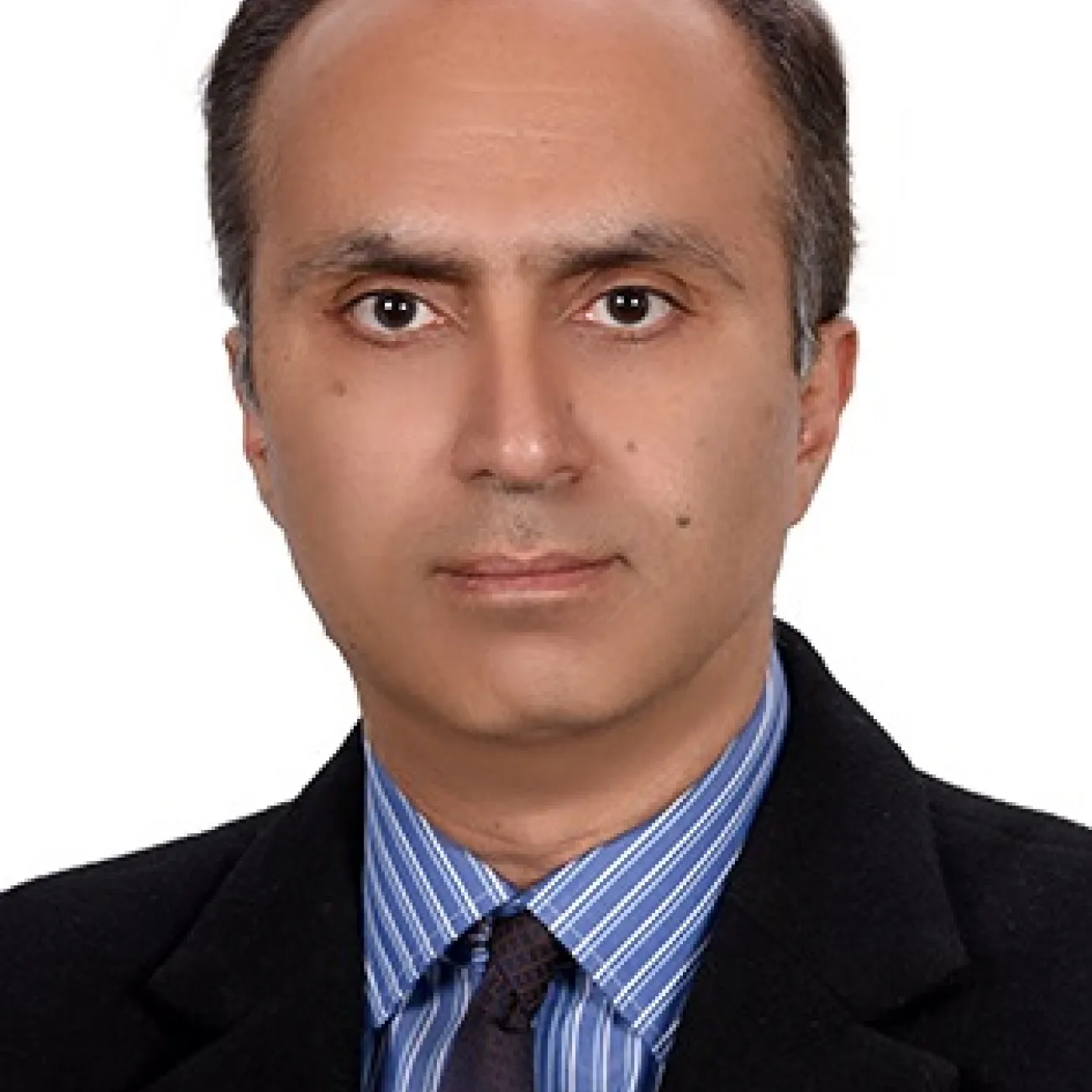
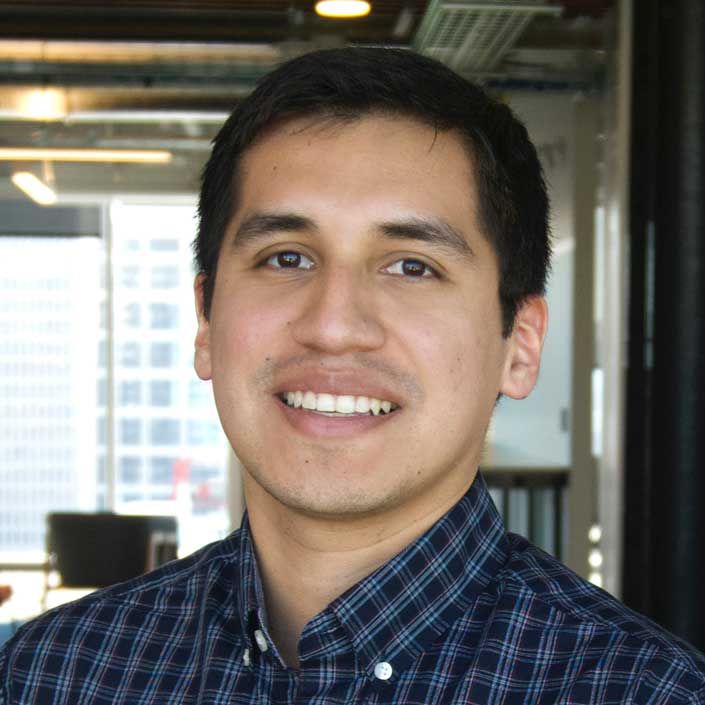
Dr. Sasan Mahmoodi is an Associate Professor at the School of Electronic and Computer Science , University of Southampton. His research focuses on Medical Image Analysis , Biometrics , and Computer Vision , with applications in healthcare and security systems. Research Groups: Vision, Learning and Control; Institute for Life Sciences; Centre for Machine Intelligence His work spans deep learning , rule-based AI , and pattern recognition in medical imaging, including applications for neonatal brain injury prognosis and radiographic knee osteoarthritis classification. He also contributes to biometric technologies like facial profile recognition and gait analysis. Recent publications highlight his expertise in: Domain adaptation for biometric systems Infrared gait recognition databases Motion artefact correction in HRpQCT imaging Histopathology image segmentation using U-Net variants Dr. Mahmoodi supervises PhD students in computer science and human health development and collaborates on interdisciplinary projects involving machine learning and medical imaging.
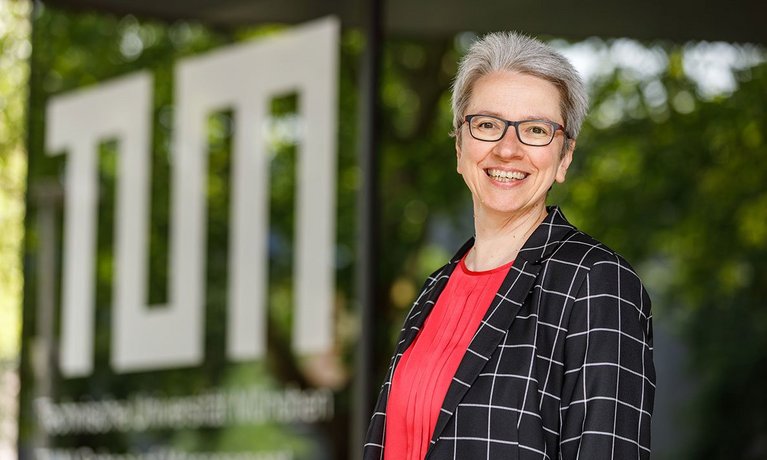
Prof. Dr. Dr. h.c. Gudrun Kiesmüller serves as Full Professor holding the Chair for Operations Management at TUM School of Management, Technical University of Munich, based at Campus Heilbronn since July 2019. She concurrently holds the position of Hedda Andersson Guest Professor at Lund University's Department of Industrial Management & Logistics since January 2021. Previously, she held professorial positions at Otto-von-Guericke-University Magdeburg (2013-2019), Christian-Albrechts-University zu Kiel (2010-2013), and Technical University Eindhoven (2002-2009). Her research program focuses on Operations Management with particular emphasis on the implications of digitization in Industry 4.0, especially in after-sales services. She develops analytical methods to optimize processes across manufacturing and supply chains. Her work spans three interconnected domains: stochastic manufacturing systems design (examining buffer sizing and spare parts planning), safety stock optimization under uncertain demand and supply conditions, and maintenance-reliability integration. She investigates how digitization transforms traditional operations, with growing emphasis on AI applications for supply chain optimization and inventory planning. Prof. Kiesmüller's extensive publication record reveals consistent contributions to operations research methodology with practical business applications. Her work demonstrates increasing integration of data-driven approaches, particularly in the most recent publications which explore AI applications for supply chain optimization. The research shows progression from theoretical inventory models toward more complex, integrated systems that consider multiple uncertainties simultaneously, reflecting the growing complexity of modern supply chains. Her professional recognition includes: 2022 Service Award from the International Society for Inventory Research Multiple Outstanding Reviewer Awards from OR Spectrum (2017, 2020) EURO Best Paper Award (2014) for influential review on lateral transshipments Multiple teaching awards recognizing excellence in both bachelor and master level instruction At TUM, Prof. Kiesmüller teaches a comprehensive curriculum in Operations Management, emphasizing both theoretical foundations and practical applications. Her courses equip students with skills to analyze supply chain planning problems, apply quantitative models, and solve complex operational challenges. She maintains an active research group investigating how digitization transforms operations management practices, particularly in after-sales service contexts where Industry 4.0 technologies enable new optimization possibilities.
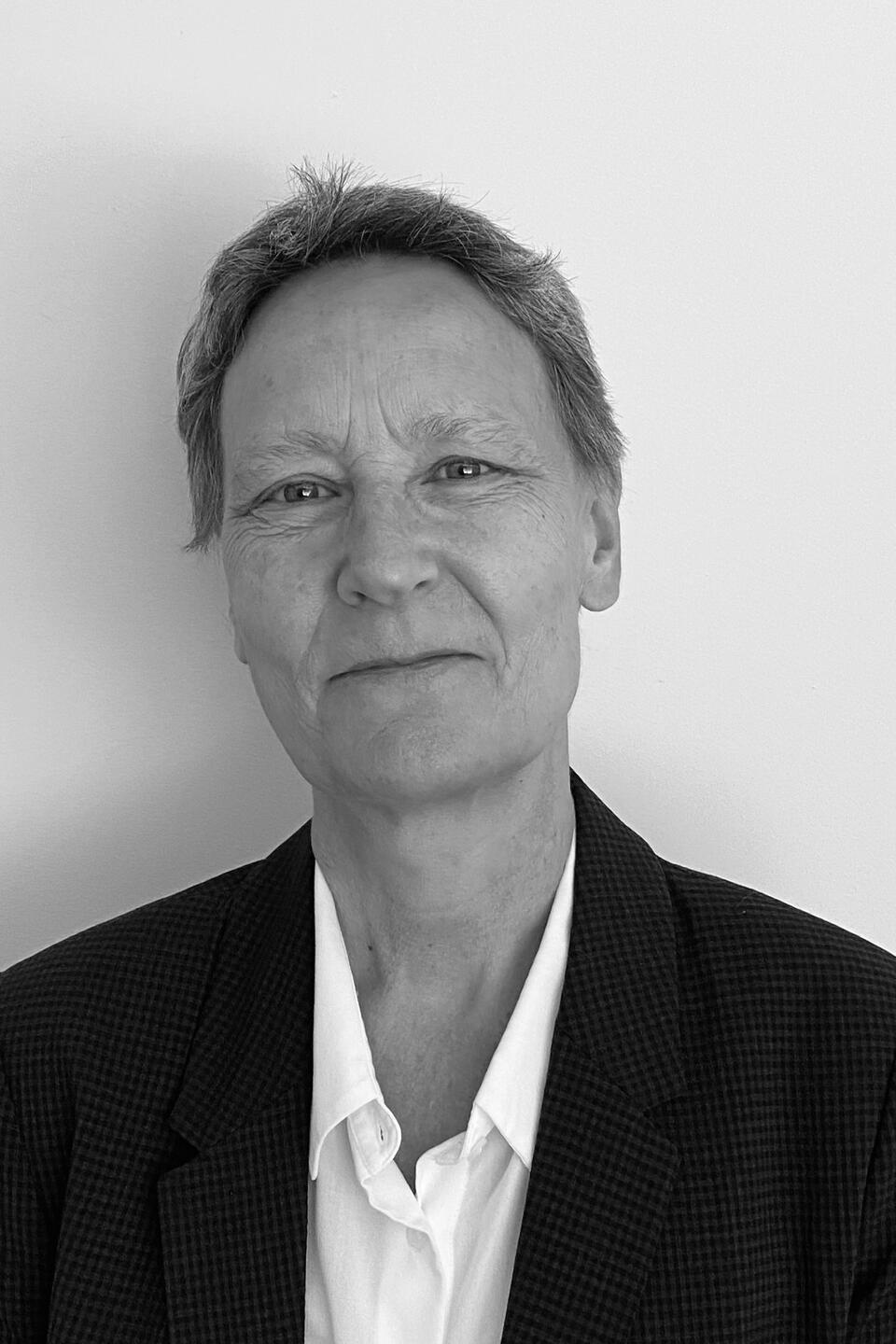
Franziska Klügl is a Professor in Computer Science at Örebro University's Faculty of Business, Science and Engineering, affiliated with the Center for Applied Autonomous Sensor Systems (AASS). She currently leads the KKS-funded TeamRob project on Human-Robot Teamwork and serves as Deputy Dean of the faculty since January 2023, chairing the academic appointment committee. Previously, she headed the Computer Science department (2020-2022) and served on the faculty board (2019-2022). Her research focuses on: Multi-agent systems : Development of languages, processes, and tools for agent-based simulation Interdisciplinary applications : Transportation, economics, epidemics, production, and mining simulations Simulation engineering : Integrating AI, machine learning, and formal methods to create accessible modeling tools for domain experts She created SeSAm , a visual programming tool for agent-based simulation that enables rapid prototyping of complex models. Analysis of her recent publications reveals three dominant themes: Human-robot collaboration frameworks and intention recognition systems Economic impacts of automation on labor markets and engineering services Advanced simulation methodologies using affordance theory and reinforcement learning She teaches software engineering, multi-agent systems, and agent-based modeling across multiple programs, including the WASP AI&ML PhD course. She leads research groups at the Machine Perception and Interaction Lab and oversees the TeamRob human-robot teamwork project.
Anant Narula is a postdoctoral researcher at Chalmers University of Technology, Sweden, affiliated with the Department of Electrical Engineering. His work focuses on power electronics in power systems, stability analysis of grid-forming converters, and renewable energy integration. PhD in Electrical Engineering (2023), Chalmers University of Technology Postdoc since 2023 at Department of Electrical Engineering Research Interests: Narula specializes in power electronics for power systems, analyzing grid-forming converter dynamics, stability, and control strategies. His work addresses challenges in renewable energy integration, microgrid protection, and converter-based grid support. Publication Trends: His recent articles (2024–2025) explore small-signal analysis of converters, reactive behavior impacts, and stability enhancement techniques. Earlier works (2016–2023) cover fault ride-through, parameter tuning, and modular converter design. Scientific Affiliation: He is a member of IEEE, contributing to power electronics and renewable energy research through collaborations and conference proceedings.
Dr Samantha Oates is a Lecturer in Astrophysics within the Department of Physics at Lancaster University's Faculty of Science and Technology. Her office is located in C035, C-Floor, Physics Building. Her research focuses on Gamma-ray Bursts (GRBs) in the gravitational wave era, investigating environments of GRB explosions, central engine mechanisms, jet structures, cosmological evolution of GRBs, and electromagnetic counterparts to gravitational wave events. She actively participates in international collaborations including Swift, LSST, STARGATE, and ENGRAVE . Her work addresses critical questions about optical/UV contaminants in gravitational wave counterpart searches and the cosmological utility of GRB correlations. Dr Oates supervises PhD students including Samuel Shilling in Observational Astrophysics. She contributes to the Astrophysics research group at Lancaster University, delivering specialized lectures and supervising projects on multi-messenger astrophysics. Recent publications demonstrate her expertise in gravitational wave follow-up campaigns, supernova classification, and nuclear transient phenomena. Her research group engages in multiwavelength observations from gamma-ray to radio wavelengths, utilizing facilities for real-time transient detection and characterization. Current projects involve analyzing data from gravitational wave events and developing methods to distinguish true counterparts from serendipitous transients.
Juliette Koning serves as Professor of Business in Society and Head of the Organisation, Strategy & Entrepreneurship Department at Maastricht University's School of Business and Economics. With a PhD in Social Anthropology from the University of Amsterdam, she brings interdisciplinary expertise spanning organizational studies, entrepreneurship, and business ethics. Her academic career includes prior appointments at Oxford Brookes University, Vrije Universiteit Amsterdam, Tilburg University, and Wageningen University. Her research centers on two interconnected domains: (1) small business organizations and entrepreneurship in Southeast Asia—particularly focusing on ethnic Chinese owner-managers—and (2) security studies including maritime security in Indonesia and organizational approaches to security across South Africa, the UK, and the Netherlands. Koning employs extensive qualitative methodologies, often incorporating creative and arts-based approaches, with publications in top journals including Organization Studies , Journal of Business Ethics , and Entrepreneurship & Regional Development . Analysis of her recent publications reveals a consistent focus on identity construction within organizational contexts, ethical dimensions of business practices, and the intersection of cultural-religious frameworks with economic activities. Her work demonstrates increasing engagement with security governance and cross-border cooperation, particularly evident in her NWO-funded research on interorganizational crime control. Koning actively contributes to academic discourse as Associate Editor of Human Relations and has secured significant research funding including an NWO SSH Open Competition grant for her project 'Cross-border Interorganizational Cooperation in Crime Control' investigating Euregional police cooperation in the Meuse-Rhine border region. Her methodological expertise in qualitative approaches extends to mentoring researchers through publications on autoethnography and ethnographic practice.
Prof. Hans Peters is Professor Emeritus of Mathematical Economics at Maastricht University's School of Business and Economics, and Honorar Professor at Rheinisch-Westfälische Technische Hochschule (RWTH) Aachen. His primary research focuses on game theory and social choice theory, with notable contributions to mechanism design, cooperative game theory, and axiomatic analysis. He served as President of the Society for Social Choice and Welfare (SSCW) from 2018-2020, and holds fellowships from the Society for the Advancement of Economic Theory (SAET) and the Game Theory Society (GTS). He is an advisory editor for Social Choice and Welfare , Games and Economic Behavior , and Mathematical Social Sciences , and leads the Springer Theory and Decision Library Series C . His recent work explores division problems with single-dipped preferences, core games, and strategic-proof rules in multidimensional domains. Key contributions include foundational studies on nucleolus computation, network power indices, and sequential claim mechanisms. His research bridges theoretical economics with practical applications in operations research and social choice, emphasizing axiomatic rigor and real-world relevance.
Willem Jonker is a Full Professor at the Digital Society Institute, specializing in Semantics, Cybersecurity & Services. His research focuses on encryption schemes, access control, and privacy-preserving technologies. He has contributed to over 120 publications, with recent work addressing CVE-to-CWE mapping, anomaly detection in network traffic, and functional encryption systems. His expertise aligns with UN Sustainable Development Goals related to secure digital systems and privacy. Jonker has supervised 10 students and actively participates in academic conferences, presenting on topics like secure data management and cryptographic protocols. Research interests include cryptographic protocols, secure data management, and cybersecurity solutions. Notable projects involve developing methods for detecting covert channels, enhancing data privacy in healthcare, and improving secure search over encrypted data. He has also contributed to standards in digital rights management and forensic image recognition.
Alexander Rodríguez is an Assistant Professor in the Department of Computer Science and Engineering at the University of Michigan. His research focuses on advancing AI methods for modeling complex spatiotemporal dynamics, particularly in applications related to population health and community resilience. He specializes in machine learning, time series analysis, uncertainty quantification, and multi-agent systems, with an emphasis on scientific modeling and data-driven decision-making. Recent contributions include keynote talks at AAMAS 2025 (Autonomous Agents for Social Good workshop), presentations at the US National Academies Symposium, and invited talks at AAAI 2025 on topics like knowledge-guided machine learning and public health prediction. He co-organizes AAMAS 2025 as sponsorship co-chair and leads initiatives in AI for science and epidemic forecasting. His publications emphasize neural networks for time series forecasting, biomedical foundation models, and epidemic surveillance systems. Notable work includes 'Neural Conformal Control for Time Series Forecasting' (AAAI 2025) and 'Deepcovid: An operational deep learning-driven framework for explainable real-time forecasting' (2021). No scientific awards explicitly listed in available texts. His research group actively collaborates on grants related to AI applications in public health and infrastructure resilience, with a focus on data-centric methodologies and multi-agent systems.
Dr. Rafeef Garbi is a Professor at the Department of Electrical and Computer Engineering, University of British Columbia, and the Founder/Director of the Biomedical Signal and Image Computing Laboratory (BiSICL). Her multidisciplinary research integrates artificial intelligence, computer vision, and medical imaging for clinical applications in pediatric orthopedics, oncology, and neurology. PhD (Chalmers University, Sweden), MSc (with distinction), Technical Licentiate Research Focus: Specializing in Medical Image Computing and Visual Computing , her lab develops AI-driven solutions for: Automated segmentation and analysis of multi-dimensional biomedical data Clinically-translatable biomarkers for disease assessment Computer-aided intervention systems in surgical contexts Scientific Leadership: UBC Killam Faculty Research Fellow Peter Wall Institute for Advanced Studies Early Career Scholar Senior IEEE Member & Founding IEEE EMBS Vancouver Section Member Key Collaborations: Active in the Medical Image Computing and Computer Assisted Intervention (MICCAI) Society and CAIDA: UBC ICICS Centre for Artificial Intelligence Decision-making and Action. Her team bridges engineering, medicine, and computational biology through translational research.
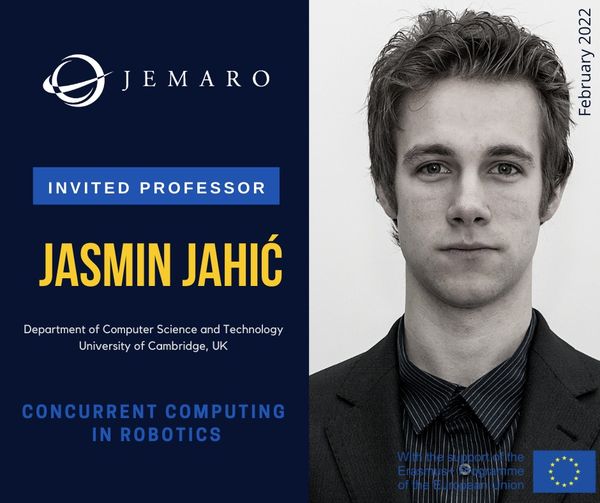
Jasmin Jahic is a Researcher at the Computer Architecture Group of the University of Cambridge, working under Timothy M. Jones. She holds a PhD in 'Supervised Testing of Embedded Concurrent Software' from the University of Kaiserslautern (2020) and has extensive experience as a researcher and project manager at the Fraunhofer Institute for Experimental Software Engineering. Her research focuses on concurrency in embedded systems, software engineering, AI integration, and low-power systems. Education: PhD in Computer Science from the University of Kaiserslautern (2020). Prior roles include Project Manager at Fraunhofer IESE and Coordinator of the European Master Program in Software Engineering. Research Interests: Concurrent computing, embedded systems architecture, AI applications in software engineering, and low-power system design. She explores concurrency bugs, synchronization mechanisms, and software architecture evolution in the context of Industry 4.0 and autonomous systems. Professional Activities: Co-Organizer of SAMOS workshops (2018–2021), Reviewer for IEEE/ACM conferences, and contributor to European Strategic Research Agendas for embedded systems. Teaches courses on software architectures for embedded systems and supervises numerous graduate students. Key Contributions: Frameworks like BOSMI for multithreaded software testing, FERA for concurrency bug detection, and research on AI adoption in traditional embedded systems. Active in HiPEAC conferences and industry partnerships.
Dr. Shufang Zhu is a Lecturer (Assistant Professor equivalent) at the Department of Computer Science, University of Liverpool , and an Associate Member at the University of Oxford’s Department of Computer Science . Previously, she held roles including Senior Research Associate at Oxford (2023–2024) and Postdoctoral Researcher at Sapienza Università di Roma (2020–2022). She earned her Ph.D. in Software Engineering from East China Normal University (ECNU, 2020) under Prof. Geguang Pu, with a visiting Ph.D. at Rice University (2016–2018) under Prof. Moshe Y. Vardi. Education: B.Sc./Ph.D. in Software Engineering from ECNU (2010–2020). Scholarships include the Chinese Scholarship Council (CSC) and UT Austin EECS Rising Star (2022). Her research focuses on interdisciplinary areas of Formal Methods and Artificial Intelligence , emphasizing automated reasoning, planning, and synthesis. Key topics include temporal logics (LTL/LTLf), symbolic synthesis frameworks, and applications in reactive systems. Notable work addresses finite-trace specifications, best-effort strategies, and coordination in multi-agent systems. Teaching: Lecturer for Game-Theoretic Approach to Planning and Synthesis (European Summer School) and Foundations of Self-Programming Agents (Oxford). She also supervises funded Ph.D. positions, including a 2025 deadline for CSC-Liverpool scholarships. Awards: Future Digileader (Digital Futures, 2023), UT Austin EECS Rising Star (2022). Erdős number ≤3 via Moshe Y. Vardi. Collaborations: Co-chair of AAAI 2023 symposium on temporal logics in AI. Active in open-source tools like LydiaSyft for LTLf synthesis. Engages with academic networks through Google Scholar, DBLP, and GitHub.
Maria Chiara Fiorentino is a Research Fellow at the Department of Information Engineering, Polytechnic University of Marche, Italy. Her work focuses on applying deep learning techniques to medical image analysis, particularly in ultrasound, MRI, and CT imaging. Education Master’s in Biomedical Engineering, Università Politecnica delle Marche (Honors) Ph.D. in Information Engineering, Università Politecnica delle Marche (Laude) Research Interests: Dr. Fiorentino specializes in deep learning for medical imaging, with applications in diagnosing neurodegenerative diseases like Parkinson’s, cardiovascular conditions, and musculoskeletal disorders. Her recent work includes federated learning for fetal ultrasound analysis, AI-driven vocal fold pose estimation, and domain adaptation in MRI segmentation. Scientific Awards: Paolo Marziali Thesis Prize for her Master’s research Gruppo Nazionale di Bioingegneria award for her Ph.D. thesis Publications: Dr. Fiorentino’s work spans fetal brain image synthesis, zero-shot learning robustness, and machine learning for catheterization management and stenosis detection.
Bettina Kemme is a faculty member at McGill University in Montreal, Canada. Her research focuses on database systems , distributed computing , and cloud data management . She has made significant contributions to database replication, consistency models, and middleware frameworks for scalable applications. Research Themes : Database replication, distributed systems, cloud computing, and software engineering. Notable Collaborations : Jörg Kienzle, Joseph Vinish D'silva, Yunjia Zheng, and Marta Patiño-Martínez. Publications span critical areas such as graph database view management, transactional recovery in key-value stores, and latency-aware publish/subscribe systems. Her work is published in venues like VLDB , ICDE , Middleware , and SRDS .
Diane M. Styers is an Associate Professor in the Department of Geosciences and Natural Resources at Western Carolina University's College of Arts and Sciences. Her work integrates geospatial technologies with community engagement to address global climate resilience challenges through human-centered research approaches. Her educational qualifications include: Postdoctoral Research in Remote Sensing and Geospatial Analysis, University of Washington Ph.D. in Forest Ecology, Auburn University M.A. in Geography, Georgia State University B.S. in Human Development & Family Studies, University of North Carolina at Greensboro Dr. Styers specializes in public participatory GIS (PPGIS) to incorporate local landscape knowledge into climate adaptation strategies. Her technical expertise spans LiDAR data analysis, object-based image analysis (OBIA), MODIS/Landsat time series, multi-sensor integration, forest ecology, and dendroecology. She investigates how social-ecological processes drive landscape changes affecting Earth's resources, with particular focus on community resilience against climate-related risks. Her publication record reveals strong thematic trends in applying geospatial methods to socio-ecological systems, with increasing emphasis on rivercane conservation, forest community dynamics in Appalachia, biodiversity education using NEON data, and vector-borne disease mapping. Recent works demonstrate sophisticated integration of remote sensing with community-based adaptation frameworks. Dr. Styers actively mentors students through co-authored publications and teaches diverse courses including Introduction to Geospatial Analysis, Remote Sensing, GIS applications, and field-based programs like Sustainability in Costa Rica. Her instructional approach emphasizes authentic science engagement using big data resources.