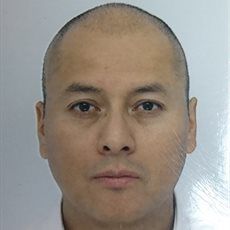
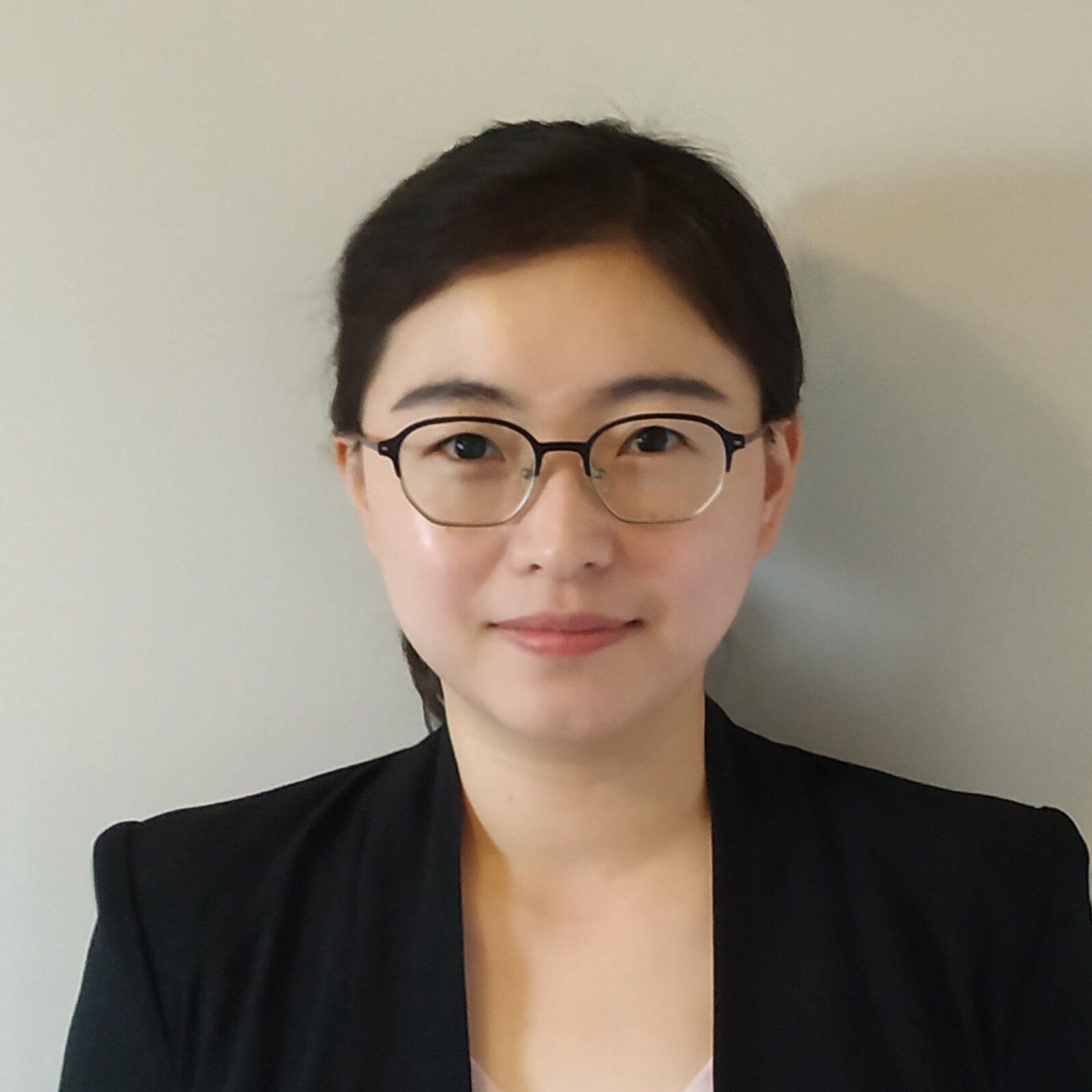
Dr. Michael Middelhoff is a researcher and faculty member at the University of Münster, affiliated with the Chair of Digital Innovation and the Public Sector (Prof. Brandt). He holds a PhD (2023) and Master’s/Bachelor’s degrees in Business Informatics from the same university. His research focuses on Supply Chain Security, Crisis Management, Enterprise Architecture Management, and Secure Business Process Modeling. Key projects include the EU-funded DRIVER+ initiative for crisis innovation and the INPOSEC project enhancing security in postal supply chains. Dr. Middelhoff has supervised over 20 theses on topics like blockchain in identity management, IoT security in postal services, and agent-based crisis simulations. His published work addresses pandemic management frameworks (STADEM), blood supply chain optimization, and crisis simulation methodologies. He contributes to teaching courses such as Enterprise Architecture Management and leads projects like 'Blut-Informationssystem für Krisenintervention'. His work bridges academia and practice, with collaborations in Germany, Europe, and South Africa. He actively participates in conferences and develops tools for crisis decision support.
Hans Vandierendonck is a Professor in High-Performance and Data-Intensive Computing at Queen’s University Belfast’s School of Electronics, Electrical Engineering and Computer Science. His research focuses on compilers, runtime systems, and architectures for parallel systems, with special attention to programmability, cache architecture, and performance evaluation. He has authored over 150 publications and supervised multiple PhD students, including Jiawen Sun, a finalist in the EPSRC Connected Nation Pioneers competition. His work spans compiler optimization, graph processing, transprecision computing, and blockchain technology. He is a Senior Member of IEEE and ACM, an IEEE Computer Society Distinguished Contributor (2023), and a Fellow of the Higher Education Academy. He has held visiting roles at FORTH, INRIA, and the Universitat Politècnica de Catalunya. His projects include the RELAX Doctoral Network and the Kelvin Living Lab for Net Zero HPC. He teaches courses on energy-efficient computing, concurrent programming, and research projects at both BSc and MSc levels. Key research interests include runtime systems, high-performance computing, energy efficiency, and scalable algorithms for data analytics. His awards include the IBM Belgium Prize (2000, 2004) and Jozef Plateau Prize (2000). He actively reviews for top journals and conferences, including ISCA, SC, and ICS. As part of the LINAS network, he explores interdisciplinary algorithmic solutions for societal impact. His current projects address challenges in graph processing, edge computing, and sustainable wearable systems. Collaborations span academia and industry, reflecting his commitment to bridging theoretical and applied computing.
Riccardo Sisto is a Full Professor in the Department of Control and Computer Science (DAUIN) at Politecnico di Torino, where he also leads the NetGroup research group and is a member of the SmartData@PoliTO and Cybersecurity National Laboratory. He has held academic positions continuously since 1991, progressing from Assistant to Full Professor by 2004. Education: PhD in Computer and Systems Engineering, Politecnico di Torino (1992) Graduate in Electronic Engineering, Politecnico di Torino (1987) Riccardo Sisto’s research focuses on formal methods applied to cybersecurity, particularly in formal verification of cryptographic protocols, security automation in cloud and virtualized networks, and secure code generation. His work bridges theoretical formal methods with practical network security applications in SDN/NFV and Kubernetes environments. The recent publications highlight a strong trend toward security automation , formal verification of network and cryptographic protocols , and policy management in virtualized infrastructures . His team develops frameworks like VEREFOO and VERIGRAPH to automate firewall and security function configuration, particularly in cloud-native and multi-cluster environments. Scientific Awards and Honors: ICICS Best Demo Award (2022) IEEE HPSR Best Paper Award Finalist (2014) High Honor Paper Award at IEEE AINA (2004) Fellow of the ACM (2010) Senior Member of the ACM Riccardo Sisto has supervised numerous PhD students and leads multiple competitive research projects funded by the EU (e.g., MIRANDA, VeTeSS) and industry. He serves on editorial boards such as ELECTRONICS and has held leadership roles in international conferences. His research includes both fundamental contributions in formal methods and applied work in industrial collaborations through commercial research projects. He is actively involved in advising PhD students and post-doctoral researchers such as Daniele Bringhenti, Simone Bussa, Francesco Pizzato, and Fulvio Valenza. His lab, NetGroup, focuses on building dependable and secure distributed systems using model-driven and formally verified approaches.
Marco Granese is a Lecturer in the Department of Film and Media at Solent University. He holds a BA (Hons) in Creative Industries from City University London and has taught film production since 2009. His professional work includes award-winning narrative shorts like Inferno (2009), broadcast documentaries on The Community Channel and London Live, and the recent fiction film The Night the Wind Blew . He coordinates post-production for Solent's BA (Hons) Film Production program, redesigning its curriculum. His research focuses on hybrid cinema's portrayal of migration and subaltern communities through practice-led projects. He teaches units including Digital Cinematography, Fiction and Beyond, and Professional Practice Portfolio. He has held visiting lecturer roles at City University London and brings industry experience in editing and production to his academic work. Key Roles: Post-production coordinator, curriculum developer, award-winning filmmaker. Awards: Best Narrative Short at Chicago International Hip Hop Film Festival (2009). Teaching Specializations: Film editing, post-production workflows, professional industry practices.
Prof. Kitty Koelemeijer is a Professor of Marketing at Nyenrode Business Universiteit and director of the Faculty Research Center for Marketing & Supply Chain Management. Her research focuses on retail marketing, supply chain management, healthcare process analysis, and Lean methodologies. She holds a PhD from Wageningen University (2000) and has extensive experience combining academic work with entrepreneurship, including supervisory roles in technology startups and non-profits. Research interests include consumer behavior in retail environments, IT-driven business models, and sociotechnical analysis of healthcare systems. She leads a team addressing topics like electronic health record workarounds and lean startup applications. Key contributions span over three decades, with notable work on assortment evaluation (1999), SEWA framework (2019), and critical success factors in IT outsourcing (2018). Education: PhD in Economics (Wageningen University, 2000) Key roles: Board member at KPN, Brunel International, Vereniging Eigen Huis, and multiple supervisory boards Awards: Not explicitly listed, but her sustained academic and professional contributions indicate recognition in business education and applied research. Advising/Grants: No explicit student advisees listed, but oversees research teams. Active in multi-method research projects funded by industry collaborations. Labs/Teams: Directs Nyenrode's Marketing & Supply Chain Management Research Center, focusing on bridging academic insights with business applications in retail, healthcare IT, and innovation strategies.
Mohammad Mohammadi Amiri is an Assistant Professor in the Computer Science Department at Rensselaer Polytechnic Institute (RPI), joining in Fall 2023. Previously, he held postdoctoral positions at MIT Media Lab (2022–present) and Princeton University (2019–2021), working with Prof. Vincent Poor and Prof. Sanjeev Kulkarni. He earned his Ph.D. in Electrical and Electronic Engineering from Imperial College London (2019), with prior degrees from Iran University of Science and Technology (B.Sc., 2011) and the University of Tehran (M.Sc., 2014). His research focuses on decentralized intelligence, federated learning, and wireless edge computing. He explores enabling distributed machine learning while preserving privacy, particularly in IoT and smart systems. Key areas include federated learning over wireless channels, data valuation, and optimization of edge computing resources. His articles address topics like federated learning convergence, device selection in wireless systems, and decentralized data valuation. Recent work includes papers accepted at AAAI 2023, CISS 2023, and IEEE Transactions on Wireless Communications. Awards : IEEE Communications Society Young Author Best Paper Award (2022) Best PhD Thesis Award (2019), IEEE Information Theory Chapter Eryl Cadwallader Davies Prize (2019), Imperial College London Advising & Grants : Mentoring Ph.D. students in machine learning and distributed systems Recipient of multiple scholarships and awards during his academic career Labs/Teams : Camera Culture Group (MIT Media Lab) Princeton University's Electrical Engineering Department
Sunil Chopra is the IBM Distinguished Professor of Operations Management at the Kellogg School of Management, Northwestern University. He has held academic leadership roles including Interim Dean (2009-2010) and Senior Associate Dean for Curriculum and Teaching (2006-2009). His research focuses on supply chain optimization, logistics, combinatorial optimization, and risk management in supply chains. Chopra has authored influential textbooks like Supply Chain Management: Strategy, Planning, and Operation , which won the IIE Book of the Year Award in 2002. Education: PhD (1986) and MS (1984) in Operations Research from SUNY Stony Brook; BTech (1981) in Mechanical Engineering from IIT Delhi. He has held editorial roles for Management Science and Operations Research , and has consulted for firms across industries. His awards include multiple teaching accolades and the Saul Gass Expository Writing Award (2019). His recent work explores pandemic impacts on retail operations, disruption risk frameworks, and omni-channel retail strategies. Chopra’s research spans over 75 publications, including articles on supply chain resilience, network design, and inventory optimization. He has designed case studies on global supply chains (e.g., Seven-Eleven Japan) and emerging challenges like attended home delivery scheduling.
Allen Landers is a Professor and Chair of the Department of Physics at Auburn University, holding the Howard Earl and Carolyn Taylor Carr Endowed Professorship. He specializes in experimental atomic and molecular physics, focusing on multi-particle imaging methods to study electronic/nuclear dynamics in atoms/molecules. His research has been published in Science , Nature , and Physical Review , supported by DOE and NSF grants. Education: Ph.D., Physics, Kansas State University, 1999 B.S., Mathematics and Physics, Kansas State University, 1993 Research Interests: Core hole localization, photoelectron angular distributions, dissociative dynamics of molecules (e.g., water, ammonia, hydrocarbons), momentum imaging techniques, and interdisciplinary outreach programs for K-12 STEM education. Outreach & Teaching: Leads initiatives to broaden science fair participation in high-needs schools. Teaches across undergraduate and graduate physics curricula. Recognized with awards for teaching (2006) and outreach (2014, 2013). Professional Roles: Member of APS Division of Atomic, Molecular & Optical Physics (DAMOP) Education Committee. Serves as proposal reviewer for DOE/NSF/NASA and referee for top physics journals. Labs/Teams: Leads experimental AMO research in Auburn’s atomic physics group, collaborating with global teams on synchrotron-based COLTRIMS reaction microscopy and X-ray spectroscopy.
Dr. Pedro Martinez-Vazquez is a Lecturer in Civil Engineering at the Department of Civil Engineering, School of Engineering, University of Birmingham, UK. He has been in this position since 2012, having previously held a lectureship at the University of Liverpool and a Research Fellow role at the University of Birmingham. Education: PhD, Universidad Nacional Autónoma de México (UNAM), 2006 MSc, Universidad Nacional Autónoma de México (UNAM), 2002 BE, Universidad Nacional Autónoma de México (UNAM), 1994 Postgraduate Certificate in Learning and Teaching in Higher Education, 2012 His research interests span a wide range of topics in civil and environmental engineering, with a strong emphasis on structural dynamics , wind engineering , seismic effects , and the application of artificial intelligence and image recognition techniques to engineering problems. He explores interdisciplinary areas such as crop lodging due to wind, numerical modeling of human body dynamics, and sustainability in engineering systems. The 15 most recent publications highlight a consistent focus on wind and earthquake load interactions , performance of wind turbine towers , multi-hazard structural analysis , and innovative uses of computational methods and AI in fluid and structural dynamics. His work bridges experimental, analytical, and numerical approaches, often integrating novel techniques like conditional simulation and eigenface-based recognition. Scientific Awards and Recognitions: Chartered Engineer, ICE, 2018 Member, Institution of Civil Engineers (ICE), 2018 Fellow of the Higher Education Academy (FHEA), 2012 Graduate Member, Institution of Structural Engineers, 2012 Associate of the Higher Education Academy, 2012 Postgraduate Certificate in Learning and Teaching in Higher Education, 2012 Dr. Martinez-Vazquez actively supervises PhD research in areas including wind and seismic engineering, computational methods, artificial neural networks, and nanomaterials for structural enhancement. He teaches across all levels of civil engineering, including Structural Engineering I & II, Seismic Engineering, and research projects at BEng, MEng, and MSc levels. He has not received mention of specific grants in the provided text, but his research output suggests involvement in computational and experimental projects, likely supported by academic and industrial collaborations. His work on windborne debris and crop lodging indicates applied research with real-world impact. He has contributed to research through experimental, analytical, and numerical investigations, particularly in wind tunnel studies and stochastic modeling. His work with teams at Birmingham and collaborators internationally (e.g., C. J. Baker, M. Sterling) reflects strong interdisciplinary and collaborative research practices.
Professor Taufiq Asyhari is a faculty member at Monash University, specializing in Data Science and Machine Learning. He holds a PhD in Information Engineering from the University of Cambridge, with expertise in telecommunications, privacy-preserving AI, and sustainable development. Visiting Professor of Future Communication Systems at Birmingham City University (since 2023) Board of Experts member at Wallacea Research Centre for Biodiversity Conservation and Climate Change (since 2022) His research spans geographically diverse AI applications in telehealth, smart cities, and environmental sustainability. Recent projects focus on fair AI systems, privacy-preserving machine learning, and tropical biomass energy solutions. Key publication trends show active contributions in: 5G telecommunications, intrusion detection systems, environmental machine learning, and sustainable energy technologies. His work combines theoretical research with practical implementations across multiple domains. Scientific achievements include: Doctor of Philosophy from University of Cambridge Editorial roles at Mobile Information Systems, Sensors, PeerJ Computer Science, and IEEE Access
Yujie Tang is an Assistant Professor in the Faculty of Computer Science at Dalhousie University, Halifax, Canada, where she has been serving since September 2022. Prior to this, she was an Assistant Professor at Algoma University from July 2019 to August 2022, and a Postdoctoral Fellow at the University of Waterloo from October 2017 to June 2019. Faculty of Computer Science, Dalhousie University (2022–Present) School of Computer Science and Technology, Algoma University (2019–2022) Department of Electrical and Computer Engineering, University of Waterloo (Postdoc, 2017–2019) Education: Ph.D., Electrical and Computer Engineering, University of Waterloo M.E., Harbin Institute of Technology, Shenzhen B.E., Lanzhou Jiaotong University Dr. Tang’s research centers on intelligent networking and computing technologies, with applications in B5G/6G networks, Internet of Vehicles (IoV), edge computing, and UAV-assisted systems. She leverages machine learning and AI to optimize resource management, spectrum allocation, and network performance in heterogeneous and dynamic environments. Her work bridges theoretical design with practical implementation in next-generation communication systems. The recent publications highlight a consistent focus on AI-driven solutions for wireless networks, particularly in vehicular communications, edge intelligence, and spectrum efficiency. Key themes include reinforcement learning for UAV deployment, deep learning for spectrum sensing, and cooperative edge caching in 5G/mmWave networks. These works span top journals such as IEEE TWC, TVT, IoT Journal, and JSAC, reflecting strong technical depth and real-world applicability. Scientific Awards and Honors: NSERC Discovery Grant (2021–2026) Faculty Research Startup Funds from Dalhousie and Algoma Universities Best Speaker Award, University of Waterloo (2017) Multiple awards including FoE Award, Graduate Scholarship, and Entrance Awards from University of Waterloo (2011–2017) Dr. Tang actively contributes to the academic community as a reviewer for leading IEEE journals and conferences, and has served on technical program committees for IEEE INFOCOM, GLOBECOM, ICC, and VTC. She is a member of IEEE, IEEE Communications Society, and IEEE Vehicular Technology Society. She is currently advising and recruiting MSc and PhD students for research in B5G/6G, IoV, and AI-empowered edge computing. Laboratory and Research Group: Dr. Tang leads a research group focused on intelligent networking and edge AI systems at Dalhousie University. Her lab investigates real-time decision-making, resource slicing, and autonomous vehicular networks, often integrating simulation with practical deployment considerations.
Professor Marc Stutter is an Honorary Professor at the Lancaster Environment Centre , Lancaster University. His research focuses on soil science and environmental biogeochemistry, particularly phosphorus dynamics, riparian zone management, and nutrient cycling in agricultural and aquatic systems. Institution: Lancaster University Department: Lancaster Environment Centre Academic Role: Honorary Professor Stutter's work investigates how riparian soils regulate dissolved organic matter and phosphorus fluxes in river systems, exploring climate sensitivity and management strategies for pollution mitigation. Recent studies address cost-effective riparian interventions, phosphorus bioavailability in sewage-derived biochars, and microbial responses to organic amendments. His publications highlight trends in riparian buffer efficacy, coupled macronutrient cycling, and advanced techniques like DGTs and soil zymography for phosphorus quantification. Articles span 2016–2025, emphasizing interdisciplinary approaches at the soil-water-plant nexus. Key collaborations include researchers from environmental management, agricultural science, and hydrology fields. The Lancaster Environment Centre serves as the primary platform for his team's interdisciplinary studies on sustainable land-water interactions.
Claudia Rosales serves as Assistant Professor in the Department of Supply Chain Management at the University of Arkansas' Walton College of Business. Her academic appointment spans both the Walton College of Business (WCOB) and the Supply Chain Management department (LSCM), with research activities centered on healthcare operations and logistics optimization. Her educational background includes a Ph.D. in Operations Management and Master of Science in Quantitative Analysis from the University of Cincinnati's College of Business, Department of Quantitative Analysis and Operations Management. She completed her foundational education with a Bachelor of Science in Chemical and Industrial Engineering from Universidad Rafael Landivar in Guatemala City. Rosales' research focuses on critical supply chain challenges in healthcare systems, particularly examining inventory management for medical supplies, risk mitigation in vaccine distribution, and optimization of surgical supply chains. Her work bridges theoretical operations management with practical healthcare applications, emphasizing analytics-driven solutions for reducing waste and improving efficiency in high-stakes environments. Recent publications demonstrate increasing specialization in physician preference items and pandemic-related supply chain resilience. Her scholarly contributions appear in top-tier journals including Journal of Operations Management , Decision Sciences , European Journal of Operational Research , and Transportation Journal . She currently serves as Associate Editor for Decision Sciences Journal , reflecting her growing influence in the field. Best Paper of the Year Award - Decision Sciences Journal Best Paper of the Year Award - Transportation Journal Rosales brings significant industry experience to her academic role, having held multiple manufacturing and engineering positions in the Consumer Packaged Goods (CPG) sector prior to her doctoral studies. Her practical background informs her research on real-world supply chain challenges, particularly in healthcare settings where operational failures can have life-or-death consequences. Current work examines influenza vaccine contracts in developing nations and consignment inventory systems for medical supplies.
Lisa Maria Kohl is a tenured researcher in the Cryptology Group at CWI Amsterdam , where she has worked since 2020. She focuses on developing practical post-quantum secure protocols and secure multi-party computation . Her academic journey includes a PhD at Karlsruhe Institute of Technology (2019), postdoctoral research at Technion (2020), and a visiting researcher role at the FACT Center at IDC Herzliya during her PhD. Education : PhD from Karlsruhe Institute of Technology (2019) Previous Positions : Postdoctoral researcher at Technion (2020), visiting researcher at IDC Herzliya (2019), visiting student at CWI (2015) Current Role : Research Scientist at CWI Amsterdam (2020–present) Kohl’s research spans cryptographic theory and its practical applications. Key areas include secure multi-party computation , homomorphic secret sharing , oblivious transfer , and lattice-based cryptography . Her work often addresses efficiency, tight security reductions, and post-quantum resilience, as seen in her recent publications on scalable protocols and topology-hiding computation. Her 15 most recent publications (2025–2019) reveal a focus on secure computation (e.g., SPDZ extensions, RMS programs), pseudorandomness (e.g., LPN-based constructions), and privacy-preserving technologies (e.g., Privacy Pass, topology-hiding communication). Collaborations with prominent researchers like Elette Boyle, Yuval Ishai, and Ronald Cramer underscore her integration into global cryptographic research networks.
Dimitris Kalogeras is a Researcher at the National Technical University of Athens (NTUA) , affiliated with the School of Electrical and Computer Engineering and the EPISEY research institute. He has been a key contributor to advanced networking initiatives, including the NTUA Network, EDET optical network, and University School Network. His work spans national and European projects like GEANT, 6net, and NOVI, and he pioneered IPv6 and multicast deployment in Greece and Europe. His research focuses on Network security Internet of Things (IoT) Artificial intelligence in networking Cyber-physical systems Robotics Medical image processing Recent work involves federated learning, UAV-based localization, and privacy-preserving frameworks in IoT environments. An analysis of his 15 most recent publications reveals strong emphasis on applications of machine learning in network security, robotic infrastructure maintenance, and lightweight AI for IoT. His projects include thethingsNetwork deployment in Athens, the HERON robotic platform, and the FELICE collaboration framework. He has contributed to global IoT initiatives through multi-channel LoRAWAN gateways and 6LowPAN mesh networks. His work on blockchain-based DDoS mitigation and semantic-aware policy management demonstrates leadership in cyber infrastructure resilience.



.jpg?sfvrsn=493fc14_4)