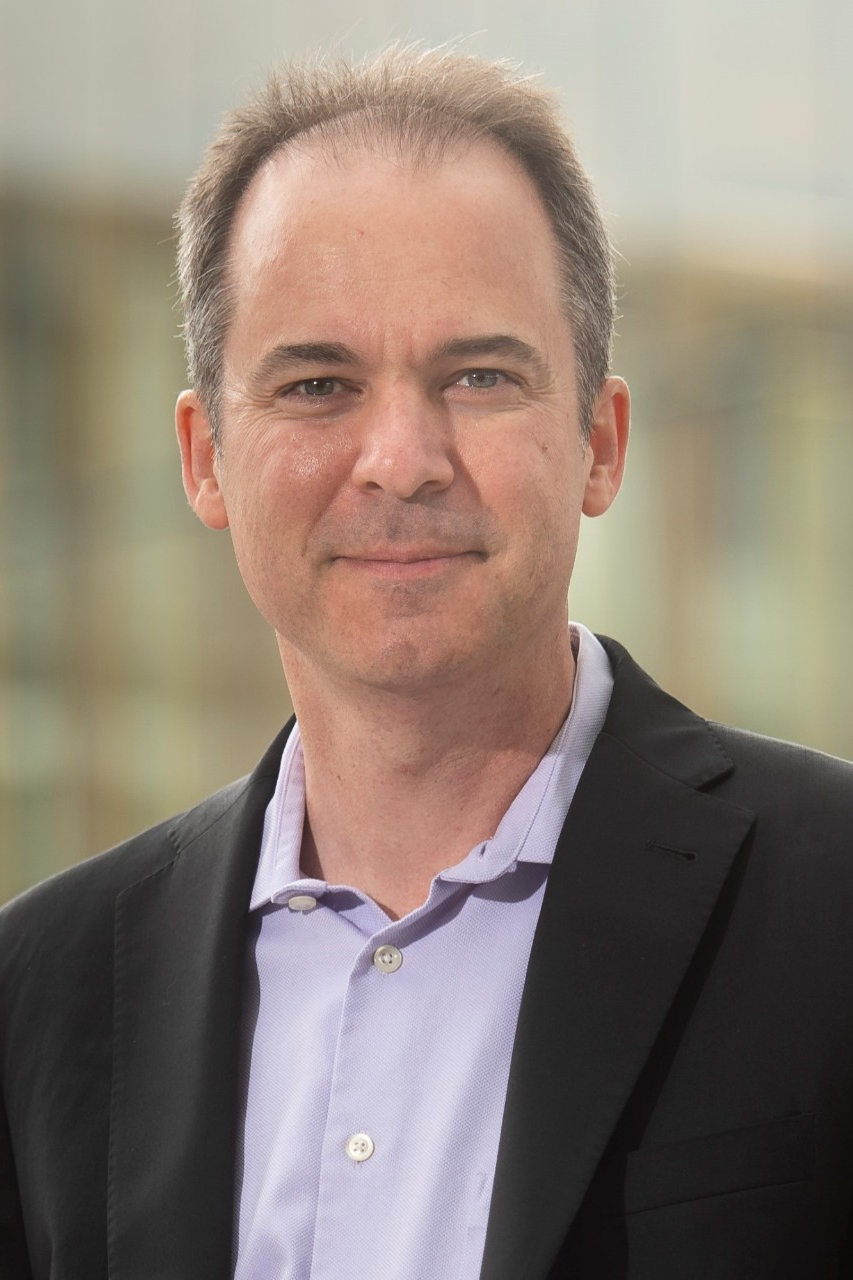
Martin Turner is a Business Relationship Manager for Research IT at the University of Manchester, specializing in e-Science and computational infrastructure. He also serves as an Honorary Lecturer in Computer Science. His roles include project management for UKRI grants and leadership in initiatives like the Harwell Imaging Partnership and the Scientific Computing Division at STFC. Research interests span visualization, image processing, and fractal geometry, with notable contributions including a book on Fractal Geometry in Digital Imaging and over 120 peer-reviewed publications. He has supervised 21 PhD/MPhil students and contributed to edited volumes such as Geographic Visualization: Concepts, Tools and Applications . Key awards include a short-term Fellowship with British Telecom. His work integrates real-world applications with cutting-edge imaging technologies, emphasizing collaboration and longitudinal research support. Projects involve visualization frameworks, tomography, and UAV-based computer vision applications. Advising focuses on MSc and PhD levels, while grants and collaborations address imaging science, geology, and computational methods. He leads teams in developing tools like the Core Imaging Library and SIRF framework, advancing tomographic and multi-channel imaging techniques.
Jevgenij Krivochiza is an active Researcher in Satellite Communications , Wireless Networks , and Signal Processing , with a focus on precoding techniques , 5G Non-Terrestrial Networks , and FPGA acceleration for multi-antenna systems. He collaborates extensively with institutions like University of Luxembourg (via co-authors Symeon Chatzinotas and Björn Ottersten ) and other researchers in distributed satellite systems. Research Interests : His work revolves around symbol-level precoding to minimize interference and power consumption, phase synchronization in coherent distributed systems, and distributed beamforming for swarm satellite networks. Recent studies include machine learning applications for PBCH symbol detection and FAIR data management for ML models. Article Trends : Publications from 2025 to 2015 span satellite communication protocols , 5G NTN , interference exploitation , and hardware acceleration , with increasing integration of machine learning in 2024–2025. Sub-fields include DVB-S2X waveform analysis , SWIPT , and precoding-enabled multi-beam systems .
Zhigang Li is a Professor in the Department of Computer Science at South China University of Technology's School of Computer Science and Engineering. His research spans multiple technical domains with significant contributions to neural networks, medical imaging, computer vision, and sensor technologies. Recent collaborations include work with Northwestern Polytechnical University, Hong Kong University of Science and Technology, and various medical research institutions. Dr. Li's research interests focus on neural network architectures, particularly small-world and feedforward networks for system modeling and medical applications. His work bridges computer science with practical applications in healthcare (EEG analysis, schizophrenia detection, liver transplant allocation), environmental monitoring (wastewater treatment), and engineering systems (CMOS image sensors, UAV networks). His research demonstrates strong interdisciplinary connections between theoretical computer science and real-world problem solving. Analysis of his recent publication trends shows increasing focus on medical applications of AI, with significant work in brain functional network analysis, depression recognition, and schizophrenia detection. His technical contributions include novel neural network architectures, efficient sensor systems, and advanced signal processing techniques. The publications reveal a consistent pattern of high-quality output in top-tier journals across multiple disciplines. Dr. Li has received recognition through publications in prestigious venues including IEEE Transactions, Medical Image Analysis, and Expert Systems with Applications, though specific awards aren't documented in the provided bibliography. His work demonstrates significant impact across multiple fields, particularly in applying computational methods to healthcare challenges. His research program includes collaborations with medical researchers for brain imaging applications, electrical engineers for sensor development, and computer scientists for network architecture design. Current projects appear focused on multi-view brain network analysis, energy-efficient sensor systems, and medical AI applications with potential clinical impact.
Dimirovski Georgi is a Professor at the Department of Control and Systems Engineering, Faculty of Electrical Engineering and Information Technologies, Ss. Cyril and Methodius University of Skopje. His research focuses on advanced control systems, neural networks, cyber-physical systems, and computational cybernetics. He has extensively contributed to theoretical and applied aspects of switched systems, nonlinear control, fault-tolerant mechanisms, and networked control systems. His work integrates methodologies such as Lyapunov theory, adaptive control, and reinforcement learning to address complex challenges in robotics, aerospace, and industrial automation. Recent studies emphasize resilient control under adversarial attacks, optimal resource allocation, and synchronization of dynamic systems. Key research trends include: (1) developing robust control strategies for systems with time-delays and uncertainties, (2) enhancing cybersecurity in cyber-physical systems through deception attack detection and mitigation, and (3) advancing machine learning techniques for real-time system estimation and prediction. Dimirovski has published over 200 peer-reviewed articles, with recent contributions appearing in top journals and conferences. His work frequently explores intersections between control theory and artificial intelligence, particularly in applications requiring safety-critical performance guarantees.
Christopher Brinton is the Elmore Associate Professor of Electrical and Computer Engineering at Purdue University, where he leads the ION research lab. His work sits at the intersection of networking, communications, and machine learning, investigating contemporary network architectures including Fog computing systems, the Internet of Things (IoT), NextG Wireless, and social learning networks. Dr. Brinton received his PhD in Electrical Engineering from Princeton University in 2016, following a Master's degree in EE from Princeton in 2013 and a BSEE from The College of New Jersey in 2011. Prior to joining Purdue, he served as the Associate Director of the EDGE Lab and a Lecturer of Electrical Engineering at Princeton University. His research focuses on network optimization, machine learning, edge and fog computing, signal processing, wireless networks, distributed computing, communication and information theory, and social learning networks. Dr. Brinton's work employs foundational techniques including convex and non-convex optimization, machine learning, and signal processing to address challenges in emerging network architectures. His research spans from theoretical foundations in information theory to practical implementations in next-generation wireless systems, with an increasing emphasis on distributed learning approaches that maintain privacy while achieving high performance. Dr. Brinton's recent publications demonstrate a strong trajectory toward integrating machine learning with networking challenges, particularly in distributed and edge computing environments. His work shows growing emphasis on federated and decentralized learning approaches that address privacy concerns and communication constraints in real-world network deployments, while also advancing theoretical understanding of network optimization problems. NSF CAREER Award ONR Young Investigator Program (YIP) Award DARPA Young Faculty Award (YFA) AFOSR Young Investigator Program (YIP) Award Intel Rising Star Faculty Award (RSA) Dr. Brinton has been active in teaching across multiple levels, lecturing courses on network principles, signals and systems, and computer communication networks. He is also the co-author of "The Power of Networks: Six Principles That Connect Our Lives," which has been used for introductory college courses worldwide and formed the basis for popular MOOCs that have collectively enrolled over 400,000 students. His teaching spans undergraduate and graduate levels, including specialized courses on wireless communication networks and Python for data science. As leader of the ION research lab, Dr. Brinton oversees a team investigating the theoretical and practical aspects of network optimization, with projects spanning fog computing systems, IoT, NextG Wireless, and social learning networks. His lab collaborates with major industry partners including Qualcomm, Nokia, Intel, Cisco, Dell, and Ericsson on cutting-edge research in next-generation networking technologies.
Saman Zonouz is an Associate Professor at Georgia Institute of Technology with joint appointments in the School of Electrical and Computer Engineering and the School of Cybersecurity and Privacy. He joined Georgia Tech in 2022 after prior roles at Rutgers University and the University of Miami. His research focuses on cybersecurity and privacy in cyber-physical systems, particularly critical infrastructures such as power grids and industrial control systems. Zonouz holds a Ph.D. in Computer Science from the University of Illinois at Urbana-Champaign (2011) and a B.Sc. from Sharif Institute of Technology (2006). His work bridges theoretical computer science with practical engineering challenges, emphasizing resilience, attack detection, and physical-layer security. His research interests include attack detection in cyber-physical systems, embedded systems security, side-channel attacks, and resilient distributed control strategies. Recent trends in his publications highlight advancements in hardware implant detection, stealthy supply chain attacks, and cross-domain resilience frameworks for modern power systems. Zonouz has received prestigious awards including the Presidential Early Career Award for Scientists and Engineers (PECASE), NSF CAREER Award, and NSA Significant Research Recognition. His work often involves collaborations with industry and government agencies to address real-world cybersecurity challenges. He has led projects funded by NSF, AFOSR, and Google, focusing on topics like trustworthy additive manufacturing, privacy-preserving IoT systems, and cyber-informed engineering education. His lab develops tools such as OpenConduit for power system simulation and Guide-Guard for bioengineering applications.
Prof. Daniel Quevedo is a Professor in Cyberphysical Systems at the School of Electrical Engineering and Robotics, Queensland University of Technology (QUT). He previously led the Chair in Automatic Control at Paderborn University, Germany. He holds a PhD from the University of Newcastle (Australia) and degrees from Universidad Técnica Federico Santa María (Chile). His research focuses on networked cyberphysical systems, cybersecurity, and model predictive control, with over 240 publications and three patents. He has attracted over $2M in research funding and is a Fellow of the IEEE. His work emphasizes cross-disciplinary collaboration in fields like power electronics, telecommunications, and behavioral economics. Educations: PhD in Automatic Control (2005), University of Newcastle, Australia M.Sc. and B.Eng. (2000), Universidad Técnica Federico Santa María, Chile Research Interests: Prof. Quevedo’s work bridges theoretical systems control with practical applications. Key areas include networked cyberphysical systems, cybersecurity (e.g., deception attacks, privacy preservation), and energy-efficient control strategies. His contributions span event-triggered control, encrypted cooperative systems, and power converter optimization. He collaborates globally with institutions like ABB, TU Berlin, and Indian Institute of Technology Bombay. Grants & Awards: Notable grants include DFG-funded projects on network-informed control and ARC grants on predictive control. His 2018 IEEE Axelby Award highlights his impact on systems control theory. He has also held visiting professorships and editorial roles for journals like IEEE Transactions on Automatic Control. Teaching & Supervision: At Paderborn University, he modernized control systems curricula, integrating blended learning and industry-relevant projects. He has supervised over 10 PhD/MSc theses and mentored postdoctoral researchers in areas like cyber-physical security and distributed control. Labs & Teams: He is affiliated with QUT’s Centre for Robotics, focusing on interdisciplinary robotics and cyberphysical systems research.
Joakim Larsson is a Lecturer at Örebro University's School of Science and Technology, Department of Natural Sciences and Technology. His work focuses on wire drawing processes, additive manufacturing, and process monitoring systems. He leads research projects such as 'Future wire drawing research' and 'Intelligent tool cooling for Wire drawing (iWire)', and contributes to the 'Mechanics and materials' research group. Research interests include optimizing wire drawing parameters, enhancing tooling via additive manufacturing, and improving thermal management in manufacturing. Notable projects address conformal cooling design, sensor-based process monitoring, and material wear analysis. Publications span topics like lattice structure optimization using electron beam manufacturing, pull force calculation methods, and nozzle size effects in 3D printing. Recent work emphasizes digitalization (Wire 4.0) and Industry 4.0 integration in wire production. His research integrates experimental and theoretical approaches, with applications in cemented carbide tooling, thermal imaging, and vibration analysis. Collaborations include industry partners like The Wire Association International (WAI) and academic conferences such as AMPA and MAMC.
Eirini Spiliotopoulou is an Associate Professor at the Department of Information Systems and Operations Management, Tilburg School of Economics and Management (TiSEM), Tilburg University. Her research focuses on behavioral operations, supply chain coordination, and human-algorithm interaction, with a strong emphasis on sustainability and humanitarian logistics. She holds a PhD and M.Eng. from the MIT-Zaragoza Logistics Program and has held academic positions at VU Amsterdam and European Business School. Visiting Scholar at MIT Sloan School of Management (Spring 2024) Editorial roles: Decision Sciences Journal (Associate Editor), Production & Operations Management (Review Board) Education: PhD in Logistics and Supply Chain Management, MIT-Zaragoza Logistics Program (Spain) M.Eng. in Logistics and Supply Chain Management, MIT-Zaragoza Logistics Program Research Interests: Behavioral operations, supply chain coordination, information sharing, human-algorithm interaction, sustainability in supply chains, and global health logistics. Methodologies include experimental design, analytical modeling, and secondary data analysis. Publications: Recent work explores inventory management under uncertainty, data-driven decisions in restaurants, and behavioral aspects of supply chain dynamics. Her articles appear in Production and Operations Management , Decision Sciences , and European Journal of Operational Research . Awards: POM Skinner Best Paper Award 2016 Advising & Grants: Active in editorial roles and research grants focusing on behavioral supply chain dynamics. No listed advisees. Labs/Teams: Collaborates with MIT, Harvard, and industry partners on applied logistics and supply chain projects. Involved in global health supply chain initiatives.
Dugan O'Neil is a Professor and Vice-President, Research and International at Simon Fraser University (SFU), Department of Physics. He leads research in high energy physics, focusing on fundamental particles, proton-antiproton collisions at Fermilab Tevatron, and CERN's ATLAS experiment. His work also encompasses high performance computing and data management. Education: B.Sc. (New Brunswick), M.Sc. (Alberta), Ph.D. (Victoria) Research Group: Includes Ph.D. candidates Jakub Stacho, Dilraj Ghuman, Hamza Hanif, and M.Sc. candidate Paras Pokharel Key Facilities: ATLAS detector, HEP Group collaborations Research interests span collider physics, Higgs boson studies, and dark matter exploration. His team utilizes advanced computational methods for data analysis in particle physics experiments.
Xia Xiao is a Professor at the D'Amore-McKim School of Business, Northeastern University, specializing in auditing and financial accounting. She holds a PhD from the University of Arizona, an MAcc from the University of Minnesota, and a BBA in Accounting from Lingnan University. Her research focuses on auditor expertise, audit-related disclosures, and regulatory effectiveness. She is licensed as a CPA in New York and Hong Kong, and serves as an ad hoc reviewer for top accounting journals. Key contributions include studies on audit firm retirement policies and critical audit matter disclosures, published in The Accounting Review and Journal of Accounting and Public Policy. She actively participates in conferences like the Hawaii Accounting Research Conference and MIT Asia Conference in Accounting. Xiao’s professional experience includes roles at KPMG as an assistant manager in audit assurance. She is a member of the American Accounting Association and Hong Kong Institute of Certified Public Accountants. Her recent work emphasizes bridging auditing practices with regulatory impacts, contributing to both academic discourse and industry standards.
Stefano Basagni is a Professor in the Department of Electrical and Computer Engineering at Northeastern University, Boston, and serves as Associate Dean of the Global Engineering Campus. He holds dual PhDs from the University of Texas at Dallas (2001) and the University of Milan (1998), along with a B.Sc. from the University of Pisa (1991). His research focuses on wireless networks, underwater sensor systems, and protocol design/testing, with a strong emphasis on IoT and 5G/6G technologies. Basagni leads Northeastern's Institute for the Wireless Internet of Things and has secured grants for projects like the X-Mili platform and PAWR testbeds. He has published over 120 refereed papers, achieving an h-index of 54, and co-authored three books. His editorial roles include guest editorships for ACM/IEEE journals and TPC co-chair positions at conferences like SECON 2019 and IEEE Globecom. He is an ACM Distinguished Scientist, IEEE Senior Member, and recipient of the 2017 Faculty Research Team Award. Research highlights include SEANet (underwater IoT), NeutRAN (open RAN architectures), and contributions to O-RAN standards. His work on wake-up radio technology and energy-efficient protocols has been widely recognized. Basagni has advised numerous students and collaborates on initiatives like the Global Experiential PhD program.
Professor Sebastian Faust is a faculty member in the Department of Computer Science at Technical University of Darmstadt, where he heads the Applied Cryptography department. He has been at TU Darmstadt since 2017, holding a full professorship. His research focuses on applied cryptography with applications in blockchain security, side-channel resistance, and secure multi-party computation. Professor Faust's educational background includes: Doctorate from KU Leuven, Belgium (2010) Postdoctoral fellowship at Aarhus University, Denmark Marie Curie IEF scholarship at EPFL, Switzerland Assistant professor position at Ruhr University Bochum Professor Faust's research interests span multiple areas of cryptography and security. He specializes in developing practical cryptographic solutions that are resilient against real-world attacks, particularly side-channel attacks and implementation-level vulnerabilities. His work bridges theoretical cryptography with practical implementation concerns, focusing on making cryptographic systems secure against both passive observation and active fault injection. He has made significant contributions to masking schemes, threshold cryptography, and blockchain security protocols. His research often addresses the gap between theoretical security guarantees and practical implementation challenges. Analysis of Professor Faust's recent publications (2023-2025) reveals a strong focus on practical cryptographic applications, particularly in blockchain and cryptocurrency security. His work addresses critical challenges like MEV (Miner Extractable Value) prevention, secure wallet implementations, and threshold cryptography for decentralized systems. He continues to advance fundamental cryptographic techniques like secret sharing and masking schemes, with a particular emphasis on making these techniques practical for real-world implementation. His research demonstrates a consistent trajectory from theoretical foundations to practical applications. Professor Faust has received numerous prestigious awards: Copernicus Award (2020) 2nd place with Perun in the category scientists at the TU Ideas Competition (2019) DFG Emmy Noether Programme for project "Cryptography beyond the black-box model" (2015) Best paper award at Eurocrypt 2014 for "Unifying leakage models: from probing attacks to noisy leakage" (2014) Marie Curie Fellowship (2013) Microsoft Research PhD Scholarship (2007) Professor Faust leads an active research group focusing on applied cryptography. His research has been supported by prestigious grants including the DFG Emmy Noether Programme, which provides exceptional early-career researchers with the opportunity to qualify for professorship by leading an independent junior research group. His work on the Shutter Network represents a significant practical application of his research in threshold cryptography for real-world blockchain systems. He has advised numerous PhD and Master's students who have gone on to contribute to both academia and industry. Professor Faust heads the Applied Cryptography research group at TU Darmstadt. This group focuses on bridging the gap between theoretical cryptography and practical implementation security. Their work encompasses side-channel resistance, secure multi-party computation, blockchain security, and cryptographic protocol design. The group maintains strong collaborations with both academic institutions and industry partners to ensure their research addresses real-world security challenges.
René Bødker Christensen is an Assistant Professor at the Department of Mathematical Sciences, Aalborg University, within the Faculty of Engineering and Science. His research focuses on quantum codes, quantum error correction, entanglement engineering, and their applications in secure communication and computing. He holds a PhD in Mathematics (2020) from Aalborg University, specializing in quantum codes and multiparty computation. Education: PhD in Mathematics: Quantum Codes and Multiparty Computation (2020) Research Interests: Quantum coding theory, entanglement-based protocols, quantum error correction, and educational applications of virtual reality in mathematics. His work bridges theoretical mathematics and practical implementations in quantum networks and secure computation. Projects: myPBL-VRMath: Integrates virtual reality into engineering mathematics education (2024) Quantum codes research collaboration (2017-2019) Activities: Active in international conferences, including presentations on quantum entanglement applications and satellite-aided quantum networks. Participated in workshops on future communication technologies and quantum engineering. Labs/Teams: Collaborates with interdisciplinary teams in quantum information science and mathematics education. Engaged in projects combining theoretical research with practical implementations in emerging technologies.
Dick H J Epema is a Professor at Delft University of Technology (TU Delft) in the Distributed Systems Group, part of the Faculty of Electrical Engineering, Mathematics, and Computer Science. His work focuses on distributed systems, performance evaluation, and cloud computing. He has organized major conferences like HPDC and contributed to ACM/IEEE initiatives. PhD: Decay-usage scheduling in multiprocessors (1998) Key roles: Conference Chair (HPDC 2012/2013), Workshop Organizer (LSAP) Research interests include distributed architectures, peer-to-peer systems, and scheduling algorithms. Notable projects involve edge-centric computing, gamification in education, and blockchain anonymity analysis. Over 130+ publications across conferences/journals like IEEE TPDS, ACM Transactions, and SIGCOMM. Labs/Teams: Core member of TU Delft's Distributed Systems Group, collaborating with institutions like Chinese Academy of Sciences and University of Trento.