Michael Luck is a Professor of Computer Science at University College London, specializing in intelligent agents, multi-agent systems, and trust and reputation frameworks. His work contributes to UN Sustainable Development Goals related to education and innovation. He holds a BSc and PhD from UCL (1988, 1993). Education: BSc (1988), PhD (1993) in Computer Science from UCL Research focuses on formal frameworks for agent systems, norms, trust mechanisms, and applications in genome analysis and grid computing. Recent projects include AQUAREOS (robotics collaboration), SAIS (AI assistants), and TrustATrip (reputation systems). Publications emphasize adaptive service environments, norm enforcement, and Bayesian trust models. He has been awarded Fellow of the British Computer Society (2005). Advising/Grants: Lead/co-investigator on 21 projects including EPSRC-funded initiatives. Supervised 14 students. Active in global conferences like AAMAS and contributed to standards via EPSRC Peer Review College.
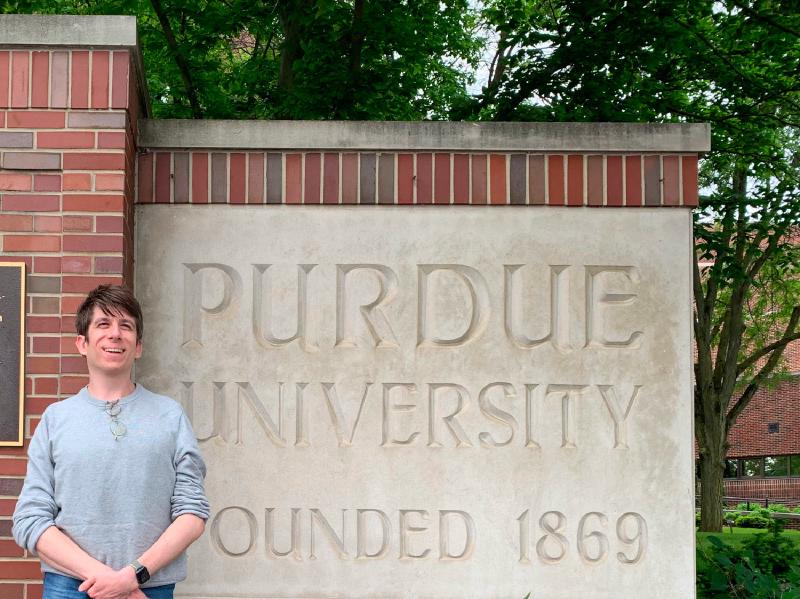
Joseph A. Campbell is an Assistant Professor in the Department of Computer Science at Purdue University, leading the Collaborative AI for Machines and People (CAMP) Lab. He holds a Ph.D., M.S., and B.S. in Computer Science and Computer Engineering from Arizona State University. Before academia, he worked as a software engineer for five years. Prior to Purdue, he was a Postdoctoral Fellow at Carnegie Mellon University's Robotics Institute. His research focuses on explainable machine learning and robotics, particularly how agents use explanations for self-improvement and decision-making. Key areas include theory of mind in multi-agent systems, lifelong learning, and interpretable transfer learning. His work bridges robotics and AI, with applications in human-robot interaction and prosthetic control. Notable publications include advancements in reinforcement learning with language models, multi-agent collaboration frameworks, and methods for enhancing state estimation in robots. His research has been presented at top conferences like NeurIPS, EMNLP, and CoRL. Dr. Campbell maintains an active GitHub profile (joe-campbell) with repositories such as Interaction Primitives for robotics applications. His lab, CAMP, explores AI systems that collaborate effectively with humans and other machines.
Steve Hailes is a Professor of Wireless Systems at the Department of Computer Science, University College London. He has served as Head of Department since 2019 and Deputy Head from 2005. His research spans wireless networks, computational trust, AI, and sensor systems for health, ecological, and environmental applications. Education: PhD and undergraduate degree from Cambridge University Appointment: Joined UCL in 1991 (postdoc), Lecturer in 1992 Research interests include: Trust and security in networked systems (co-founder of computational trust) Security of industrial control systems AI/ML applications in security and causal discovery Multi-agent reinforcement learning and moral behavior modeling Gas sensor fabrication and deployment for diverse applications Recent publications focus on feature selection for cybersecurity , moral alignment in LLM agents , trust-based consensus algorithms , and causal discovery using reinforcement learning . Collaborations include co-authors like Westphal, Musolesi, and Tennant. Applications span healthcare (dementia, JIA), ecology (endangered species in Botswana), and environmental monitoring (CO distribution, meth lab detection).
Tamer Başar is a Maybelle Leland Swanlund Endowed Chair Emeritus and Professor Emeritus of Electrical and Computer Engineering at the University of Illinois' College of Engineering. He leads research in game theory, control systems, and networked systems through the Coordinated Science Lab. His work focuses on stochastic processes, multi-agent systems, and optimization under uncertainty. Research interests include Nash equilibrium analysis, mean-field theory, and reinforcement learning applications in dynamic systems. Recent publications explore strategic incentives in large population games, nonstationary reinforcement learning, and coupled bi-virus models. Notable honors include the IEEE Control Systems Award (2014), American Academy of Arts and Sciences Membership (2023), and honorary doctorates from multiple institutions. His work bridges theoretical foundations with practical applications in socio-technical networks and edge computing systems. Basar's contributions span over 900 publications, focusing on distributed control algorithms, network security, and strategic information design. His research lab at Illinois addresses challenges in timely computation, resilient systems, and decentralized decision-making frameworks.
Xuezhe Ma is an Assistant Professor in the Department of Computer Science at the University of Southern California's Viterbi School of Engineering. Previously, he was a Ph.D. student at Carnegie Mellon University's Language Technologies Institute, where he worked under the supervision of Professor Eduard Hovy. His academic journey includes a Master's degree from Shanghai Jiao Tong University's Center for Brain-like Computing and Machine Intelligence and a Bachelor's degree in Computer Science from the same institution. Ph.D. in Computer Science, Carnegie Mellon University (completed ~2020) M.S. in Brain-like Computing, Shanghai Jiao Tong University B.S. in Computer Science, Shanghai Jiao Tong University Dr. Ma's research spans multiple areas at the intersection of Natural Language Processing and Machine Learning, with particular focus on structured prediction, syntactic and semantic parsing, machine translation, language generation, and deep generative models. His recent work has expanded into vision-language models, large language model architectures, and applications across computer vision tasks. His research combines theoretical foundations with practical implementations, as evidenced by his development of tools like NeuroNLP2 and MaxParser. His publication record shows a clear trajectory from foundational NLP work during his PhD (including papers on dependency parsing and sequence labeling) to more recent contributions in generative models and large language systems. The 15 most recent publications reveal a strong focus on addressing fundamental challenges in generative modeling, context handling, and multimodal integration, with applications spanning literary translation, medical imaging, and news diffusion analysis. AI2 Outstanding Intern Award (2018) Dr. Ma has secured research funding supporting his work in generative models and language technologies, with projects focusing on improving the efficiency and capabilities of large language models. His research group at USC is actively working on next-generation language understanding and generation systems, with particular emphasis on context-aware modeling and multimodal integration. He has established collaborations with industry partners including the Allen Institute for AI and has contributed to open-source projects like Texar. At USC, Dr. Ma leads research in the Information Sciences Institute, directing projects on efficient large language model architectures and multimodal reasoning systems. His lab focuses on developing novel approaches to context handling, model efficiency, and multimodal integration, with applications across diverse domains including healthcare, literary analysis, and news media.
Prashant Mehta is a Professor of Mechanical Science and Engineering at the University of Illinois at Urbana-Champaign , affiliated with the Coordinated Science Laboratory . His research focuses on controlled interacting particle systems and machine learning applications , particularly in human activity recognition using motion sensors. Education: Ph.D. in Mathematics, Cornell University (2004) M.S. in Electrical & Computer Engineering, University of Massachusetts Amherst (1996) B.E. in Electrical & Electronics Engineering, Birla Institute of Technology & Sciences (1993) Mehta's work has pioneered the feedback particle filter (FPF) algorithm for nonlinear estimation, applied in robotic systems and gesture recognition. His research spans control of combustion instabilities in jet engines, mean-field games , and dynamical systems in aerospace engineering. His publications emphasize nonlinear control theory and stochastic filtering , with recent trends in sensor data pattern recognition and cyber-physical systems . He has received multiple scientific awards , including the MURI award for the Cyberoctopus project and Excellence in Undergraduate Advising Awards . Scientific Honors: MURI Award (2019) for Cyberoctopus Excellence in Undergraduate Advising (2010, 2008) Outstanding Teaching Assistant Award (1994) Senior Member, IEEE Control Systems Society Member, ASME Energy Systems Subcommittee Member, SIAM Dynamical Systems Group Mehta has supervised students like Jin Kim (IEEE CDC Best Student Paper, 2019) and co-founded the startup Rithmio , acquired by Bosch Sensortec . His laboratory develops gesture-detection filters for applications in soft robotics and human-machine interfaces .
Shuran Song is an Assistant Professor of Electrical Engineering at Stanford University, with a courtesy appointment in Computer Science. Previously, she was faculty at Columbia University. She holds a Ph.D. in Computer Science from Princeton University and a BEng from HKUST. Her research focuses on the intersection of computer vision and robotics, particularly in embodied AI, robot manipulation, and sensorimotor learning. Song's work emphasizes learning from physical interactions to enable robots to perform complex tasks autonomously. She leads the Robotics and Embodied AI Lab (REAL@Stanford) and has received prestigious awards, including the NSF Career Award, Sloan Fellowship, and Microsoft Faculty Fellowship. Education: Ph.D., Computer Science, Princeton University; BEng, HKUST Affiliations: Stanford School of Engineering, Department of Electrical Engineering Research interests include deformable object manipulation, visuomotor policy learning, and generalizable robot skills. Her lab develops algorithms for robots to learn through interaction, with applications in household assistance (e.g., TidyBot) and industrial automation. Notable contributions include the TossingBot and Diffusion Policy frameworks. Publications span robotics, computer vision, and AI conferences (RSS, ICRA, CVPR), focusing on policy learning, deformable object handling, and embodied intelligence. Awards highlight her impact in advancing robot learning and perception. Advises doctoral and master's students in robotics and AI, and collaborates on grants from NSF, DoD, and industry partners. Teaches courses on robot perception and embodied AI at Stanford.
Miroslav Pajic serves as a Professor in the Department of Electrical and Computer Engineering at Duke University's Pratt School of Engineering. He also holds joint appointments as Associate Professor in the Thomas Lord Department of Mechanical Engineering and Materials Science and Associate Professor of Computer Science. As Director of Master's Studies, he oversees the graduate program in Electrical and Computer Engineering and teaches numerous courses spanning embedded systems, cyber-physical systems design, and robotics. Education: Ph.D. in Electrical and Computer Engineering from University of Pennsylvania (2012) Miroslav Pajic's research focuses on the design and analysis of cyber-physical systems (CPS) with varying levels of autonomy and human interaction. His work spans the intersection of embedded systems, artificial intelligence, machine learning, control theory, formal methods, and robotics. He specializes in developing high-assurance autonomous systems with applications in robotics, automotive systems, and medical devices, with particular emphasis on CPS security and resilient autonomy. His research addresses fundamental challenges in creating systems that can operate reliably in uncertain environments while maintaining security against potential cyber attacks. Analysis of Pajic's recent publications reveals a strong interdisciplinary research program bridging theoretical foundations with practical applications. His work spans secure sensor fusion for distributed autonomy, medical applications of CPS (particularly deep brain stimulation for neurological disorders), and innovative sensing technologies for autonomous vehicles. A significant portion of his research addresses security challenges in cyber-physical systems, including stealthy GPS attacks on UAVs and methods for attack-resilient state estimation. His publications increasingly integrate machine learning techniques with traditional control theory to create more adaptive and robust autonomous systems. Pajic actively mentors graduate students and leads research groups focused on cyber-physical systems security and high-assurance autonomy. His research is supported by multiple grants, including the NSF AI Institute for Edge Computing (Athena), which he co-leads. He has received funding from various sources to support his work on secure and resilient cyber-physical systems, medical device security, and autonomous vehicle technologies. Pajic collaborates extensively with medical researchers on applications of cyber-physical systems in healthcare, particularly in deep brain stimulation for neurological disorders. His work bridges the gap between theoretical control systems and practical implementations in safety-critical domains, with a growing emphasis on translating research into real-world applications that improve system security and reliability.
Timothy Bretl is a Professor of Aerospace Engineering at the University of Illinois at Urbana-Champaign, holding the Severns Faculty Scholar position since 2021. He also serves as Associate Head of the Aerospace Engineering department. His research focuses on robotics, control systems, rehabilitation robotics, and engineering education. Bretl earned his Ph.D. from Stanford University (2005), with prior degrees from Swarthmore College. He holds affiliate roles across multiple departments, including Neuroscience, Coordinated Science Laboratory, and Computer Science. Education: Ph.D. in Aeronautics and Astronautics, Stanford University (2005) B.A. in Mathematics and B.S. in Engineering, Swarthmore College (1999) His research spans engineering education innovations, robotic manipulation, and brain-machine interfaces. Notable awards include the NSF CAREER Award (2010), Best Manipulation Paper (2012), and multiple teaching honors like the Rose Award for Teaching Excellence (2016). Bretl’s work integrates theoretical foundations with practical applications in prosthetics, autonomous systems, and educational technology. He has advised numerous projects on robotics, control systems, and human-robot interaction. His lab explores advanced topics like elastic rod manipulation, magnetic positioning, and curriculum reform in STEM education. Collaborative projects include partnerships with industry and interdisciplinary teams at the Beckman Institute.
Alyssa Pierson is an Assistant Professor in the Department of Mechanical Engineering at Boston University, with affiliations in Robotics & Autonomous Systems and Systems Engineering. She leads the Collaborative Autonomy Group and serves as Chief Scientist at Ava Robotics. Her research focuses on trust, cooperation, and distributed control in multi-agent systems, emphasizing socially-compliant and autonomous robotic systems interacting in dynamic environments. Education: PhD in Mechanical Engineering, Boston University (2017) BS in Engineering, Harvey Mudd College Research Interests: Multi-agent systems, distributed robotics control, socially-compliant autonomous systems, and human-robot interaction. Her work addresses challenges in cooperative teaming, trust modeling, and safe navigation in complex environments. Key Awards: NSF Career Award (2023) MassRobotics Rising Star in Robotics Medal (2023) Clare Booth Luce Fellowship Grants & Projects: Recipient of NSF CAREER Award for 'Decentralized and Online Planning for Emergent Cooperation in Multi-Robot Teams'. Active in projects like heterogeneous teaming and privacy-aware trajectory planning. Labs & Affiliations: Principal Investigator of the Collaborative Autonomy Group. Affiliated with BU's Intelligent, Autonomous & Secure Systems division and the Hariri Institute for Computing.
Yongjoo Park is an Assistant Professor in the Department of Computer Science at the University of Illinois at Urbana-Champaign (UIUC), affiliated with the Grainger College of Engineering. He leads research in data-intensive AI systems as a member of the Data and Information Systems (DAIS) lab, focusing on novel data systems that bridge database theory and practical AI applications. His work emphasizes open-source contributions through GitHub and direct societal impact. Research interests center on systems for data-intensive AI , particularly efficient Retrieval-Augmented Generation (RAG) systems for exploratory AI, data science versioning, and in-storage computing. Key projects include Kishu (the world's first undoable Jupyter notebook with time-travel capabilities), CARE (a causal-relational system for structured/unstructured data), and AirDB/AirIndex (serverless transactions and automatic index optimization). His group develops tools enabling scalable, optimized AI workflows from storage layers to LLM inference. Recent publications reveal a strong focus on interactive data systems (85% of recent work), with significant contributions to notebook environments (Kishu), vector databases (ISCA'25), and RAG optimization. Awards highlight technical innovation, including SIGMOD 2025 Best Demo Award and NSF CAREER funding. His open-source philosophy drives GitHub releases of all major systems. SIGMOD 2025 Best Demo Award (Kishu) NSF CAREER Award (Novel data science systems) SIGMOD'23 Best Artifact Award Honorable Mention (DeepOLA) IBM-Illinois Project Selection (VectorDB/RAG) Mentorship spans 12 current PhD/MS students and 6 graduated advisees, including Supawit Chockchowwat (now Postdoc at Google, future Assistant Professor at CMKL University). He teaches advanced courses like CS511 (Advanced Data Management) and recruits 1-2 new PhD students annually, prioritizing data systems research. His lab emphasizes diversity, individual respect, and concrete outcomes in a collaborative workspace.
Don Towsley is a Distinguished University Professor in the Department of Computer Science at the University of Massachusetts Amherst, within the College of Information and Computer Sciences. He has held visiting positions at AT&T Labs, IBM Research, INRIA, Microsoft Research Cambridge, and the University of Paris 6. He earned a B.A. in Physics and a Ph.D. in Computer Science from the University of Texas. Prof. Towsley's research spans network science, measurement, modeling, and analysis, with recent emphasis on quantum networking and wireless security. His work addresses foundational challenges in network tomography, entanglement distribution, and quantum communication protocols, contributing to efficient and secure next-generation networks. Analysis of his 2022-2025 publications reveals a dominant focus on quantum networking—including quantum internet architecture, entanglement distribution, and tomography—alongside continued contributions in classical networking areas such as DDoS detection and edge computing. His exceptional contributions have been recognized with numerous prestigious awards: 2007 IEEE Koji Kobayashi Computer and Communications Award 2007 ACM SIGMETRICS Achievement Award 2008 ACM SIGCOMM Award 2011 INFOCOM Achievement Award 1999 IEEE Communications Society William Bennett Award 2008 ACM SIGCOMM Test of Time Paper Award 2012 ACM SIGMETRICS Test of Time Award 2018 ACM MOBICOM Test of Time Award UMass Award for Outstanding Accomplishments in Research and Creative Activity University of Massachusetts Chancellor's Medal UMass Amherst Distinguished Graduate Mentor Award Outstanding Research Award from the College of Natural Science and Mathematics IBM Faculty Fellowship Award (twice) Fellow of the IEEE Fellow of the ACM Corresponding member of the Brazilian Academy of Sciences Prof. Towsley has mentored numerous graduate students, as evidenced by his Distinguished Graduate Mentor Award, and his research has been funded by significant grants including an NSF NeTS grant for quantum network design. He leads the Gaia research group at UMass Amherst, which has evolved from traditional networking research to pioneering quantum networking initiatives.
Irina Oleinikova is a Professor at the Norwegian University of Science and Technology (NTNU) in the Department of Electric Energy, Faculty of Information Technology and Electrical Engineering. She leads the Power System Operation and Analysis research group and serves as the NTNU Smart Grid Team Leader. She is a steering committee member of the European Energy Research Alliance (EERA) Joint Programme on Smart Grids and an expert in the International Smart Grid Action Network (ISGAN) WG6. Research Interests : Power System Operation, Digital Power System Protection and Control, Grid Resilience, Energy Flexibility, Cybersecurity in Power Systems, and Hydrogen Technology Integration. Her work focuses on advancing smart grids, grid flexibility, and cybersecurity through projects like FME CINELDI, HONOR, ASAP, and ZeroKyst. Key Projects : CINELDI : Developing intelligent electricity distribution grids. HONOR : Cross-sectoral energy flexibility markets. ASAP : Next-generation system protection schemes. ZeroKyst : Hydrogen and charging infrastructure along Norway’s coast. COSPAT : Stability of AC/DC transmission grids via co-simulation. Advising & Grants : Supervises PhD students in digital protection and cybersecurity. Active in projects funded by RCN, STATNETT, and EU Horizon 2020. Leads the Power System Operation and Analysis group and collaborates with SINTEF and industry partners. Labs/Teams : NTNU Smart Grid Team and the Power System Operation research group.
Calin Belta is the Brendan Iribe Endowed Professor of Electrical and Computer Engineering and Computer Science at the University of Maryland, College Park. He is affiliated with the Institute of Systems Research (ISR) and the Maryland Robotics Center (MRC), and holds a Research Professor position at Boston University's College of Engineering. His work bridges control theory, formal methods, and machine learning to ensure safety in cyber-physical and data-driven systems, with applications in robotics, autonomous driving, and systems biology. Research Interests: Focus on dynamics and control theory, formal methods for verification and control synthesis, robotics, autonomous systems, and synthetic biology. Recent projects include PROGENIC (collaborating with MIT, UChicago, and UDelaware) and safety-critical control for heterogeneous robotic teams. Key Achievements: General Chair of the 2025 MRC Symposium, recipient of AFOSR Young Investigator Award (2008), NSF CAREER Award (2005), and IEEE Fellow. His work on formal methods for autonomous systems has led to impactful tools for safety assurance in robotics and AI. Grants: NSF EFRI PROGENIC grant (2024), multiple industry partnerships. Advising: Mentored students like Wenliang Liu (PhD 2024, now at Amazon), and collaborator Marius Kloetzer (shared HSCC Test of Time Award 2025). Labs/Teams: Maryland Robotics Center, Institute for Systems Research, and Boston University collaborations.
Dr. Feras Dayoub is a Senior Lecturer at the School of Computer and Mathematical Sciences (Faculty of Sciences, Engineering and Technology) at the University of Adelaide , specializing in Embodied AI and Robotic Vision within the Australian Institute for Machine Learning (AIML) . He co-directs the CROSSING French-Australian laboratory for human-autonomous agent teaming and holds an Adjunct position at the Queensland University of Technology (QUT) , serving as an Associate Investigator at its Centre for Robotics . Previously, he was a Chief Investigator at the ARC Centre of Excellence for Robotic Vision . His research focuses on advancing reliable deployment of computer vision and machine learning on mobile robots in real-world environments. Applied projects include agricultural automation , environmental conservation , and autonomous infrastructure monitoring . He has published extensively on topics like object detection , domain adaptation , 3D representation learning , and vision-language navigation , with a particular emphasis on robustness in dynamic and partially observed environments. Dr. Dayoub is also an educator specializing in programming , computer vision , and robotic perception . He contributes to open-source robotics research through tools like AARK (Autonomous Racing Toolkit) and has led teams developing solutions for precision agriculture (e.g., Deepfruits fruit detection system) and environmental monitoring (e.g., Crown-Of-Thorns starfish detection ). Key Collaborations : CROSSING Lab, QUT Centre for Robotics Research Themes : Embodied AI, Robust Perception, Domain Adaptation