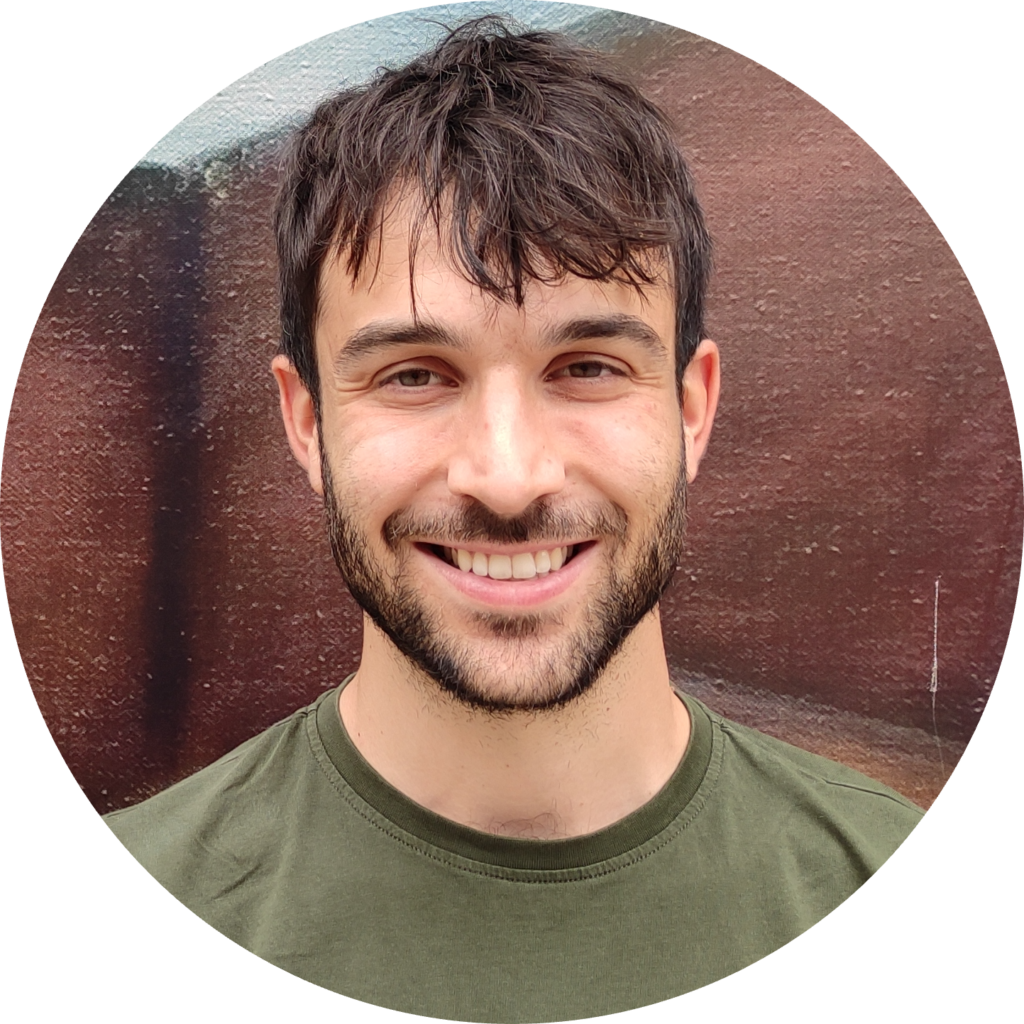
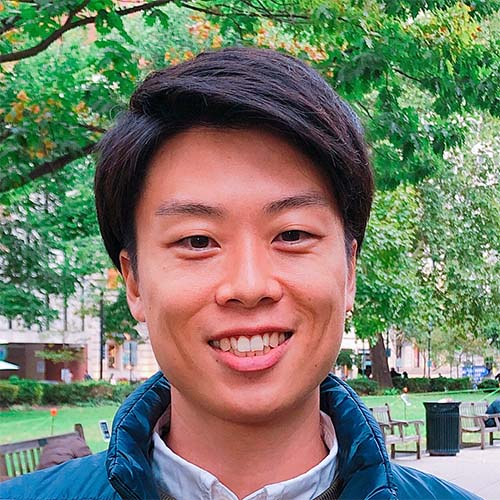
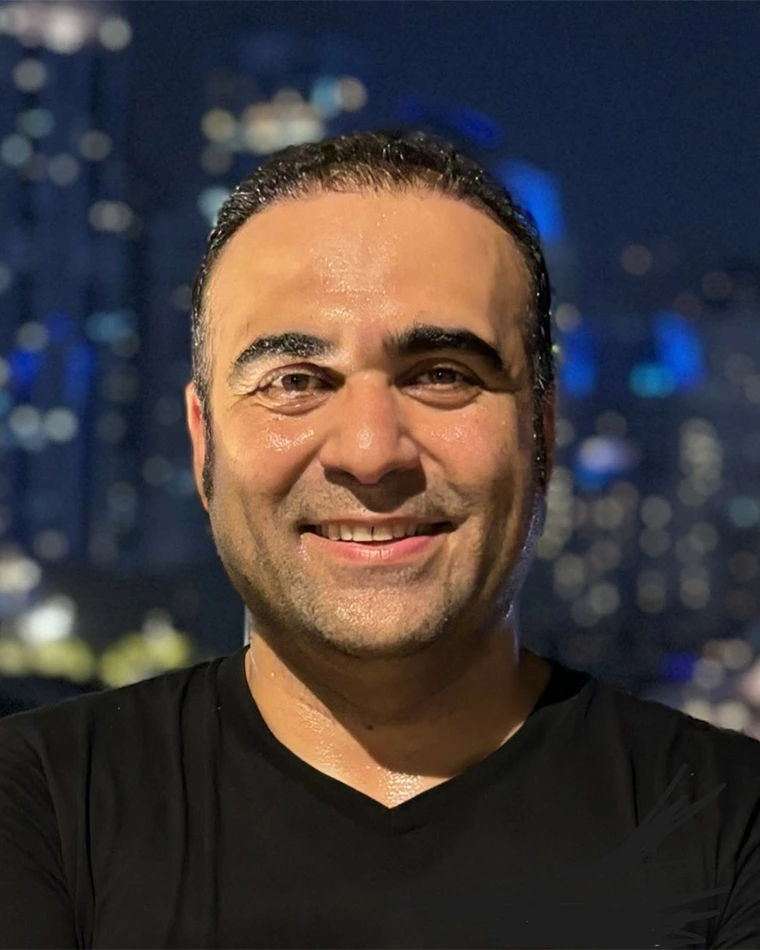
Matthias Pezzutto is an Assistant Professor at the Department of Information Engineering, University of Padova. His research focuses on advanced control systems, networked control systems, and wireless communication for control applications. He explores topics such as distributed estimation, epidemic control, and optimization in cyber-physical systems. His work bridges theoretical advancements with practical implementations, including experiments over Wi-Fi and multirotor robotics. Key areas of interest include: Control systems with communication constraints Epidemic modeling and intervention strategies Real-time wireless control architectures His publications emphasize robust control methodologies, such as self-triggered MPC and adaptive transmission protocols, addressing challenges like packet loss and latency. Recent works explore the integration of edge-cloud continuum for control systems and heterogeneous vehicle mission planning. While no specific awards or grants are listed, his research activities are supported by experimental validations and collaborations in industry and academia.
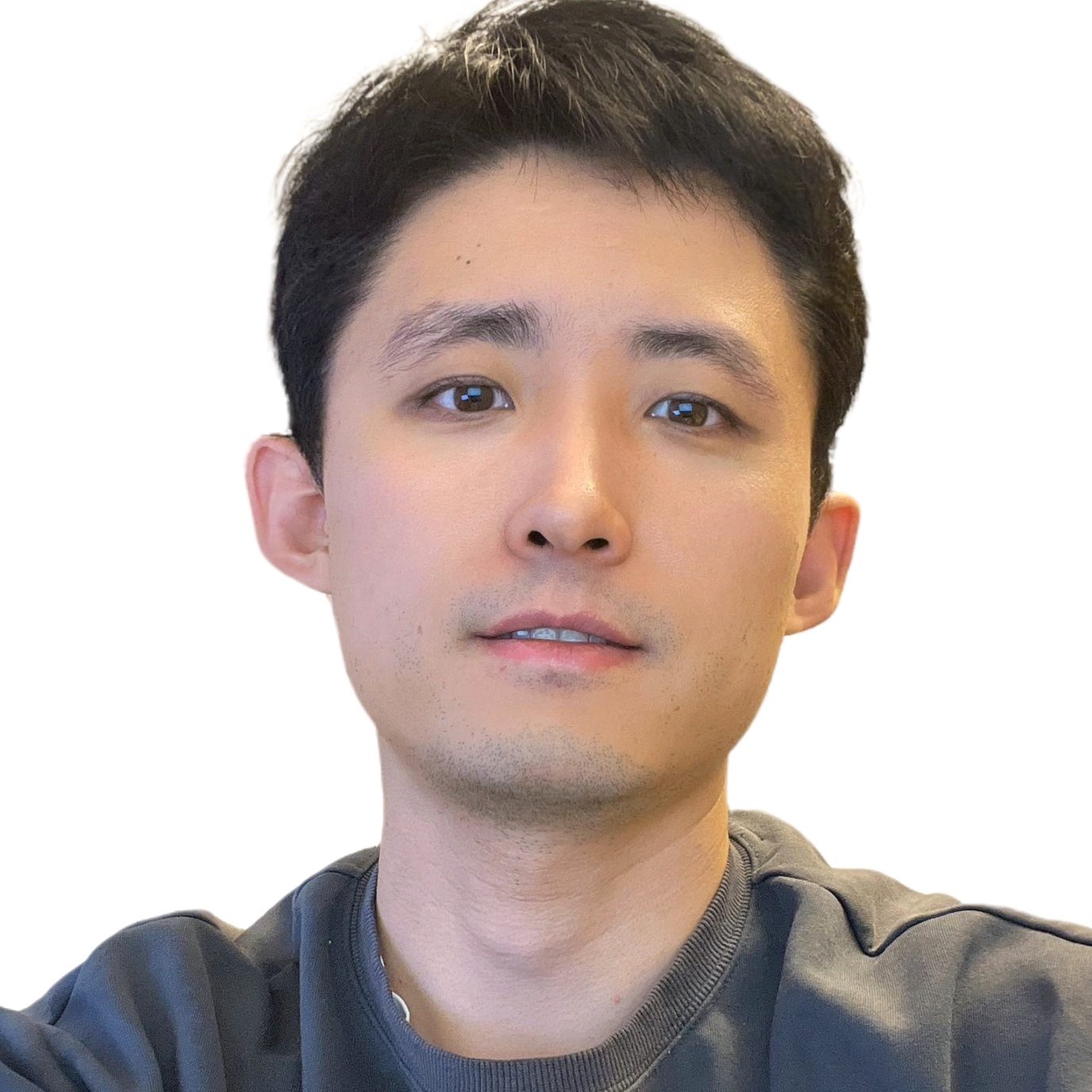
Abhishek Cauligi is an incoming Assistant Professor of Mechanical Engineering, starting in Summer 2025. Prior to this role, he worked as a Robotics Technologist at NASA Jet Propulsion Laboratory and earned his PhD in Aeronautics & Astronautics from Stanford University. His doctoral research focused on accelerating trajectory optimization using machine learning, with experiments conducted on the International Space Station. His research interests center on spacecraft and robotic autonomy, leveraging nonlinear optimization, machine learning, and control theory to advance autonomous space exploration. Key areas of focus include trajectory optimization, autonomous systems, and machine learning-driven solutions for space robotics. Recent work highlights include studies on transformer-based constraint prediction for powered descent guidance, diffusion policies for spacecraft trajectory generation, and stochastic optimization for asteroid reconnaissance. He has also contributed to lunar navigation systems (ShadowNav) and multi-agent autonomy for planetary exploration, such as the Cadre Lunar Technology Demonstration. Notable collaborations include the CoSTAR team’s victory in Phase II of the DARPA Subterranean Challenge, showcasing advanced robotic autonomy in challenging environments. His innovations span from gecko-inspired adhesive testing aboard the ISS to recurrent neural network approaches for mixed-integer optimal control problems.
Dr. Xuan Vinh Doan is a Reader in the ISM-Analytics (ISMA) Group at Warwick Business School. He serves as the former Research Environment Lead in Analytics (2023-2025) and was a Turing Fellow at the Alan Turing Institute (2018-2023). His academic journey includes a PhD from MIT’s Operations Research Center, a master’s via the MIT-Singapore Alliance program, and an undergraduate degree from RMIT University. Education: PhD: Operations Research Center, MIT MSc: MIT-Singapore Alliance Program Bachelor’s: RMIT University, Australia His research focuses on Optimization under Uncertainty , Data Mining , and Operational Research , with applications to large-scale systems and fairness in resource allocation. Recent work addresses surgical scheduling under uncertainty, equitable resource distribution, and blockchain optimization. His articles span topics like healthcare operations, algorithmic fairness, and stochastic modeling. Key contributions include frameworks for handling missing data in machine learning and optimizing Merkle tree structures for blockchain efficiency. Dr. Doan currently teaches Advanced Analytics: Models and Applications and Optimization Models in the MSc Business Analytics program.
Silun Zhang is an Assistant Professor in the Department of Mathematics at KTH Royal Institute of Technology, affiliated with WASP (Wallenberg AI, Autonomous Systems and Software Program) and the Digital Futures Faculty. He holds a Ph.D. in Optimization & Systems Theory from KTH (2019), an M.S. and B.S. in Automation from Harbin Institute of Technology, China. Prior to KTH, he was a Postdoctoral Associate at MIT's Laboratory for Information & Decision Systems (LIDS) and EECS Department (2019–2023), where he collaborated with Prof. Munther Dahleh and contributed to the MIT MicroMasters Program in Statistics and Data Science. His research focuses on nonlinear control , large-scale complex systems , privacy-preserving algorithms , and risk-averse reinforcement learning . Key areas include control on manifolds (e.g., rigid-body attitude coordination), privacy in federated learning, and moment-based modeling for collective systems. He leads projects such as 'Analysis and Synergy of Hyper-networked Autonomy' and 'Designing Interaction-Aware Multi-Robot Systems.' Current team members include Georgios Vasileiou (Ph.D.), Lantian Zhang (Postdoc), and Malintha Fernando Chakravarthige (Postdoc). His work is supported by the Wallenberg Foundations and Digital Futures. Open positions are available for motivated Ph.D. students and postdocs.
Arumugam Nallanathan is a Professor of Wireless Communications at Queen Mary University of London, affiliated with the School of Electronic Engineering and Computer Science. He leads the Communication Systems Research (CSR) Group and is a core member of the Centre for Networks, Communications and Systems. His research focuses on 6G technologies, AI-driven wireless systems, reconfigurable intelligent surfaces (RIS), UAV-enabled communications, ultra-reliable low-latency communications (URLLC), and IoT applications. He teaches the advanced 5G Mobile and Beyond module, integrating theoretical frameworks with practical implementations. Nallanathan's work bridges cutting-edge research with real-world challenges, emphasizing secure and energy-efficient communication systems. His recent publications explore topics such as IRS-based DOA estimation, covert communication techniques, and federated learning in edge networks. He actively contributes to the design of integrated sensing and communication systems, with applications in smart cities and beyond. His research group collaborates on grants addressing future network architectures and AI-enabled solutions. Research interests span: 6G systems, AI for communications, RIS optimization, UAV networks, URLLC protocols, and IoT security. His teaching emphasizes 5G fundamentals and emerging technologies. Notable contributions include advancements in STAR-RIS aided communication, multi-modal learning for satellite-ground networks, and secure resource allocation in NOMA systems. He leads projects on edge intelligence, digital twins for URLLC, and generative AI for channel estimation. The CSR Group actively engages in industry partnerships to translate research into practical solutions.
Professor Emanuele Viterbo is a faculty member in the Department of Electrical and Computer Systems Engineering at Monash University, where he has served as Professor since 2010 and Associate Dean (Graduate Research) from 2012 to 2020. His research focuses on error control coding, lattice codes, and algebraic coding theory with applications to wireless communications. He holds a PhD and Laurea in Electrical Engineering from Politecnico di Torino. Key research areas include lattice codes for fading channels, algebraic space-time coding (e.g., Golden Code), and OTFS modulation. He has received prestigious awards such as the IEEE Fellow designation (2011) and the Australia-India Fellowship (2012-13). His work on polar codes and coding for NAND flash memories has advanced practical coding schemes for modern communication systems. Major grants include projects on blockchain coding, high-mobility wireless systems, and NAND flash memory reliability. He has supervised numerous PhD students and contributed to foundational research in information theory. His affiliations include leadership roles in IEEE committees and visiting research positions at institutions worldwide. Scientific achievements include pioneering contributions to space-time coding and lattice-based modulation. Current projects explore OTFS modulation, error control for blockchains, and advanced modulation techniques for 5G/6G networks.
Reha Uzsoy is the Clifton A. Anderson Distinguished Professor in the Edward P. Fitts Department of Industrial & Systems Engineering at North Carolina State University. He holds a PhD from the University of Florida (1990) and dual BS/MSc degrees from Bogazici University (Turkey). His research focuses on production planning, scheduling, and supply chain management, with significant contributions to semiconductor manufacturing optimization. He has held visiting roles at Intel, IC Delco, and Hong Kong University of Science and Technology. Awards include Fellow of the Institute of Industrial Engineers (2005), C.A. Anderson Outstanding Faculty Award (2011), and Purdue University's University Faculty Fellow (2001). He transitioned to NC State in 2007 from Purdue, where he directed the Laboratory for Extended Enterprises, an interdisciplinary supply chain research center. Education: PhD in Industrial Engineering, University of Florida, 1990 BS and MS in Industrial Engineering, Bogazici University, 1984-1986 Additional BS in Mathematics, Bogazici University, 1985 Research interests emphasize production systems' dynamic behavior, including new product introductions, congestion effects, and transition management. His work bridges theoretical models (e.g., clearing functions) with industrial applications in semiconductor fabrication and supply chain coordination. Recent projects include optimizing order acceptance/scheduling in additive manufacturing and developing equity-focused food distribution models. Awards: Fellow of the Institute of Industrial Engineers (2005) Outstanding Young Industrial Engineer in Education (1997) C.A. Anderson Outstanding Faculty Award (2011) Purdue University Faculty Fellow (2001) Contributions extend beyond academia: he co-developed NC State's Master of Supply Chain Engineering and Management (MSCEM) program and pioneered methodologies for production planning under stochastic demand. His research has been funded by NSF, Intel, Hitachi, and others. Labs/Teams: Former director of Purdue's Laboratory for Extended Enterprises; collaborates with NC State's industrial partners on semiconductor and healthcare supply chain initiatives.
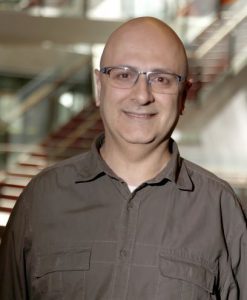
Dr. Yang Liu is a Senior Lecturer in the Department of Computer Science at Swansea University's Faculty of Science and Engineering. He holds a D.Phil. in Computer Science from the University of Oxford and specializes in data security, privacy-preserving computing, and blockchain technologies. Research Focus: Dr. Liu's work centers on secure computation frameworks with specific expertise in: Federated learning systems optimization Privacy-preserving smart contract design Blockchain security and regulation Cryptographic techniques for data protection Secure machine learning applications Recent publications demonstrate methodological innovations in adaptive federated learning algorithms, regulatable blockchain architectures, privacy-enhanced recommendation systems, and security vulnerability analysis in Ethereum networks. His research bridges theoretical cryptography with practical applications in cloud/edge computing environments.
Francesc Wilhelmi is a Tenure-Track Professor at Universitat Pompeu Fabra (UPF) and a Research Engineer at Nokia Bell Labs . He holds a Ph.D. in Information and Communication Technologies (2020) and an M.Sc. in Intelligent and Interactive Systems (2016), both from UPF. His research focuses on Wi-Fi technologies , machine learning , decentralized learning , and blockchain applications in telecommunications . He previously served as a researcher at CTTC and taught at UPF (2015–2020) and Universitat Oberta de Catalunya (2020–2022), specializing in networking courses. Key contributions include the Komondor wireless network simulator and standardization work at ITU-T , notably editing recommendation Y.3181 on Machine Learning Sandboxes. Active in FG-ML5G , organizing problem statements for the ITU AI/ML in 5G Challenge. Explores blockchain for O-RAN sharing and AI-driven spatial reuse in 5G/6G networks. His work bridges network simulation with machine learning to address challenges in dense wireless environments, emphasizing practical implementations and open-source tools.
Mark Balas is a Professor in the J. Mike Walker ’66 Department of Mechanical Engineering at Texas A&M University, holding the Leland T. Jordan Professorship. His research focuses on adaptive control systems, quantum systems, and aerospace engineering. Notable awards include the AIAA GNC Control Heritage Award (2018), ASME Fellow (2015), IEEE Fellow (2006), and AIAA Fellow (2001). Education: Ph.D., Applied Mathematics, University of Denver — 1974 M.S., Electrical Engineering, University of Denver — 1974 M.S., Mathematics, University of Maryland — 1970 B.S., Electrical Engineering, University of Akron — 1965 Research Interests: Control and Estimation of Quantum Systems, Nonlinear Systems, Aerospace Engineering, and Adaptive Control Theory. Awards & Honors: AIAA GNC Control Heritage Award (2018) ASME Fellow (2015) IEEE Fellow (2006) AIAA Fellow (2001) Advising & Grants: Active in the Morpheus Lab, focusing on adaptive systems and control. His research spans wind turbine control, spacecraft formations, and autonomous systems. Collaborates on projects involving distributed parameter systems and quantum engineering. Labs/Teams: Morpheus Lab at Texas A&M University, dedicated to advancing adaptive control and systems engineering.
Katherine Davis is an Associate Professor in the Department of Electrical and Computer Engineering at Texas A&M University, part of the College of Engineering. Her research focuses on cyber-physical systems, power grid security, and resilient energy infrastructure. She holds a Ph.D., M.S., and B.S. in Electrical Engineering from the University of Illinois Urbana-Champaign and the University of Texas at Austin. Her work addresses challenges such as cyber-physical attack detection, smart grid resilience, and integration of renewable energy systems. Education: Ph.D., Electrical Engineering (Power and Energy Systems), University of Illinois Urbana-Champaign, 2011 M.S., Electrical Engineering (Power and Energy Systems), University of Illinois Urbana-Champaign, 2009 B.S., Electrical Engineering (High Honors), University of Texas at Austin, 2007 Research interests include: - Operation and control of power systems - Cyber-physical security and situational awareness - Data-driven analysis of coupled infrastructure - Interactions between computer and power networks - False data injection attack detection using machine learning Her recent publications emphasize scalable tools for cyber-physical systems, AI-driven grid optimization, and resilient energy management. Notable trends include leveraging graph neural networks for anomaly detection, blockchain for secure data exchange, and multi-agent frameworks for distributed energy resources. Dr. Davis’s work has been applied to real-world scenarios such as wildfire response optimization and geomagnetic disturbance analysis. She collaborates on interdisciplinary projects involving cybersecurity, power systems engineering, and environmental resilience.
Professor Marie-Therese Wolfram holds a faculty position at the Mathematics Institute of the University of Warwick. Her research focuses on applied partial differential equations, mathematical modeling in socio-economic and life sciences, and inverse problems. She is actively involved in organizing international workshops and serves on editorial boards for journals like ESAIM M2AN and Kinetic and Related Models. Her academic journey includes grants such as the Royal Society International Exchange (2022-2024) and the EPSRC First Grant (2017-2019). Notable awards include the Excellence in Gender Equality Award (2023) and the Whitehead Prize (2023). She co-leads the EDI committee at Warwick and contributes to initiatives like the Young Academy of the Austrian Academy of Sciences. Her research spans opinion dynamics, crowd modeling, and optimal transport theory. Recent work explores consensus-breaking in social networks and applications of mean-field games to knowledge growth. She collaborates internationally on projects such as the 'Multiscale Modelling of Crowded Transport' and the 'Wasserstein Gradient Flows' initiative. Teaching responsibilities include MA265 Methods for Mathematical Modelling and MA4M2 Inverse Problems. Her work bridges theoretical analysis with practical applications, reflecting her dual expertise in pure mathematics and interdisciplinary modeling.
Daigo Shishika is an Assistant Professor in the Department of Mechanical Engineering at George Mason University's College of Engineering. His research focuses on autonomy, dynamics, controls, and robotics, particularly in multi-agent systems and cooperative control of robot teams in adversarial environments. PhD, Aerospace Engineering, University of Maryland, College Park Master of Science, Aerospace Engineering, University of Maryland, College Park Bachelor of Science, Aerospace Engineering, University of Tokyo Dr. Shishika's research interests lie at the intersection of robotics and game theory, with a strong emphasis on multi-robot systems , cooperative control , and adversarial engagement . He explores bio-inspired swarming behaviors—such as those observed in mosquitoes—to design scalable and robust distributed algorithms. His work also investigates deception through motion , dynamic resource allocation , and perimeter defense games , aiming to enable robot teams to operate effectively under uncertainty and limited sensing. The recent publications reflect a strong trend in applying game-theoretic models to multi-robot coordination, especially in security and defense contexts. Themes include dynamic games, adversarial resource allocation, perimeter defense, and distributed decision-making on graphs. These works combine control theory, artificial intelligence, and robotics to solve real-world challenges in autonomous teaming. Scientific recognition includes: Nominated for Best Paper in Cognitive Robotics at IROS 2023 Dr. Shishika advises several PhD students including Vi Rostobaya, Goutam Das, James Berneburg, Manshi Limbu, and Sara Oughourli. His research is supported by funding from DCIST and involves collaborative projects with institutions such as Georgia Tech, University of Pennsylvania, and UC Santa Barbara. He actively recruits motivated students for research in robotics, control, and game theory. He leads the Collaborative Robotics, Autonomy, and Dynamics Lab at George Mason University, where his team develops autonomous blimps and quadrotors for competitive and research purposes, including participation in the DTR autonomous blimp competition. The lab emphasizes both theoretical advances and practical implementations in robotics.
Yousef Khayat is a Marie Curie Postdoctoral Research Fellow at Aalborg University's Faculty of Engineering and Science within the Electric Power Systems and Microgrids department. His work focuses on advanced control strategies for renewable energy integration in modern power systems. His research spans Microgrid Systems , Virtual Synchronous Generator Technology , and Adaptive Control Systems , with particular emphasis on stability enhancement during grid faults and seamless renewable integration. Current investigations address inertia response improvement and fault ride-through solutions for wind power plants. Analysis of his publication record reveals strong specialization in AC microgrid control architectures (71% of works), fault management in weak grids (43%), and virtual synchronous machine implementations (29%). His research demonstrates significant impact with multiple publications exceeding 100 Scopus citations. Scientific Recognition: Marie Curie Postdoctoral Fellowship Dr. Khayat actively contributes to major research initiatives including the InnoWindFaultRiForm project (2025-2027) investigating grid-forming control solutions for wind power plants. His collaborative network spans six international institutions focused on microgrid innovation and power system resilience.
Hossein Rastgoftar is an Assistant Professor in the Department of Aerospace and Mechanical Engineering and the Department of Electrical and Computer Engineering at the University of Arizona, College of Engineering. He is also a member of the Graduate Faculty, contributing to interdisciplinary research and education in autonomy, robotics, and intelligent systems. Education: PhD in Mechanical Engineering, Drexel University, Philadelphia, PA MS in Mechanical Engineering, University of Central Florida, Orlando, FL (Mechanical Systems and Solid Mechanics) BS in Mechanical Engineering - Thermo-Fluids Rastgoftar's research focuses on swarm robotics, system autonomy, human-robotic interaction, UAS traffic management, and intelligent transportation systems . He develops physics-inspired models such as continuum deformation and fluid flow navigation for multi-agent coordination, with applications in urban air mobility, disaster response, and traffic congestion control. His work emphasizes safety, resilience, and formal verification in autonomous systems. His recent publications (2023–2025) reveal a strong trend in safety-critical planning for human-UAS collaboration, decentralized swarm control, and formal methods for traffic and airspace management . He frequently integrates machine learning, optimal control, and multi-agent coordination to solve real-world challenges in urban environments and emergency response. Scientific Awards: No awards listed in the provided text. Rastgoftar has advised students and leads a research group focused on autonomy and multi-agent systems. He teaches AME 455: Control System Design and has been involved in projects related to UAV coordination, payload transport, and traffic modeling. His lab work includes experimental validation of continuum deformation and swarm coordination algorithms using quadcopter teams. Labs and Research Teams: His research involves experimental evaluation of multi-agent systems, particularly quadcopter teams, using fluid flow and continuum deformation models. He collaborates with researchers at the University of Michigan and Villanova, and his work often bridges aerospace, mechanical, and electrical engineering disciplines.