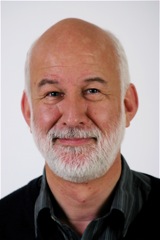
Guido Schäfer is a Professor at the University of Amsterdam affiliated with the Theoretical Computer Science (TCS) group at Centrum Wiskunde & Informatica (CWI) and the Institute for Logic, Language and Computation (ILLC), a joint research institute of the University of Amsterdam and Vrije Universiteit Amsterdam dedicated to interdisciplinary work at the intersection of logic, language, and computation. His research centers on theoretical computer science with emphasis on algorithmic game theory and combinatorial optimization. These fields investigate strategic decision-making in multi-agent systems and optimal solutions for discrete structures respectively, forming core components of computational logic and discrete mathematics. The work has significant implications for economic modeling, network design, and algorithmic fairness. Professor Schäfer maintains active research ties with CWI's TCS group, a national hub for mathematics and computer science in the Netherlands. His contact details include email g.schaefer@uva.nl and personal homepage https://homepages.cwi.nl/~schaefer/ .
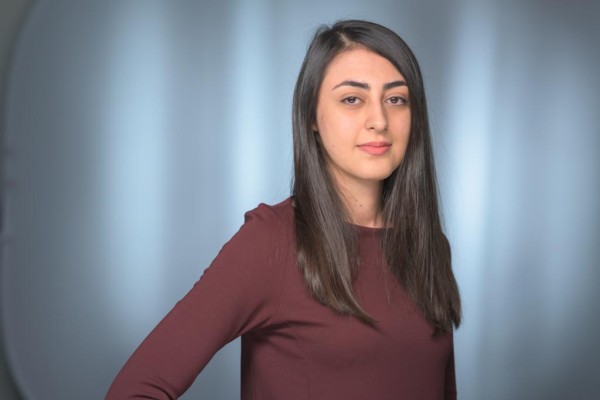
Aryaman Reddi is a PhD student at TU Darmstadt affiliated with the Intelligent Autonomous Systems (IAS) group within the Department of Computer Science . He is also associated with the JMU Würzburg LiteRL Lab and the Hessian Centre for Artificial Intelligence . Reddi earned his BA and MEng in Information and Computer Engineering from the University of Cambridge , where his Master's thesis explored deep Q-learning for game strategies under bounded rationality. His research focuses on multi-agent reinforcement learning , game theory , and bounded rationality , aiming to enhance agent generalizability and dynamic obstacle avoidance. His work intersects deep learning and cognitive science with applications in robotics and humanoid systems . Key publications include contributions to the ICLR 2024 conference and the CoRL 2024 LocoLearn Workshop , both addressing adversarial reinforcement learning under bounded rationality frameworks. Reddi is actively involved in academic collaboration, working with researchers like Prof. Carlo D'Eramo at TU Darmstadt and Prof. Glenn Vinnicombe at Cambridge. His projects explore robot learning algorithms , humanoid motion planning , and AI ethics in autonomous systems.
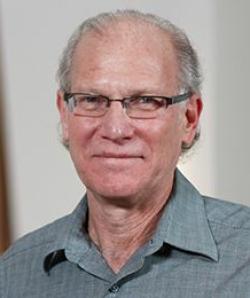
Krzysztof Apt is a Professor at the University of Amsterdam and a CWI-Fellow. His academic work focuses on theoretical computer science, game theory, and formal verification of algorithms. He is affiliated with the Networks and Optimization department at the University of Amsterdam. Research Interests His research spans multiple fields including: Logic and formal verification Game theory and mechanism design Network optimization algorithms History of computer science Programming methodology Distributed systems Scientific Contributions His recent publications (2021–2025) cover loop termination proofs, historical analyses of computer science pioneers, coordination games on graphs, and foundational work in Hoare logic. The research combines theoretical rigor with applications in machine learning and distributed systems. Awards and Grants NWO TOP grant (2013) for combining machine learning with game theory
Sonja Wogrin is an Associate Professor in the Department of Industrial Organization at the Higher Technical School of Engineering, Pontifical University of Comillas. She holds a Ph.D. in Electricity Markets from the Instituto de Investigación Tecnológica (IIT) at the same university and has been a researcher there since 2009. Her work focuses on decision support systems for energy systems, optimization techniques, and generation capacity expansion planning. Education: B.Sc. in Technical Mathematics (Graz University), M.Sc. in Computation for Design and Optimization (MIT), Ph.D. in Electricity Markets (IIT-Comillas) Affiliations: Researcher at IIT-Comillas, Associate Professor in Industrial Organization Her research interests include energy systems modeling , optimization (particularly bilevel programming ), and electricity storage . She has developed open-source tools like the LEGO model for low-carbon expansion and analyzed market feedback in transmission planning. Her work addresses technical constraints in generation commitment, inertia in low-carbon grids, and policy implications of renewable integration. Recent article trends show a focus on gas pipeline MILP modeling , thermal demand simulations , and convex optimization in imperfect markets . She emphasizes stochasticity , multi-objective frameworks , and GIS-based siting for renewables. Scientific awards include the Iberdrola Spain Research Grant , 4th EASE Student Award (Belgium), and multiple mobility grants from Erasmus and NILS. As an advisor, she has supervised four Ph.D. theses on transmission planning , European gas markets , and co-optimized storage . Her grants include EU-funded projects like STEXEM and hydrogen roadmap development for Colombia with the IDB. She collaborates with institutions such as MIT, Johns Hopkins, and NTNU through research stays and contributes to IEEE Transactions , Applied Energy , and European Journal of Operational Research as a reviewer.
Joana Campos is an Assistant Professor in the Department of Computer Engineering at Instituto Superior Técnico, University of Lisbon. Her research focuses on Artificial Intelligence, Social Robotics, and Human-Robot Interaction, with a particular emphasis on conflict modeling and resolution in multi-agent systems. Artificial Intelligence Social Robotics Human-Robot Interaction Conflict Modeling Multi-Agent Systems Her publications explore interdisciplinary topics such as acoustic-prosodic personality assessment, mixed-motive games for conflict analysis, and computational approaches to conflict resolution in serious games. Collaborations with Ana Paiva, Carlos Martinho, and other researchers are central to her work. Joana's projects include My Dream Theater and MAY: My Memories Are Yours , which blend AI with immersive storytelling and emotional engagement. She also investigates applications of evolutionary psychology in conflict resolution training for children.
Chen Jian is the Lenovo Chair Professor at the School of Economics and Management, Tsinghua University , and Director of the Ministry of Education Key Research Base for Humanities and Social Sciences . With a career spanning over 30 years at Tsinghua, he has held multiple leadership roles in academic societies, including Vice Presidency in four top-tier Chinese academic societies and editorial positions in over ten international journals. Research Focus: Systems engineering, supply chain optimization, and decision theory Courses Taught: Dynamic systems analysis and control, operations management His scientific contributions include over 200 publications and 50 major projects, with significant impact in operations management, supply chain coordination, and emerging business models. He has trained numerous doctoral students and received prestigious accolades like the National Science Fund for Distinguished Young Scholars and IEEE Fellow status.
Marc G. Bellemare is a Canada CIFAR AI Chair at Mila, an Adjunct Professor at the School of Computer Science at McGill University and Université de Montréal, and the Chief Scientific Officer at Reliant AI, a Montréal-Berlin startup. His research focuses on reinforcement learning and generative modeling, with significant contributions to distributional reinforcement learning, exploration in high-dimensional spaces, and the development of the Arcade Learning Environment (ALE). He has held previous roles at the Google Brain team and DeepMind. Marc’s work includes both theoretical and applied advancements, such as distributional reinforcement learning theory, exploration strategies, and the commercial application of RL for Loon’s stratospheric balloons. His publications span journals like Nature and top conferences including NeurIPS, ICML, and AAAI. He has received multiple best paper awards, including at NeurIPS 2021 and ICML 2019 Workshop. Current Students: Adrien Ali Taiga, Jacob Buckman, Harley Wiltzer, Pierluca D'Oro, Nathan U. Rahn, Jesse Farebrother Graduated Students: Rishabh Agarwal, Charline Le Lan, Max Schwarzer, Johan Obando Céron, Philip Amortila, Vishal Jain His recent articles emphasize distributional RL, exploration strategies, and large-scale applications. Scientific awards include best papers at NeurIPS, ICML, and RLDM. He is also a co-founder of Reliant AI and developed the ALE benchmark, which underpins deep RL research.
Lillian J. Ratliff is an Associate Professor in the Department of Electrical and Computer Engineering at the University of Washington, with adjunct appointments in the Paul G. Allen School of Computer Science & Engineering and the Department of Aeronautics and Astronautics. Her research bridges theoretical foundations with practical applications in intelligent systems, focusing on strategic decision-making in complex environments. Dr. Ratliff earned her PhD in Electrical Engineering and Computer Sciences from UC Berkeley in 2015. She completed dual Bachelor of Science degrees in Electrical Engineering and Mathematics from the University of Nevada, Las Vegas (UNLV) in 2008, followed by a Master of Science in Electrical Engineering from UNLV in 2010. Her research expertise spans the intersection of game theory , economics , optimization , machine learning , and control theory . She develops theoretical frameworks for decision-making in intelligent systems with learning-enabled components and strategic agents. Her work addresses fundamental questions about convergence properties of learning algorithms in game-theoretic settings, equilibrium analysis in complex multi-agent systems, and the development of efficient algorithms for strategic decision-making. Her theoretical contributions have significant practical implications for understanding strategic interactions in systems ranging from transportation networks to human-AI collaboration. Dr. Ratliff's recent publications reveal a strong focus on matrix games, Stackelberg games, and performative prediction, with applications spanning from human-computer interaction to multi-agent reinforcement learning. Her work demonstrates increasing sophistication in handling decision-dependent distributions and analyzing convergence properties of learning dynamics in complex strategic environments. Her scientific achievements have been recognized with prestigious awards including: NSF Graduate Research Fellowship (2009) NSF CISE Research Initiation Initiative award (2017) NSF CAREER award (2019) ONR Young Investigator award (2020) UW College of Engineering Junior Faculty Award (2021) Dhanani Endowed Faculty Fellowship (2020) Invited speaker at the National Academy of Engineering China-America Frontiers of Engineering Symposium (2019) Dr. Ratliff leads a research program funded by multiple National Science Foundation grants (CNS-1736582, CNS-1836819, CNS-1931718, CNS-1907907, CNS-1844729, CNS-1952011, CNS-1634136, CNS-1646912, CNS-1656873) and the Office of Naval Research Young Investigator Program. Her research group investigates theoretical foundations for strategic decision-making with applications to intelligent transportation systems, human-machine interaction, and multi-agent reinforcement learning. Her work is organized around theoretical foundations for decision-making in strategic environments, with applications to intelligent transportation systems, human-AI collaboration, and network congestion management. She maintains active collaborations across disciplines, including with researchers in computer science, aeronautics, control theory, and economics, demonstrating the interdisciplinary nature of her research program.
Professor Stacy Marsella is a Cognitive Neuroimaging researcher at the University of Glasgow with a distinguished career in computational modeling of human cognition, emotion, and social behavior. Her work bridges computer science, cognitive psychology, and artificial intelligence to create sophisticated virtual human systems. Her research interests focus on computational modeling of cognition, emotion and social behavior, with particular emphasis on the interplay between emotion and cognition, Theory of Mind (modeling beliefs about others' mental processes), and the role of nonverbal behavior in face-to-face interaction. She has pioneered applications in virtual human design, where software entities interact with humans using spoken dialogue in virtual environments, and large-scale social behavior simulation. Analysis of her 15 most recent publications reveals a consistent focus on virtual human technologies, social interaction modeling, and decision-making processes. Her work spans multiple disciplines including affective computing, human-computer interaction, cognitive science, and artificial intelligence, with particular strength in gesture generation, social virtual reality, and computational models of human behavior under stress. Recent work shows increasing application to real-world problems like hurricane evacuation decisions, supply chain management, and public speaking training. Professor Marsella has supervised postgraduate students including Marion Roth and Tobias Thejll-Madsen, and has worked with research assistants Stephanie Cheng, Amol Deshmukh, and Alessandro Vinciarelli. Her significant research is supported by multiple major grants including from EPSRC and DARPA. She leads research funded by three major grants: 'From data and theory to computational models of more effective virtual human gestures' (EPSRC, 2020-2022), 'AGENTS with Theory of Mind for Intelligent Collaboration (ATOMIC)' (DARPA, 2019-2023), and 'Graphical Encoding of First Principles for Agent-Based Social Simulation (GEFPABSS)' (DARPA, 2018-2020). These projects reflect her leadership in developing advanced computational models of social cognition and virtual human technologies.
Prof. Dr. Pawel Romanczuk is a faculty member at Humboldt University's Faculty of Life Sciences, Institute of Biology, where he leads research in complexity science and adaptive systems. His work bridges biological collective behavior with robotics and computational modeling. Research Focus: Collective decision-making, swarming dynamics, animal behavior, and bio-inspired robotics Key Collaborations: Interdisciplinary work with robotics, physics, and ecological modeling His recent publications explore metric-free alignment in active matter, human-swarm interaction , and escape cascades in biological systems. He investigates how network topology influences decision-making and studies vision-based navigation algorithms. Scientific trends include: Understanding phase transitions in animal collective behavior Developing biomimetic robots for experimental studies Modeling social contagion in multi-agent systems
Markus Ewert is a PhD researcher at the Decision Sciences & Systems group within the Department of Computer Science at the Technical University of Munich (TUM), supervised by Prof. Martin Bichler since May 2021. His work bridges computer science, economics, and operations research to advance computational methods for game-theoretic market analysis, with a focus on behavioral equilibria in incomplete information settings. His educational background includes: Master in Information Systems (M.Sc.) from Technical University Munich (2018-2020) Bachelor in Statistics (B.Sc.) from Ludwig-Maximilians-University Munich (2016-2021) Bachelor in Information Systems (B.Sc.) from Technical University Munich (2014-2017) Ewert's research centers on game theory and market design, specializing in auction theory, equilibrium computation, and behavioral modeling. He develops novel computational frameworks integrating machine learning with economic theory to analyze strategic interactions in complex markets. His work particularly addresses human behavior anomalies in auctions through equilibrium learning and Bayesian optimization techniques, contributing to more robust market mechanism design. His publication record reveals a strong trajectory in merging computational methods with economic theory, with recent work emphasizing structural estimation via optimal transport and equilibrium learning for asymmetric market environments. Key themes include resolving the overbidding puzzle in all-pay auctions, designing robust mechanisms for utility asymmetries, and computational approaches to Bayes-Nash equilibria in crowdsourcing contests. Ewert actively mentors students through bachelor and master thesis supervision, guiding projects spanning derivative-free optimization, market mechanism design, and behavioral game theory applications. His advisees frequently collaborate with industry partners including SWM, Mercedes-Benz AG, SAP, and NavVis on energy systems, investment strategies, and sales analytics. As a core member of TUM's Decision Sciences & Systems research group, he contributes to teaching courses in Business Analytics and Learning in Games while advancing the group's mission in optimization, market design, and computational social choice through ongoing research projects.
Luca Fraccascia is an Associate Professor at Sapienza University of Rome and an Adjunct Professor at the University of Twente (The Netherlands). He holds a PhD in Mechanical and Management Engineering from Politecnico di Bari (Italy) and serves as Editor of Resources, Conservation and Recycling Advances and Associate Editor of Sustainable Development . His research focuses on industrial symbiosis, circular economy, sustainable consumer behavior, agent-based modeling, business models, and economic complexity. Research Highlights: His work spans circular economy implementation in SMEs, industrial symbiosis dynamics, sustainable product design in mass customization, and behavioral economics in sustainable consumption. He has developed simulation tools for circular business education and investigates energy transitions in global markets. Scientific Awards: AiIG Giorgio Pagliarani Best Paper Award 2019 Special mention at Gianluca Spina Best Paper Award 2022 Included in the global Top 100,000 Scientists list (2020 & 2021) Leadership Roles: Member of the Italian Association of Management Engineering (AiIG), editorial board member for Journal of Business Research , and acts as guest editor/referee for multiple journals. He also demonstrates expertise in wine as a certified sommelier.
Daniel Solow serves as Professor in the Department of Operations at Case Western Reserve University's Weatherhead School of Management, where he has maintained continuous faculty appointment since 1978. His interdisciplinary expertise bridges operations research, complex systems theory, and mathematics education within the university's business school framework. His educational background includes foundational training at premier institutions: PhD in Operations Research from Stanford University (1978) MS in Operations Research from University of California at Berkeley (1972) BS in Mathematics from Carnegie-Mellon University (1970) Solow's research program operates at three interconnected frontiers: (1) Mathematical modeling of complex adaptive systems to analyze leadership emergence and optimal central control in organizational contexts; (2) Development of advanced optimization algorithms for deterministic, combinatorial, and nonlinear problems; (3) Creation of systematic pedagogical frameworks for teaching mathematical proofs and quantitative methods. His work demonstrates consistent translational impact from theoretical mathematics to practical business applications, particularly in team dynamics and decision-making under complexity. Analysis of his 15 most recent publications reveals strong thematic continuity in applying mathematical rigor to organizational phenomena, with increasing focus on leadership modeling since 2014. His research evolves from pure optimization techniques toward complex systems applications, maintaining strong representation in top-tier journals like Management Science and Organization Science while expanding into interdisciplinary outlets such as Mathematics and The American Scientist . His scientific recognition includes: Weatherhead Teaching Excellence Award (1981, 2010, 2015) Solow's academic contributions extend beyond publications through significant educational leadership. He has developed influential textbooks including How to Read and Do Proofs and Linear Programming: An Introduction to Finite Improvement Algorithms , while teaching quantitative methods across Weatherhead's MBA, master's, and PhD programs. His course development spans foundational topics like Statistics and Decision Modeling to advanced subjects including Operations Analytics and Python Programming, with documented excellence through multiple teaching awards based on student nominations. External service includes editorial roles for INFORMS Journal on Computing and committee leadership for curriculum development and faculty recruitment.
Dr. Yi Dong is a faculty member actively engaged in research and teaching. His work spans interdisciplinary applications in computer science, robotics, and cyber-physical systems, with a focus on AI safety, privacy-preserving technologies, and distributed control systems. Research interests include: Robustness in LLM-driven systems Game theory for multi-agent equilibrium Optimization algorithms for industrial systems Reliability verification in autonomous robotics Privacy-preserving distributed learning Recent article trends show expertise in applying AI to cyber-physical systems, enhancing LLM security, and developing verification frameworks for robotics. Publications in IEEE Robotics and Automation Letters and Neurocomputing highlight cross-domain collaborations.
Dr. Kimia Chavoshi Boroujeni is an Assistant at the Chair of Control and Computation under the Institute for Automatic Control at ETH Zurich. Her research focuses on advanced traffic management systems for autonomous and connected vehicles. PhD in Civil Engineering (Road Traffic Engineering), ETH Zurich (2019–2024) MSc in Electrical Engineering (Control Systems), Sharif University of Technology (2016–2018) BSc in Electrical Engineering (Control Systems), Sharif University of Technology (2011–2015) Her work addresses complex control challenges in nonlinear systems , model predictive control (MPC) , and autonomous vehicle coordination , particularly in lane-free and direction-free highway systems. She has developed innovative strategies like feedback linearization and Karma games to enhance fairness and efficiency in traffic networks. Notable projects include ASTRA BGT for automated driving in road tunnels and RECCE for real-time traffic estimation. Her publications span journals like IEEE Transactions on Intelligent Transportation Systems and Electronics, alongside conferences like TRB and STRC.