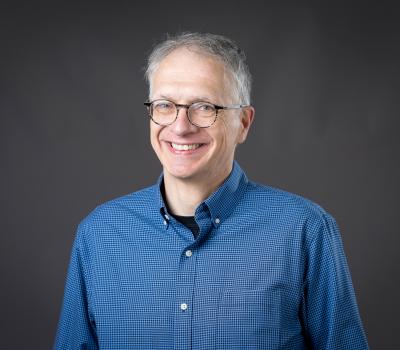
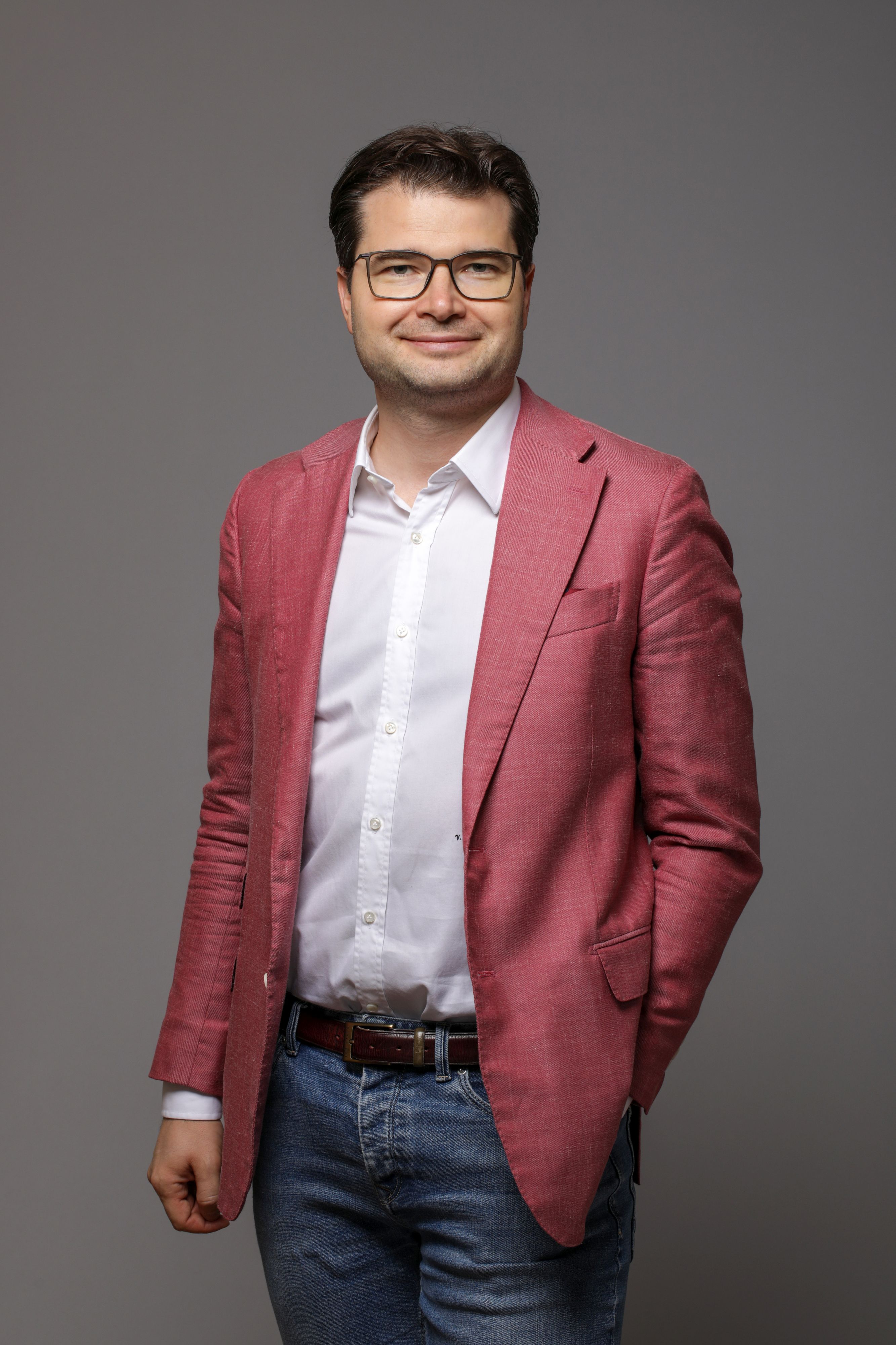
Martin Erwig is a Professor of Computer Science at Oregon State University's School of Electrical Engineering and Computer Science since 2000. He holds a Habilitation (1999) and Ph.D. (1994) from the University of Hagen, Germany, and a Diploma (M.S.) from the University of Dortmund (1989). His research focuses on domain-specific languages (DSL), functional programming, and visual languages, with notable contributions to oceanographic simulation tools and educational methodologies. Erwig's awards include the 2023 John McCarthy Best Overall Paper Award, 2021 College of Engineering Mentoring Award, and a 2017 American Book Fest Best Book Award for his book Once Upon an Algorithm . He has published over 160 peer-reviewed articles and developed teaching strategies using games to explain computational concepts. His academic journey includes a 15-month military stint as a tank driver and early work designing databases. He emphasizes computational literacy for non-specialists, advocating for accessible explanations through storytelling and analogies.
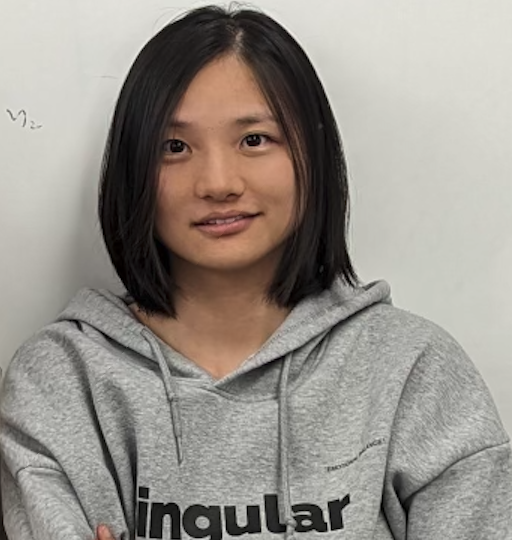
Xuan Luo is an Assistant Professor at the School of Information Technology, York University. He holds a PhD in Computing Science from Simon Fraser University (2021–2024), MASc from the University of British Columbia, and BEng from Tongji University. His research focuses on responsible data management, data valuation, data markets, machine learning, and game theory, with applications in AI governance and blockchain systems. He teaches courses such as ITEC 1620, ITEC 2610, and ITEC 6970 at York University. Luo serves on the program committees of ICDE 2025 and CIKM 2025, and is a local chair for KDD 2025. His recent work emphasizes scalable Shapley value computation for data assemblage tasks and data pricing in machine learning pipelines. Prospective PhD students with expertise in data science, databases, or machine learning are encouraged to contact him. His research bridges theoretical foundations (e.g., cooperative game theory) with practical systems (e.g., blockchain-based token exchanges).
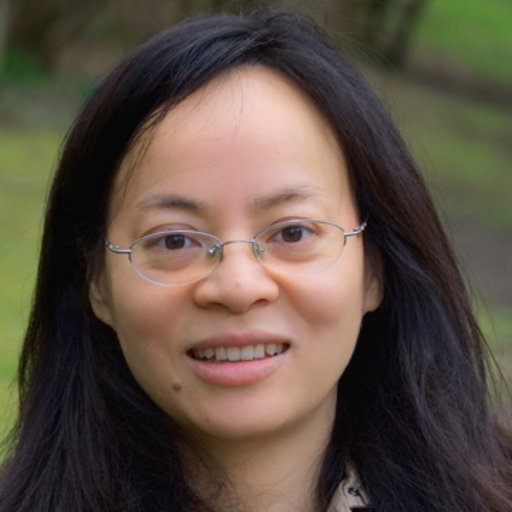
Professor Lang White is a faculty member at the University of Adelaide, holding the position of Professor of Electrical Engineering within the School of Psychology and Faculty of Health and Medical Sciences. His research focuses on statistical signal processing, control systems, optimization, and multi-agent systems with applications in defense, AI-human interaction, and communication networks. He leads projects on hidden reciprocal chain modeling, sensor array processing, and game-theoretic resource allocation strategies. Collaborations include institutions in Italy, France, and the U.S., and he is actively involved in defense-funded initiatives. Current research areas include Bayesian rationality in satisfaction games, Stackelberg game models for asymmetric conflict, and adaptive reinforcement learning algorithms. He has secured postdoctoral positions in human-AI interaction and maintains expertise in MIMO radar waveform design and TCP congestion control. His work bridges engineering and psychology, addressing interdisciplinary challenges in decision-making and system optimization. Professor White seeks consultancy opportunities in signal processing and control systems for defense clients and contributes to academic outreach through conference presentations and journal publications. He advises on emerging trends in distributed optimization and maintains a lab focused on temporal modeling and stochastic processes.
Kyrre Harald Glette is a Professor in the Department for Informatics at the University of Oslo , affiliated with the Robotics and Intelligent Systems Research Group and the RITMO Centre for Interdisciplinary Studies in Rhythm, Time and Motion . His research focuses on the co-design of robot morphology and control using evolutionary and bio-inspired artificial intelligence methods. Research Interests: Robotics and Intelligent Systems Evolutionary Robotics and Co-Design of Morphology and Control Artificial Intelligence and Machine Learning Evolvable Hardware and Embodied Computation Computational Creativity and Music-AI Interaction Human-Robot Interaction and Swarm Robotics His recent publications (2023–2025) reflect a strong interdisciplinary trend, combining robotics, evolutionary computation, and music technology. Key themes include evolutionary design of modular robots , real-time adaptation in bio-inspired systems , interactive sonification , and AI-driven music generation . His work often involves the DyRET robotic platform, emphasizing real-world evolution and embodied learning. Scientific Contributions: Extensive publications in top venues like Frontiers in Robotics and AI , IEEE ICRA , GECCO , and Nature Machine Intelligence . Development of open-source robotic platforms and frameworks for evolutionary robotics. Interdisciplinary work bridging AI, neuroscience, and music. Advising and Projects: He supervises MSc students in evolutionary robotics, robot locomotion, and musical robot swarms. He is involved in several research projects including Predictive and Intuitive Robot Companion (PIRC) , Modeling and Robots , Multimodal Elderly Care Systems (MECS) , Musical Human-Machine Interaction , and Neurophysiological Mechanisms of Human Auditory Predictions (AudioPred) . Labs and Research Groups: He is a key member of the Robotics and Intelligent Systems (ROBIN) group, the RITMO Centre of Excellence , and the Creative Computing Hub Oslo (C2HO) . These groups support interdisciplinary research in AI, robotics, music, and human interaction.
Shengrong Bu is an Associate Professor at the Department of Engineering, Brock University, Canada. She holds a Ph.D. in Electrical and Computer Engineering from Carleton University and has held academic positions at the University of Glasgow and industrial roles at Huawei Technologies. Her research bridges smart grid communications, wireless network security, and deep reinforcement learning applications. Ph.D., Electrical & Computer Engineering, Carleton University MEng by Research, Electrical Engineering, University of Wollongong BEng, Mechanical Engineering & Automation, Huazhong University Research focuses on: Multi-vector energy microgrids and smart grid communications Deep reinforcement learning for network optimization Game theory applications in energy systems Big data analytics for grid resilience Articles show expertise in P2P energy trading, fog computing resource allocation, and wireless security in smart grid environments, with funding from EPSRC and NSERC. Awards include multiple IEEE best papers and prestigious research fellowships. She supervises Ph.D. and MSc students in energy systems research.
Yifan Hu is a Professor of Practice at Northeastern University, specializing in AI/ML/NLP and Information Visualization. He held senior roles at Amazon (Senior Manager of Applied Science, 2023-2024) and Yahoo! Research (Senior Director, 2014-2023), leading teams in AI-driven projects. Earlier, he contributed to AT&T Labs, Wolfram Research, and Daresbury Laboratory. His research focuses on graph visualization, machine learning, and data science applications. Research interests include advanced visualization techniques (e.g., SmartGD framework), AI moderation systems, graph algorithms, and federated learning fairness. He has pioneered methods for graph layout optimization, dynamic data visualization, and adversarial NLP defenses. Notable achievements include winning the 2017 IEEE ICDM 10-Year Highest-Impact Paper Award for work on collaborative filtering. He currently teaches Data Mining (CS 6220) and Machine Learning (CS 6140) at Northeastern, emphasizing practical applications of AI. Labs/Projects: Actively develops visualization tools like SmartGD and DeepGD , exploring interdisciplinary applications in healthcare, cybersecurity, and large-scale data analysis. His work bridges theoretical advancements with industrial-scale implementations.
Univ. Prof. Dr. Ezio Bartocci is a Professor at TU Wien, leading the Forschungsbereich Cyber-Physical Systems . His research focuses on formal methods, runtime verification, and probabilistic systems in Cyber-Physical Systems (CPS). He leads projects like 'Distribution Recovery for Invariant Generation of Probabilistic' and 'Trustworthy IoT for CPS'. Key interests include specification mining, probabilistic hyperproperties, and developing tools like MoonLight for spatio-temporal monitoring. Recent work explores reinforcement learning ethics, neural network verification, and adaptive testing frameworks. His contributions span conferences such as HSCC and RV, with notable publications on parameter synthesis, fault localization in CPS, and moment-based analysis of probabilistic loops. Research Interests : Cyber-Physical Systems (CPS) design and validation Formal specification and verification techniques Probabilistic systems and hyperproperties Runtime monitoring and adaptive testing Neural networks and ethical AI Labs/Teams : Active in TU Wien's Cyber-Physical Systems research unit, collaborating with industry and academia on CPS security and autonomous systems.
Eirinakis Pavlos is an Associate Professor at the Department of Industrial Management & Technology, University of Piraeus. His affiliations include the Maritime and Industrial Studies school. He specializes in analytical methods in industrial systems and optimization techniques. His research focuses on digital twins, reconfigurable manufacturing systems, and maritime logistics optimization. Pavlos' work integrates advanced technologies like machine learning and cyber-physical systems to enhance industrial processes and supply chain resilience. Research interests span manufacturing systems optimization, energy-efficient robotics, and emissions control in maritime industries. He explores algorithmic solutions for collaborative logistics and mathematical programming under uncertainty. His recent work emphasizes cognitive digital twins for production resilience and modular manufacturing architectures. Publications highlight contributions to digital twin applications, stochastic optimization, and maritime big data analytics. His articles often bridge theoretical optimization frameworks with practical industrial challenges, such as LPG production quality control and cargo loss prevention via AIS-enabled systems. Pavlose@unipi.gr is his official contact. His office is located at 503/Delig. No listed scientific awards or advising students are mentioned in the provided texts.
Adam Abdin is a researcher specializing in interdisciplinary systems optimization, with a focus on urban mobility, critical infrastructure resilience, and space engineering. His work bridges operations research, AI applications, and climate adaptation strategies. He collaborates extensively with institutions on projects involving pandemic response, energy systems, and autonomous technologies. Key research areas include predictive maintenance frameworks, climate change exposure modeling, and on-orbit servicing mission optimization. Developed methodologies for coordinating traffic-power systems and enhancing AI-driven risk management in space missions. Recent research emphasizes strategic planning for pandemic control and optimizing testing strategies, as well as designing resilient energy systems against extreme weather events. His publications highlight contributions to electric vehicle rate design, cyber-risk mitigation in space AI, and comprehensive frameworks for critical infrastructure interdependency.
David I. Inouye is an Assistant Professor in the Elmore Family School of Electrical and Computer Engineering (ECE) at Purdue University. His research focuses on trustworthy AI/ML, causal inference, distribution robustness, and explainable AI. He holds a PhD in Computer Science from The University of Texas at Austin and completed a postdoc at Carnegie Mellon University. Education: PostDoc in Machine Learning, 2019 – Carnegie Mellon University PhD in Computer Science, 2017 – The University of Texas at Austin MS in Computer Science, 2015 – The University of Texas at Austin BS in Electrical Engineering, 2012 – Georgia Institute of Technology BA in Natural Sciences, 2011 – Covenant College Research Interests: Developing robust machine learning methods resilient to distribution shifts and computational assumptions Exploring causal mechanisms to mitigate ML robustness issues Advancing explainable AI and fairness in automated decision systems Designing robust collaborative learning frameworks for edge device networks Publications Highlight Trends in: Counterfactual fairness and causal reasoning Federated learning and domain generalization Generative models and distribution matching Vertical data partitioning and dynamic network inference Grants: Funded by NSF, Army Research Laboratory (ARL), and Office of Naval Research (ONR). Active lab collaborations include projects on federated domain translation and causal ML. Labs/Teams: Leads the Inouye Lab, with contributions to open-source tools like FedINB and StarCraftImage datasets.
Ian G. Ludden is an Assistant Professor of Computer Science and Software Engineering at Rose-Hulman Institute of Technology, located in Terre Haute, IN. His academic journey includes a B.S. in Computer Engineering and Mathematics from Rose-Hulman (2013-2016) and a Ph.D. in Computer Science (Theory and Algorithms) from the University of Illinois Urbana-Champaign (2017-2023). He joined Rose-Hulman as faculty in 2023. Research Focus: Ludden's work centers on Combinatorial Optimization, Algorithmic Game Theory, and Graph Theory applications in Health Care and Sports Analytics. His recent projects emphasize political redistricting optimization frameworks, including algorithmic fairness and compromise mechanisms in districting processes. He has developed models for NCAA March Madness bracket analysis and x-ray image processing. Key Projects: Graph partitioning for redistricting games, NCAA tournament prediction systems, and health analytics. Tools: Python, GitHub repositories (e.g., power-model-ncaa ). Awards: NSF Graduate Research Fellowship (GRFP) Illinois CS Outstanding Teaching Assistant — Lifetime Professional Contributions: Active GitHub contributions since 2019, including open-source projects like bracket analytics and machine learning for medical imaging. Collaborates with institutions on redistricting optimization frameworks and sports probability models.
Professor Vedran Podobnik is a Full Professor at the Department of Telecommunications, Faculty of Electrical Engineering and Computing (FER), University of Zagreb. He serves as Director of the socialLAB research group. Research focus on multi-agent systems, social network analysis, and smart grid technologies Expertise in electric vehicle infrastructure, data monetization, and context-aware service provisioning Developed agent-based models for power trading, collaborative services, and telecom process automation His publication record includes: Agent-based power trading simulations (2018, 2012, 2005) Social network influence analysis (2015) Smart grid market mechanisms (2012, 2014) Procurement strategy frameworks (2007) Digital advertising auction models (2010) The research demonstrates cross-disciplinary innovation in: Energy informatics and mobility networks Social data analytics and trust modeling Context-aware telecom services Collaborative urban computing Business intelligence in e-commerce
Olivier Buffet is a Researcher at INRIA, working at the INRIA Center at Université de Lorraine / LORIA since November 2007. He is affiliated with the LORIA laboratory (Lorraine Laboratory of Computer Science and its Applications), which focuses on computer science research. His work spans multiple institutions, having previously held positions at NICTA's Statistical Machine Learning program (2004-2006), RSISE at ANU (2004-2006), and LAAS at CNRS (2006-2007). Dr. Buffet received his engineering degree from Supélec and a DEA (Diplôme d'Etudes Approfondies) from Henri Poincaré University. He completed his PhD in computer science under the supervision of François Charpillet and Alain Dutech at LORIA / INRIA Nancy Grand-Est, defended on September 10, 2003. He later defended his habilitation to supervise research (HDR) on December 18, 2017. Dr. Buffet's research focuses on artificial intelligence, particularly in the areas of automated planning and scheduling, reinforcement learning, and decision-making under uncertainty. His work extensively explores Markov Decision Processes (MDPs), Partially Observable MDPs (POMDPs), and Decentralized POMDPs (Dec-POMDPs), with applications ranging from multi-agent systems to traffic management and adaptive conservation strategies. His research often bridges theoretical foundations with practical applications, developing algorithms that can handle complex decision problems in uncertain environments. His publication record demonstrates a consistent focus on advancing methods for planning and decision-making under uncertainty. Over the past decade, his work has increasingly addressed decentralized and multi-agent settings, developing novel approaches for coordination among multiple decision-makers with partial information. More recently, his research has explored interpretable solutions for adaptive management problems, particularly in environmental contexts, and advanced theoretical understanding of properties like Lipschitz continuity in POMDP value functions. Dr. Buffet has received recognition for his contributions to the field, including: Winner of the probabilistic track in the Fifth International Planning Competition (IPC-06) Best Paper award at AAMAS-14 for "Exploiting separability in multi-agent planning with continuous-state MDPs" Best Paper award at JFSMA-13 for "Synchronisation de véhicules autonomes aux croisements d'un réseau de routes" Best Paper award at CAp'11 for "Une extension des POMDP avec des récompenses dépendant de l'état de croyance" As an educator and mentor, Dr. Buffet has supervised numerous PhD students including Arnaud Glad, Mauricio Araya-Lòpez, Mohamed Tlig, Arsène Fansi, and Manel Tagorti. He has also guided many interns and research projects. His teaching experience includes tutored sessions on discrete and deterministic optimization, decision making under uncertainty, and computer science for industrial engineering at École des Mines de Nancy, as well as courses on Unix shell and C programming at Université Henri Poincaré. Dr. Buffet has been actively involved in the academic community, serving as Co-Conference Chair of the 30th International Conference on Automated Planning and Scheduling (ICAPS 2020) in Nancy. He has organized multiple meetings of the French workgroup JFPDA (formerly PDMIA) and chaired several workshops on planning and scheduling under uncertainty. He previously served on the editorial boards of Revue d'Intelligence Artificielle (RIA) and Journal of Artificial Intelligence Research (JAIR), and has been a reviewer for numerous prestigious journals and conferences in artificial intelligence.
Adriano Festa is an Associate Professor in the Department of Mathematical Sciences "G.L. Lagrange" (DISMA) at Politecnico di Torino, Italy. His work bridges applied mathematics, numerical analysis, and engineering applications, with strong affiliations across multiple engineering colleges including Mechanical, Aerospace, Automotive, and Mathematical Engineering. He actively contributes to teaching and research in numerical methods and control theory. His research focuses on numerical analysis , partial differential equations , optimal control , and mean-field games , with applications in traffic modeling, opinion dynamics, and sustainable urban systems. He is a member of the Numerical Analysis and Scientific Computing research group at DISMA, and his work aligns with ERC sectors in control theory, optimization, and numerical analysis, as well as UN SDGs 9, 11, and 14. The recent publications highlight a strong trend in game-theoretic modeling , Hamilton-Jacobi equations , and hybrid control systems , particularly applied to crowd behavior, traffic routing, and geometric tessellations. These works reflect an interdisciplinary approach combining rigorous mathematics with real-world engineering challenges. He has served as Guest Editor for Journal of Dynamics and Games (2021) and contributed to the editorial series Lecture Notes in Mathematics (2017). He has also participated in the organizing committees of conferences such as W-Math (2022) and Rencontres Normandes sur les EDP (2019). Adriano Festa has held past research positions at the University of L'Aquila (2018–2019), Ecole Polytechnique Palaiseau (2013), and the University of Rome "La Sapienza" (2009–2010). He teaches a wide range of courses, including Numerical Methods for Nonlinear Hyperbolic Equations , Advanced Engineering Thermodynamics/Numerical Modeling , and Linear Algebra and Geometry across various engineering programs. He is also a member or invited member of several academic collegia at Politecnico di Torino. His research is conducted within the Numerical Analysis and Scientific Computing group at DISMA, focusing on projects related to nonlinear hyperbolic equations, optimal control, and numerical differential modeling.
Professor Herve Moulin holds the Donald J Robertson Chair in Economics at the University of Glasgow, where he has been since 2013. Previously, he taught at Virginia Tech, Duke, and Rice Universities in the U.S. His academic journey includes a PhD from the Université de Paris (1975) and graduate studies at the Ecole Normale Supérieure in Paris (1971). Moulin's research focuses on microeconomics , game theory , social choice theory , and mechanism design , with a particular emphasis on fair division . His work bridges theoretical foundations with real-world applications, addressing issues like resource allocation, cost-sharing mechanisms, and algorithmic fairness. He has been recognized as a Fellow of the Econometric Society (1983), Royal Society of Edinburgh (2015), and British Academy (2018). His recent research trends emphasize fair division under congestion, algorithmic fairness in resource allocation, and mechanism design for strategic environments. Over 140 publications highlight his impact, including foundational work on random assignment, cost-sharing methods, and axiomatic fair division principles. Key contributions include pioneering studies on envy-free division, strategic-proof mechanisms, and the application of game theory to public economics. His work often blends mathematical rigor with policy relevance, addressing challenges in economics, computer science, and public policy.