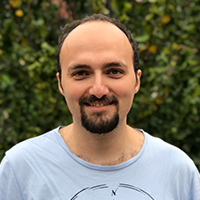
Dr. Jonathan M. Aitken is a Senior Lecturer in Robotics at the University of Sheffield's School of Electrical and Electronic Engineering. Previously a Research Fellow at the Autonomous Control Laboratory (ACSE), his work focuses on autonomous robotic systems with emphasis on quadcopters, computer vision, spatial awareness, and multi-robot collaboration. Expert in safe autonomous drone deployment Specializes in collaborative robotics (cobots) Qualified UK commercial drone pilot Research spans: Autonomous reconfiguration of robotic systems Dynamic risk assessment for systems-of-systems Visual SLAM for feature-sparse environments Formal verification of UAS systems Human-robot co-working interfaces Recent publications examine: Robust localization in sewer pipes Visual saliency algorithms for mobile robots Cobotic safety controller synthesis Modular digital twinning frameworks Spatial awareness for multi-robot teams Major grants include EPSRC Programme Grants for buried pipe sensing and Lloyds Registry Foundation funding for cobot safety integration.
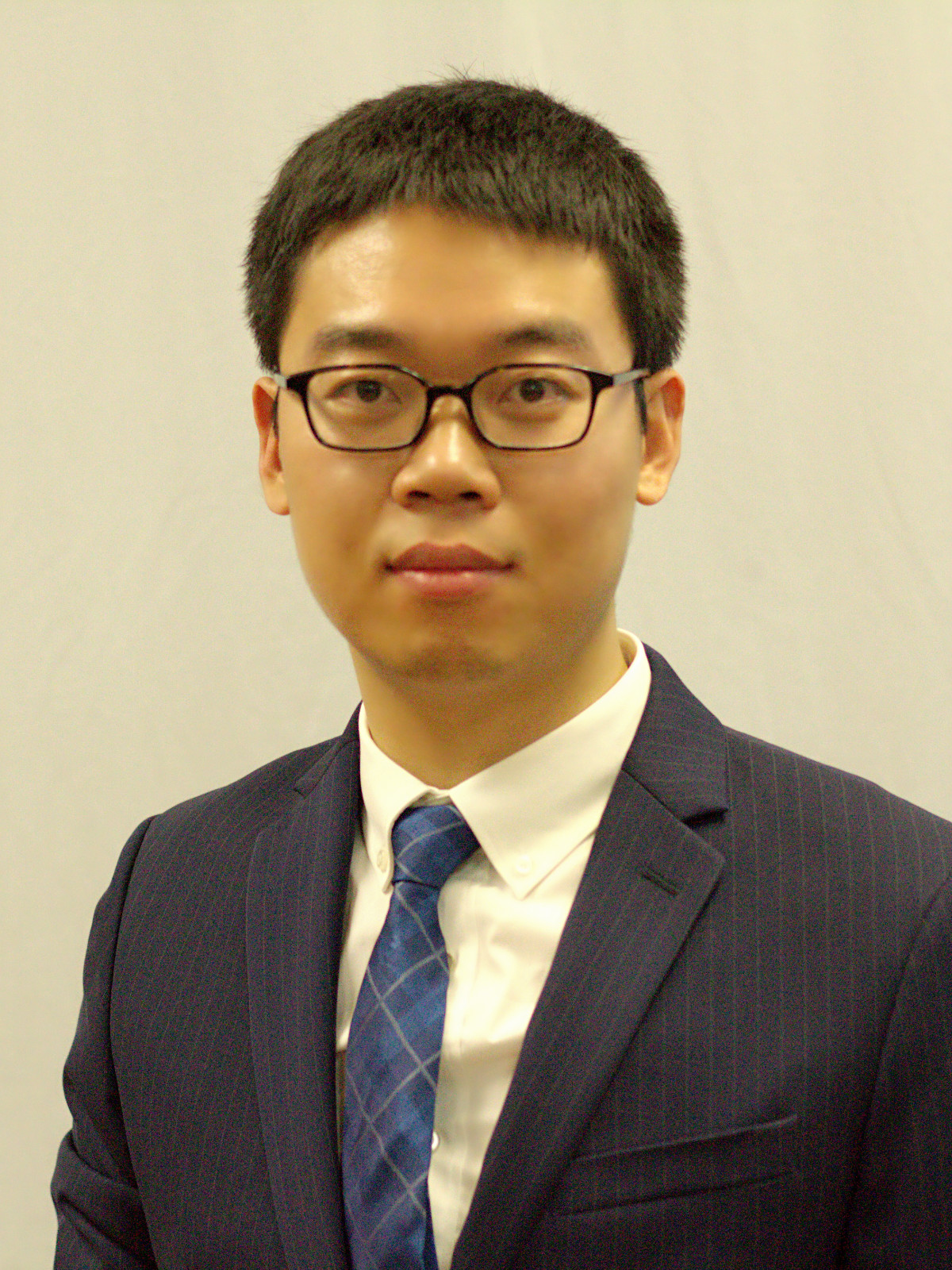
Xiaowu Dai is a tenure-track Assistant Professor at the University of California, Los Angeles (UCLA), holding primary appointment in the Department of Statistics and Data Science and secondary appointment in the Department of Biostatistics. His research bridges economics, machine learning, and biostatistics with applications in neuroimaging, diabetes, and kidney exchange programs. His educational background includes: Postdoctoral studies in Computer Science and Economics at UC Berkeley (2019-2022), advised by Michael I. Jordan, with additional collaboration with Lexin Li and Robert M. Anderson Ph.D. in Statistics from University of Wisconsin-Madison (2019), advised by Grace Wahba M.S. in Computer Sciences (2018) and M.S. in Mathematics (2015) from University of Wisconsin-Madison B.S. in Mathematics (with distinction) and B.A. in Economics (double degree) from Shanghai Jiao Tong University (2014) Dai's research spans four interconnected domains: (1) Economics and Machine Learning, integrating game theory with online learning for mechanism design in data marketplaces and matching markets; (2) Statistical Foundations for Dynamical Models, focusing on optimization dynamics and derivative-based learning; (3) Uncertainty Quantification with ML Systems, developing multimodal learning and distribution-free inference methods; and (4) Biomedical Discovery, applying these techniques to neuroimaging diagnostics, diabetes risk analysis, and kidney exchange optimization. His work consistently addresses real-world challenges through algorithmic innovation. Analysis of his 14 most recent publications (2018-2025) reveals a pronounced shift toward economic applications of machine learning since 2021, with 70% of recent work focusing on mechanism design, matching markets, and incentive-aware systems. Simultaneously, his biomedical research has evolved toward causal inference methods for time-series health data, particularly in diabetes research. The intersection of uncertainty quantification techniques across both domains represents his most distinctive contribution. His scientific recognition includes: Hellman Fellows Award (2025) Dai actively recruits graduate students for research in machine learning and biostatistics, supported by an NIH grant for diabetes research using AI (2025). His editorial roles include Associate Editor for Stat (2022-present) and reviewer for Journal of Machine Learning Research (2022-present). He has served as commencement speaker at Shanghai Jiao Tong University (2024) and contributes to practical implementations like the Hilbert Matching system for the clothing industry. His GitHub repository (irand) demonstrates leadership in developing computational tools for causal inference, indicating an active research team focused on methodological innovations for time-series analysis in healthcare applications.
Irina Harris is a Senior Lecturer in Logistics and Operations Modelling at the Cardiff Business School , Cardiff University, and serves as Deputy Section Head for Research, Innovation, and Engagement within the Logistics and Operations Management Section. Her career bridges computer science and logistics, focusing on sustainable network design, multi-objective optimization, and technological trends in supply chains. PhD in Computer Science (2011) - Multi-Objective Optimization for Green Logistics BSc (First Class) in Computer Science, Cardiff University Her research explores strategic and tactical logistics network design through economic and environmental lenses, emphasizing green logistics and reverse supply chains . She specializes in heuristics , evolutionary algorithms , and multi-criteria decision-making tools , often collaborating with industry partners to address real-world challenges. Her recent publications highlight electric vehicle adoption trends using agent-based modeling and machine learning , collaborative strategies in SME logistics , and carbon mitigation in multimodal transport . While no scientific awards are documented, her work frequently addresses sustainability in public procurement, supply chain resilience, and climate change adaptation. Contact: HarrisI1@cardiff.ac.uk
Xian Chen is an active academic researcher with an extensive publication record spanning over 30 years from 1994 to 2025. Their research demonstrates significant contributions across multiple disciplines within computer science, engineering, and applied mathematics. The publication pattern indicates sustained scholarly activity at a high level, with numerous papers in top-tier journals and conferences. Chen's research interests span a remarkably diverse range of fields, with particular emphasis on machine learning, artificial intelligence, stochastic processes, and their applications across various domains. Their work bridges theoretical foundations with practical applications, as evidenced by publications in both theoretical journals like SIAM Journal on Control and Optimization and applied venues like IEEE Access . The research portfolio shows evolution from early work in parallel computing and wireless networks toward contemporary AI and machine learning applications. The publication record reveals significant trends in Chen's research trajectory. Early work focused on parallel computing, wireless networks, and database systems. Over time, there's a clear shift toward machine learning applications, optimization techniques, and interdisciplinary work connecting computer science with fields like biomedical engineering, renewable energy, and education technology. Recent publications (2024-2025) show strong focus on large language models, federated learning, hate speech detection, and educational AI applications, reflecting current trends in artificial intelligence research. The consistent output across multiple domains suggests a highly collaborative research approach with numerous co-authors across different institutions. Chen has established productive collaborations with researchers worldwide, as evidenced by the diverse author lists across publications. The research demonstrates both theoretical depth in areas like stochastic games and Markov decision processes, as well as practical applications in fields ranging from medical diagnostics to renewable energy systems. The interdisciplinary nature of the work indicates versatility in applying computational methods to solve domain-specific problems.
Oluwasanmi Oluseye Koyejo is an Adjunct Associate Professor at the Siebel School of Computing and Data Science, University of Illinois. His research spans machine learning, neuroscience, and computer science, with specific interests in algorithmic fairness and brain-computer interfaces. He has received prestigious awards including the NSF CAREER Award and Sloan Research Fellowship. His recent publications demonstrate interdisciplinary work combining machine learning with medical imaging and decision theory. His 111 research outputs frequently appear in top-tier conferences and journals.
Pedro Pablo Lucas Bravo is a Doctoral Research Fellow at the University of Oslo's Department of Informatics (IFI), affiliated with the RITMO Centre for Interdisciplinary Studies in Rhythm, Time and Motion within the Faculty of Mathematics and Natural Sciences. His research focuses on developing interactive music systems using autonomous agents and swarm intelligence, with applications in Extended Reality (XR), Spatial Audio, and robotics. His Ph.D. project explores automatic tempo synchronization in human-machine systems through swarms of autonomous agents, aiming to create emergent musical behaviors in virtual, physical-virtual, and physical platforms. Key technologies include XR, spatial audio synthesis, motion capture, and robotic platforms. Bravo has contributed to projects like the XR Human-Swarm Interactive Music System and the MusicLab Copenhagen Dataset. His work bridges computer science, music technology, and artificial intelligence, with publications in venues such as IEEE ACSOS, NIME, and SMC. He holds a focus on interdisciplinary collaboration, leveraging swarmalator systems for self-organizing compositions and exploring cross-disciplinary applications of embodied oscillators in music performance.
Luis Ortiz is an Associate Professor in the Department of Computer and Information Science at the University of Michigan's College of Engineering and Computer Science. He holds a Ph.D. in Computer Science from Brown University and completed postdoctoral training at MIT and the University of Pennsylvania. His research bridges computational game theory, artificial intelligence, and probabilistic modeling with applications in autonomous systems, economics, and complex networks. Key focus areas include: Multi-agent reinforcement learning for autonomous driving Graphical models and game-theoretic equilibria Strategic behavior in networked systems Probabilistic inference and machine learning Recent publications explore reinforcement learning for highway automation and variational methods in probabilistic modeling. Dr. Ortiz has led NSF-funded projects including RI:Small:Collaborative Research:Influence Games and CAREER grants on the integration of graphical models and game theory.
Mingxi Liu is an Associate Professor in the Department of Electrical and Computer Engineering at the University of Utah. His research focuses on control theory and optimization applied to power systems, smart grids, and cyber-physical systems. He holds a Ph.D. from the University of Victoria, Canada, and has held postdoctoral positions at UC Berkeley. Key roles include NSF CAREER Awardee (2022), NSERC Postdoctoral Fellow (2016), and NSERC Doctoral Scholar (2014). Education: B.Eng. (Harbin Institute of Technology, 2010), M.A.Sc. and Ph.D. (University of Victoria, 2012–2016) Research Interests: Scalable control frameworks for decentralized energy systems, privacy-preserving optimization, resilient microgrids, and grid-edge resource coordination. Active in IEEE Technical Committees, particularly in industrial cyber-physical systems. Grants: Includes projects like the ENERGIZING DINETAH microgrid initiative (2023–2025), CAREER Award-funded scalable grid-edge control (2022–2027), and EV charging infrastructure planning (2021–2025). Awards: Best Reviewer (IEEE Transactions on Smart Grid, 2019), Top 15% Teacher (University of Utah, 2020) Teaching: Courses include Linear Control Systems, State Space Control, and Special Topics in advanced control systems. Active in STEM outreach, including workshops for Navajo communities and incarcerated youth.
Dr. Seyed Ahmad Soleymani is a Research Fellow at the University of Surrey's Institute for Communication Systems and part of the 5G/6G Innovation Centre. His research focuses on cybersecurity, edge computing, IoT, UAV systems, and 5G/6G networks. He has contributed to secure authentication protocols for medical and industrial IoT systems, UAV-assisted edge computing optimization, and multi-target tracking algorithms using Q-learning. His work emphasizes energy efficiency, data security, and real-time applications in smart manufacturing and vehicular networks. Research interests include secure communication in UAV networks, sustainable edge node deployment, and privacy-preserving authentication schemes. He has explored applications such as flood forecasting via UAV-assisted sensors and energy-efficient building systems. His publications span IEEE journals and conferences, addressing challenges in edge computing resource allocation, intrusion detection systems, and trust management in 5G-IIoT environments. Collaborations involve institutions like the University of Electronic Science and Technology of China and Universiti Teknologi Malaysia. Notable contributions include the MI3SE encryption scheme for outdoor IIoT devices and the TRUTH trust scheme for 5G industrial IoT. His work combines machine learning (e.g., SAC, Q-learning) with network optimization to address latency, security, and scalability in modern communication systems. He has also developed frameworks for cybertwin-based 6G networking and secured target tracking in O-RAN environments.
Dr. Serkan Saritas is an Assistant Professor in the Department of Electrical and Electronics Engineering at Middle East Technical University (METU). He holds a Ph.D. from Bilkent University (2018) and completed postdoctoral research at KTH Royal Institute of Technology in Sweden (2018–2021). His research focuses on Networked Control Systems, Game Theory applications in security, Communication Theory, and Information Theory. He has authored numerous high-impact publications in top-tier venues such as IEEE Transactions on Automatic Control, IEEE Transactions on Information Theory, and Automatica. Education: Ph.D. in Electrical and Electronics Engineering, Bilkent University (2013–2018) M.Sc. in Computer Engineering, Bilkent University (2010–2013) B.Sc. in Electrical and Electronics Engineering, Bilkent University (2005–2010) Research Interests: Game-Theoretic Security (e.g., adversarial attacks, authentication strategies) Networked Control Systems (resilience, fault tolerance) Information Theory (signaling games, estimation theory) Communication Theory (channel modeling, detection algorithms) Awards: Recipient of the IEEE Turkey PhD Thesis Award (2020), TÜBİTAK scholarships for graduate studies, and top national exam rankings (1st in ALES 2014, 2nd in ÖSS 2005). Teaching: Recently taught courses like EE348 (Logic Design) and EE494 (Engineering Design) at METU.
Demosthenis Teneketzis is a Professor of Electrical Engineering and Computer Science at the University of Michigan, Ann Arbor. He holds degrees from the University of Patras (Greece) and MIT (USA). His research focuses on stochastic control, decentralized systems, communication networks, and game-theoretic applications to cyber-security and electricity markets. He has held visiting positions at ETH Zurich and has industry experience with Systems Control, Inc. and Alphatech, Inc. Education: Diploma in Electrical Engineering, University of Patras, 1974 M.S., E.E., Ph.D. in Electrical Engineering, MIT, 1976-1979 Research Interests: Stochastic Control & Decentralized Systems Game Theory in Networks & Markets Cyber-Security & Resource Allocation Electricity Market Design Optimization & Mechanism Design Recent work trends include: Dynamic games with asymmetric information Information design in strategic systems Optimal mechanisms for electricity markets Decentralized control of cyber networks Game-theoretic security strategies No scientific awards explicitly listed in provided text. Advising/grants: No student list or grant details provided. Active in interdisciplinary projects like the SoilSCaPE wireless sensor network for environmental monitoring.
Alessandro Scagliotti is a Researcher at the Department of Mathematics, Technical University of Munich (TUM), affiliated with the School of Computation, Information and Technology. His research focuses on Optimal Control with applications to Machine Learning, particularly exploring dynamical models for Residual Neural Networks and large-scale training dataset analysis, alongside accelerated convex optimization methods. His academic contributions span theoretical advancements in control systems applied to neural networks, quantum state transfers, and biomedical applications like drug resistance management in cancer therapies. His work bridges mathematical rigor with practical machine learning challenges, emphasizing robustness and scalability. Recent publications highlight innovative approaches in neural ODEs, minimax optimization, and ensemble control systems, reflecting a strong interdisciplinary orientation. Collaborations are evident through topics like quantum dynamics and biomedical modeling. Email: scag@ma.tum.de | Office: 02.08.033 | Phone: +49 (89) 289-17467
Long Zhao is an Assistant Professor in the Department of Analytics and Operations at the National University of Singapore Business School. He holds a Ph.D. in Decision Sciences from the University of Texas at Austin (2019). His research focuses on data-driven decision making, emphasizing the development of intuitive yet high-performing decision tools. Key research areas include synthetic data generation, federated learning, neural networks, and control systems. Notable contributions span privacy-preserving techniques, generative adversarial networks (GANs), and optimization algorithms for complex systems. His work addresses challenges in vertical federated learning, time-series data synthesis, and underwater robotics applications. Zhao’s publications reflect interdisciplinary strengths, blending machine learning with control theory, privacy engineering, and natural language processing. He has explored topics such as robust neural control for nonlinear systems and adaptive algorithms for multi-agent game scenarios. Research trends show a strong emphasis on synthetic data’s ethical and practical applications, with over 20 publications since 2019. His projects often bridge theoretical advancements and real-world implementations, such as improving autonomous underwater vehicle intent recognition and enhancing medical data privacy through federated learning frameworks. Grants and advising activities are not explicitly detailed in the provided text.
Antonio Di Stasio is a Lecturer (Assistant Professor) at the Department of Computer Science, City, University of London, and a member of the Research Centre for Machine Learning. He holds an Associate Membership at the University of Oxford's Department of Computer Science and is part of Kellogg College's Common Room. His academic journey includes a Ph.D. in Mathematical and Computer Science from the University of Napoli 'Federico II' (Italy), supervised by Prof. Aniello Murano, and a visiting research period at Rice University under Prof. Moshe Vardi. His research focuses on Game Theory, Parity Games, Formal Verification, System Specification, Synthesis, and Automated Planning. He has contributed to advancements in temporal logic synthesis and finite-trace analysis, with notable work on LTLf specifications and environment-driven synthesis. Di Stasio has held roles such as Chair for Highlights of Reasoning at ECAI 2024 and service on program committees for AAMAS, AAAI, IJCAI, and others. He has taught courses on self-programming agents and game-theoretic approaches to planning at the University of Oxford and Sapienza University of Rome. His publications span venues like FM, IJCAI, ECAI, and KR, addressing topics ranging from parity game solving algorithms to compositional safety synthesis. His work emphasizes practical improvements in algorithmic efficiency and theoretical foundations of reactive systems.
Francesco Quinzan is a Researcher at the University of Oxford's Department of Computer Science. His work focuses on advancing AI alignment, causal machine learning, and combinatorial optimization with applications in medical imaging, reinforcement learning, and fair algorithm design. He leads the ELSA project under Prof. Marta Kwiatkowska's supervision. Research interests include: Safe AI development through causal representation learning and doubly robust methods Optimization techniques for submodular functions and evolutionary algorithms Counterfactual analysis for bias detection in medical AI systems Reinforcement learning frameworks incorporating human feedback Recent publications (2020-2025) demonstrate contributions to: Causal feature selection and invariant predictors Scalable optimization methods for large-scale problems Robustness in multi-agent systems and diffusion-based models Algorithmic fairness in constrained feature selection Current projects involve: ELSA: Developing explainable and safe AI systems Optimal transport applications for domain correction Causal discovery from temporal data streams