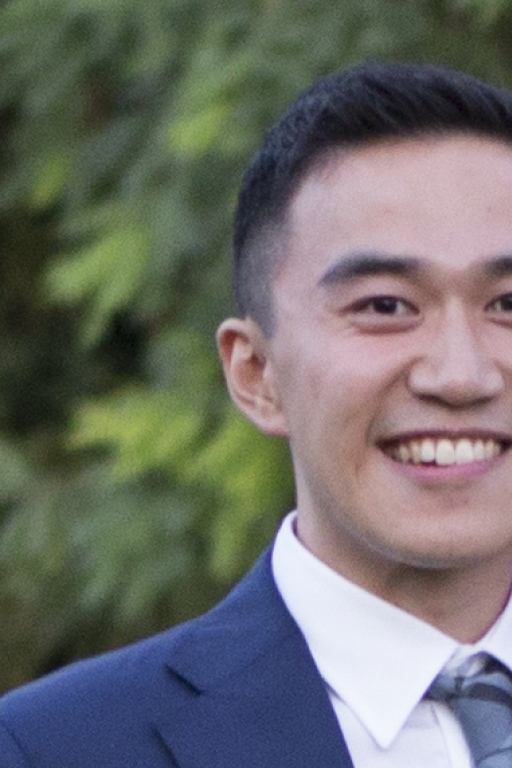
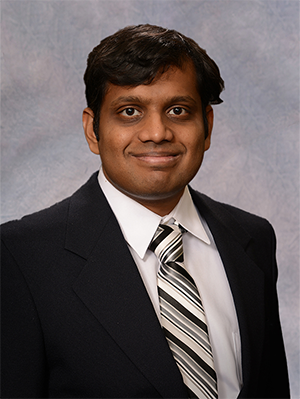
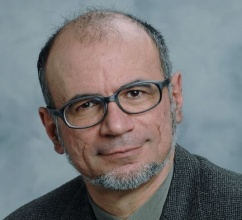
Alberto Quattrini Li is Associate Professor of Computer Science at Dartmouth College, directing the Reality and Robotics Laboratory. His research develops autonomous systems for aquatic environments with applications in environmental monitoring and underwater archaeology. Current NSF-supported projects focus on multi-robot aquatic exploration and archaeological inspection systems. Research thrusts include surface vehicle obstacle avoidance in waterways, low-cost underwater sensing solutions, autonomous underwater construction, and laser-based air-underwater communication. Recent innovations include buoyancy-enabled manipulation systems and multi-sensor SLAM techniques for underwater operations. Quattrini Li advises six PhD students and collaborates with archaeologists through NSF grants. His laboratory prototypes systems using custom surface and underwater robotic platforms. No scientific awards are documented in the source materials.
Professor Kerstin Bach is affiliated with the Department of Computer Technology and Informatics at NTNU's Faculty of Information Technology and Electrical Engineering. Her research focuses on artificial intelligence, machine learning, and their applications in health informatics and robotics. Notable projects include the selfBACK app for musculoskeletal pain management and reinforcement learning for robotic systems. She has supervised numerous doctoral students in areas like activity recognition and explainable AI. Education: Formal academic degrees not explicitly listed in text. Research interests span: - Case-Based Reasoning for clinical decision support - EHealth/mHealth applications (e.g., wearable sensor analytics) - Explainable AI methodologies - Human activity recognition using accelerometer data Recent work emphasizes: - Machine learning models for health monitoring (sleep/wake detection, gait analysis) - Reinforcement learning for robotics and autonomous systems - AI-driven clinical tools for pain management Key Projects: selfBACK app: Digital self-management tool for musculoskeletal pain (RCT validated) UtiliGEM: Energy management framework for IoT devices Labs/Teams: Active in NTNU's AI research groups focusing on healthcare informatics and robotics. Collaborates with medical institutions on clinical AI applications.
Davide Bacciu is a Full Professor of Machine Learning at the University of Pisa, where he leads the Pervasive Artificial Intelligence Laboratory (PAILab) and coordinates the EIC-Pathfinder EMERGE project. He is also Director of AI Research at Aptus.AI and founder of ContinualIST and QuantaBrain startups. His academic roles include Vice President of AIxIA (Italian Association for Artificial Intelligence) and former Senior Editor of IEEE Transactions on Neural Networks and Learning Systems. He holds a PhD in Computer Science from IMT Lucca and is affiliated with the Department of Computer Science at the University of Pisa. His research focuses on machine learning fundamentals, graph neural networks, continual learning, and applications in robotics and healthcare. Key projects include the EMERGE initiative exploring collective awareness in AI systems and QuantaBrain’s diagnostic tools for autism spectrum disorders. Bacciu’s work emphasizes interdisciplinary collaboration, integrating AI with cyber-physical systems and societal impact. His contributions span foundational theory (e.g., causal abstractions, graph structure learning) and applied domains (e.g., autonomous systems, medical AI). He has organized workshops on AI for Space exploration and Geometric Deep Learning, showcasing his commitment to advancing AI frontiers. Education: PhD in Computer Science (IMT Lucca), MSc & BSc from University of Pisa. Labs/Teams: PAILab, EMERGE project, QuantaBrain startup. Grants/Projects: EIC Pathfinder EMERGE, TEACHING_H2020, AI for Space initiatives. His recent publications address challenges in dynamic graph learning, continual learning, and causal discovery. Bacciu advocates for a national AI strategy in Italy, stressing long-term vision and ethical AI governance aligned with EU regulations like the AI Act.
Dr. Sivakumar Rathinam is a Professor in the Department of Mechanical Engineering at Texas A&M University, affiliated with the College of Engineering and the Computer Science & Engineering department. He holds certifications as a Fellow of ASME (2021) and Senior Member of IEEE (2019). His research focuses on motion planning for autonomous vehicles, collaborative decision-making, combinatorial optimization, and vision-based control systems. He leads the Autonomy Lab, addressing challenges in multi-agent systems, path planning, and rural autonomous vehicle accessibility. Education: Ph.D., Civil Systems Engineering, University of California, Berkeley (2007) M.S., Electrical Engineering & Computer Science, UC Berkeley (2006) M.S., Mechanical Engineering, Texas A&M University (2001) B.Tech., Mechanical Engineering, Indian Institute of Technology Madras (1999) Research Highlights: Dr. Rathinam's work spans autonomous vehicle navigation, UAV coordination, and sensor fusion for adverse conditions. His lab develops algorithms for multi-agent pathfinding and persistent monitoring missions. Recent efforts include rural road detection datasets (R2D2) and thermal/LIDAR sensor fusion for safety in challenging environments. Awards: Outstanding Faculty Contribution Award (2021) Best Paper Runner-Up, ICAPS (2021) Teaching Excellence Award (2012) Labs & Teams: Directs the Autonomy Lab, collaborating with industry partners through the Mechanical Engineering Industry Advisory Council. Active in NSF-funded projects on equitable rural autonomy and multi-UAV recharging frameworks.
Mark Yim is the Asa Whitney Professor of Mechanical Engineering at UPenn, specializing in modular robotics and bio-inspired systems. As Director of GRASP Lab and Faculty Director for Design Studio, he leads research on reconfigurable robots, micro air vehicles, and human-robot interaction through the Modular Robotics Laboratory (ModLab). Key projects include IceBot (robots made from ice), Variable Topology Truss reconfigurable systems, and Quori social robotics platform. Research combines mechanical design, distributed control, and human-centered applications. Recent publications focus on soft robotics control, structural design automation, and aerial manipulation systems.
Dr. Annette Stahl is a Professor at the Department of Engineering Cybernetics, Norwegian University of Science and Technology (NTNU). She is an Onsager Fellow and leads the Robot Vision Group, overseeing the AILARON project funded by the Research Council of Norway. Her roles include affiliation with NTNU AMOS and the SFI AutoShip Centre for Research-based Innovation. Stahl holds a PhD in Applied Mathematics (Computer Vision) from Heidelberg University. Affiliations: NTNU AMOS, SFI AutoShip, and AILARON project leadership Research Focus: Robotic vision, autonomous systems, underwater exploration, and aquaculture monitoring Education: PhD in Applied Mathematics (Computer Vision) – Heidelberg University Research Interests: Her work spans robotic and computer vision, control theory, autonomous vehicles, mathematical image analysis, and machine learning applications in aquaculture and maritime systems. Key focus areas include underwater SLAM, sensor fusion for autonomous ships, and plankton detection using AI. Articles: Recent publications emphasize underwater robotic systems, sensor fusion for autonomous navigation, and AI-driven aquaculture monitoring. Key themes include 3D reconstruction, visual SLAM, and maritime tracking algorithms. Grants & Projects: AILARON (FRINATEK/IKTPLUSS) AUTOSIGHT (IKTPLUSS) AROS (IKTPLUSS) SFI AutoShip (SFI) Advising: Main supervisor for 10+ PhD candidates (e.g., Trym Nygård, Mauhing Yip) Co-advisor for projects like INDISAL (fish identification) Labs/Teams: Robot Vision Group at NTNU Collaborations with SINTEF Ocean and Zebop AS
Guoyuan Li is a Professor at the Department of Marine Operations and Engineering Technology at NTNU, affiliated with the Faculty of Engineering. His research focuses on digitalization, control systems, robotics, maritime operations, and human-machine interaction. He holds IEEE Senior Membership (2019) and editorial roles in IEEE Journal of Oceanic Engineering and IEEE Transactions on Intelligent Transportation Systems . Education includes a Ph.D. in Computer Science from Hamburg University (2013), M.S. and B.S. from Chongqing University (2009/2006). Key projects include EU-funded RoboSAPIENS (robotic adaptation), Digital Twin for Green Ship Operations, and TwinShip (vessel lifecycle services). Recent awards include 2024 IEEE Robotics & Automation Magazine Best Paper and multiple IEEE conference recognitions. His work spans AI-driven maritime safety, digital twin applications, and autonomous systems. Visit Intelligent Systems Lab for more.
Dr. Fernando E. Casado is a Researcher at the Personal Robotics Lab (PRL) within the Department of Electrical and Electronic Engineering at Imperial College London since March 2023. He holds a BSc in Computer Science (2017, University of Santiago de Compostela) with awards for academic excellence, an MSc in Artificial Intelligence Research (2018, Menéndez Pelayo International University), and a PhD in Computer Science (2022, USC) with Cum Laude distinction for his work on continual federated learning strategies. His research focuses on multi-robot and multi-user machine learning to enhance trustworthy human-robot interaction, addressing challenges such as concept drift, non-stationary data, and personalized robotic behavior. Key contributions include federated learning frameworks for assistive robotics, adaptive algorithms for heterogeneous data, and eye-gaze tracking for trust assessment in HRI. Publications span topics like federated learning, continual learning, and human-robot trust, with applications in assistive devices and smart environments. Awards include the Best Academic Record and Thesis Award (BSc) and the highest honors in his PhD. Casado’s work bridges theoretical machine learning with practical robotics, emphasizing privacy-aware systems and user-centered design. He collaborates internationally, including visits to PRL in 2021, and contributes to advancing adaptive algorithms for real-world robotic applications.
Kostas Vlachos is an Assistant Professor in the Department of Computer Science and Engineering at the University of Ioannina, Greece. He has been in this position since 2014, following prior teaching roles at the University of Thessaly (2007–2013). He is a member of the Information Processing and Analysis (I.P.AN.) research group and actively supervises PhD, MSc, and diploma students in robotics and control systems. PhD, School of Mechanical Engineering, National Technical University of Athens, 2004 MSc, Interdepartmental Postgraduate Program in Automation Systems, National Technical University of Athens, 2000 Diploma in Electrical Engineering, Technical University of Dresden, Germany, 1993 His research focuses on robotics and control, with emphasis on microrobotics , haptic mechanisms , medical simulators , and autonomous navigation . He has made significant contributions to over-actuated marine platforms, reinforcement learning for navigation, and tactile robotic systems. His work bridges mechanical engineering and computer science, particularly in intelligent robotic control. The 15 most recent publications highlight a strong trend in autonomous marine robotics , multi-agent reinforcement learning , and intelligent control systems . Key themes include energy-efficient control, obstacle avoidance, sensor fusion, and learning-based navigation. The research spans from theoretical control design to real-world implementation in unmanned surface vehicles and microrobots. Best Student Paper Award, 9th Hellenic Conference on AI (SETN 2016) Vlachos has supervised over 30 students at various levels and has participated in multiple national and European research projects in robotics and automatic control. His teaching includes courses such as Computational Mathematics, Robotics, and Robotic Systems. He collaborates extensively with researchers like E. Papadopoulos and K. Blekas. He leads research within the Information Processing and Analysis (I.P.AN.) group, focusing on intelligent perception and control of robotic systems. His lab works on mobile manipulators, haptic devices, mini-robots, and marine platforms, integrating simulation (ROS/Gazebo) with real-world experimentation.
Evangelos E. Milios is a Professor in the Faculty of Computer Science at Dalhousie University , Halifax, Nova Scotia. He has been a faculty member since 1998 and leads the MALNIS (Machine Learning and Networked Information Spaces) research group. He is affiliated with the Institute of Big Data Analytics and served as Scientific Director of DeepSense , an innovation hub for ocean data analytics. Education: PhD in Electrical Engineering and Computer Science, MIT (1986) SM & EE, MIT (1983) Dipl. Eng. in Electrical Engineering, NTUA, Greece (1980) His research focuses on visual text analytics, text mining, graph mining, social network analysis, and machine learning . He has made significant contributions to modeling and mining of networked information spaces, with applications in data science and AI. The recent publications reflect a strong trend in data mining, robotics, pattern recognition, and semantic analysis , particularly in log analysis, pose estimation, and information retrieval. His work bridges theoretical algorithms with practical applications in robotics and web technologies. Scientific Awards and Honors: Distinguished Research Professor (2017–2022) Killam Chair in Computer Science (2006–2011) Senior Member, IEEE Professional Engineer, Ontario (1998–2024) He has served in key administrative roles including Associate Dean, Research (2008–2017) and Director of the Graduate Program (1999–2002) . He has supervised numerous graduate students and taught a wide range of courses in AI, machine learning, data science, and networking. His research is supported by major grants and collaborations, including NSERC and industry partnerships. Research Labs and Teams: MALNIS – Focuses on machine learning and networked information spaces. DeepSense – Ocean data analytics and AI innovation. Institute of Big Data Analytics – Cross-disciplinary big data research.
Joelle Pineau is a Professor at the School of Computer Science, McGill University, Montreal, Canada. Her work spans Machine Learning , Artificial Intelligence , and Reinforcement Learning , with significant contributions to causal inference , ethics in AI , and continual learning . She has led initiatives like the NeurIPS 2019 Reproducibility Program and co-authored over 315 publications. Key Research Themes : Algorithmic fairness, robust policy learning, interpretable models, and AI ethics Recent Trends : Focus on uncertainty-aware systems, multi-task learning, and societal implications of foundation models Scientific Awards : NeurIPS 2019 Reproducibility Program Leadership Advancements in AI Ethics Review Practices Her work intersects Computer Science , Biomedical Research , and Societal Policy , with applications in healthcare, robotics, and knowledge graphs.
Viviana Mascardi serves as an Associate Professor within the Department of Computer Science, Bioengineering, Robotics, and Systems Engineering (DIBRIS) at the University of Genoa. Her teaching responsibilities encompass core computer science courses such as Algorithms and Data Structures for the undergraduate program, and advanced topics including Natural Language Processing and Symbolic and Distributed Artificial Intelligence for master's students. Dr. Mascardi's research spans several key areas in Artificial Intelligence. She specializes in Multi-Agent Systems, where she develops frameworks for intentional dialogue systems and investigates agent deployment strategies. Her work in Natural Language Processing focuses on integrating ontologies with cognitive conversational agents. Additionally, she contributes to software engineering through runtime verification techniques for object-oriented programming constructs. Analysis of her recent publications (2023-2024) reveals consistent contributions across three primary domains: multi-agent architectures, natural language processing systems, and software verification methodologies. Her research demonstrates a strong interdisciplinary approach, connecting theoretical computer science with practical applications in virtual environments and conversational AI. No scientific awards were mentioned in the available information. Similarly, details regarding student advising, research grants, laboratory facilities, or collaborative research teams were not provided in the source material.
Professor Stephan Chalup is a leading academic in Artificial Intelligence and Machine Learning at the University of Newcastle , affiliated with the School of Information and Physical Sciences and the Data Science and Statistics department. He leads the Interdisciplinary Machine Learning Research Group (IMLRG) and the Newcastle Robotics Lab , where his team has achieved global recognition, including two RoboCup world championships. PhD in Computing Science , Queensland University of Technology (2002) Diplom in Mathematics with Neuroscience , University of Heidelberg His research focuses on artificial neural networks , deep learning , and high-dimensional data analysis , with applications in robotics, computer vision, medical imaging, and architectural analysis. He investigates how biological neural systems inspire robust AI models, particularly in topological data analysis and 4D vision . The recent publications highlight a strong trend in topological and geometric machine learning , with a focus on 4D data analysis , multi-agent reinforcement learning , and robot perception . His work bridges theoretical AI with practical industry solutions in transport, healthcare, and robotics. RoboCup World Champion (2008, 2006) Leadership Excellence, CESE (2024) Supervision Research Excellence Award (2015) Multiple Best Student Paper Awards (2019, 2018, 2011) Chalup has supervised numerous students and led significant research projects, including the ARC Discovery Project on estimating topology of low-dimensional data. His lab fosters interdisciplinary collaboration and innovation, with alumni working in top global tech roles. He is an active keynote speaker and program committee member in major AI conferences. His labs, including the Newcastle Robotics Lab , are equipped with state-of-the-art robots and computing systems, supporting cutting-edge research in humanoid robotics, autonomous navigation, and AI-driven data analysis.
Maryam Kamgarpour is a Tenure Track Assistant Professor at École Polytechnique Fédérale de Lausanne (EPFL), School of Engineering. She previously held faculty positions at the University of British Columbia and ETH Zürich. Her work bridges stochastic control , multiagent learning , and game theory , focusing on safety-critical systems. Education: PhD in Engineering from UC Berkeley, BSc in Applied Science from University of Waterloo. Research Interests: Control under uncertainty, game theory, mechanism design, mixed-integer optimization, and applications to transportation, robotics, power grids, and healthcare. Her recent publications emphasize safe reinforcement learning , multirobot coordination , and stochastic trajectory planning , with applications to aircraft navigation and energy systems. She has received the European Union ERC Starting Grant, NASA High Potential Individual Award, and IEEE Transactions on Control of Network Systems Outstanding Paper Award. Scientific Awards: ERC Starting Grant (2016-2021) NASA High Potential Individual Award (2010) NASA Excellence in Publication Award IEEE Outstanding Paper Award (2022) PhD Students: Jordan Philip Christopher Maddux Anna Maria Ni Tingting Ren Kai Salizzoni Giulio Schlaginhaufen Andreas Vaishampayan Saurabh Dilip Vallat Gabriel Rémi Former EPFL student: Guo Baiwei
Christopher Pal is a Full Professor in the Department of Computer Engineering and Software Engineering at Polytechnique Montréal. With a Ph.D. from the University of Waterloo, he has held academic positions at the University of Rochester and the University of Toronto, and industry roles at Interval Research and Microsoft Research's Interactive Visual Media Group. Fields of Expertise: Artificial Intelligence, Computer Vision, Pattern Recognition, Machine Learning, and Natural Language Processing Affiliations: CIFAR Chair in Artificial Intelligence, Institute for Data Valorization (IVADO) Member His research focuses on deep learning applications in visual question answering , medical image segmentation , and generative models . Recent work involves multimodal data analysis for climate modeling and vision-language systems for code generation. Key projects include CarbonSense for climate flux modeling and GeoCoder for geometry problem-solving AI. His 15 most recent publications (2023-2025) span topics from diffusion models to multi-agent systems , with emphasis on video generation , 3D animation , and environmental applications . Scientific recognition includes: CIFAR Chair in Artificial Intelligence IVADO Institute Membership Top-2% cited researcher (2021) He has supervised 22 Ph.D. and Master's students, with recent graduates working on generative AI , reinforcement learning , and medical imaging . Current research grants include MITACS-funded projects in software engineering agents and drone imagery analysis for tropical forest conservation.