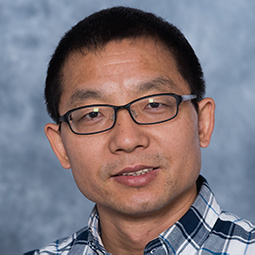
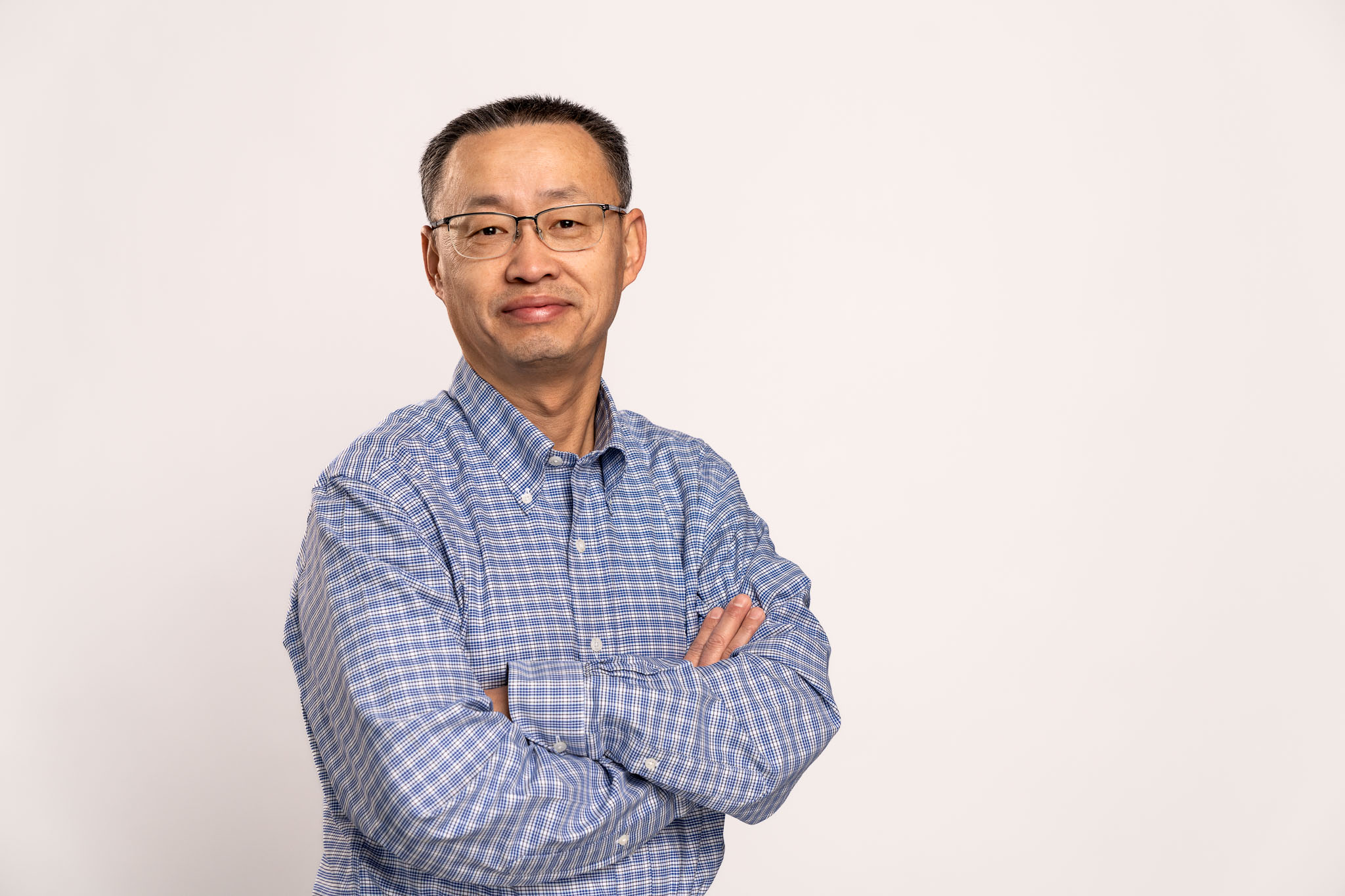
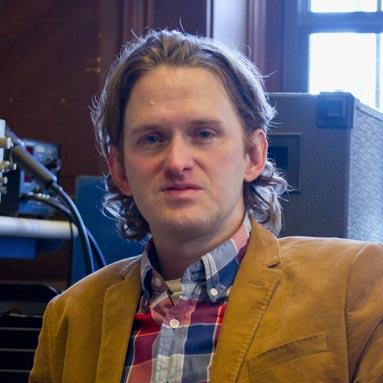
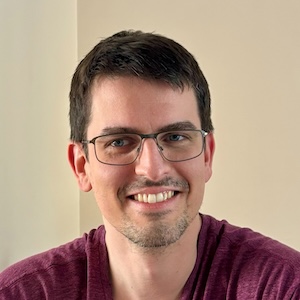
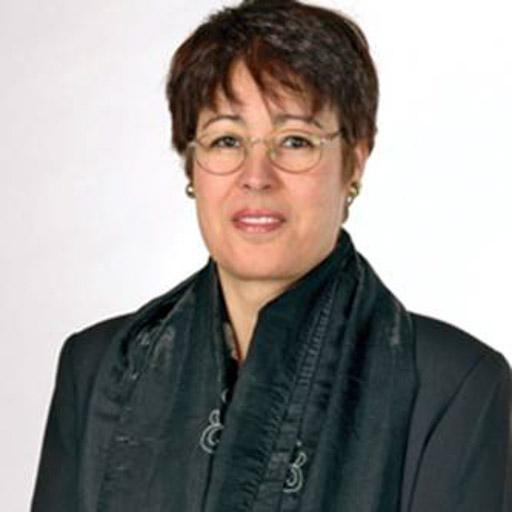
Dr. Frank L Lewis is a Professor and Moncrief-O'Donnell Endowed Chair in Electrical Engineering at The University of Texas at Arlington (UTA), where he has been since 1990. His research focuses on autonomous systems control, optimal control, reinforcement learning, and neural networks. He holds a PhD from Georgia Institute of Technology (1981), an MS in Aeronautical Engineering from the University of West Florida (1977), and a BS/ME in Physics/Electrical Engineering from Rice University (1971). His research has been ranked #1 globally in Optimal Control and Reinforcement Learning, and #2 in Control Theory by ScholarGPS. He has authored 527 journal papers, 30 books, and graduated 65 PhD students. Notable recognitions include the IEEE Neural Networks Pioneer Award (2012), AIAA Intelligent Systems Award (2016), and Texas Regents Outstanding Teaching Award (2013). Dr. Lewis has secured $17M in research grants, including from NSF, ONR, and ARO. He serves on numerous editorial boards and is a Fellow of IEEE, IFAC, and the National Academy of Inventors. His work spans robotics, autonomous systems, and industrial control, with applications in unmanned aerial vehicles (UAVs), distributed control systems, and renewable energy.
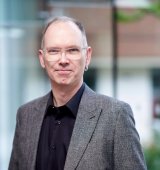
Lefteris Doitsidis is an Associate Professor at the School of Production Engineering and Management, Technical University of Crete. He holds a PhD in Production and Management Engineering from the same institution (2008), with prior academic positions at the Department of Electronics, Hellenic Mediterranean University. His professional journey includes visiting scholar roles at the University of South Florida, USA. Research focuses on robotic systems, including autonomous navigation of UAVs/AUVs, multirobot teams, computational intelligence, and educational robotics. He leads the Intelligent Systems and Robotics Laboratory, developing tools like HYDRA for STEM education and frameworks for industry 4.0 applications such as bin-picking and precision agriculture. His work integrates control systems optimization, energy efficiency in manufacturing, and digital twin technologies. Over 65 publications span journals, conferences, and books, emphasizing practical implementations like ROS-based autonomous vehicle testbeds and energy management systems for electric vehicles. Key contributions include UAV path planning algorithms, swarm robotics coordination, and sensor fusion techniques. Current research trends emphasize sustainability in manufacturing, educational robotics platforms, and autonomous systems validation through advanced algorithms like Deep Deterministic Policy Gradient.
Ehsan Esfahani is an Associate Professor and Director of Graduate Studies in the Department of Mechanical and Aerospace Engineering at the University at Buffalo's School of Engineering and Applied Sciences. He is affiliated with the Stephen Still Institute for Sustainable Transportation and Logistics. His research focuses on AI-driven robotics, human-machine interaction, and bio-mechatronics systems. Education: PhD in Mechanical Engineering, University of California, Riverside (2012) MS in Electrical Engineering, University of California, Riverside (2012) MS in Mechanical Engineering, University of Toledo (2007) BS in Mechanical Engineering, Isfahan University of Technology (2004) Research Interests: Brain-computer interfaces for CAD/robotic systems Human-robot collaboration and neuroergonomics Bio-inspired robotics and tactile sensing Swarm intelligence and multi-agent systems Variable stiffness actuators for safe manipulation Key Contributions: Esfahani's work bridges AI with physical systems, emphasizing real-time human-in-the-loop control. Recent trends in his publications focus on scalable swarm robotics, human-swarm interaction dynamics, and adaptive gripper designs for confined environments. His neurophysiological approaches assess cognitive load in collaborative tasks, enhancing system safety and efficiency. Awards: American Power Public Associations DEED Scholarship (2012) UC Riverside Dissertation Year Fellowship (2011–2012) Lung-Wen Tsai Memorial Scholarship (2010) Advising & Labs: Directs the HILS Lab (Human-Inspired Learning Systems), exploring human-centered robotics. Active in grants focusing on AI-driven factories, cognitive modeling in surgery, and variable stiffness mechanisms. Collaborates on projects like SHaSTA (Human-Swarm Team Simulator) and MyoTrack rehabilitation systems. Labs & Teams: HILS Lab: Human-AI collaboration frameworks Stephen Still Institute: Transportation logistics and sustainability
Andreas Brännström is a postdoctoral fellow at the Department of Computing Science , Umeå University, Sweden. His research focuses on formal logic-based methods for modeling and verifying manipulation, deception, and influence in communication , with applications in cybersecurity and social engineering. He employs frameworks such as Answer Set Programming, Formal Argumentation, and Description Logic to analyze mental states, belief change, and dialogue strategies in autonomous systems. His work intersects artificial intelligence , computational ethics , and human-agent interaction . Key research themes include: Formal verification of deceptive communication Computational empathy modeling Trust-based argumentation systems Behavior change interventions for autism Human-aware planning in hybrid AI Cross-cultural affective knowledge representation Recent publications analyze manipulation dialogues , critical friend agents , and emotion-aware planning using formal methods. The research contributes to responsible AI and trustworthy human-agent collaboration . Current projects include strategic argumentation frameworks (2020-2024) and collaborative mixed-reality tools for autism support. He is affiliated with the Formal Methods for Trustworthy Hybrid Intelligence research group and contributes to Responsible Artificial Intelligence initiatives.
Dr. Bin Zhang is an Associate Professor in the Department of Electrical Engineering at the Molinaroli College of Engineering and Computing, University of South Carolina. With over 20 years of experience in prognostics and health management, intelligent systems and control, and robotics, he has established himself as a leading researcher in battery management systems, power electronics, and fault-tolerant control systems. Dr. Zhang's educational background includes: Ph.D. in Electrical Engineering from Nanyang Technological University, Singapore M.E. in Mechanical Engineering from Nanjing University of Science and Technology, China B.E. in Mechanical Engineering from Nanjing University of Science and Technology, China His research focuses on active approaches to achieve intelligent smart systems with self-situational-awareness and self-adapting capabilities. Primary interests include prognostics and health management (PHM), which covers fault detection and isolation, failure prognosis, and fault tolerance; robotics and unmanned systems; intelligent systems and control; and dynamic systems design, modeling, simulation and control. His work integrates physics-based models with data-driven techniques and computational intelligence, including pattern recognition and machine learning. Analysis of Dr. Zhang's recent publications reveals a strong emphasis on battery modeling (particularly lithium-ion batteries), power electronics control (including fractional order delay and virtual variable sampling techniques), and deep learning methods (including graph neural networks, deep residual convolutional neural networks, and deep belief networks). His research spans multiple application domains including power grids, batteries, aircraft, helicopters, and manned/unmanned vehicles. Dr. Zhang serves as Associate Editor for prestigious journals including IEEE Transactions on Industrial Electronics, IEEE Transactions on Systems, Man, and Cybernetics: Systems, and Neurocomputing. He is a Senior Member of IEEE and a member of ASME. As director of the Resilient Systems Laboratory, Dr. Zhang advises numerous graduate students working on cutting-edge research in battery technology, power cable insulation, and control systems. His lab is equipped with advanced facilities including an 8-channel ARBIN BT-Smart battery testing system, power electronics control systems, cable/wire testing systems, rotating machinery testing systems, and unmanned vehicles including quadrotors and hexacopters.
Niels van Berkel is a Professor in the Department of Computer Science at Aalborg University, affiliated with The Technical Faculty of IT and Design. His research focuses on Human-Centered Computing and AI for societal benefit, with key projects including the HERD initiative on human-robot collaboration and initiatives to enhance mental health through digital tools. He leads multiple research projects involving AI ethics, healthcare applications, and swarm robotics. His educational background includes a Ph.D. in Computer Science. Research interests span AI explainability, human-AI interaction design, and the ethical implications of AI systems in healthcare and daily life. He has supervised 1 doctoral student and contributed to over 169 research outputs across journals, conferences, and datasets. Notable contributions include work on chatbot-driven data collection, coordination in AI development teams, and swarm robotics for search & rescue. His project 'AI for the People' emphasizes technology's role in improving societal wellbeing, while collaborations with medical professionals address chronic pain management and telehealth innovations. He received the DIS 2024 Honourable Mention and has actively engaged with media to communicate research impacts, including discussions on AI ethics and robot swarms. His work bridges technical innovation with human-centric design principles, addressing challenges in explainable AI, moral agency perceptions, and sustainable urban mobility solutions.
Professor Jinjun Shan is a Full Professor of Space Engineering and former Department Chair (2018-2023) in the Department of Earth and Space Science and Engineering at York University's Lassonde School of Engineering. An internationally recognized expert in dynamics, control and navigation, he joined York University as an Assistant Professor in 2006, was promoted to Associate Professor in 2011, and became a Full Professor in 2016. Dr. Shan received his B.Eng., M.Eng., and Ph.D. degrees from Harbin Institute of Technology, China, in 1997, 1999, and 2002, respectively. Before joining York, he was a Post-Doctoral Fellow at the University of Toronto Institute for Aerospace Studies (2003-2006) and a Research Assistant at City University of Hong Kong (2002-2003). His research focuses on dynamics, control and navigation, autonomous systems, multi-agent systems, smart materials and structures, space instrumentation, active vibration control, and orbit dynamics. Dr. Shan has made significant contributions to national and international space missions including NEOSSat and has attracted over $5 million in research funding from governmental agencies and industry partners. His laboratory, the Spacecraft Dynamics Control and Navigation Laboratory (SDCNLab), which he founded in 2006, conducts cutting-edge research in space engineering. Dr. Shan's extensive publication record includes over 200 peer-reviewed journal and conference papers, with his most recent work focusing on multi-agent formation control, autonomous vehicle decision-making, quadrotor control systems, and smart material applications. His research shows a clear progression from fundamental dynamics and control theory toward increasingly complex multi-agent systems and real-world applications in autonomous vehicles and space engineering. Fellow of Canadian Academy of Engineering (CAE) Fellow of Engineering Institute of Canada (EIC) Fellow of American Astronautical Society (AAS) Associate Fellow of AIAA Alexander von Humboldt Research Fellowship JSPS Fellowship Lassonde Educator of the Year Award (2022) Named in Stanford's list of world's top 2% researchers Dr. Shan has successfully mentored numerous graduate students and post-doctoral fellows, with current advisees working on cutting-edge projects in multi-agent systems, UAV control, and smart materials. His research is supported by substantial funding from NSERC, CSA, and industry partners. As the founding director of SDCNLab, he has built a comprehensive research facility for spacecraft dynamics, control, and navigation, recently expanding to include autonomous unmanned vehicle research through a CFI JELF award. His laboratory continues to make significant contributions to both theoretical advancements and practical applications in space engineering and autonomous systems.
Sergey Bereg is a Professor of Computer Science at the University of Texas at Dallas (UTD), affiliated with the Erik Jonsson School of Engineering and Computer Science. He has held this position since 2018. His research focuses on computational geometry, combinatorial optimization, and algorithm design, with applications in computational biology, geographic information systems, and network communications. He earned his Ph.D. in Computer Science from the Minsk Institute of Mathematics in 1992. His research interests include computational geometry and geometric optimization, with notable contributions to permutation arrays, convex partitions, and geometric algorithms. He has also explored applications in bioinformatics, such as genome rearrangement visualization, and robotics, including multi-drone coordination and coverage problems. His work often bridges theoretical foundations with practical implementations in areas like sensor networks and vehicular systems. Bereg’s publications span a wide range of topics, emphasizing combinatorial algorithms and geometric problems. Recent trends in his work include permutation arrays under various metrics, drone-based coverage algorithms, and robust synchronization in multi-agent systems. His research demonstrates a strong focus on both theoretical advancements and real-world applications. Though no specific awards are mentioned in the provided text, his extensive publication record underscores his contributions to the field. He has advised numerous students through his academic career, though specific names are not listed here. His projects include work on graph rigidity and Voronoi diagrams, reflecting his interdisciplinary approach to computational challenges.
Mishah Salman is a Teaching Professor in Mechanical Engineering at Stevens Institute of Technology's Charles V. Schaefer, Jr. School of Engineering and Science. He directs the Musichanicals student-faculty performance group and advises the Stevens Robotics Club. His technical expertise spans control systems, robotics, mechatronics, and aerospace vehicle dynamics. Salman develops control algorithms for omnidirectional mobile robots and failure accommodation systems for aircraft. His research includes kinematic analysis of robotic systems and coning reduction techniques for spinning aerospace vehicles. He teaches courses in dynamics, control systems, mechatronics, and robotics engineering design.
Scott D Barton is an Associate Professor in the Department of Humanities & Arts at Worcester Polytechnic Institute (WPI), with affiliations in Robotics Engineering, Psychology, and Interactive Media & Game Development. His work bridges music, robotics, and cognition, focusing on robotic musical instruments, human-robot interaction, and perceptual studies. He holds a BA from Colgate University (1998), an MMus from Brooklyn College (2006), and a PhD from the University of Virginia (2012). Research interests include designing automated musical instruments, exploring how cognitive processes shape musical perception, and applying AI to music creation. Key projects involve the Music, Perception and Robotics Lab , where he develops systems like Cyther (a self-tuning robotic zither) and Parthenope (a robotic siren). His work has been showcased in venues like the International Conference on New Interfaces for Musical Expression. Barton emphasizes interdisciplinary collaboration, teaching students to merge technical skills with creative expression. Media coverage includes interviews in The New York Times and The Telegram & Gazette , discussing topics like urban sound phenomena and robot-human concerts. His performances blend algorithmic composition with live robotics, exemplifying WPI's focus on innovative engineering and art. Grants and collaborations are central to his work, though specific funding details are not provided. Advising focuses on guiding students in creating novel musical technologies and understanding perceptual frameworks. Upcoming events include performances at the International Computer Music Conference and workshops on computer music technology.
Lucas Lehnert is an Assistant Professor in the Department of Computer Science at the University of Saskatchewan, specializing in Artificial Intelligence and Reinforcement Learning (RL). His research focuses on how intelligent systems can learn to solve complex decision-making tasks through representation learning, abstraction mechanisms, and lifelong learning strategies. He also explores applications of AI/RL in scientific and engineering domains. Education: PhD in Computer Science (Brown University, 2021), MSc (McGill University, 2016), BSc (McGill University, 2014). Postdoctoral positions included Meta's FAIR team (2022–2024) and the Mila Quebec AI Institute (2021–2022). Research interests include reinforcement learning fundamentals, generative AI reasoning, exploration strategies, and reward-predictive representations. His work bridges model-based and model-free RL paradigms, emphasizing scalable and generalizable solutions. Awards include the Best Student Workshop Paper Award (2017) and an NIMH training grant in cognitive neuroscience. His research has been published in top conferences like NeurIPS, ICML, and ICLR. He advises graduate students in RL and collaborates on projects involving transformer-based planning, exploration algorithms, and multi-agent systems. Current work includes developing SearchFormer for efficient planning tasks and exploring maximum entropy exploration methods.
Rachida Dssouli is a Professor at the Concordia Institute for Information Systems Engineering (Concordia University). Her research focuses on advanced software engineering methodologies, quality assurance systems, and distributed computing frameworks. She specializes in model-based testing, federated learning optimization, and big data quality management. Her work integrates formal verification techniques with modern machine learning approaches to address challenges in edge computing, IoT, and safety-critical systems. Key research areas include: Development of hybrid swarm intelligence algorithms for optimizing large language model deployment in edge-cloud environments Design of reinforcement learning frameworks for robotics motion planning and IoT device scheduling Creation of interpretable machine learning tools for fault detection in software systems Establishment of holistic big data quality frameworks for continuous monitoring and unstructured data analysis Formal verification methods for avionics systems using multi-agent models Her recent work demonstrates trends toward AI-driven solutions for testing methodologies (e.g., SHAP-Driven fault detection) and edge-cloud integration (e.g., MIMO-based computation offloading optimization). The 2025 publications highlight advancements in federated learning and trust-aware IoT scheduling. Earlier works (2018-2020) emphasize foundational contributions to cloud trust models, big data quality metrics, and safety-critical system testing. Her research also addresses emerging technologies for developing countries through frameworks like neurodegenerative disease monitoring systems and mobile application requirements engineering. She has contributed to service-oriented architectures for healthcare systems and cloud-based resource orchestration strategies.
Thomas Williams is an Associate Professor of Computer Science at the Colorado School of Mines, where he directs the MIRRORLab (Mines Interactive Robotics Research Lab). He earned his PhD in Computer Science and Cognitive Science from Tufts University in 2017. His educational background includes: BA in Computer Science, Hamilton College, 2011 MS in Computer Science, Tufts University, 2013 PhD in Computer Science: Cognitive Science, Tufts University, 2017 Williams' research focuses on artificial intelligence for human-robot interaction, especially natural language understanding and generation in uncertain environments. His work integrates cognitive science principles from linguistics and psychology to develop context-aware robotic systems. Key areas include Human-Robot Interaction, Natural Language Processing, Robot Ethics, and Augmented Reality, with emphasis on ethical implications and social dynamics in human-robot communication. Analysis of his publications (2015-2020) reveals a clear trajectory toward context-sensitive dialogue systems that handle ambiguity, social norms, and ethical considerations. His work increasingly explores multimodal interaction through AR/VR and examines how language-capable robots influence human moral frameworks, with growing attention to gender dynamics and noncompliance behaviors in social robotics. His notable awards include: New and Future AI Educator Award, EAAI (2017, 2018) Teaching Fellowship, Tufts Graduate Institute for Teaching (2015) Doctoral Consortia participation at YRRSDS (2014), HRI (2015), and AAAI (2016) Williams teaches Human-Robot Interaction, Robot Ethics, and Computer Vision courses while leading externally funded research. His work receives support from NSF, ONR, ARL, and Early Career awards from NSF, NASA, and AFOSR, focusing on grants that advance context-aware natural language interaction in robotics. As director of the MIRRORLab, he oversees research on human-robot interaction systems that dynamically adapt to environmental, cognitive, social, and moral contexts, with applications in assistive robotics and collaborative workspaces.
Dr. Ulysses Bernardet is a Lecturer at Aston University specializing in virtual human technologies. His research at the Cybernetic Human Lab bridges computer science, psychology, and neuroscience to develop autonomous virtual characters for applications in training, therapy, and entertainment. Research focuses on creating believable virtual humans that exhibit personality through nonverbal behavior, social-spatial interactions, and adaptive responses. Current projects include virtual breathing coaches, social group influence modeling, and architectures for reflexive behaviors. Teaching responsibilities include modules on Computer Animation (CS2420), Game Development (CS3450), and Research Methods (CS4780). His pedagogical approach emphasizes practical implementation of virtual agent technologies.
Dr. Cain Evans is a Teaching Professor at Aston University, serving as co-Programme Director for the MSc DTSS Degree Apprenticeship within the College of Engineering and Physical Sciences. He holds a prominent role in leading degree apprenticeship programs and has over 24 years of teaching experience across the UK and Far East, specializing in Computer Science, Software Engineering, and pedagogical research. His research focuses on intelligent systems, context-aware technologies, digital health (smart-care spaces), and AI-driven applications. He has served as an external examiner at multiple UK universities and has held senior academic roles at institutions like Birmingham City University and Northumbria University. His professional affiliations include Fellow of the Higher Education Academy (FHEA), STEM Ambassador, and memberships in BCS and IEEE. Research Interests: Dr. Evans' work spans interdisciplinary areas including software engineering, cyber security, AI (data science/mining), and pedagogy. Recent trends in his publications highlight advancements in smart care systems (e.g., pervasive sensing for at-home care), algorithmic trading models using neural networks, and mobile advertising frameworks like iMAS. His contributions also address challenges in e-education and future iCampus developments. Awards : Birmingham and Solihull STEM Ambassadors Award (2010) 15th Anniversary Outstanding Reviewer Awards (2016) Nominated for Engaging & Inspiring Teacher of the Year (2017) Advising & Grants : Supervisor for MSc Data Science and DTSS Professional projects Past roles include Programme Director for BSc DTS Professional and external examiner at Bradford, Brighton, and University of Wales Labs/Teams : Active in interdisciplinary collaborations, particularly in smart-care and AI applications, though no specific lab names are mentioned.