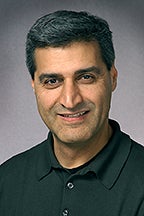
Amir Khajepour is a Professor at the University of Waterloo and holds prestigious positions as a Tier 1 Canada Research Chair in Mechatronics Vehicle Systems and a Senior NSERC/General Motors Industrial Research Chair in Holistic Vehicle Control. His research focuses on autonomous vehicle systems, mechatronics, and advanced control methodologies. Key areas include autonomous driving safety, sensor fusion, vehicle dynamics, and energy management. He leads the Mechatronic Vehicle Systems Lab, pioneering innovations in connected and automated vehicles. His work integrates machine learning, robotics, and mechanical engineering to address challenges in real-world autonomous systems, including path planning, perception reliability, and multi-agent coordination. Recent projects involve 5G-enabled mobility systems, robust tire force estimation, and game-theoretic decision-making frameworks. Khajepour’s contributions span both theoretical advancements and practical implementations, such as the WATonoBus autonomous shuttle technology. Research Highlights: Autonomous vehicle safety, sensor fusion algorithms, adaptive control systems, and energy-efficient powertrains. Grants & Awards: Canada Research Chair, NSERC/GM Industrial Chair, and multiple industry collaborations. Labs & Teams: Directs the Mechatronic Vehicle Systems Lab at the University of Waterloo. His publications emphasize real-world deployment, safety validation, and interdisciplinary approaches to advancing intelligent mobility solutions.
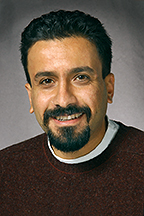
William Melek is a Professor in the Department of Mechanical and Mechatronics Engineering at the University of Waterloo. He serves as Director of the Laboratory of Computational Intelligence and Automation and RoboHub. His research focuses on intelligent systems, modular robotics, autonomous vehicles, and bioinformatics. He holds a B.A.Sc. in Electrical & Computer Engineering (Zagazig University, 1994), M.Sc. and Ph.D. in Mechanical Engineering (University of Toronto, 1998/2002), and a Post-Doctorate in Computer Science (Ryerson University, 2004). Education: Bachelor's: B.A.Sc in Electrical & Computer Engineering, Zagazig University (1994) Master's: Mechanical Engineering, University of Toronto (1998) Doctorate: Mechanical Engineering, University of Toronto (2002) Post-Doctorate: Computer Science, Ryerson University (2004) His research interests span artificial intelligence, intelligent control, mechatronics, automotive design, and computational intelligence. Recent work includes autonomous vehicle navigation, predictive maintenance in manufacturing, and bioinformatics-driven clinical decision support systems. He teaches courses such as ME 360 (Control Systems), ME 780 (Mechatronics), and MTE 100 (Intro to Mechatronics). Articles from 2023–2025 highlight advancements in autonomous driving decision-making, modular robotics, and 5G-enabled teleoperation systems. His lab develops algorithms for urban autonomous systems and industrial automation. He currently oversees graduate student applications in mechatronics and robotics. Labs/Teams: Laboratory of Computational Intelligence and Automation, RoboHub.
Scott Buffett is an Adjunct Professor at the Faculty of Computer Science, University of New Brunswick, and an Associate Research Officer at the National Research Council Canada (NRC), working in the Learning and Collaborative Technologies Group under the Information and Communications Technology Portfolio. He holds a PhD in Computer Science from the University of New Brunswick (UNB). His primary research focus is on artificial intelligence, particularly multi-agent systems, preference elicitation, workflow/process mining, and social commerce. He has developed systems like OmniBid, which demonstrates mechanism design for automated negotiations that balance individual utility and societal welfare. His work extends to privacy in e-commerce, data mining, and machine learning. Education: PhD (UNB), MSc in Automated Theorem Proving. Current teaching includes MBA courses in Production and Operations Management and Social Network Analysis. Past courses include Decision-Theoretic Agents and FORTRAN Programming. He supervises graduate students in preference modeling, negotiation systems, and workflow analytics. His research has been published extensively in conferences like CAI, ICEC, and journals like Electronic Commerce Research and Applications. He is active in collaborative technologies and data-driven process optimization. Research Interests: Multi-Agent Systems: Negotiation mechanisms, utility theory, and societal welfare optimization. Preference Elicitation: Techniques for extracting user preferences with minimal intrusion, including Bayesian methods and clustering. Workflow Mining: Dynamic process modeling for real-time guidance in industries like manufacturing and energy. Social Commerce: Analyzing social network effects on commercial interactions using network analysis techniques. Privacy and Data Analytics: Frameworks for privacy compliance in collaborative environments and energy management systems. Publications: Over 30 peer-reviewed articles, including work on automated negotiation, process mining theory, and preference network adaptation. Recent focus on dynamic process composition and socially aware commerce systems.
Prof. Pooya Moradian Zadeh is a Professor in the School of Computer Science at the University of Windsor, specializing in Artificial Intelligence and its applications in public health, social networks, and pandemic response. His research focuses on leveraging AI to address challenges like social isolation, disease surveillance, and healthcare accessibility. He has led interdisciplinary projects such as the $15 million INSPIRE initiative for pandemic preparedness and contributed to the WE-Spark Health Institute's COVID-19 Dashboard . Recognized for his teaching excellence, he received the 2024 Alumni Association Distinguished Teaching Award . His work involves collaborations with institutions like the Great Lakes Institute for Environmental Research and WE-Spark, addressing topics ranging from recommender systems to compassionate community approaches for vulnerable populations. He mentors students like Saghi Khani and Kameswara Peddada, guiding projects such as Simplified SCO on Wheels , which improves retail checkout processes. Research & Grants : Prof. Zadeh has secured grants totaling over $15M for pandemic response, AI-driven health solutions, and social network analysis. His teams develop algorithms for social isolation detection, personalized healthcare recommendations, and agent-based models for public health policy evaluation. He is also involved in advancing conversational AI for healthcare accessibility and optimizing team formation in digital networks. Labs & Collaborations : He leads projects at the University of Windsor’s 300 Ouellette Ave. campus and collaborates with industry and academic partners to bridge AI innovation with real-world health challenges. His work emphasizes ethical AI practices and community-focused solutions.
Peter West is an incoming Assistant Professor at the University of British Columbia (UBC) Computer Science Department, specializing in Natural Language Processing (NLP) and AI. His research focuses on understanding the capabilities and limitations of large language models (LLMs) and generative AI systems, emphasizing their divergence from human intuition and alignment challenges. He holds a PhD from the University of Washington (2024), supervised by Yejin Choi, and a BSc (Honours Computer Science) from UBC (2017). His work has been recognized with awards including Best Method Paper at NAACL 2022 and Outstanding Paper awards at ACL 2023 and EMNLP 2023. He conducted internships at the Allen Institute for AI and Microsoft Research’s NLP group. Research interests include analyzing LLM behavior through a natural sciences lens, exploring model capabilities versus human expectations, and developing decoding algorithms to infuse models with algorithmic logic. His recent publications address generative AI paradoxes, constrained text generation, and symbolic knowledge distillation. He serves on panels for NeurIPS workshops and is beginning a postdoc at Stanford with Chris Potts. His research group at UBC seeks students interested in generative AI’s analytical frontiers.
Guillaume Dumas is a Professor at the Faculté de médecine of Université de Montréal, specializing in computational psychiatry and social neuroscience. He leads the Laboratoire de Psychiatrie de Précision et de Physiologie Sociale at the CHU Sainte-Justine Research Center. His work bridges neuroscience, AI, and clinical practice, focusing on social cognition, brain synchronization, and neurodevelopmental disorders. Education includes a PhD in Cognitive Neuroscience from Sorbonne Université and an HDR in Clinical Neurosciences from Université de Paris. He has held roles at Institut Pasteur and Florida Atlantic University. Research interests span computational psychiatry, interbrain connectivity, and AI-driven diagnostic tools. Notable projects include the SCALE initiative studying autism across levels and InterBrain Synchronization mechanisms. His lab develops serious games for clinical assessment and biomarker discovery. Recipient of FRQS J1/J2 awards, IVADO affiliation, and grants from CIHR and FRQNT. Supervised 7 Master’s students recently, focusing on EEG, genomic variants, and AI models.
Richard S. Sutton is a pioneering researcher and Professor of Computing Science at the University of Alberta, where he serves as Chief Scientific Advisor for the Alberta Machine Intelligence Institute (Amii). He is also a Canada CIFAR AI Chair, Senior Fellow at CIFAR, and Research Scientist at Keen Technologies. Sutton is widely recognized as one of the founders of reinforcement learning, a field in which he continues to lead globally. His work has profoundly shaped modern AI research and applications. Education: B.A., Psychology, Stanford University (1978) M.S., Computer Science, University of Massachusetts (1980) Ph.D., Computer Science, University of Massachusetts (1984) Sutton's research focuses on identifying computational principles underlying intelligence and goal-directed behavior. He emphasizes learning from experience and extending reinforcement learning to create empirically grounded approaches to knowledge representation based on prediction. His work bridges artificial and natural intelligence, exploring how systems can predict and influence the world through learning, perception, action, and cognition. Sutton's research has produced foundational contributions including temporal-difference learning theory, actor-critic algorithms, the Dyna architecture, and Horde architecture. His recent publications reveal a continued focus on reinforcement learning fundamentals while expanding into broader AI applications. The articles show strong emphasis on theoretical foundations, convergence analysis, and practical implementations of reinforcement learning algorithms. There's also evidence of applying these techniques to real-world problems like pandemic forecasting, suggesting growing interest in practical societal applications of his theoretical work. Scientific Awards: 2024 Turing Award (with Andrew Barto) Fellow of the Royal Society (2021) Fellow of the Royal Society of Canada (2016) CAIAC Lifetime Achievement Award (2018) Outstanding Achievement in Research Award, UMass Amherst (2013) Sutton has mentored approximately 60 early-career researchers, including notable figures like David Silver (lead researcher behind AlphaGo), Doina Precup (DeepMind Montreal), Adam White (Amii Fellow), and Cam Linke (CEO of Amii). His Reinforcement Learning & Artificial Intelligence Lab at the University of Alberta has become a global hub for RL research. Sutton is currently collaborating with John Carmack through Keen Technologies to accelerate AGI development, documented in part through 'The Alberta Plan' which outlines his vision for creating long-lived computational agents. Sutton founded the Reinforcement Learning & Artificial Intelligence (RLAI) Lab at the University of Alberta and co-authored the seminal textbook 'Reinforcement Learning: An Introduction' with Andrew Barto. His work has been cited over 130,000 times and featured in major publications including Science, The Economist, New York Times, and Wall Street Journal. He is also known for his 'Tea Time Talks' tradition at Amii, fostering new ideas among researchers and students.
Pengfei Li is an Assistant Professor in the School of Information at the Rochester Institute of Technology (RIT), where he leads research at the intersection of machine learning, sustainability, and social equity. Previously, he completed his Ph.D. in Computer Science at the University of California, Riverside under Prof. Shaolei Ren, with additional collaborations at Caltech with Adam Wierman and an internship at Nokia Bell Labs. His educational background includes an M.S.E. in Robotics from Johns Hopkins University and a B.E. in Electrical Engineering from Zhejiang University. Dr. Li's research focuses on three interconnected pillars: developing trustworthy online algorithms with strict robustness guarantees, creating sustainable AI systems that minimize environmental impact, and addressing environmental and social inequities through algorithmic solutions. Analysis of his recent publications reveals a strong emphasis on the environmental consequences of AI systems, particularly water consumption ('Making AI Less 'Thirsty'') and geographical distribution of environmental burdens ('Towards Environmentally Equitable AI'). His work bridges theoretical computer science with practical sustainability challenges, often incorporating learning-augmented approaches to traditional online optimization problems. Scientific Recognition: Dissertation Completion Fellowship Award (DCFA) from the Graduate Program in Computer Science (February 2025) 'Making AI Less 'Thirsty'' in Communications of the ACM has received 15 citations and over 17,000 downloads Organizer of the workshop on learning-augmented algorithms at SIGMETRICS 2025 Dr. Li actively seeks to build a research group focused on societal fairness, reliable generative AI, and decision-focused learning. His work has established important connections between theoretical computer science and critical societal challenges, particularly around AI's environmental footprint and equitable resource distribution. Current research directions include developing algorithmic solutions for environmental and social fairness, with applications in water infrastructure, energy systems, and equitable AI deployment.
Alán Aspuru-Guzik is Professor of Chemistry and Computer Science at the University of Toronto, holding the Canada 150 Research Chair in Theoretical Chemistry, Canada CIFAR AI Chair at the Vector Institute, and Google Industrial Research Chair in Quantum Computing. He directs the Acceleration Consortium, a strategic initiative uniting industry, government, and academia for pre-competitive research on the 'lab of the future'. His educational background includes a PhD in Physical Chemistry from UC Berkeley and BSc in Chemistry from the National Autonomous University of Mexico. Research spans quantum information, chemistry, and machine learning—pioneering quantum algorithms for chemical simulations, investigating quantum coherence in photosynthesis, and accelerating discovery of organic semiconductors, photovoltaics, and batteries. Current focus centers on autonomous chemical laboratories integrating AI and robotics. Recent publications (2024-2025) reveal dominant trends: self-driving laboratories for materials synthesis, quantum computing applications in molecular simulation, and generative AI for metal-organic frameworks and drug discovery. Key methodologies include reinforcement learning for experimental design and vision-language models for reaction mining. Major awards include: Chemical Engineering Medal (2023) John C. Polanyi Award (2023) MIT TR35 (2010) Sloan Research Fellowship (2009) Canada 150 Research Chair (2018) As Director of the Acceleration Consortium, he leads multi-institutional efforts in autonomous research systems, supported by Canadian government chairs and Google funding. His editorial role at Digital Discovery and co-founding of Zapata AI (quantum software) and Kebotix (robotic labs) demonstrate commitment to transforming scientific discovery through AI-driven automation.
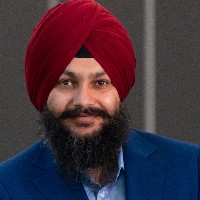
Dr. Parminder Singh Kang serves as Associate Professor in the Department of Decision Sciences at MacEwan University's School of Business, specializing in supply chain optimization through advanced analytics and machine learning. His cross-disciplinary research integrates people, process, and technology elements to solve complex industrial and service operations challenges. Education: PhD from De Montfort University M.Sc. from De Montfort University Dr. Kang's research centers on applying AI/ML, combinatorial optimization, and simulation modeling to enhance supply chain resilience and customer-centric service systems. His work bridges theoretical frameworks with industry applications, focusing on sustainable digitization, risk profiling, and process improvement through evolutionary algorithms and Lean/Six Sigma methodologies. Recent projects address circular economy integration and Service 4.0 transformation. His publication portfolio reveals strong trends in machine learning applications for supply chain risk analysis, text mining for competency mapping, and digital twin development for customer-centric operations. The research spans theoretical models like HI-TOP to practical case studies on pandemic disruptions and ERP implementation, demonstrating industry-relevant academic contributions. Scientific Awards: Best Paper Award, Administrative Sciences Association of Canada (2018) Horace Pops Medal Award, Wire Cable Conference (2015) Dr. Kang supervises senior student independent studies while teaching business intelligence, machine learning, and supply chain management courses at undergraduate, graduate, and MBA levels. His research is funded by NSERC, MITACS, Alberta Innovates, and industry partners including Fluor Canada, Apana Technologies, and the City of Calgary, supporting projects valued at over $2M annually. He leads collaborative research with Panjab University, CPA Canada, and TATA Steel Europe, focusing on supply chain digitization and process optimization. His work with UK-based SMEs and Canadian organizations drives practical implementation of analytics frameworks in real-world operational environments.
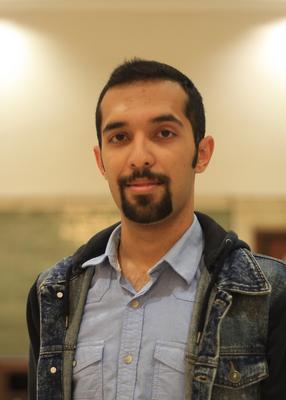
Nima Akbarzadeh is a Research Fellow at HEC Montréal since May 2023, co-supervised by Erick Delage and Yossiri Adulyasak. He previously completed his Doctorate (2017–2022) in Electrical and Computer Engineering at McGill University under Aditya Mahajan's supervision. Current affiliation: HEC Montréal (Postdoctoral Research Fellow) PhD: McGill University (Electrical and Computer Engineering) Research focus areas: Game theory, Mathematical modeling, and Optimization without derivatives Nima's work bridges algorithm development with risk-aware reinforcement learning (RL), particularly in restless multi-arm bandits and weakly coupled Markov decision processes (MDPs). His recent publications at AISTATS 2025 highlight advancements in sequential decision-making frameworks and fair resource allocation strategies. Scientific awards include: 2024 GERAD Postdoctoral Fellowship 2020–2022 FRQNT Doctoral Scholarship 2017–2019 McGill Engineering Doctoral Award He actively participates in academic workshops and seminars, including IVADO's Risk-Aware/Safe RL Workshop (2023) and McGill's Informal Systems Theory Seminar (2021).
Dr. Youcef Derbal is an Associate Professor in the Department of Information Technology Management at Toronto Metropolitan University's Ted Rogers School of Information Technology Management. With a Ph.D. in Electrical and Computer Engineering from Queen's University, he brings extensive industry experience from robotics, telecommunications, and software sectors to his academic work. His research focuses on Complex Adaptive Systems, particularly in modeling cancer dynamics through agent-based simulations, machine learning applications for oncology, and computational frameworks for biological processes. Key research areas include tumor dynamics, cell signaling pathways, and tumor-infiltrating lymphocyte recruitment. Dr. Derbal teaches undergraduate courses in business information systems, programming, system analysis, database design, and client-server applications, along with graduate-level advanced project management. His publication record shows consistent output in computational biology, cancer modeling, and grid computing since 2006. Professional affiliations include: Association for Computing Machinery (ACM) Institute of Electrical and Electronics Engineers (IEEE) International Society for Computational Biology (ISCB) Administrative contributions include service on University Senate, chairing multiple departmental committees, leading the Business Technology Management curriculum development (2009-2014), and serving as School Director during 2013/2014.
Keyhan Sheshyekani is a Full Professor in the Department of Electrical Engineering at Polytechnique Montréal. He holds membership in the NSERC/Hydro-Québec/RTE/EDF/OPAL-RT Industrial Research Chair, specializing in multi time-frame simulation of transients for large-scale power systems. His work bridges industry and academia through partnerships with major energy stakeholders. Research interests span: Smart grids : Cybersecurity, EV-grid integration, and demand response Electromagnetic systems : Grounding design, field modeling, and compatibility Energy control : Optimization algorithms for microgrids and converter systems Recent publications (2021-2025) show strong focus on: Machine learning applications in energy dispatch Cybersecurity frameworks for grid IT/OT convergence Real-time simulation of power electronics Advanced control strategies for EV charging infrastructure He actively mentors graduate students, with 10+ advised in the past five years working on projects like: EV aggregator controls for grid ancillary services FPGA-based real-time simulation Cybersecurity for synchrophasor networks