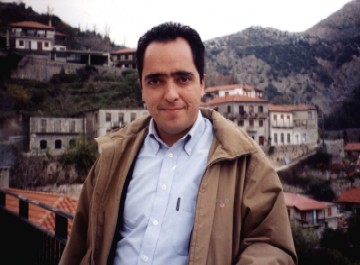
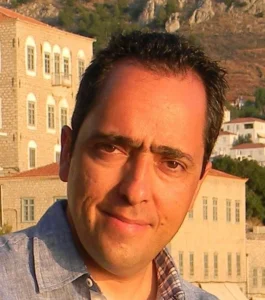
Yannis Theodoridis is a Professor at the Department of Informatics, University of Piraeus, leading the Information Systems Laboratory (InfoLab). He specializes in spatiotemporal databases, mobility analytics, and maritime data science. His research focuses on trajectory analysis, location-based services, and big data frameworks for transportation and maritime surveillance. Key projects include the MOD (Moving Objects Databases) initiative, the ARGOS framework for real-time trajectory prediction, and contributions to the HERMES trajectory database engine. He has advised 7 PhD students and co-authored numerous papers in IEEE and ACM venues. His work addresses challenges like vessel collision risk assessment, urban mobility optimization, and maritime event detection. He serves on the editorial board of the International Journal of Data Warehousing and Mining and contributes to conferences like PCI and ECML PKDD. His labs emphasize interdisciplinary approaches to mobility data science, integrating machine learning with domain-specific analytics.
Nikolaos Pelekis is a Professor at the Department of Statistics and Actuarial Science, School of Finance and Statistics, University of Piraeus, where he teaches courses in Data Science, Data Management, Information Systems, and Computer Programming. He has been actively involved in both undergraduate and postgraduate education, offering specialized courses such as "Statistical Data Mining Methods" in the Applied Statistics Master's program and "Big Data Management" in the Cybersecurity and Data Science postgraduate program. Born in 1975, Professor Pelekis earned his Bachelor's degree in Computer Science from the University of Crete (1998), followed by an MSc in Information Systems Engineering (1999) and a PhD in Moving Object Databases (2002) from UMIST University in the United Kingdom. His educational background laid the foundation for his distinguished career in data science and database management. Professor Pelekis' research spans multiple domains within data science and database management, with particular emphasis on mobility data analytics. His work focuses on data mining, big data management and analytics, with special attention to location and motion data including trajectories of moving objects. He has made significant contributions to spatial and spatiotemporal database management, moving object database systems, privacy-preserving data mining, and OLAP analysis. His research bridges theoretical foundations with practical applications, particularly in maritime and transportation domains. An analysis of Professor Pelekis' recent publications reveals a strong trend toward maritime data analytics and vessel traffic prediction. His work increasingly focuses on applying machine learning techniques to maritime trajectory data, developing systems for collision risk assessment, vessel location forecasting, and maritime route prediction. The research demonstrates a progression from foundational database management techniques to sophisticated analytics for time-critical mobility forecasting, with applications in aviation and maritime domains. Five best research paper awards 1st & 3rd place in the SemEval-2017 competition 3rd place in the ACM SIGSPATIAL Cup 2016 competition Best paper award at ACM SIGSPATIAL'14 (Path-based Queries on Trajectory Data) Best paper award at ER'13 (Baquara: A Holistic Ontological Framework for Movement Analysis with Linked Data) Best application paper award at ICDM'09 (Clustering Trajectories of Moving Objects in an Uncertain World) Ralf H. Güting best research paper award at SSTD'21 (A Novel Indexing Method for Spatial-Keyword Range Queries) Best Demo Paper award at SSTD'21 (MaSEC: Discovering Anchorages and Co-movement Patterns on Streaming Vessel Trajectories) Professor Pelekis has been actively involved in advising and research funding acquisition. He has participated in over 10 European and National Research and Development projects as principal investigator or key researcher. His leadership extends to directing research laboratories and coordinating large-scale collaborative projects. As co-founder of the Data Science Lab - DataStories at the University of Piraeus, he has mentored numerous researchers and students. His research has been supported by prestigious funding programs including Horizon Europe, Horizon 2020, and national research initiatives. Professor Pelekis co-founded and leads the Data Science Lab - DataStories at the University of Piraeus, which comprises 9 faculty members from 4 different Departments along with experienced and young researchers. He previously served as Head of Research for the Information Management Lab (InfoLab) at the Department of Informatics, University of Piraeus (2005-2014). His current research team is actively engaged in multiple European projects including "DAT.AI – Energy-efficient AI-ready Data Spaces" and "EMERALDS – Extreme-scale Urban Mobility Data Analytics as a Service," focusing on cutting-edge applications of data science in maritime and urban mobility contexts.
Professor Theodoridis Ioannis is a distinguished faculty member in the Department of Informatics at the University of Piraeus, where he serves as Director of the Data Science Laboratory within the School of Information and Communication Technologies. With a career spanning over two decades, he has established himself as a leading expert in data management and analysis. His research interests focus on Data Science, particularly in databases, big data management, data mining, and geoinformatics. Professor Theodoridis has made significant contributions to spatial database systems, time series analysis, and distributed data processing. His work bridges theoretical foundations with practical applications in areas such as smart cities, mobility analytics, and scientific data management. His publication record demonstrates consistent research productivity with over 100 peer-reviewed articles in top-tier venues, accumulating more than 10,000 citations. His research output shows a clear evolution from foundational database techniques toward contemporary challenges in big data analytics, machine learning integration, and privacy-preserving methods. Member of editorial board of ACM Computing Surveys (since 2016) Reviewer for numerous international journals and conferences Active participant in data management conference committees Professor Theodoridis has secured significant research funding through Horizon 2020 projects, serving as project coordinator and research team leader since 2001. His work demonstrates strong industry and academic collaboration, with applications spanning multiple domains. He has also co-authored three influential monographs in his field. He leads the Data Science Laboratory, which serves as a hub for interdisciplinary research at the intersection of database systems, machine learning, and domain-specific applications. The laboratory fosters collaboration between computer scientists, domain experts, and industry partners to address real-world data challenges.
Michalis Vazirgiannis is a Professor in the Department of Informatics at the Athens University of Economics and Business (AUEB), specializing in data mining and machine learning with applications in web and social network analysis. His work bridges theoretical algorithms and real-world scalability challenges. Education: Bachelor Degree in Informatics, National and Kapodistrian University of Athens, 1986 Master (M.Sc.) in Robotics, National and Kapodistrian University of Athens, 1988 Master (M.Sc.) in Knowledge Based Systems, Heriot Watt University, Edinburgh, 1989 Ph.D. in Informatics, National and Kapodistrian University of Athens, 1994 Research Focus: Professor Vazirgiannis pioneers clustering algorithms with subjective/objective validation, distributed feature selection for evolving graphs, and temporal link analysis for dynamic page ranking. His research addresses critical gaps in semi-supervised learning for large-scale web and social networks, emphasizing dimensionality reduction and ranking predictability in temporal contexts. Publication Trends: His 2007-dominated publications reveal a strategic shift toward graph-based web mining, with recurring themes of distributed processing (P2P similarity search), clustering validity frameworks, and semantic web personalization. The work consistently targets scalability bottlenecks in real-world network data. Scientific Recognition: ERCIM Post-doctoral Scholarship (2001) Marie Curie European Scholarship (2006) Leadership & Collaboration: As ERASMUS coordinator for AUEB's Informatics Department and editorial board member of Intelligent Data Analysis journal, he bridges academia and industry. His EU project leadership (FP6 SQO-OSS, Marie Curie NGWeMiS) and program committee roles (IEEE/ICDM 2008, ECML/PKDD 2008) highlight his influence in data mining standardization. International collaborations span INRIA, Fraunhofer, Max Planck, and IBM Research. Technical Innovation: His patent contributions and invited lectures at ECML/PKDD 2006/SIAM/SDM 2006 demonstrate applied impact, particularly in web personalization engines (SEWeP) and evolving graph analytics.
Professor Michalis Vazirgiannis is affiliated with the Informatics Department at Athens University of Economics and Business (AUEB). He holds a PhD in Informatics from the National and Kapodistrian University of Athens (1994), with prior degrees in Physics, Robotics, and Knowledge-Based Systems. His research focuses on data mining, machine learning, clustering algorithms, and web mining. He has led EU-funded projects like SQO-OSS and NGWeMiS, and contributed to initiatives like DB-GLOBE and I-KnowUMine. Awards include ERCIM Post-Doctoral Scholarship (2001) and Marie Curie Fellowship (2006). He serves on editorial boards (e.g., IDA Journal) and program committees for conferences like IEEE/ICDM and ECML/PKDD. His work spans theoretical advancements and practical applications in distributed systems, semantic networks, and temporal graph analysis. Education: BSc Physics, NKUA (1986) MSc Robotics, NKUA (1988) MSc Knowledge-Based Systems, Heriot-Watt University (1989) PhD Informatics, NKUA (1994) Research interests include semi-supervised learning, page ranking, and distributed feature selection. His publications address clustering frameworks, peer-to-peer systems, and normalized PageRank for evolving graphs. He has contributed to patents and held visiting researcher positions at INRIA, Fraunhofer, Max Planck, and IBM India.
Nikos Pelekis is a Lecturer at the Department of Statistics and Insurance Science and a researcher at the Information Management Group in the Department of Informatics at the University of Piraeus. His research specializes in mobility data management, spatiotemporal databases, and knowledge discovery from moving objects. Research Focus: Design of trajectory database engines (HERMES) Semantic-aware mobility data mining Privacy-preserving techniques for sensitive trajectory data Key Achievements: Best Paper Award at ER'13 and IEEE ICDM'09 Author of "Mobility Data Management and Exploration" monograph Principal researcher in EU projects including GeoPKDD and MODAP